A Tijani Glass Painting from Senegal
Shaykh Ahmad al-Tijani
Senegal, Thies, ca. 1950
Painting on glass
Paris, Musée du Quai Branly—Jacques Chirac, 73.1994.4.17
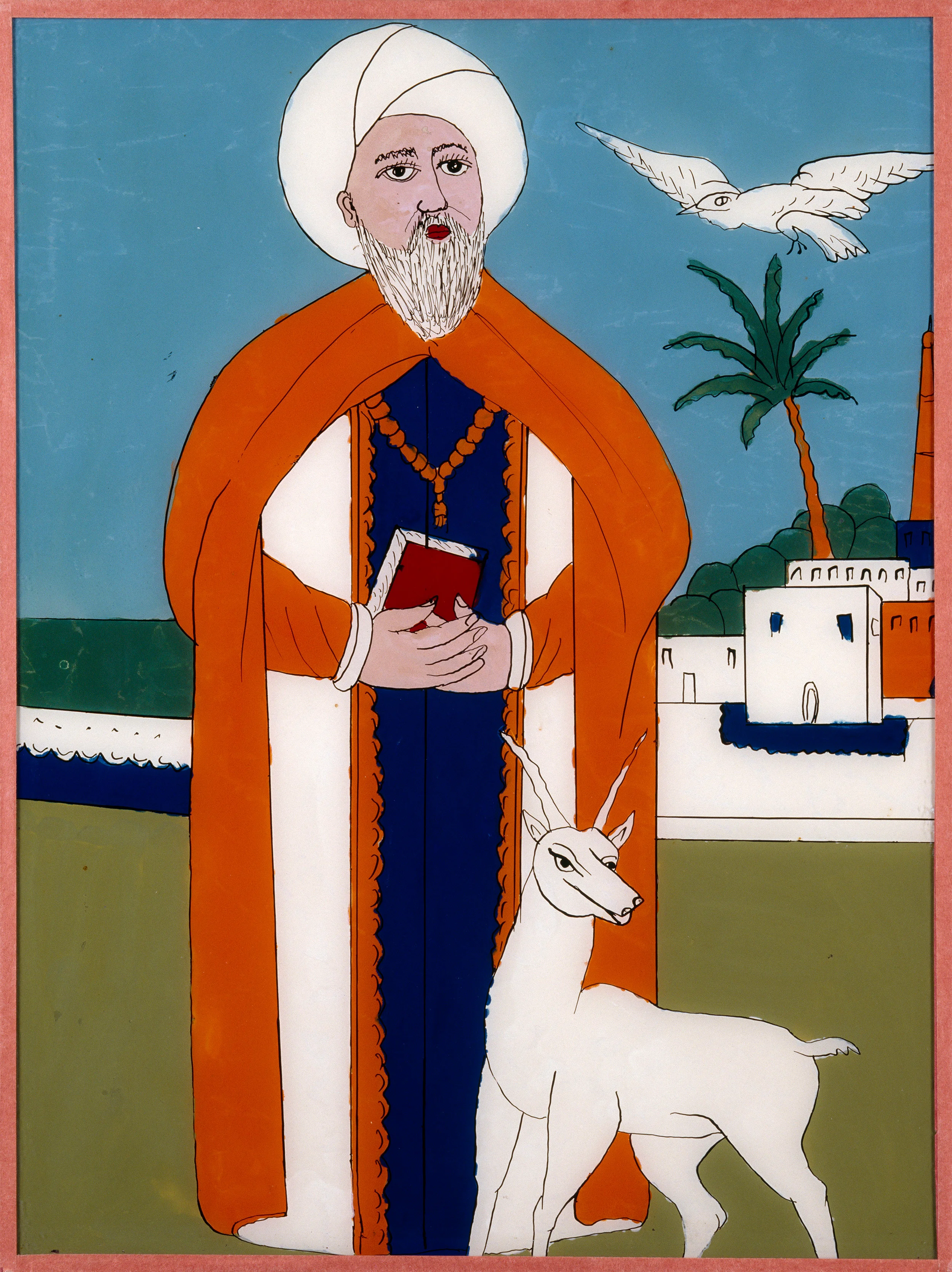
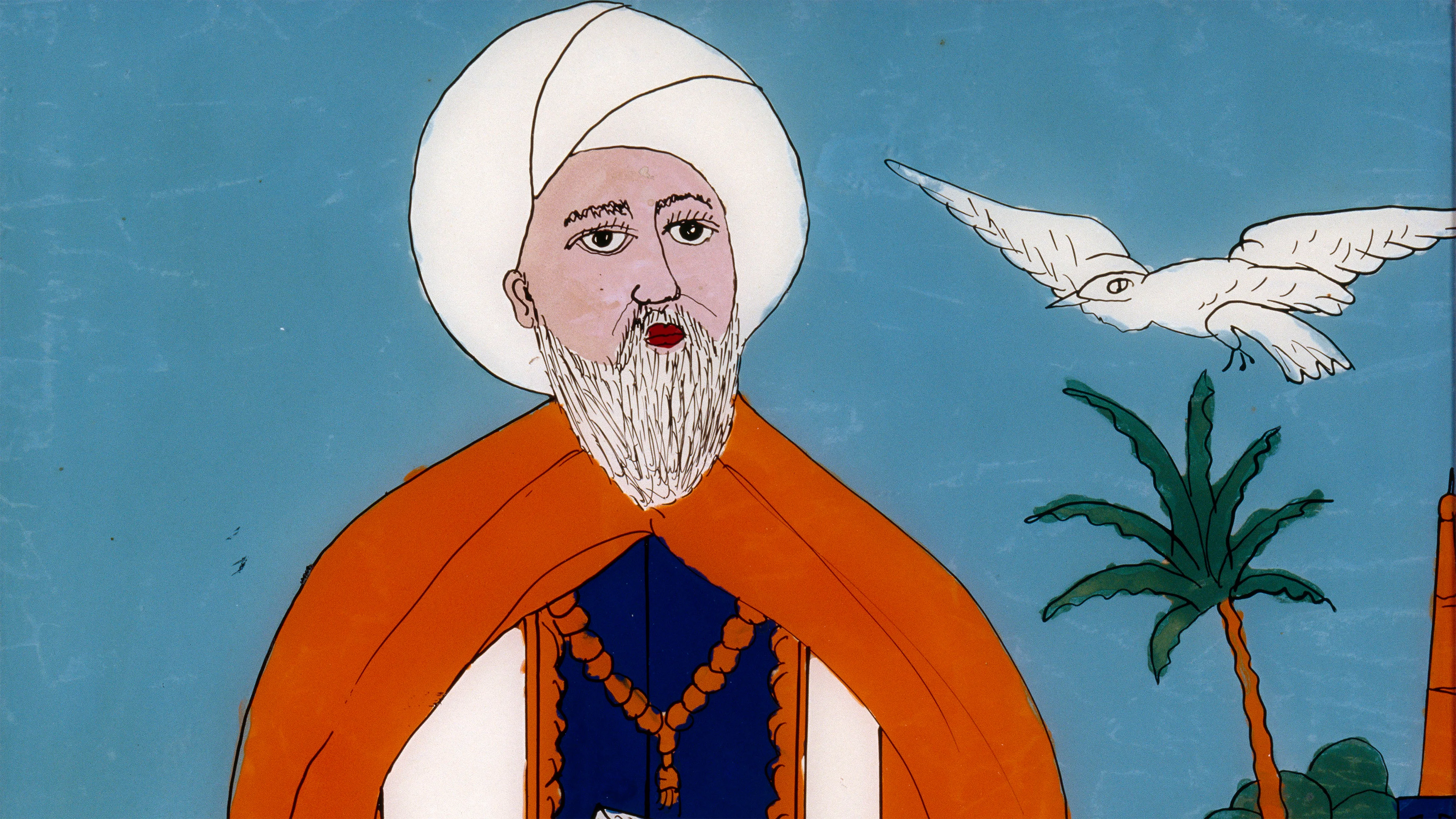
Standing at the center of a glass painting, Shaykh Ahmad al-Tijani (1737–1815), the founder of the Tijani order, is depicted with the posture of a holy man. Wearing an orange burnous over a djellaba, both traditional garments of the Maghrib, and a white turban marking his religious status, Ahmad al-Tijani has his hands joined in front of him and is holding a book. He is looking ahead in a pensive mode, an indication of his connection with the divine and higher spheres.
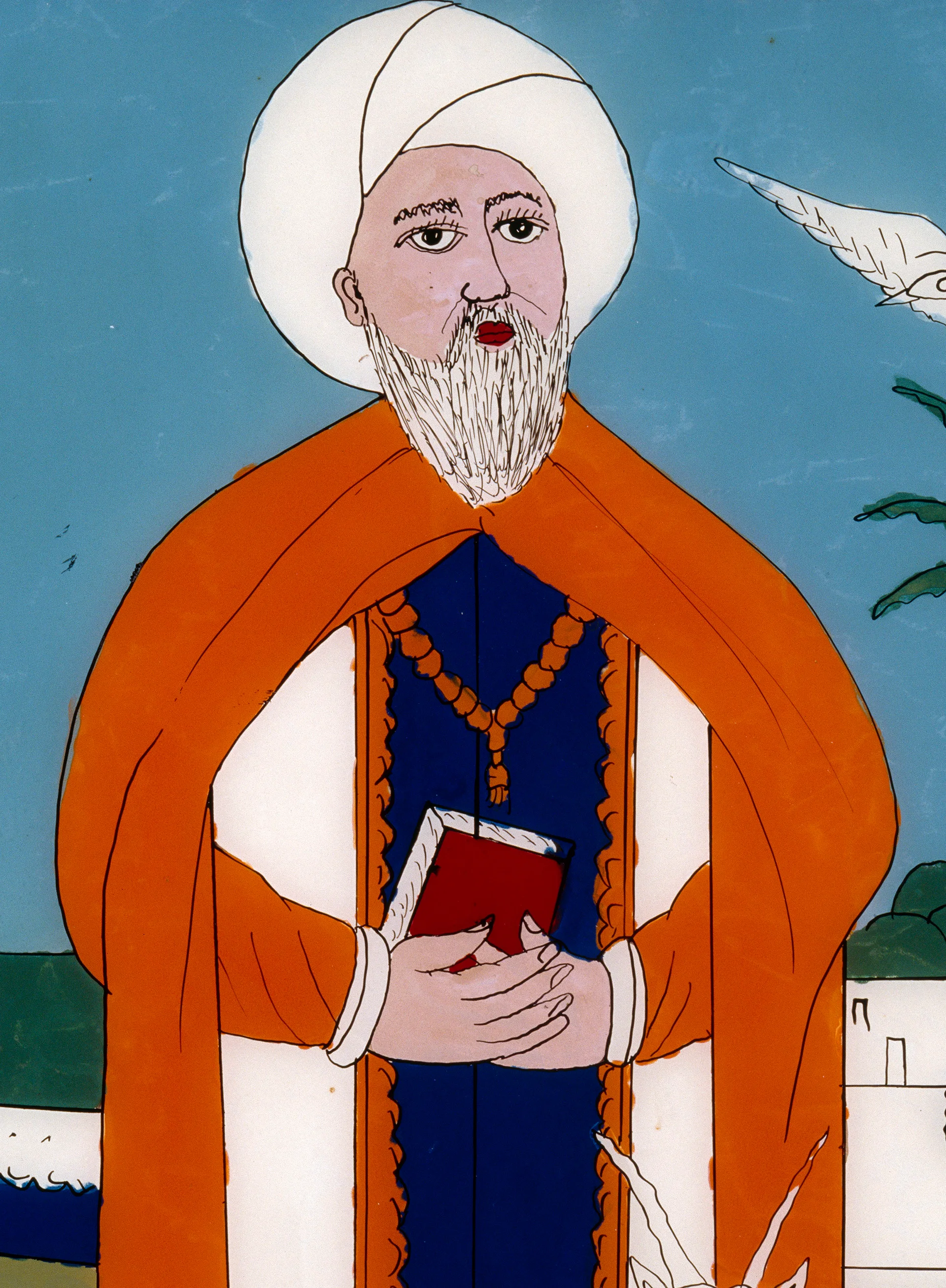
The landscape is plain with a stylized North African cityscape and a palm tree in the background. A gazelle, a Sufi symbol of spiritual yearning, stands by the saint’s side, and a flying bird in the sky represents the soul.
Back to the Original Model
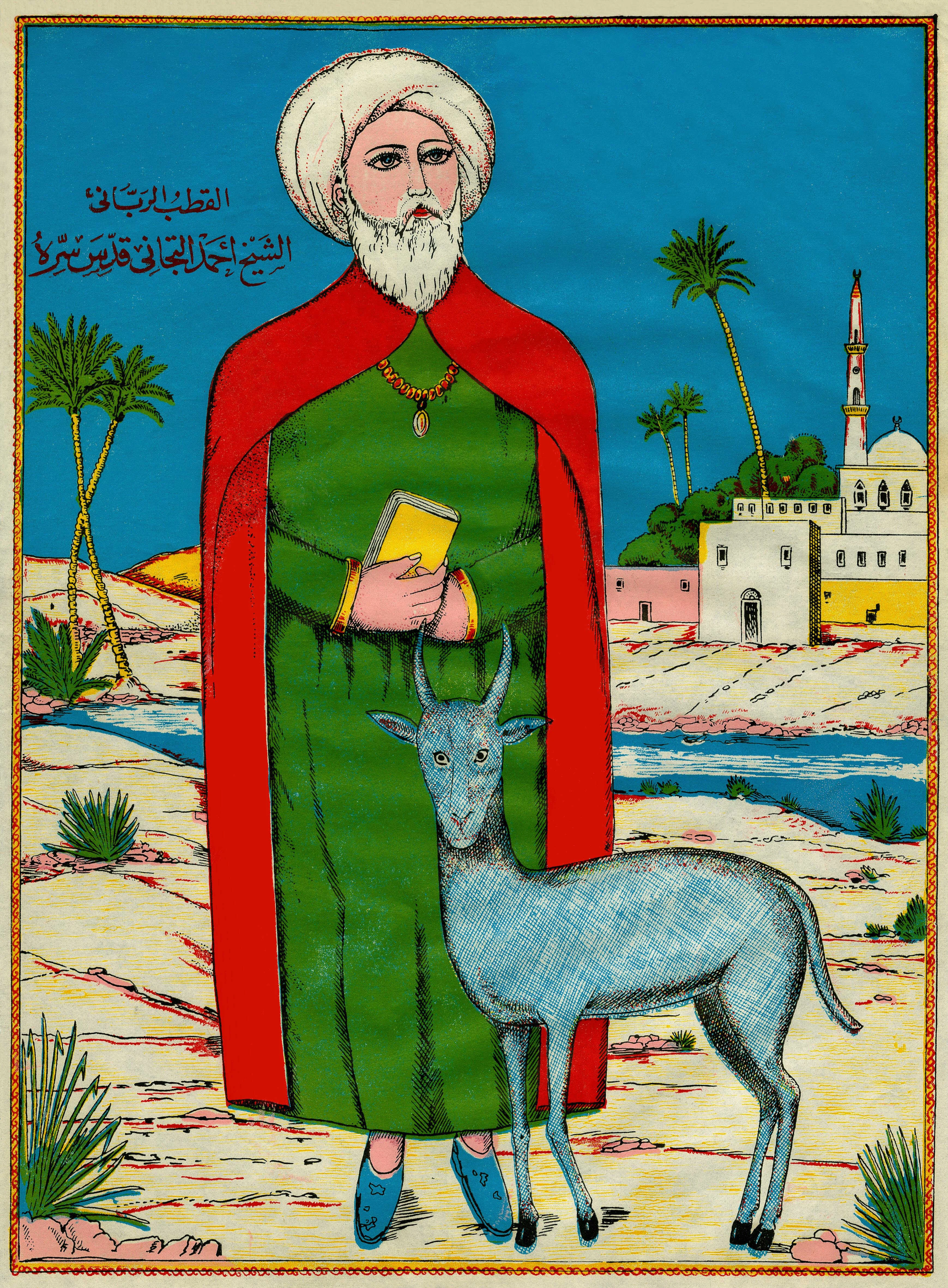
The glass painting, probably made in mid-twentieth-century Senegal, is based on a much older image, a chromolithograph of a portrait of Ahmad al-Tijani. Chromolithographs are colored images that are printed by using the lithographic process, whereby colors are inked separately on plates and then transferred to paper through a printing press. They were popular throughout the world circa 1900. The Senegalese artist of the glass painting may have been inspired by the image seen here that was made in a printing house in Tunisia, then under the French colonial mandate. Mass-produced, this type of popular Islamic imagery spread rapidly and became widely available around the globe.
© Leonard de Selva / Bridgeman Images.
Spot the Differences
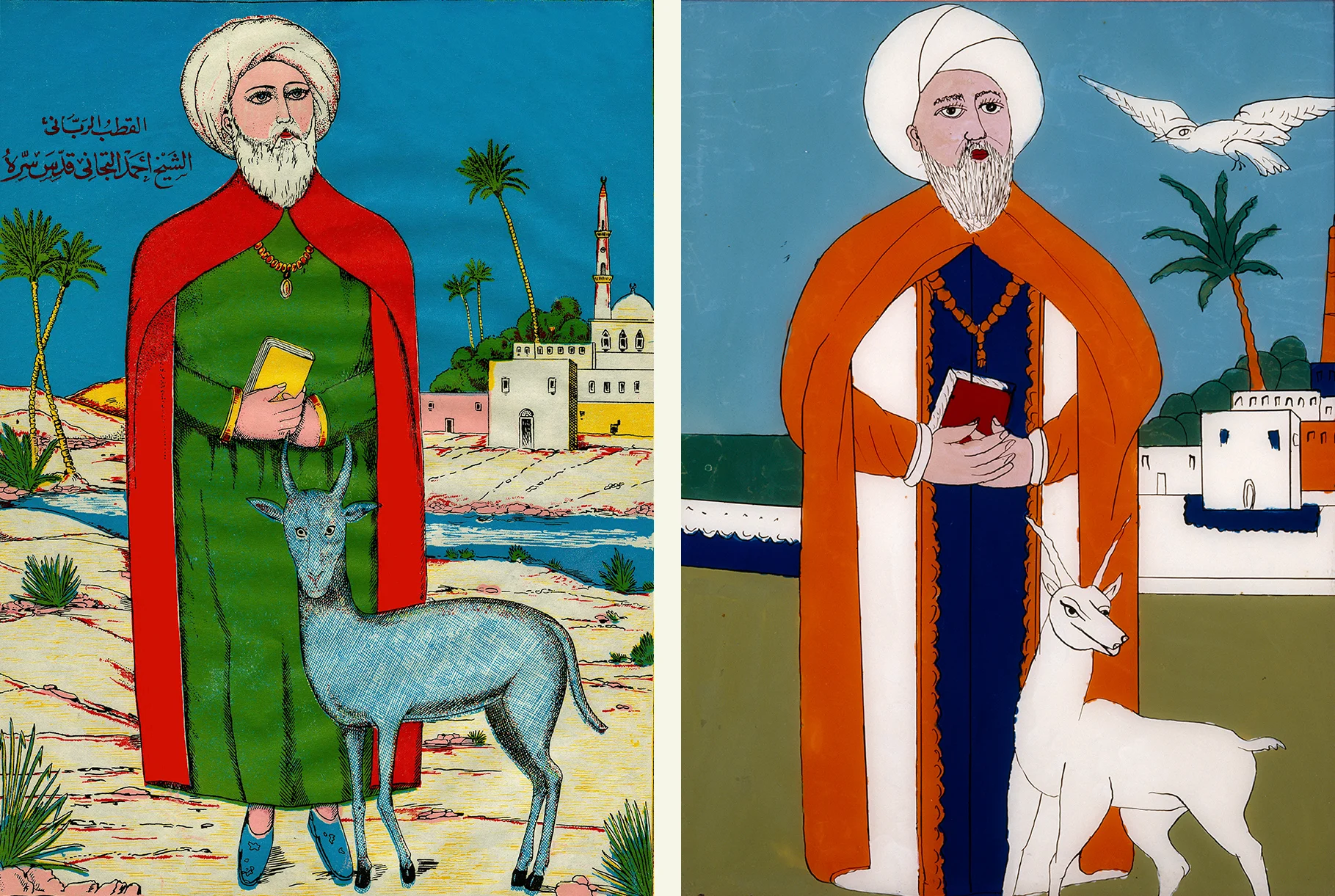
Differences in the style and the composition are noticeable in the two works, which may be a consequence of the multiple iterations between the time of their production. In other words, the Senegalese glass painting may be a copy of a copy of the Tunisian image, a process during which some elements were altered.
With the architecture in the background, the palm trees and a small lake, the semi-desertic landscape on the chromolithograph evokes an oasis, probably the town of Aïn Madhi in the south of Algeria, where Ahmad al-Tijani was born. On the glass painting, the water is not depicted and the background is entirely green, making the reference to Aïn Mahdi no longer comprehensible.
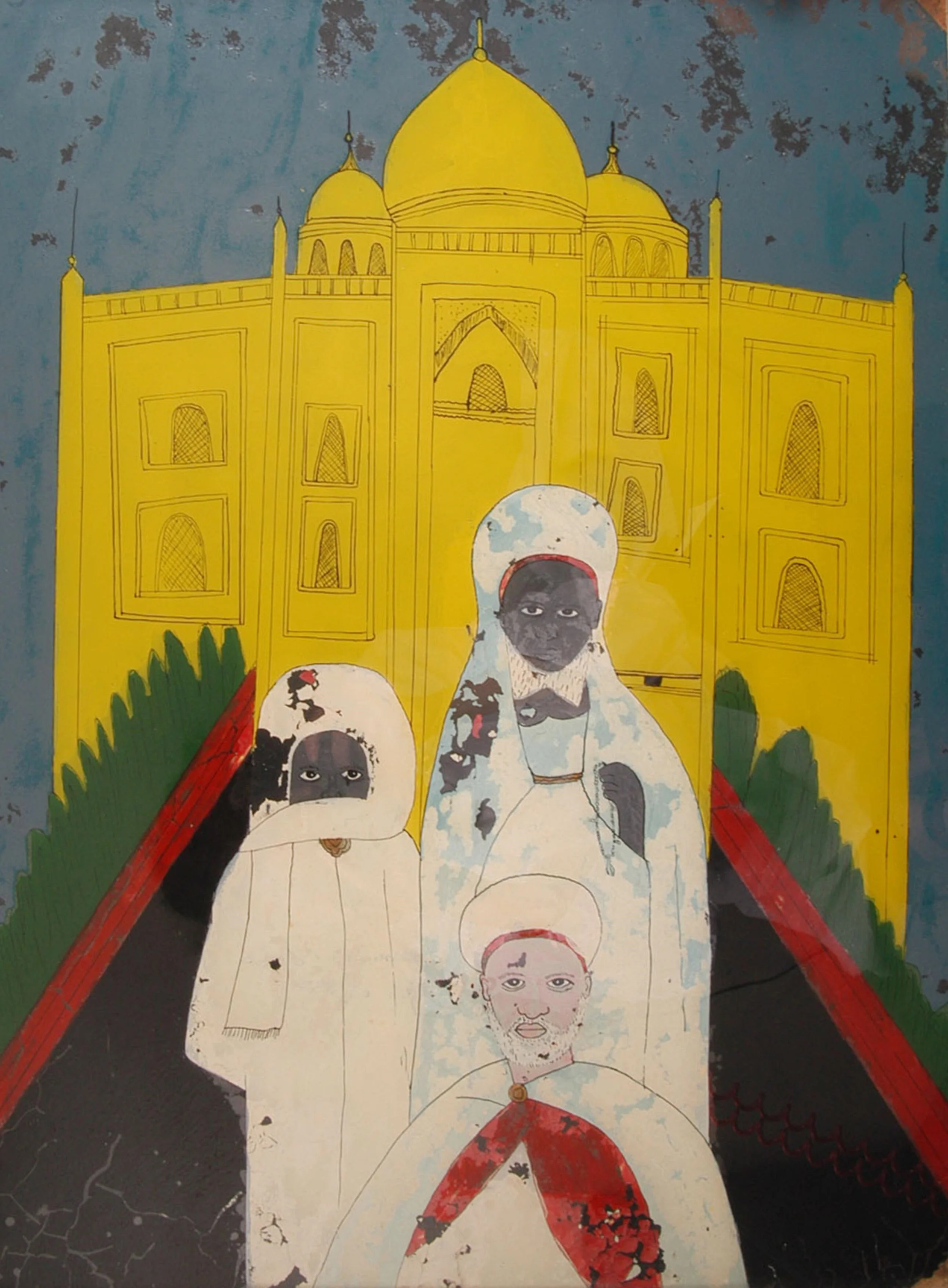
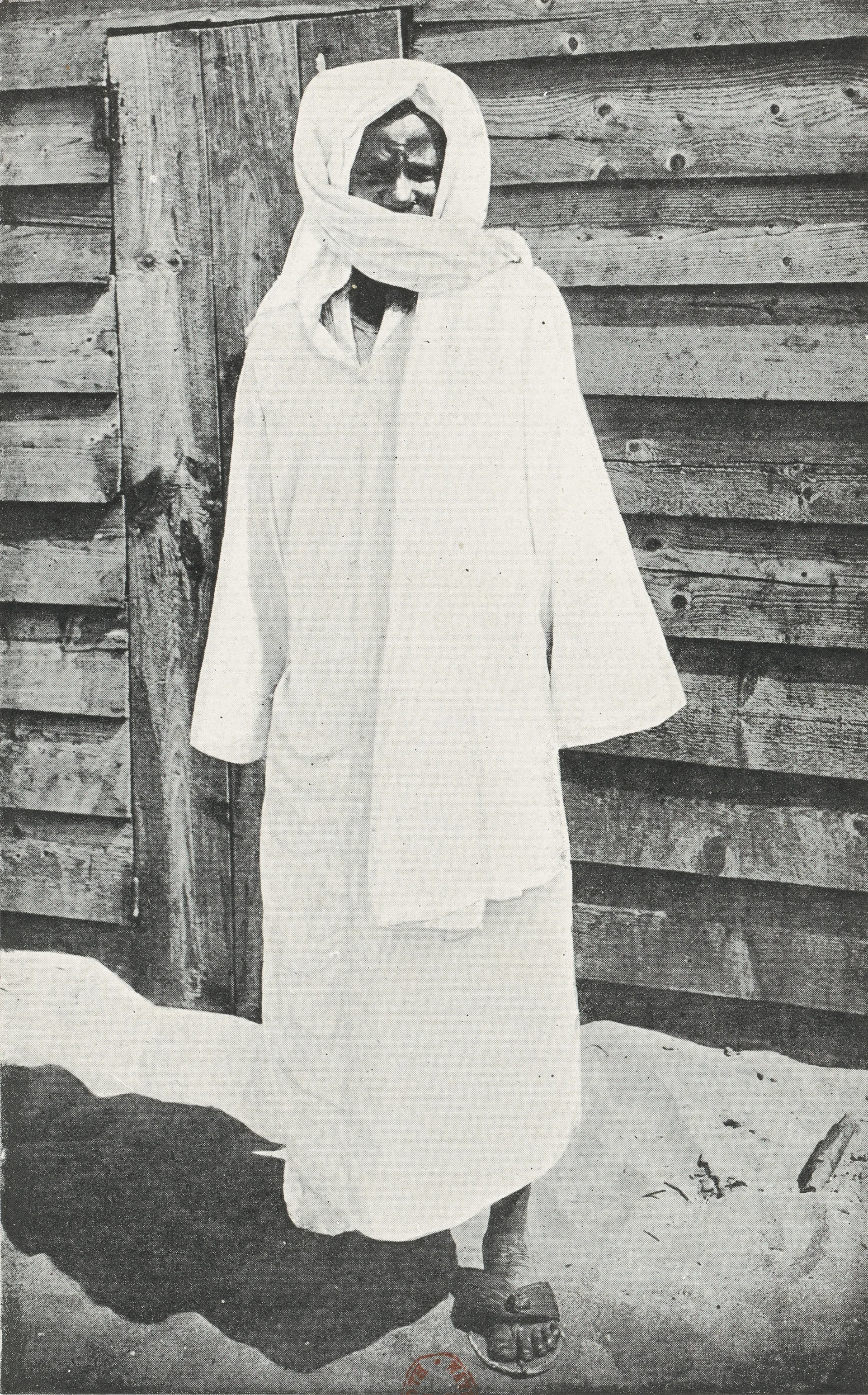
Glass painting became one of the favorite mediums for religious images in West Africa, particularly in Senegal in the twentieth century. In this group portrait, the depiction of Shaykh Ahmad al-Tijani in the foreground, who appears to be seated, was inspired by the above-mentioned Tunisian chromolithograph and its later Senegalese glass painting adaptation. Standing straight behind Shaykh Ahmad al-Tijani is El-Hadj Malick Sy, the founder of a Tijani order’s sub-branch in Senegal in 1902. On the left is Amadou Bamba (1850–1927), a Sufi saint, poet, teacher, and hero of the cultural resistance against the French colonial administration. He is represented in a white robe with the scarf on his head and over the lower part of his face.
© RMN-Grand Palais / Art Resource, NY
A Pacifist Sufi
Shaykh Amadou Bamba founded the Muridiyya, an order he established in Touba, Senegal, in 1883. His portrait on the group glass painting is based on the photograph published in Paul Marty’s Études sur l’Islam au Sénégal (Studies on Islam in Senegal), published in 1917. This is the only surviving image taken before Bamba’s exile to Gabon and Mauritania and was subsequently used as the sole model to represent the saint’s likeness.
Courtesy of Bibliothèque nationale de France, Paris.
Iconic Figures
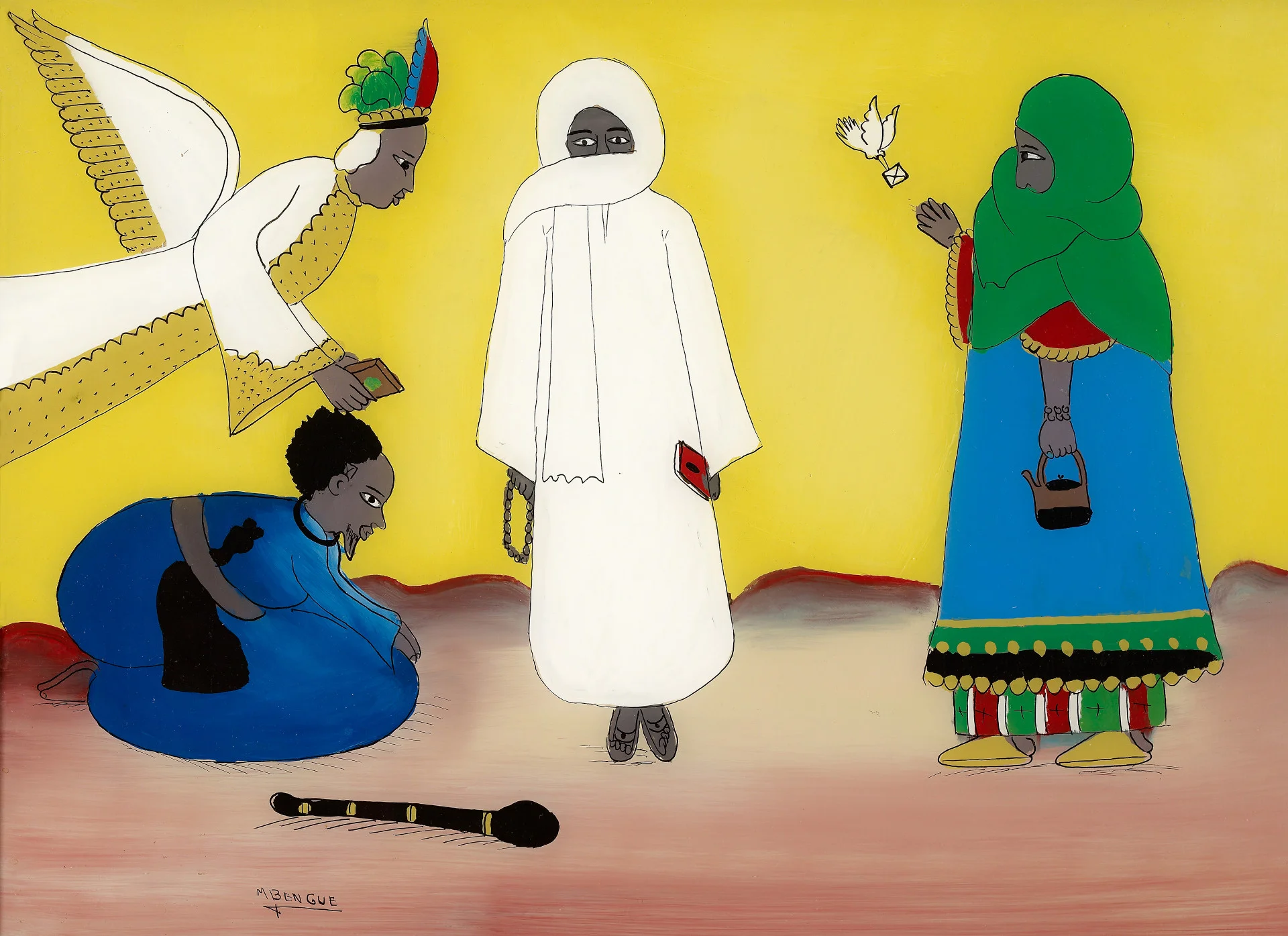
Used for reproducing and disseminating portraits of famous men and Sufi leaders, these painted images became ubiquitous and were displayed in homes, cars, and public spaces to serve as constant reminders of the saint and his deeds. This tradition continues to the present day, as shown on a glass painting by Gora Mbengue (d. 1988), an artist active in Gorée, Senegal, and whose work documents the life of Amadou Bamba. In every representation of the saint, his body is almost formless, and he appears ethereal in his immaculate white robes as if floating in the air with a scarf covering his head and half his face.
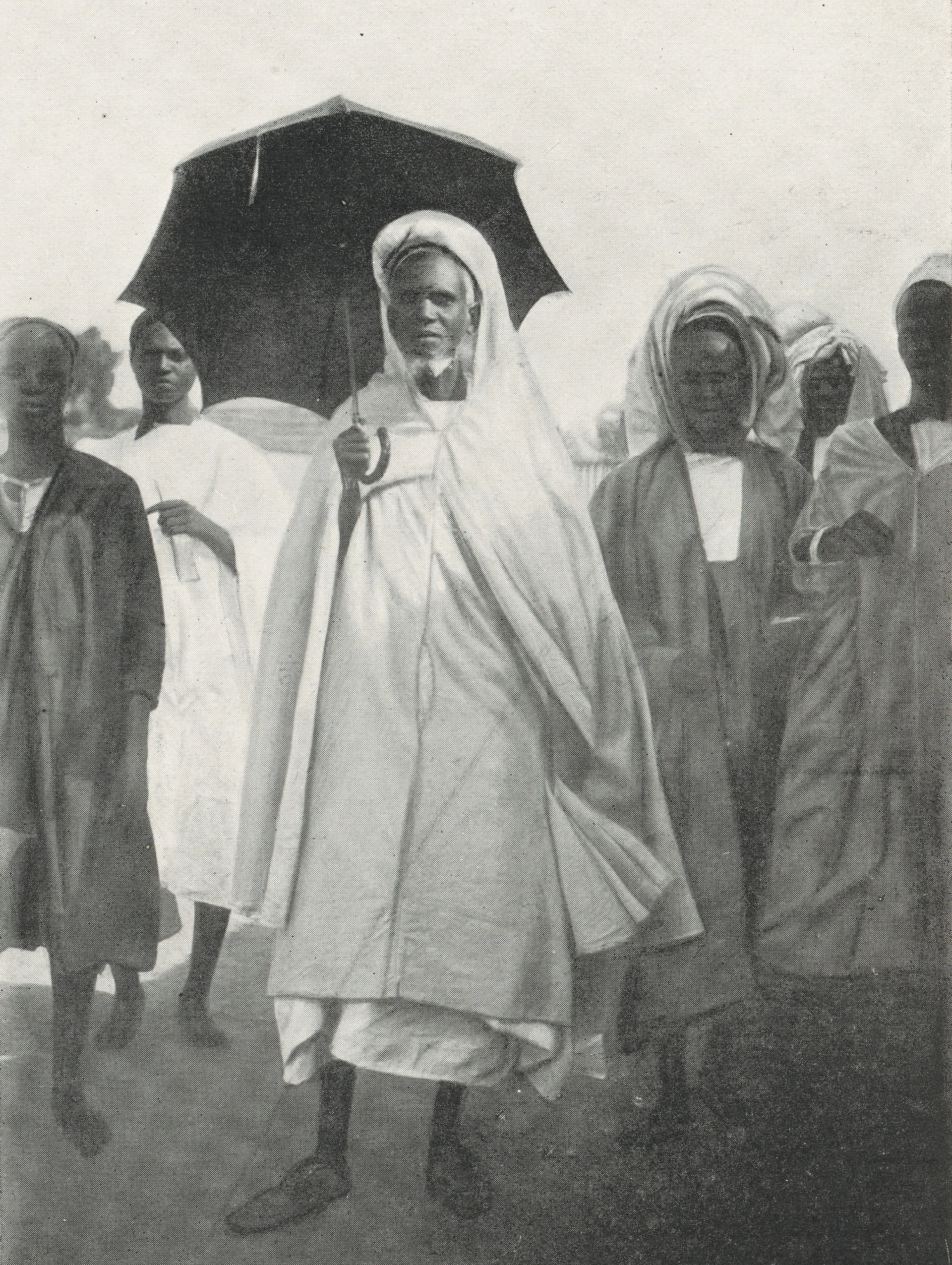
The figure next to Amadou Bamba behind Ahmad al-Tijani on the glass painting is El-Hadj Malick Sy. Like Bamba’s portrait, el-Hadj Malick Sy’s image is based on and almost identical to a photograph also published in Marty’s book. However, the artist of the glass painting removed the umbrella visible in the photograph. He still represented the saint’s right hand, which holds the umbrella. This gesture clearly identifies El-Hadj Malick Sy.
Courtesy of Bibliothèque nationale de France, Paris.
In his trio of saints, the painter did not simply reproduce photographic imagery or chromolithographs. Innovative in his approach, he combined the three Sufi shaykhs, even if Ahmad al-Tijani lived almost a century before Malick Sy and Amadou Bamba. Their presence together on the glass painting reinforces the devotional aspect of the image and infuses it with even more baraka.
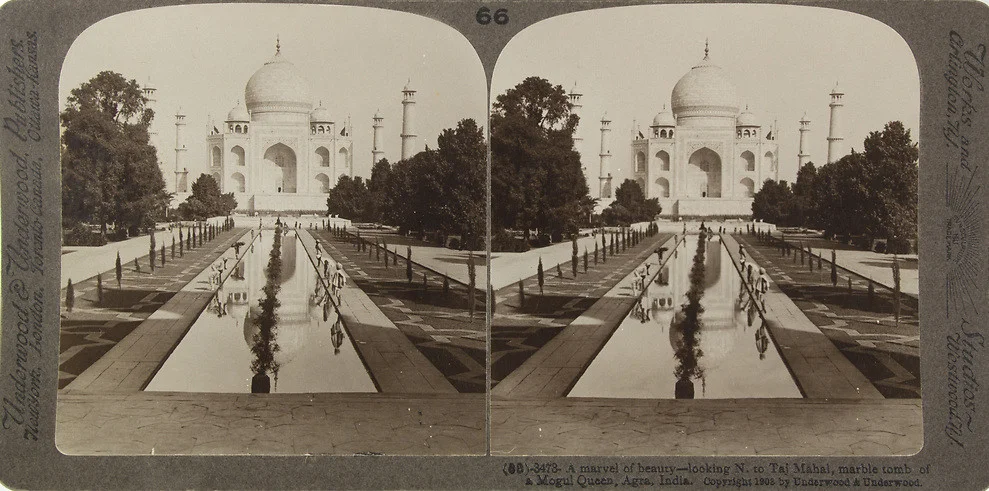
Another original characteristic of the painting is the use of stylized architecture in the background. The building is inspired by the Taj Mahal in Agra, India. Images of this monument, such as in this stereograph, circulated widely. By the mid-twentieth century, the Taj Mahal had become a familiar and iconic image around the world. Even if the building’s minarets were removed from the painting, the architectural representation retains its Islamic character thereby reinforcing the three sitters’ Muslim identity. Finally, the structure functions almost like a gold halo, highlighting the saintly character of Ahmad al-Tijani, El-Hadj Malick Sy, and Amadou Bamba.
Fez Morrocco
Objects
Explore the map or scroll to select an object.