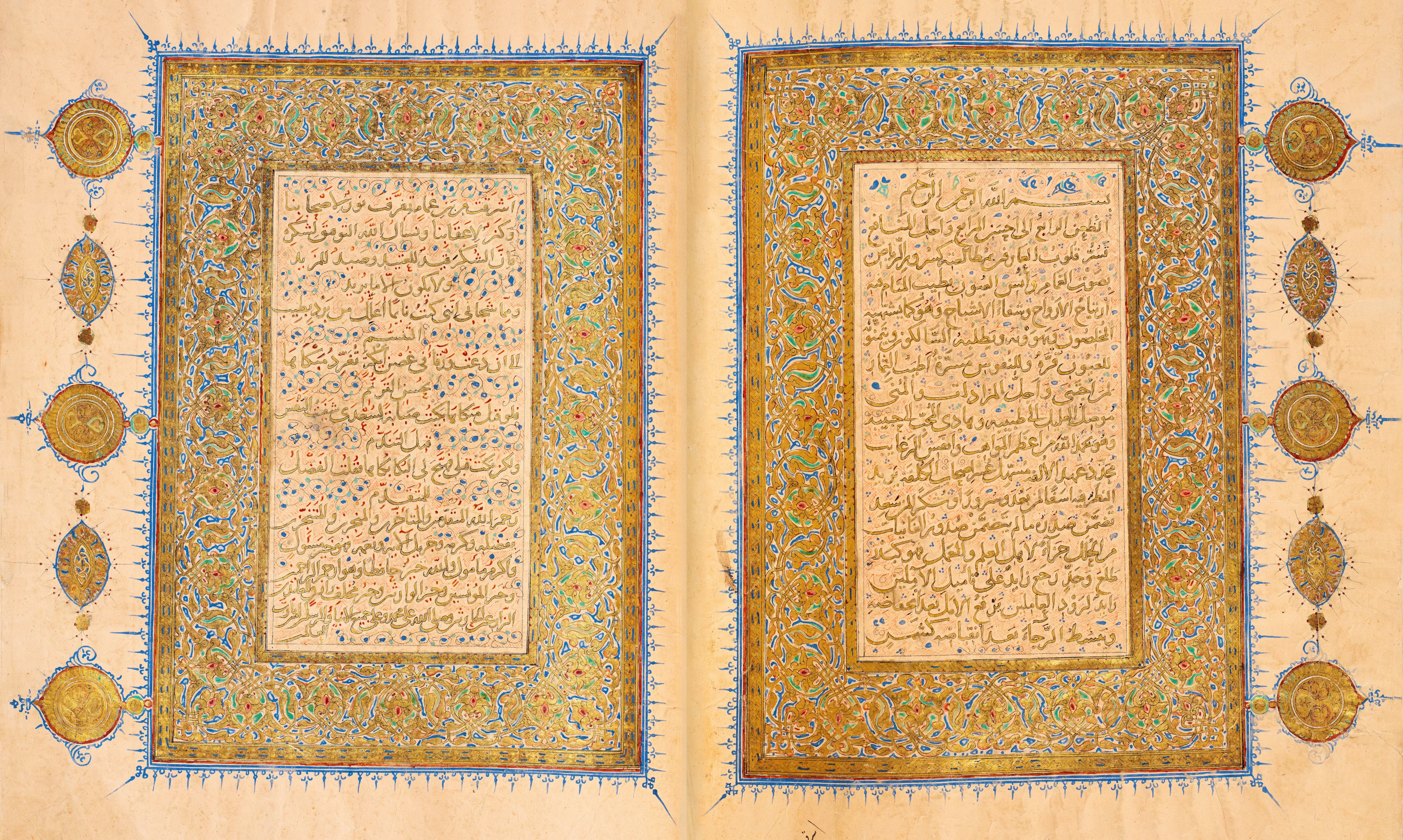
An Early Copy of Rumi’s Masnavi
Copied by Muhammad al-Waladi
Türkiye, Konya, Rum Seljuk period, 1278
Gold, ink, and watercolor on paper
Türkiye, Konya, Mevlana Museum, Acc. N. 51.
The Masnavi-yi ma‘navi (Spiritual Couplets) by Jalal al-Din Rumi (1207–1273) is considered one of the greatest literary works of the Islamic world. It is written in Persian and in rhyming couplets, hence the term masnavi, which refers to the particular poetic form and allows for the composition of long and elaborate narratives.
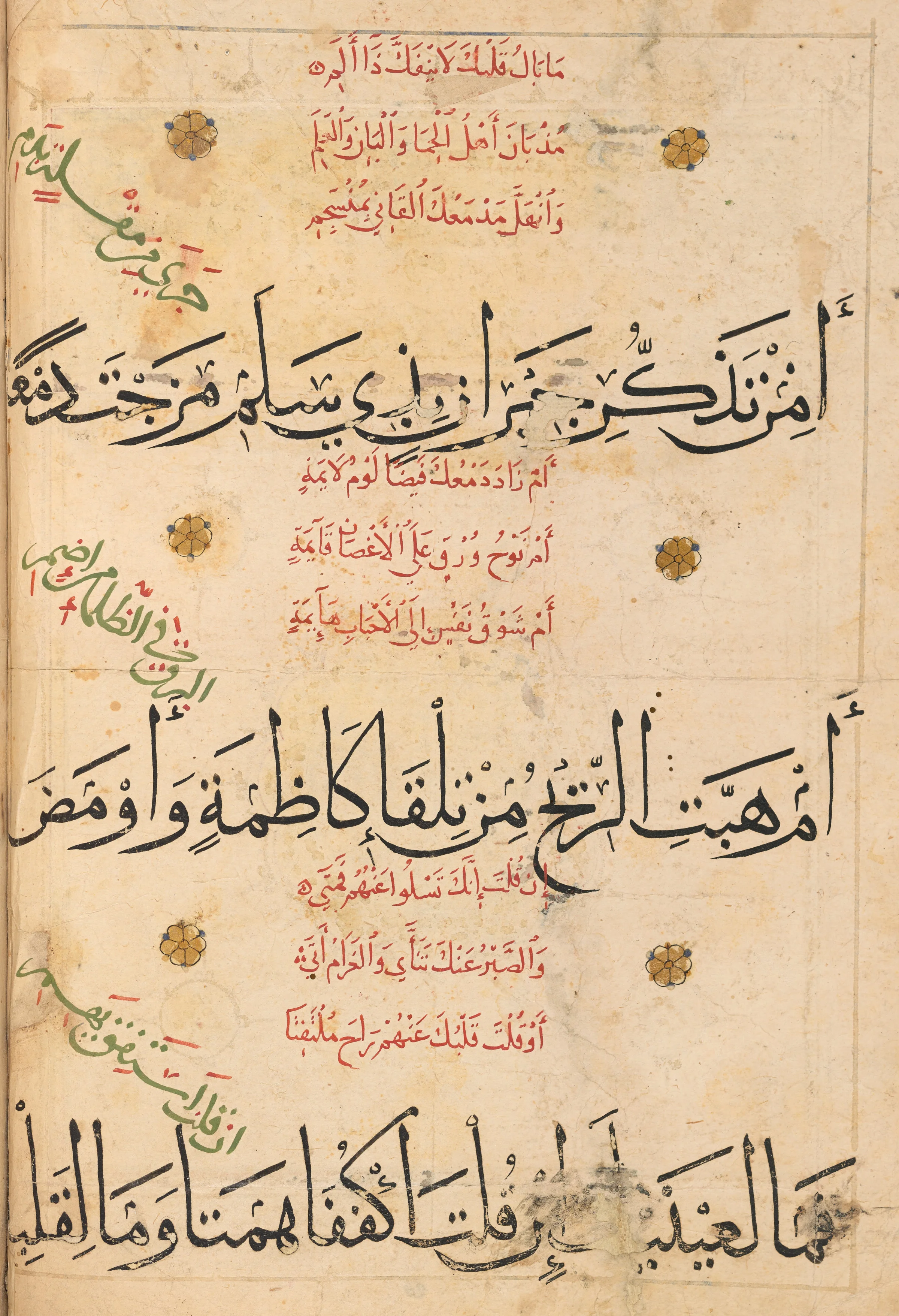
While no autograph copy is known, the earliest surviving Masnavis were transcribed not long after Rumi’s death and are kept in his shrine in Konya, now called the Mevlana Museum. Among these volumes, one stands out for its size, measuring 48.5 × 33.5 cm. Dated to 1278, it was probably commissioned by a royal or princely member of the Rum Seljuk dynasty (1037–1307), which ruled over Anatolia and whose capital was Konya. Based on a copy corrected by Rumi himself, this volume is also the first definitive edition of the Masnavi.
Lavish Decorations
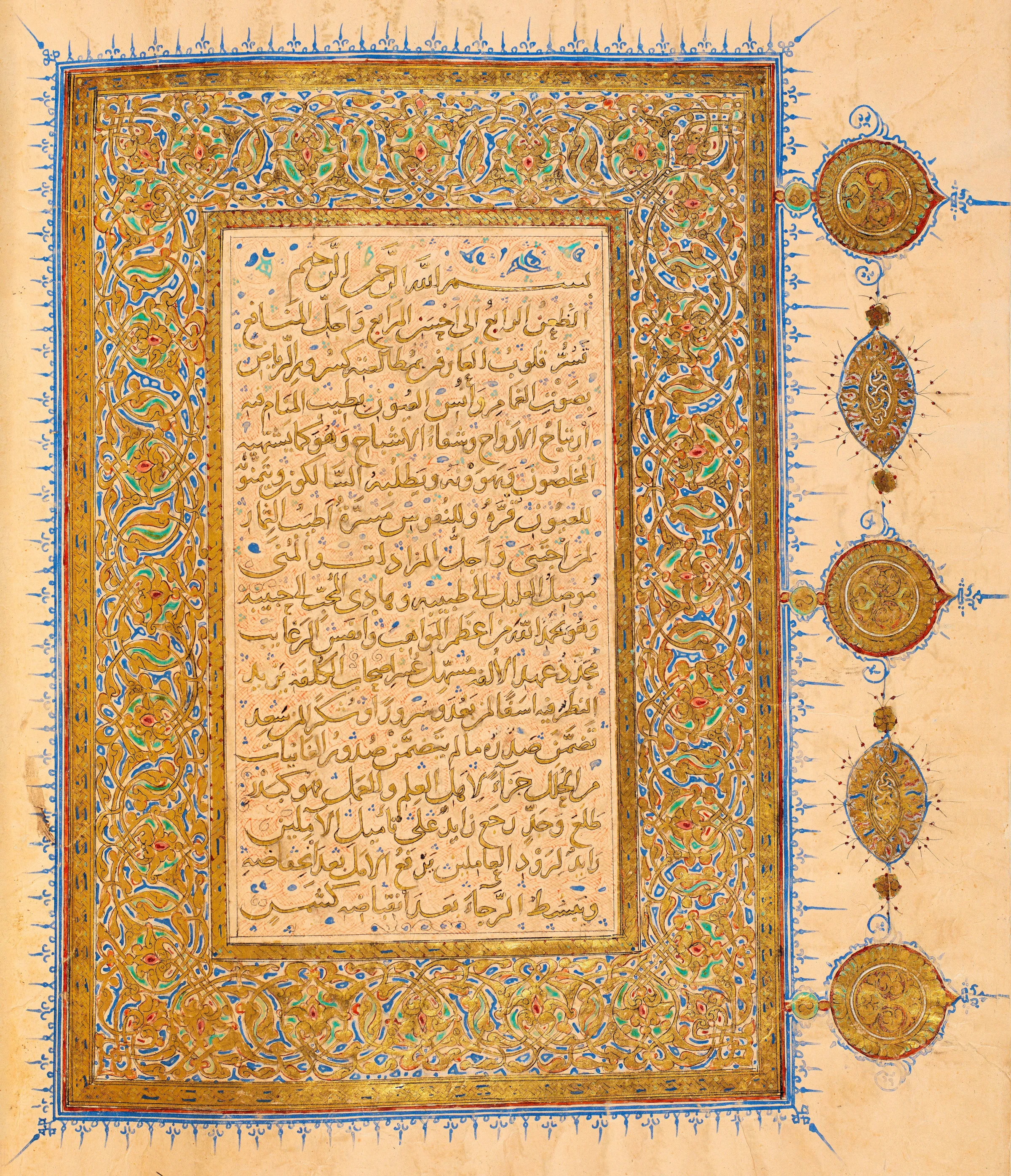
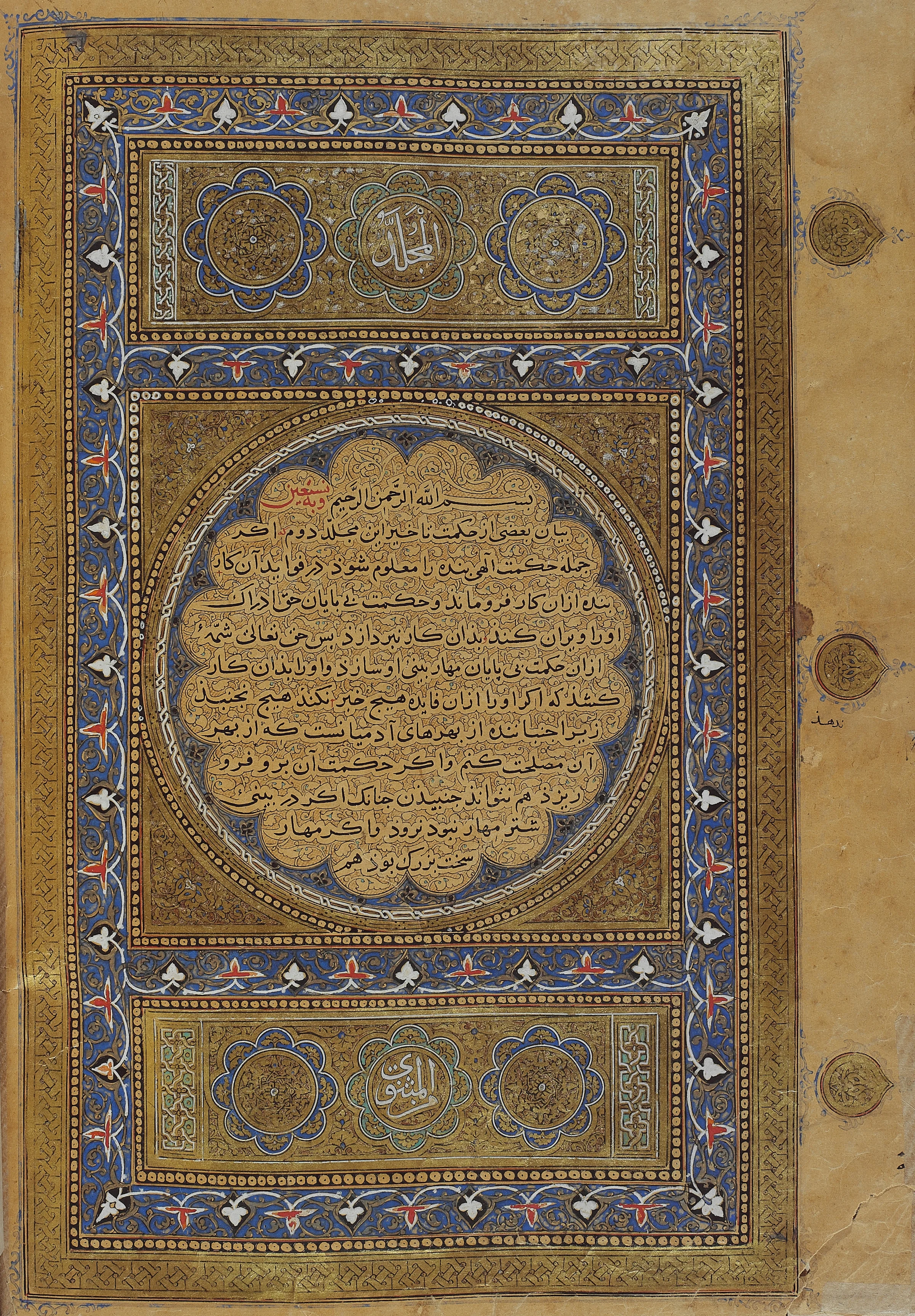
One of the outstanding characteristics of this volume is its profuse use of illumination. Each of the six books, also called chapters, that compose the Masnavi is introduced with a sequence of richly embellished folios with different but related layouts and designs.
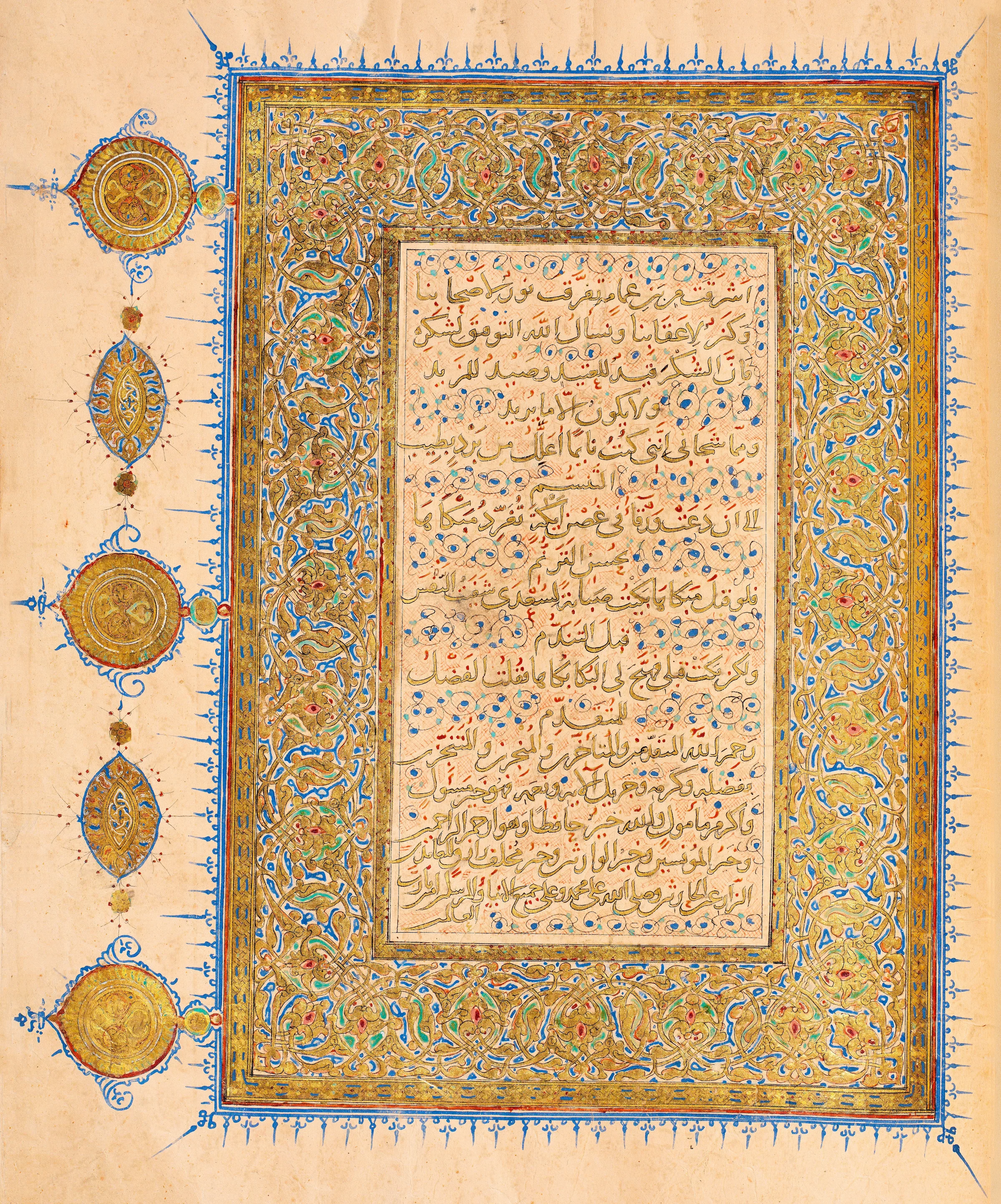
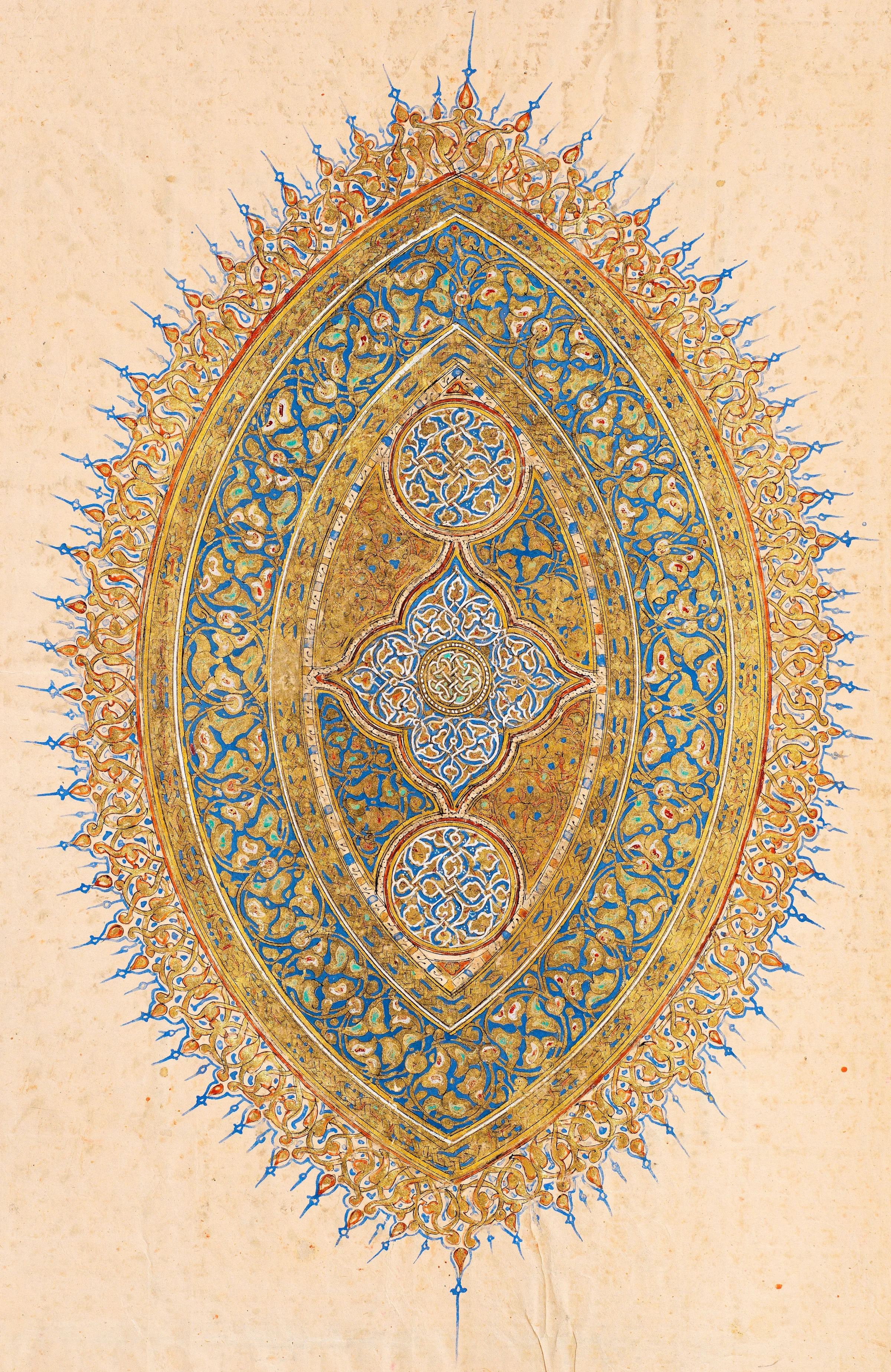
Using a predominantly gold palette, the artist has added accents of blue, green, and red in a subtle variety. To create the gold, thin layers of gold leaf would be pounded into powder and mixed with gum arabic. The mixture was then added to the surface.
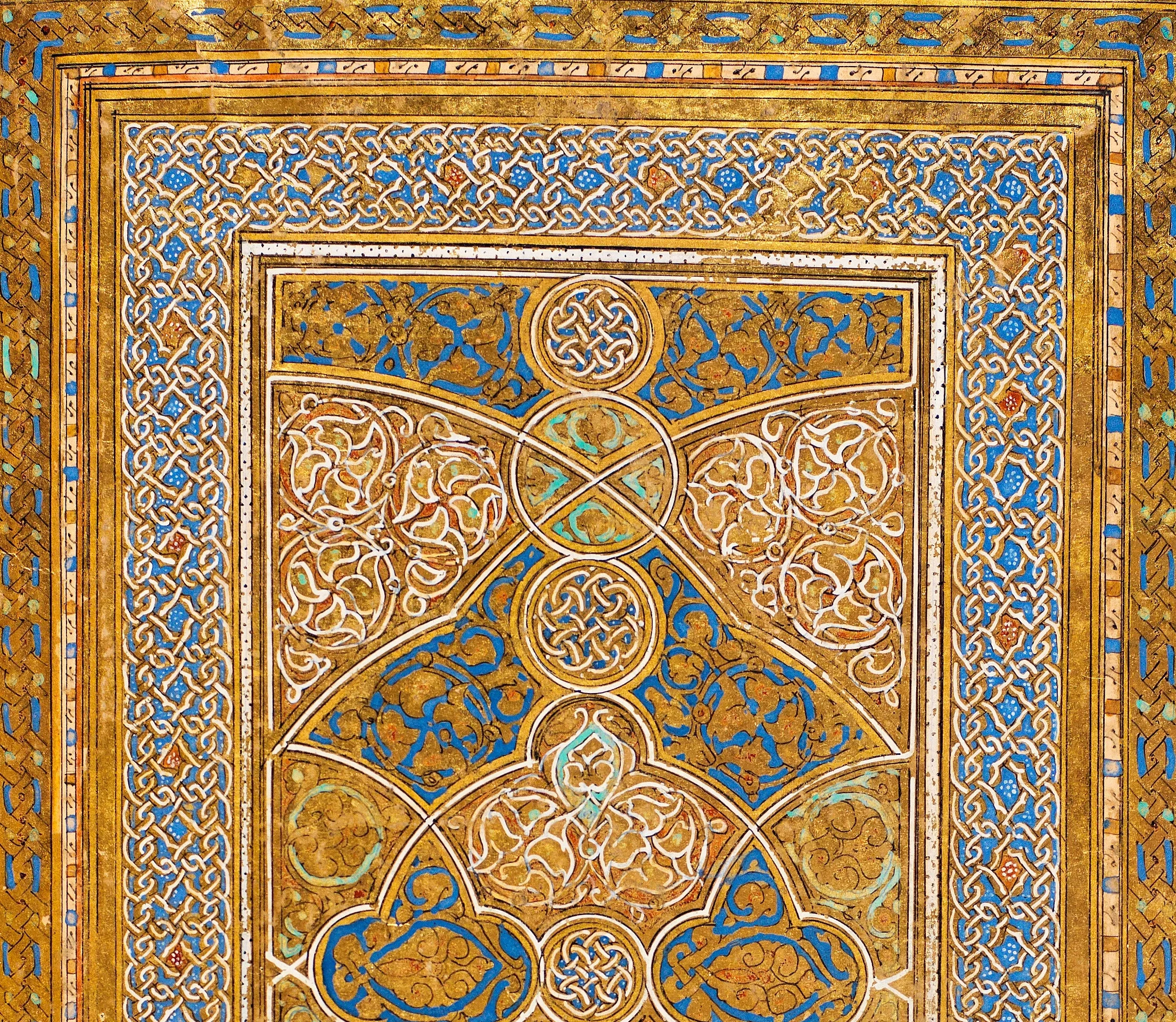
The other colors were derived from minerals and plants; they were also ground into powder, mixed with gum arabic, and applied with a brush.
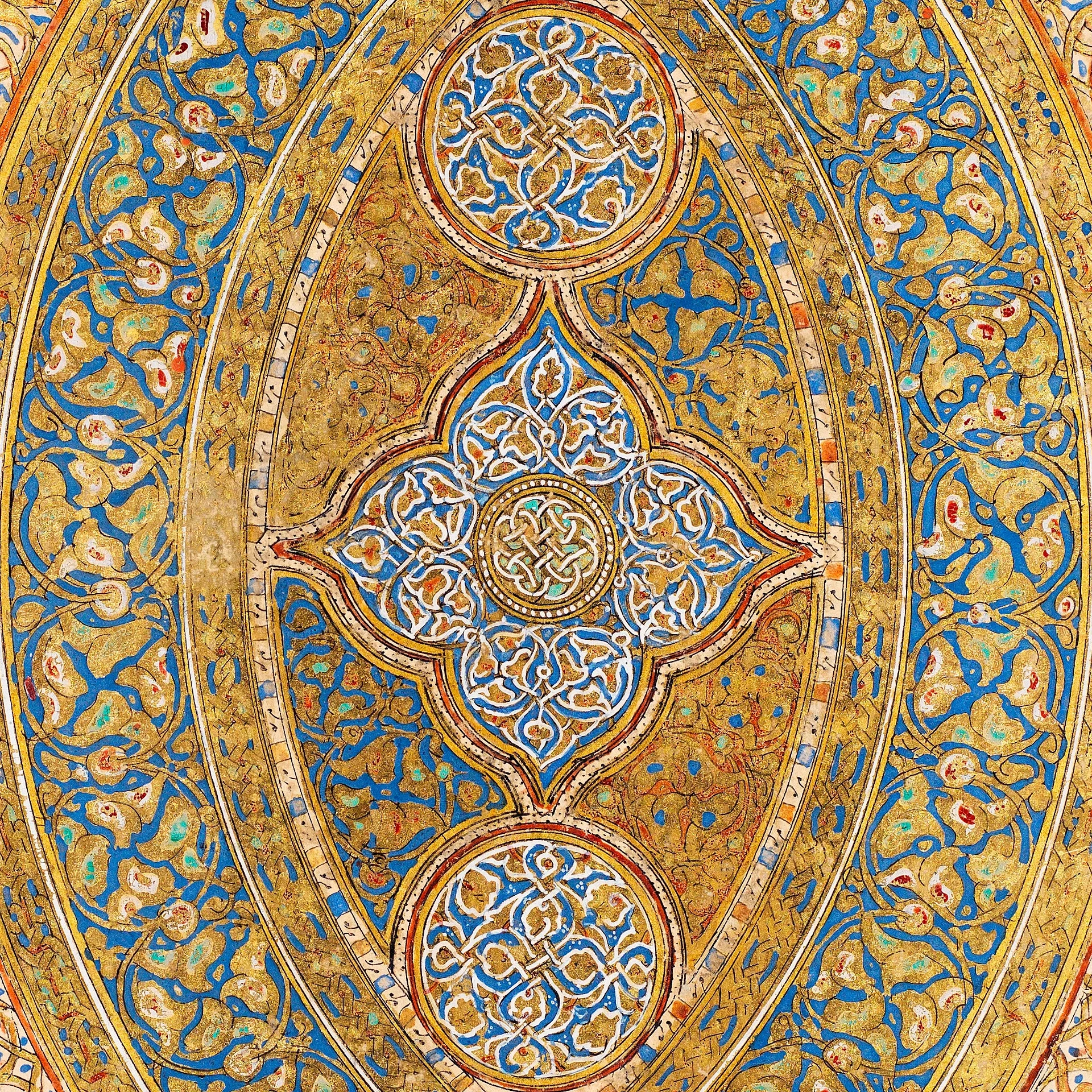
A page with a pair of almond-shaped illuminated medallions (referred to as “mandorla” in the West) marks the beginning of each book of this Masnavi. The motif combines gold with different shades of blue, while red has been used as an outline or accent.
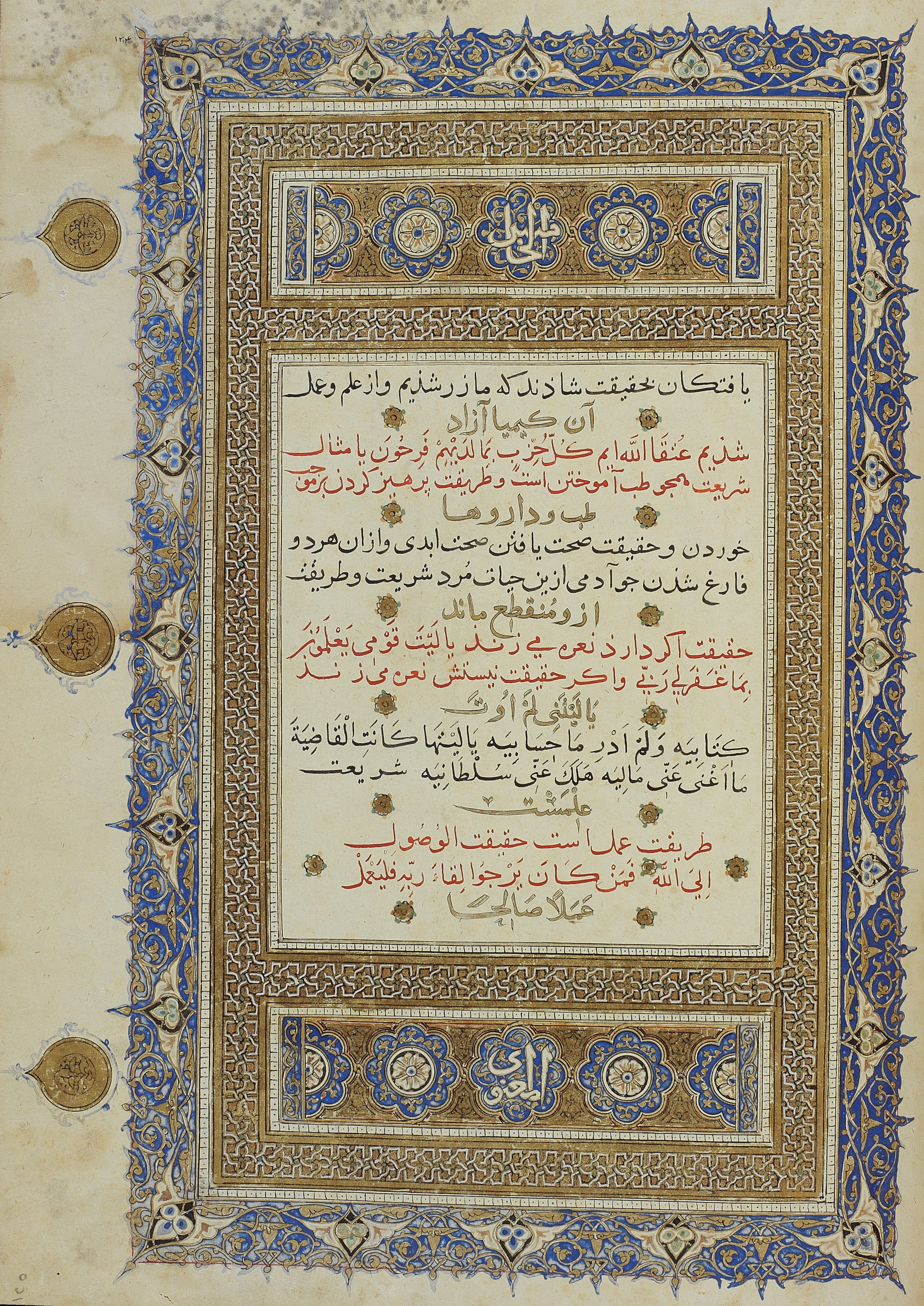
The illumination on the next double-page occupies the entire text field. In addition, alternating round- and oval-shaped medallions appear in the outer margins and further enliven the page.
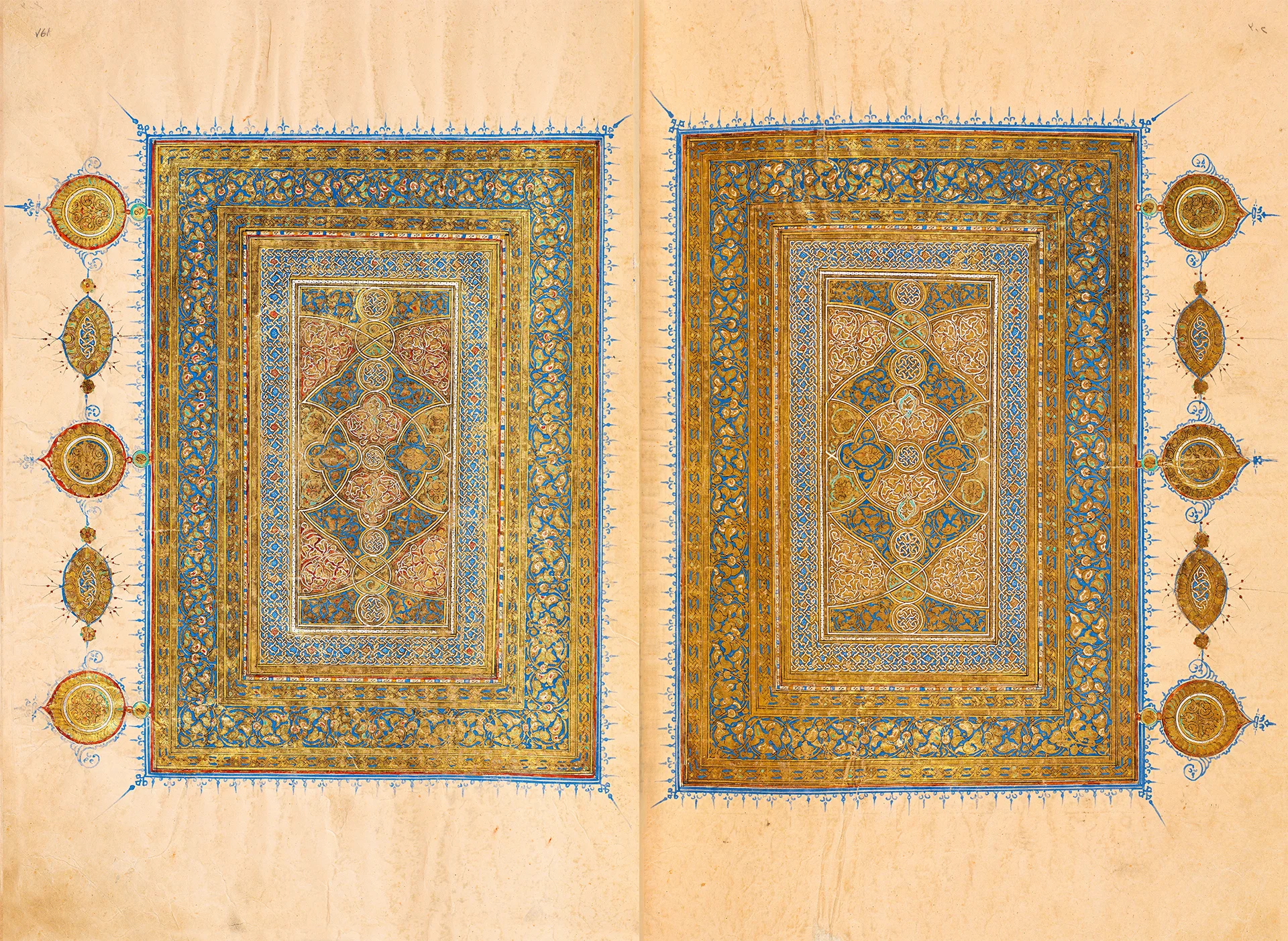
Using once again a palette of gold with blue and red highlights, the overall design, and especially the marginal motifs, recall contemporaneous Qur’ans, where the roundels indicate text divisions. In the Masnavi, they are purely decorative but underscore the status of the text.
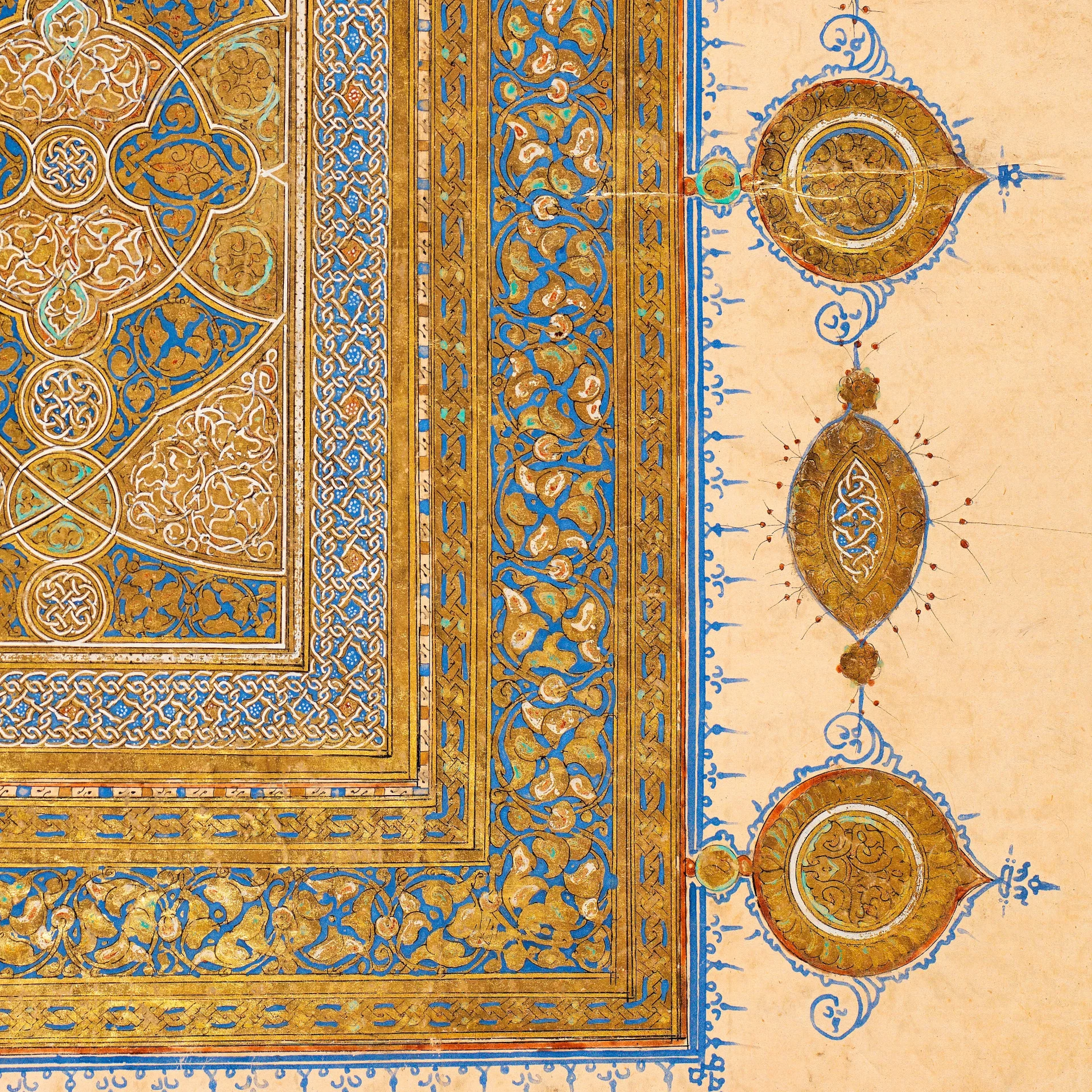
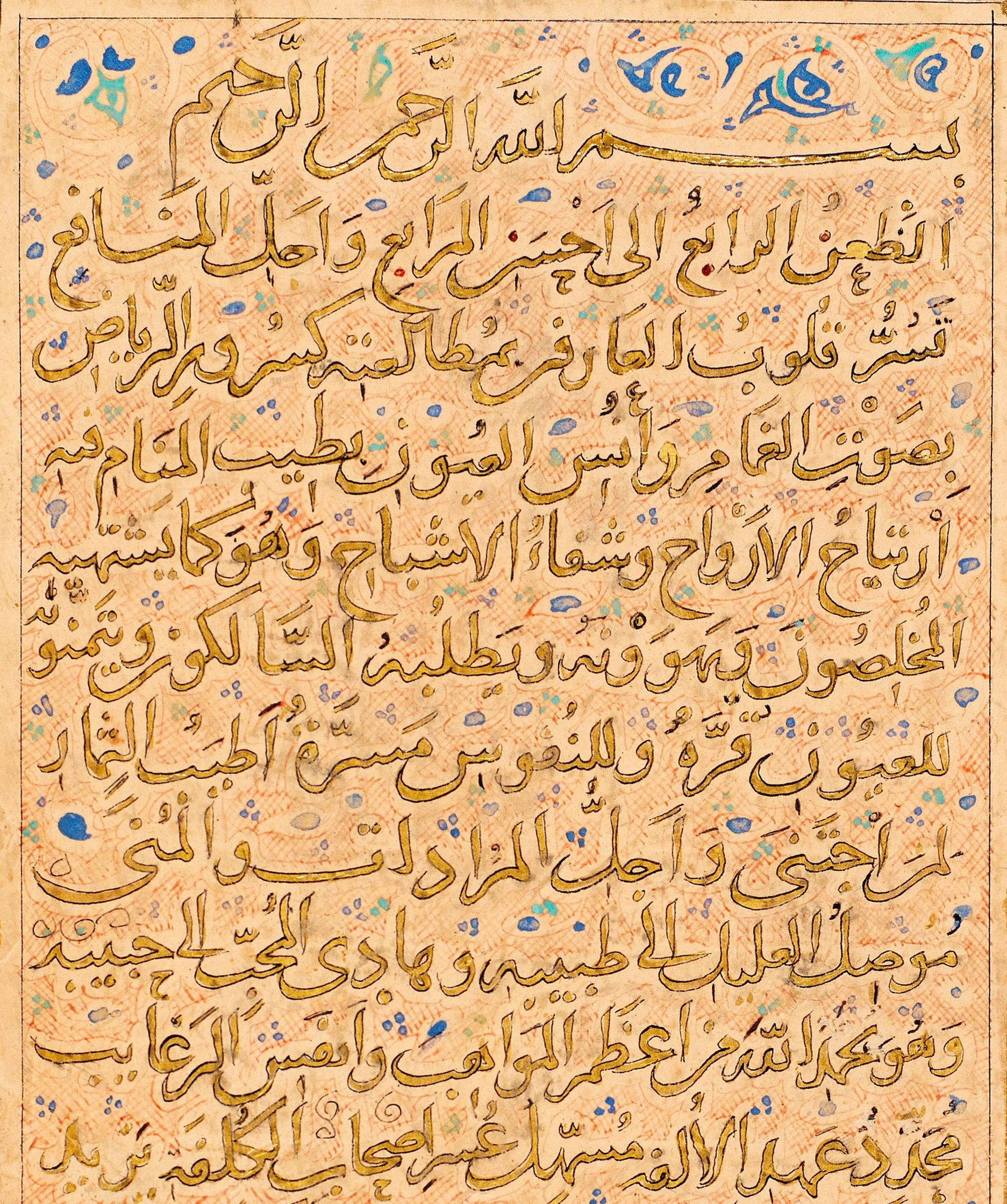
An introductory text in the form of a short preface follows the decorated double-pages. Spread across two pages, it is set in an illuminated frame, which draws on the same palette and design features that appear in the previous illuminated folios. Decorative marginal roundels also embellish this double-page, once again echoing the illumination found in Qur’anic manuscripts.
To draw even greater attention to the text, it is written in gold ink and in a script known as tawqi’, one of the so-called six scripts used for copying the Qur’an.
Elaborate Layout
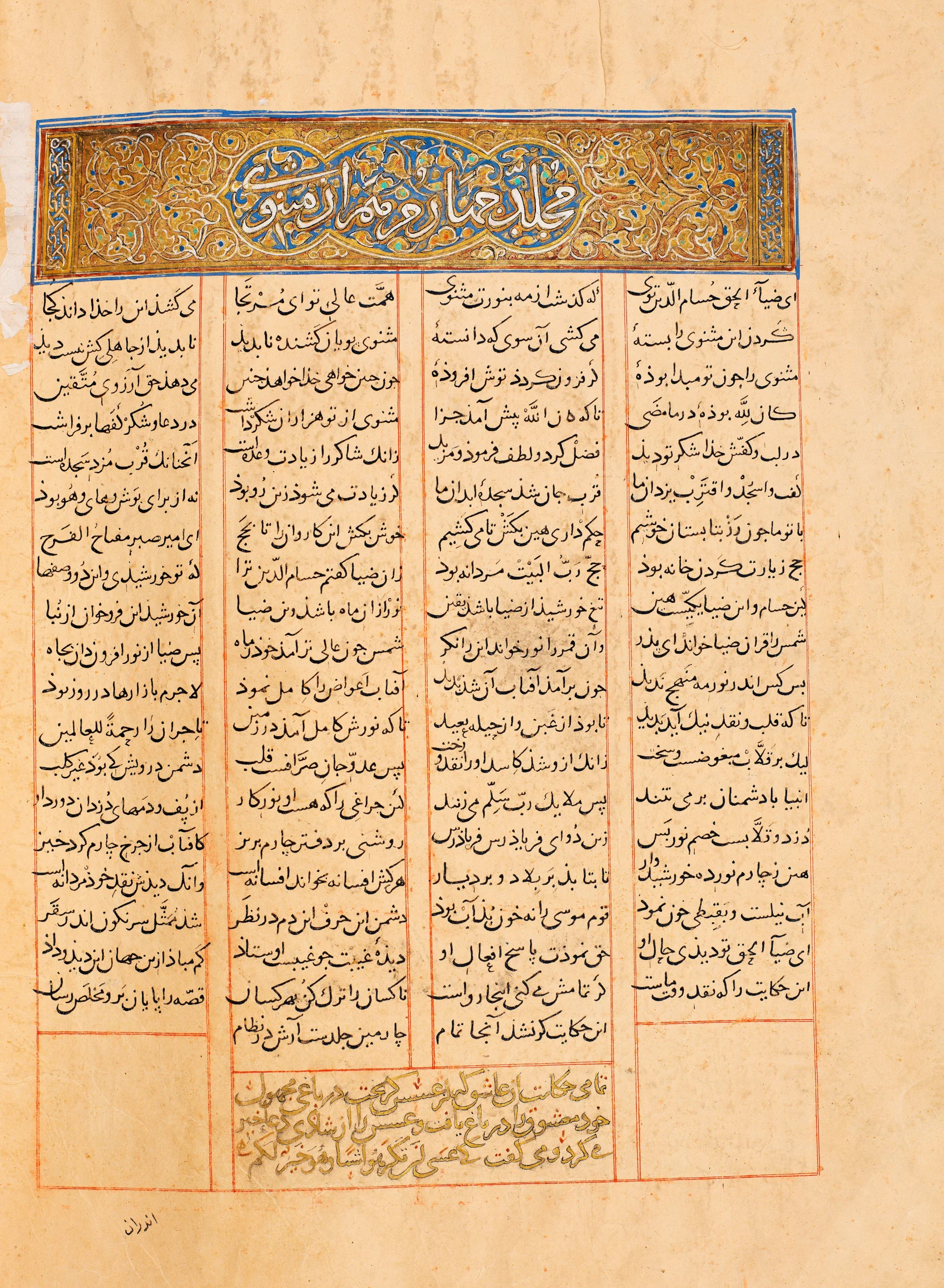
Chapters open with an illuminated band at the top, which includes the title copied in white thuluth, another type of Qur’anic script.
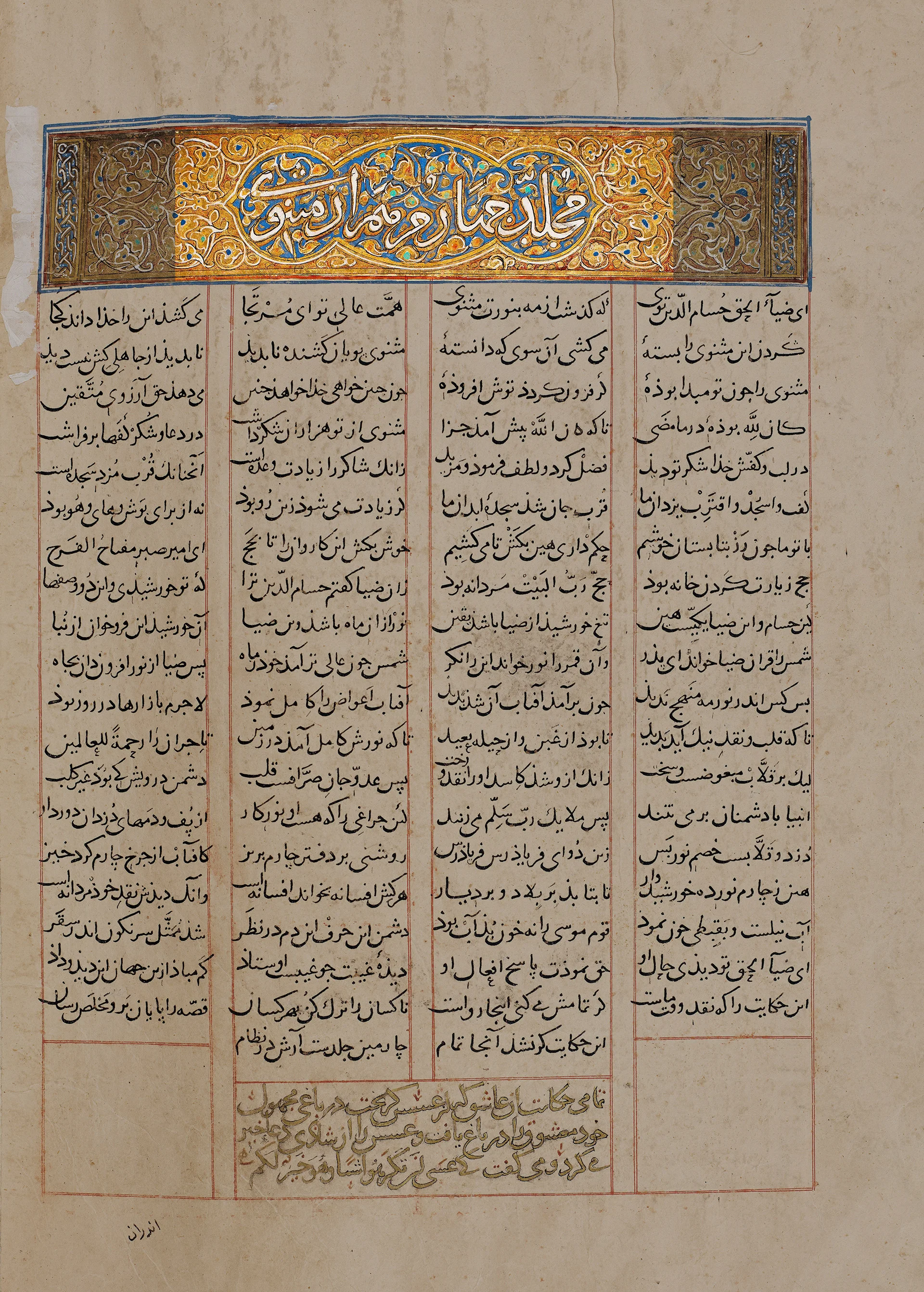
The text of the Masnavi is written in four columns in black ink in naskh script, widely used also for the Qur’an. Each column contains half a verse, and the four are read from right to left across the columns.
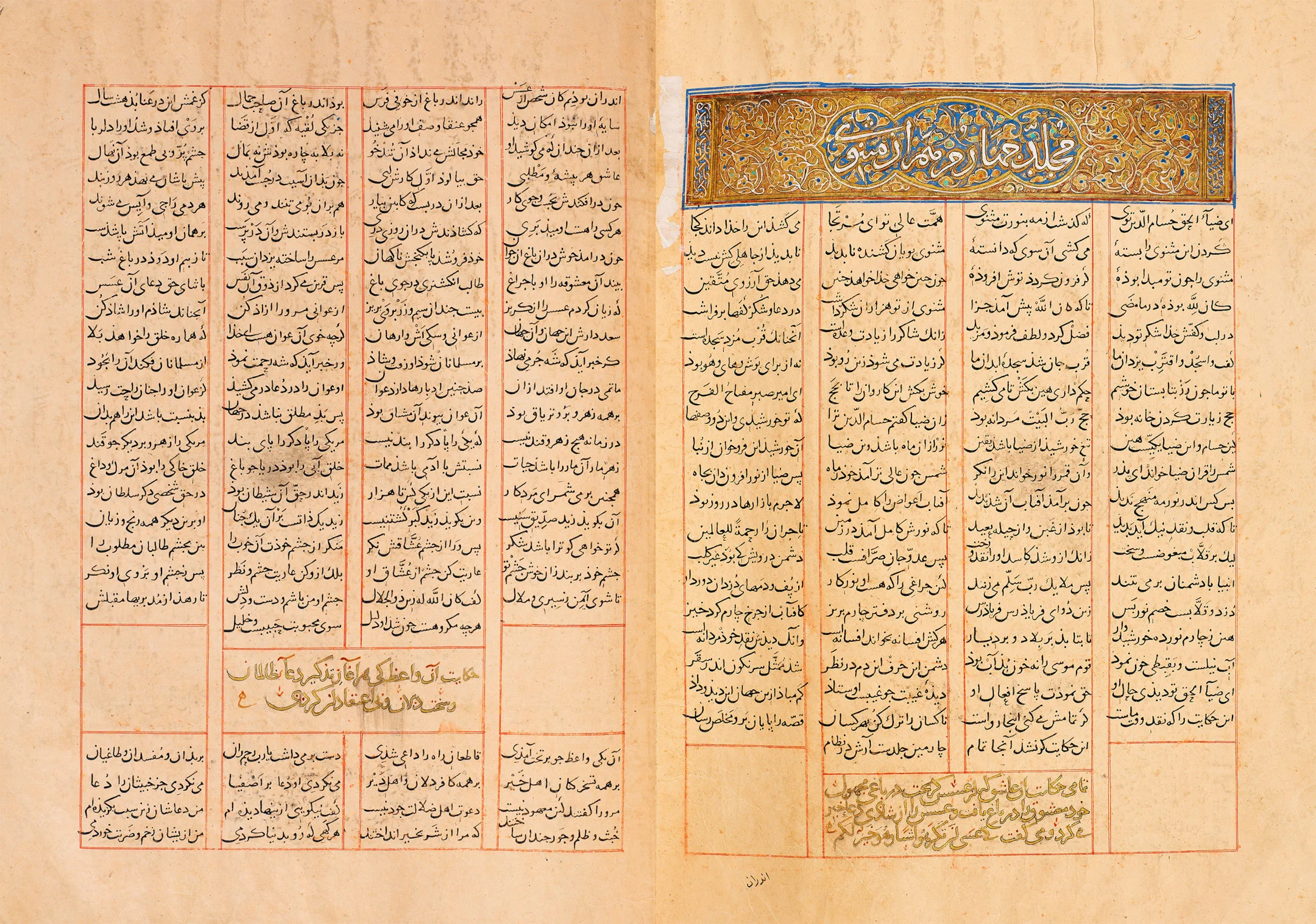
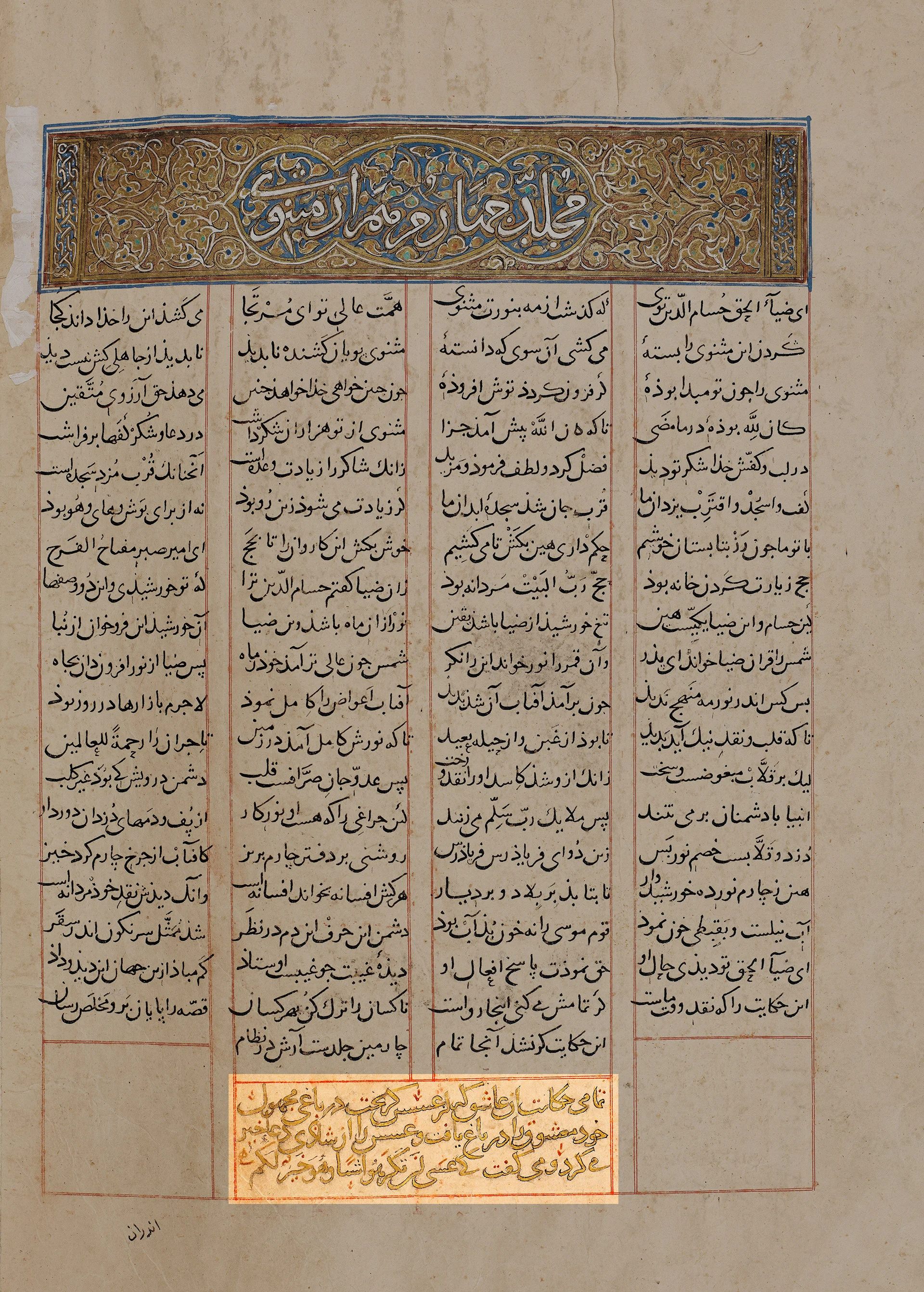
A subheading, written in gold with diacritics in red, occupies the two central columns at the bottom.
The Best of the Artists
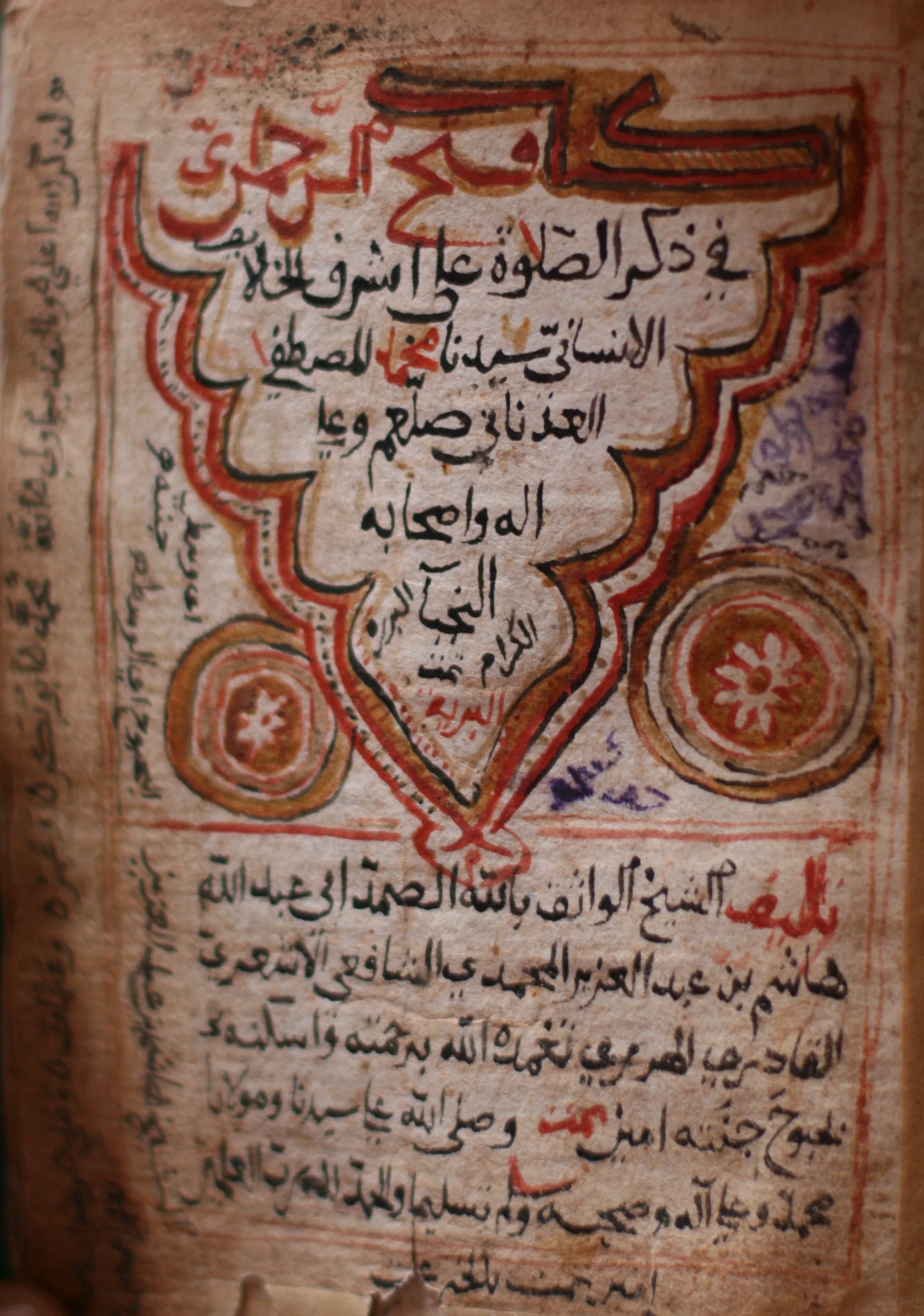
The colophon, a statement at the end of the manuscript, offers invaluable information about the creation of this volume. Composed in Arabic, it mentions that the copy was completed in the month of Rajab of the year 677 AH (November–December 1279 CE). The colophon also identifies the calligrapher as Muhammad ibn Abd Allah al-Konavi, meaning “from Konya,” and the illuminator as Mukhlis ibn Abd Allah al-Hindi, meaning “from Hind (India).” While the calligrapher was local, the illumination was carried out by an artist who may have migrated from India, converted to Islam (ibn Abd Allah is a generic paternal name for converts), and settled in Konya. Although it is unusual for the illuminator to be named in a colophon, Mukhlis ibn Abd Allah al-Hindi clearly deserved to be singled out for his contribution to the volume.
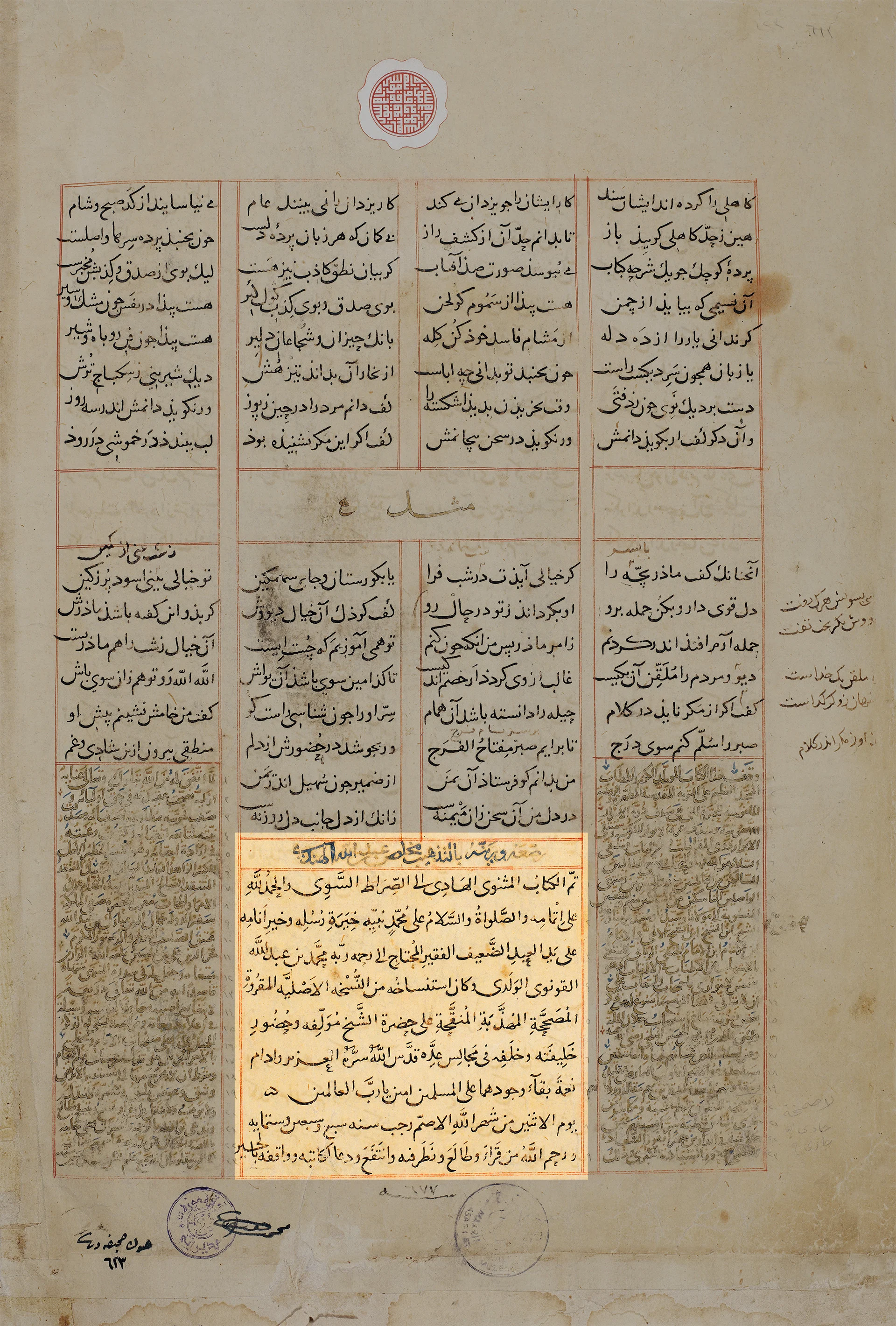
A Costly Gift
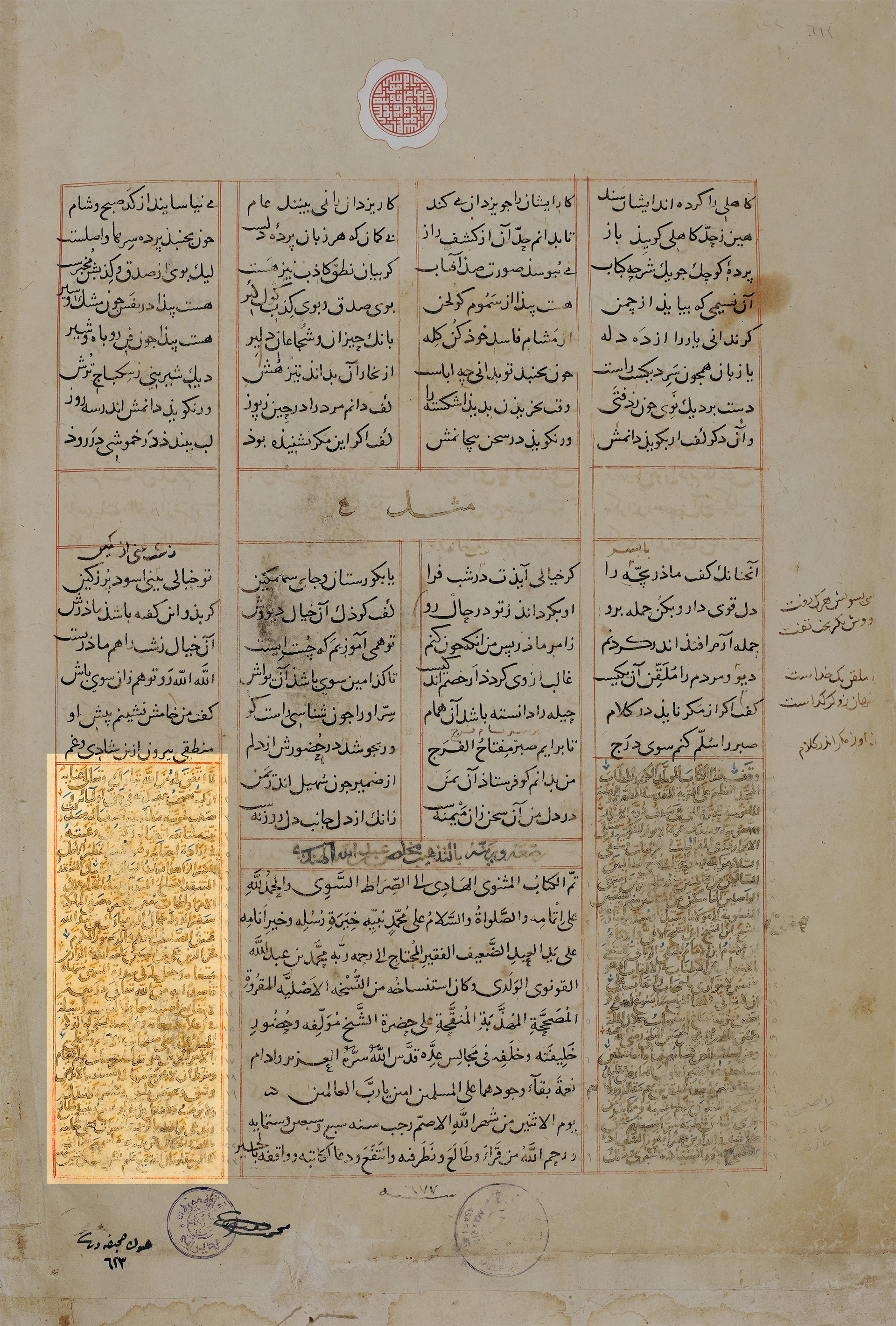
Additional information about the manuscript appears in the columns flanking the colophon, which are inscribed with the endowment statement (waqf). Written in gold, the left-hand column names a freed slave of a Seljuk courtier, Jalal al-Din Mubarak ibn Abd Allah al-Sahibi, as the patron of the manuscript and states that he donated it to the library of Rumi’s shrine. The colophon asks that the name of the patron be remembered on the Day of Judgment and his reward increased.
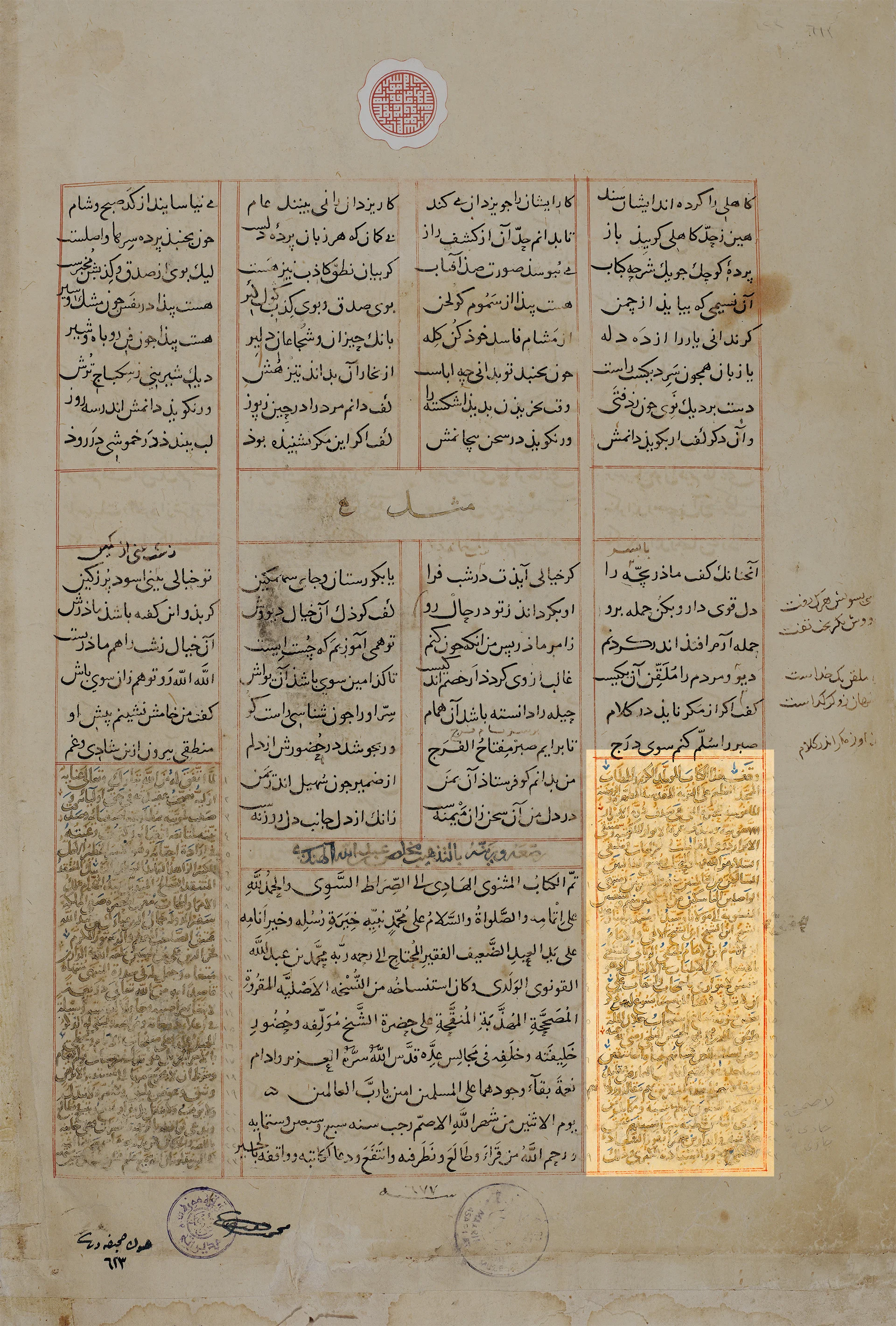
The right-hand column explains how “this precious and enduring book has been endowed to the pure and sacred tomb of this great and illustrious personage . . . that this tomb be the pearl of holy secrets . . . the place yearned for by those who obey and worship God, those who enter and seek the path [of a mystic order].” The endowment was made in 1279, the same year that Rumi’s tomb was completed.
A Sumptuous Bookstand for the Masnavi
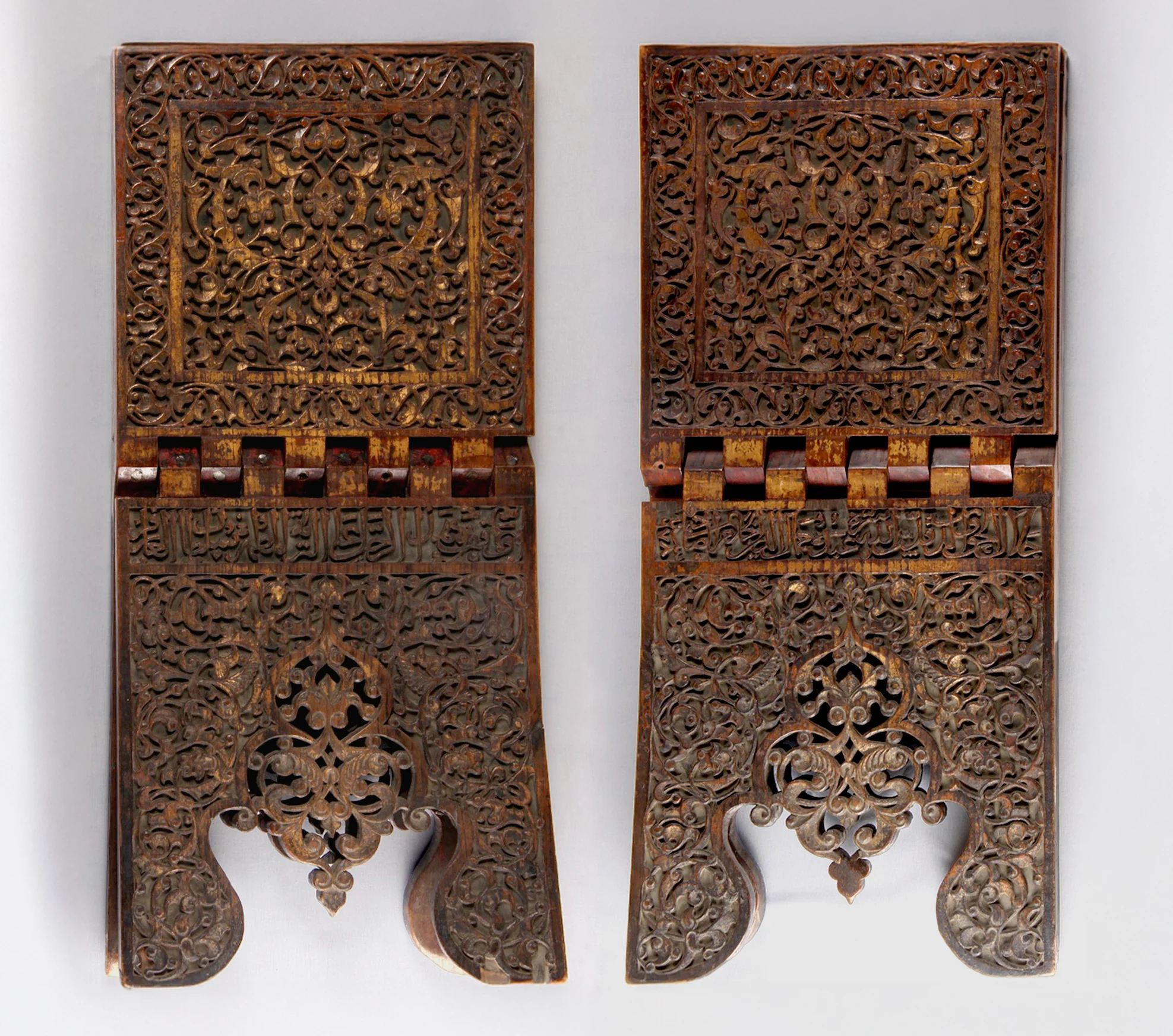
In 1279, an exceptional bookstand was donated to the shrine. It is carved from walnut with dense and intricate vegetal motifs and split palmettes on the exterior.
Courtesy of the Mevlana Museum
An inscription records that Jalal al-Din al-Sahibi, who gifted the Masnavi to the shrine, also “endowed [the book stand] for the immaculate tomb.”
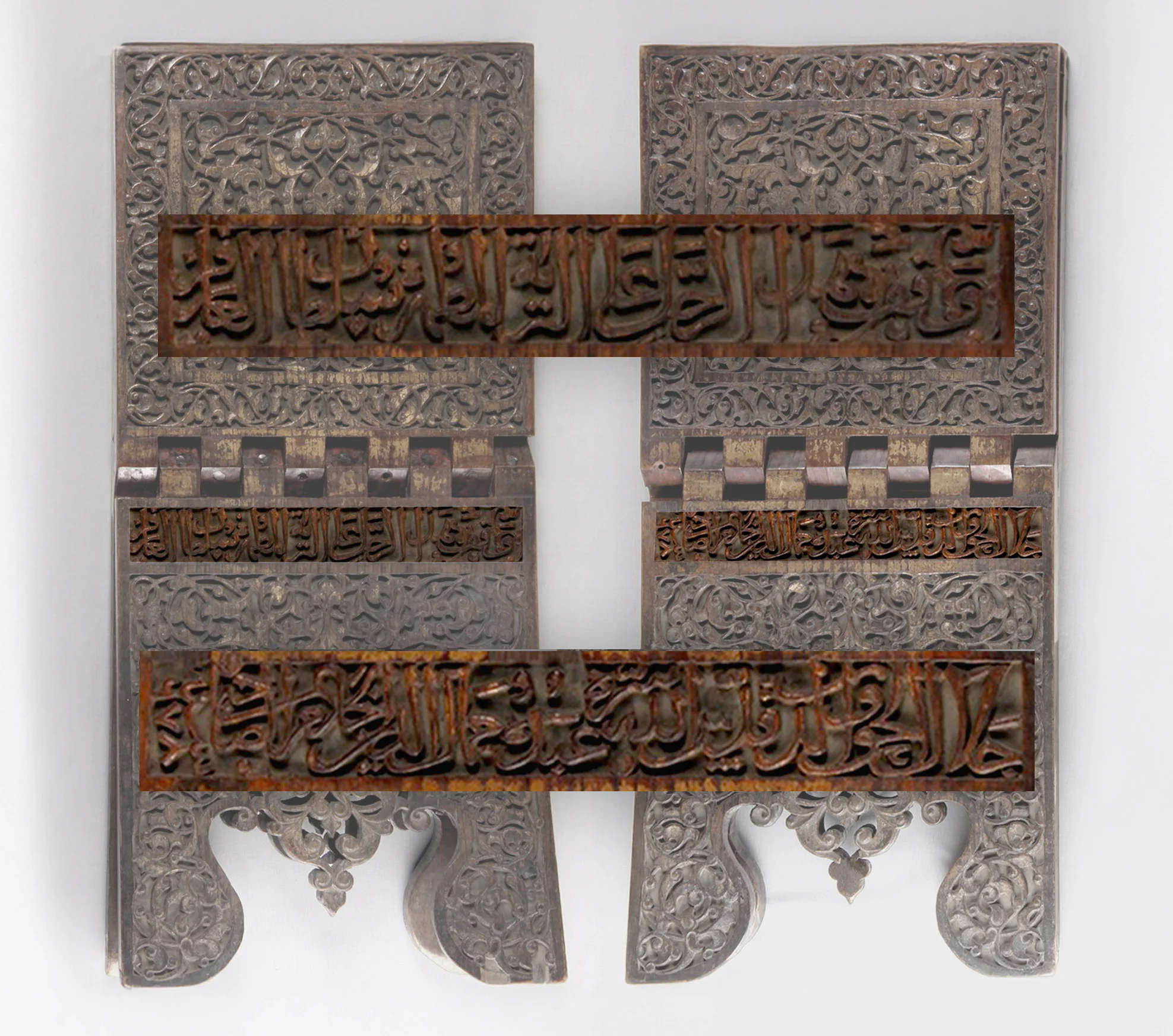
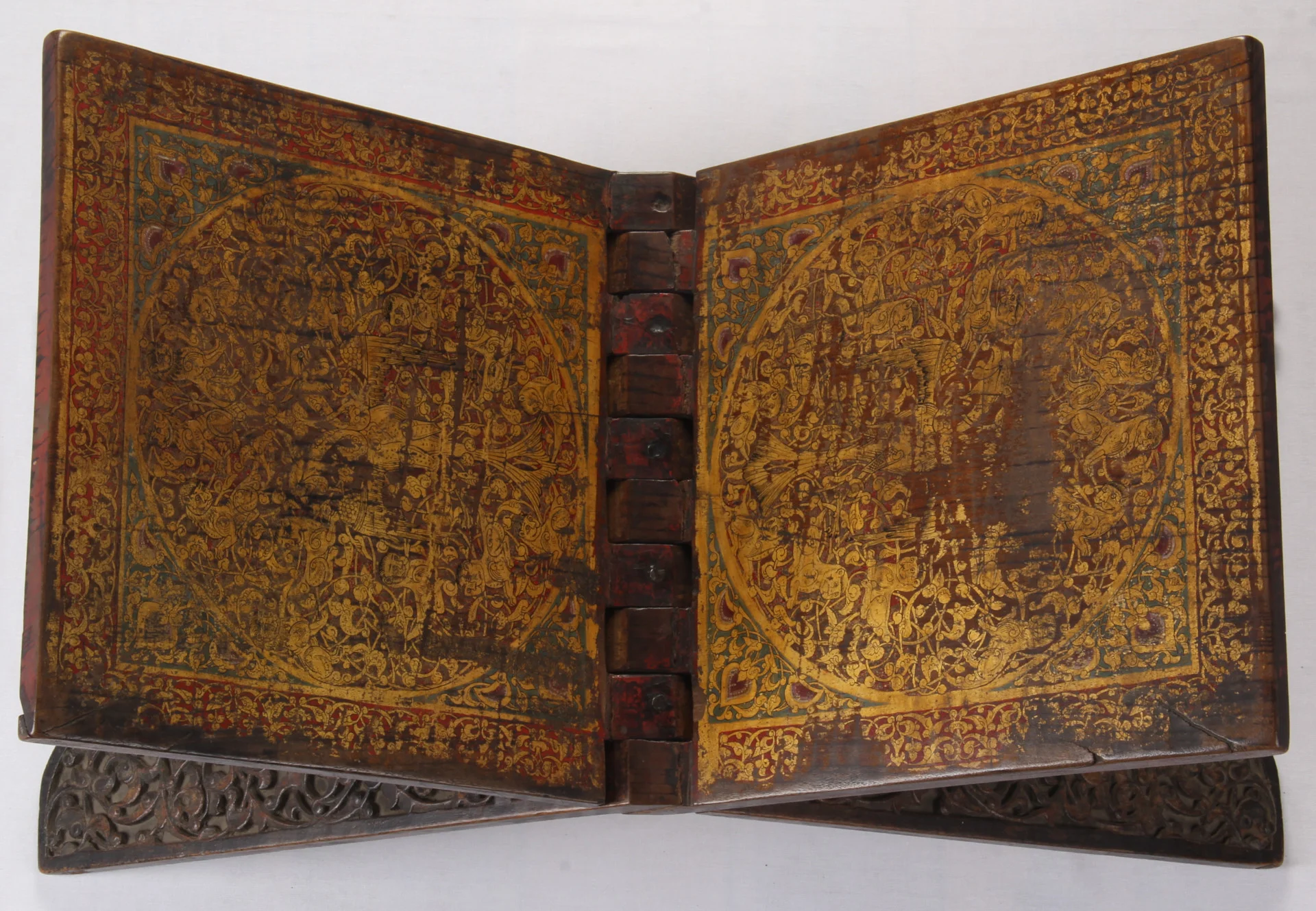
A comparison of the two works suggests that the Masnavi easily fits on the stand. Based on the size, date, and patron, scholars have proposed that the manuscript and the stand were donated together at the time of the shrine’s inauguration.
Courtesy of the Mevlana Museum
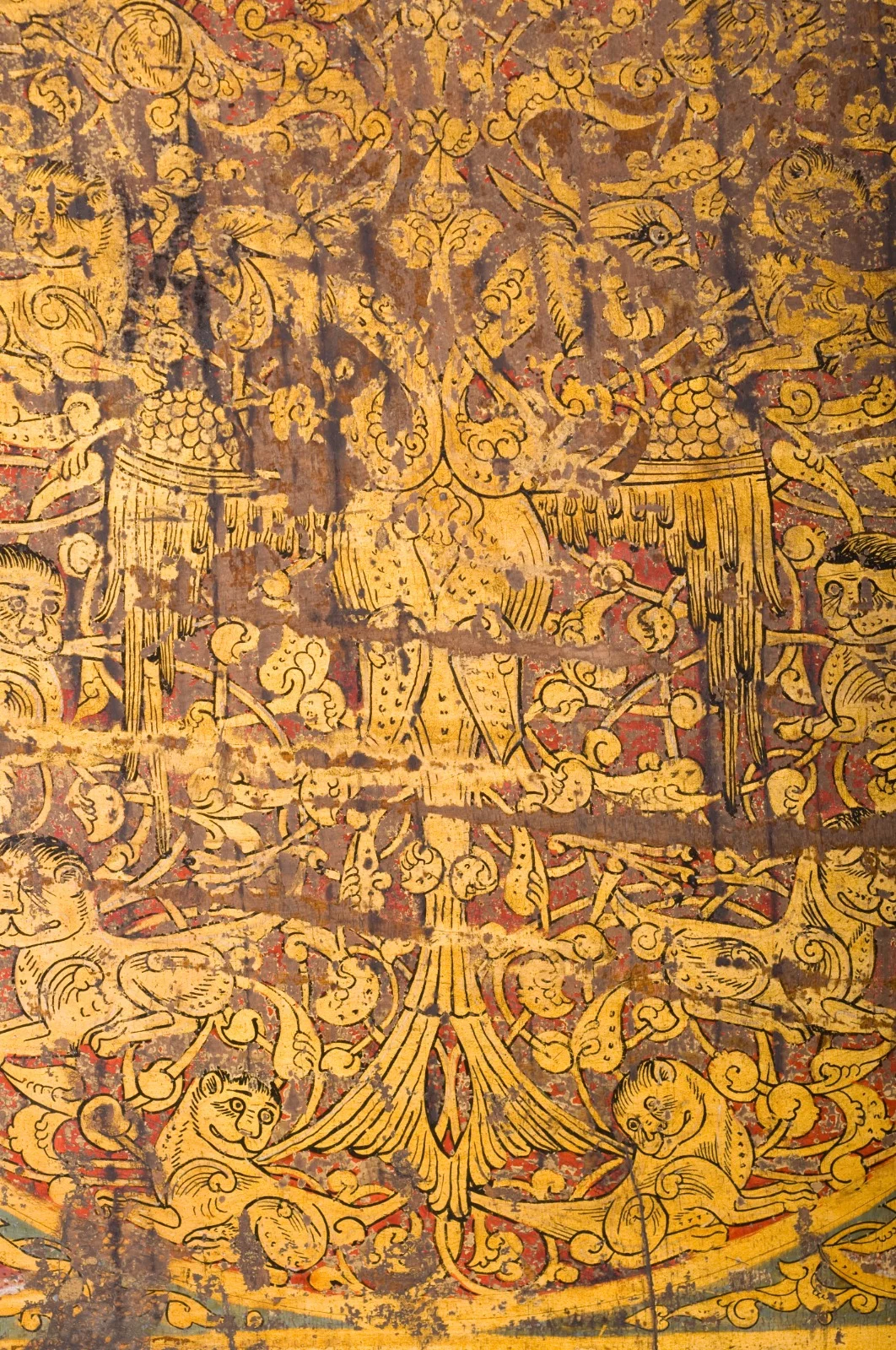
The inner panels are decorated with an elaborate gold composition of vegetal scrolls ending with feline bodies and arranged symmetrically around a large double-headed eagle. The fantastic beast, associated with Seljuk royal and Sufi imagery, visually unites the spiritual and earthly powers and links the Seljuks to Jalal al-Din Rumi.
The bookstand, made and endowed six years after Rumi’s death in 1273, testifies to the quality of donations made to the lodge and residence of the nascent Mevlevi order’s community.
Enduring Patronage
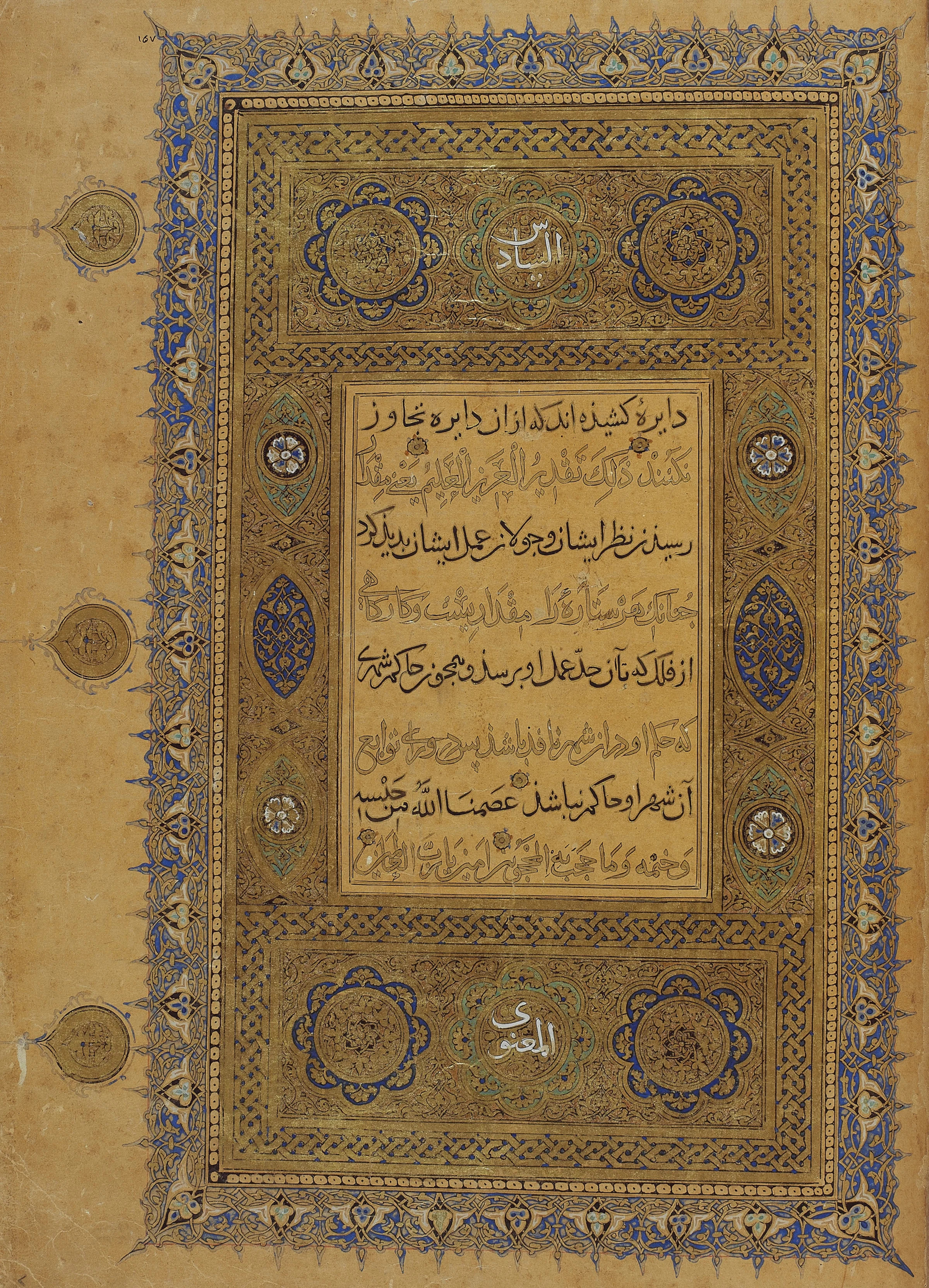
Another fine volume of the Masnavi, dated 1372 and one of several outstanding copies at Konya, attests to the practice of commissioning and endowing luxurious manuscripts by members of the elite in the subsequent centuries.
Courtesy of the Mevlana Museum.
Such lavish gifts were believed to confer blessings and prestige on the donor.
Courtesy of the Mevlana Museum.
Much like providing for the renovation of the complex, donating precious objects and books to the shrine should be seen as an act of reverence to Rumi and support for the Mevlevi order.
Courtesy of the Mevlana Museum.
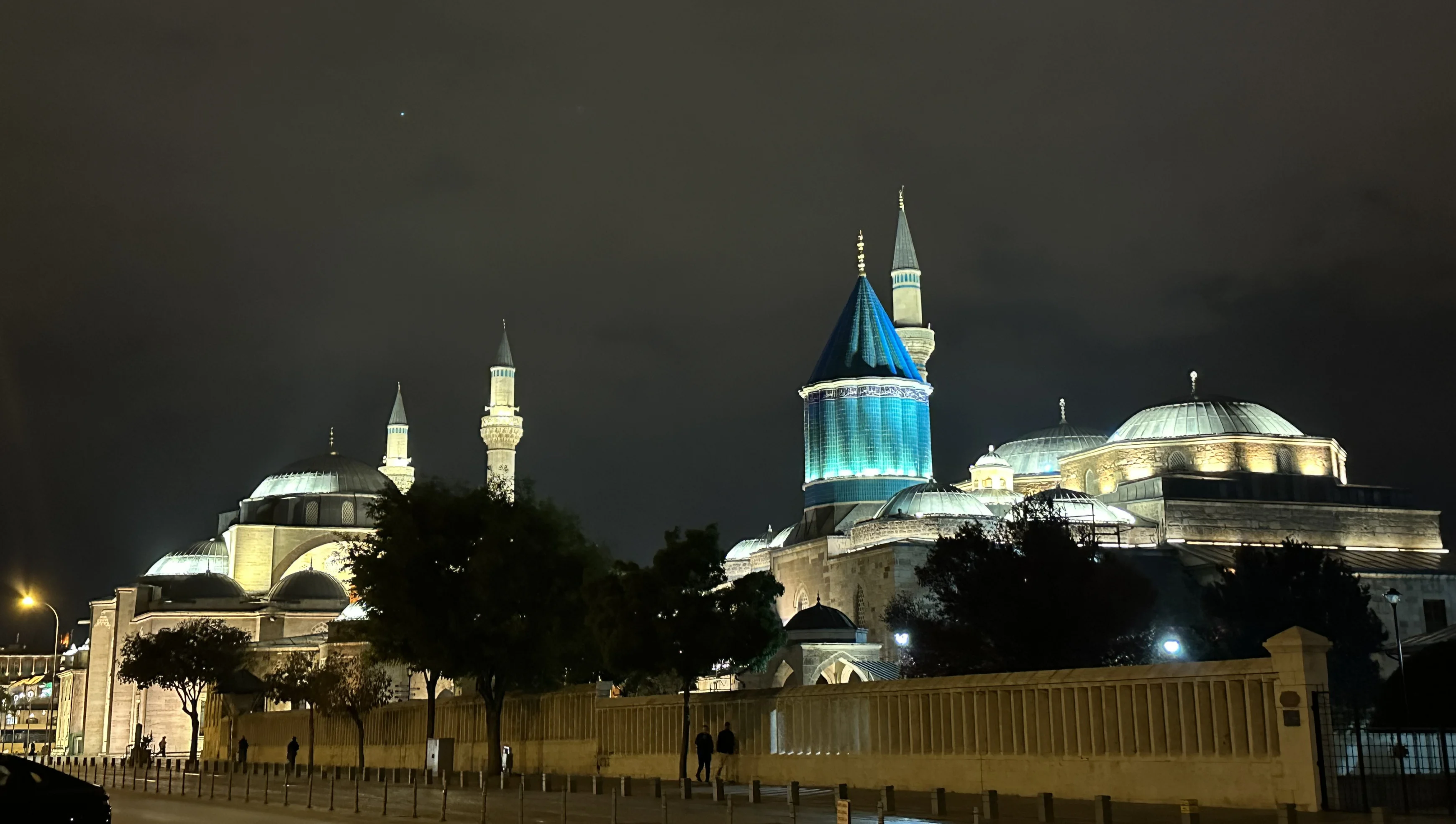
Konya Türkiye
Objects
Explore the map or scroll to select an object.