A Mamluk Copy of al-Busiri’s Qasida al-Burda
Egypt, probably Cairo
Mamluk period, ca. 1453–61 and ca. 1422–37
Ink, opaque watercolor, and gold on paper
Purchase – Smithsonian Unrestricted Trust Funds, Smithsonian Collections Acquisition Program, and Dr. Arthur M. Sackler
National Museum of Asian Art, Sackler Collection, S1986.29
The Qasida al-burda (Ode to the Mantle), composed by Muhammad ibn Sa‘id al-Busiri (d. 1296), is one of the most famous poems in praise of the Prophet Muhammad and is credited with holding extraordinary divine blessings (baraka).
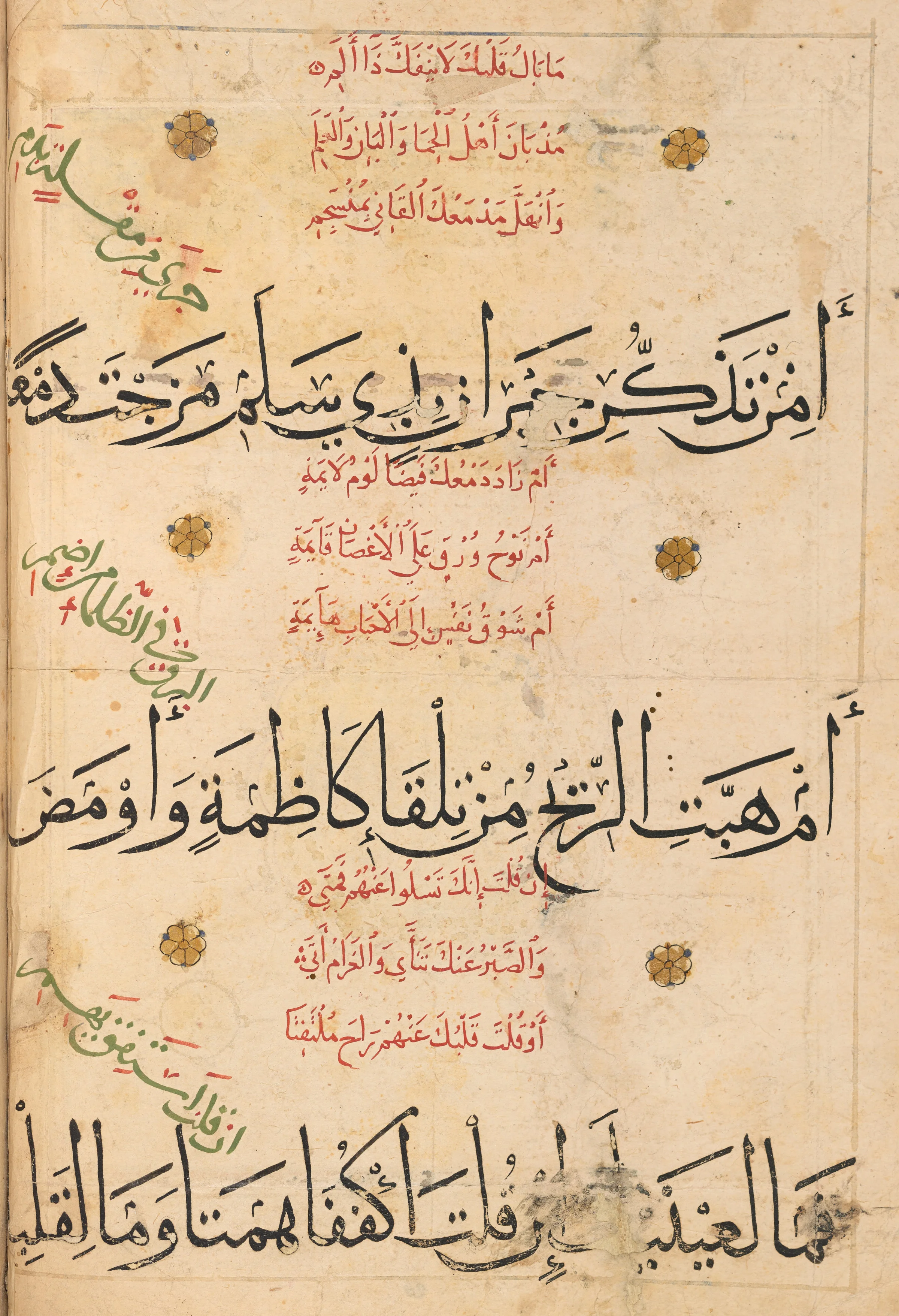
Not long after the text’s creation, it became widely popular and many copies were transcribed. Some were commissioned by the elite and were finely copied and lavishly illuminated.
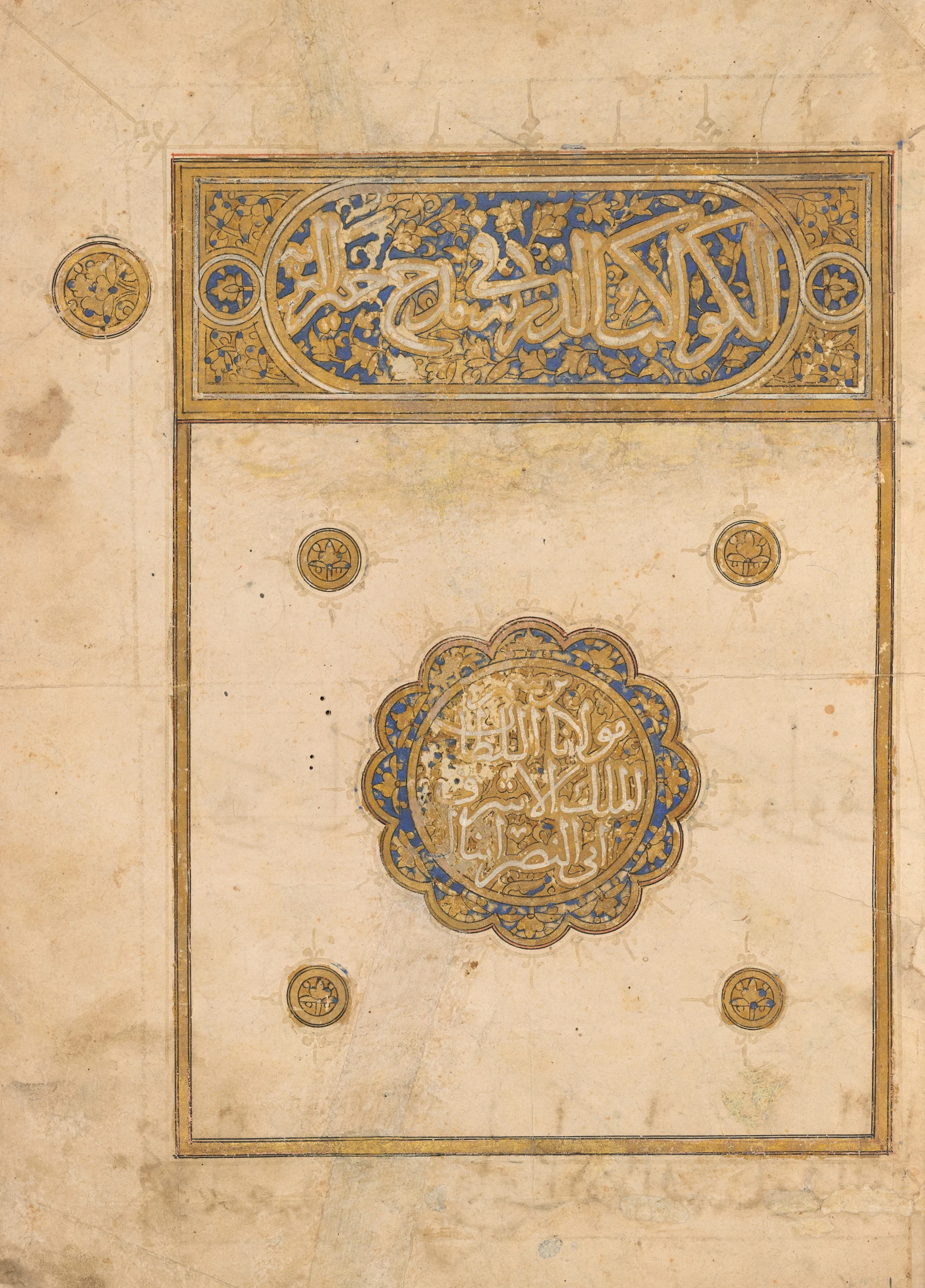
An Illuminated copy
The volume presented here was made for the treasury of al-Malik al-Ashraf Sayf al-Din Inal (r. 1453–61), the Mamluk sultan of Egypt and Syria whose short reign was marked by social unrest and outbreaks of plague.
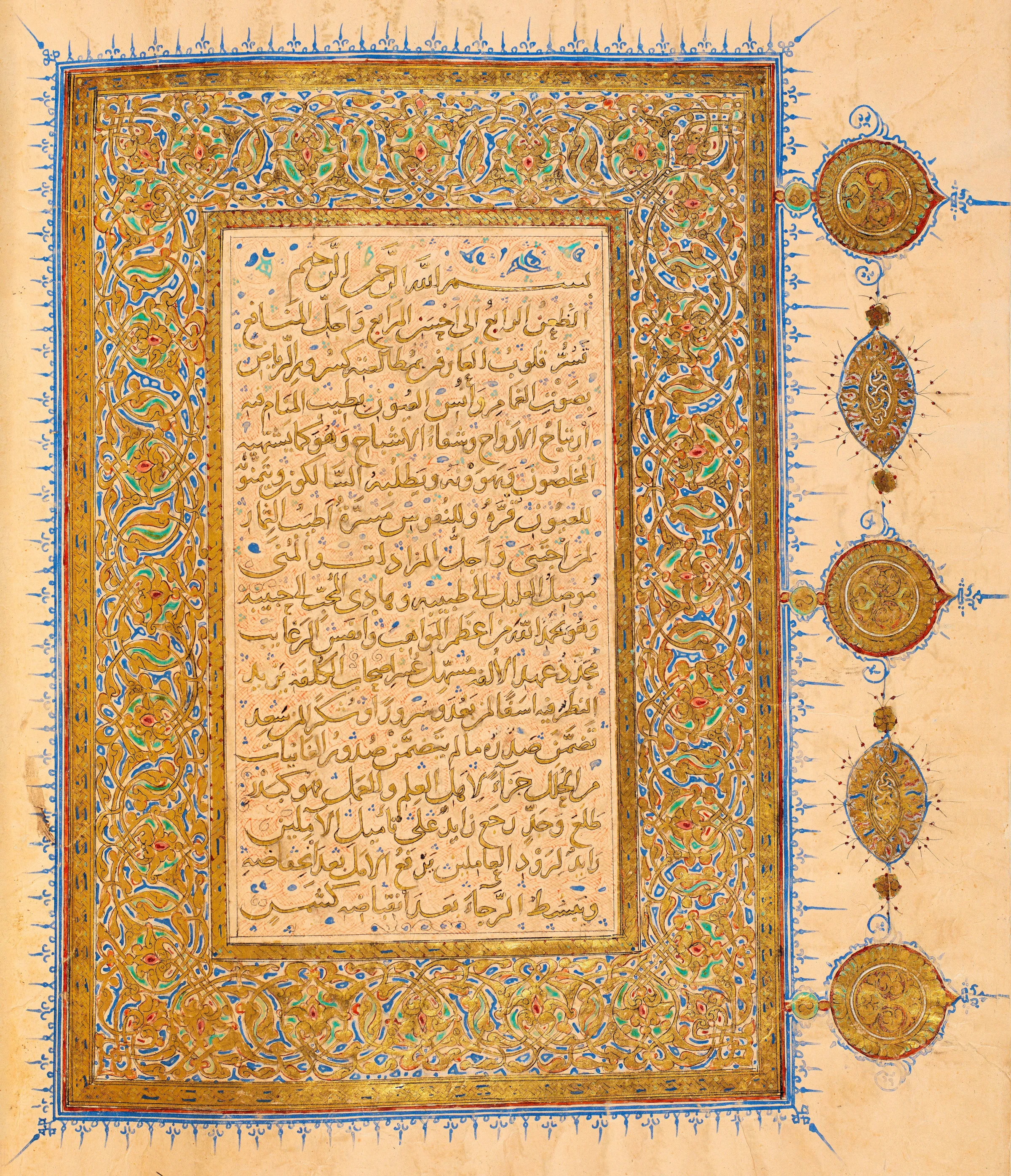
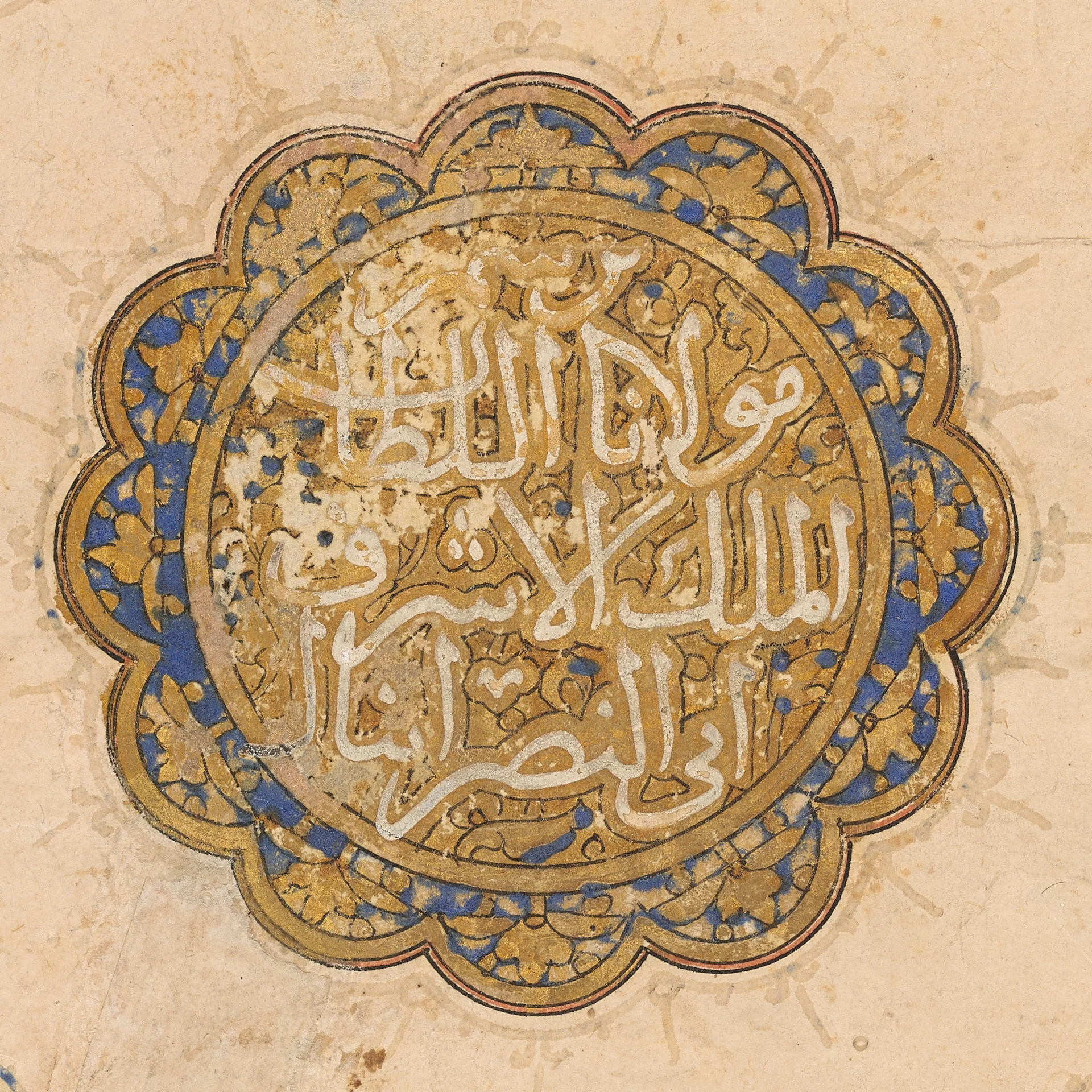
The opening page of the manuscript carries the name of Sultan Inal in a central roundel (shamsa, in Arabic).
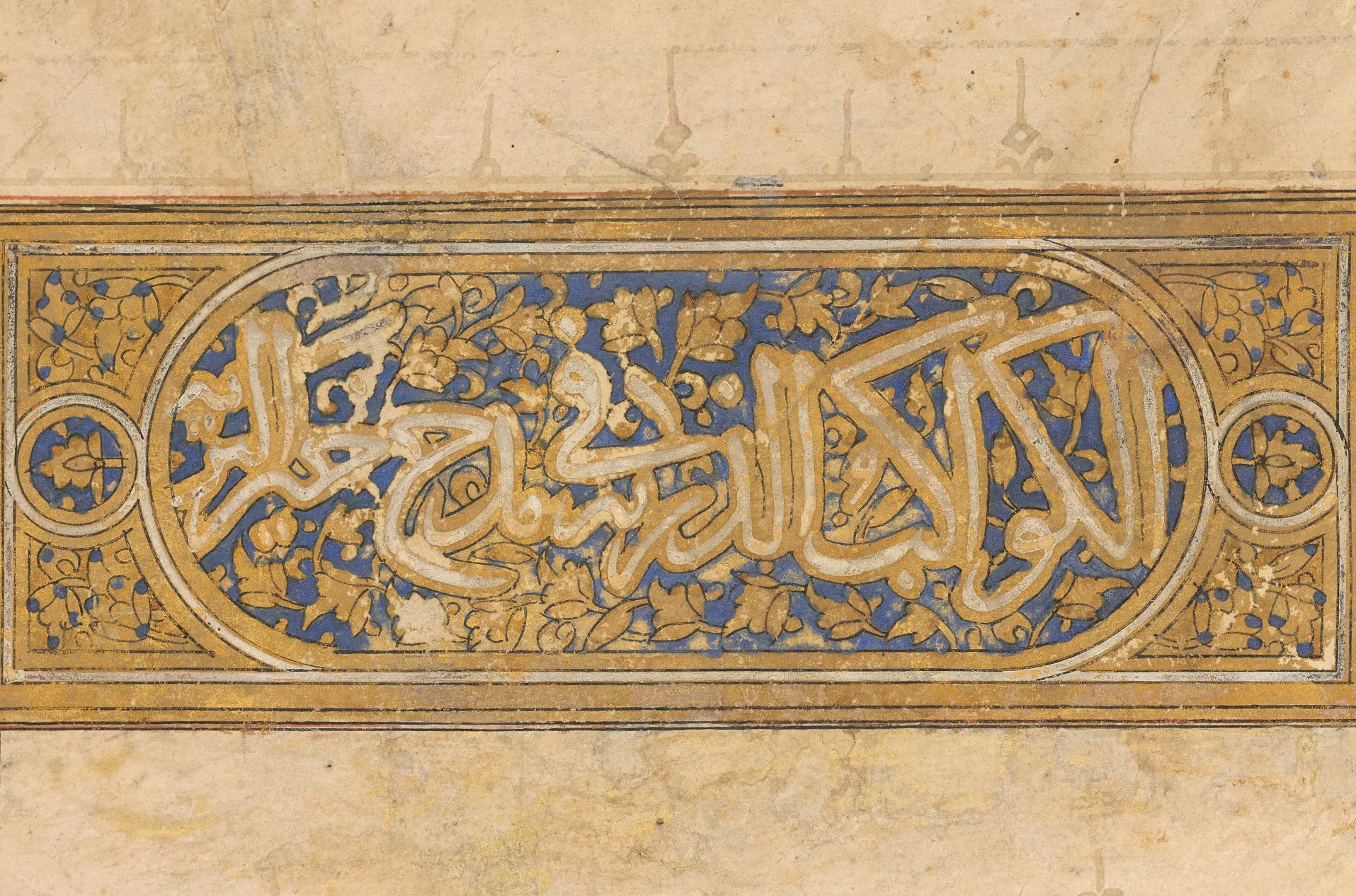
The formal title of the work, al-Kawakib al-durriya fi madh khayr al-bariyya (The Celestial Lights in Praise of the Best of Creation), is inscribed in an upper cartouche.
Both elements are illuminated and decorated with stylized vegetal and floral motifs in geometric medallions with gold, blue, and white tones predominating.
An Original Layout
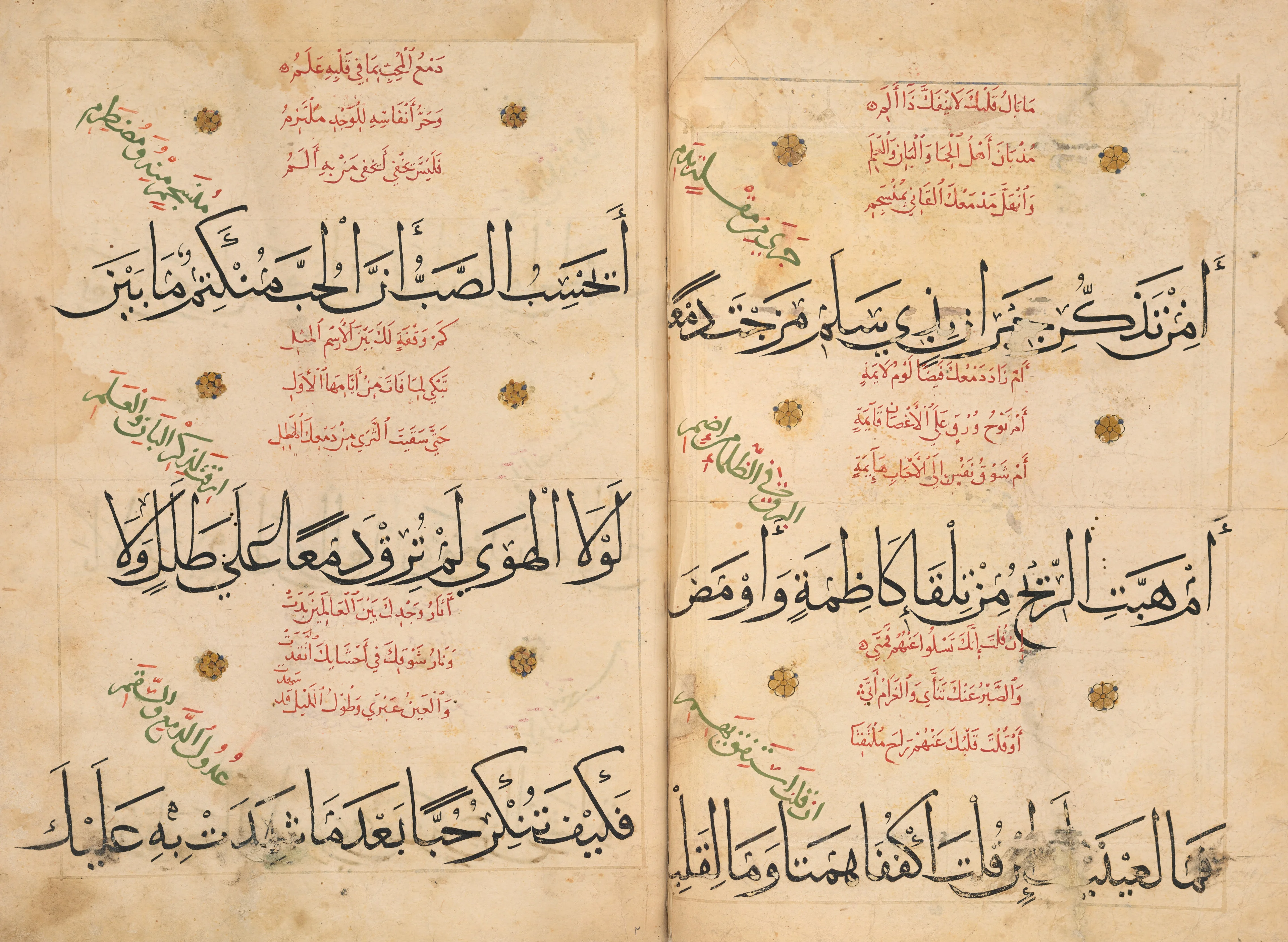
On each page, the copyist has transcribed one couplet per line in black muhaqqaq, a large calligraphic script whose characteristics are the flattened and sharp tips of the lower strokes.
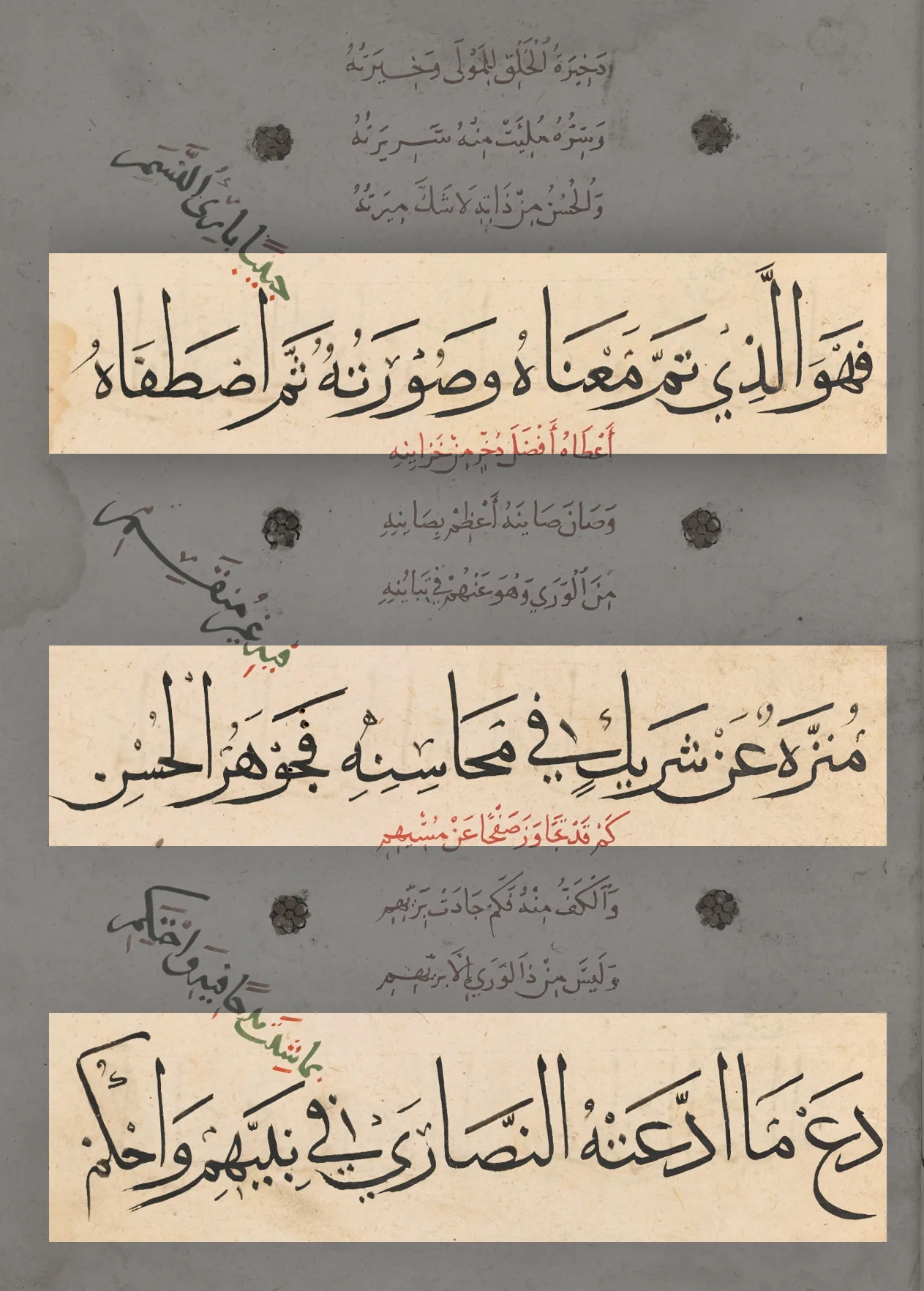
The end of each couplet, on the other hand, has been written diagonally above the line in muhaqqaq in another more fluid style called riqa‘. It was copied in green with diacritics in red.
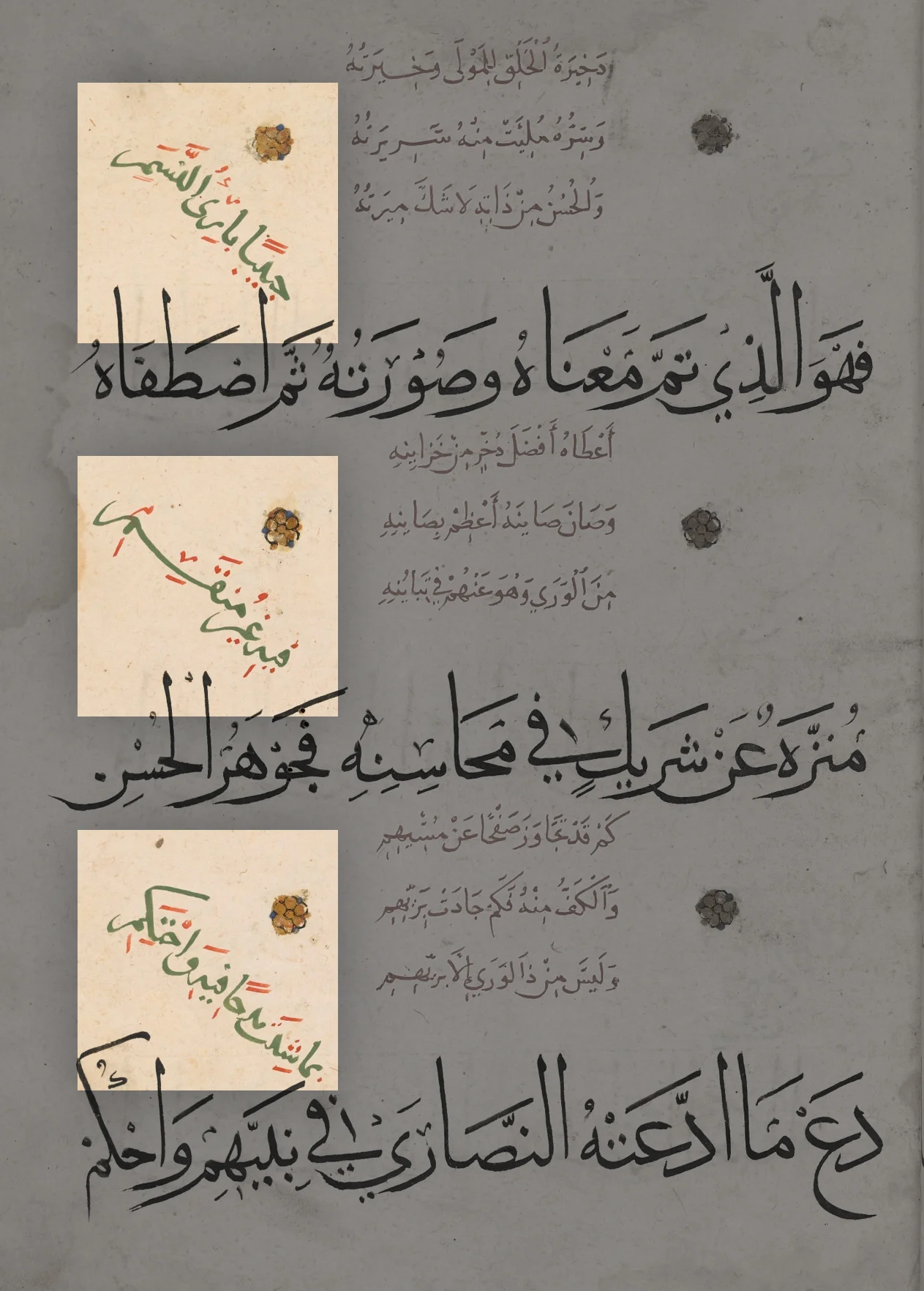
Both scripts are used to transcribe religious texts but their association here is particular to copies of the Qasida al-burda from the Mamluk period, providing a way to differentiate this work from others.
The Text in Between
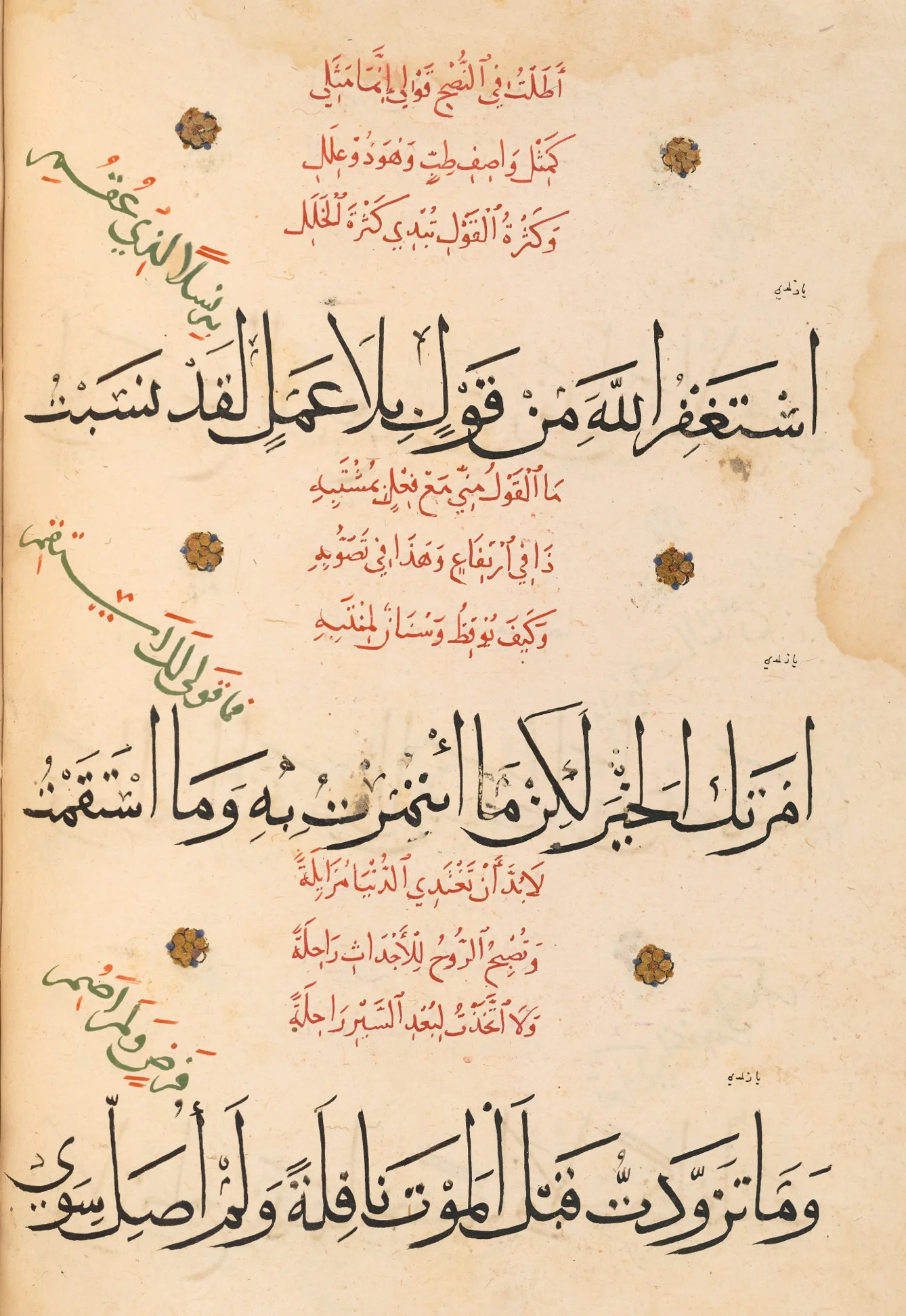
The black lines alternate with blocks of three lines, written in red ink in a script called naskh, one of the most common cursive scripts and appreciated for its legibility.
This text is not original to the Qasida al-burda but was composed in the fourteenth century by Shams al-Din Muhammad al-Fayyumi. It complements al-Busiri’s poem by elaborating on it and adding layers of meaning. Al-Fayyumi’s addition is one of the most popular amplifications of the ode.
Discrete Decorations
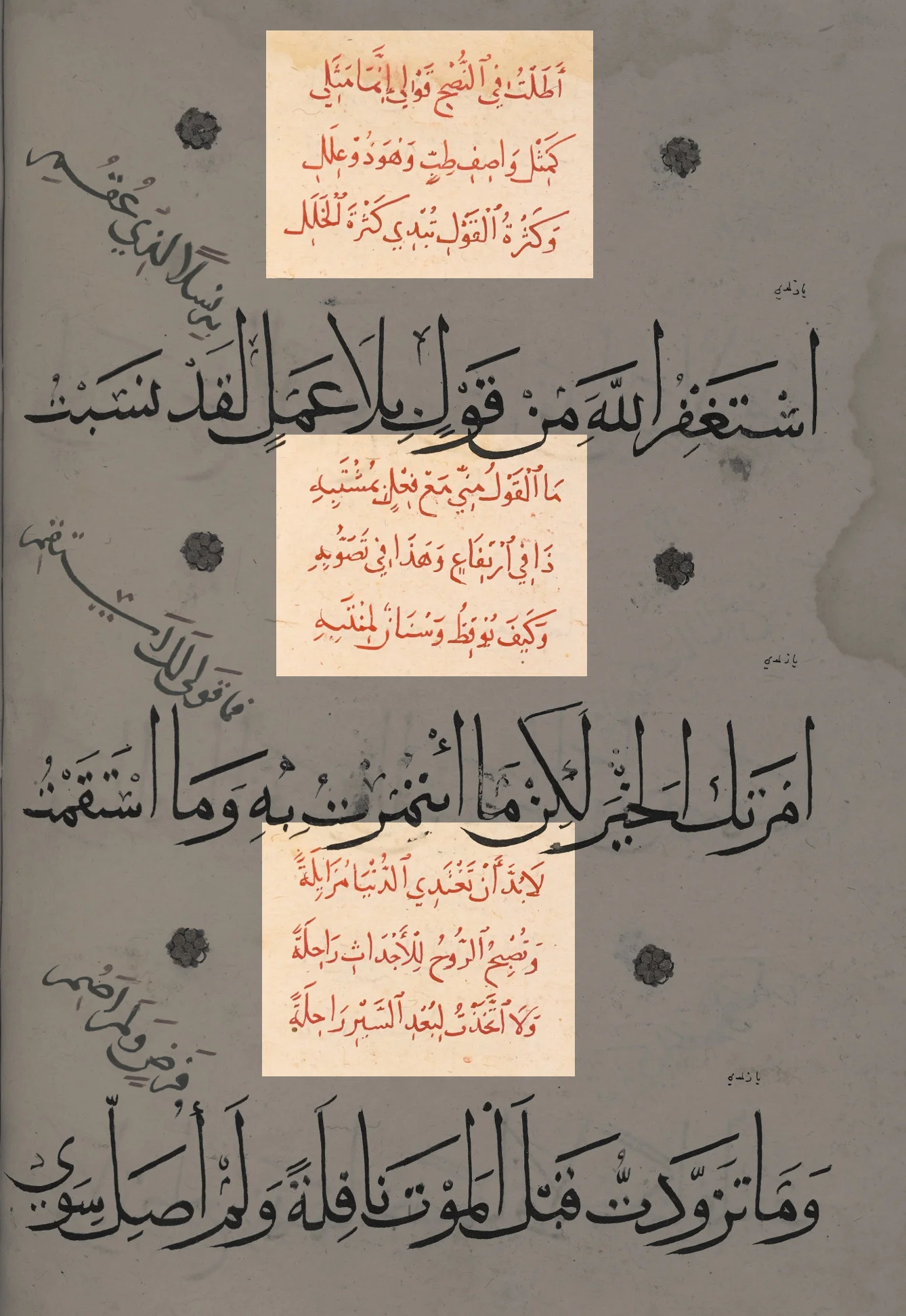
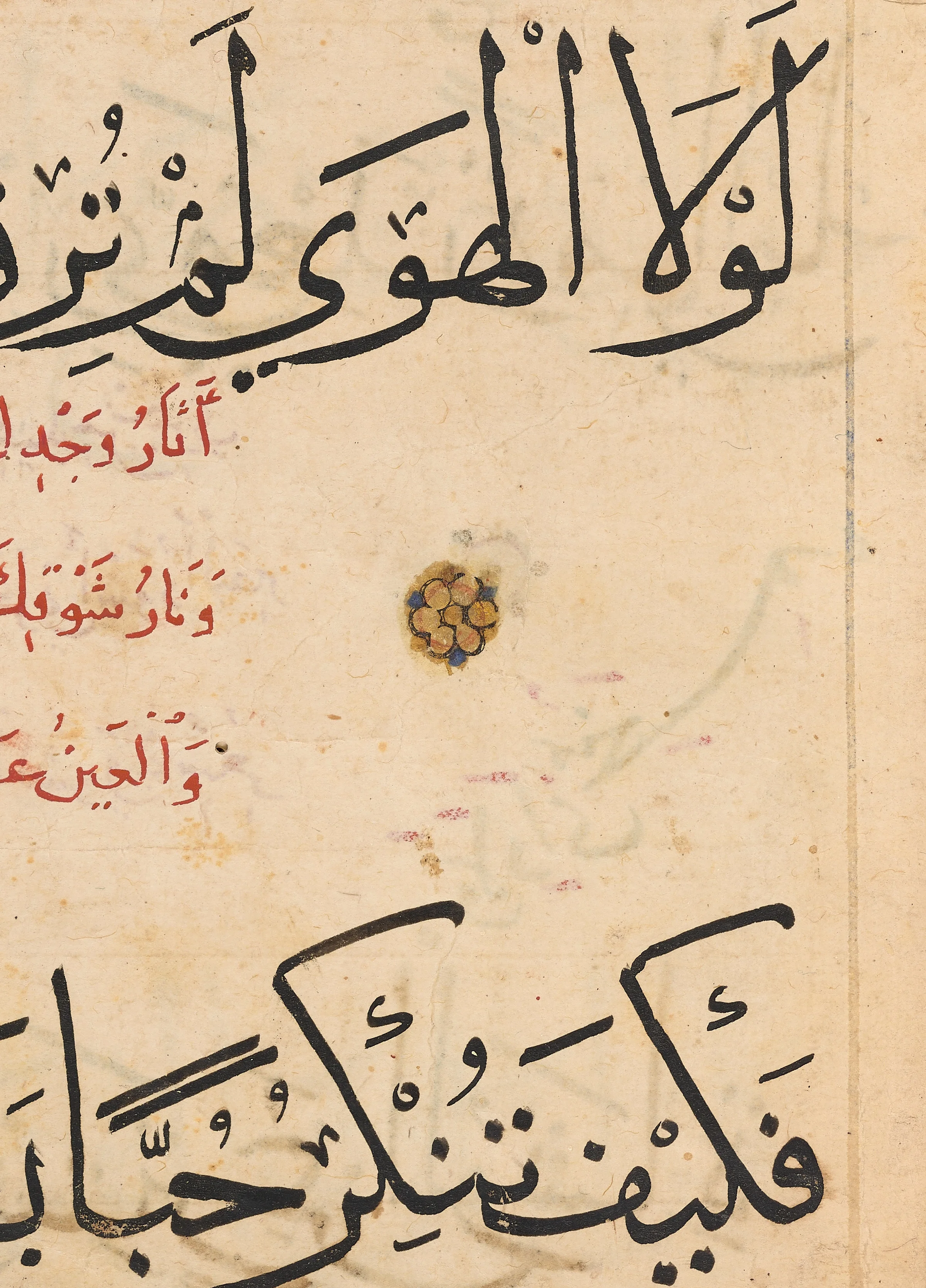
Every page of the manuscript is decorated with three regularly spaced small rosettes on either side of al-Fayyumi’s textual elaborations. Made of gold leaf and outlines in black and red with blue dots, these rosettes are purely decorative. In comparison to the Qur’an, where similar motifs serve as verse markers, here they do not carry any function.
Powerful Couplets
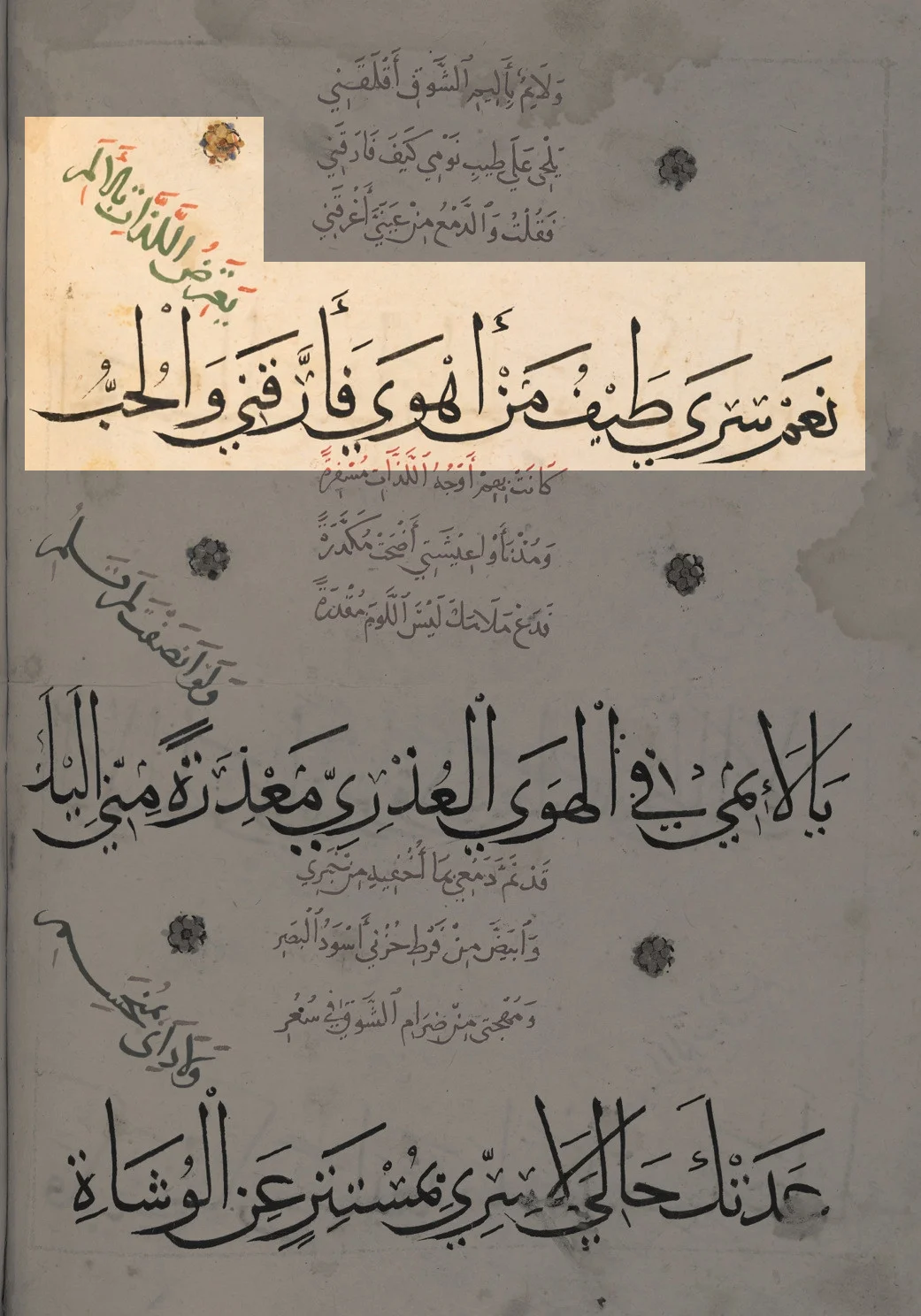
Some verses of the Qasida al-burda are considered to be particularly effective for certain wishes. For instance, repeating the eighth couplet of the poem at bedtime may result in a dream of the Prophet Muhammad, as happened to al-Busiri when he was sick.
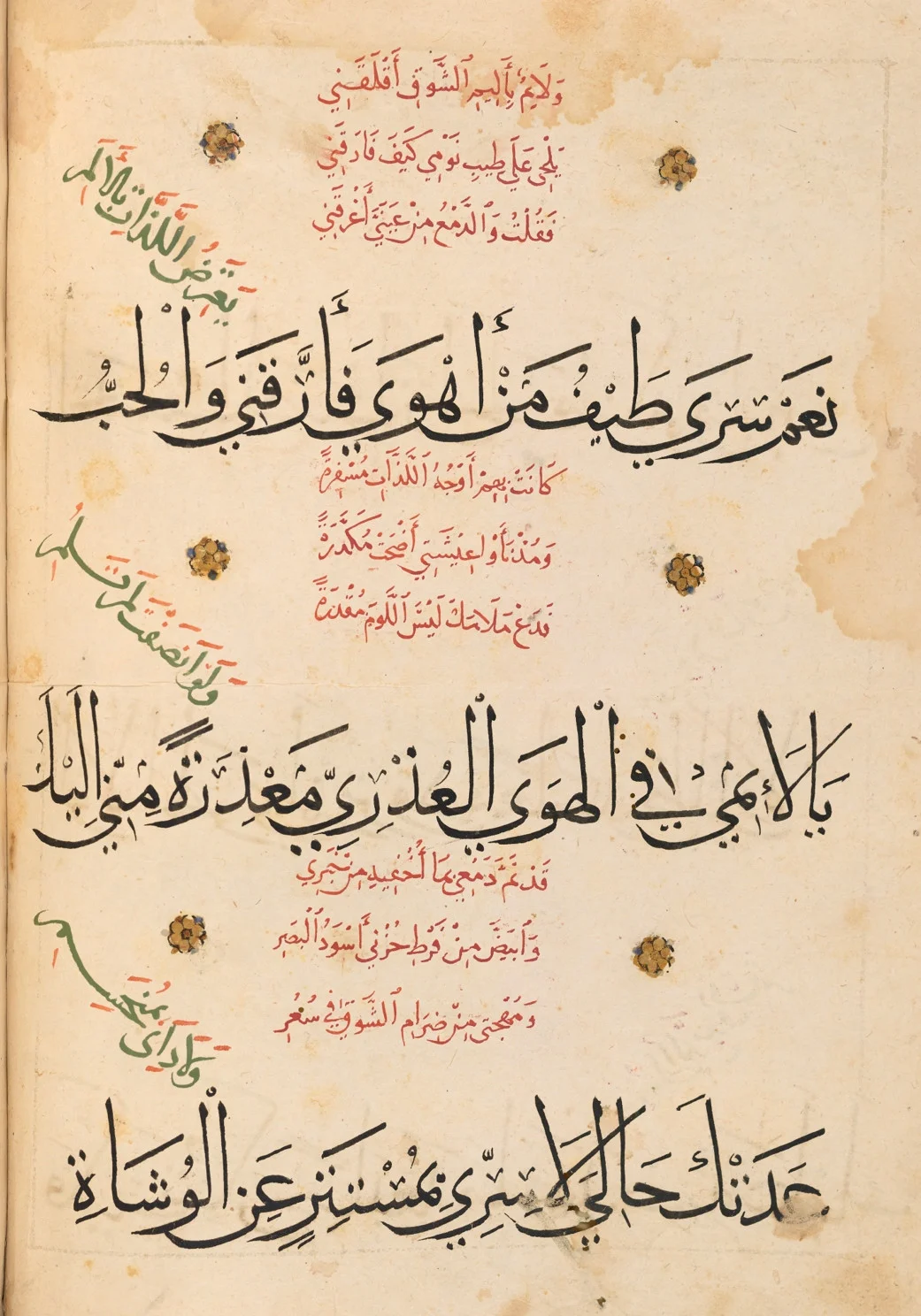
Located here on the top line, the couplet reads:
Yes, my beloved’s apparition came to me and denied me sleep,
For love always opposes pleasures with pain!
The term “beloved” often refers to God in the Sufi context but it also can apply to the Prophet, as is the case here.
Another Text for Another Sultan
This copy of the Qasida al-burda is combined with a second text, which was copied at least twenty years earlier.
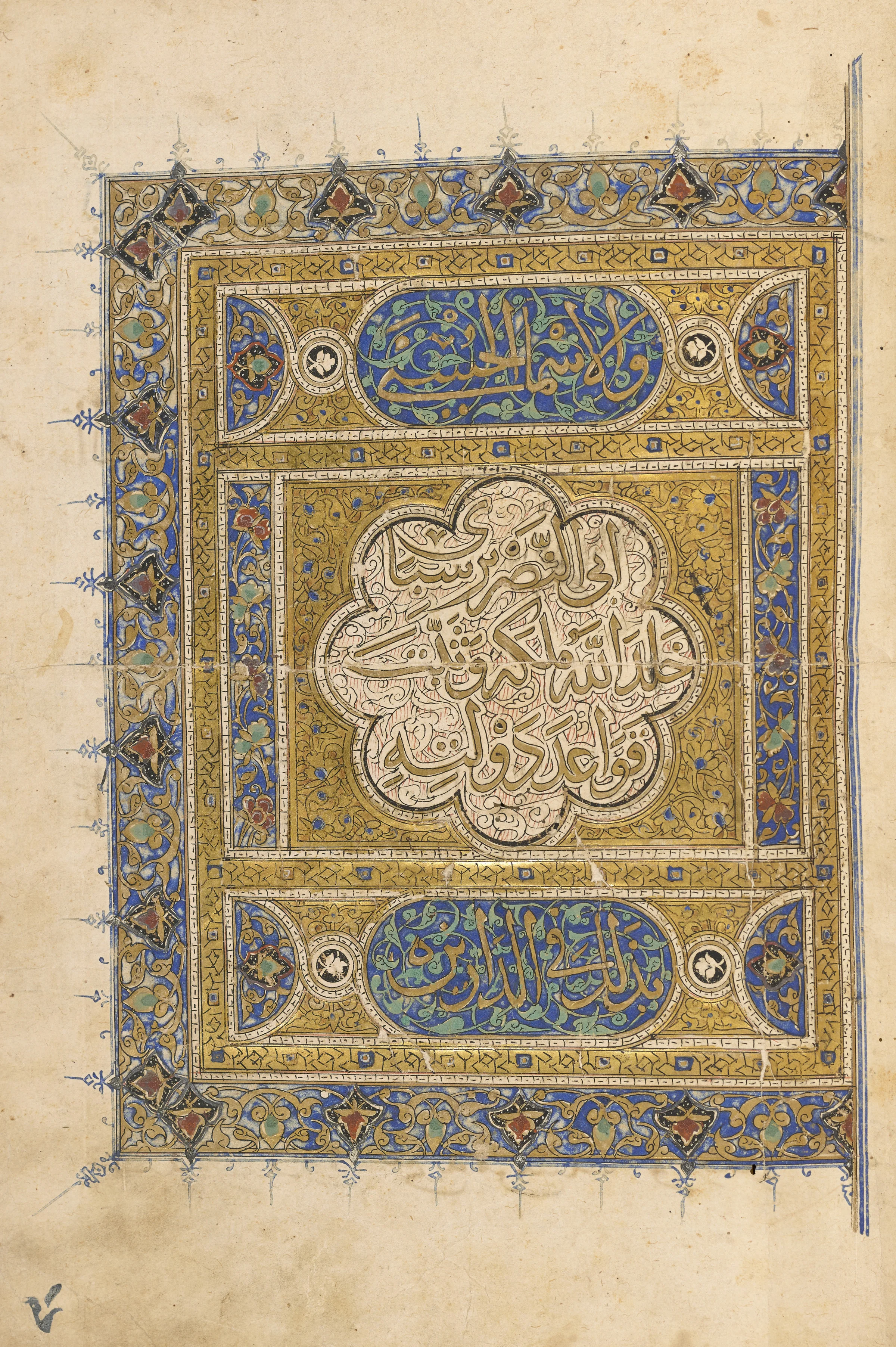
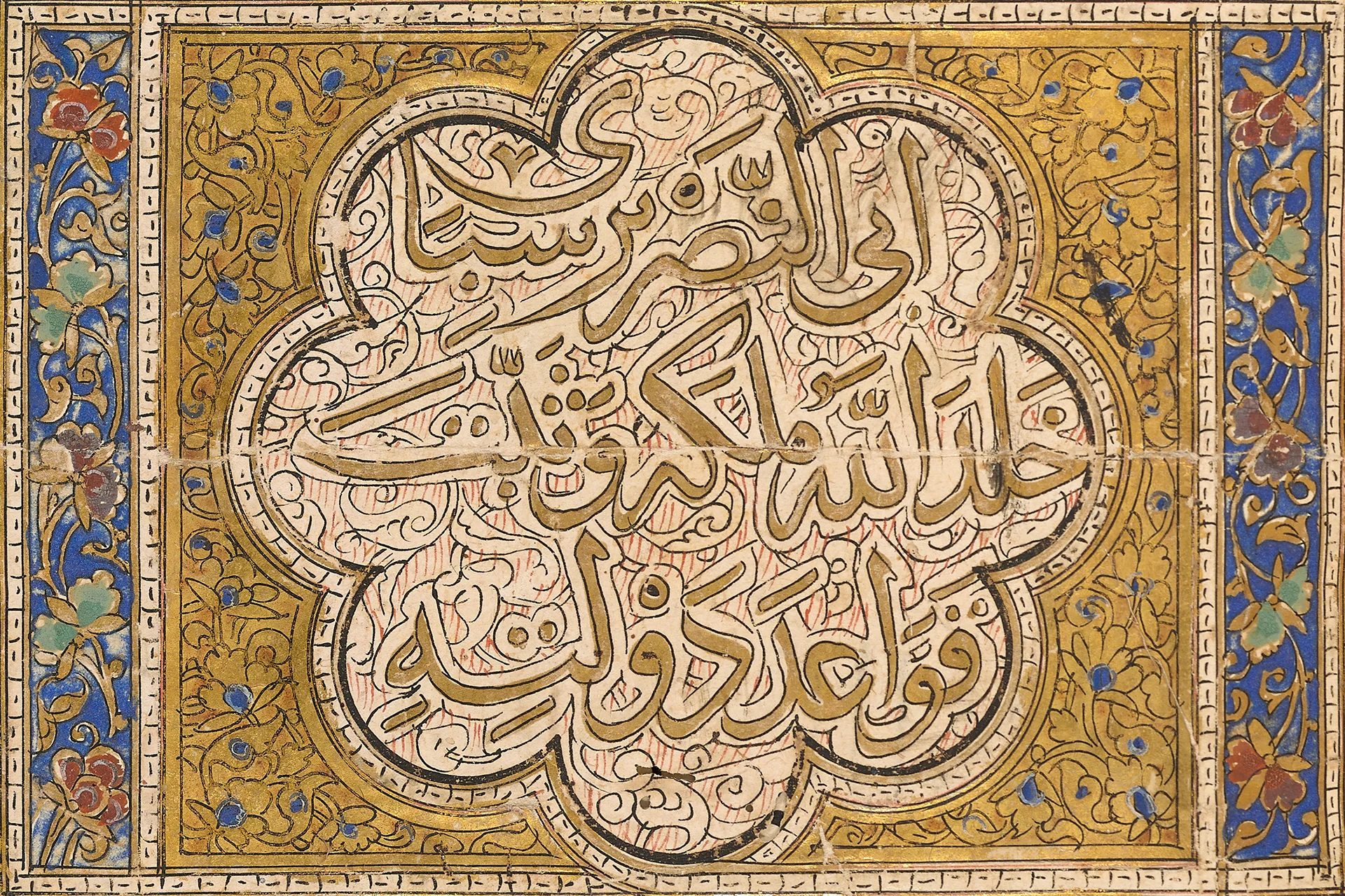
The lavishly illuminated frontispiece indicates that it was made for Mamluk Sultan Al-Malik al-Ashraf Abu’l-Nasr Barsbay (r. 1422–38) and includes the following invocation: “May God protect his kingdom forever and make firm the foundations of his empire.” It likely had a facing page, now lost.
A Book of Prayers
The volume contains al-Hizb al-sayfi (Prayer of the Sword Bearer), which has been attributed to Ali ibn Abi Talib, the cousin and son-in-law of the Prophet Muhammad. This prayer was popular in the fifteenth century not only in the Mamluk realm but also in Ottoman Türkiye and Timurid Iran, especially among Sufis.
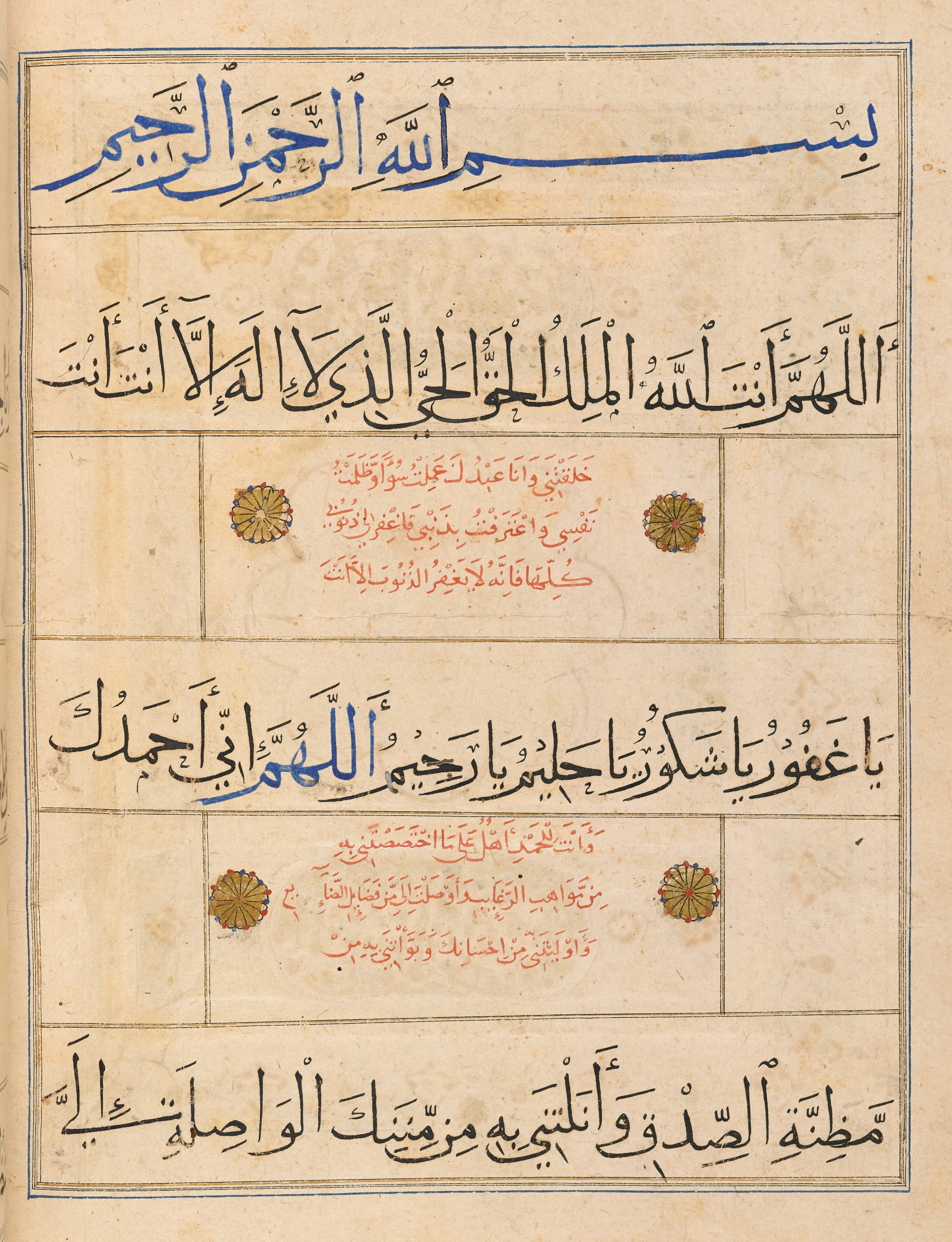
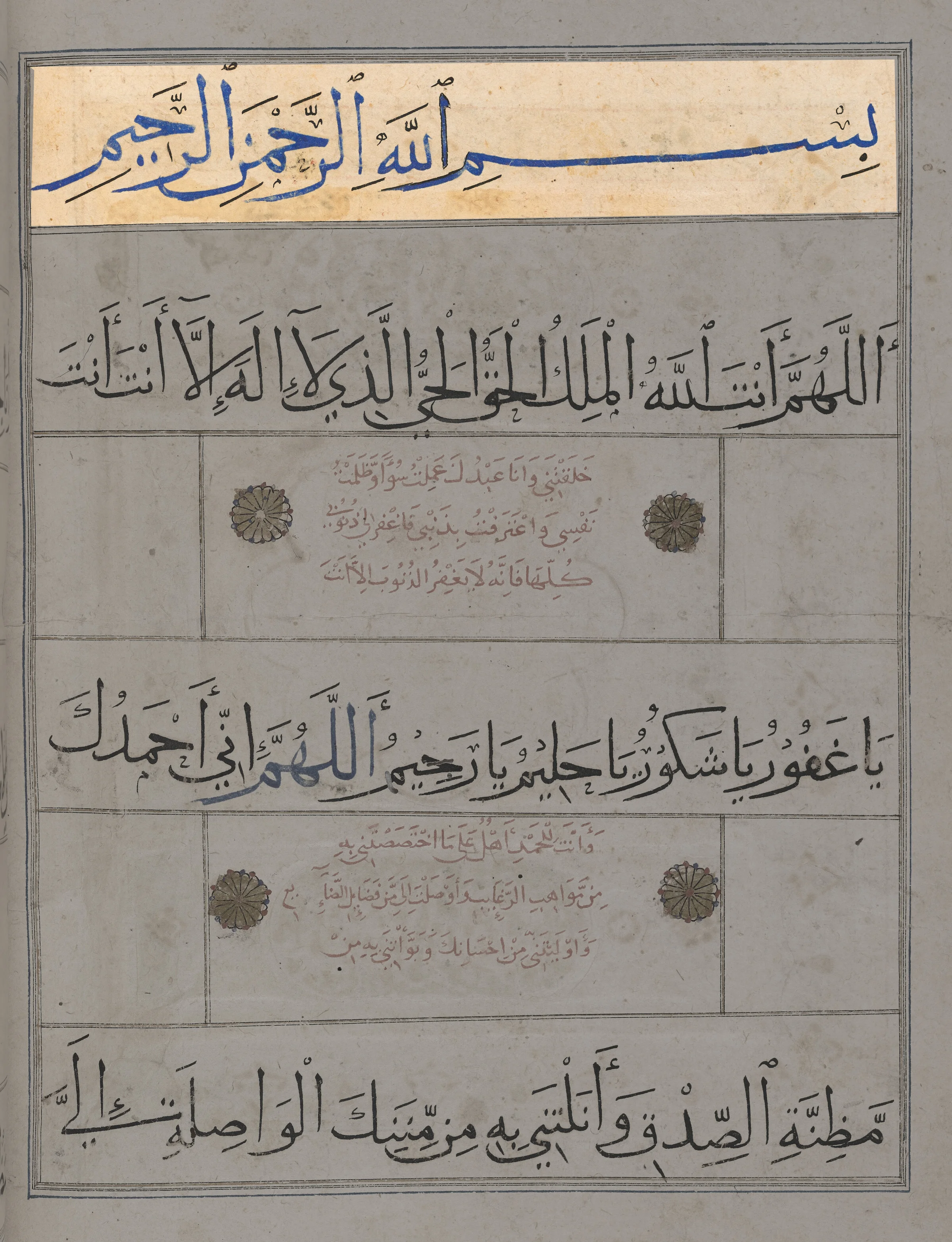
The layout of the prayer in this copy is similar to the one in the Qasida al-burda with large lines of muhaqqaq in black alternating with blocks of three red lines in naskh with decorative rosettes on both sides.
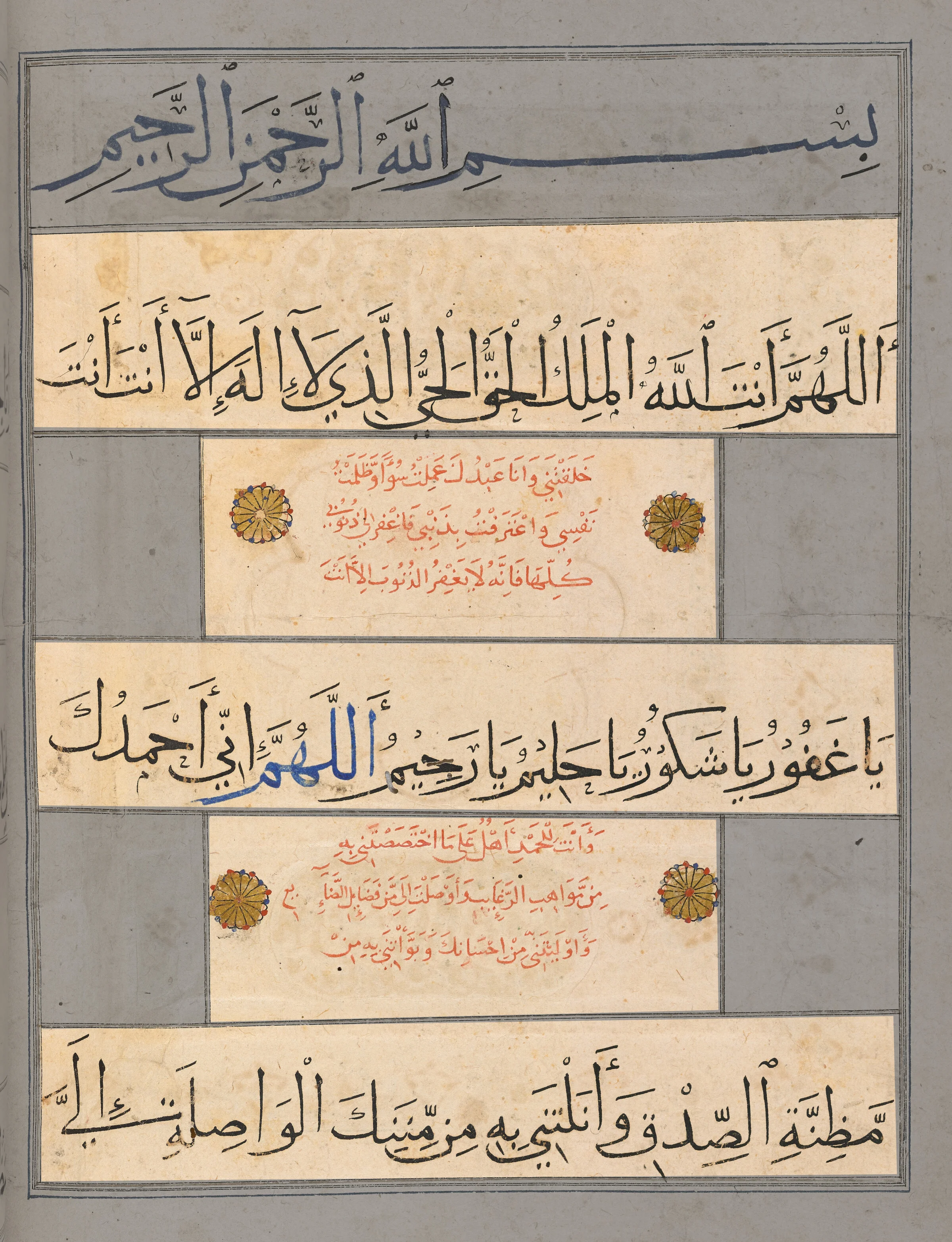
The basmala the traditional Islamic invocation (“In the name of God, the Most Gracious, the Most Merciful”), atop the page is written in blue to differentiate it from the rest of the text.
Endowed to a Sufi Institution?
The Qasida al-burda and the Hizb al-sayfi may have been bound together at the time of Sultan Inal. As it includes two popular litanies, the volume may have been offered to a religious institution.
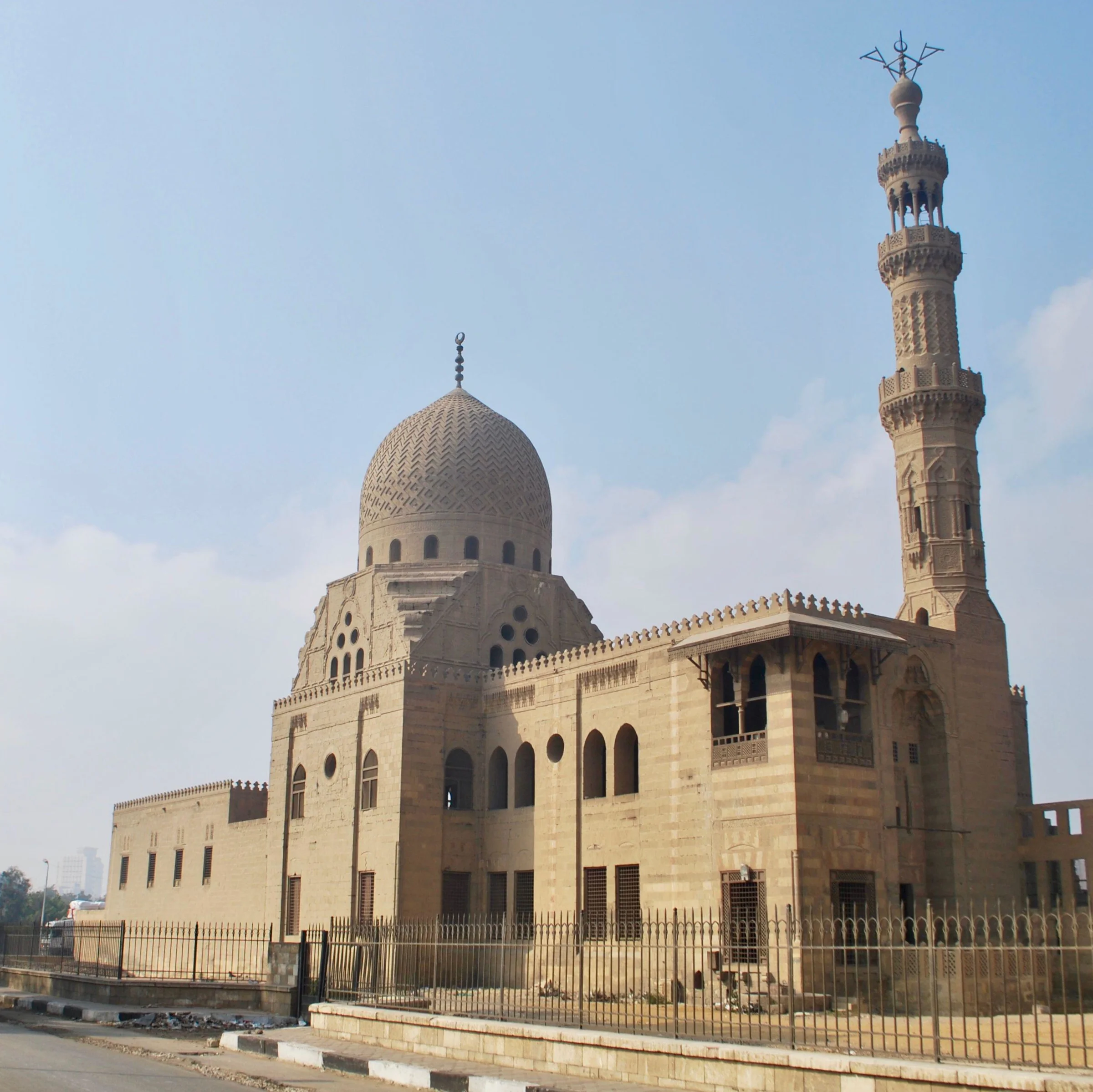
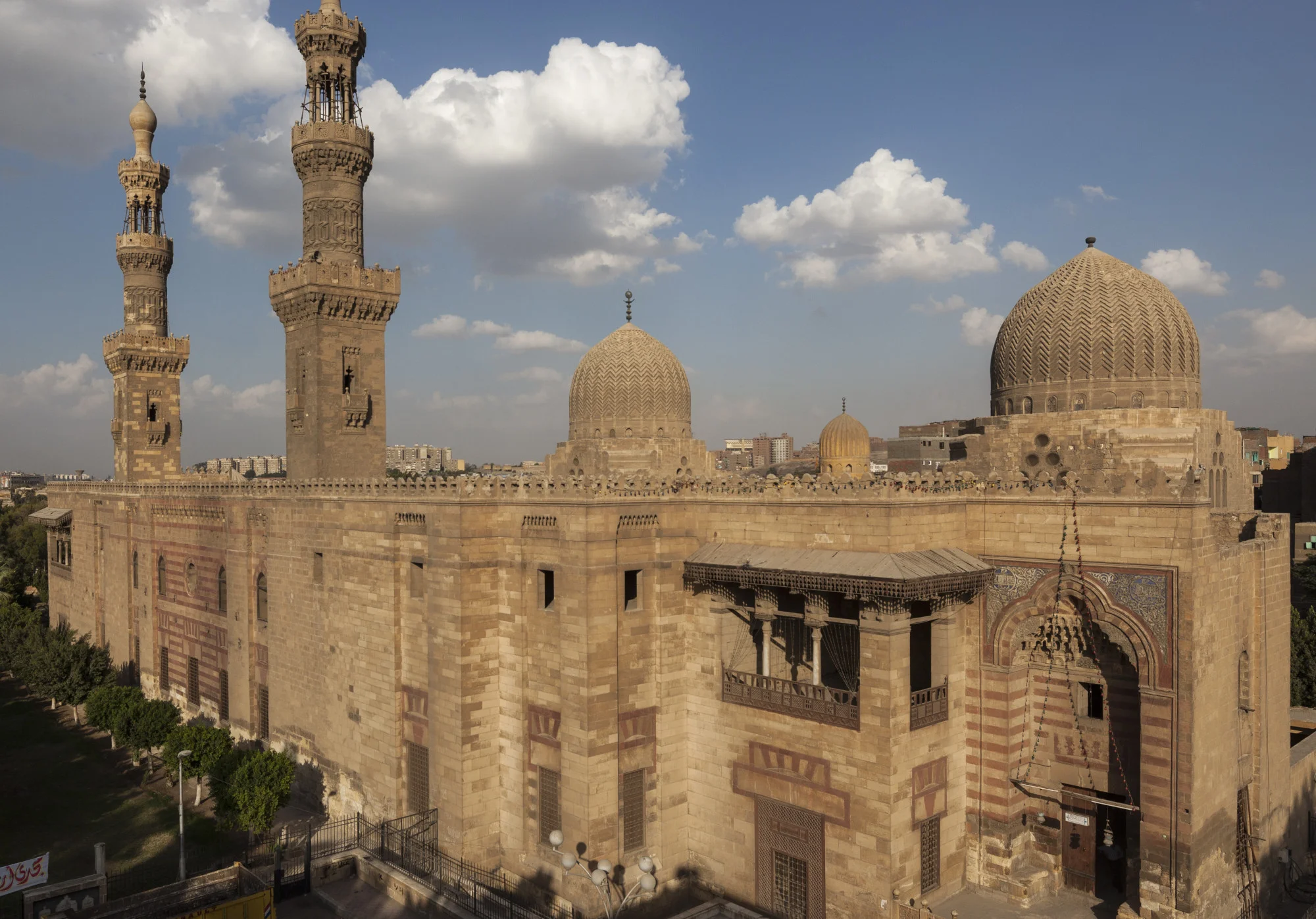
In fact, Mamluk Sultan Inal built such a complex in the City of the Dead, near to the one built by Sultan Barquq. It was completed in 1456 and, in addition to a mosque and the sultan’s mausoleum, it included a khanaqa with cells for the Sufis and large duplex apartments for their families.
There, both the Qasida al-burda and the Hizb al-sayfi may have been put on display and their texts recited on special occasions, such as the mawlid of the Prophet or of the saints.
Cairo Egypt
Objects
Explore the map or scroll to select an object.