A Mughal Painting with a Chishti Shaykh
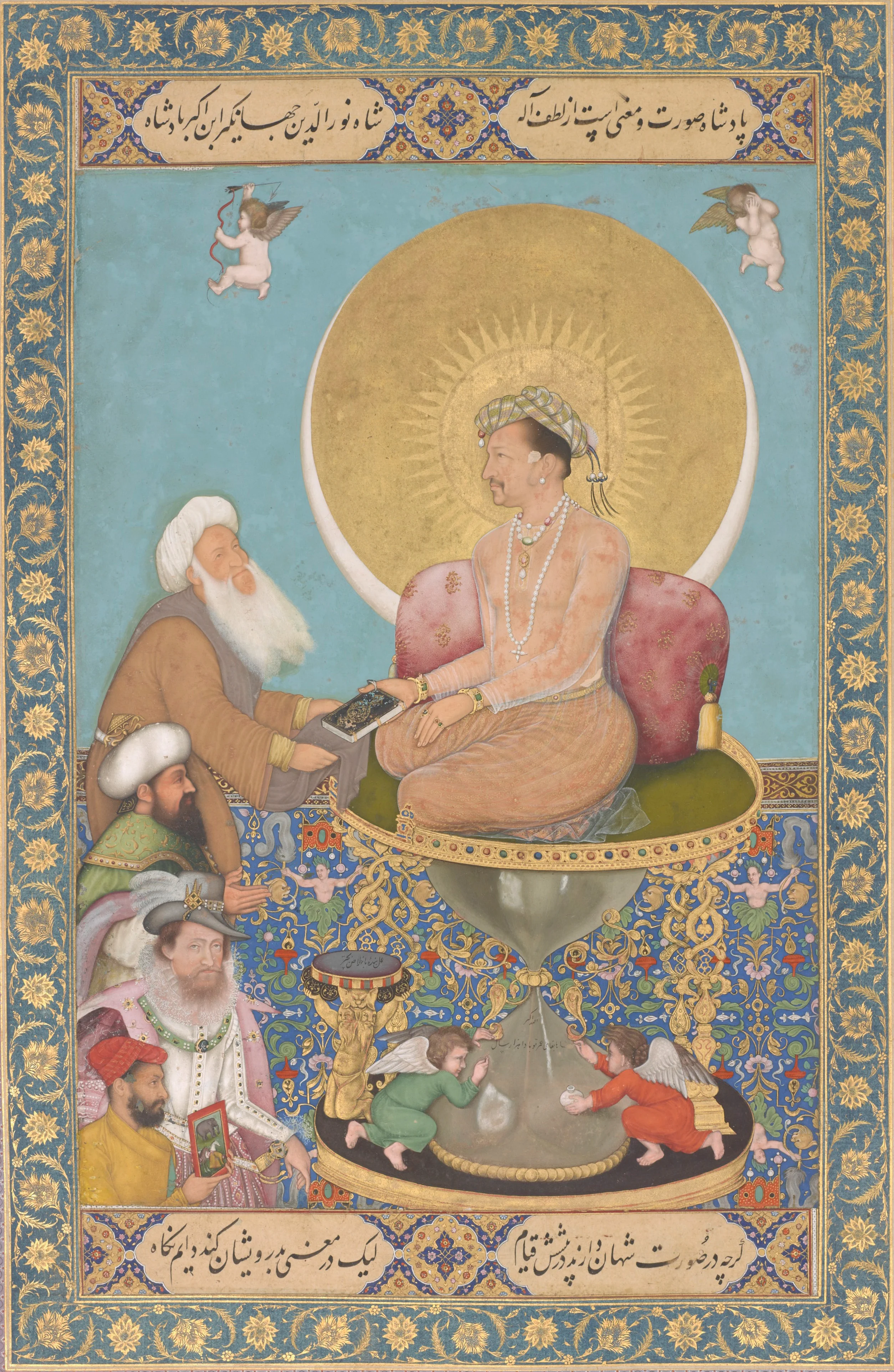
from the St. Petersburg Album, signed by Bichitr
India, Mughal period, ca. 1615–18
Opaque watercolor, ink, and gold on paper
National Museum of Asian Art, Smithsonian Institution, Freer Collection
Purchase—Charles Lang Freer Endowment F1942.15 recto
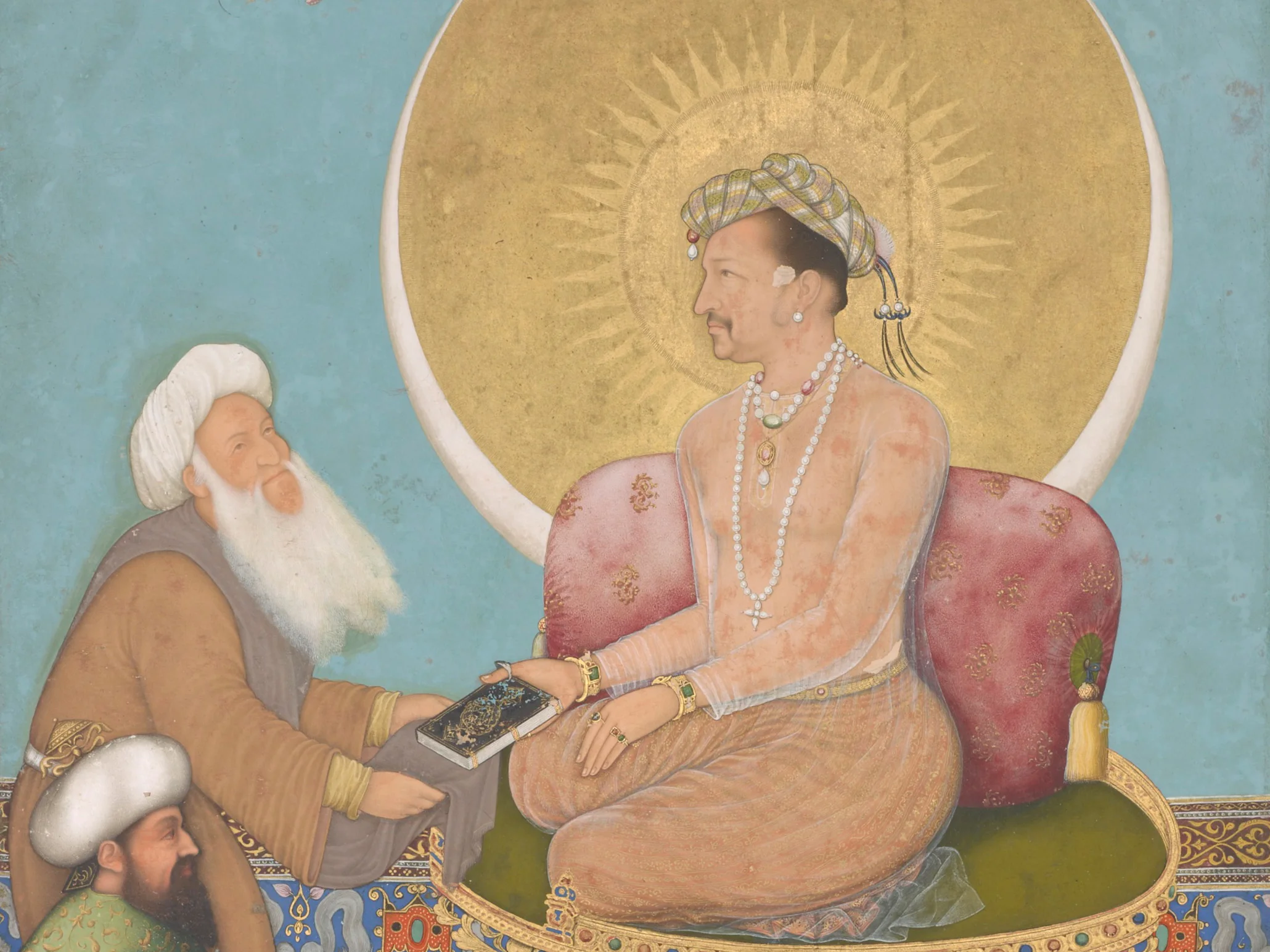
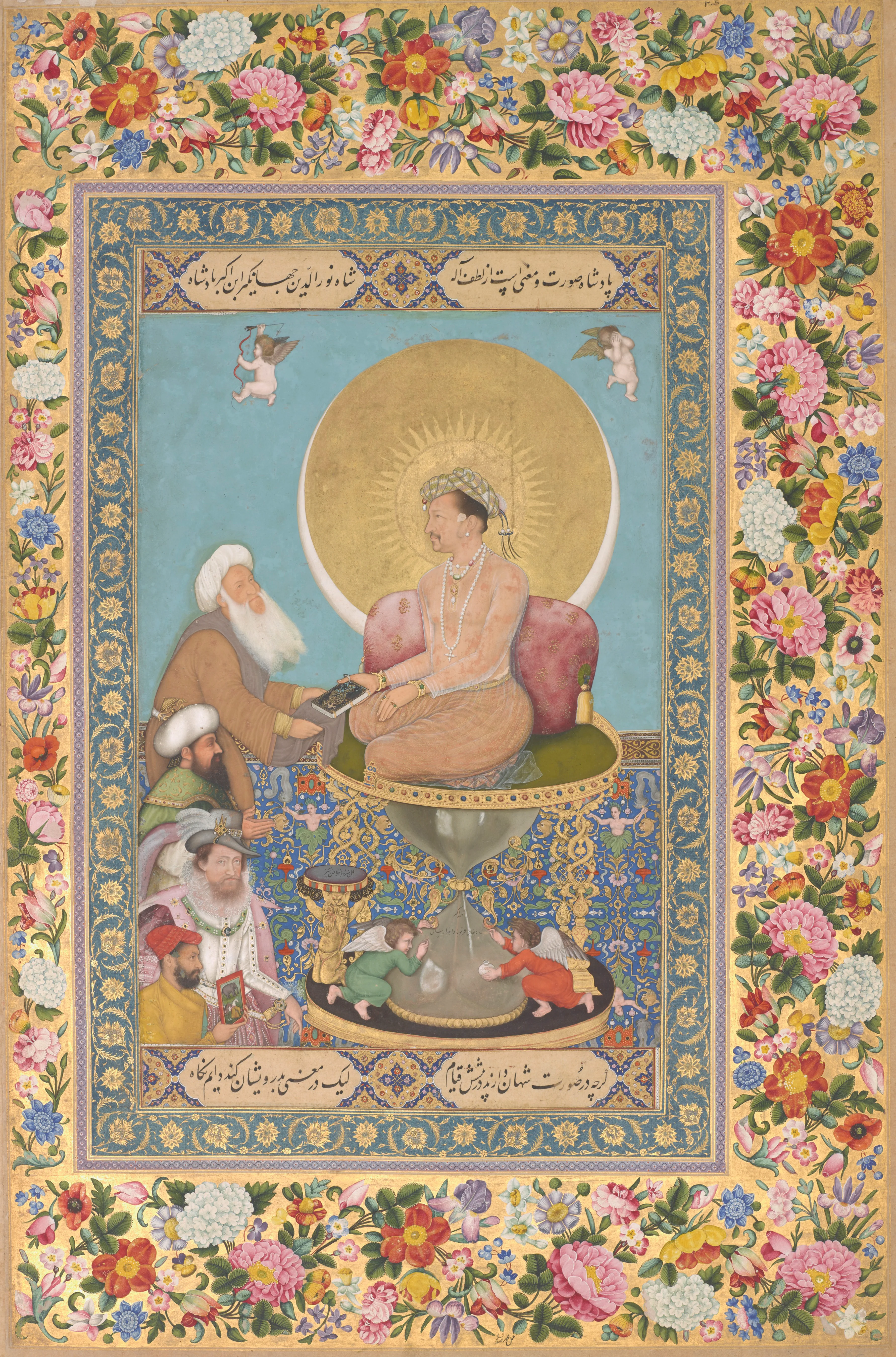
In the last fifteen years of his reign, the Mughal Emperor Jahangir (r. 1605–27) commissioned several unusual self-portraits that suggest some of his religious views and political concerns. Jahangir Prefers a Sufi Shaykh to Kings is one such example. These compositions were inspired by the emperor’s dreams and visions, which allegedly occurred when he was in Ajmer, the city associated with Mu‘in al-Din Chishti and the Mughal capital between 1613 and 1616. In the Sufi tradition, dreams were often viewed as messages from God in which devotees met long-deceased Sufi shaykhs who initiated them into a Sufi order.
Jahangir In Splendor
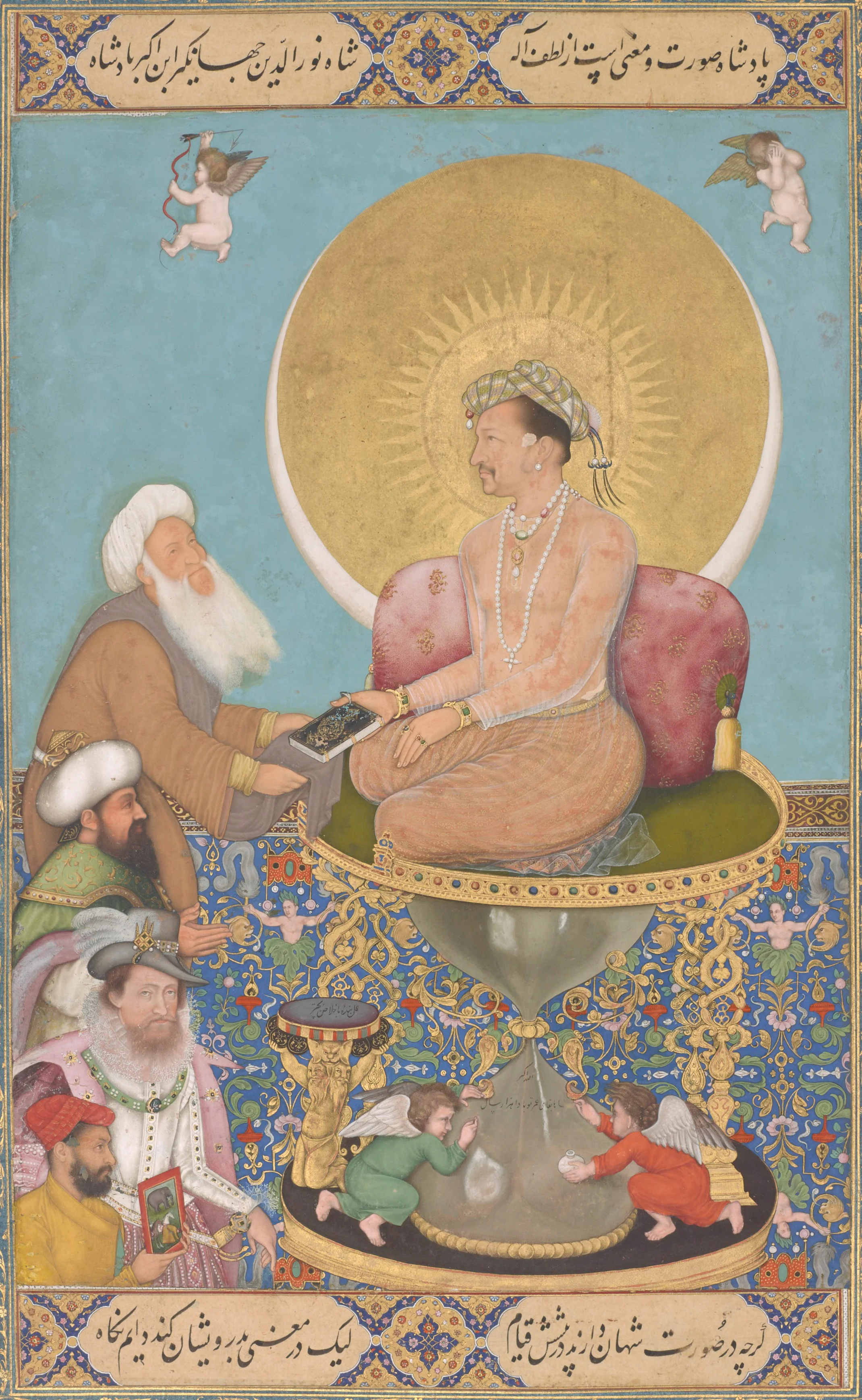
The composition depicts Jahangir seated in profile on a throne supported by an hourglass, which in turn rests on a stylized Italian carpet. He is silhouetted against a brilliant sun nestled in a crescent moon, which alludes to Jahangir’s other name: Nur al-Din (“Light of religion”). The emperor is dressed in the finest diaphanous robes accented with pearls and other precious gems, symbolizing his earthly wealth.
Ethereal and otherworldly, Jahangir Prefers a Sufi Shaykh to Kings was completed between 1615 and 1618. It is painted in opaque watercolors and gold on paper and skillfully integrates European and Indian artistic motifs and conventions. The composition has been flattened, but figures are carefully modeled and shaded, and certain features, such as the hourglass and the cherubs, are directly borrowed from Western pictorial sources.
Jahangir Prefers Spiritual Leaders Over Worldly Ones
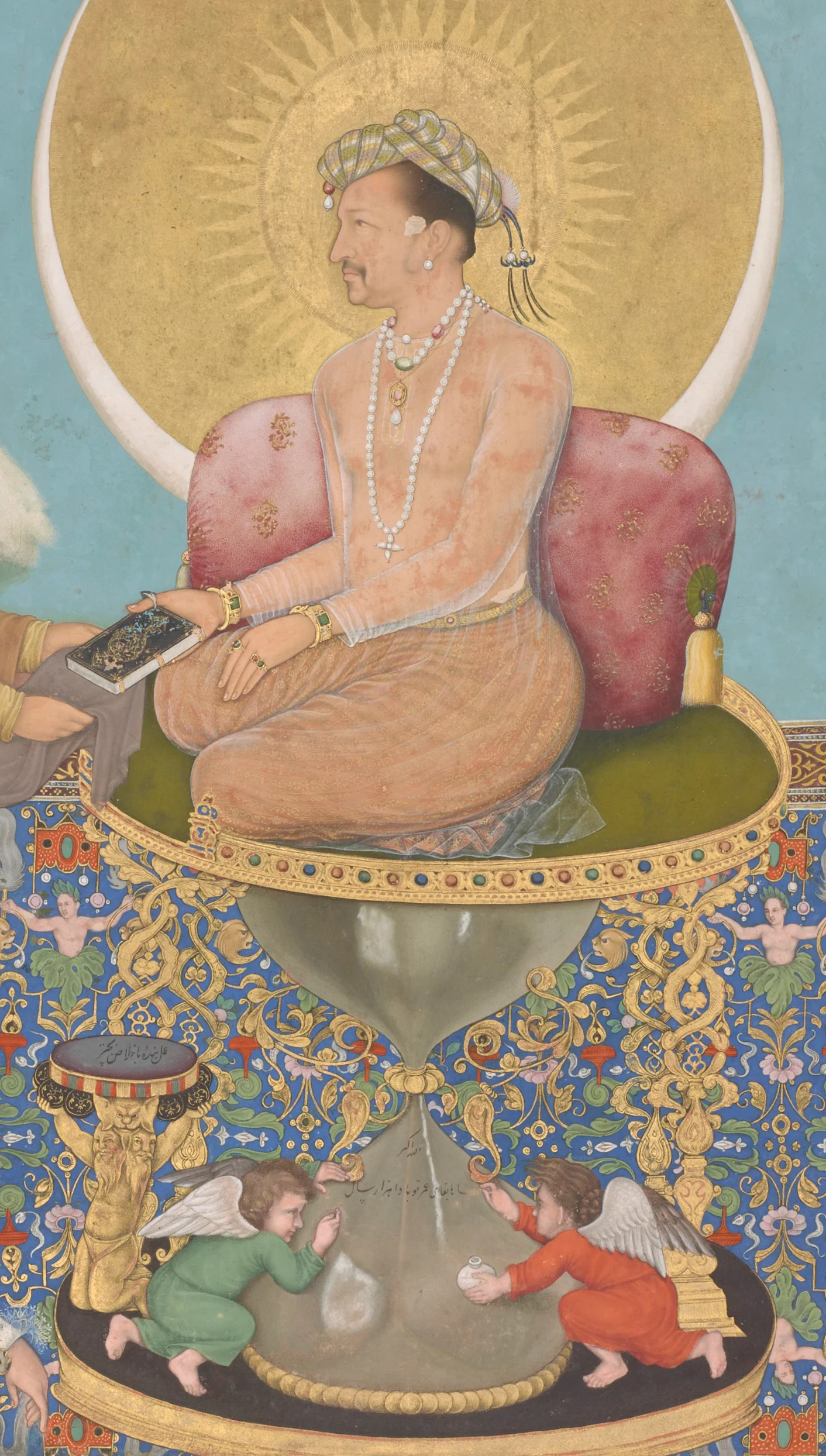
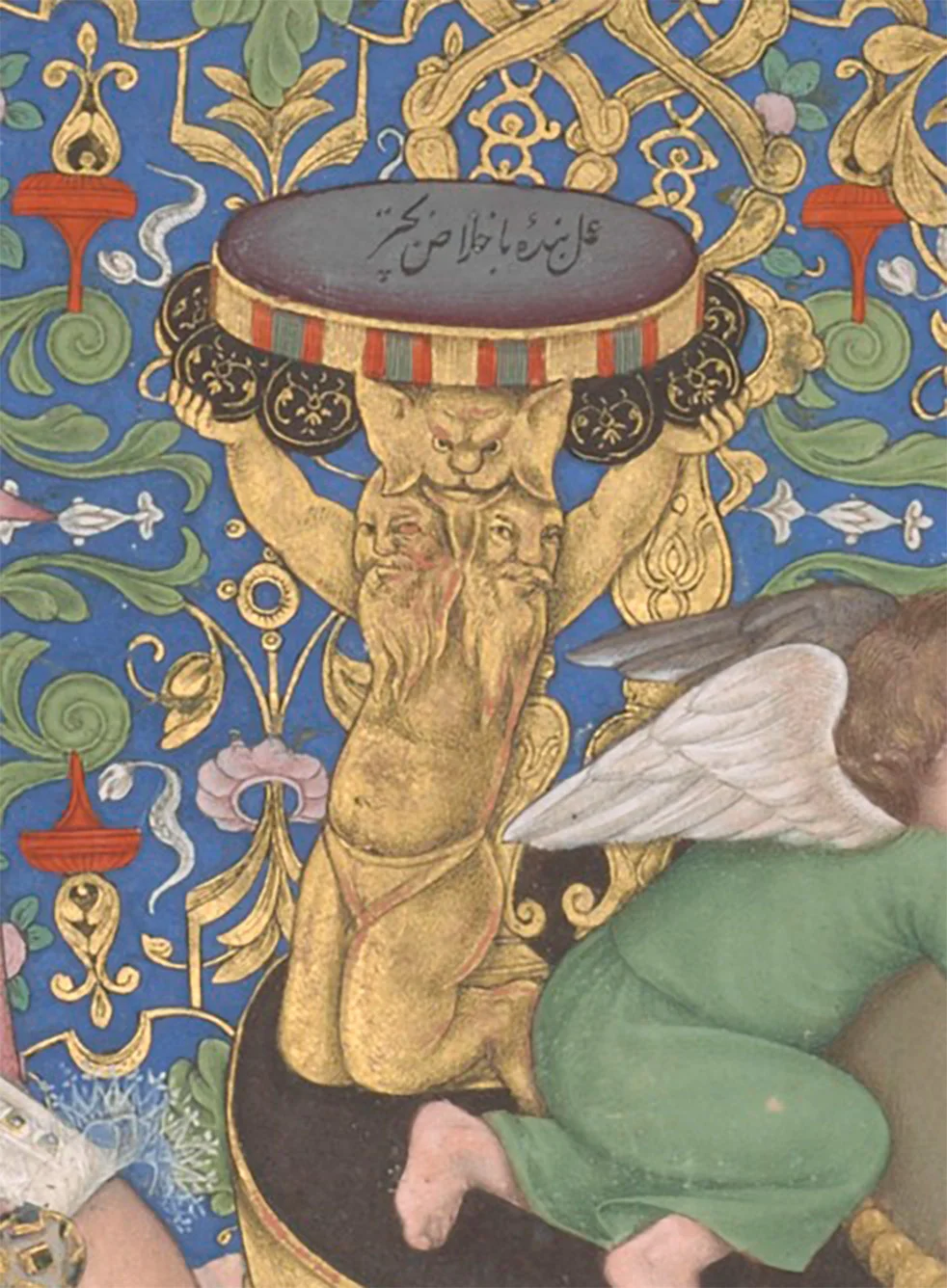
As Jahangir offers a book to a white-bearded figure, cherubs are frolicking above the throne. In contrast to Jahangir’s bejeweled appearance, the stooped, elderly man is wearing a plain brown robe and a white turban. He is admiringly gazing at the ruler as he extends his shawl to receive the book, probably a copy of the Qur’an. Based on other portraits, the figure represents Shaykh Husayn Ajmeri, whom Jahangir appointed as custodian of the Ajmer shrine and often consulted during his reign.
Inscription
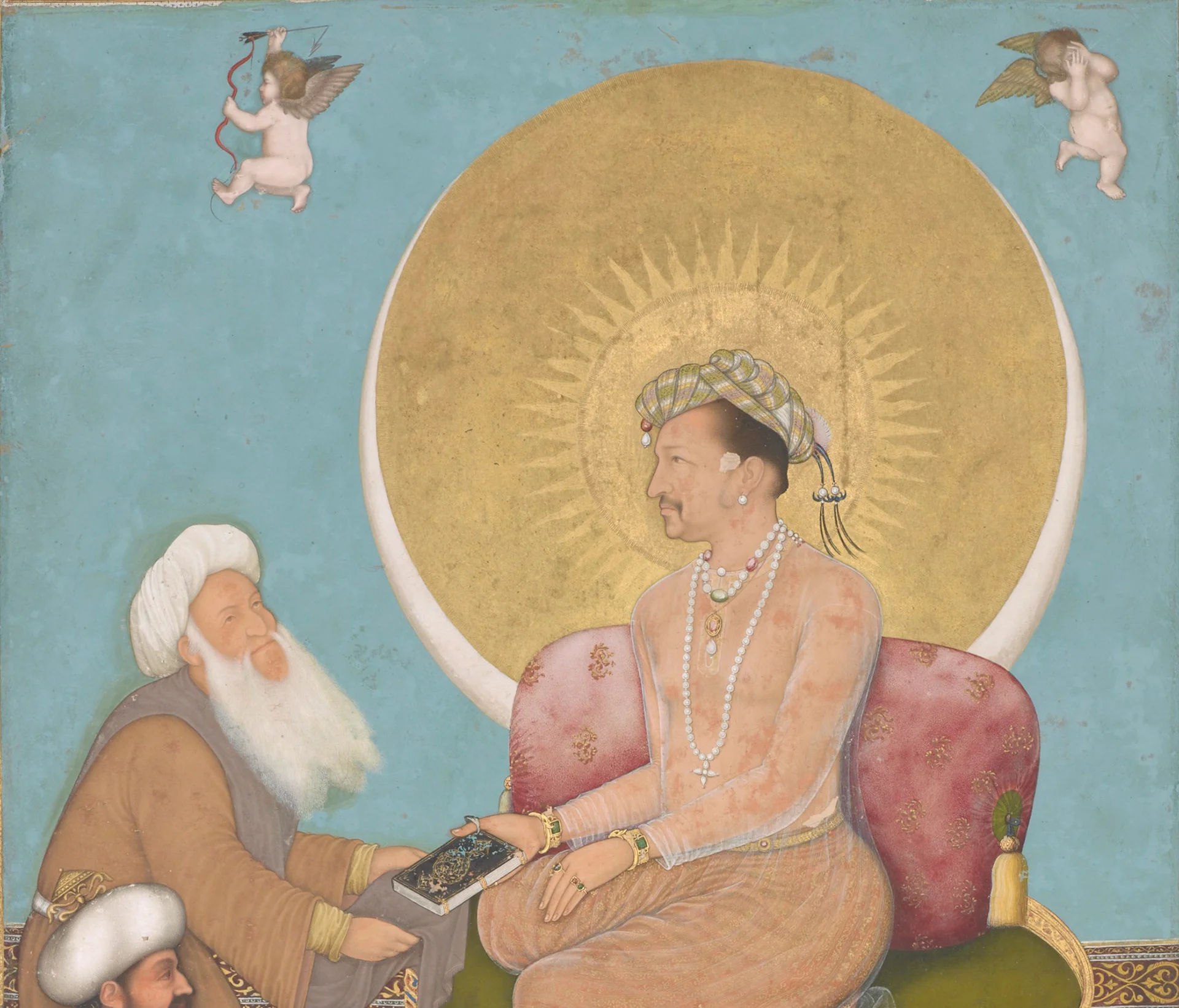
The couplets framing the composition at the top and bottom confirm the meaning of the painting. Reading from left to right, they state that Jahangir is the ruler of both the spiritual and worldly realms. Although he interacts with other sovereigns and men of power, he prefers the company of spiritual leaders and “turns his gaze toward dervishes.”
The King of the outer and inner domains is, by the grace of God,
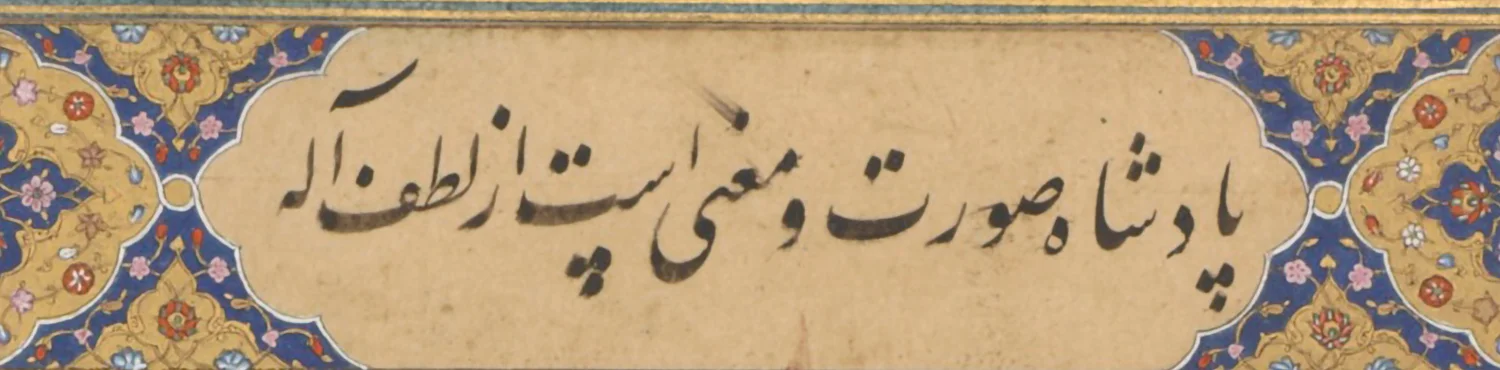
The King of the outer and inner domains is, by the grace of God,
King Nur al-Din Jahangir ibn Akbar Padishah.
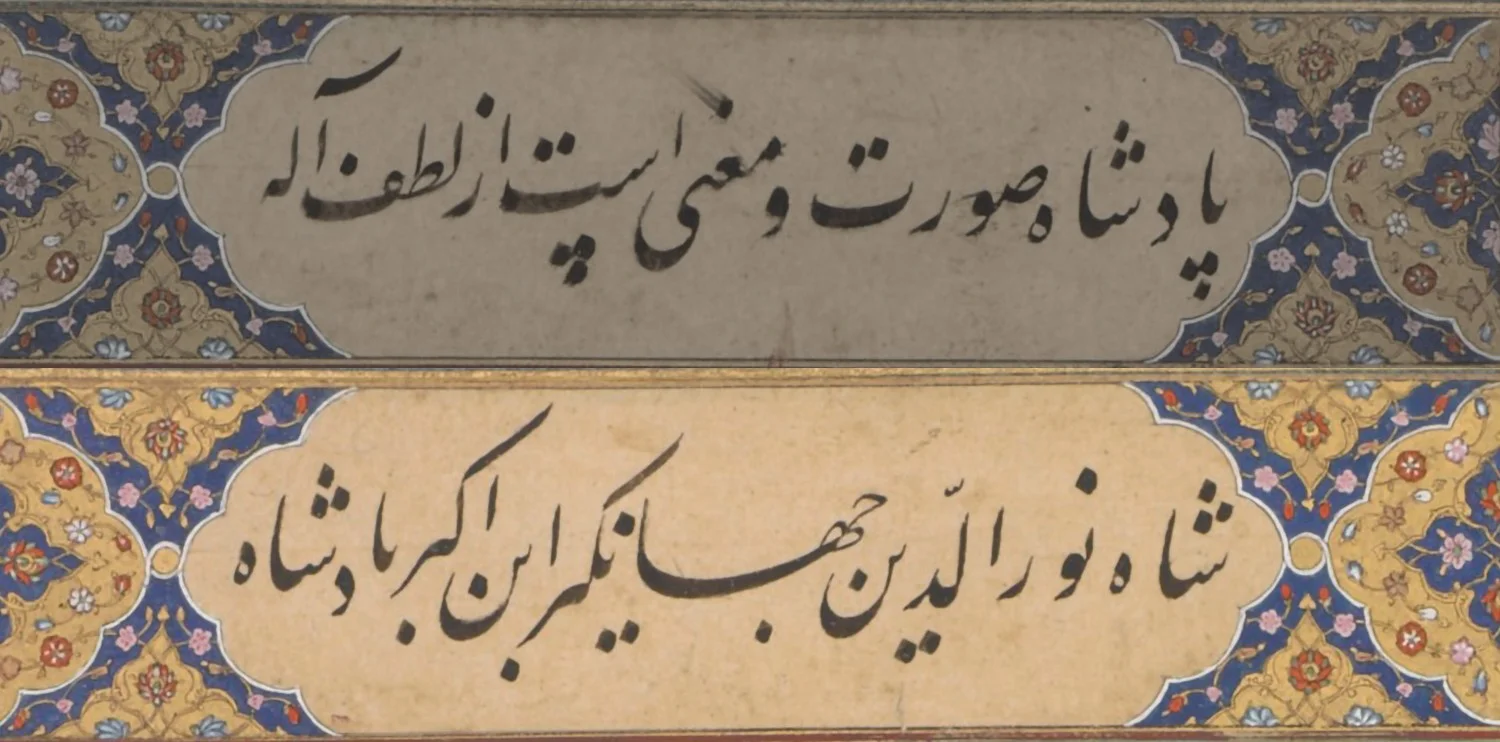
The King of the outer and inner domains is, by the grace of God,
King Nur al-Din Jahangir ibn Akbar Padishah.
Although outwardly kings stand before him,
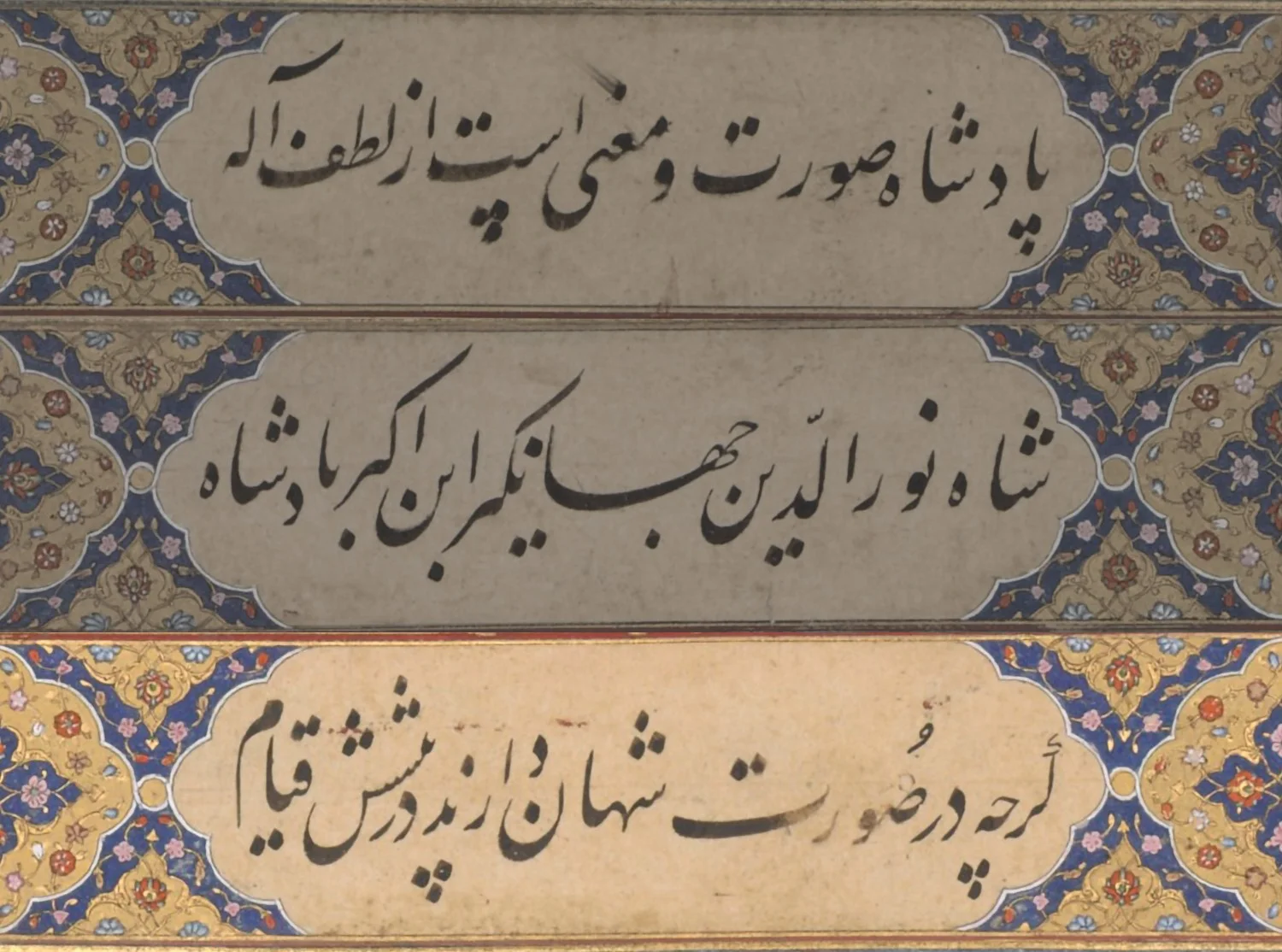
The King of the outer and inner domains is, by the grace of God,
King Nur al-Din Jahangir ibn Akbar Padishah.
Although outwardly kings stand before him,
Inwardly he always turns his gaze towards dervishes.
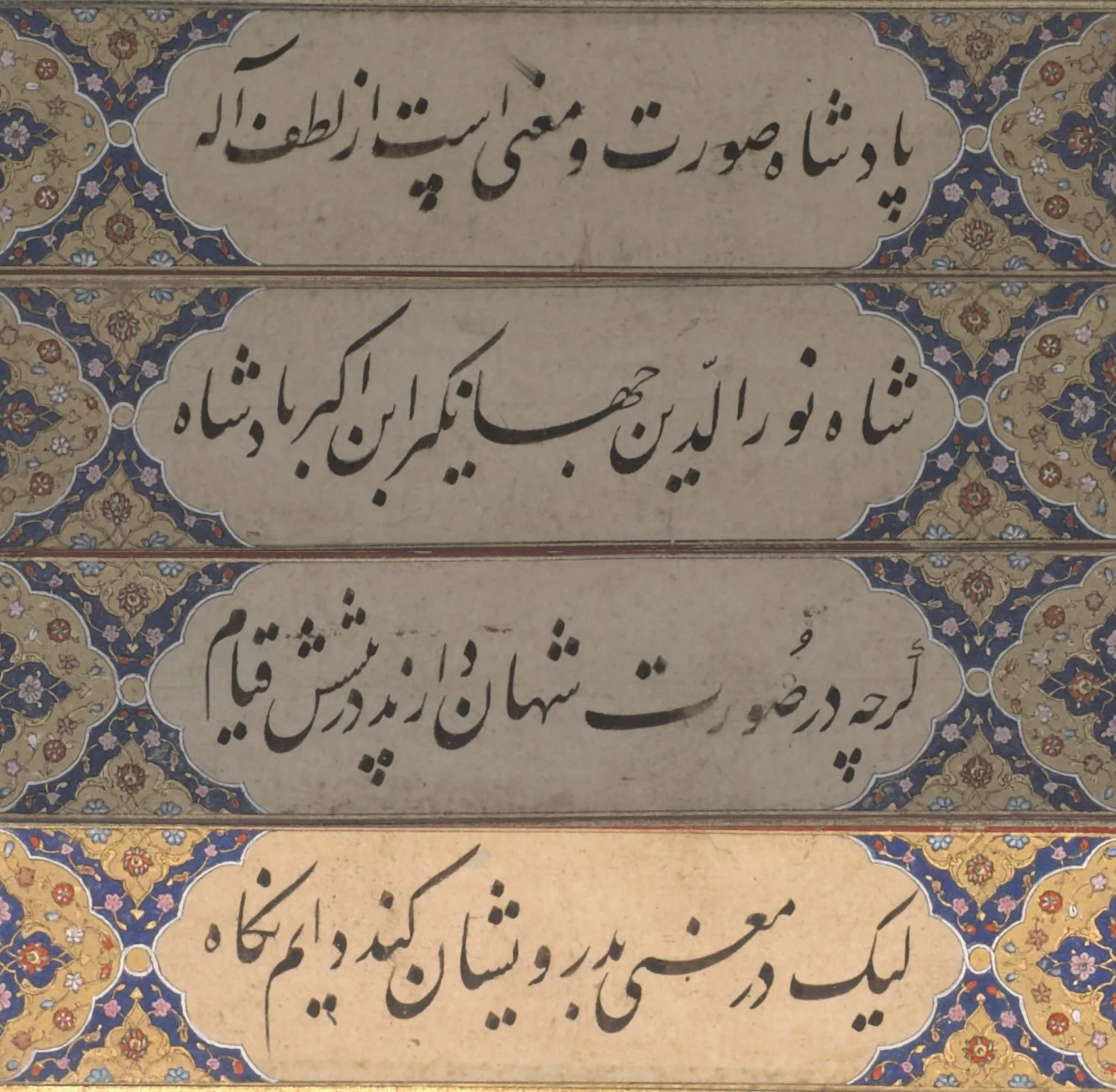
Men of Worldly Power
Standing below Shaykh Husayn Ajmeri, and therefore inferior to him, are three figures. The portly man in profile and dressed in a green robe and a white turban still needs to be properly identified. His attire suggests he may be an Ottoman sultan, a member of the Christian clergy, or of Russian royalty. Next to him stands James I (r. 1603–25), king of England and Ireland, who stares out of the composition. His plumed hat and fine fitted European attire and jewelry confirm his royal identity.
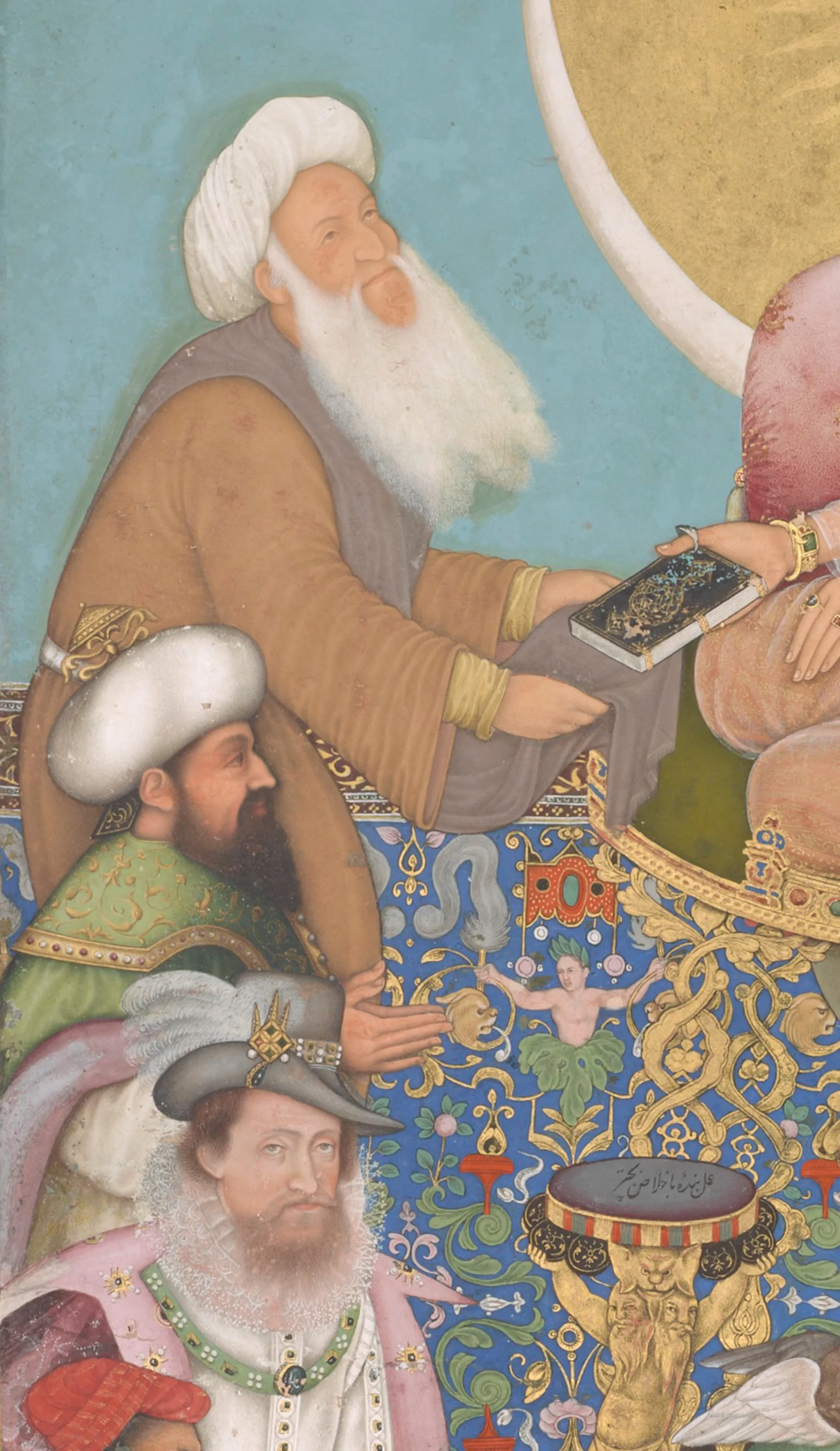
King James I
King James’s image is based on portraits by Flemish and Dutch artists in England, such as Simon van der Passe (d. 1647), which must have circulated in seventeenth-century India. In this painting, James I represents the type of worldly figure, whom Jahangir ignored in favor of holy men.
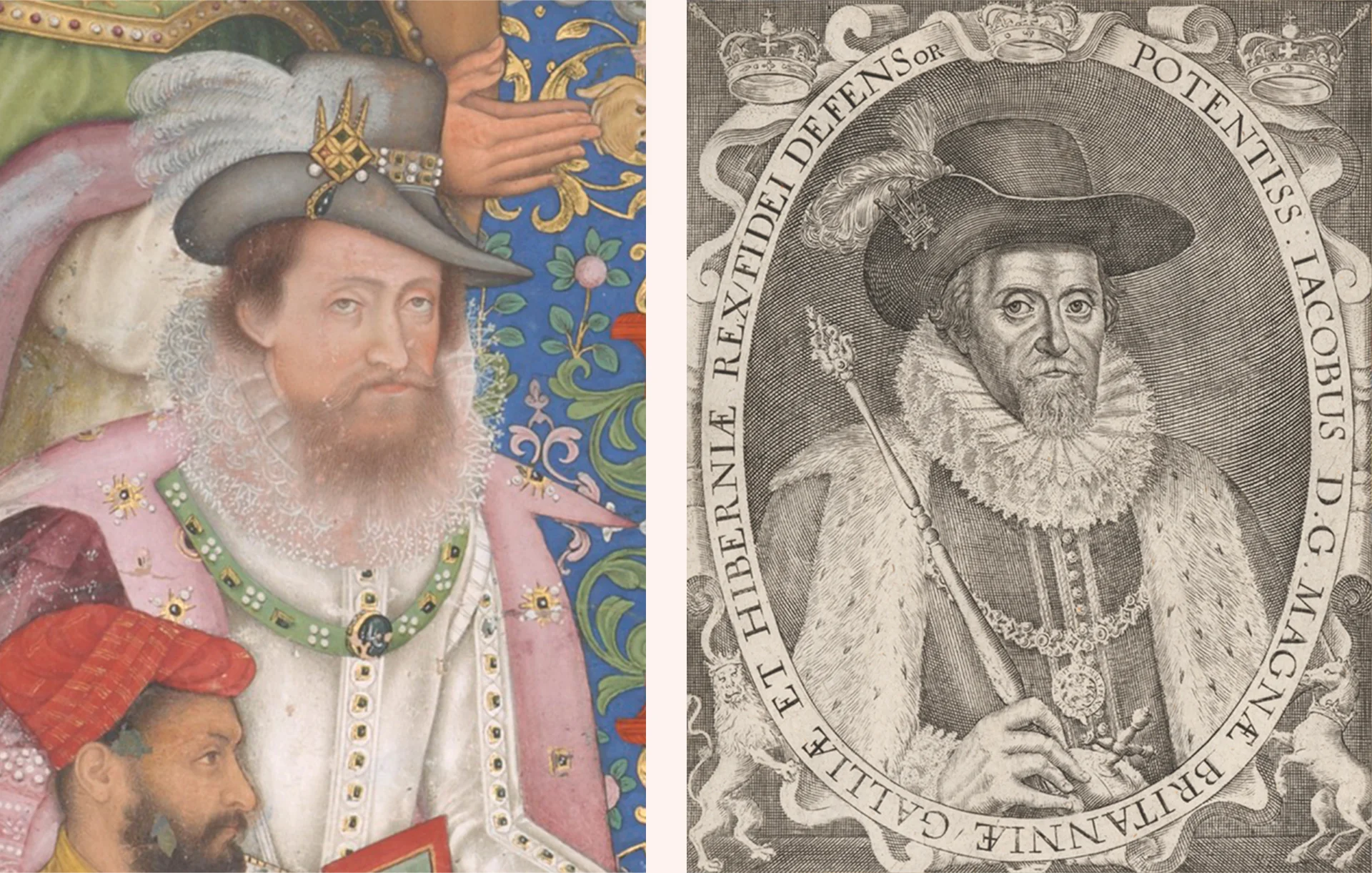
The Artist
The figure in the lower corner, wearing an unassuming yellow jama (man’s robe) and a red turban, is the Hindu artist Bichitr (act. ca. 1615–40), who has inserted himself into the composition. A member of the royal workshop during the reign of Jahangir and his successor Shah Jahan (r. 1628–58), Bichitr excelled at portraiture and incorporated European artistic ideas into his composition.
To confirm his identity as an artist, Bichitr holds up a painting of an elephant and two horses—two animals he may have received as royal gifts. In the composition, a male figure, who is also dressed in a yellow jama, is prostrating. It may be another self-portrait expressing the artist’s gratitude to the emperor.
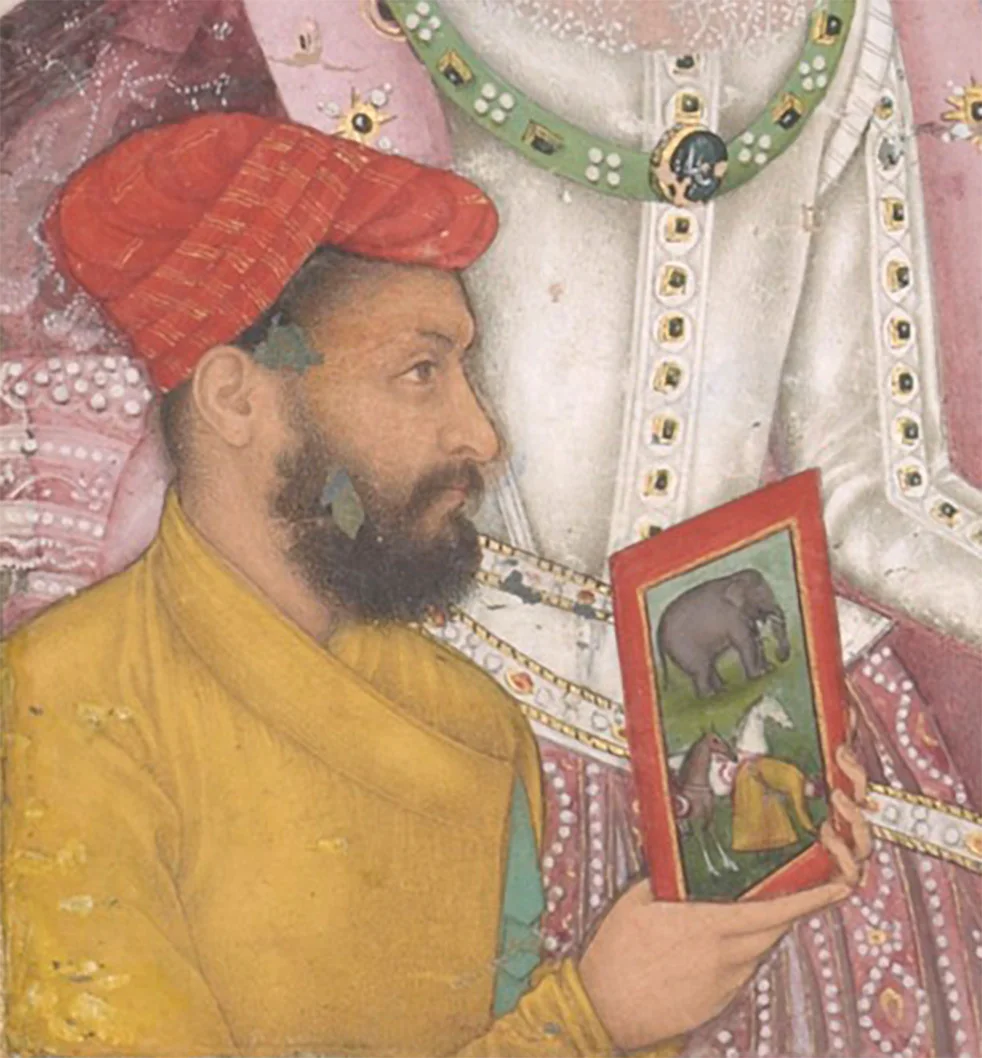
As a further sign of respect and humility, Bichitr’s signature appears on the small footstool in front of the throne, which is held up by the mythical Greek figure of Atlas.
The Painting’s Afterlife
Jahangir Prefers a Sufi Shaykh to Kings was kept in the Mughal royal library until 1739 when Nadir Shah, the ruler of Iran, invaded and sacked Delhi. Nadir Shah took the painting, together with many other priceless Mughal works of art, to Iran.
In 1747–48, the celebrated Persian artist Muhammad Sadiq added new borders to the portrait, which were inspired by both Mughal and European botanical studies. Most of these folios from India were then integrated into an album (muraqqa‘) with other Mughal and Persian paintings and calligraphies.
In 1910, Tsar Nicholas II purchased the album, and today it is housed in the Institute of Oriental Manuscripts in St. Petersburg, hence the name “St. Petersburg Album.” Some of the folios that were not included, like those at the National Museum of Asian Art, gradually made their way further west.
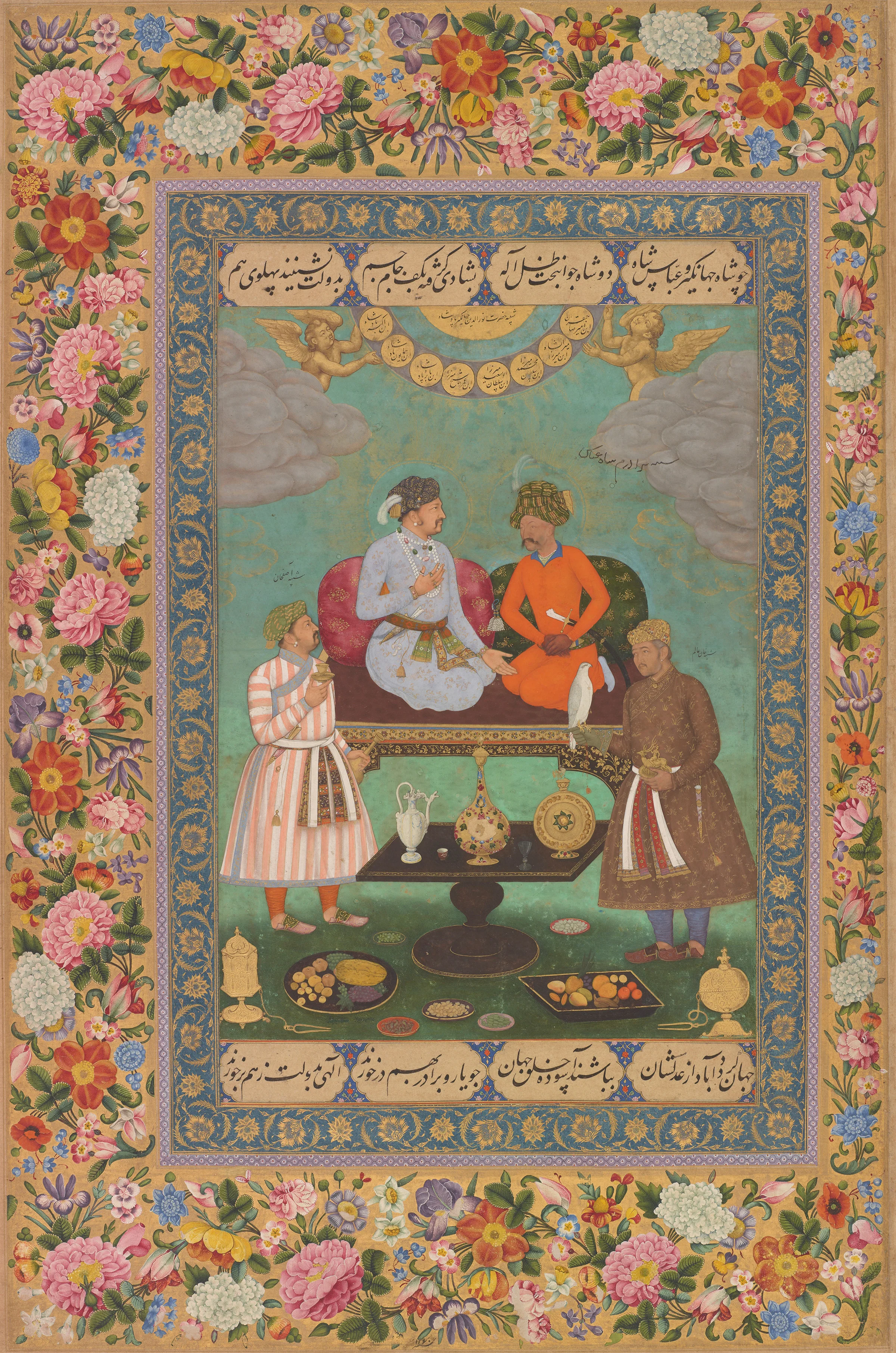
The National Museum of Asian Art’s Freer Collection houses two other seventeenth- century paintings inspired by Jahangir’s alleged visions. They depict Jahangir in the company of his rival, Shah Abbas (r. 1588–1629), the ruler of Safavid Iran, whom he had never met.
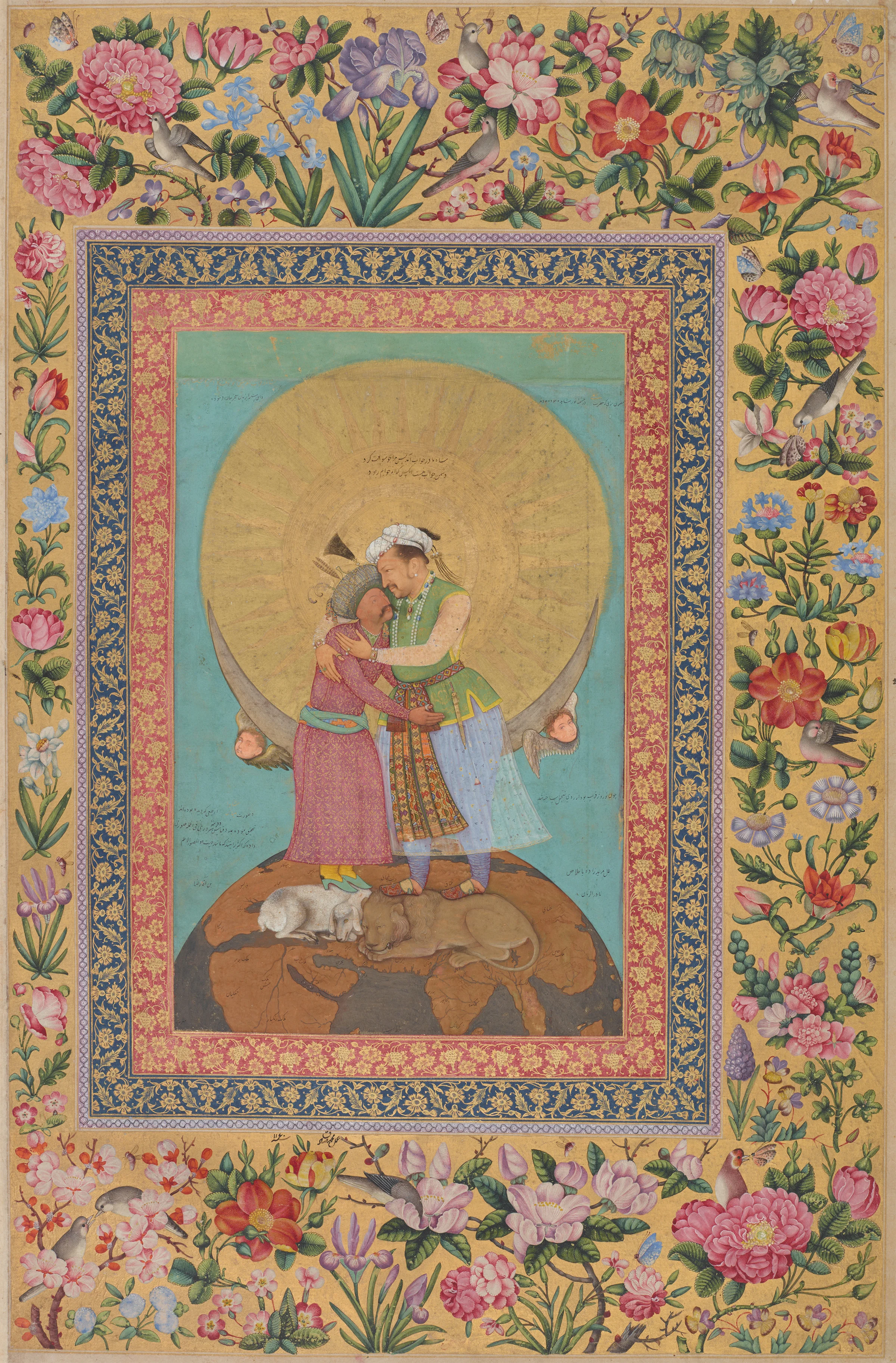
Like Jahangir Preferring a Sufi Shaykh to Kings, these images highlight some of the emperor’s worldly concerns and preoccupations, such as the military and economic competition between the Mughals and the Safavids.
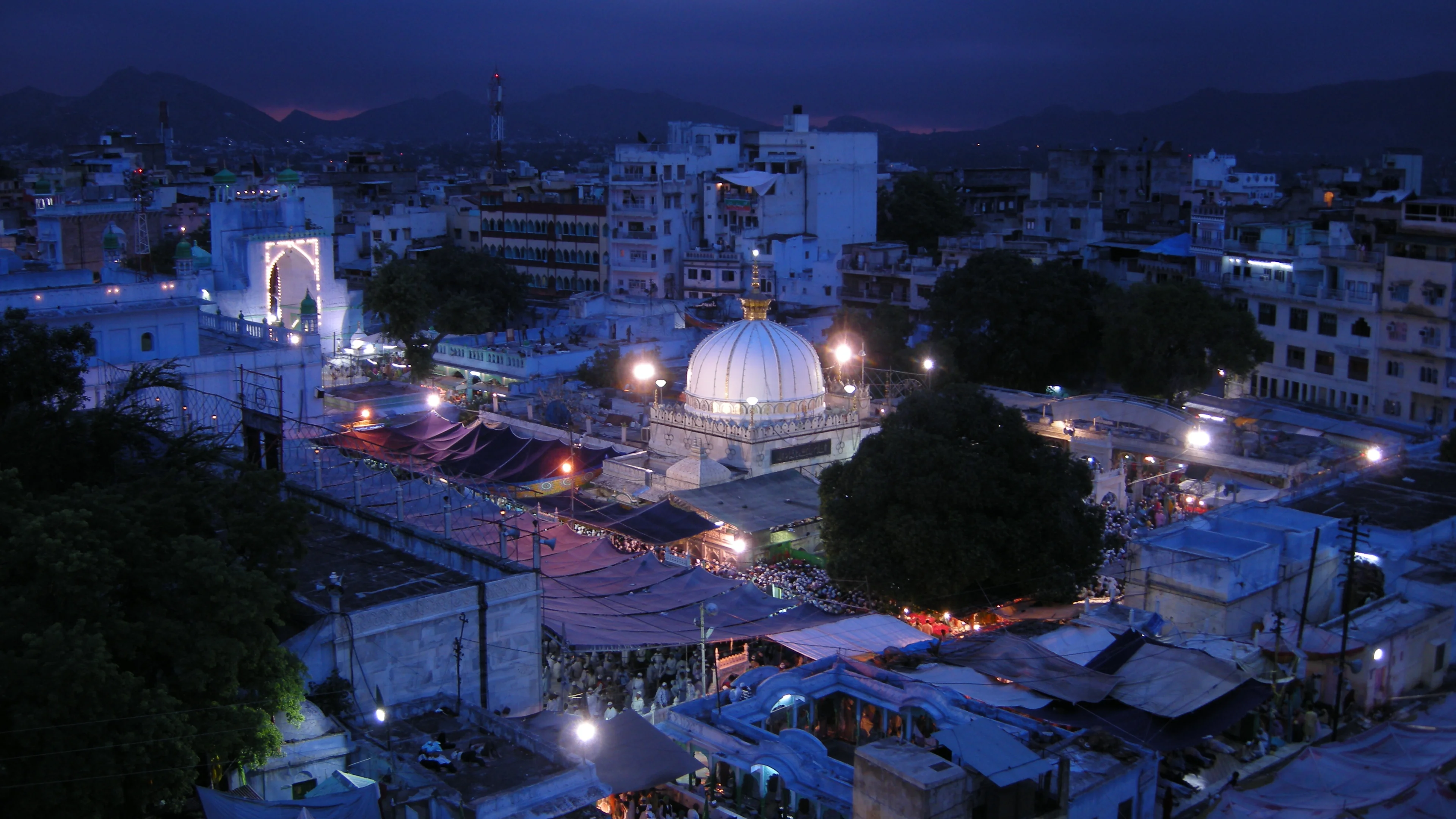
Ajmer India
Objects
Explore the map or scroll to select an object.