A Qadiri Prayerbook from Harar: The Fath al-Rahman
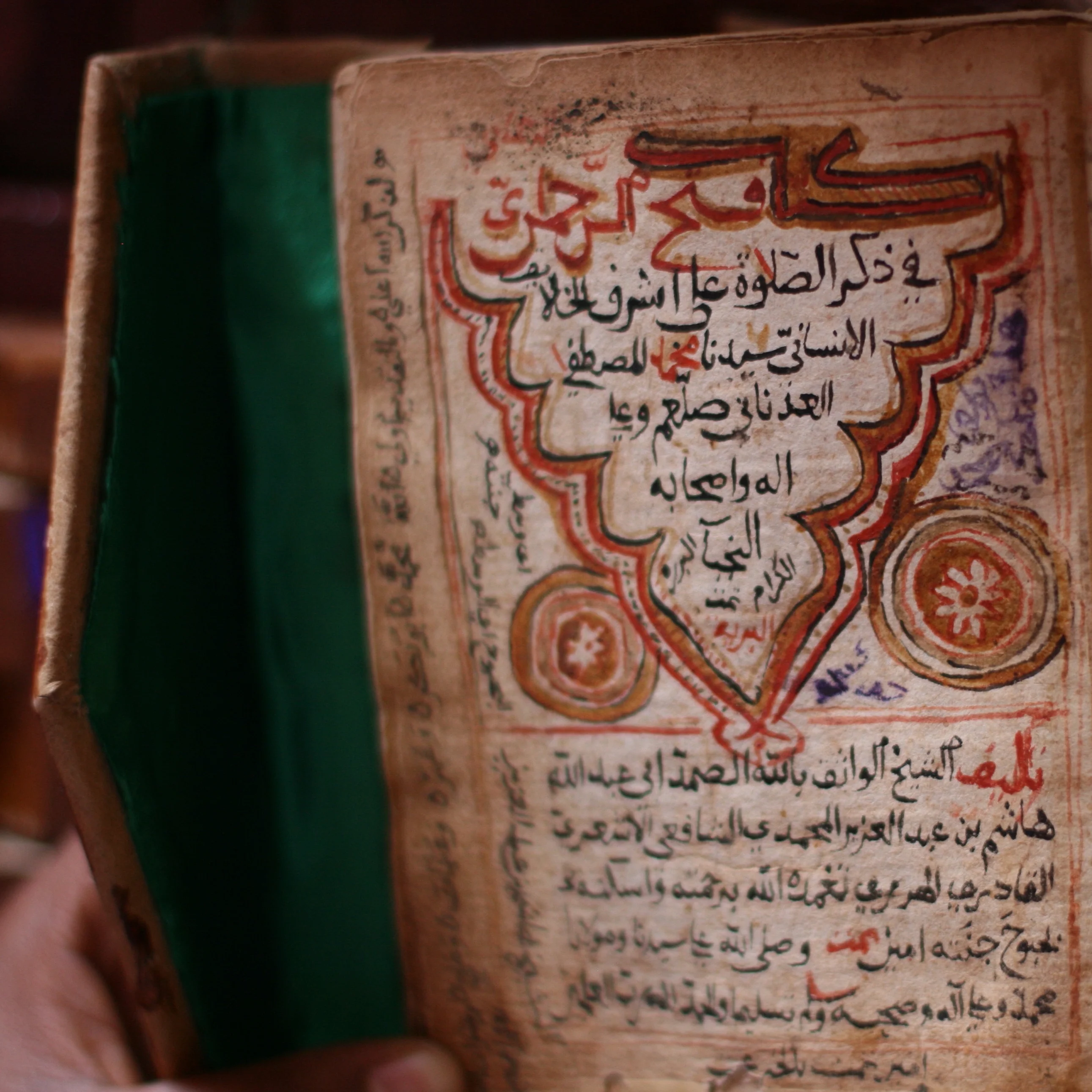
Copied by Ibrahim ibn Omar ibn Saʿd al-Marhum
Ethiopia, Harar, 15 Dhu al-Qaʿda 1165 AH/23 September 1752 CE
Ink and color on paper; with leather cover
Sharif Harar Museum, SH2006-187
The practice of sending blessings upon the Prophet Muhammad is common to Muslim communities. Such invocations are part of a larger tradition of prayers but are also considered an act that brings merit upon the reciter. The Fath al-Rahman (Inspiration of the Merciful) is one such Sufi devotional text. It was composed by Shaykh Hashim ibn Abd al-Aziz (d. 1765) in Harar, Ethiopia.
The Many Identities of Shaykh Hashim
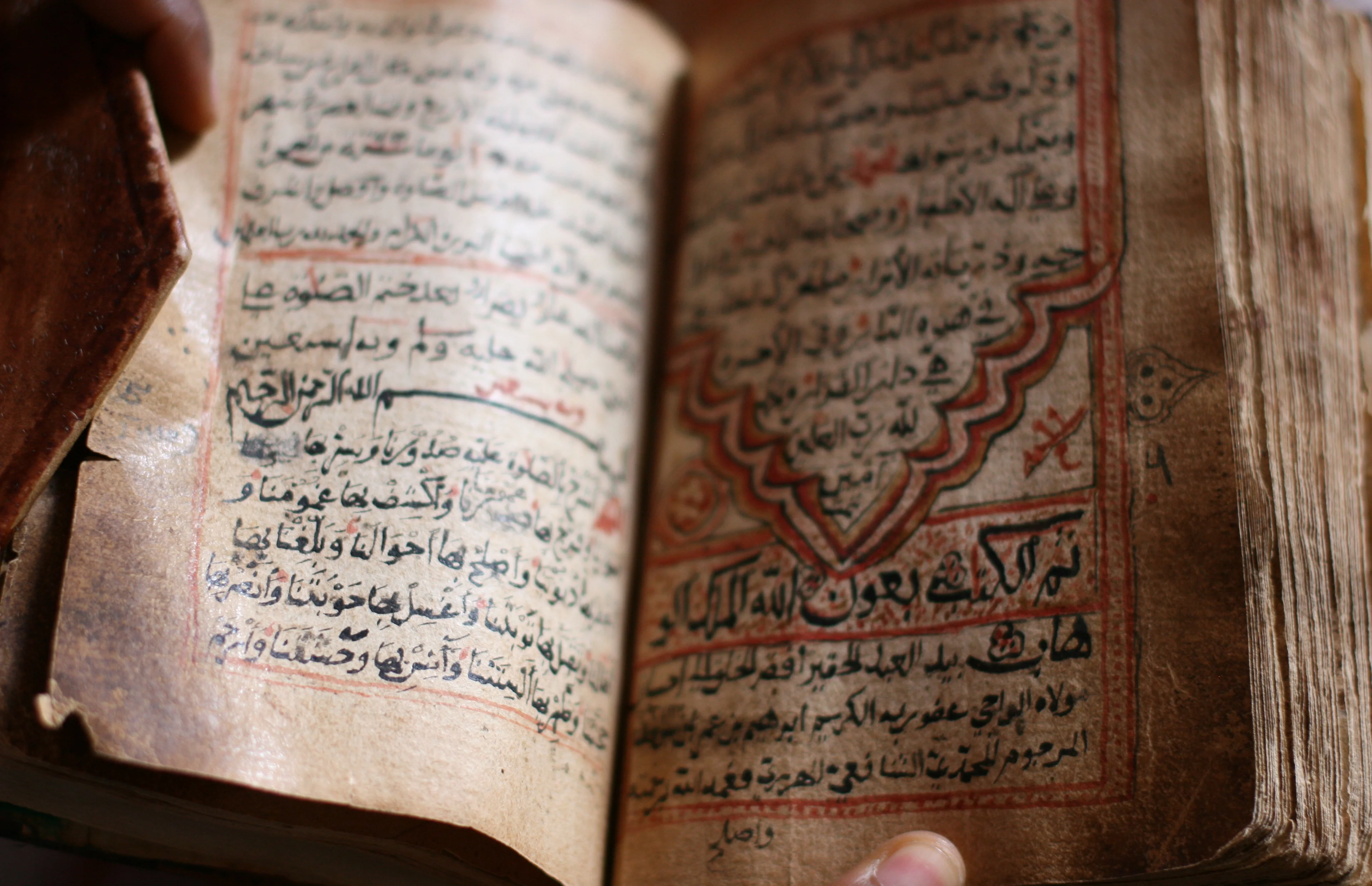
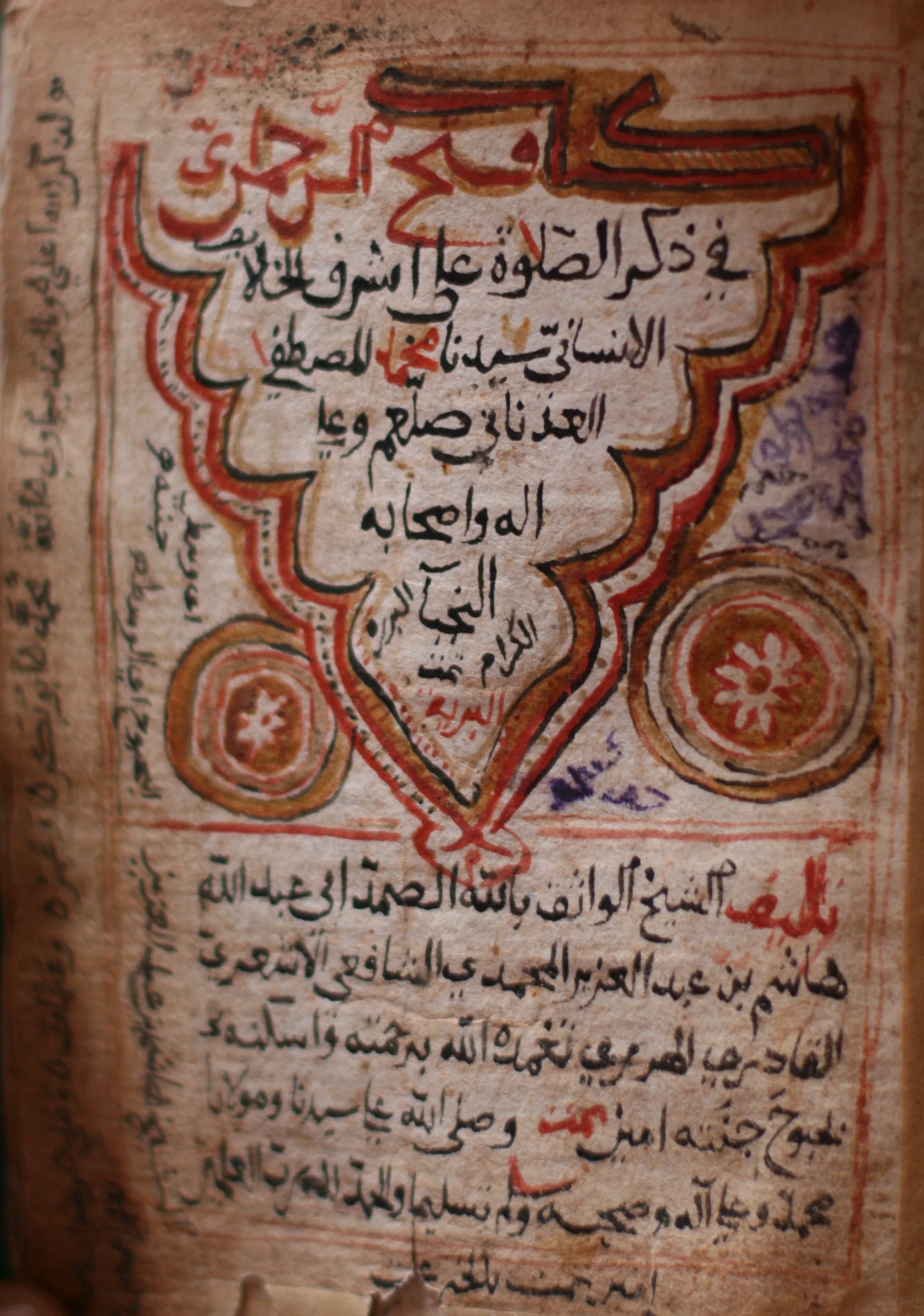
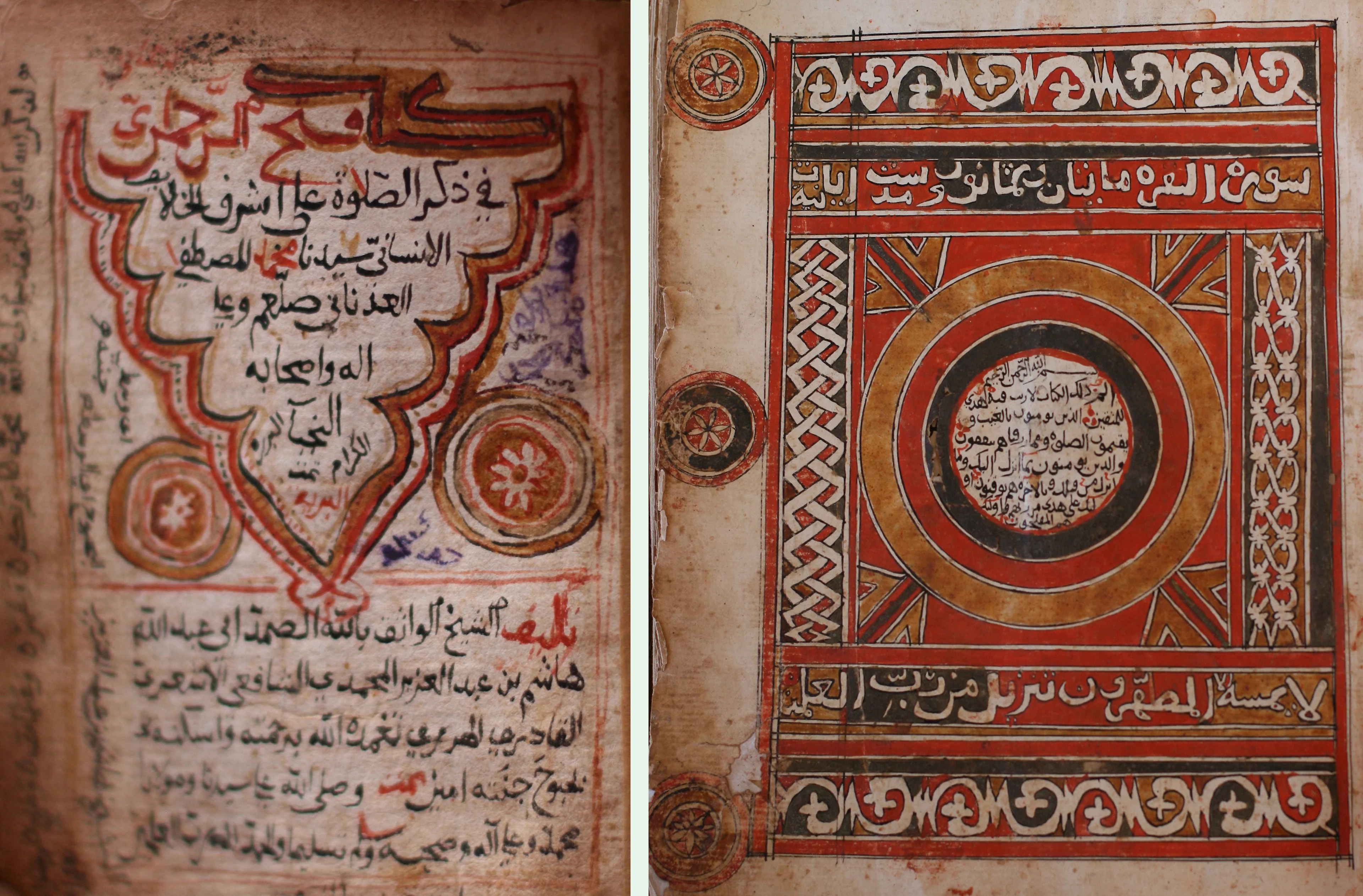
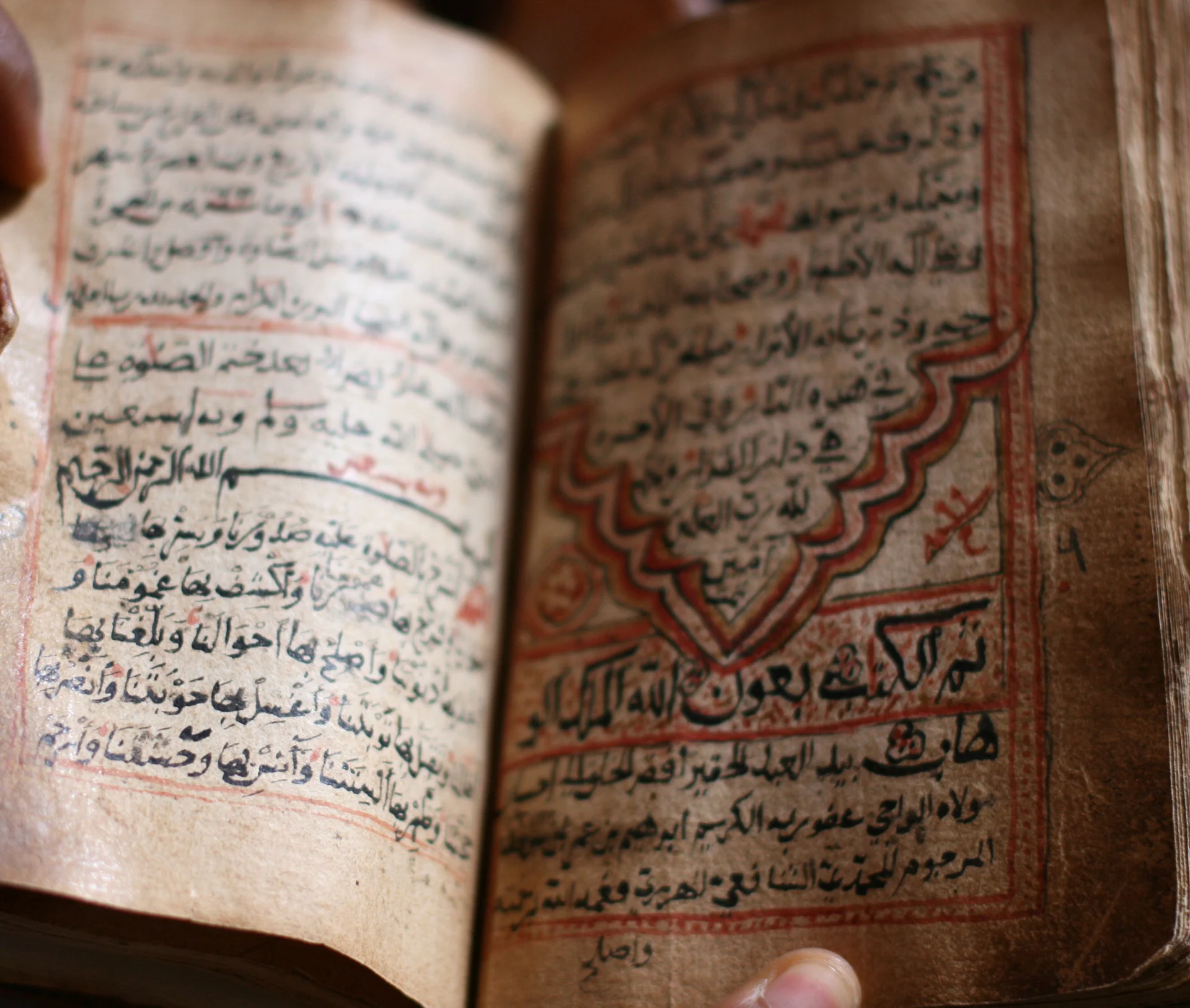
Written in black ink and decorated with red and yellow designs, the lower part of the title page in this copy emphasizes Shaykh Hashim’s different affiliations, each listed after his name.
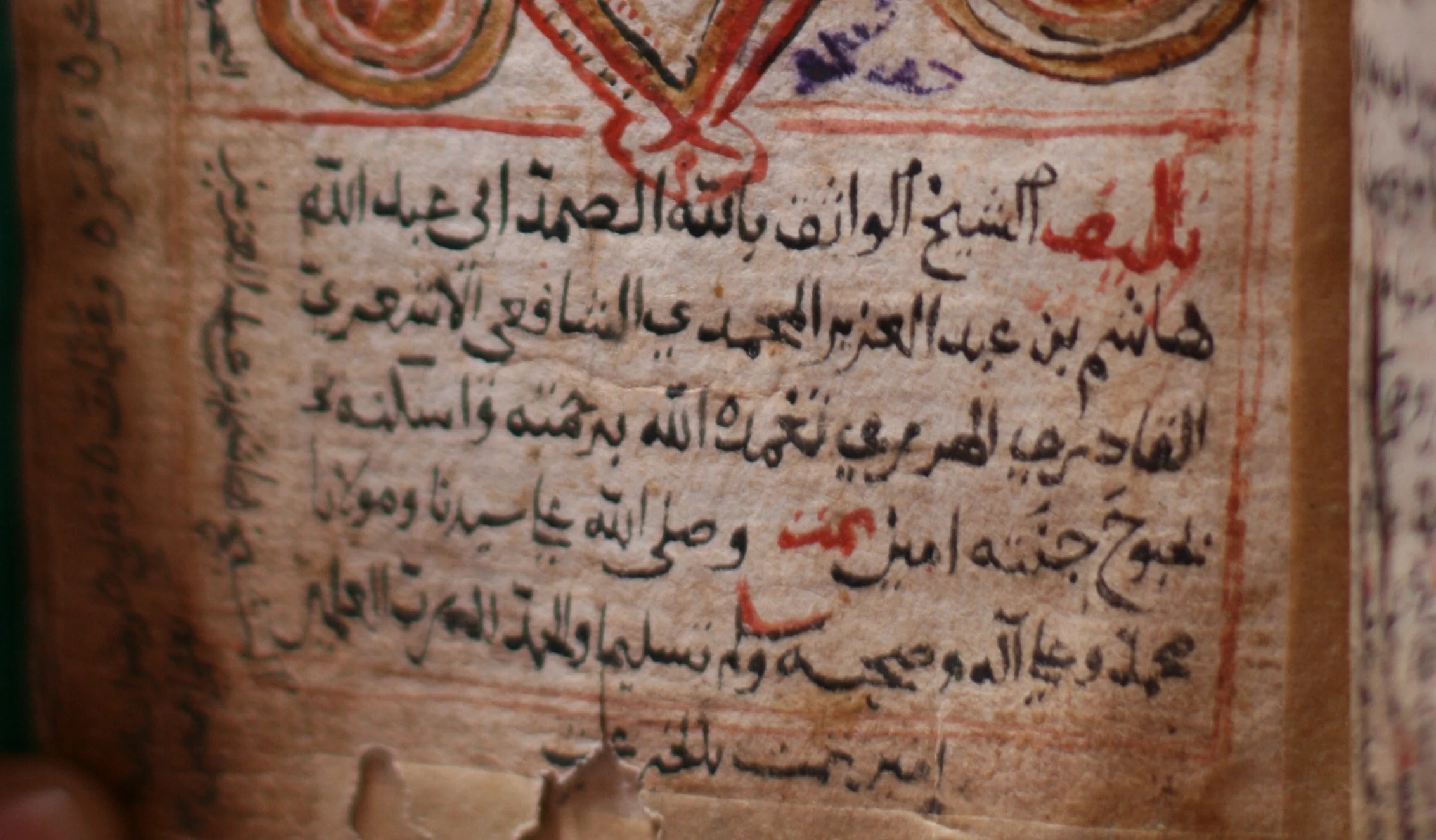
Hashim ibn Abd al-Aziz
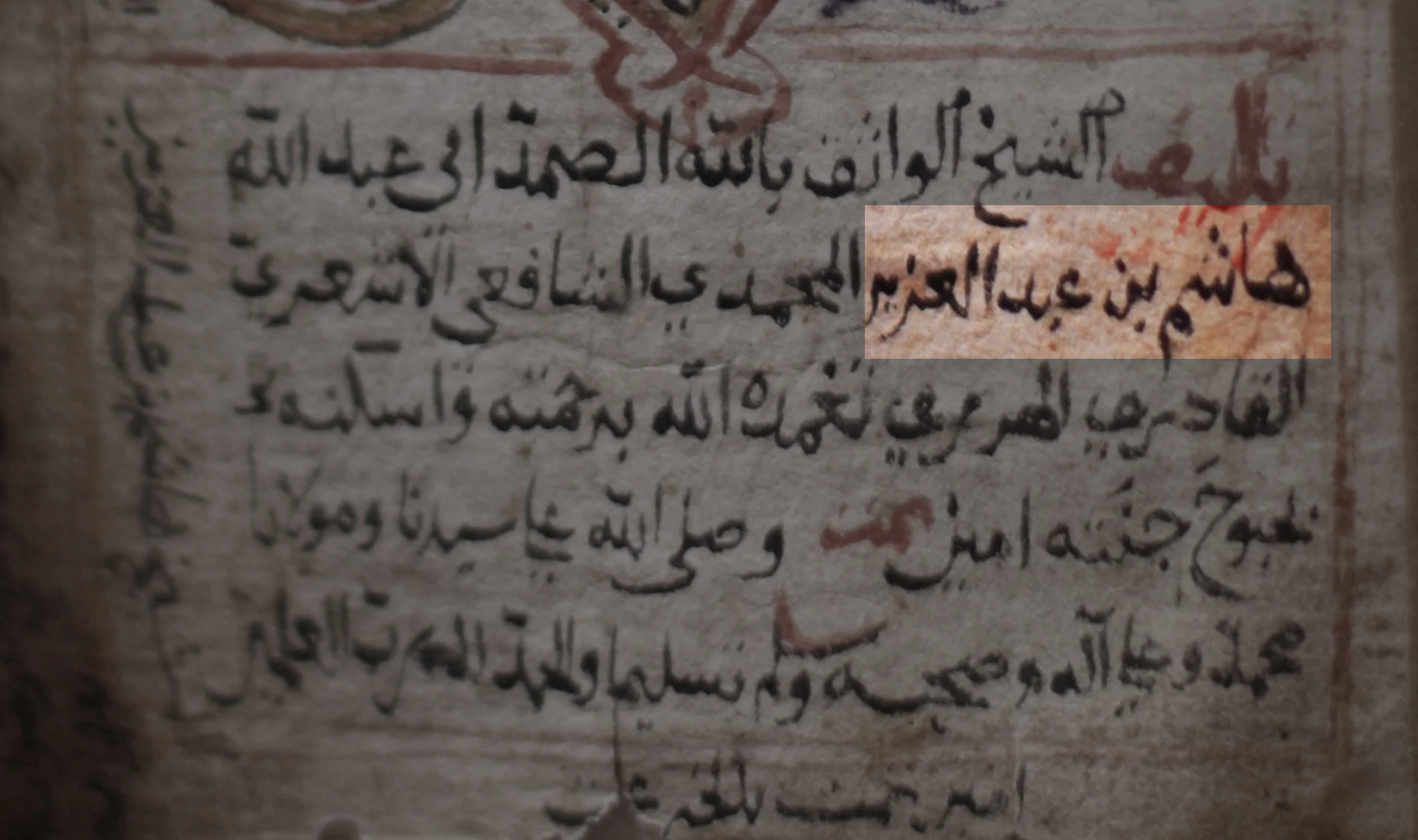
He is from the Shafi‘i legal school, one of the four schools of jurisprudence in Islam.
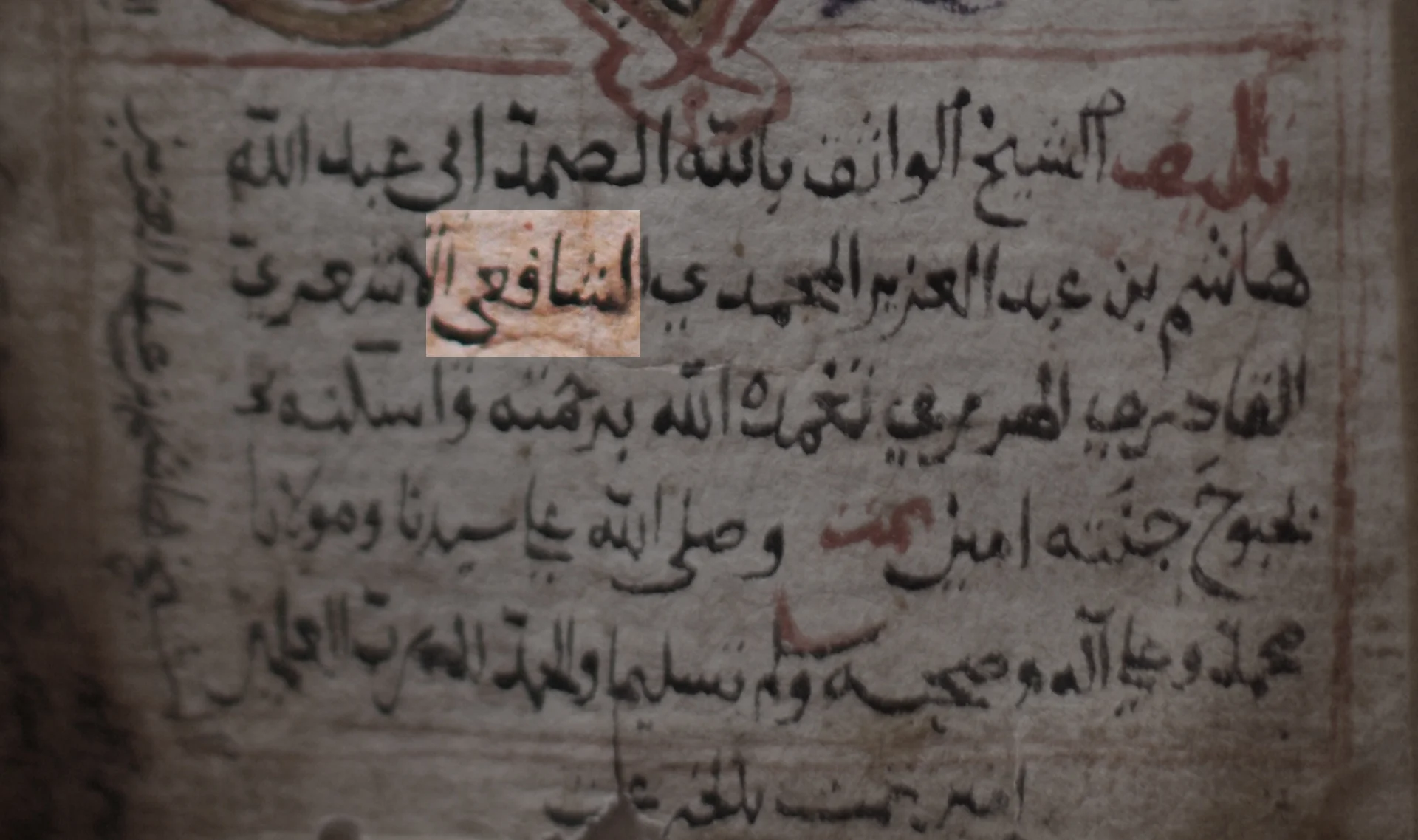
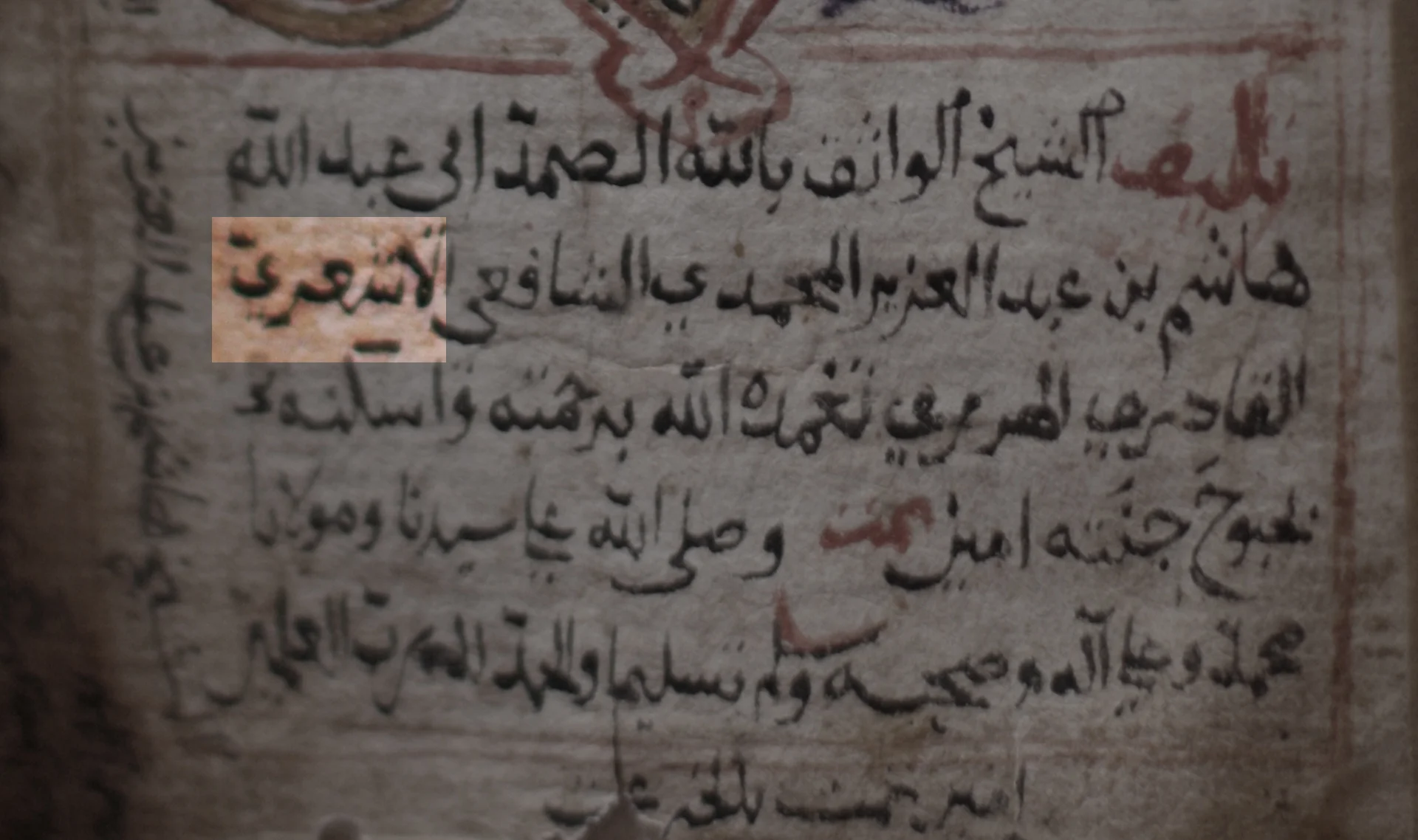
He is a follower of Ash‘ari theology, named after its founder, Abul Hasan al-Ashʿari (d. 936).
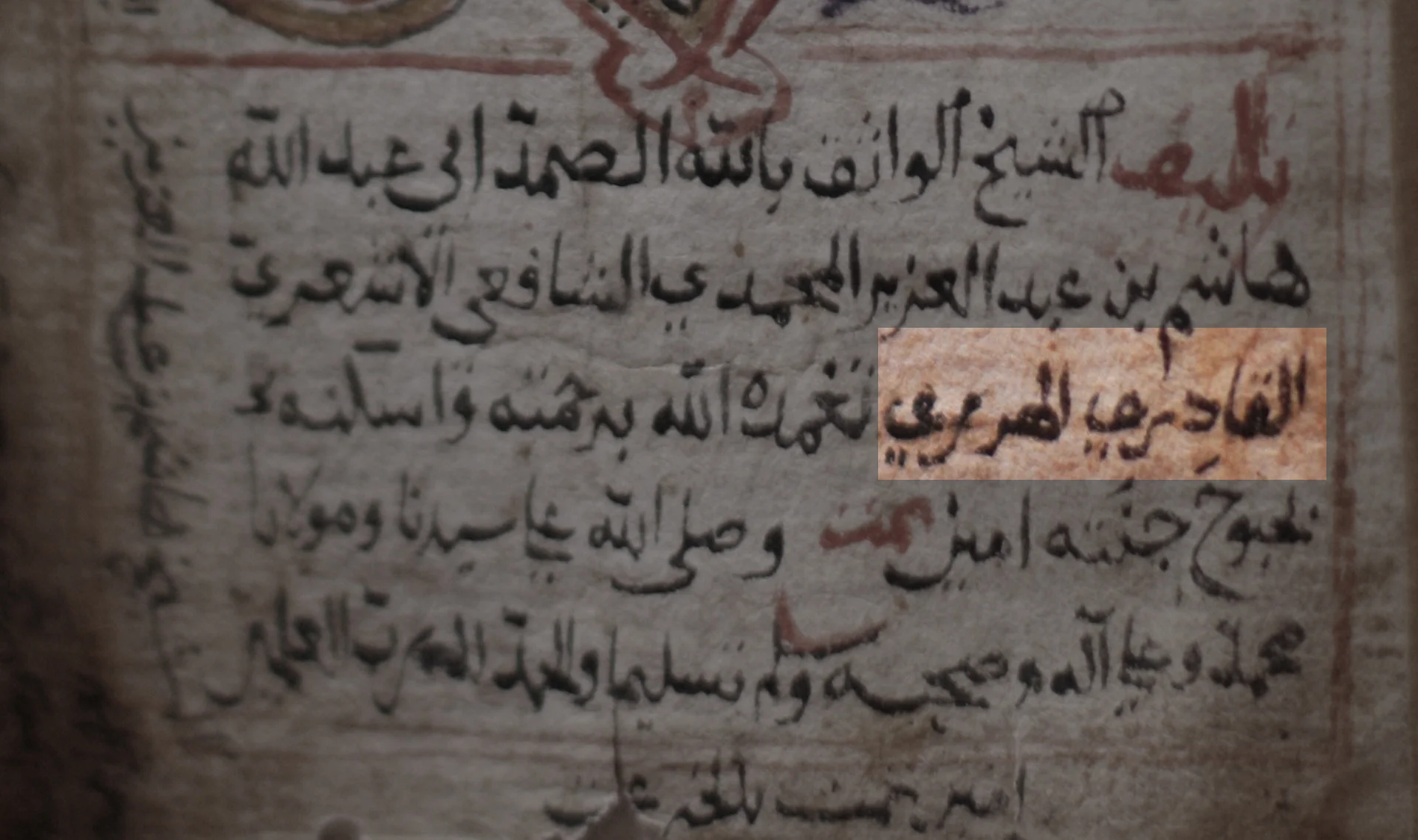
He is also a member of the Qadiri tariqa and from Harar.
While not mentioned, Shaykh Hashim was also the grandson of Harari Amir Hashim (r. 1662–1721) and the great-grandson of the founder of the Harari Emirate, Ali ibn Dawud (r. 1646–1662).
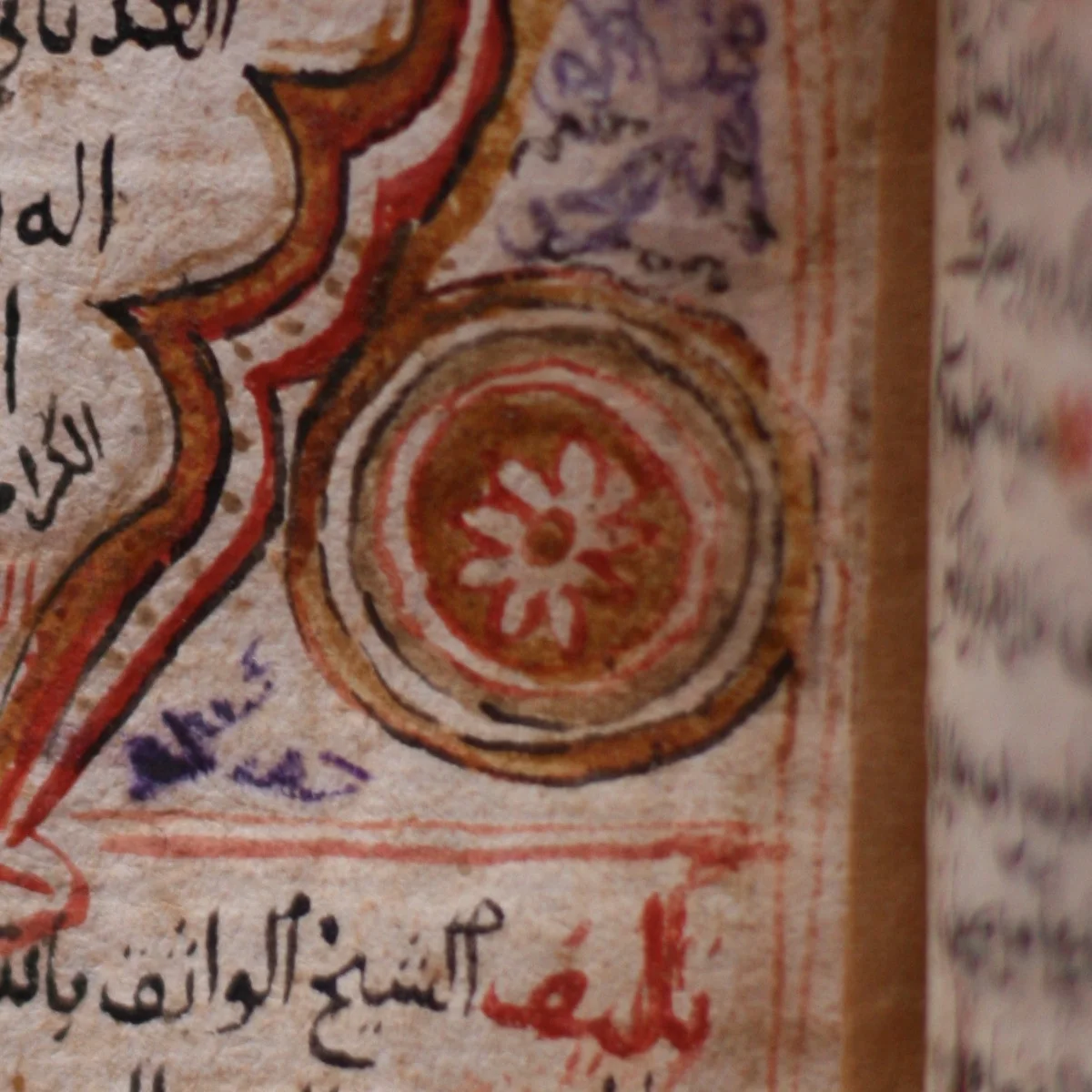
A Qadiri Decorative Motif
Two flowers appear in the corners of the upper part of the title page, which follows the format often found for title pages and colophons at the end of manuscripts in Harar and Yemen. The medallions could be related to roses—a floral symbol commonly used by Qadiri followers. The rose was linked to Shaykh Abd al-Qadir Jilani (d. 1166), the eponymous founder of the order, who was known as “The Rose of Baghdad,” the city in which he preached and was buried. The motif is often found on Qadiri tombs and hats in other parts of the Islamic world.
Written in Red
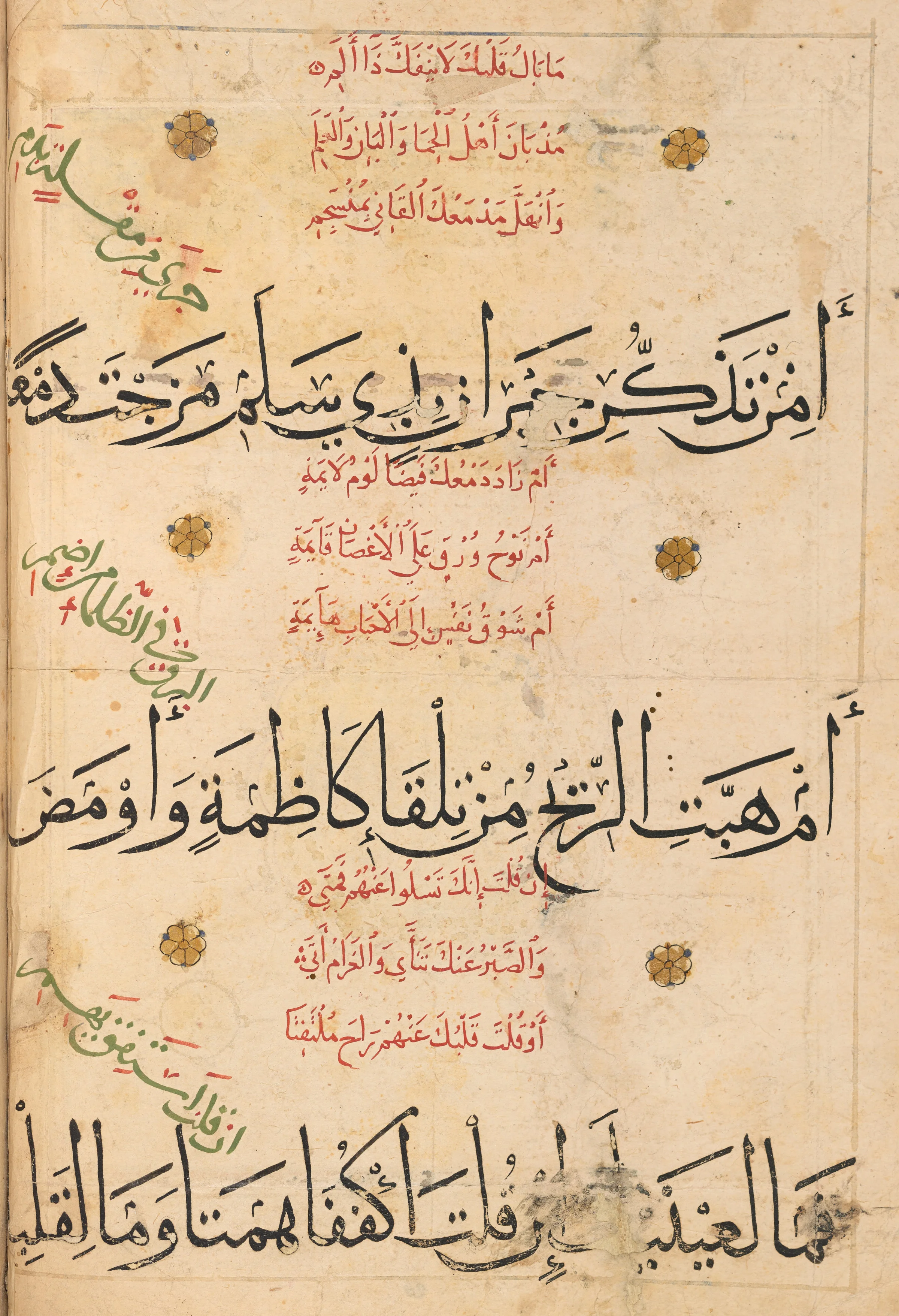
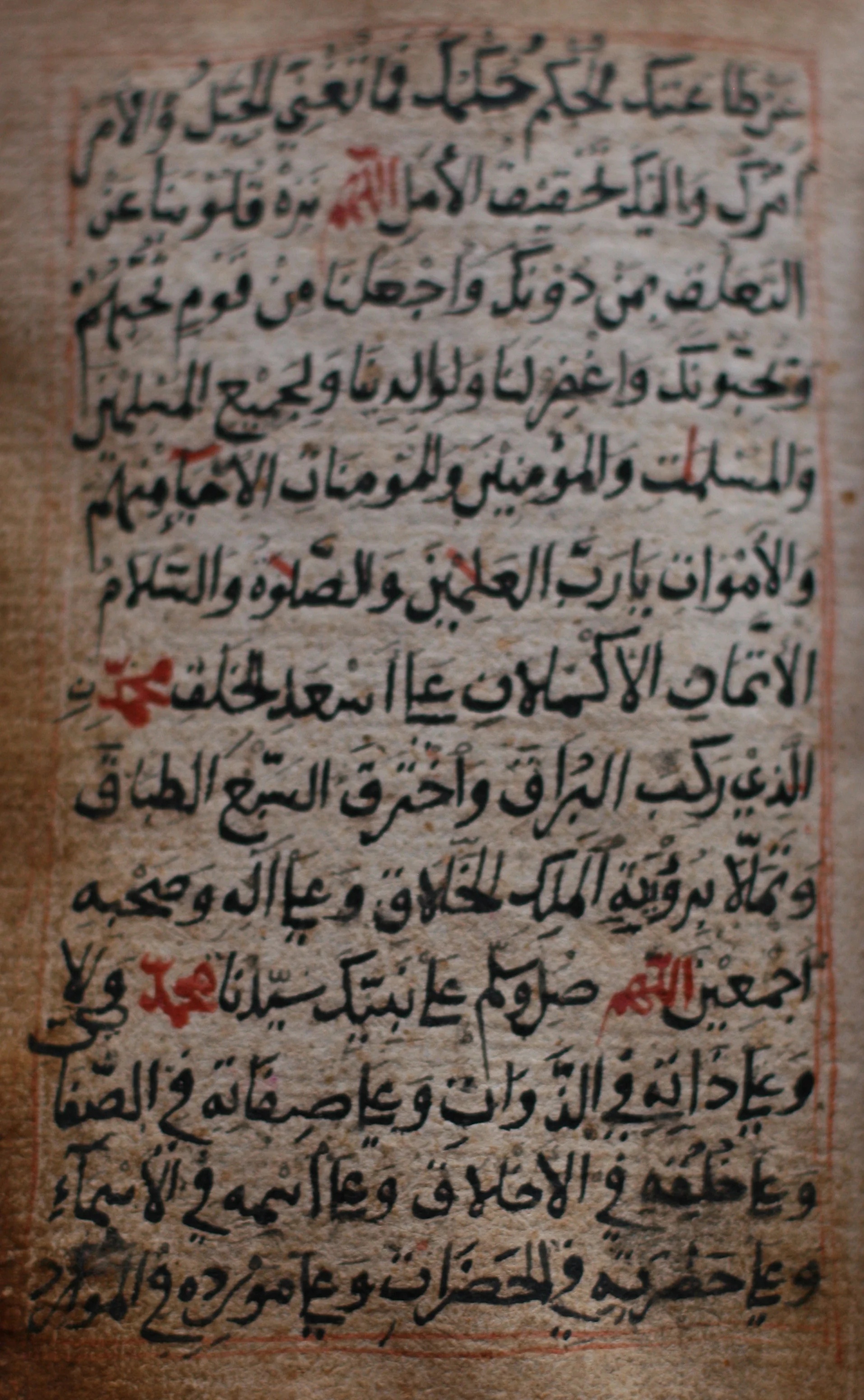
Throughout this copy of the Fath al-Rahman, the scribe has highlighted the name of the Prophet Muhammad in red as well as the phrases invoking God. The red ink helps these words stand out from the rest of the text, which is written in black ink.
The work falls under the genre of a tasliya, a type of prayer that invokes God’s blessings upon the Prophet Muhammad. The Fath begins with a description of how Shaykh Hashim was inspired to write the text and his dream, where the Prophet Muhammad revealed Shaykh Hashim would be granted entry to heaven and able to intercede for his students.
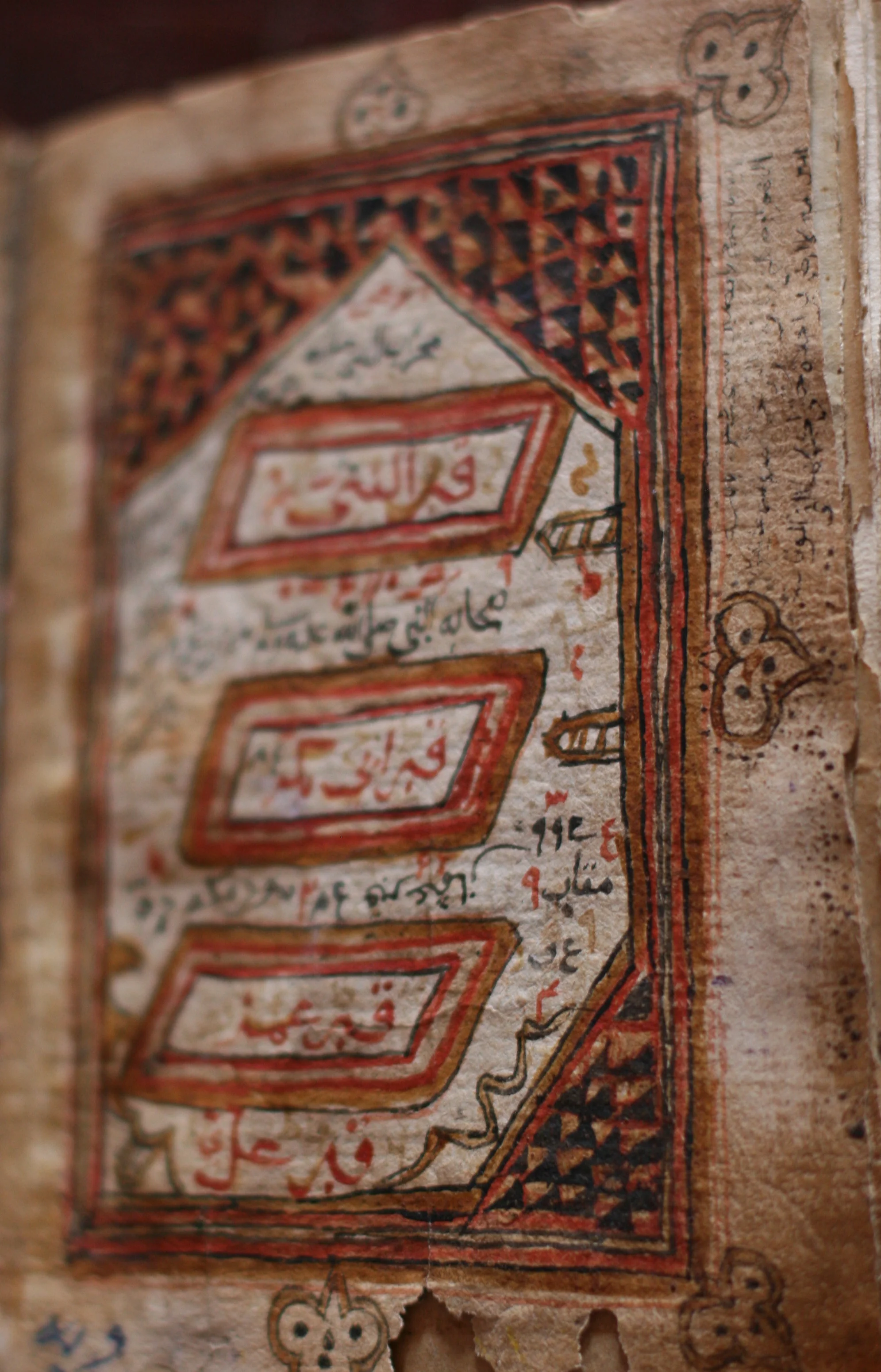
Marking the Prophet’s Tomb
Within this volume, there is a rare depiction of the Prophet Muhammad’s tomb before the start of the text and the recounting of Shaykh Hashim’s dream. The painter has presented a schematic representation of the tomb under the dome of the mosque in Medina. Also presented are the two tombs next to the Prophet’s, those of his first two successors, Abu Bakr and Umar ibn al-Khattab, which are also within the mosque’s precinct. In addition, the composition marks the grave of the fourth caliph and the Prophet’s son-in-law and cousin, Ali ibn Abi Talib, who was buried in Najaf, Iraq, and not in Medina. This inclusion may have been inspired by the fact that Jilani traces his lineage back to the Prophet Muhammad through Ali.
A Source of Inspiration
Depictions of these graves and the mosque in Medina are more common in the Dala’il al-khayrat (Waymarks of Benefits), another compilation of prayers and blessings on the Prophet Muhammad. In fact, the Dala’il al-khayrat is directly quoted and invoked throughout the five chapters of the Fath al-Rahman. Written by Muhammad b. Sulayman al-Jazuli (d. 1465) in Morocco, this text is one of the most popular prayer books in the Islamic world to the present day.
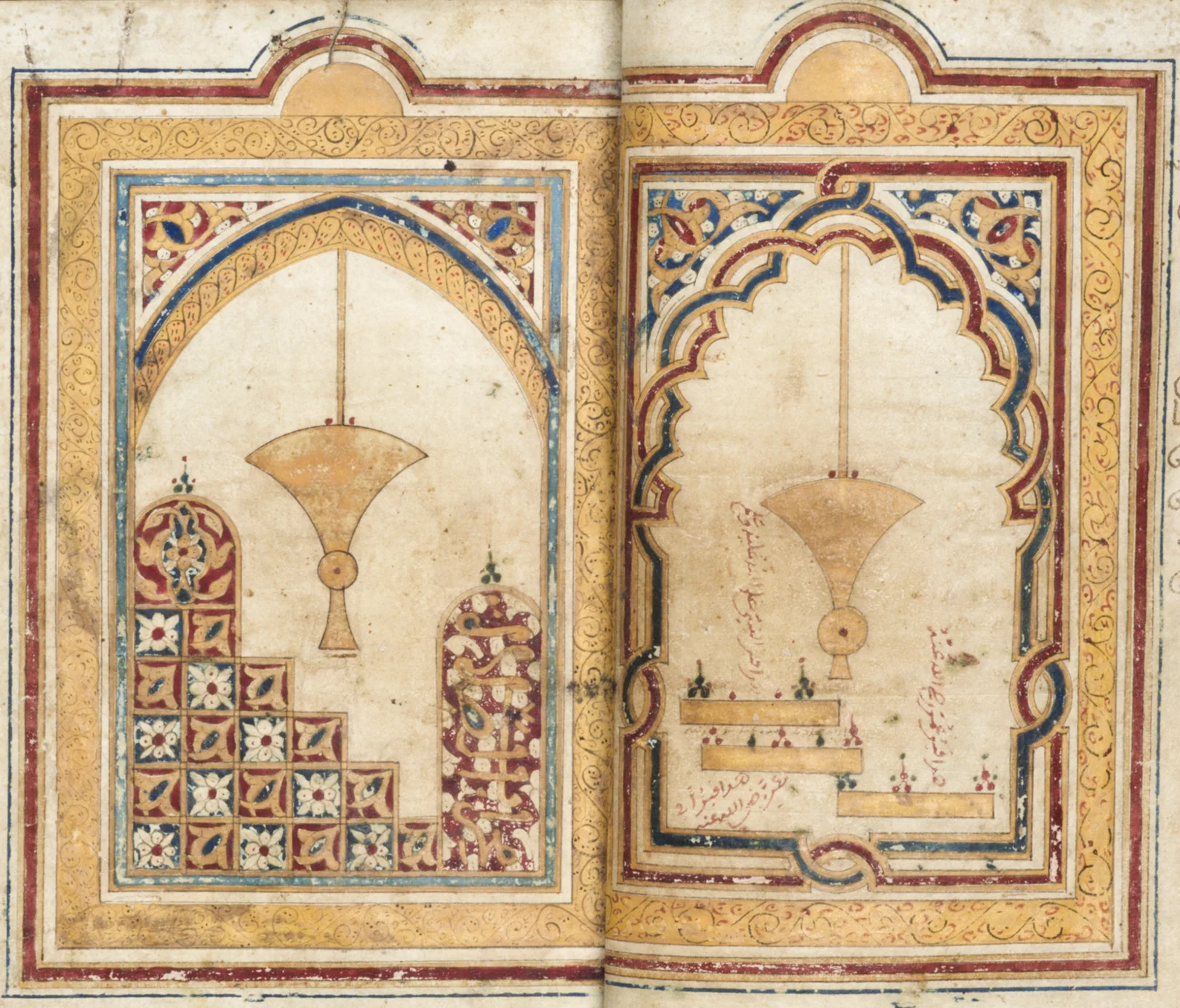
Harari Dala’il
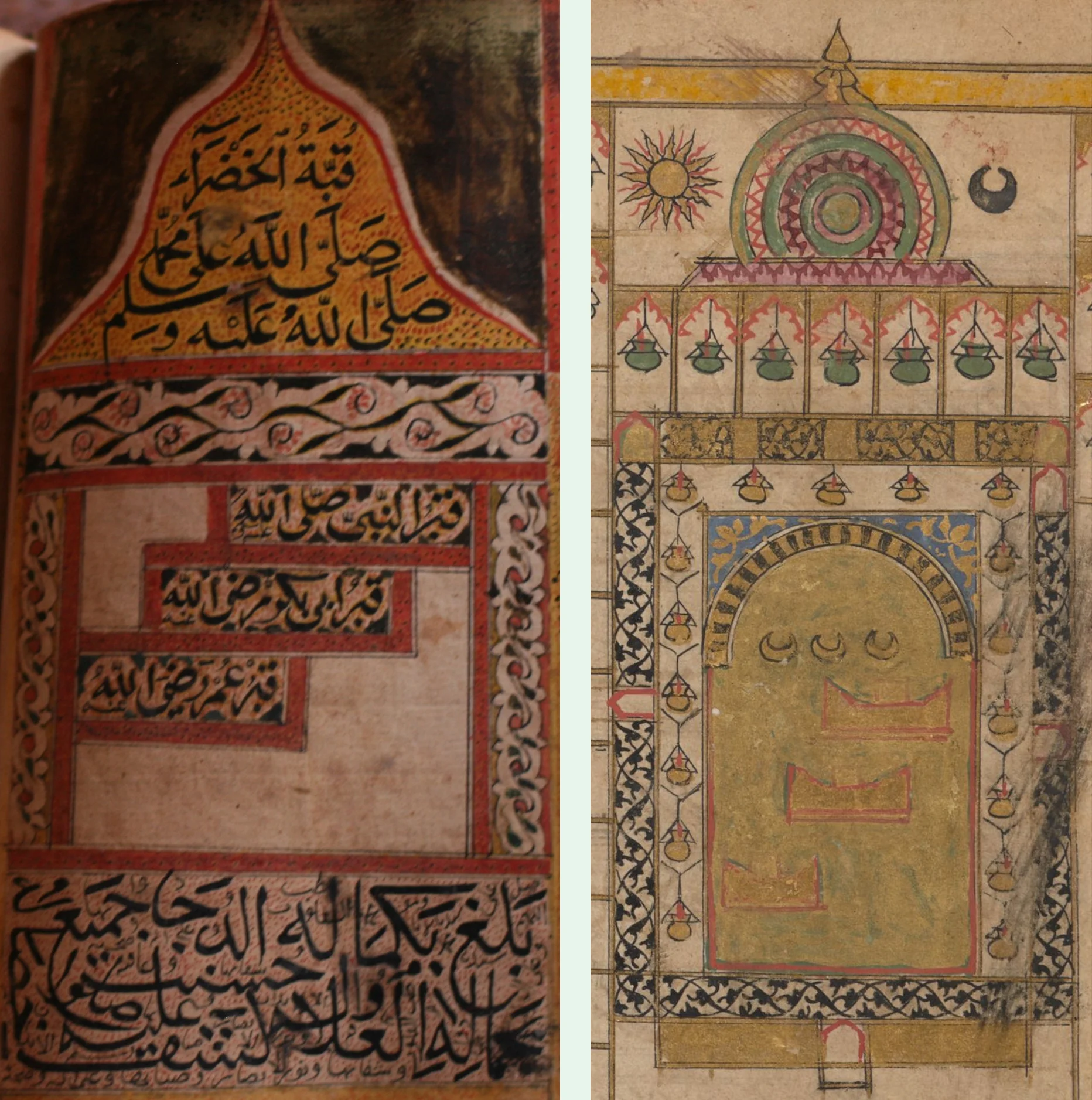
Although less popular than the Fath al-Rahman, the Dala’il al-Khayrat was also commonly copied in Harar. This testifies to the success and wide circulation of such devotional texts across the Islamic world. In this nineteenth-century copy from Harar, the three graves of the prophets are presented under an elaborate dome, representing the mosque in Medina.
The composition also unusually includes a quote from the Persian poet, Sa’di (1210-1291), who claims the following:
He attained eminence by his perfection
The darkness was lifted by his beauty
Lovely are all of his qualities
Blessings upon him and his family
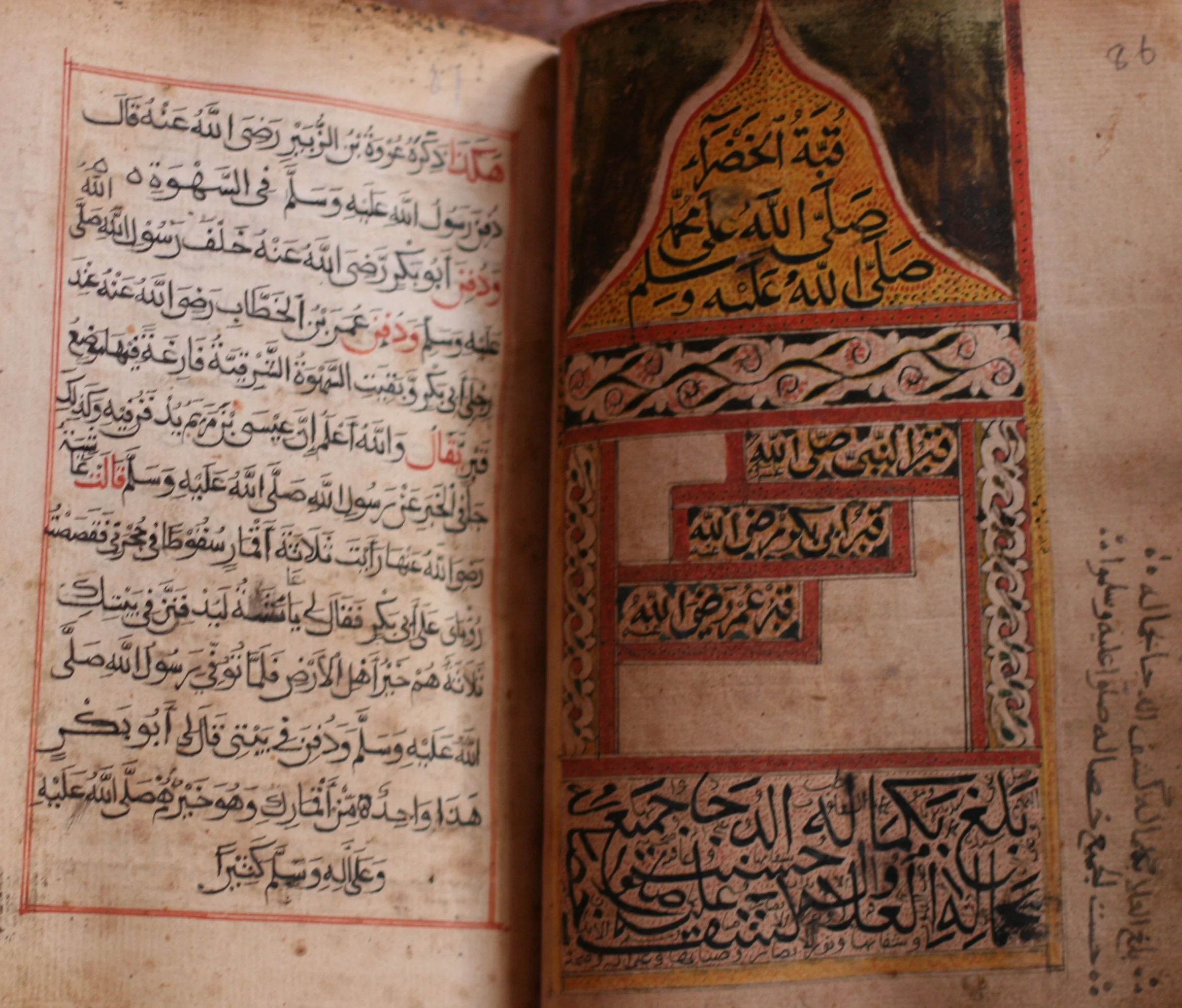
Domes of the Prophet’s Mosque
Outside of Harar, copies of the Dala’il al-khayrat often depict additional features of the mosque in Medina, such as the Prophet’s minbar (pulpit) and garden as depicted on the right page of this Indian version produced between the mid-eighteenth and mid-nineteenth centuries. The three graves are presented under a flattened dome rendered in an abstract form.
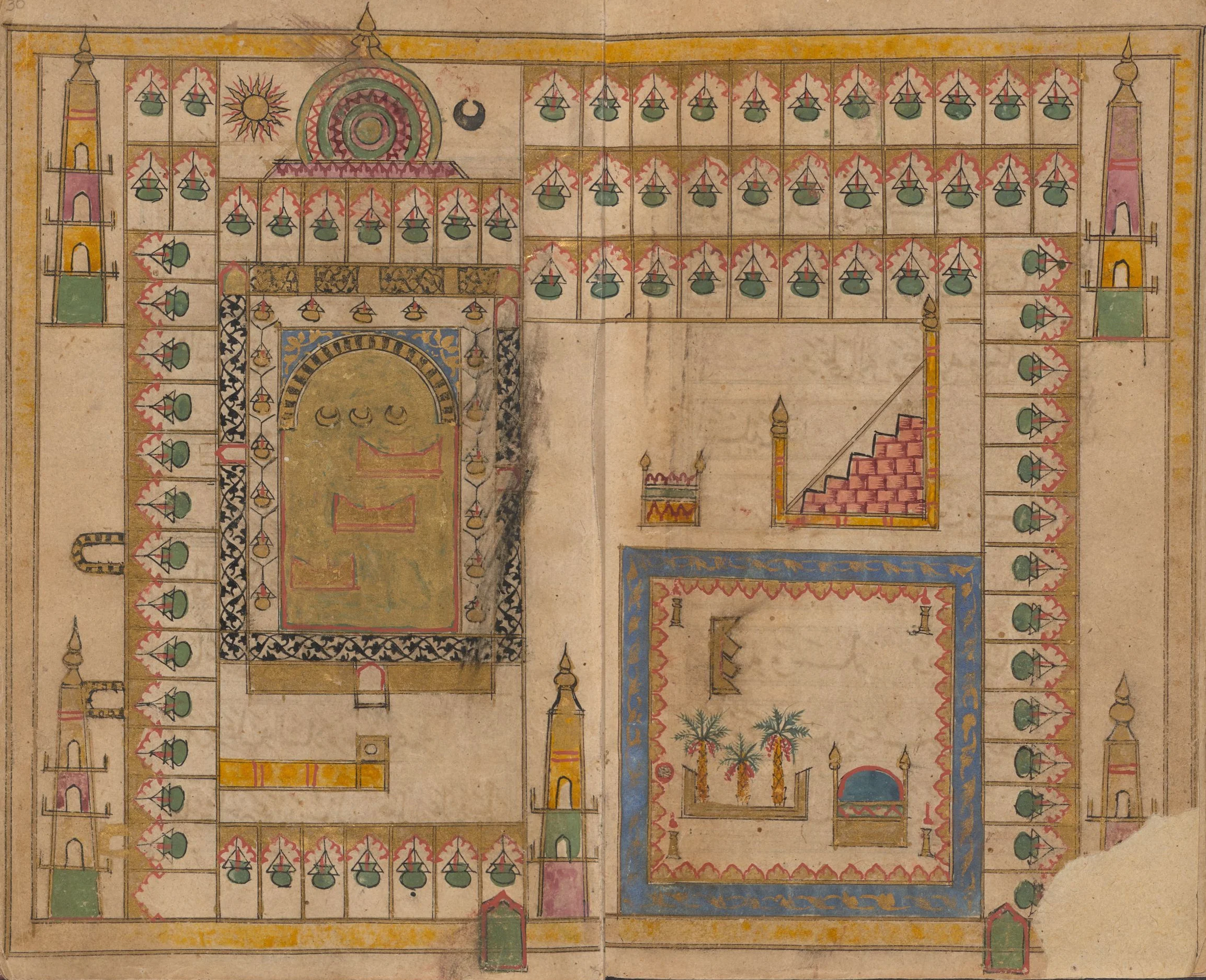
The Harari artist uses a similar composition, with inscriptions identifying the green dome and the three graves, thereby creating an almost “shorthand” representation, which is also found in other Harari Dala’il al-khayrat and in the above Fath al-Rahman.
Colorful Volumes
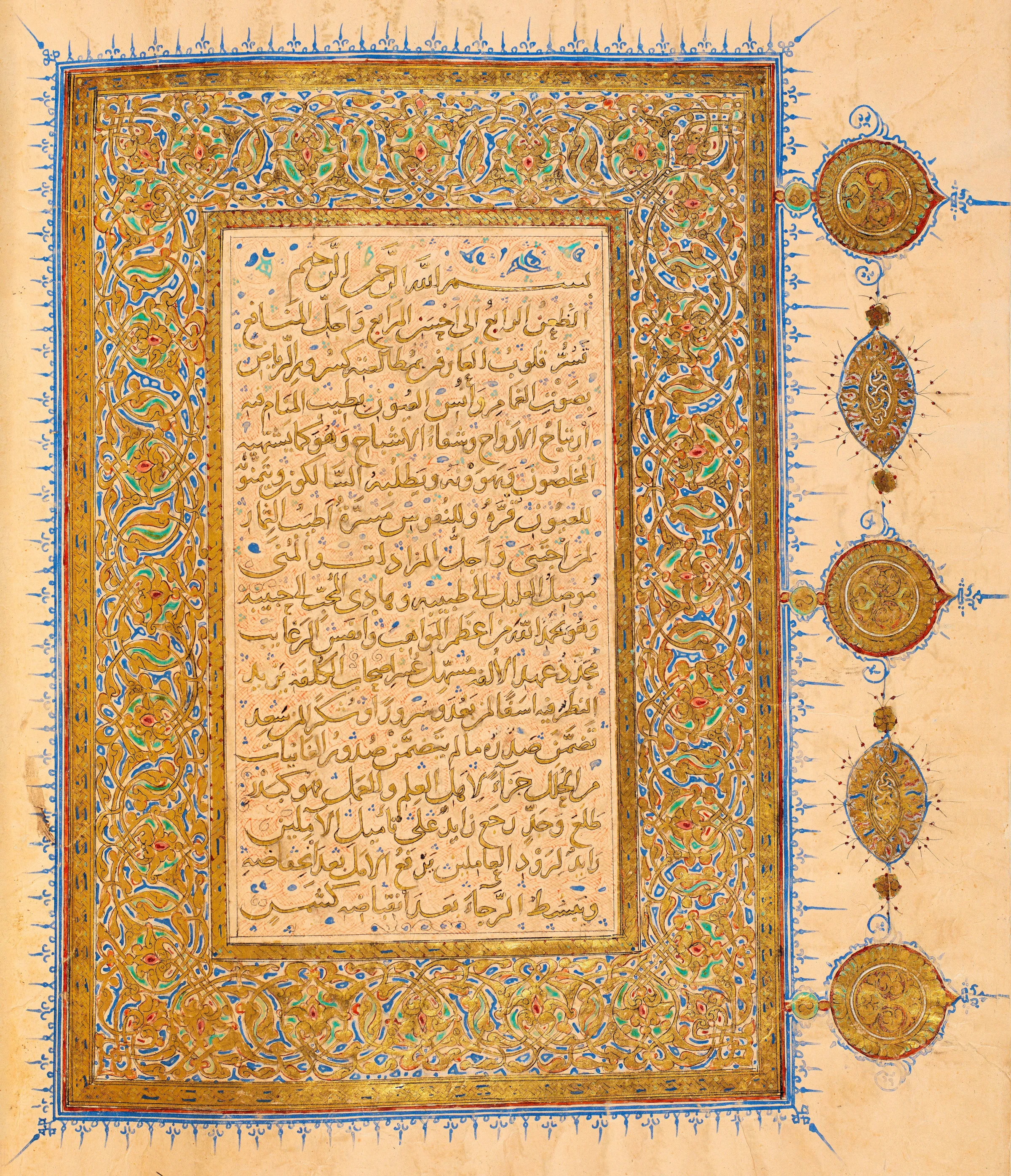
In its palette of black, red, and yellow, highlighted with large inscriptions and similar design motifs, such as rosettes, this copy of the Fath al-Rahman recalls contemporaneous Qur’anic manuscripts also produced in Harar, such as one dated to 1708.
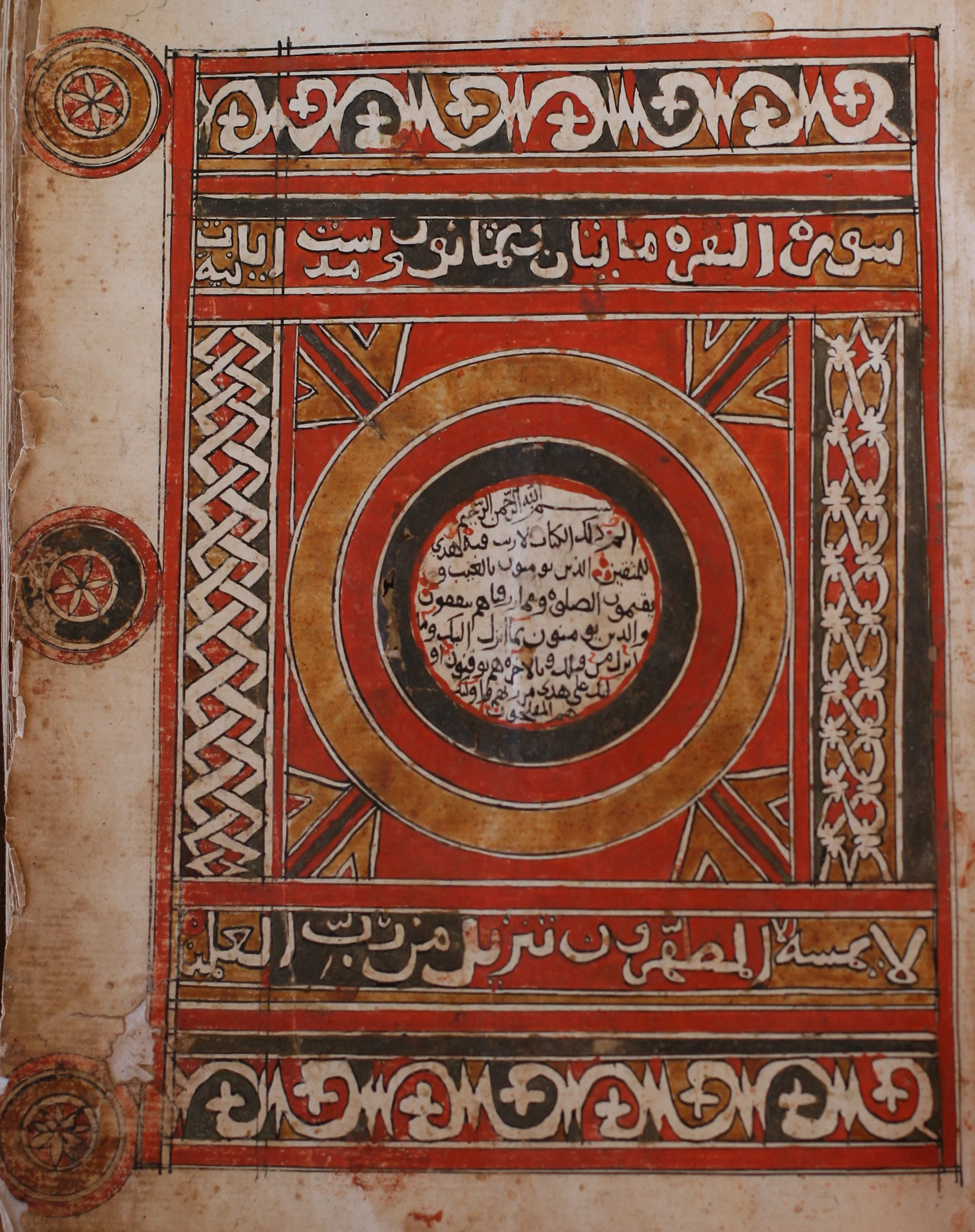
The elaborate compositions link to wider artistic styles within the Red Sea region, from Somalia to Egypt, developed over several centuries. Many eighteenth-century Harari manuscripts were copied on Italian paper, another sign of long-distance mercantile networks in the eighteenth century.
Recited for Centuries
Just fifteen centimeters tall, this small manuscript was copied during the lifetime of Shaykh Hashim in September 1752. The scribe identifies himself as Ibrahim ibn Omar ibn Saʿd al-Marhum. Unlike his description of Shaykh Hashim, Ibrahim does not refer to himself as a Qadiri. Later inscriptions and additions to this manuscript suggest it was used continuously into the twentieth century.
Numerous manuscripts of the Fath al-Rahman survive today, but none present the same schematic diagrams. Shaykh Hashim’s texts remained immensely popular in Harar and neighboring regions and were recited by individuals regardless of their affiliation with the Qadiriyya. Due to its high regard, in 1949 it became one of the earliest Ethiopian books to be printed.
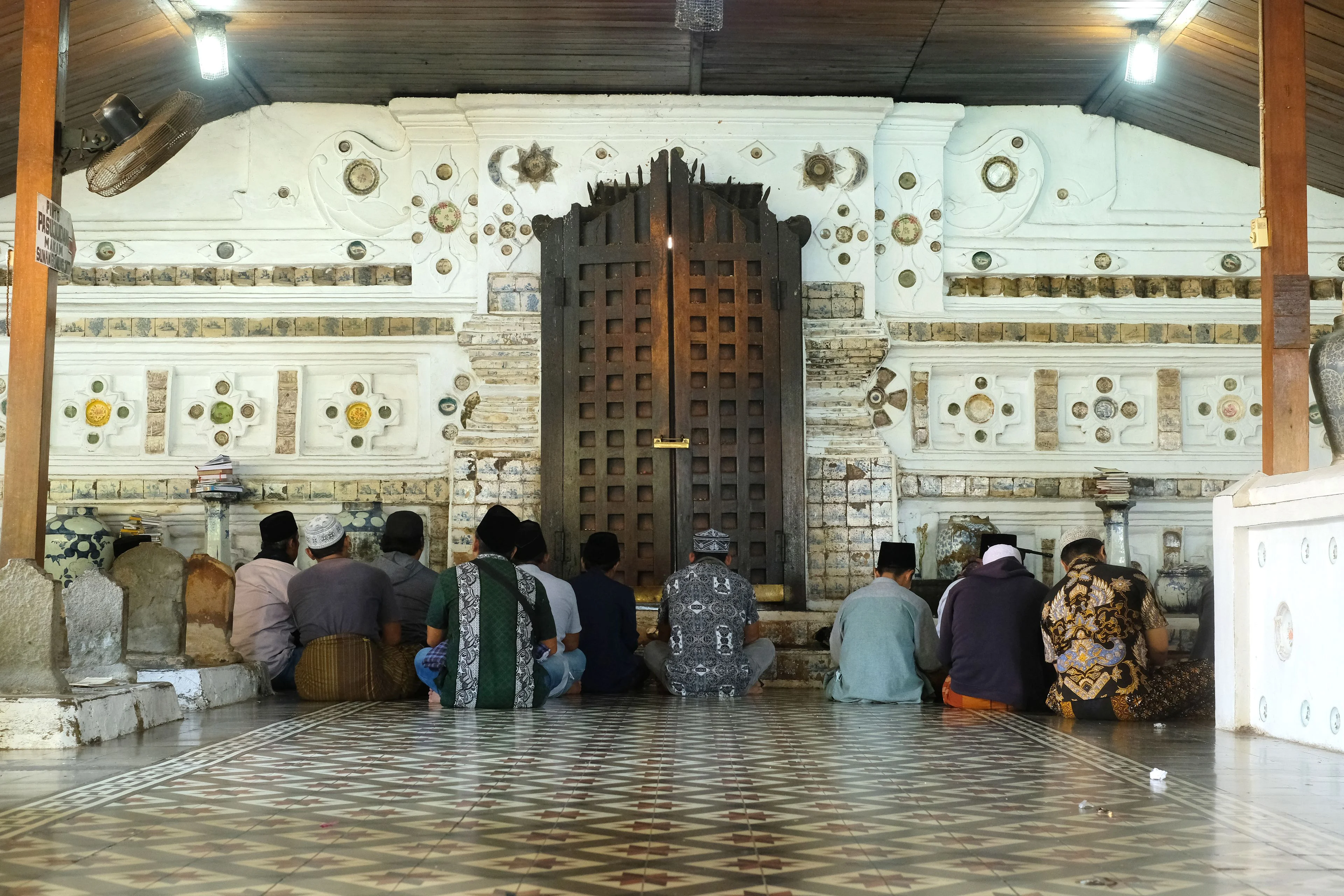
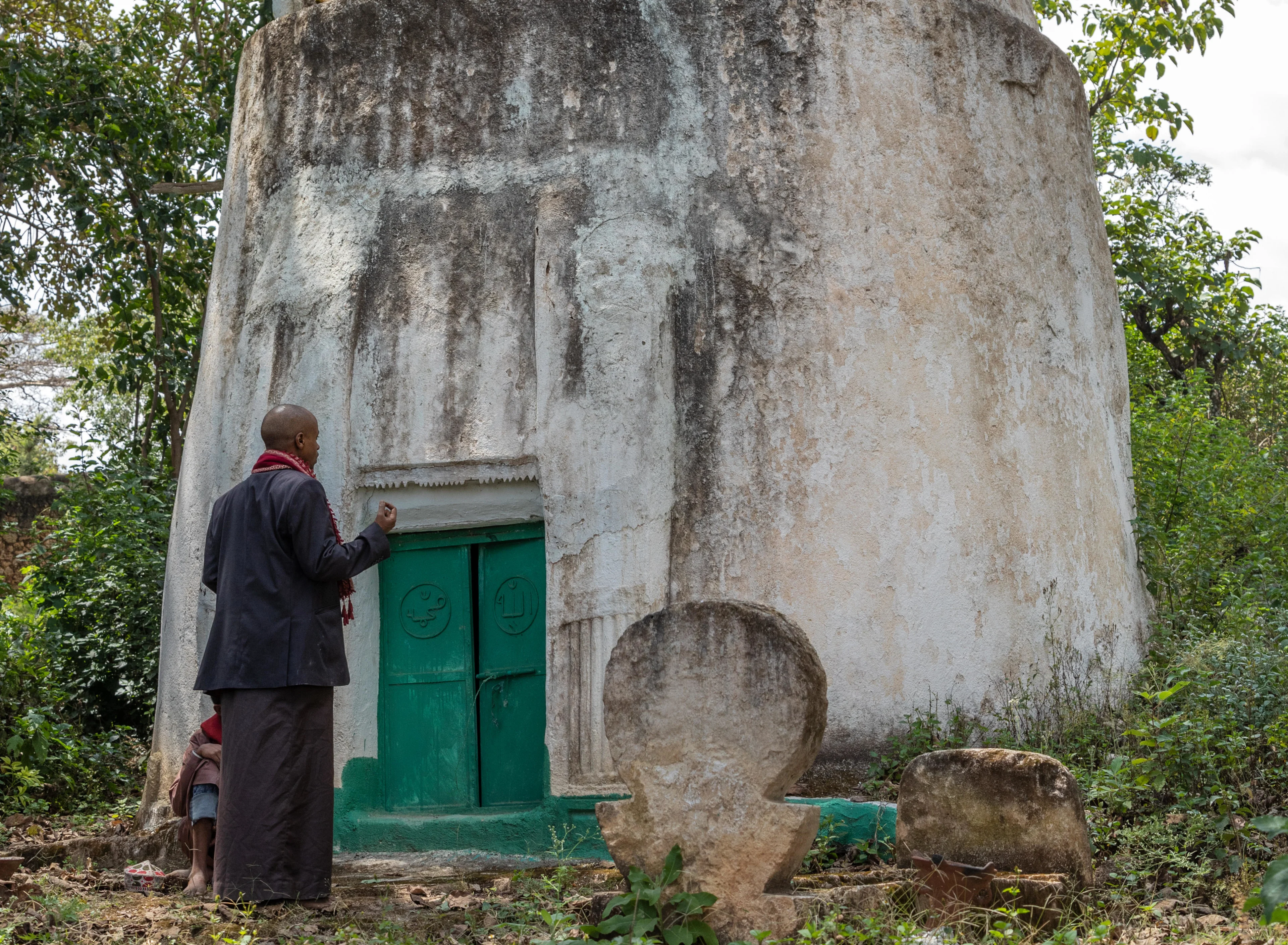
The Fath al-Rahman is still read regularly in Harar today, particularly by Shaykh Hashim’s devotees who gather for communal prayer and to recite his texts.
Harar Ethiopia
Objects
Explore the map or scroll to select an object.