The Ceramics of Teak Hill
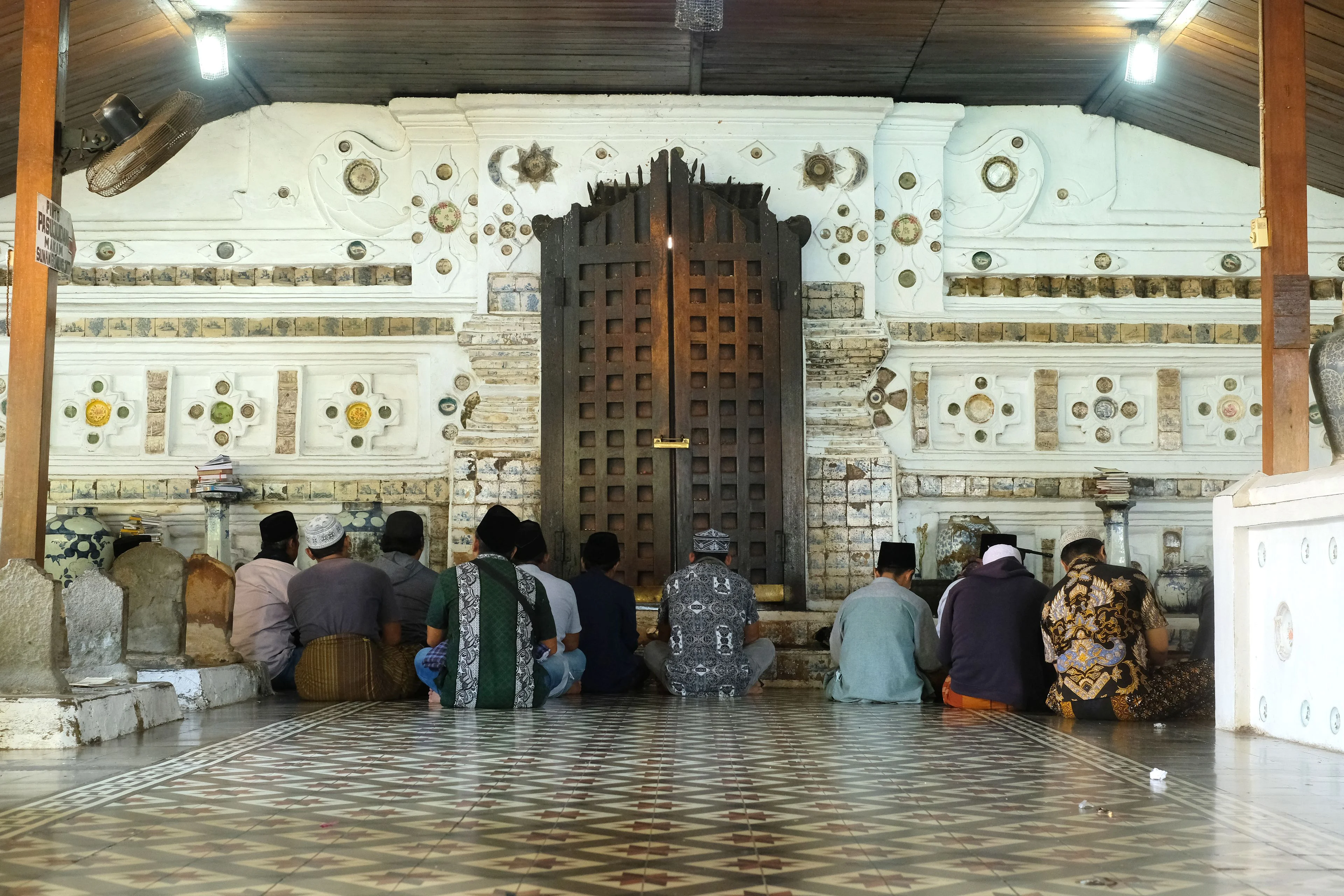
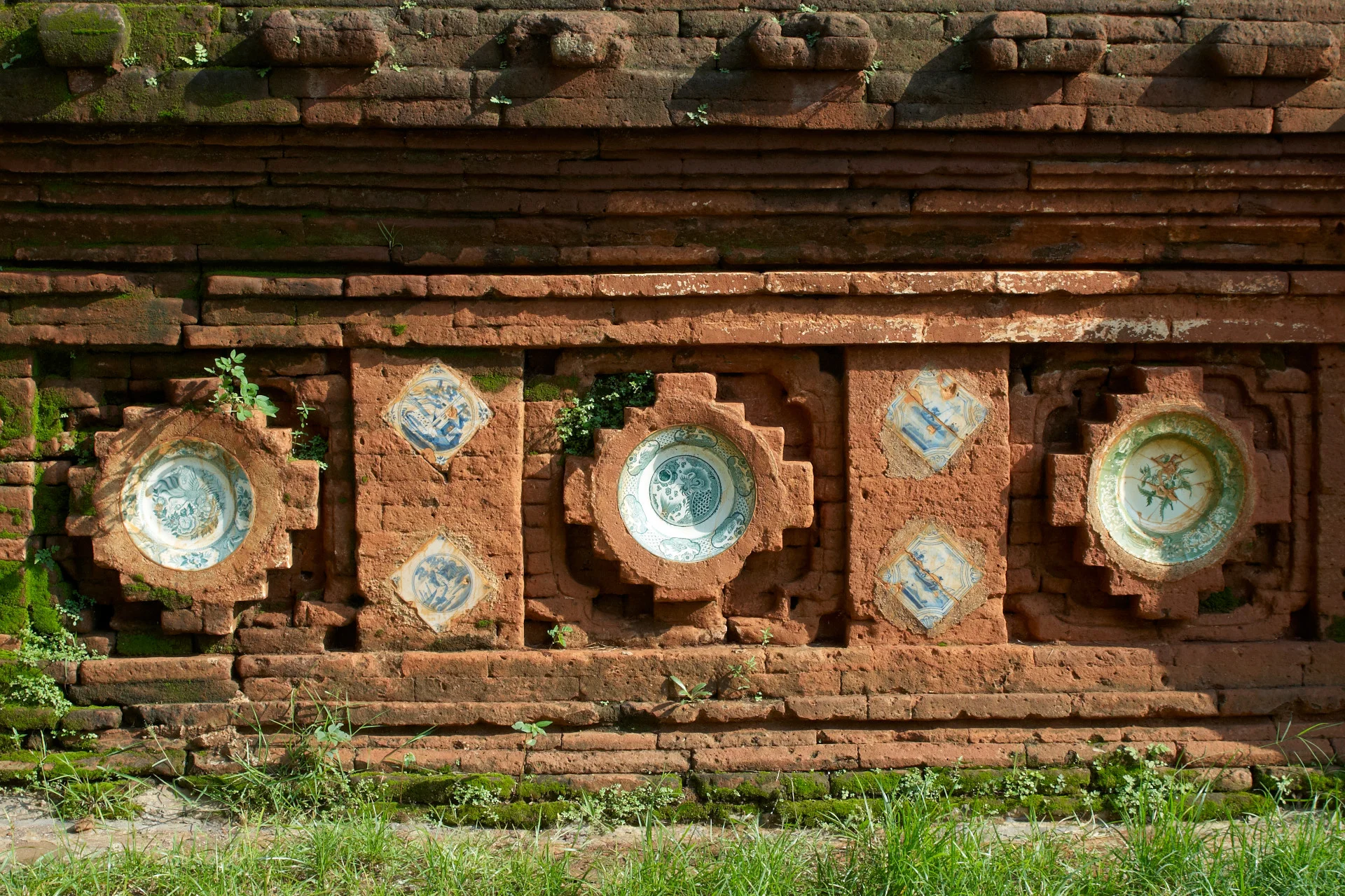
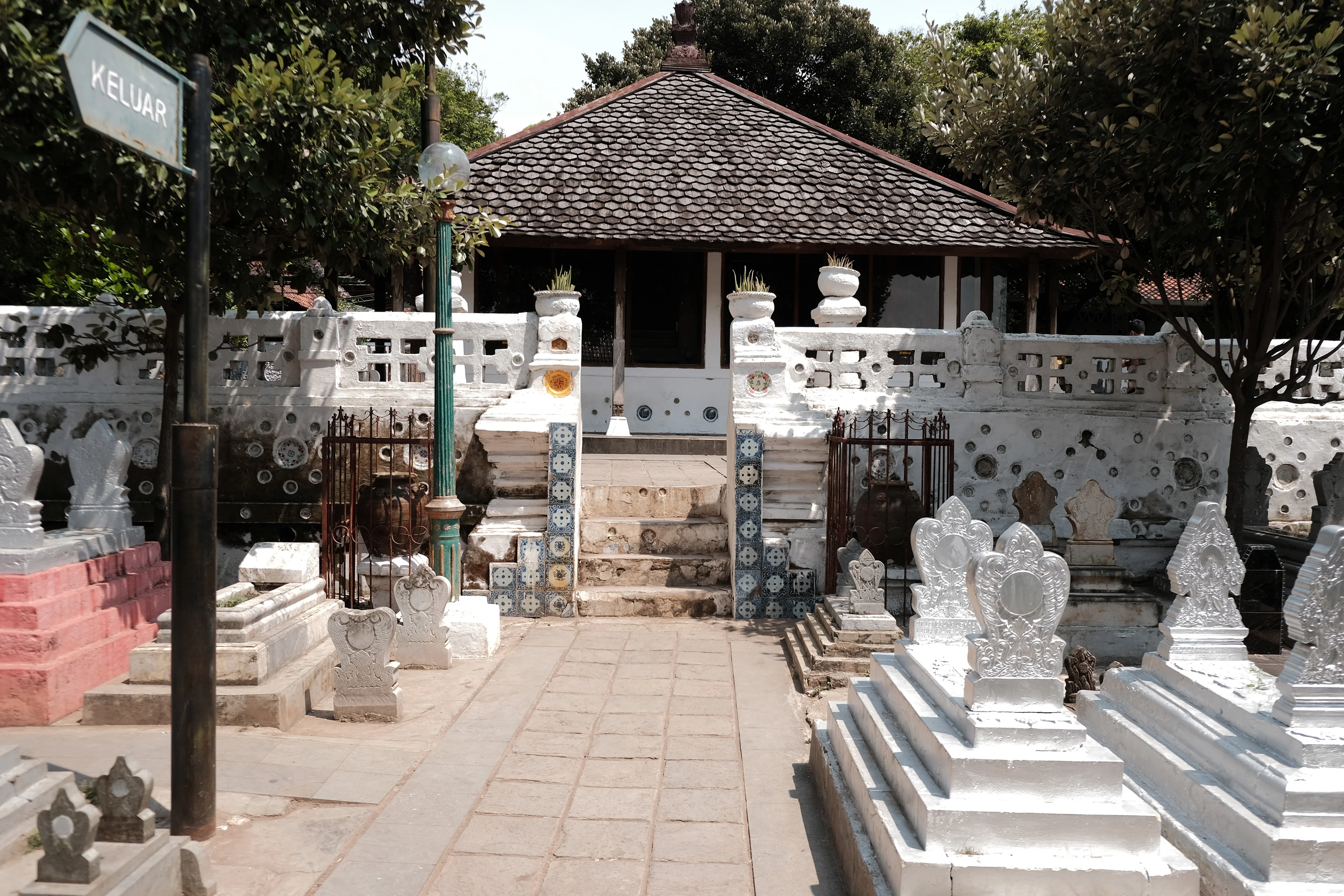
The Sunan Gunung Jati mausoleum complex in Cirebon is extraordinary in the sheer quantity and variety of the largely East Asian and European ceramic plates and tiles imbedded in the walls, niches, alcoves, and gates.
Ceramics embellish the outside walls as well as the exteriors of several pavilions that compose the shrine and cover the inner sanctum. More than decorative features, these ceramics speak to Cirebon’s long and rich history at the nexus of trade routes reaching from Europe to China.
Vibrant Accents
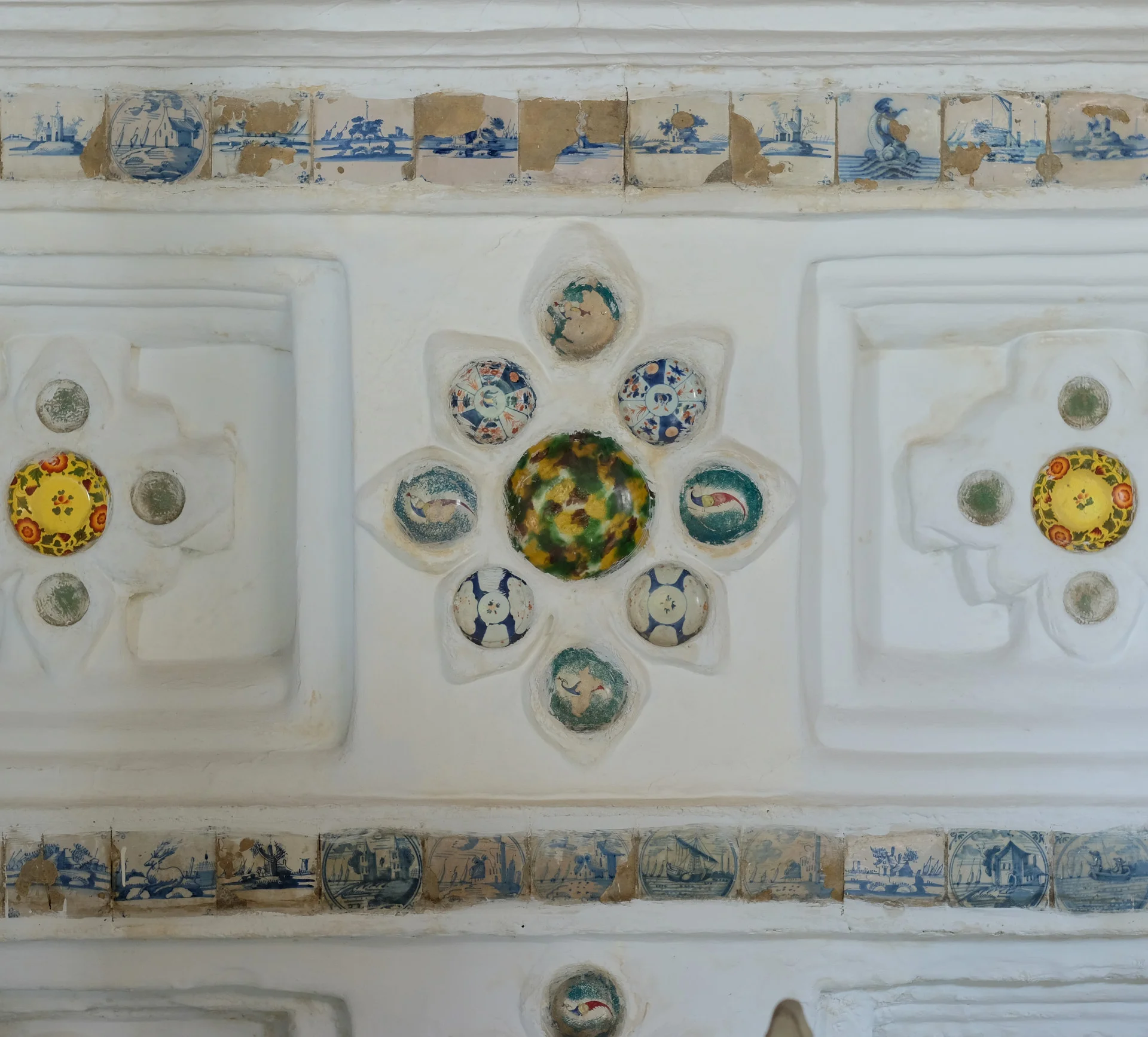
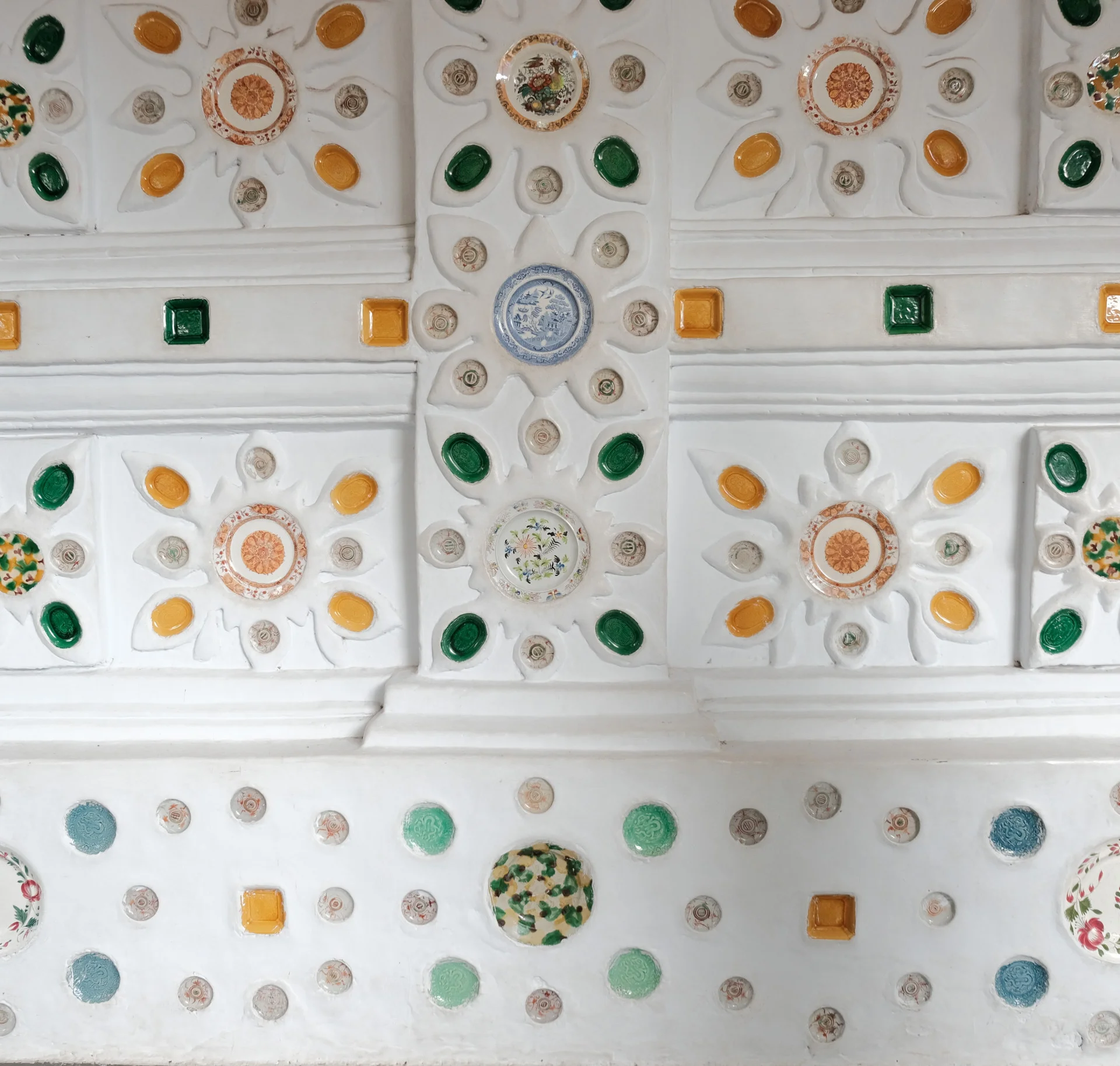
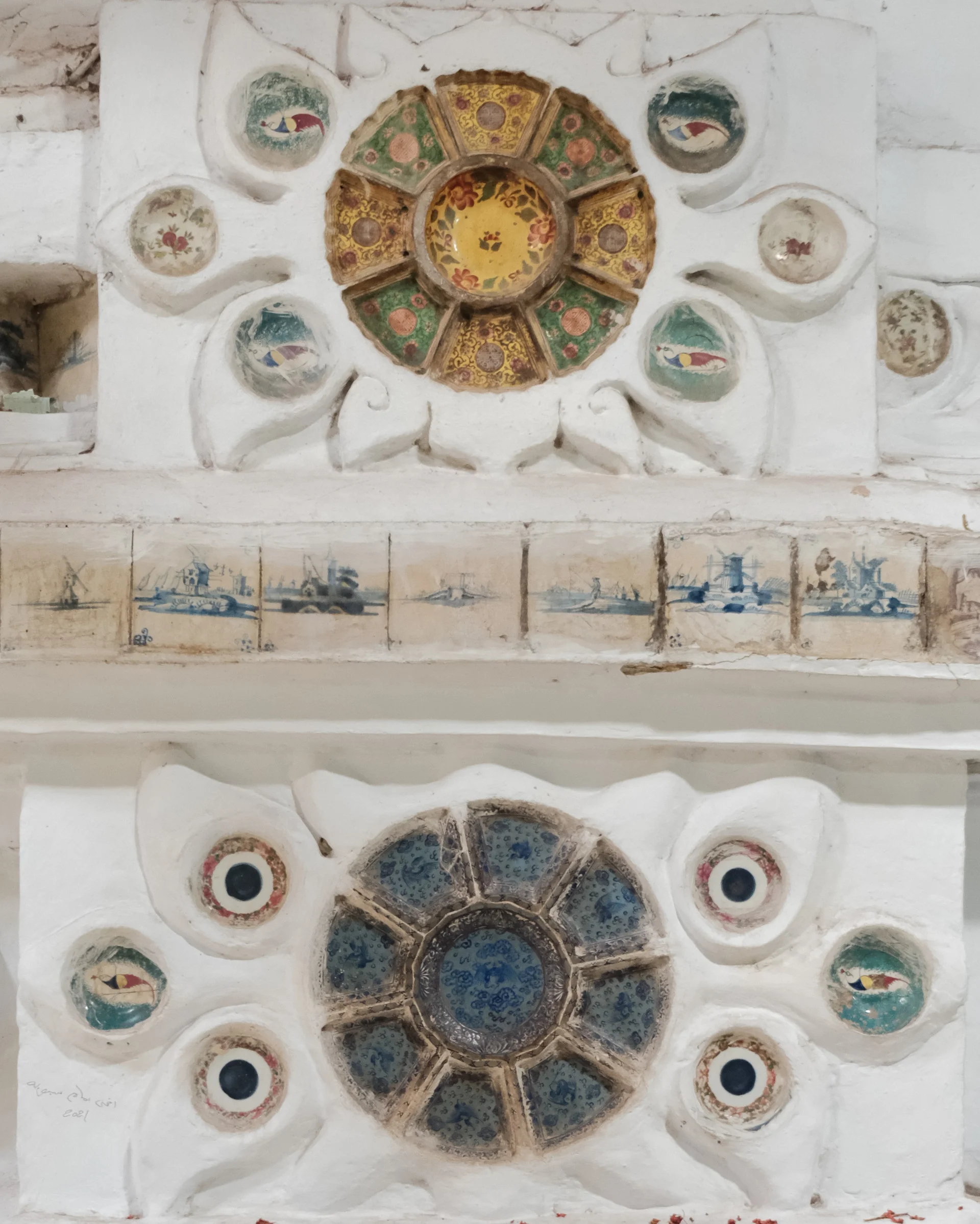
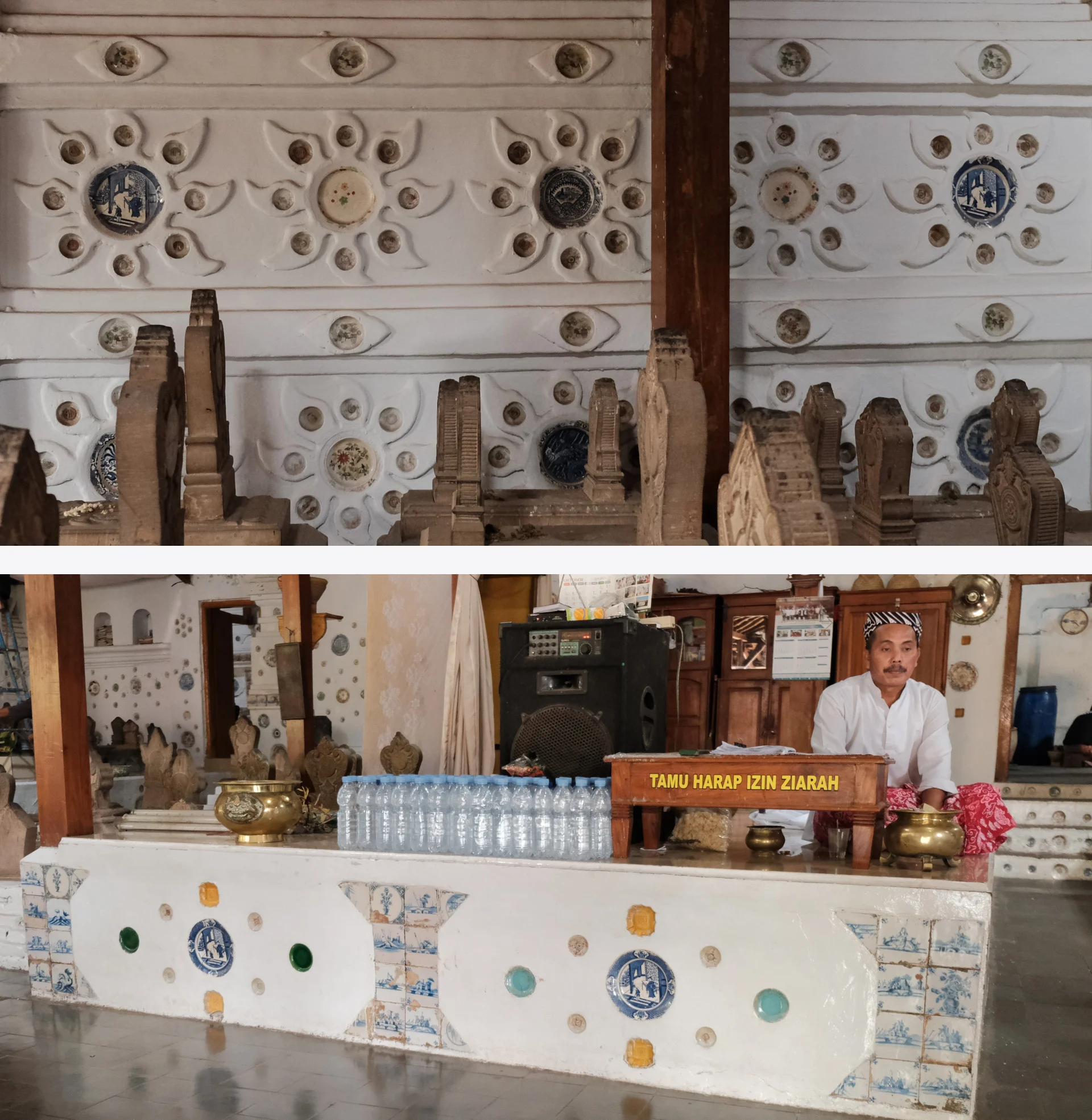
The colorful ceramics and tiles are cut into different shapes and are made into patterns that are displayed symmetrically and at regular intervals – such as here on a building built by Sultan Sepuh IX (r. 1845 – 1853) and the tomb of Sunan Gunung Jati. They stand out against the whitewashed surface of the walls, lending the various structures of the complex a sense of visual harmony.
A Long History
Much of the collection consists of Chinese and Japanese blue-and-white porcelain. They are believed to have been gifts from foreign rulers and devotees. The vessels are kept in storage and used throughout the complex.
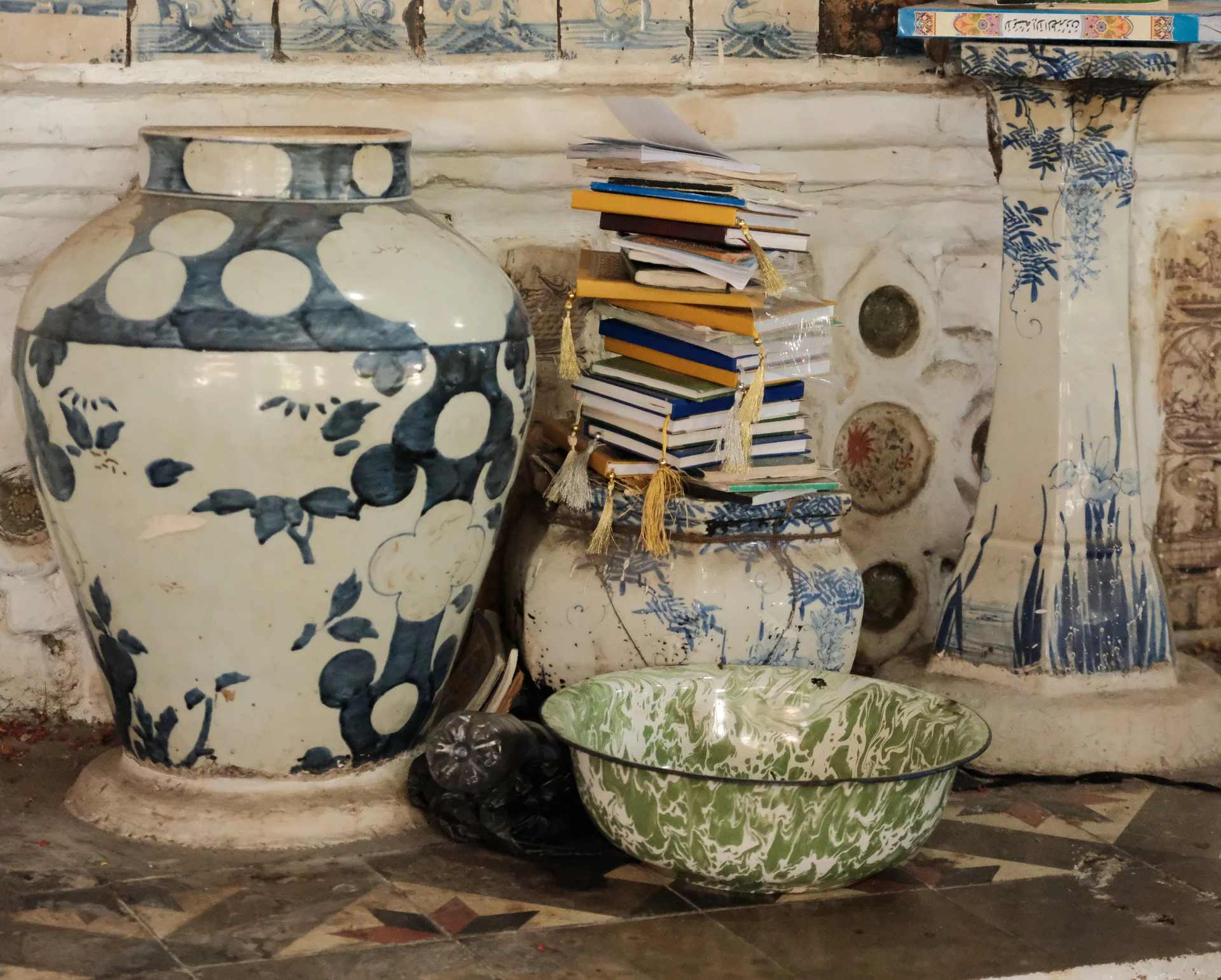
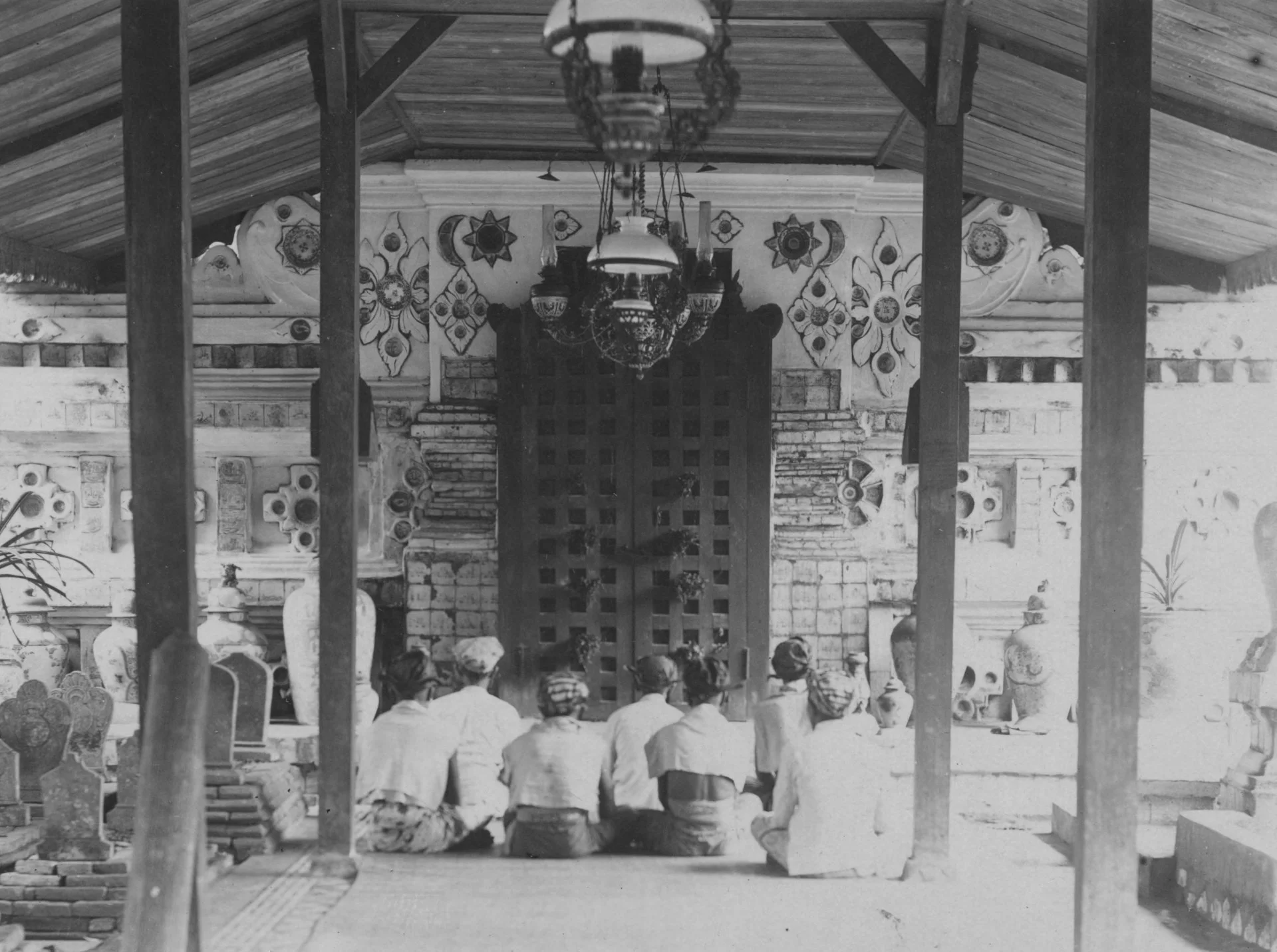
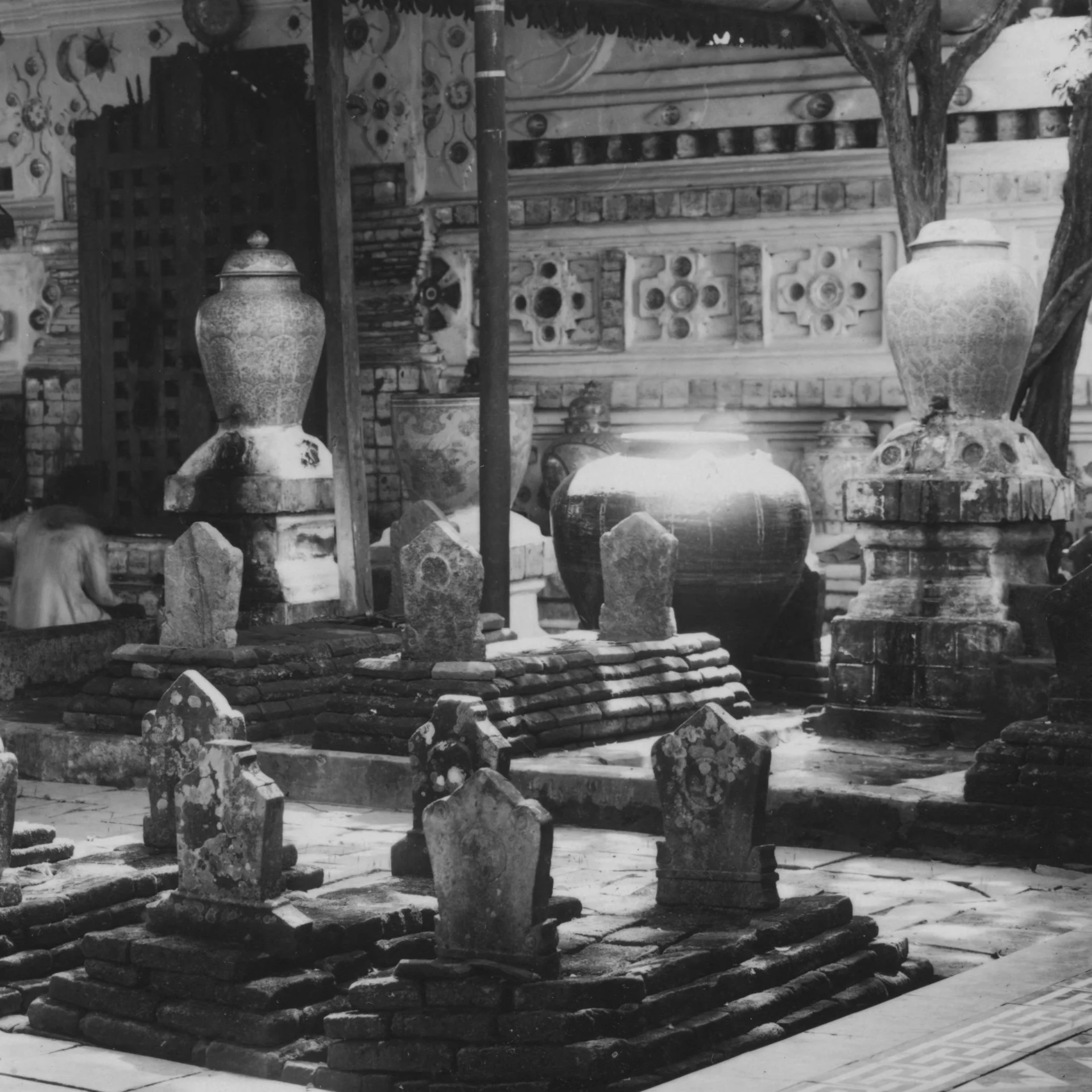
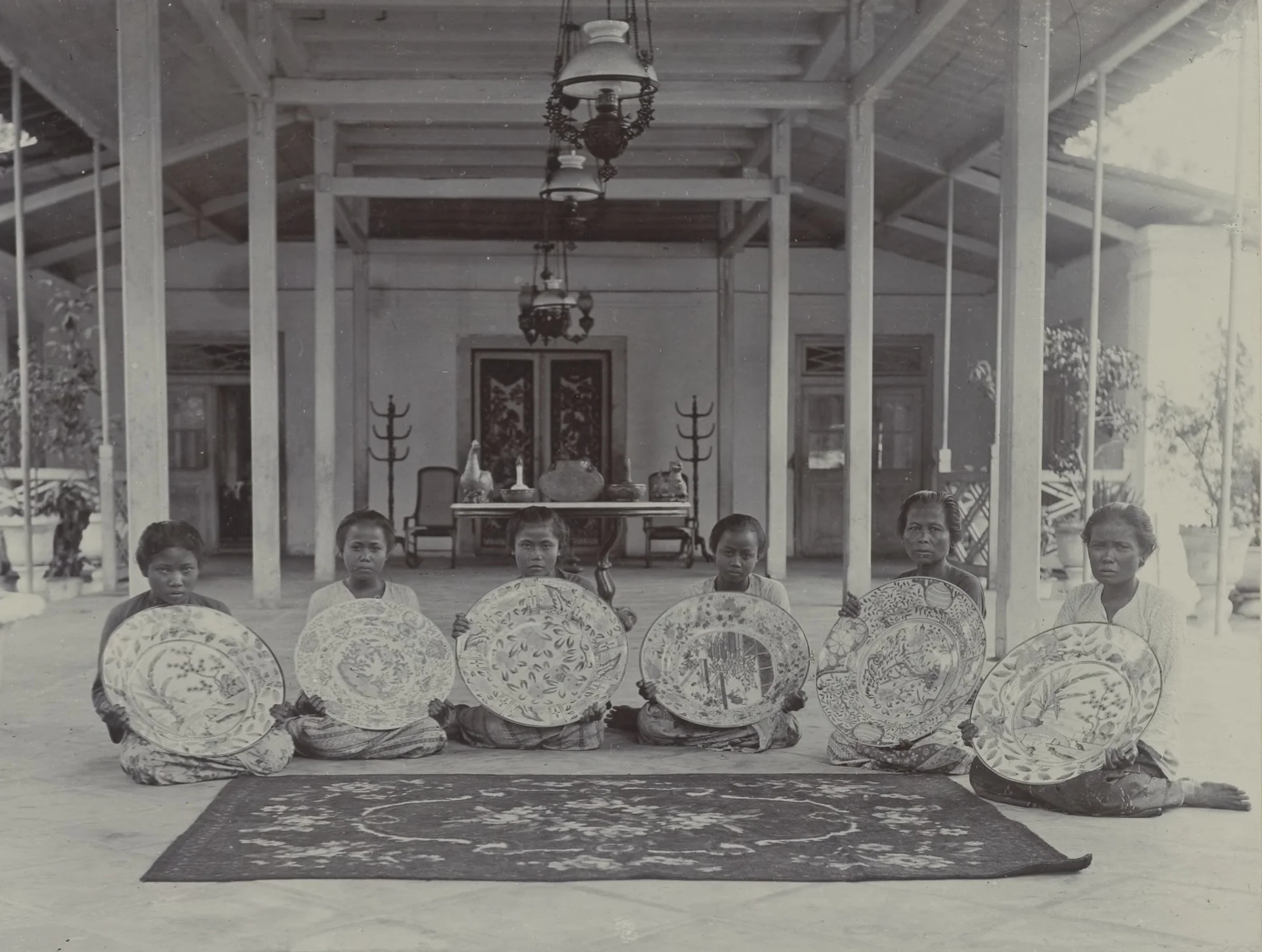
François Valentijn, a Dutch Calvinist minister and naturalist, mentions the creative use of ceramics in the shrine in his Oud en Nieuw Oost-Indiën (Old and New East Indies), published in 1726. As some of the pieces predate the eighteenth century, the tradition must have begun even earlier. In addition, early twentieth-century photographs also document the diverse ceramics, showing how they were historically presented.
From Faraway Places
The astonishing variety of ceramic pieces attest to Cirebon’s active long-distance trade with China, Japan, Myanmar, Thailand, and Vietnam, as well as England, Scotland, and the Netherlands between the sixteenth and nineteenth centuries.
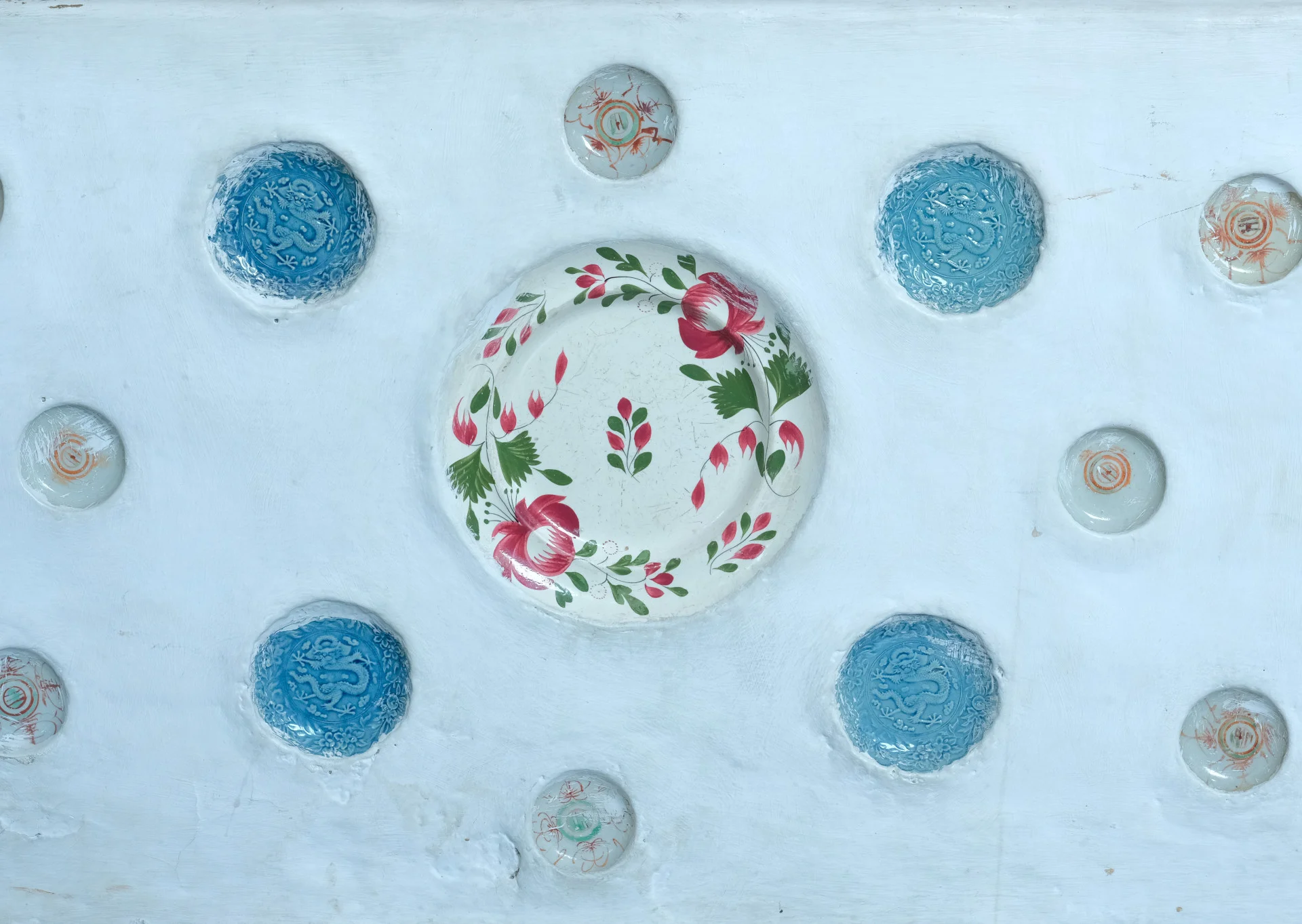
The juxtaposition of brilliant and austere colors invigorates the walls and galleries of the structures. For example, this nine-piece serving tray was probably created in the first half of the eighteenth century in Fujian province in southwest China. The tray is known as Sancai, a type of decoration that combines amber, white, and green glazes. Developed in China during the Tang dynasty (618–907), it was revived under the Qing rulers (1644–1912).
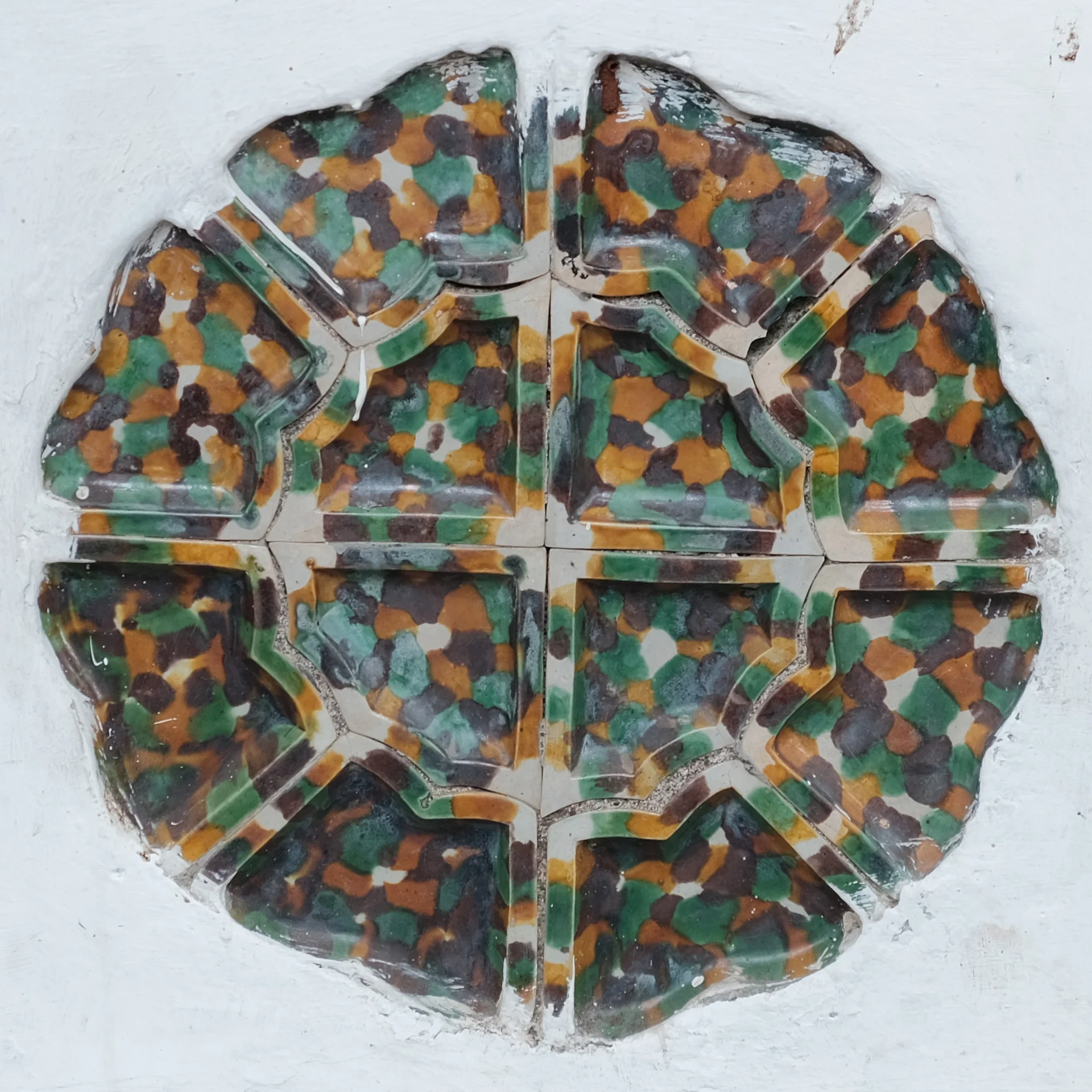
This type of interlocking serving sets is found throughout the complex in a variety of colors and designs. A common export ceramic, they were intended for sweets or condiments and shipped in wooden boxes.
A Dutch Touch
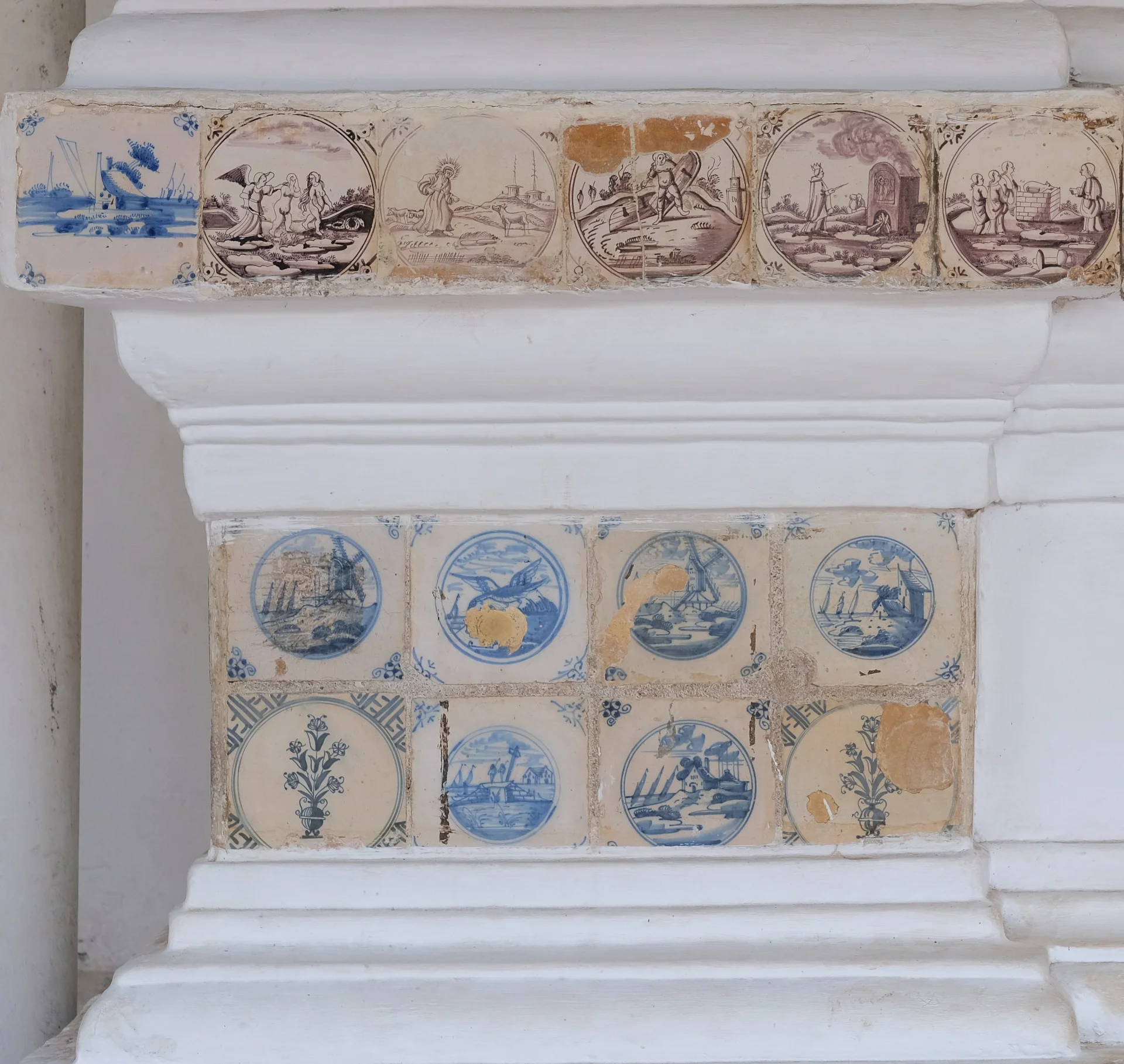
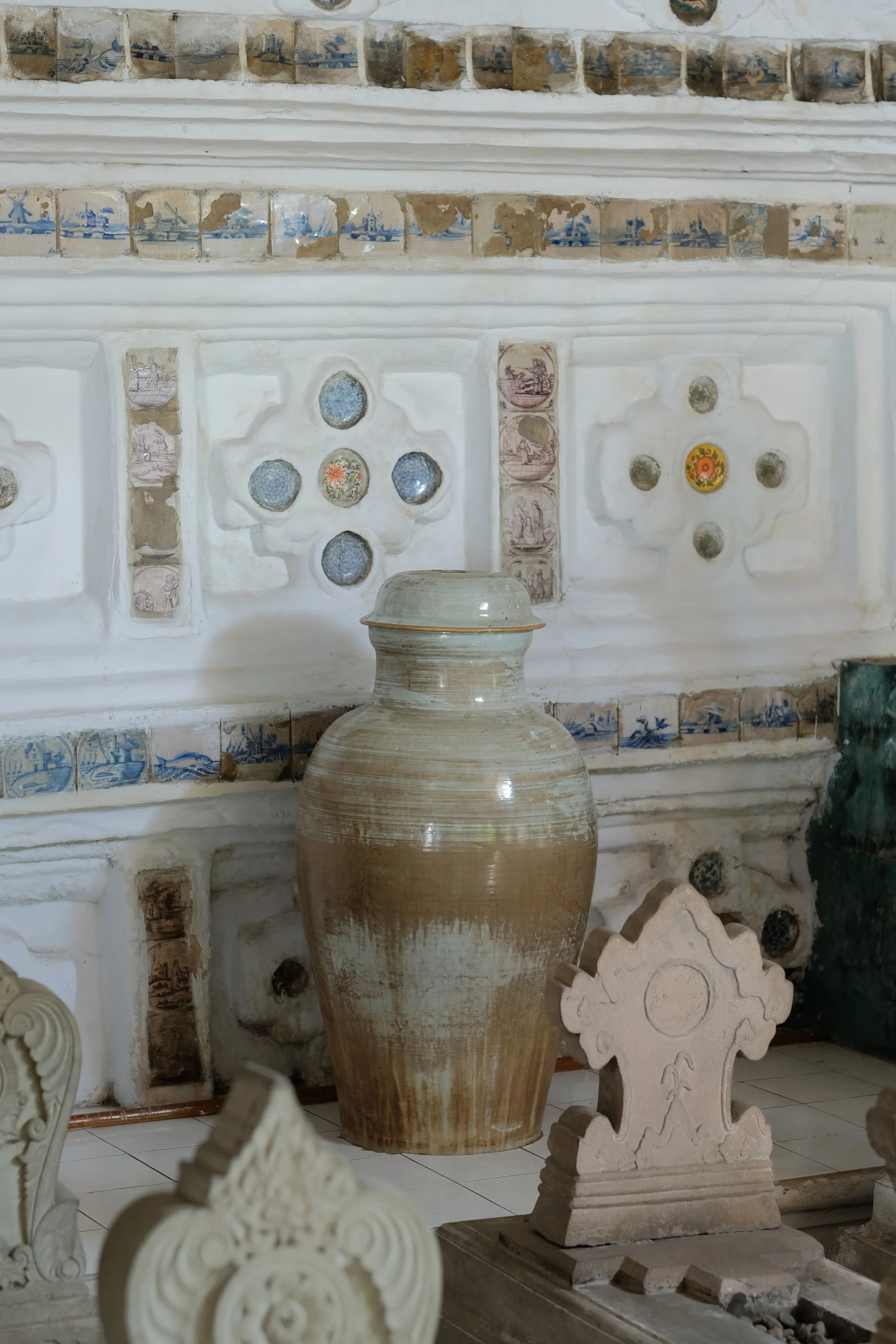
Hundreds of Dutch delft tiles are found across the complex. Dating from the second half of the seventeenth century to the eighteenth century, they feature small still lifes and landscapes painted in blue. Some of these tin-glazed earthenware tiles also depict biblical stories and fables.
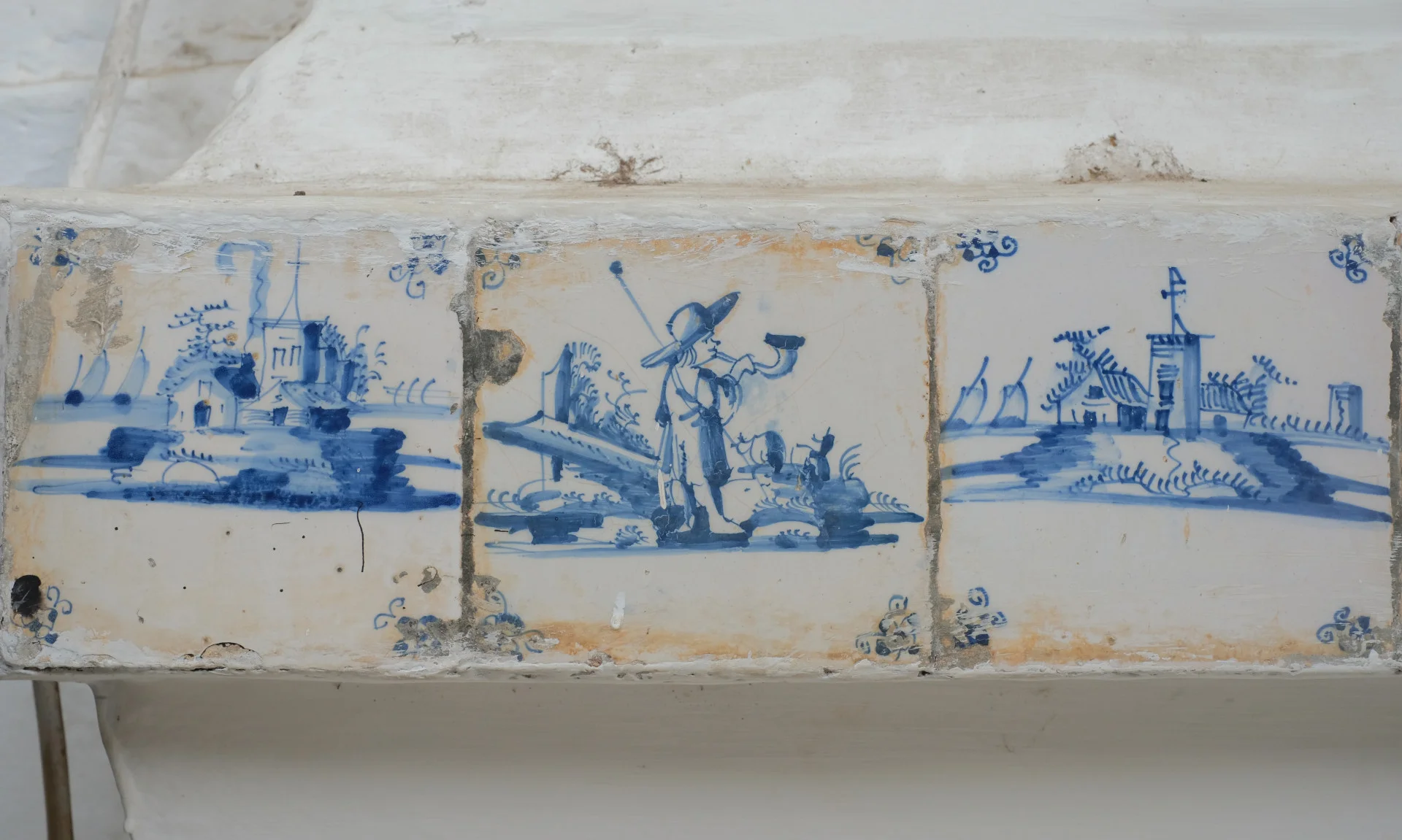
In their arrangement, it appears the subject matter of the tiles was of less importance, and they may have been valued more for their aesthetic properties and as economic symbols. Sunan Gunung Jati was known for his efforts to resist temporarily the advances of Dutch forces. Eventually, however, Java fell to the Dutch in the early 1600s with the establishment of the powerful Dutch East India Company or VOC (Vereenigde Oost-Indische Compagnie), which competed with other European powers for control over the region.
Inspired by China
Some ceramics were inspired by Chinese examples but produced elsewhere. This blue-and-white plate depicting a Chinese domestic scene was, in fact, manufactured by Robert Cochran & Co.’s Britannia Pottery company in Glasgow, Scotland in the 1880s.
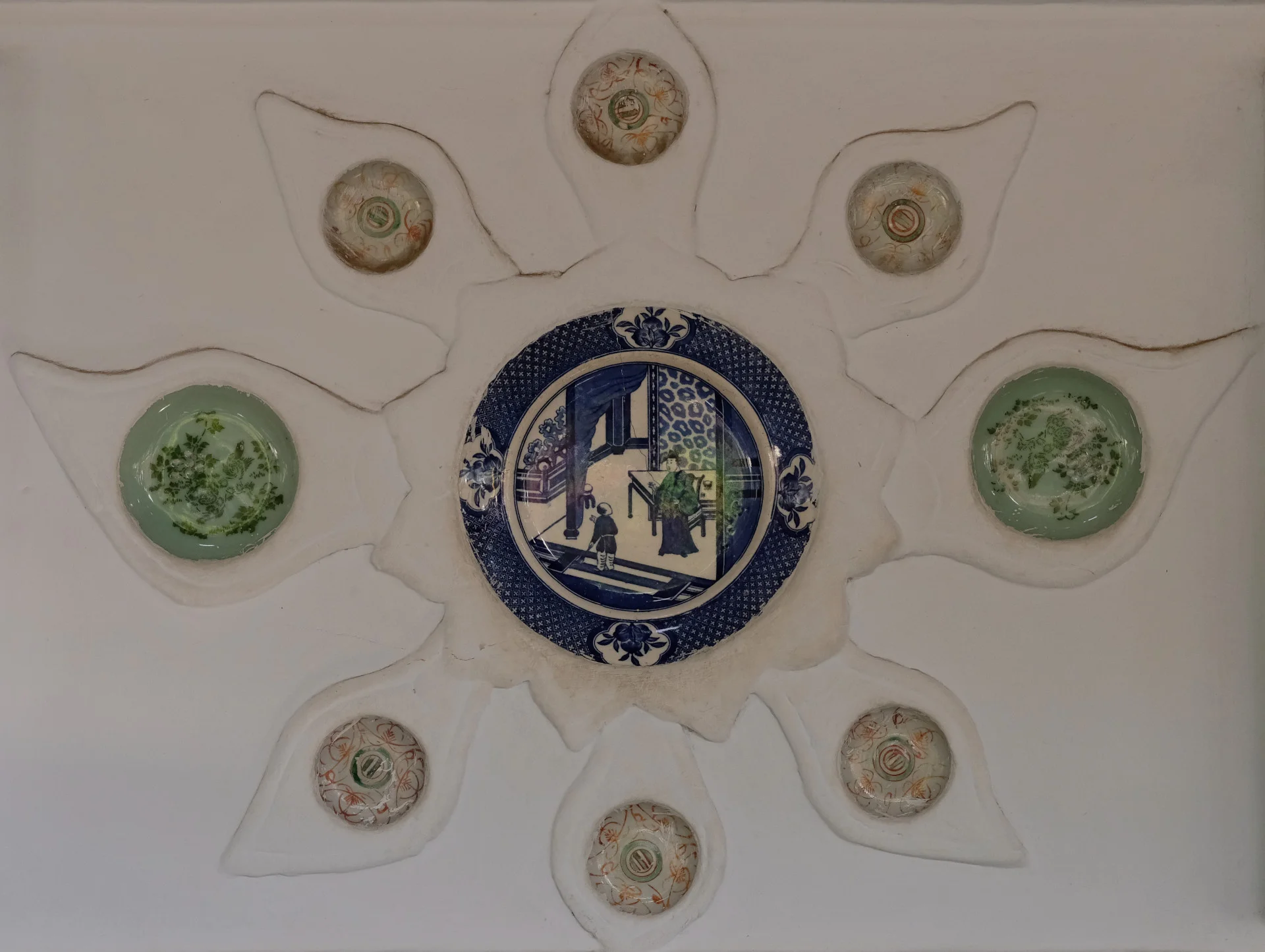
Such transfer-printed ceramics were then exported to Southeast Asia, where they were used as decoration as well as for domestic purposes. They must have been imported in large quantities as this plate is found in numerous places throughout the complex. These areas were likely built or renovated in the late 19th century.
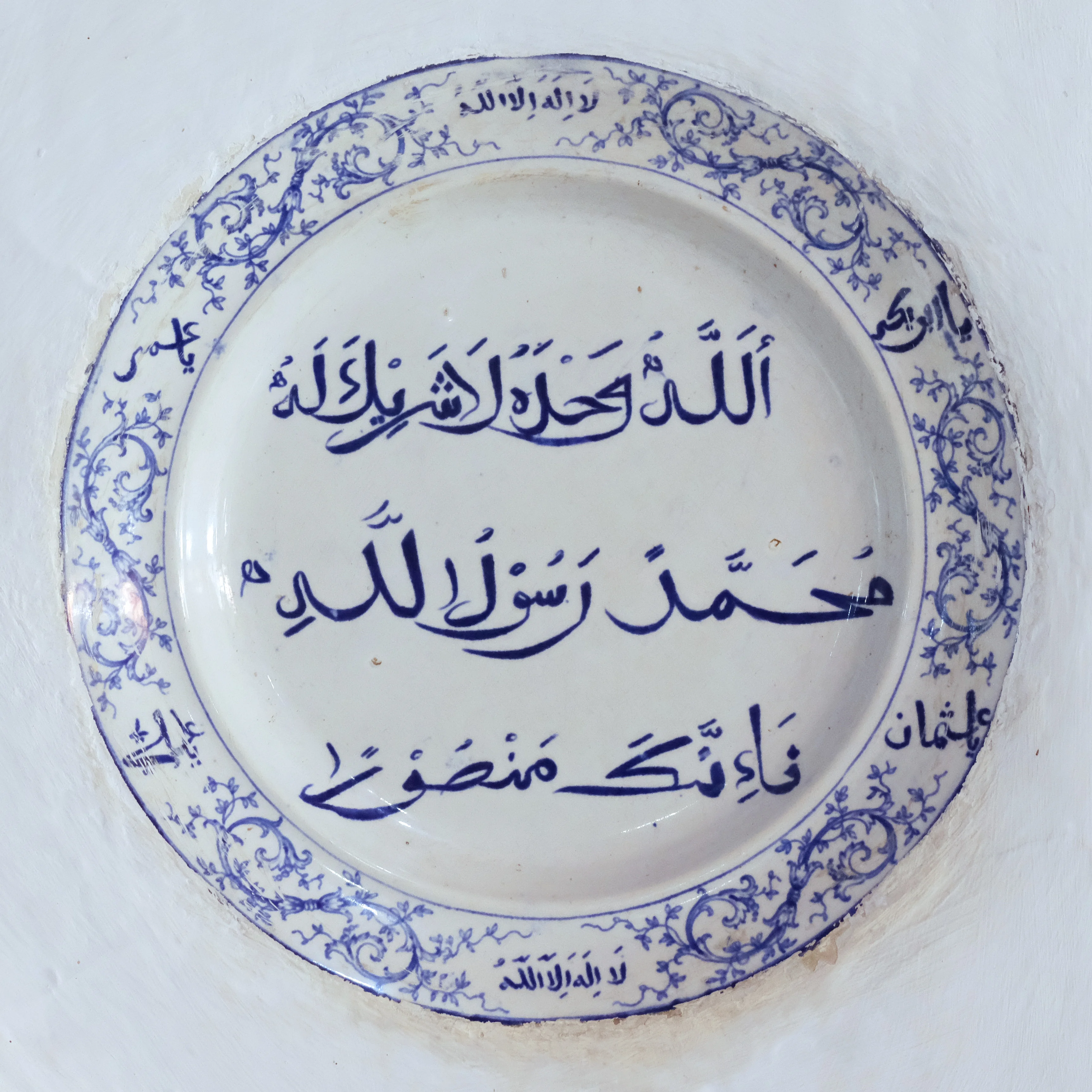
Made in England, Intended for Asia
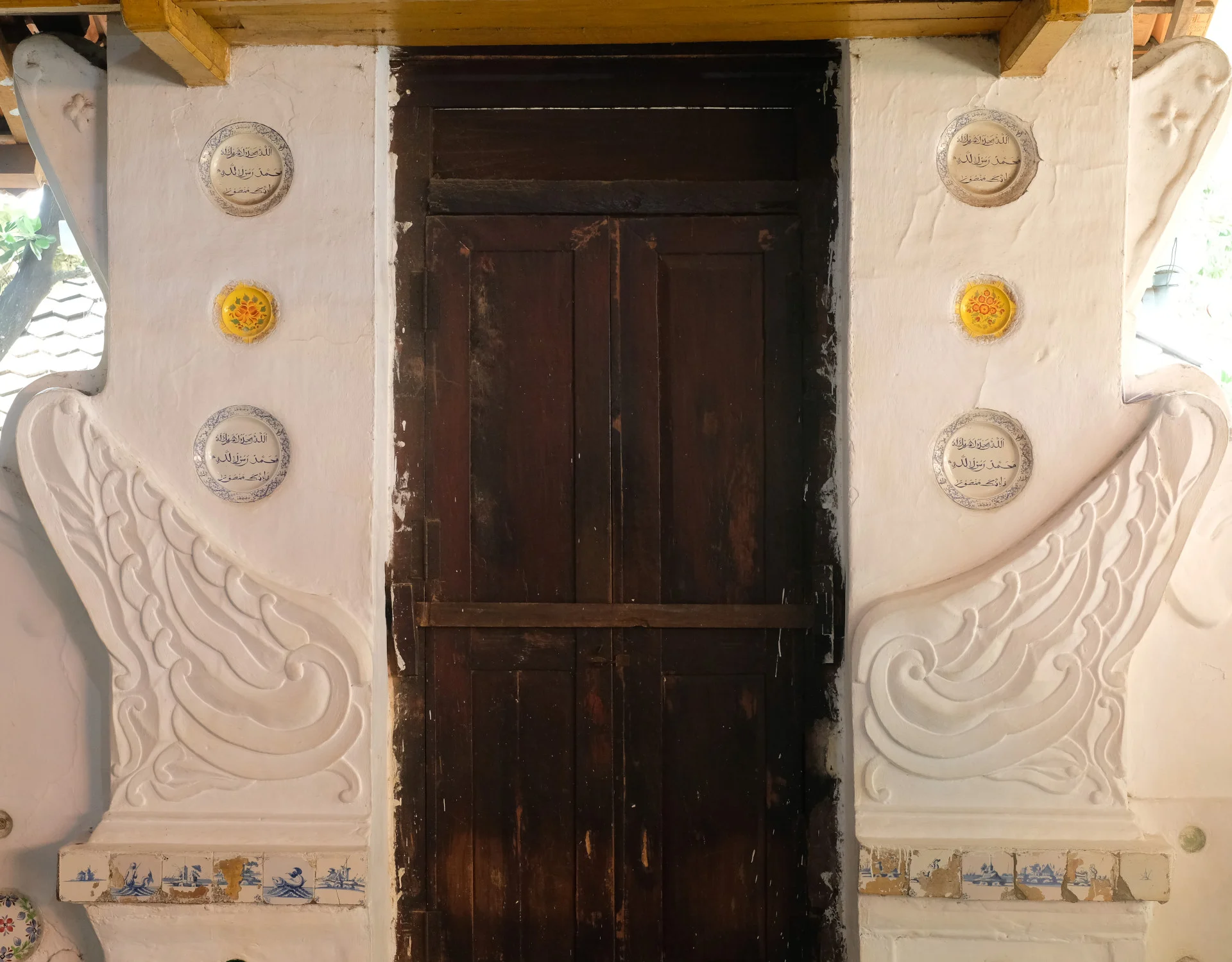
Another group of blue-and-white ceramics was produced in Staffordshire, England. Its design was trademarked in 1853 in London and displays Arabic inscriptions. The three lines in the center of the plate read as follows:
“Allah the one, there is no partner to Him.
Muhammad is the Prophet of Allah
Indeed, you are the Conqueror.”
The smaller inscriptions at the top and bottom of the outside rim reiterates the idea of the oneness and uniqueness of God, stating “there is no god but God.” The names of the first four caliphs (Abu Bakr, Umar, Uthman, and Ali)—the immediate successors to the Prophet Muhammad—also appear on the outer border.
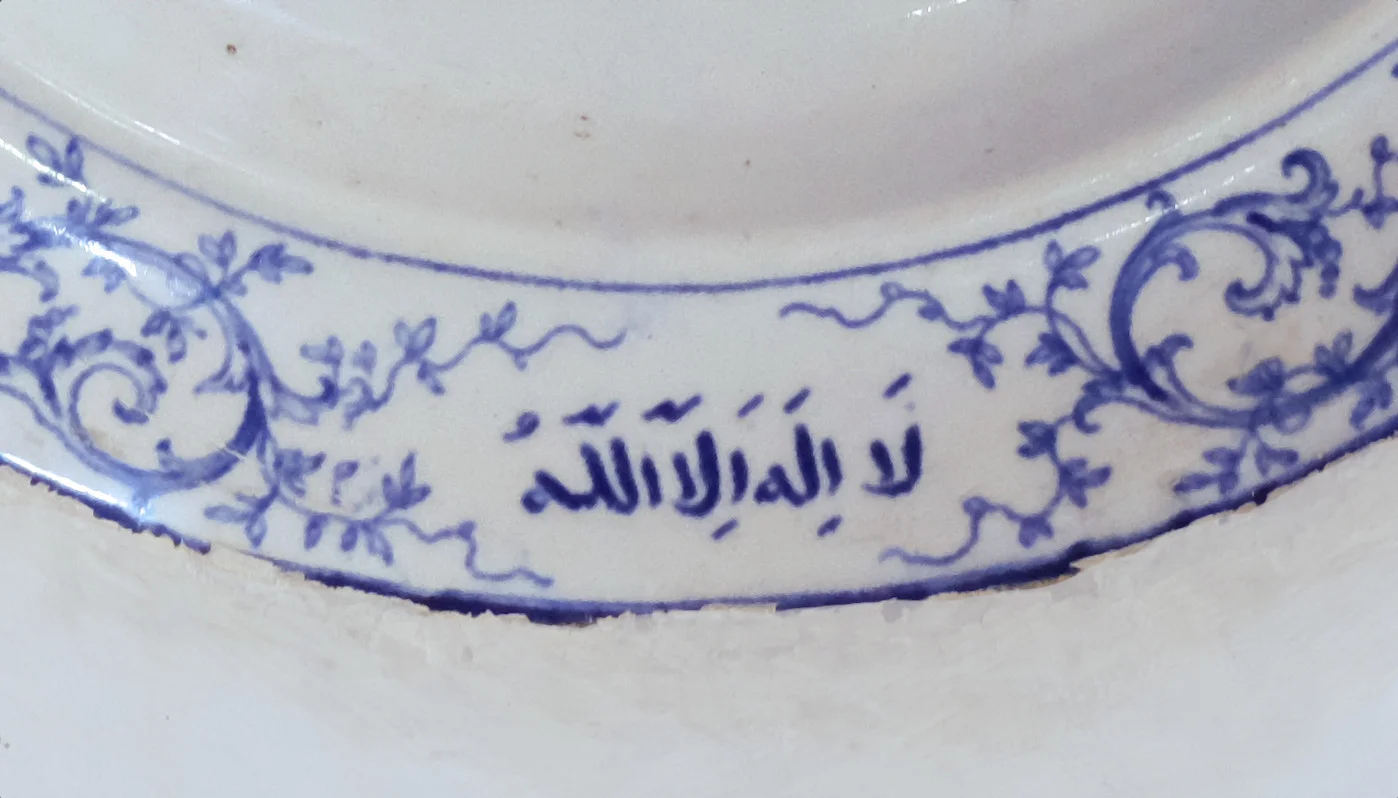
Plates with religious statements are carefully placed to face the tomb of Sunan Gunung Jati on the interior of the entrance, marking the most sacred space within the shrine. These plates were widely exported, and numerous examples are found in Indonesia and India.
Shorter Journeys
Pots and vases are displayed in various parts of the complex. Some of the oldest ones are from other parts of Southeast Asia, like Myanmar or Vietnam.
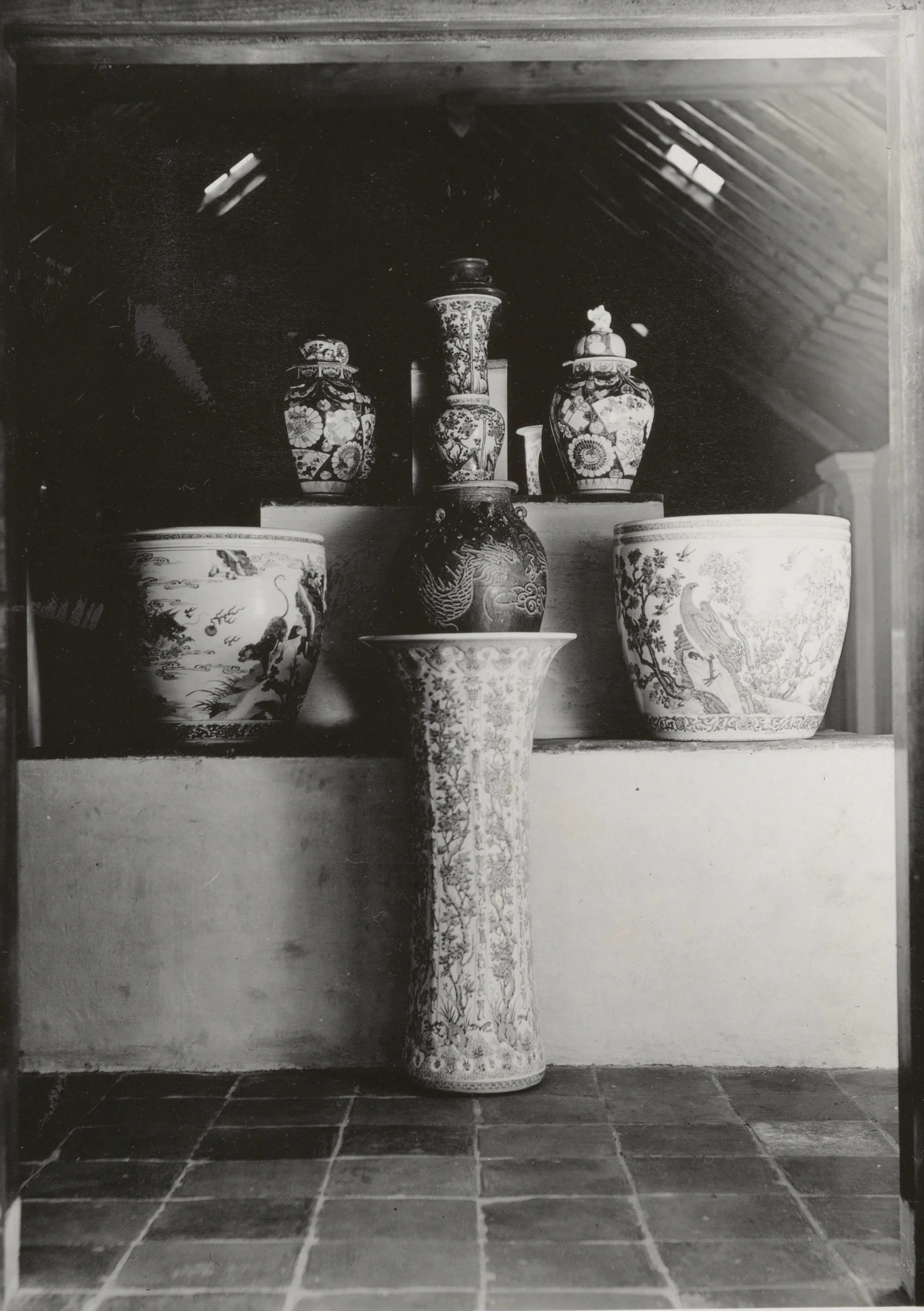
Large jars are often placed within the galleries of the mausoleum, against the inner structure that surrounds the actual grave. They are plastered to the ground so they cannot be moved, attesting to their importance and precious nature. Other large containers were likely used during festivals and are on display throughout the complex.
Beauty and Function
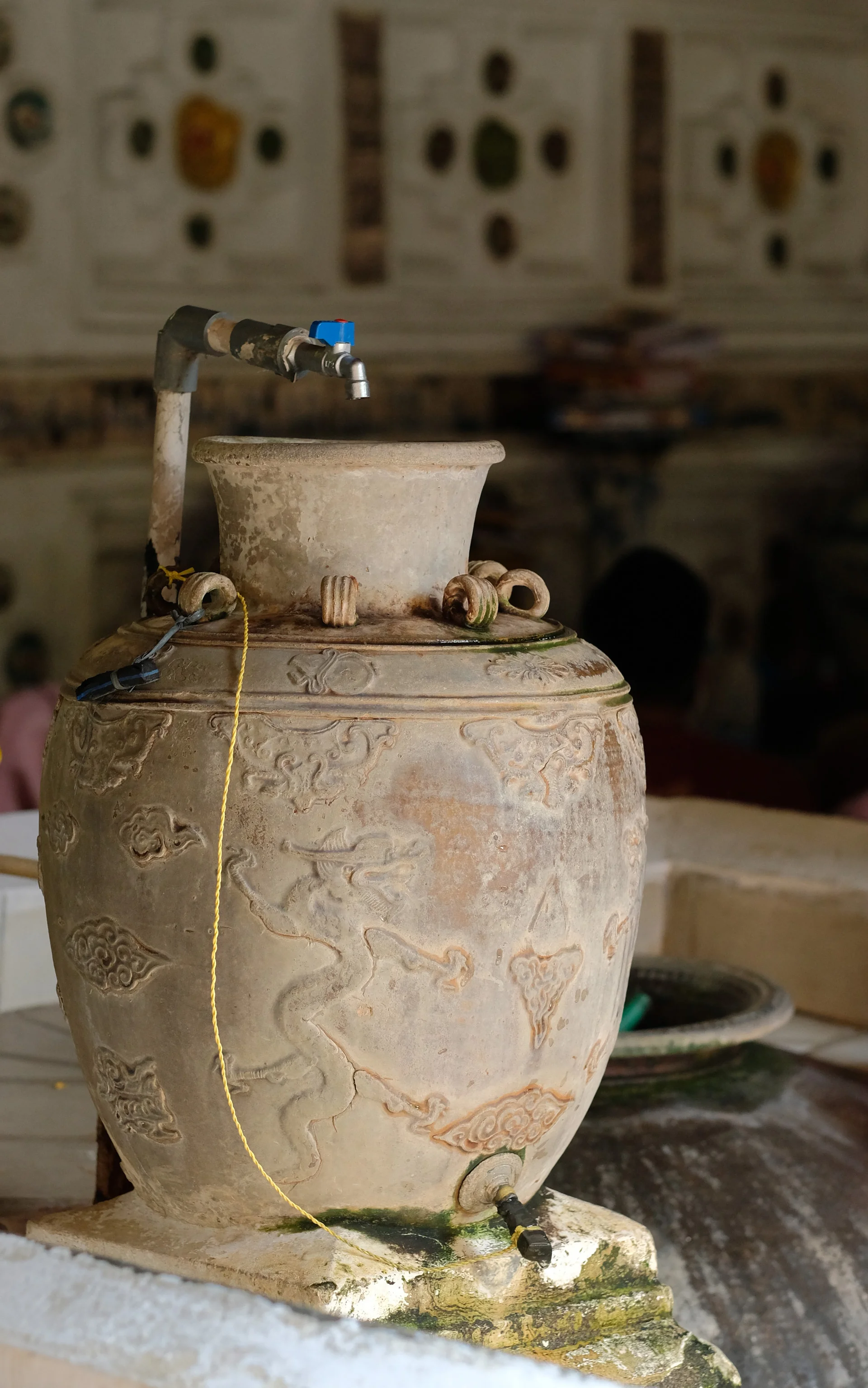
While some jars appear to have been solely decorative, others have been transformed for practical use.
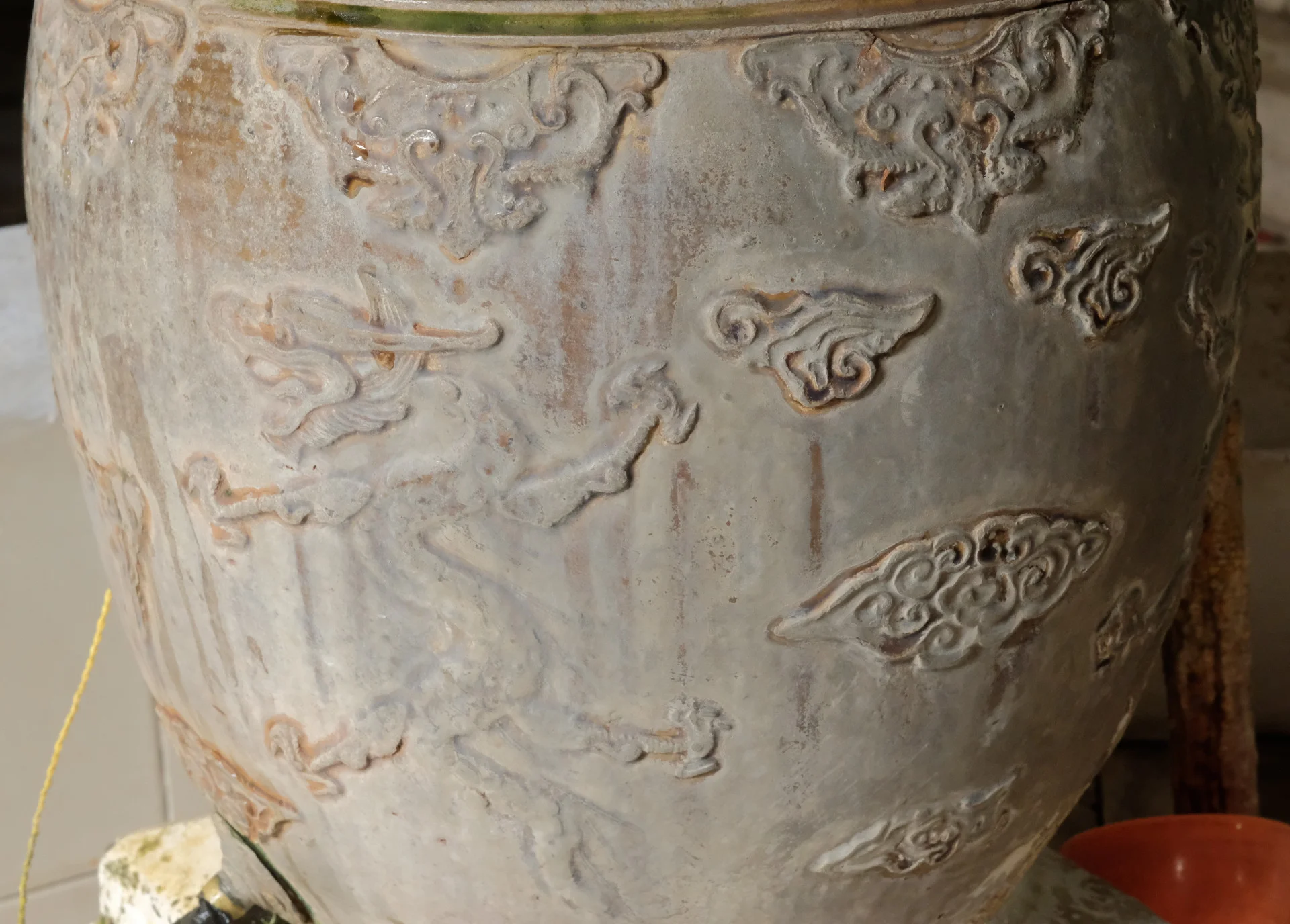
This finely decorated, large stoneware storage jar was made in southern China in the eighteenth or early nineteenth century and now serves as a water basin.
Other jars were also transformed into water basins as seen in this photograph from 1902.
For Saints and Sultans
The practice of imbedding ceramics into surfaces, a tradition that continues to the present, is also found in the ornate walls of the Friday mosque in Cirebon and of other shrines in Java.
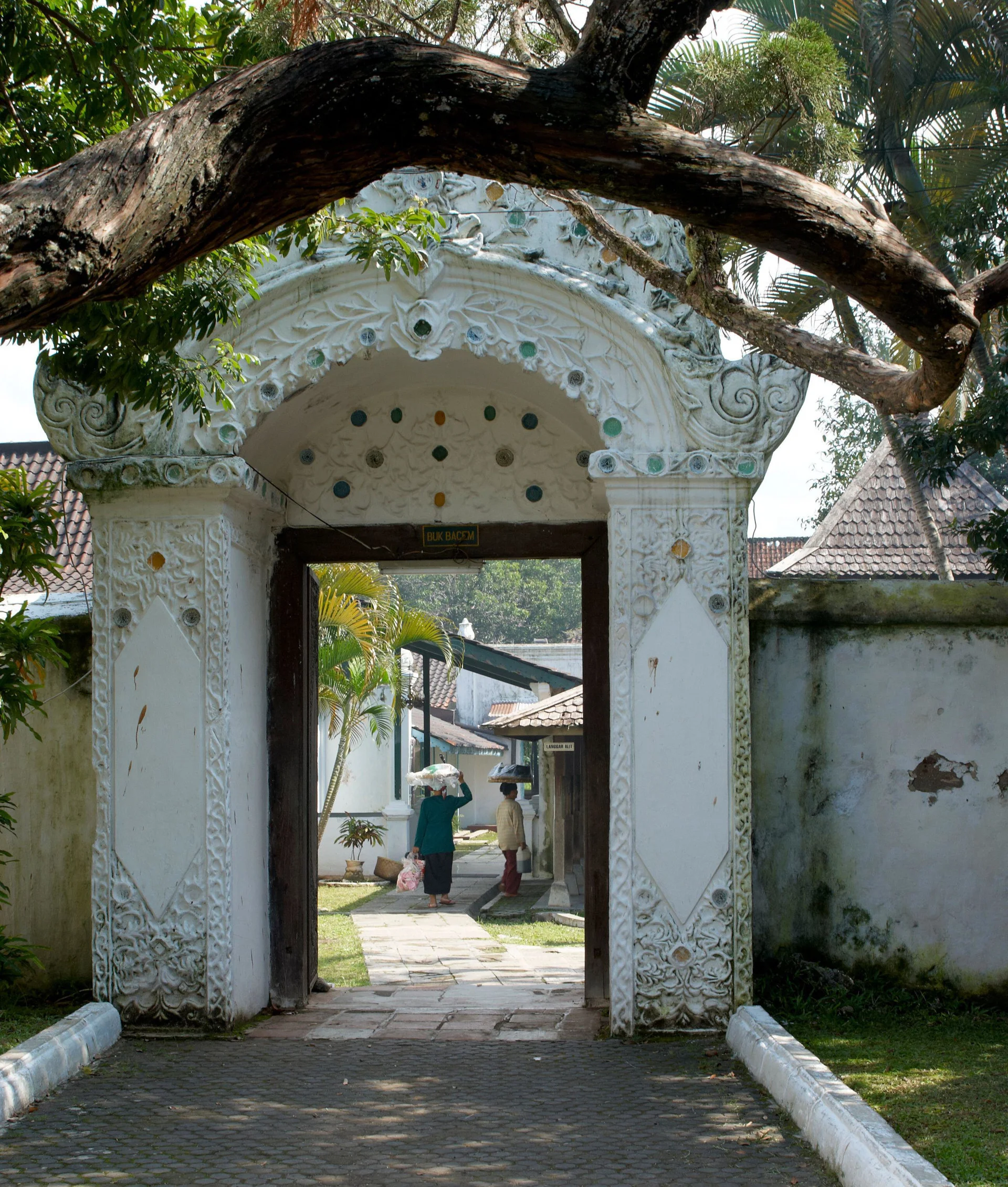
They are also visible in the Keraton Kasepuhan, the historic palace of Cirebon sultans, where walls and gates are decorated with dishes and tiles in a fashion similar to the shrine of Sunan Gunung Jati.
Other vessels, such as large Chinese serving dishes, were used for practical purposes and reserved for banquets. In both secular and religious contexts, the ceramics were and still are signs of prestige, wealth, and power. They also tell the story of vibrant political, commercial, and artistic interactions between Java and the rest of the world.
This presentation draws from the ongoing research of Jaap Otte.
Cirebon Indonesia
Objects
Explore the map or scroll to select an object.