A Bektashi Mirror Calligraphy
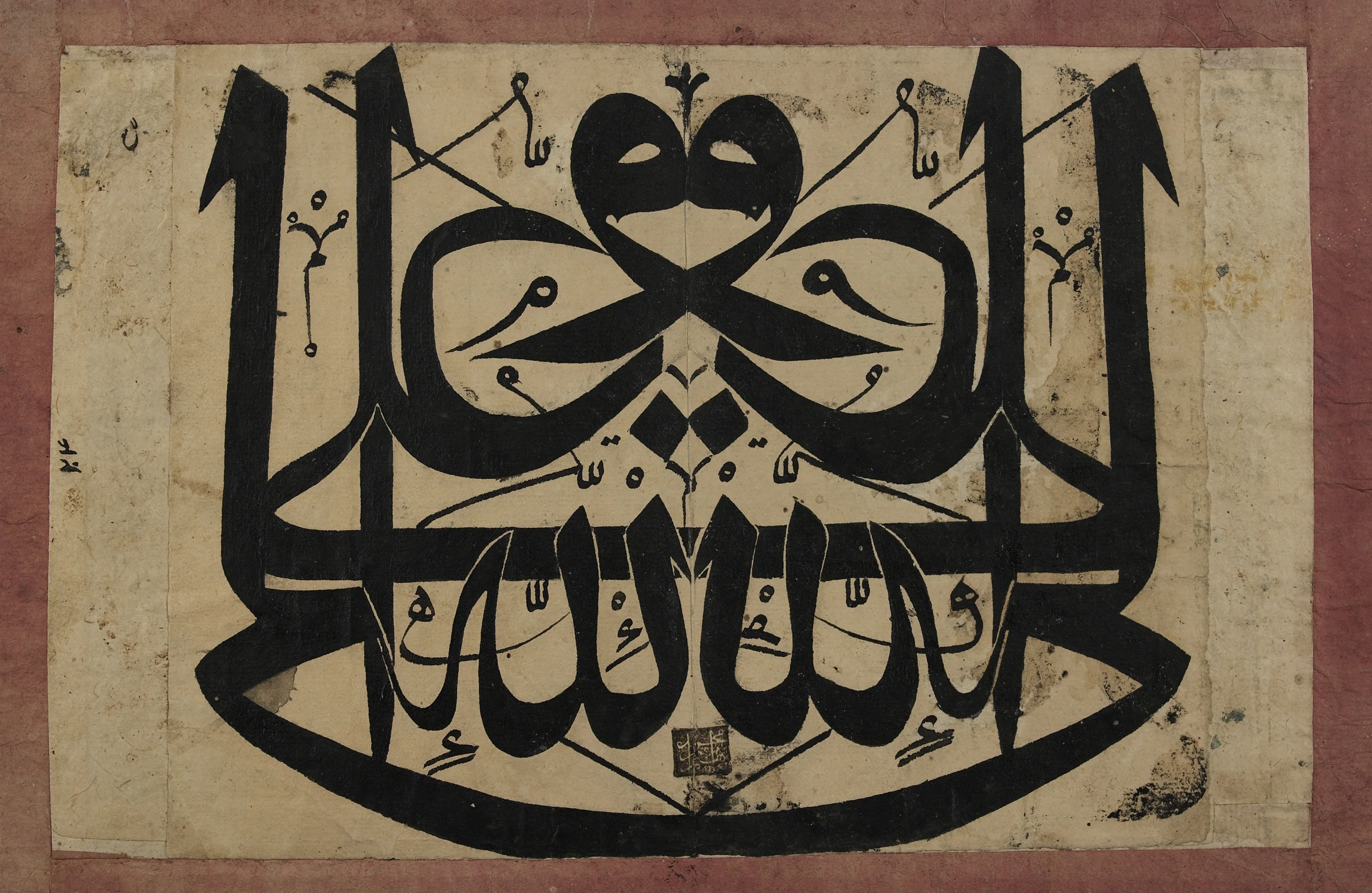
Signed by Muhammad Ibrahim
Probably Türkiye or the Balkans, Ottoman period, ca. 1720–30
Ink on paper
Library of Congress, African and Middle East Division, Near East Section Persian Manuscript Collection, 1-86-154.130
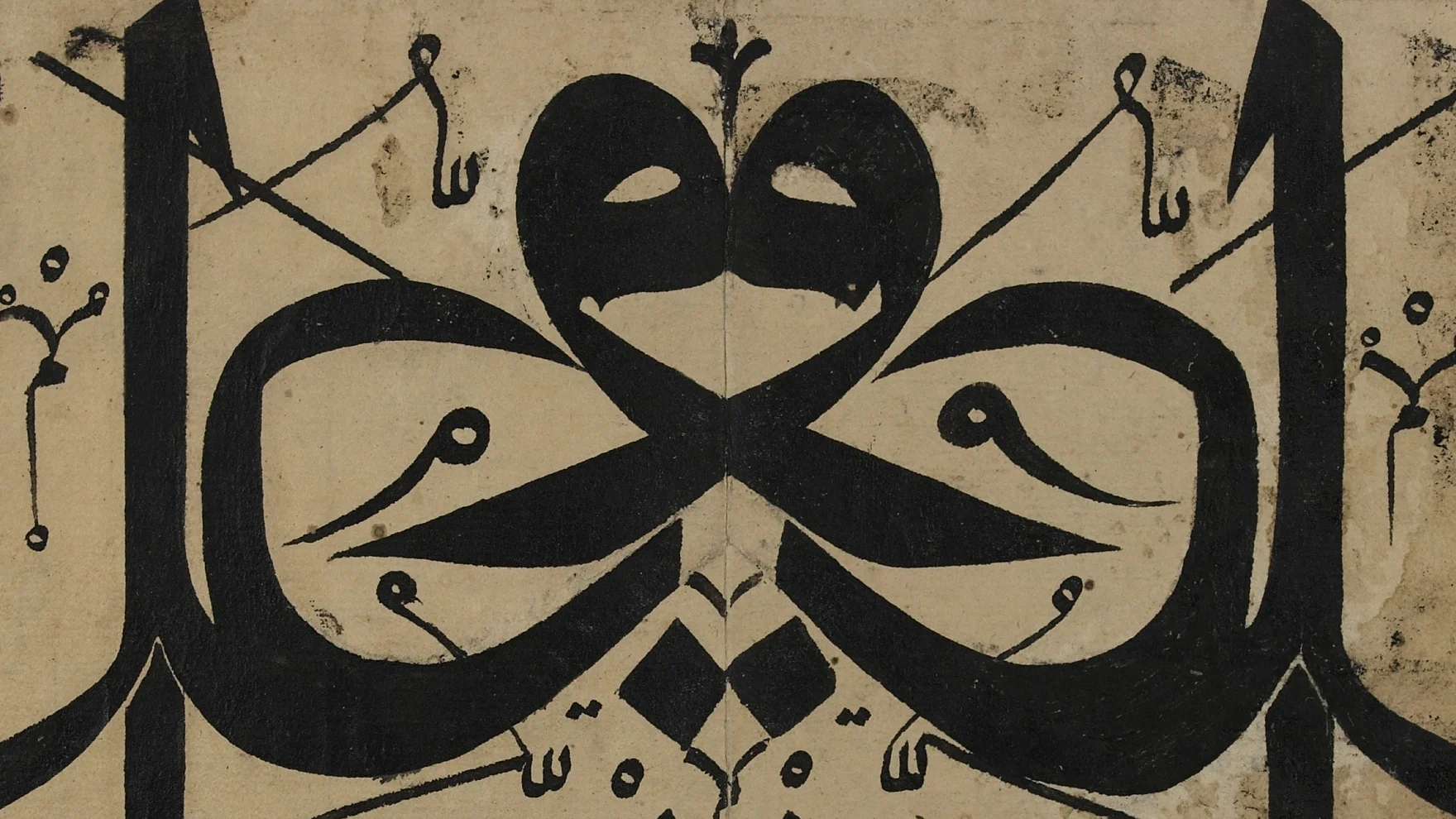
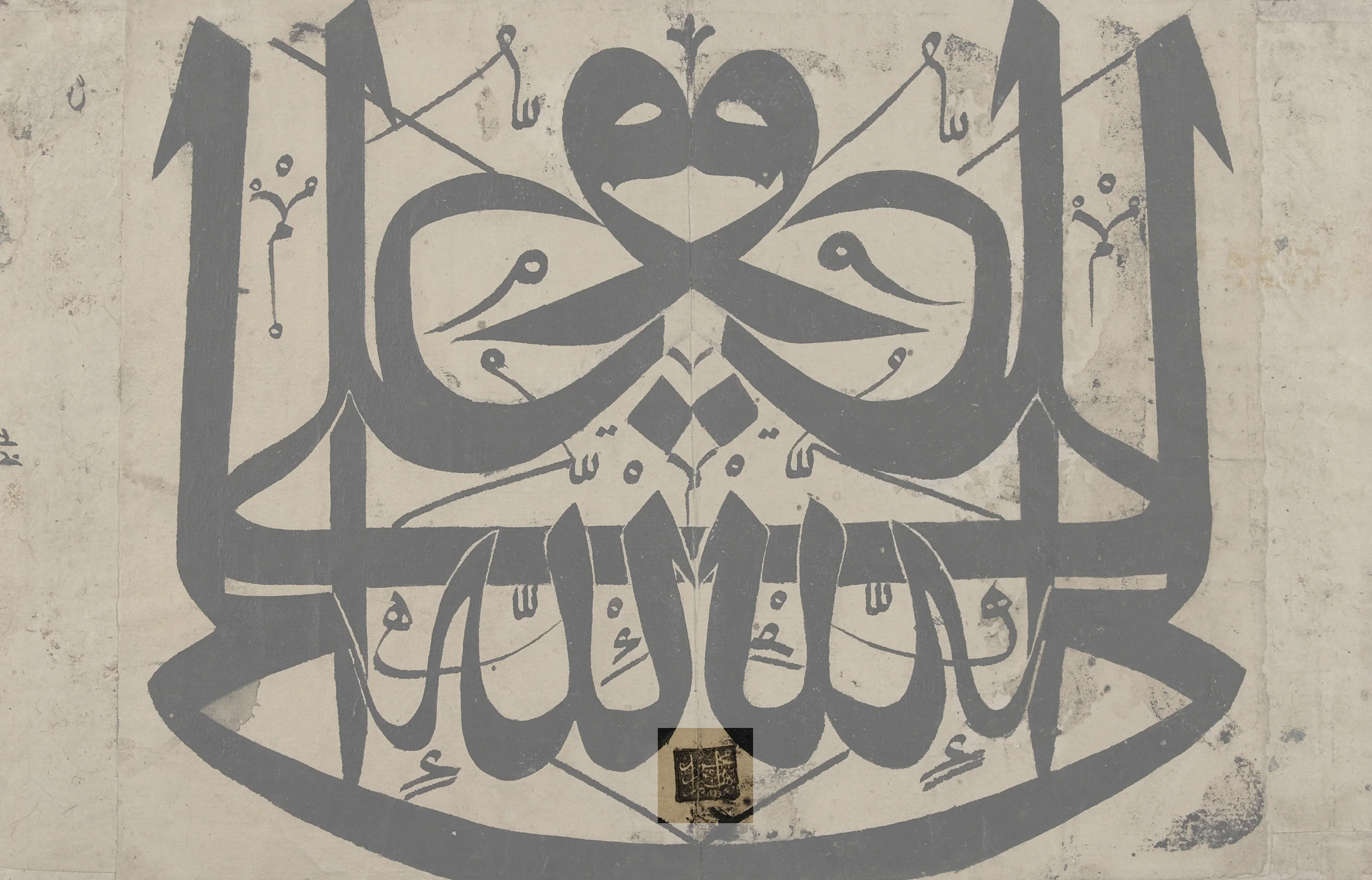
This bold calligraphy reads “Ali is the vice-regent of God” (‘Ali Wali Allah, in Arabic), which is a phrase Shi‘i Muslims usually add to the shahada, the Islamic declaration of faith (“There is no god but God and Muhammad is the Prophet of God”). The phrase refers to Ali ibn Abi Talib, the cousin and son-in-law of the Prophet Muhammad, considered the first Shi‘i Imam, and confirms the belief that Ali was divinely ordained to be the Prophet’s successor.
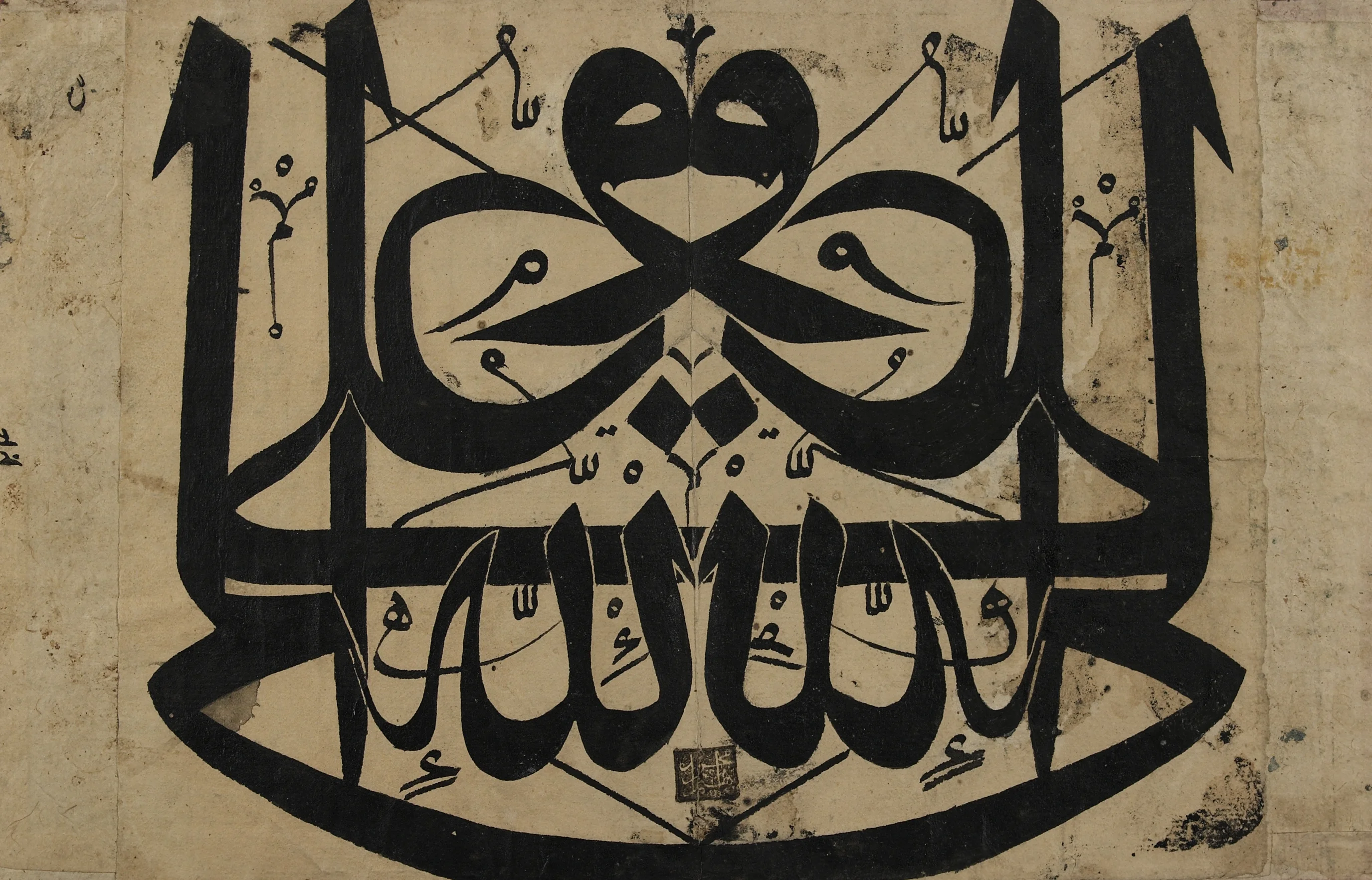
A Panel on the Wall
This type of calligraphy, called levha (literally, “panel”) in Turkish, was especially popular among the Ottomans and flourished after the eighteenth century. Written in a script large enough to be read from a distance, such works were religious in content and framed and hung on walls of shrines and places of worship. They were particularly associated with the Bektashi order but were also used elsewhere. In the Great Mosque of Bursa, a monumental levha professing “He is God” (Huwa Allah, in Arabic), dated to 1275 AH (1859 CE), was donated by the Mevlevi order.
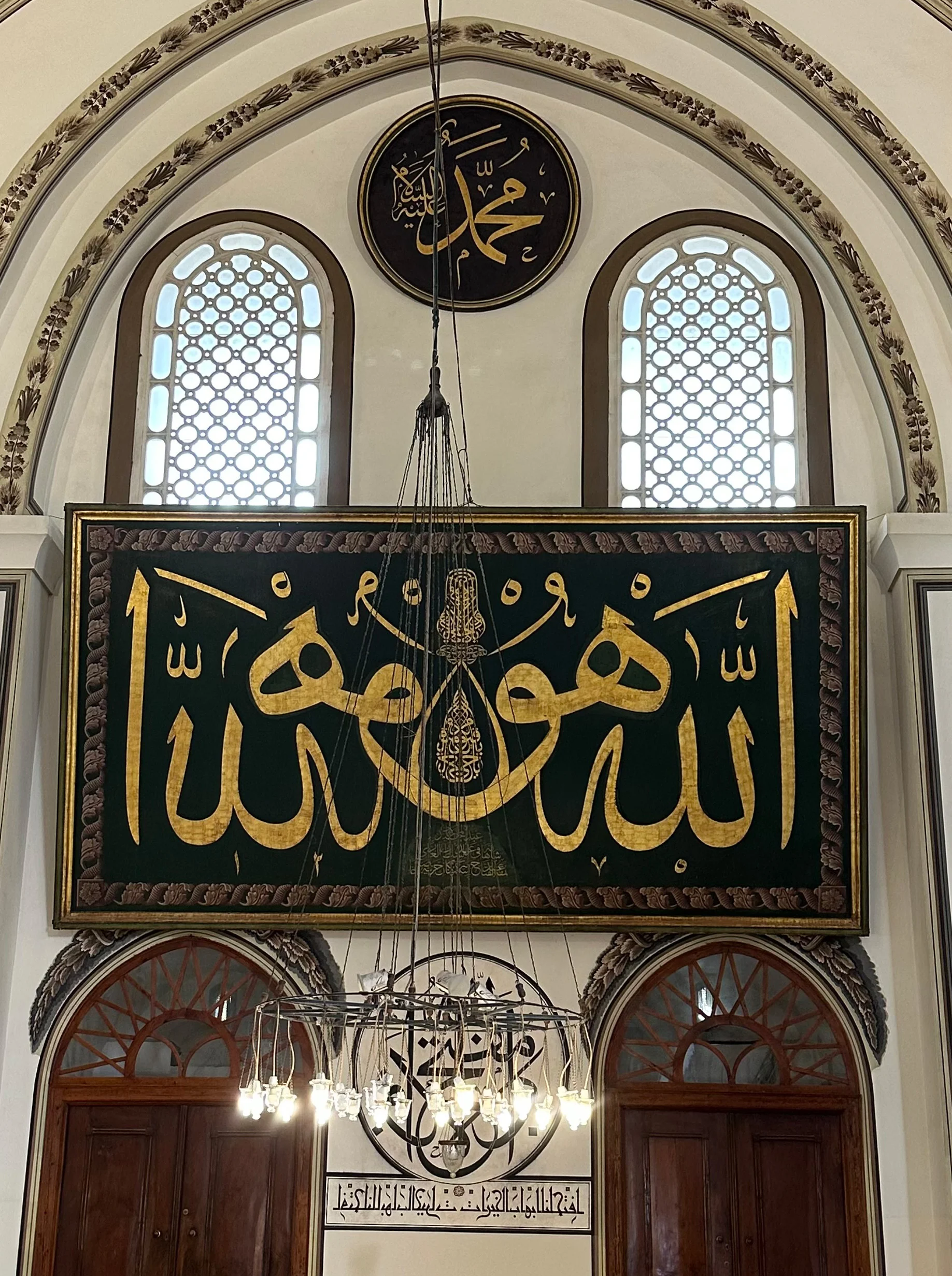
National Museum of Asian Art, Smithsonian Institution, Photo by Simon Rettig.
Mirror Calligraphy
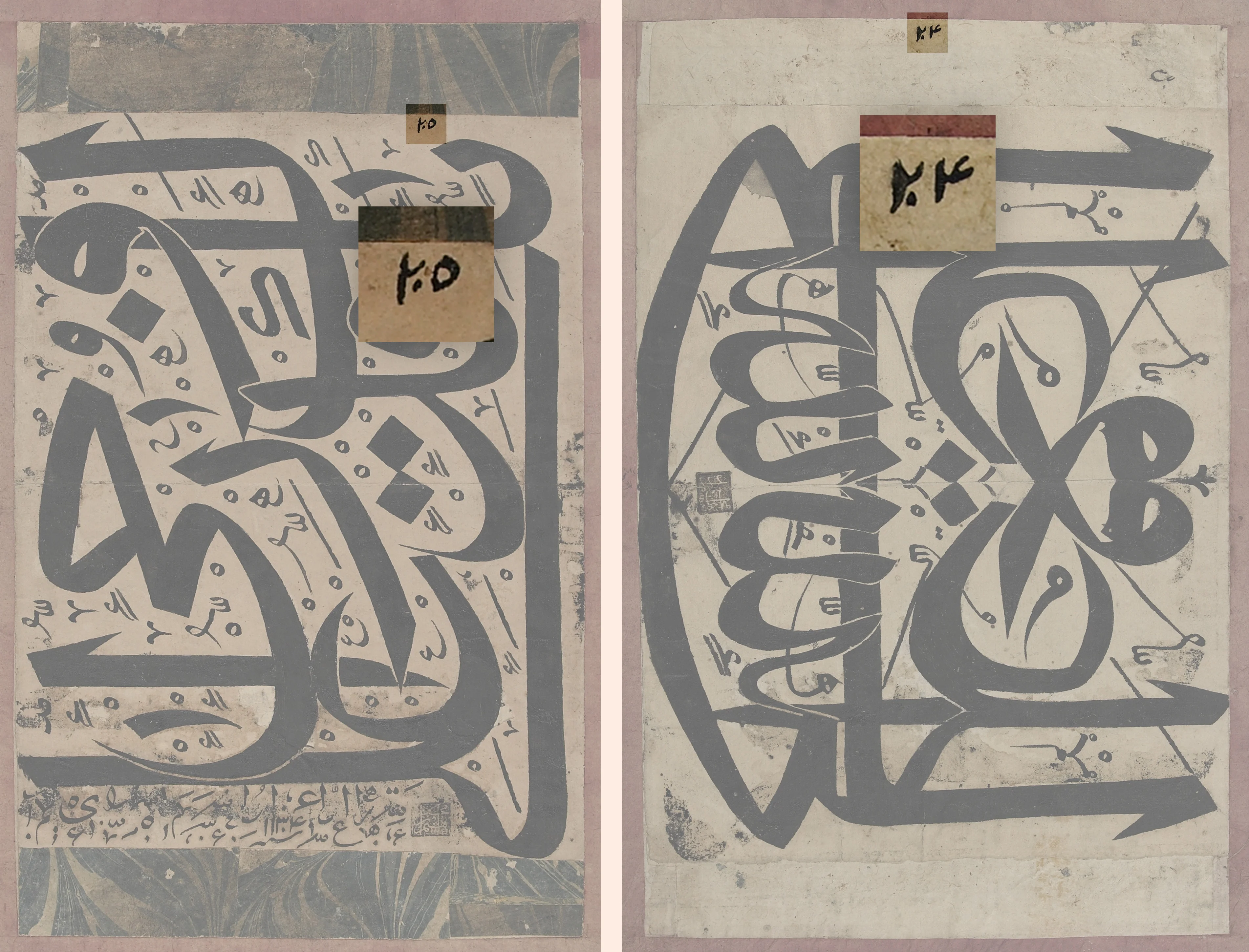
The folio from the Library of Congress is a fine example of mirror writing, or muthanna (literally, “bifold”). A seam in the middle of the page indicates that the paper was indeed folded as a visual aid to help the calligrapher to keep the composition perfectly symmetrical.
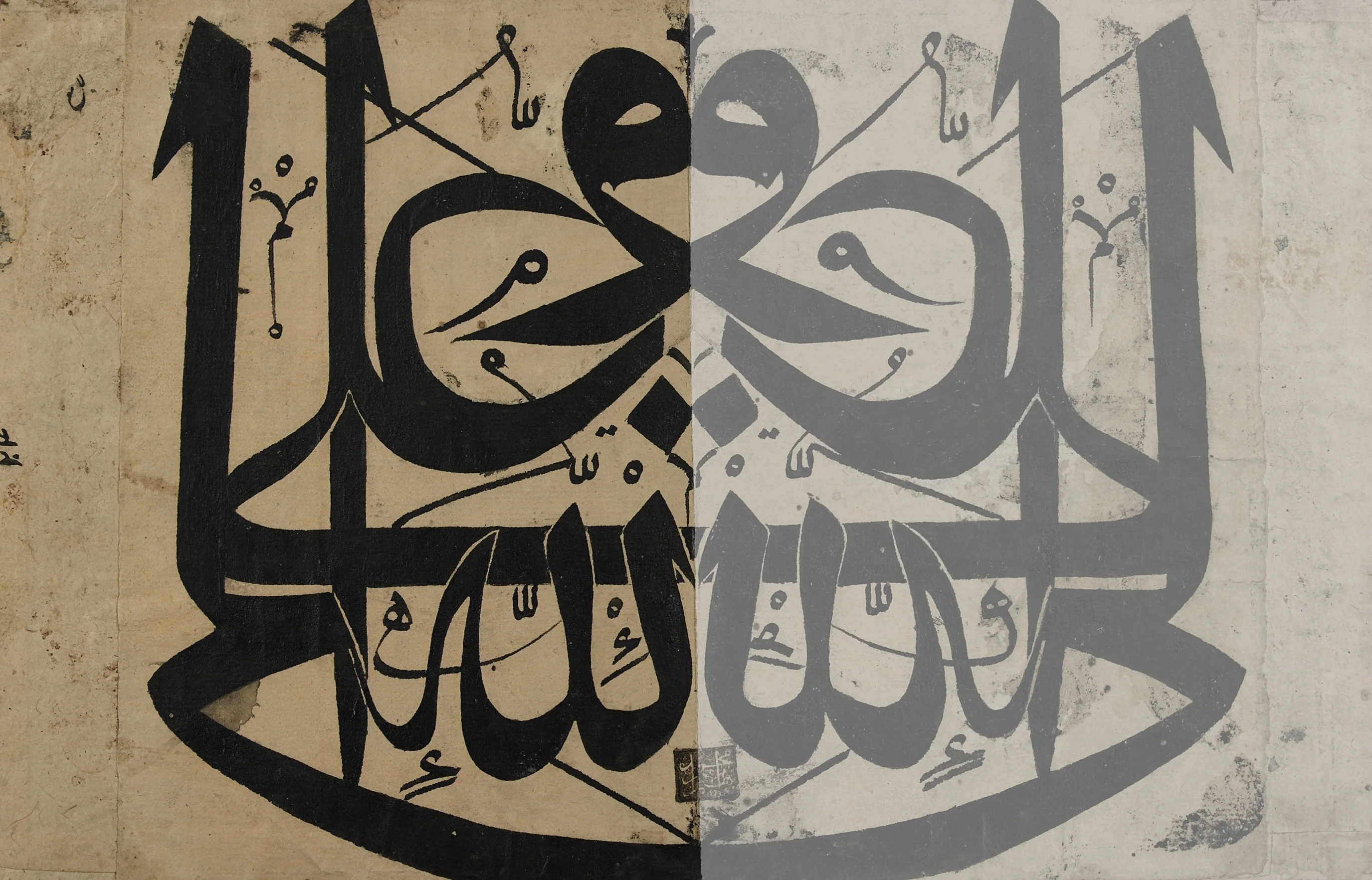
Beginning with the facing and linked Arabic letter at the top, “waw,” which signifies divine love in Islam, the calligrapher has extended letters and words across the line of symmetry, creating a powerful interlocking design. The configuration encourages viewers to scan the entire surface to understand fully the written words, which restate the role of Imam Ali in Bektashi belief.
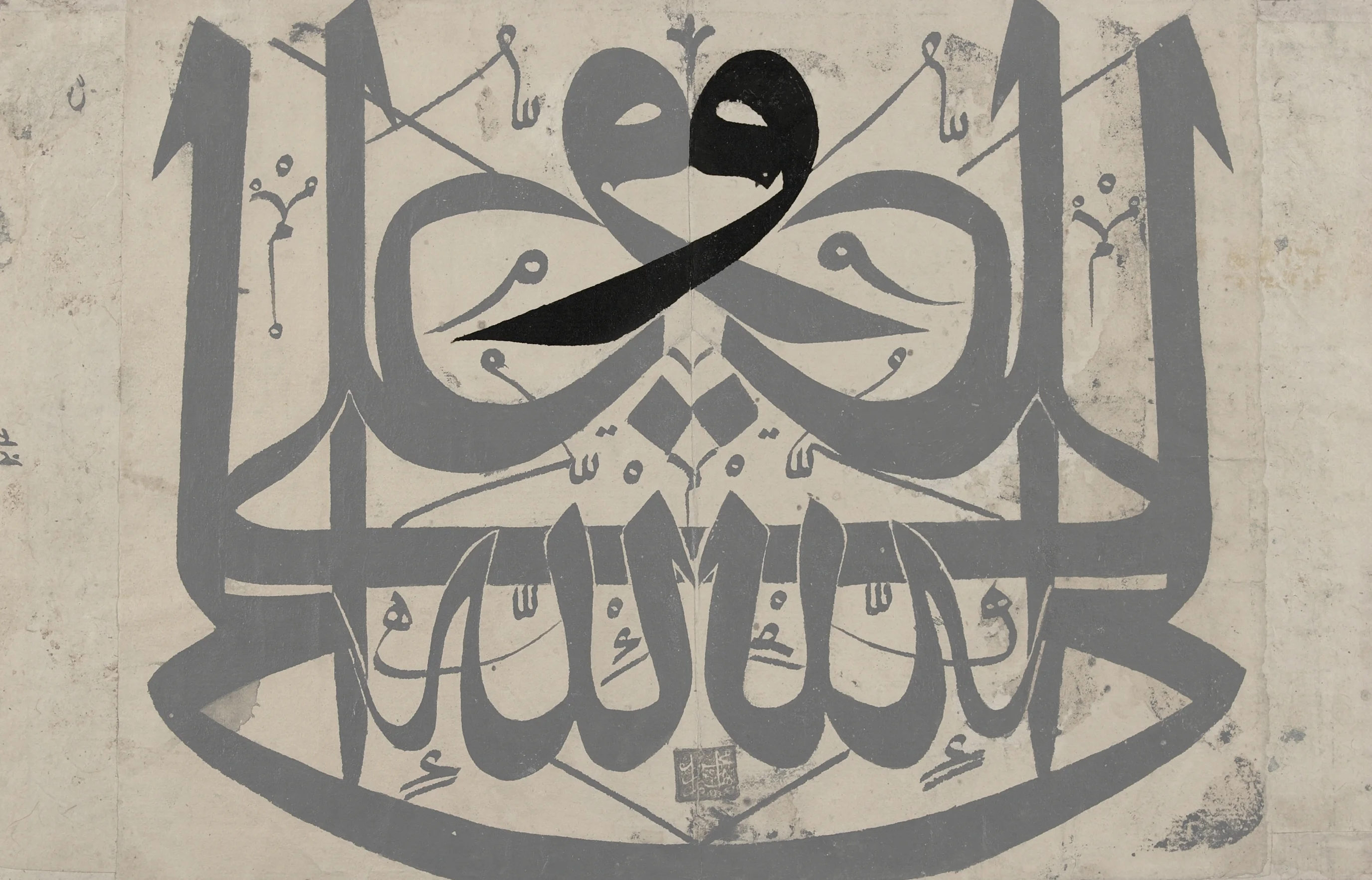
The words in the composition spell out:
‘Ali Wali Allah
Ali is the vice-regent of God
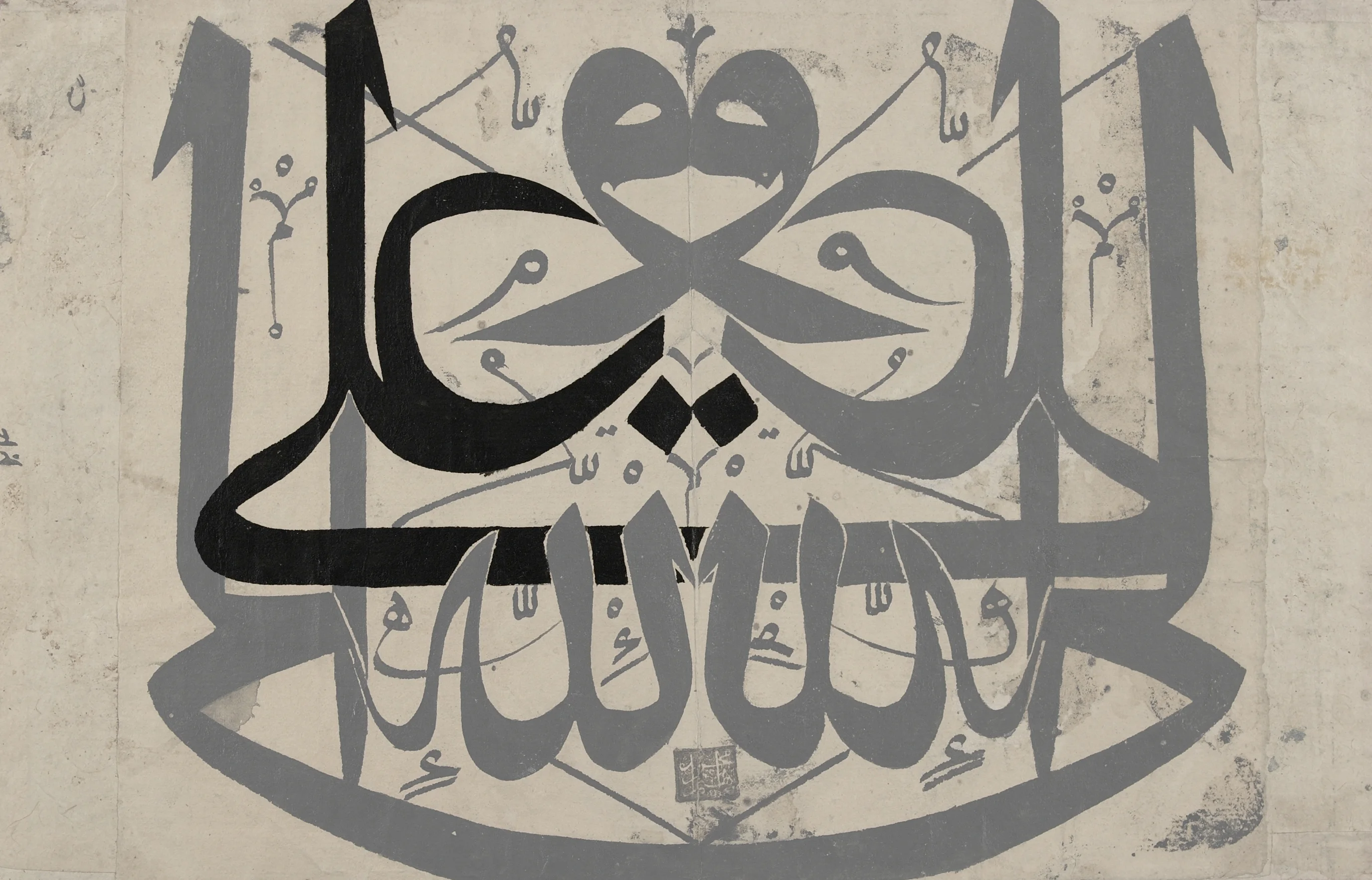
‘Ali Wali Allah
Ali is the vice-regent of God
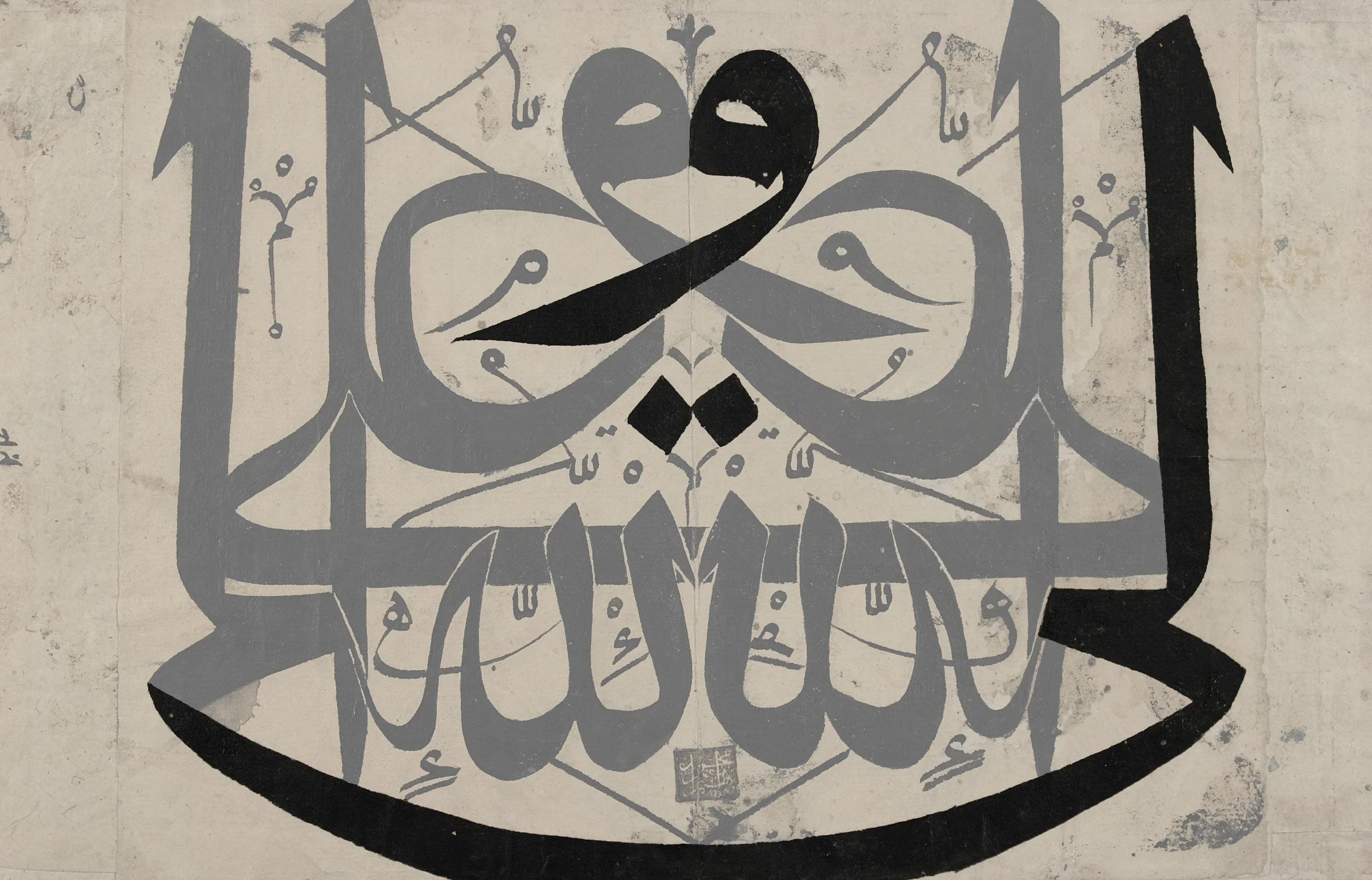
‘Ali Wali Allah
Ali is the vice-regent of God
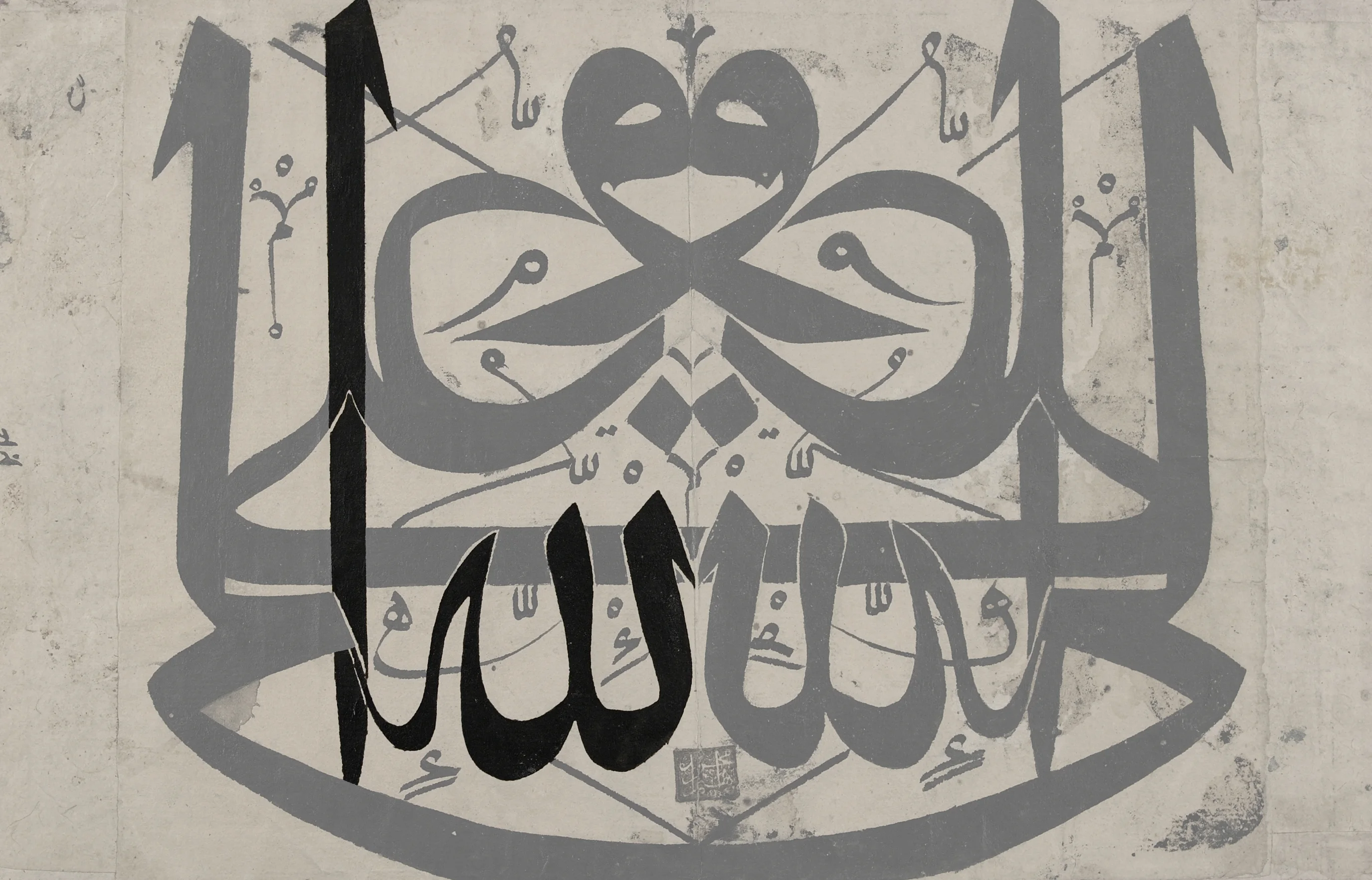
The Artist’s Signature
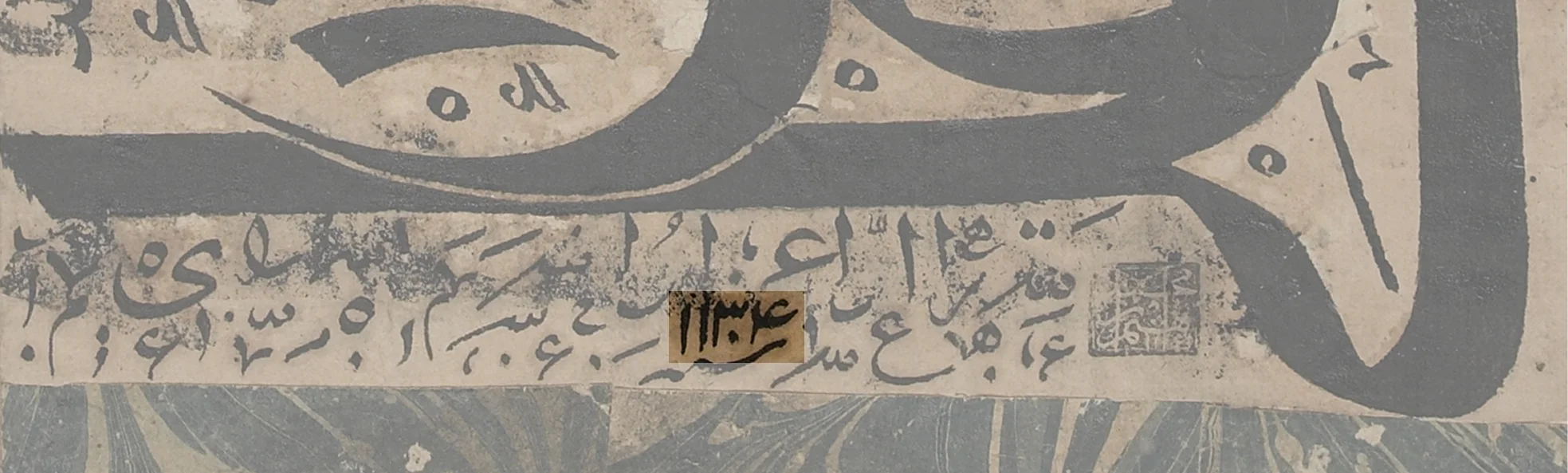
A seal impression appears over the central fold at the bottom of the page. It identifies the artist as a certain Muhammad Ibrahim. While seals are usually associated with owners, this one belongs to the artist.
A seal impression with the same calligrapher’s name is also present on a second levha. Written in a large script, it is not, however, penned in mirror calligraphy.
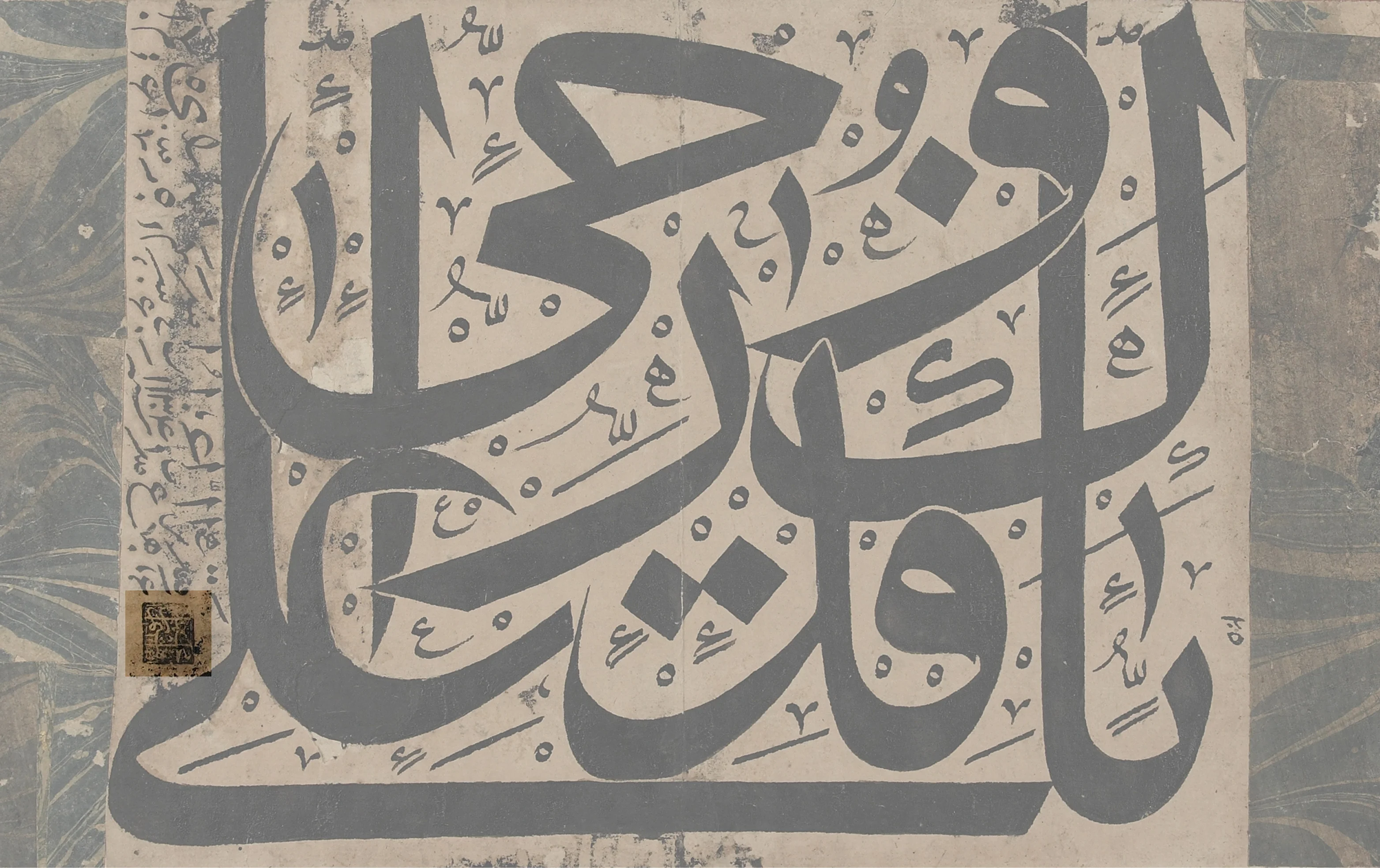
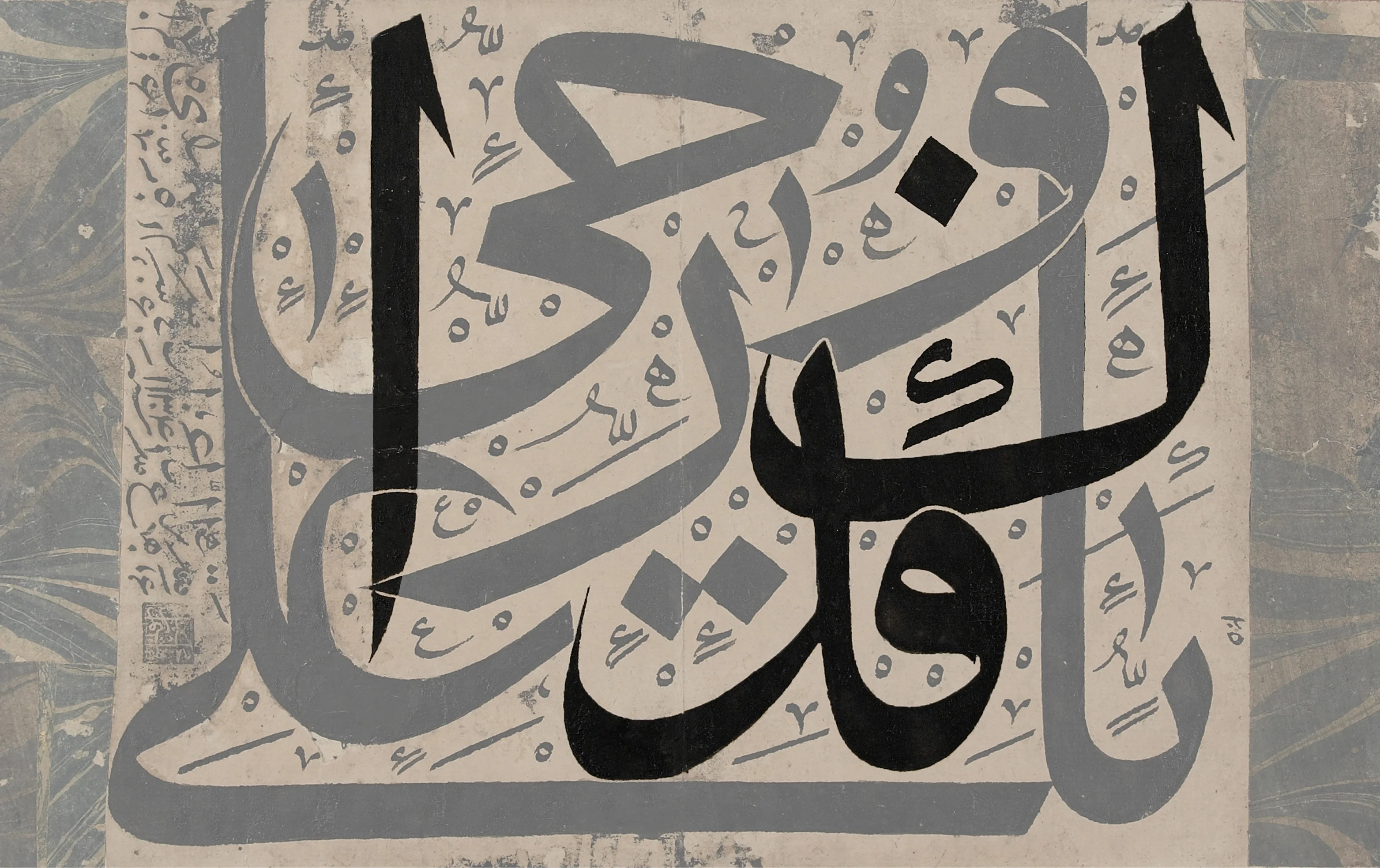
The text reads Ya Ali, ruhi fadak (“O Ali, my soul be sacrificed for you”). Because of its Shi‘i content, it can also be associated with the Bektashi order. Similar to the first calligraphy in mirror script, the phrase is not written in a linear manner, encouraging the reader to move back and forth across the page to piece together the words to understand the full meaning of the text.
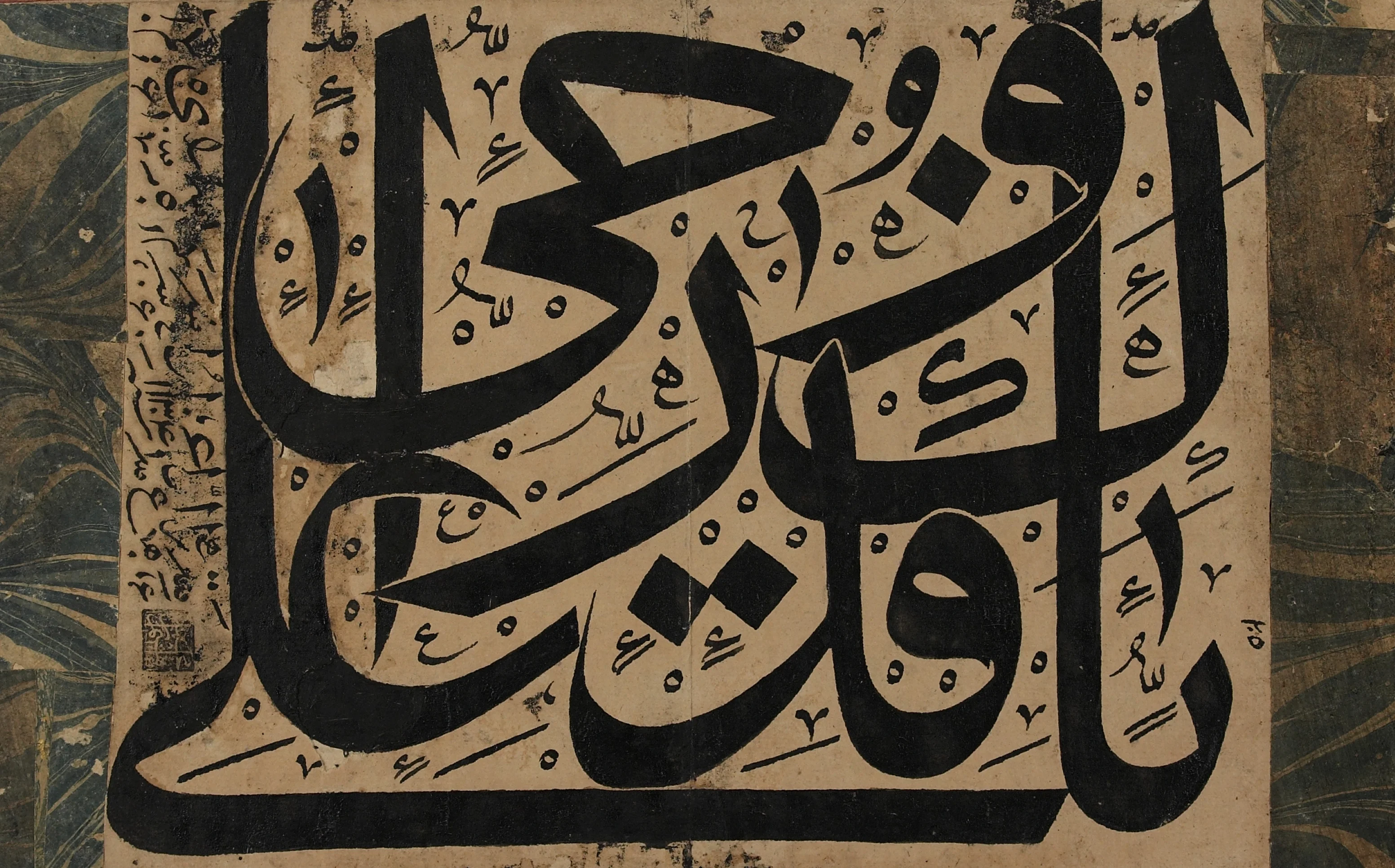
Ya Ali, ruhi fadak
O Ali, my soul be sacrificed for you
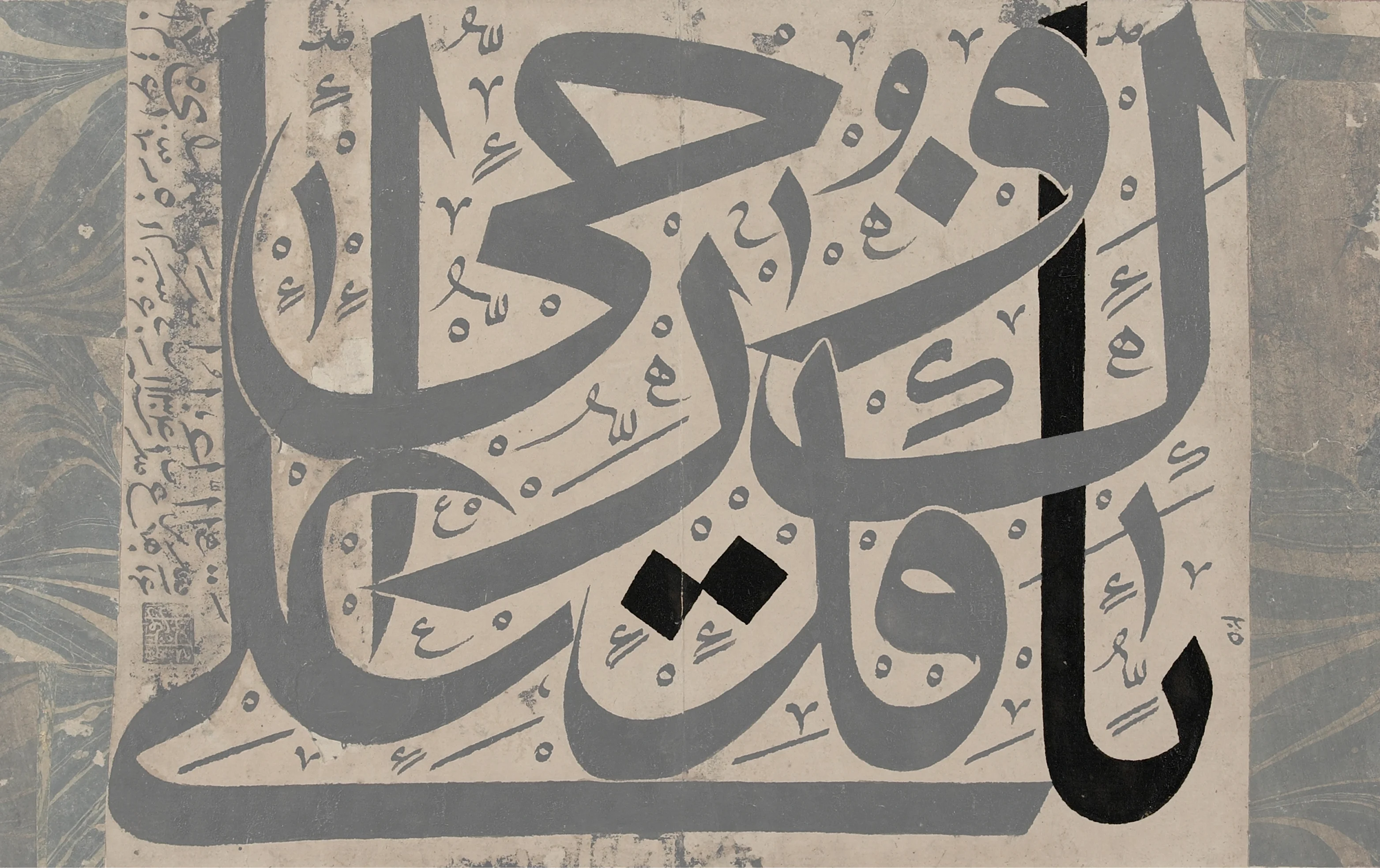
Ya Ali, ruhi fadak
O Ali, my soul be sacrificed for you
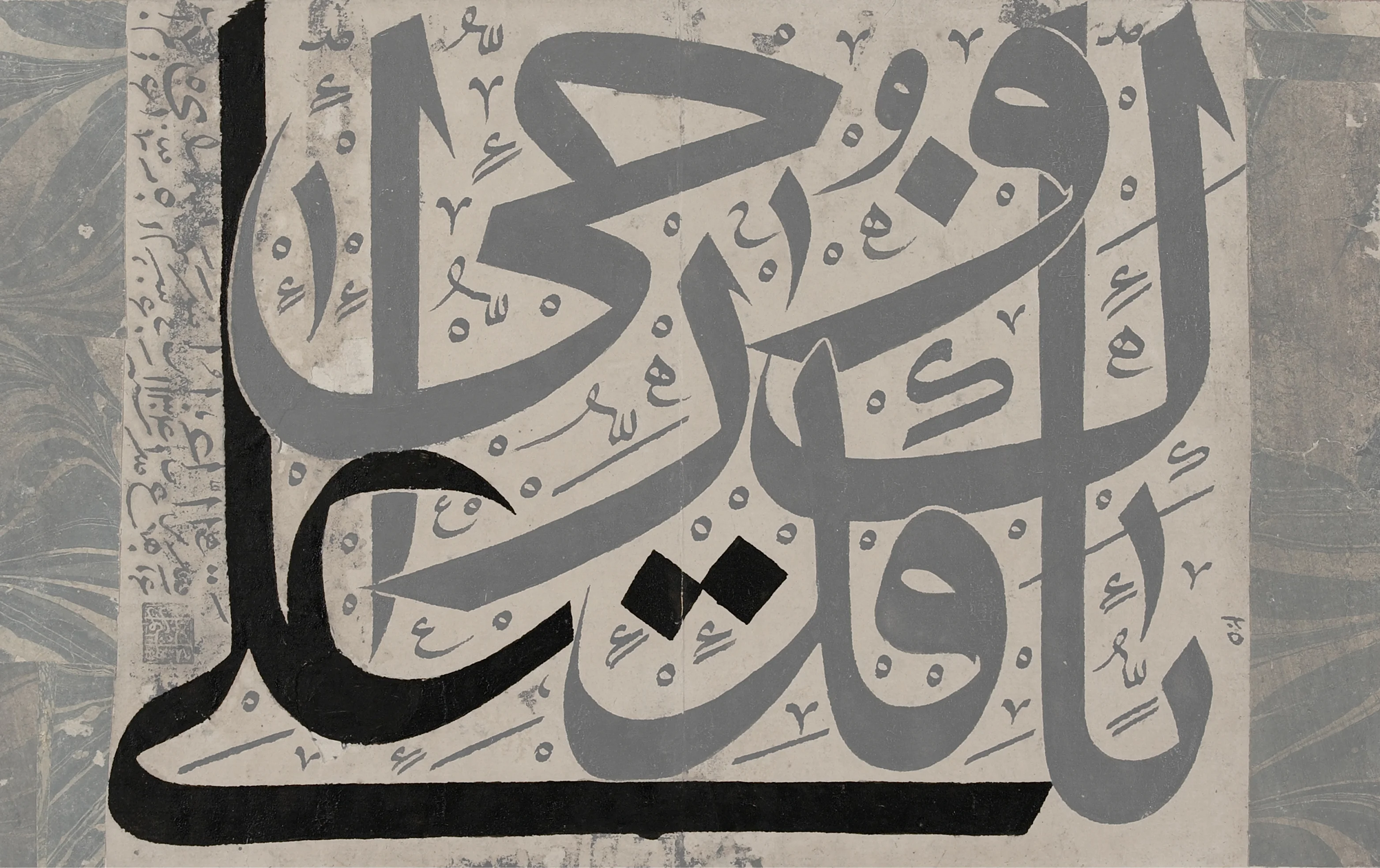
Ya Ali, ruhi fadak
O Ali, my soul be sacrificed for you
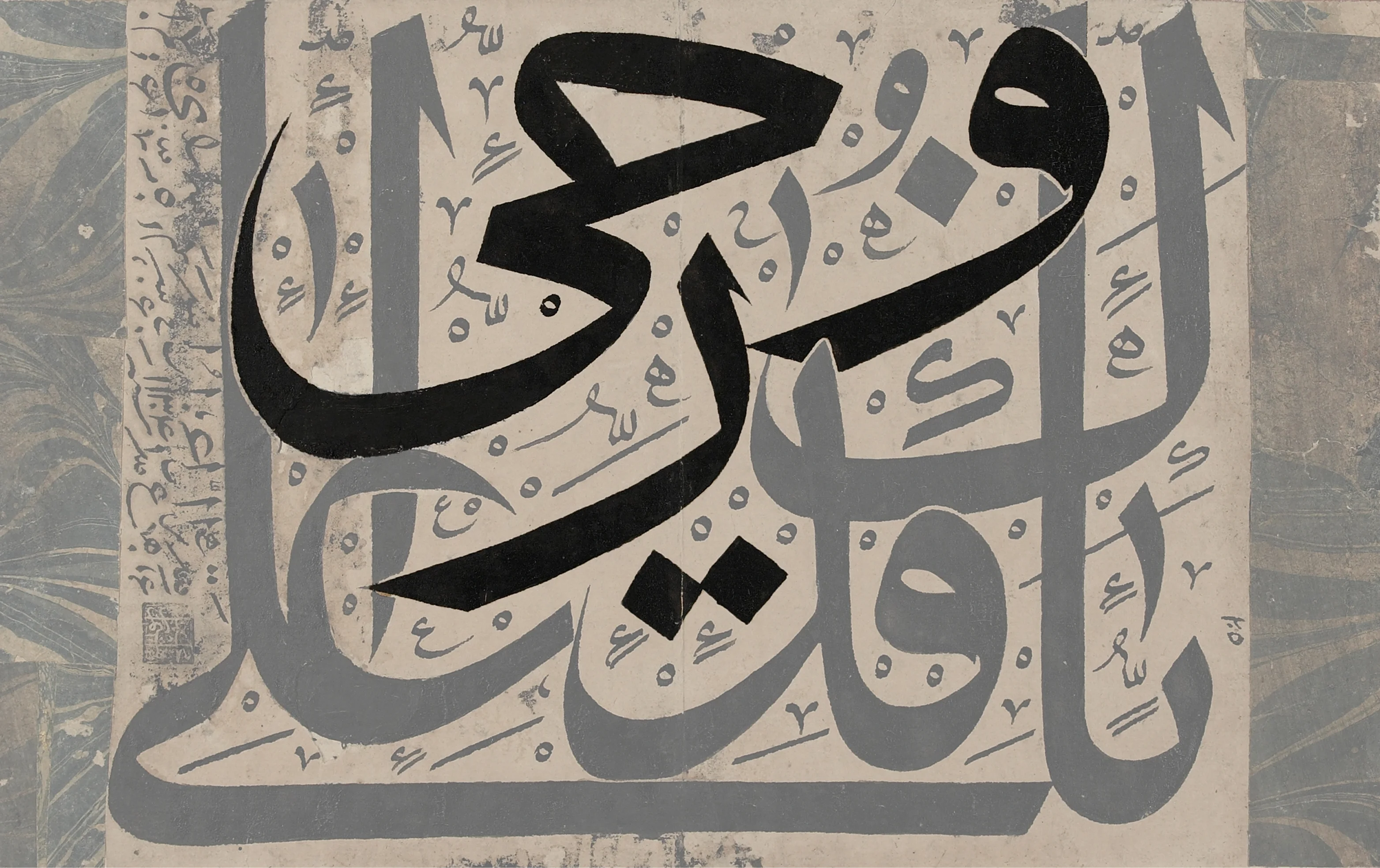
Ya Ali, ruhi fadak
O Ali, my soul be sacrificed for you
In addition to the artist’s name, the seal carries the date 1141 AH (1728 CE).
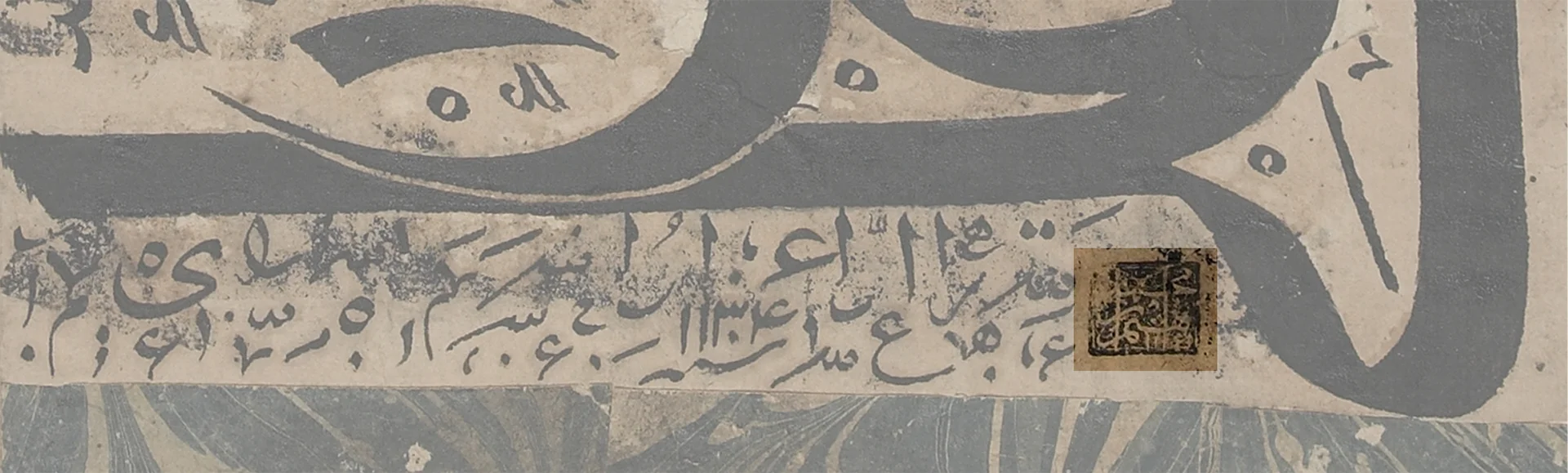
Curiously, a series of independent letters and diacritics run perpendicular to the rest of the text along the left edge of the folio, which bears the date 1134 AH (1721–22 CE). If we assume this is the date of the work, then it seems that the calligrapher added his seal impression seven years after the original completion.
Part of a Larger Gathering?
Based on the dated second panel, it is tempting to suggest that the first panel, written in mirror calligraphy, was also completed circa 1720–30. The two works are both mounted into an album, which may have included additional calligraphies. Furthermore, they have been enlarged with strips of paper on either side, including with marble paper on the dated calligraphy, and set in maroon borders to unify them.
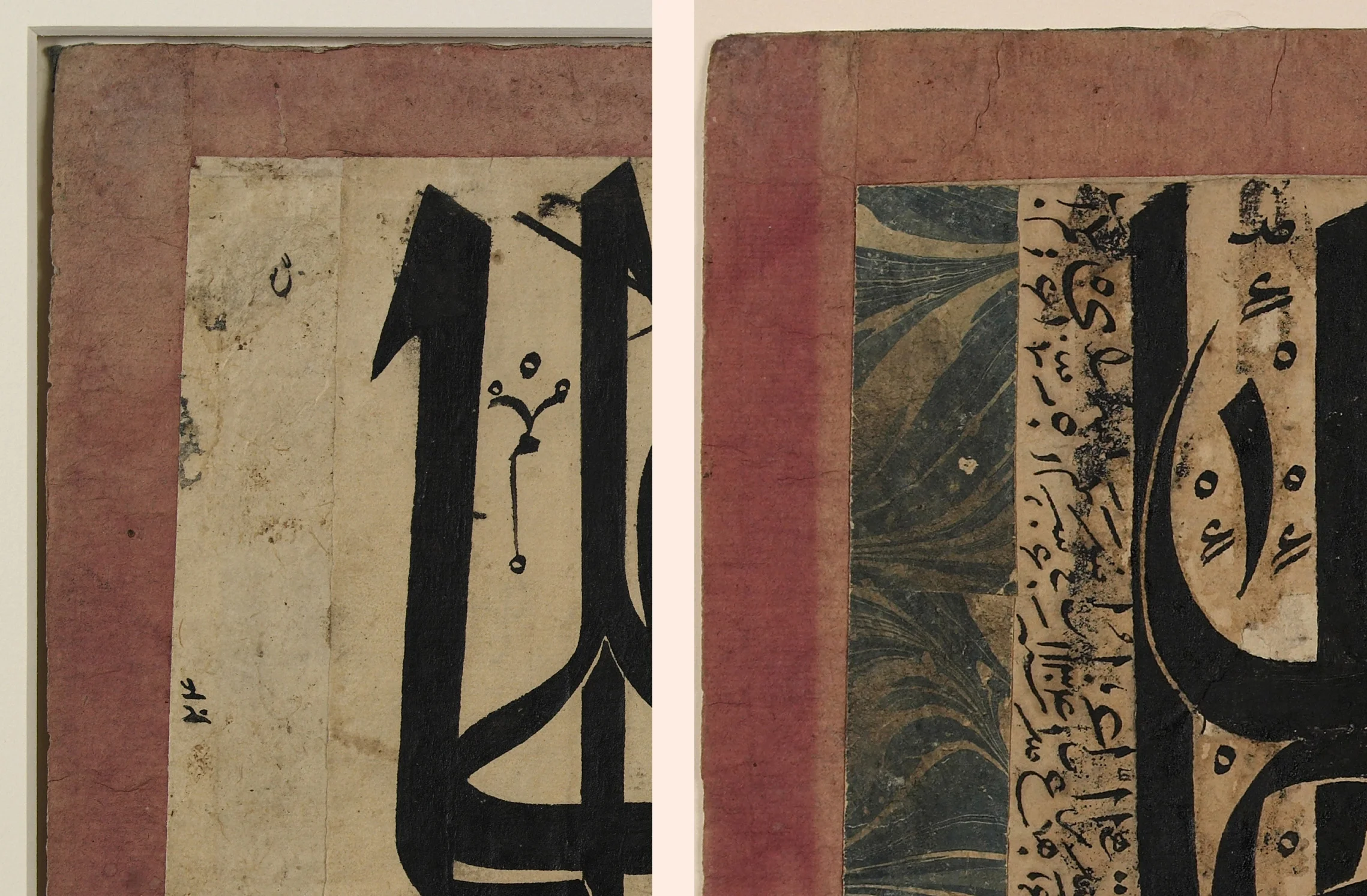
Both calligraphies are also paginated. As the mirror calligraphy is numbered 204 and the other page carries the number 205, Muhammad Ibrahim’s compositions must have followed and faced each other in the album. Finally, the page numbers suggest the existence of over two hundred other works in the album, which were considered important enough to collate and preserve for posterity.
Bektashi Writings on the Wall
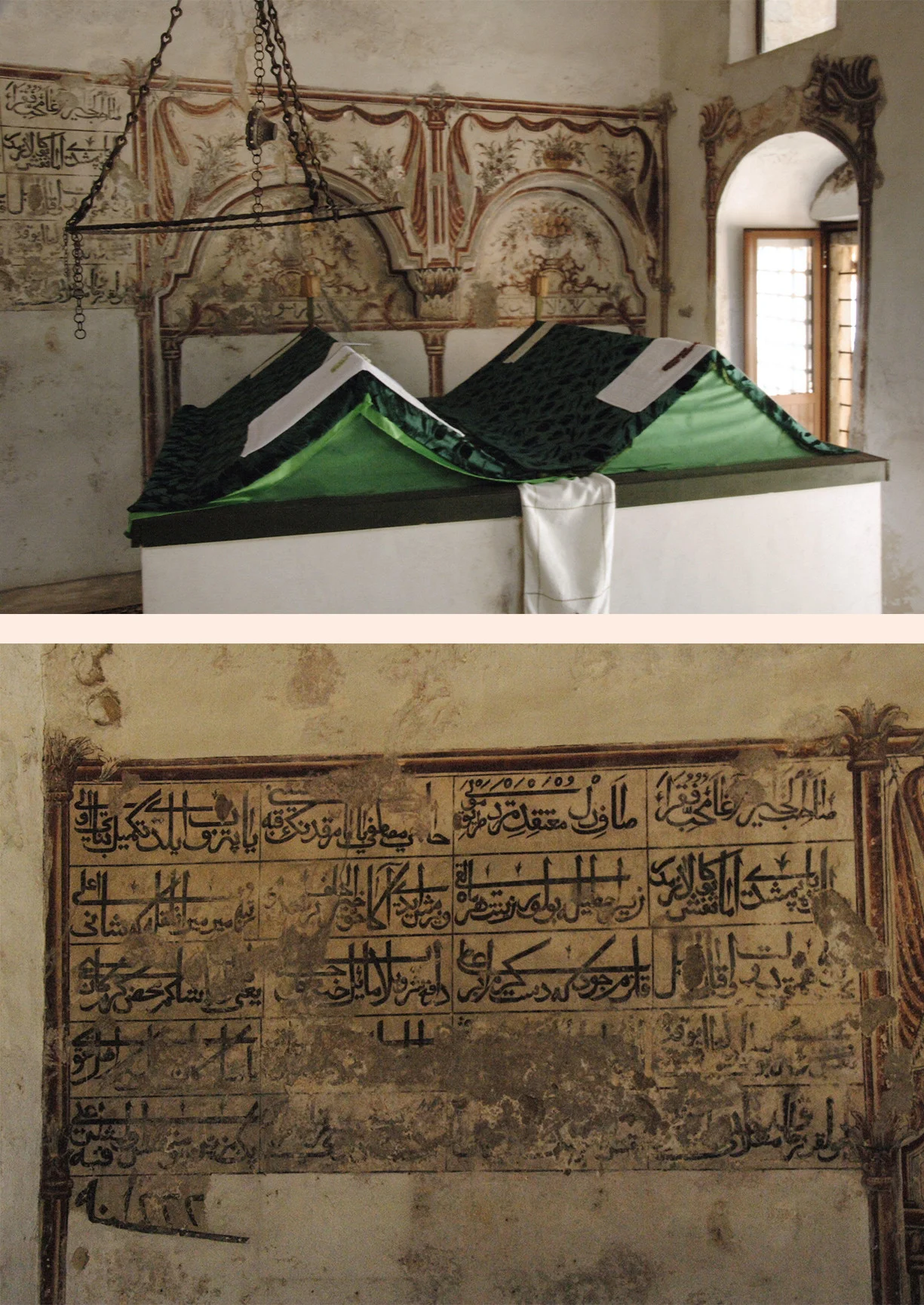
The Bektashis also added inscriptions to the interior of their shrines, similar to those in the two smaller panels on paper. The Dollma tekke in Krujë, Albania, for example, displays a wall of writing dated 1222 AH (1808 CE) alongside European-style frescoes inside the tomb of a Bektashi baba. Here, the calligrapher may have first worked out his design on paper, not unlike the album leaves, before transferring it to the wall.
Album / Alamy Stock Photo.
Earlier Mirror Calligraphy
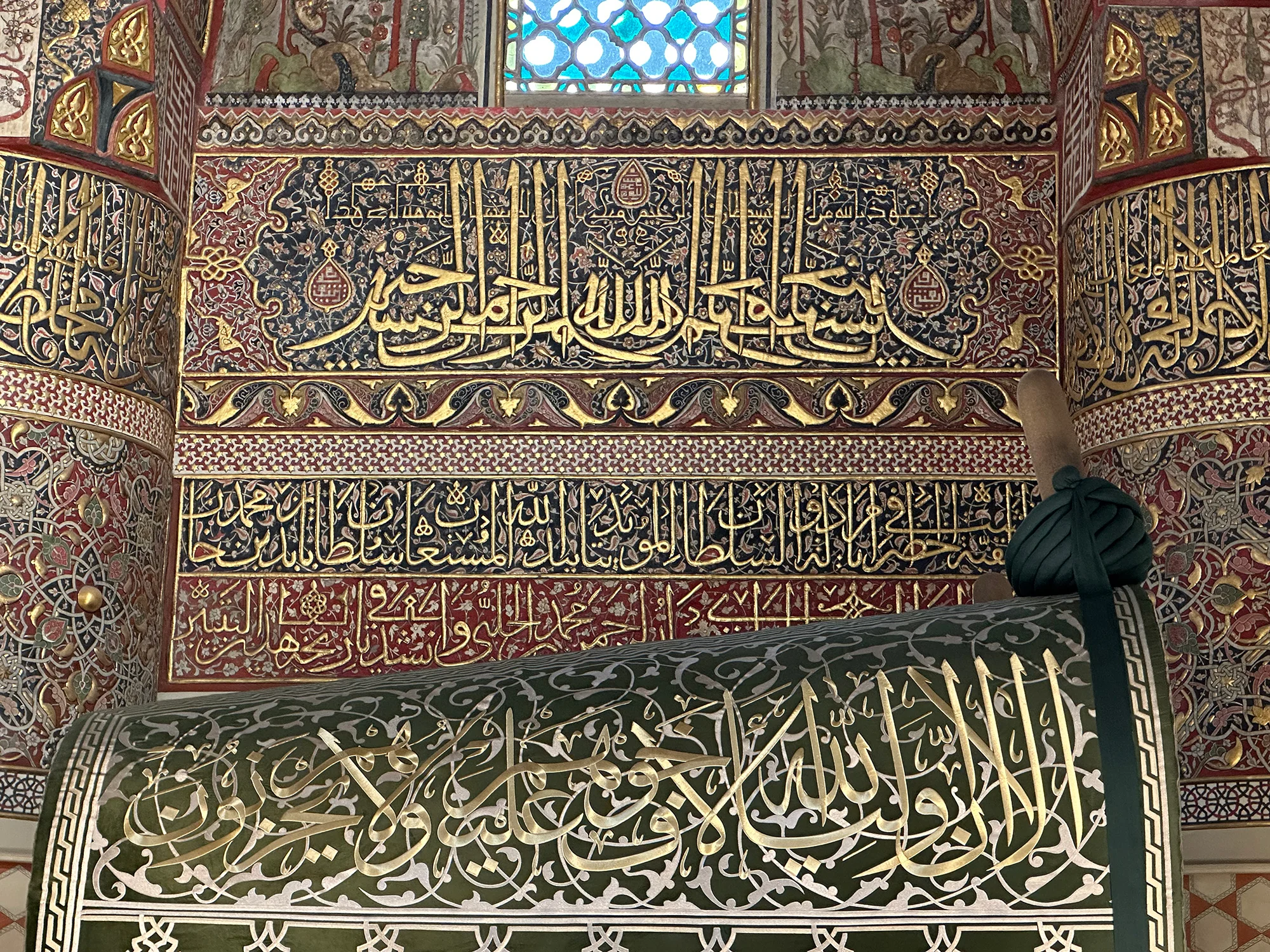
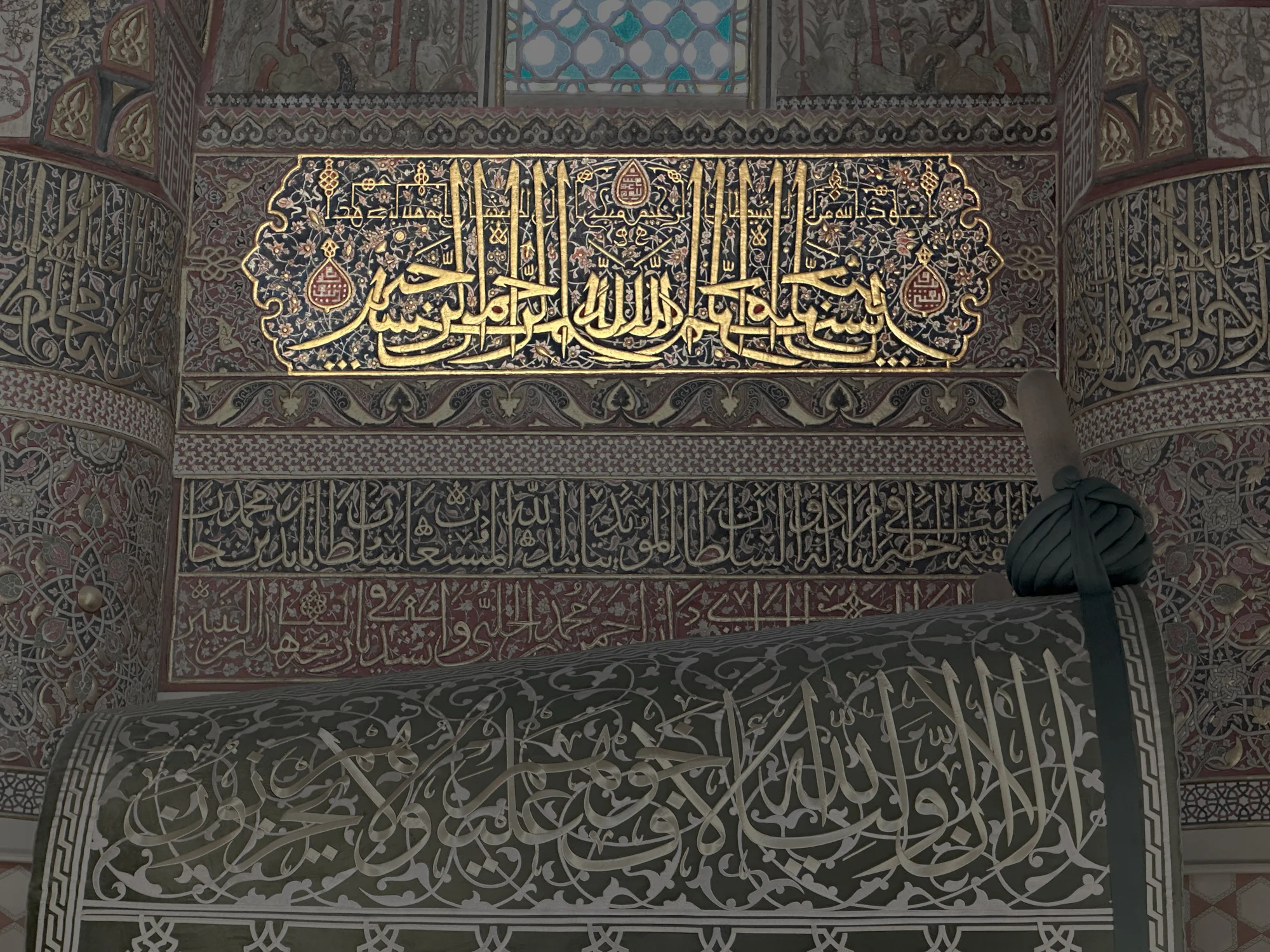
Although Bektashis have been known practitioners of mirror calligraphy since the late eighteenth century, the artform developed much earlier among other Sufi orders, such as the Mevlevis. The recent renovation of Rumi’s burial chamber in the Mevlana Museum in Konya revealed mural decoration commissioned by the Ottoman sultan Bayezid II around 1500.
National Museum of Asian Art, Smithsonian Institution, Photo by Simon Rettig.
Part of it is a basmala (“In the name of God, the Most Gracious, the Most Merciful”) on the wall behind Rumi’s tomb. It is written in gold in an elaborate form of mirror calligraphy, creating a compelling and arresting design that towers over the cenotaph as if to protect it.
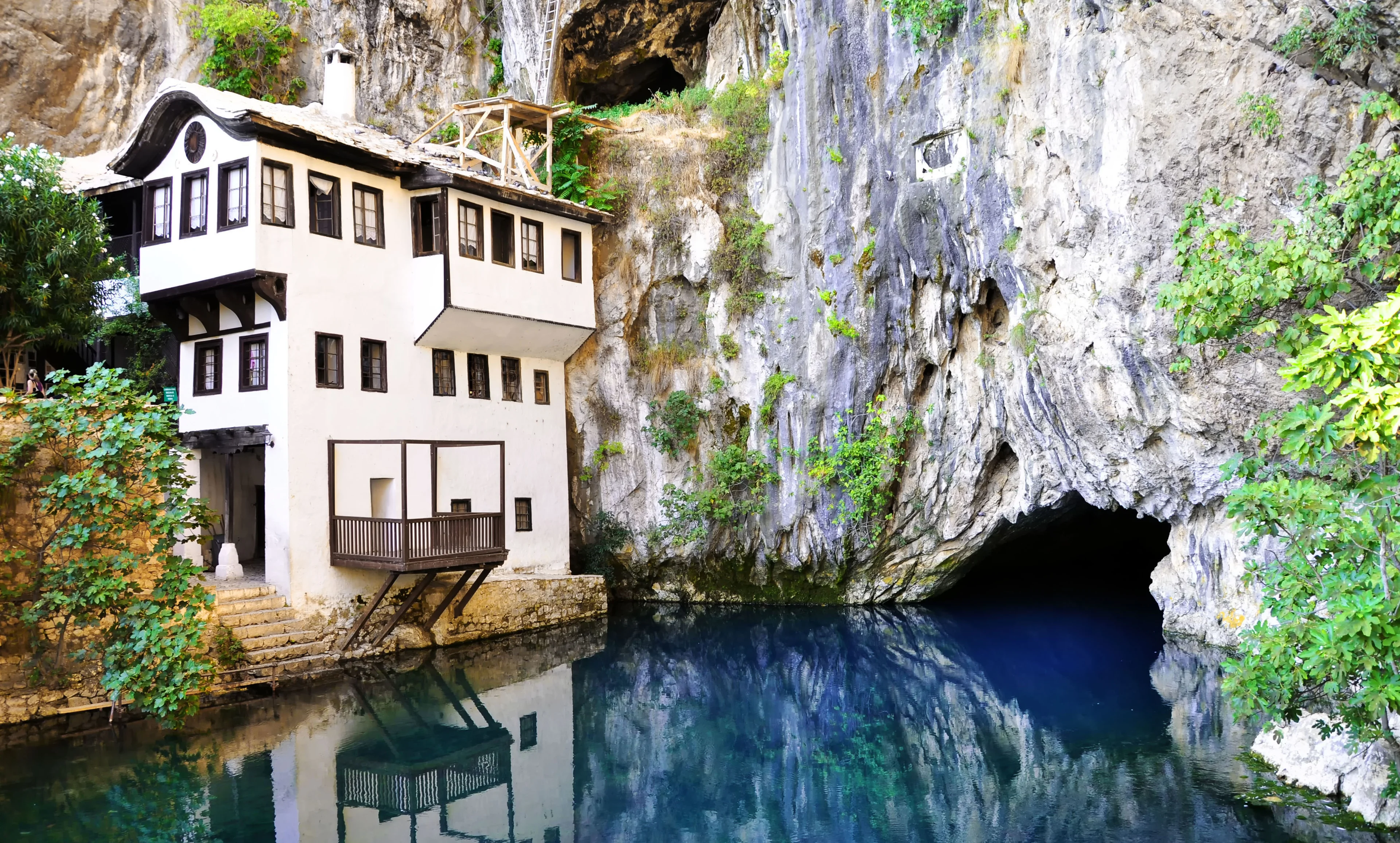
Blagaj Bosnia & Herzegovina
Objects
Explore the map or scroll to select an object.