The Ardabil Carpets
The finest royal gift to the Ardabil shrine was a magnificent pair of signed carpets, dated to 1539–40. Arguably the most famous Persian carpets, the two must have been donated by the Safavid ruler Shah Tahmasb (r. 1524–76).
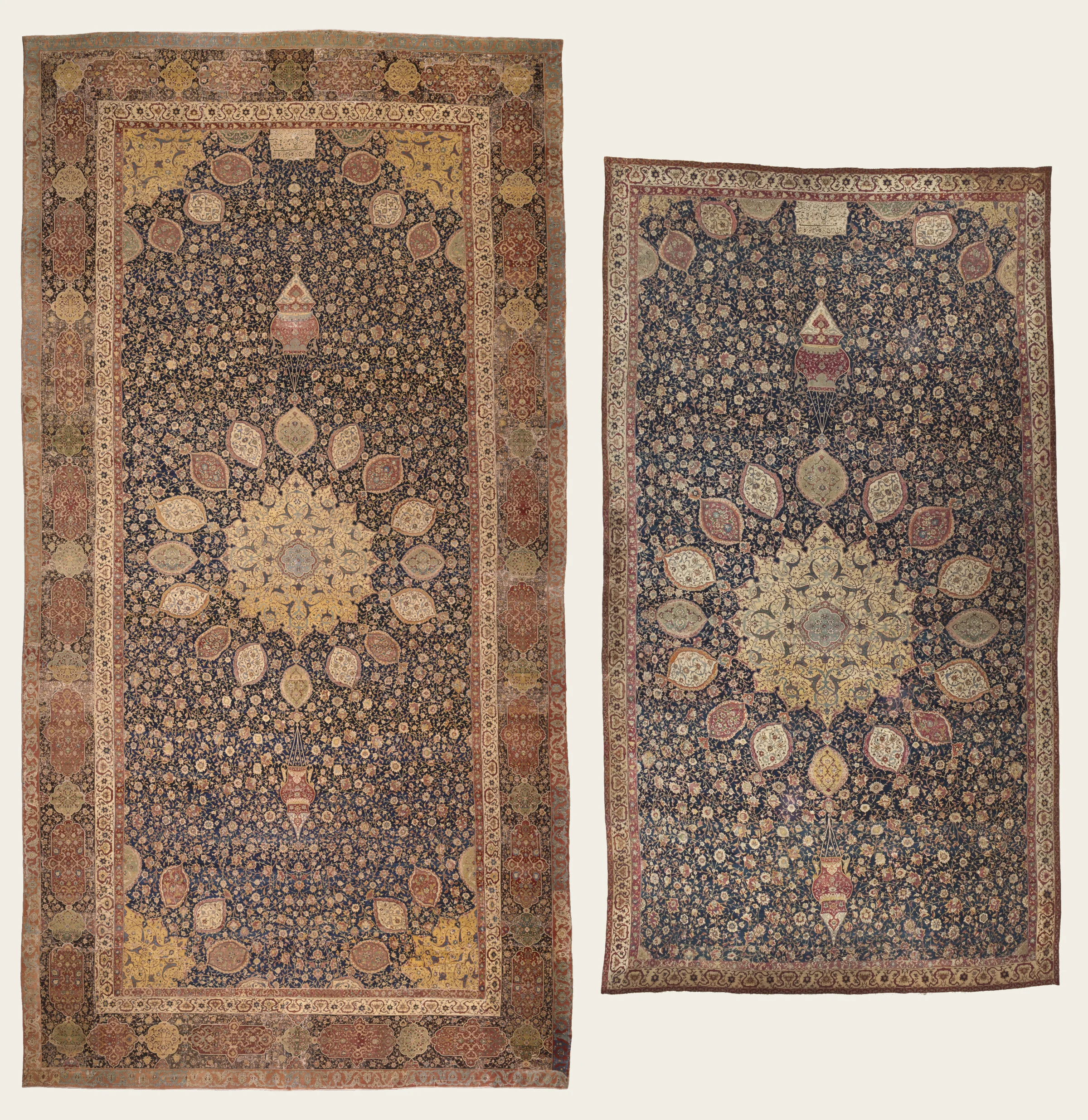
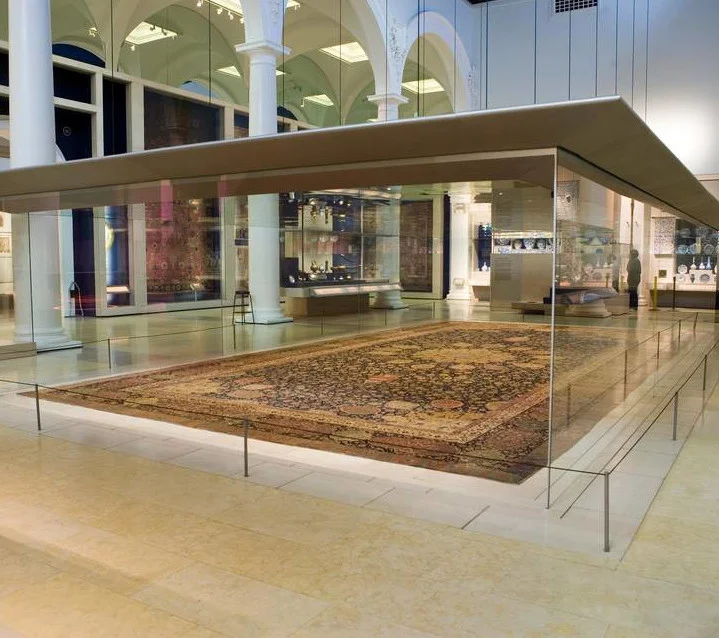
The Victoria and Albert Museum “Ardabil” Carpet
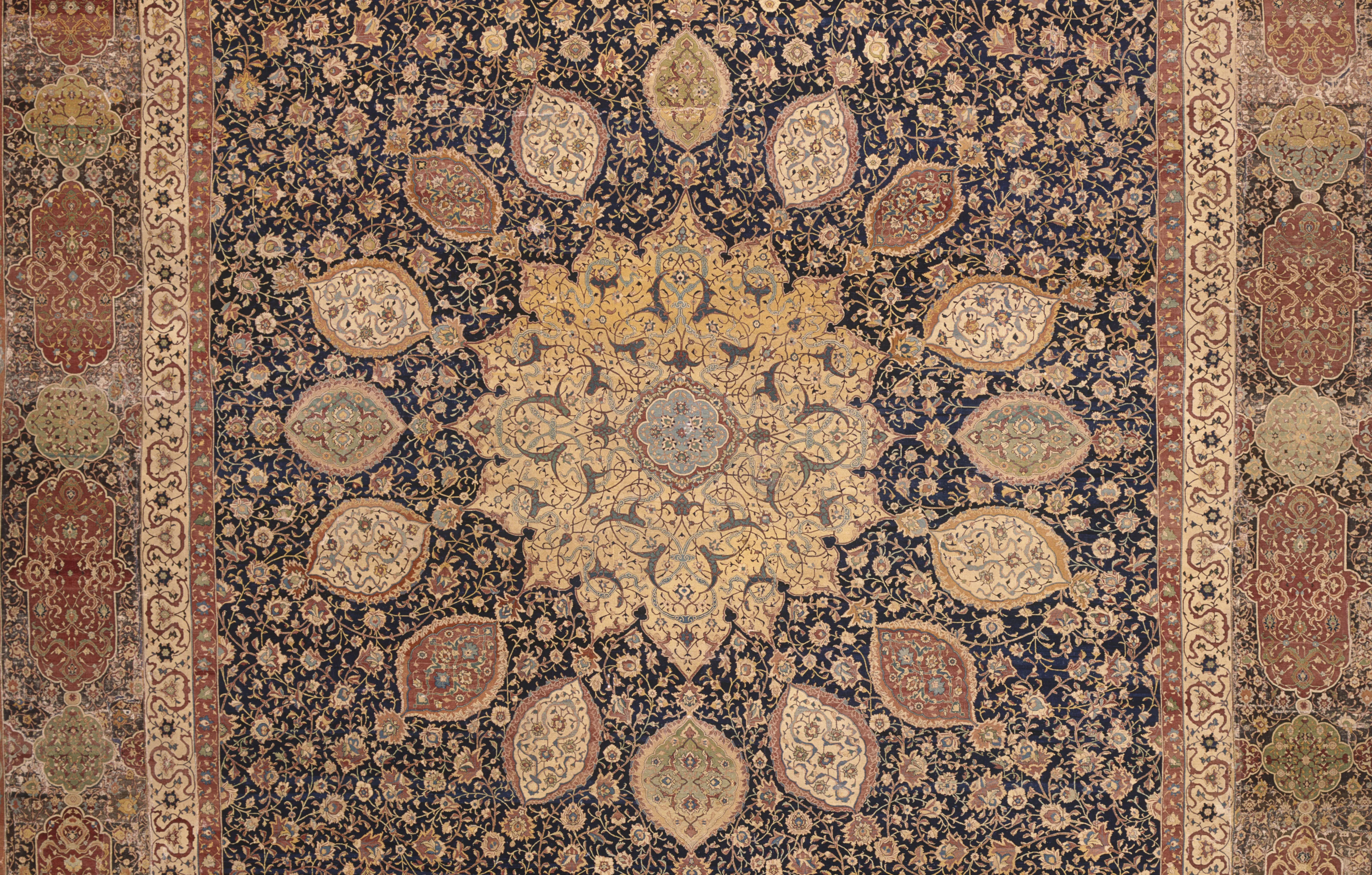
Today, the larger and more complete of the two carpets is housed in the Victoria and Albert Museum in London and measures 10.5 × 5.3 meters (34.5 × 17.5 ft.). It is woven in wool on silk warps and wefts—the vertical and horizontal yarns that give structure to a carpet. The use of wool for the pile lends the carpet greater durability. Each square inch is made up of 340 to 350 knots, which allowed the weaver to introduce intricate designs and fine details into the surface.
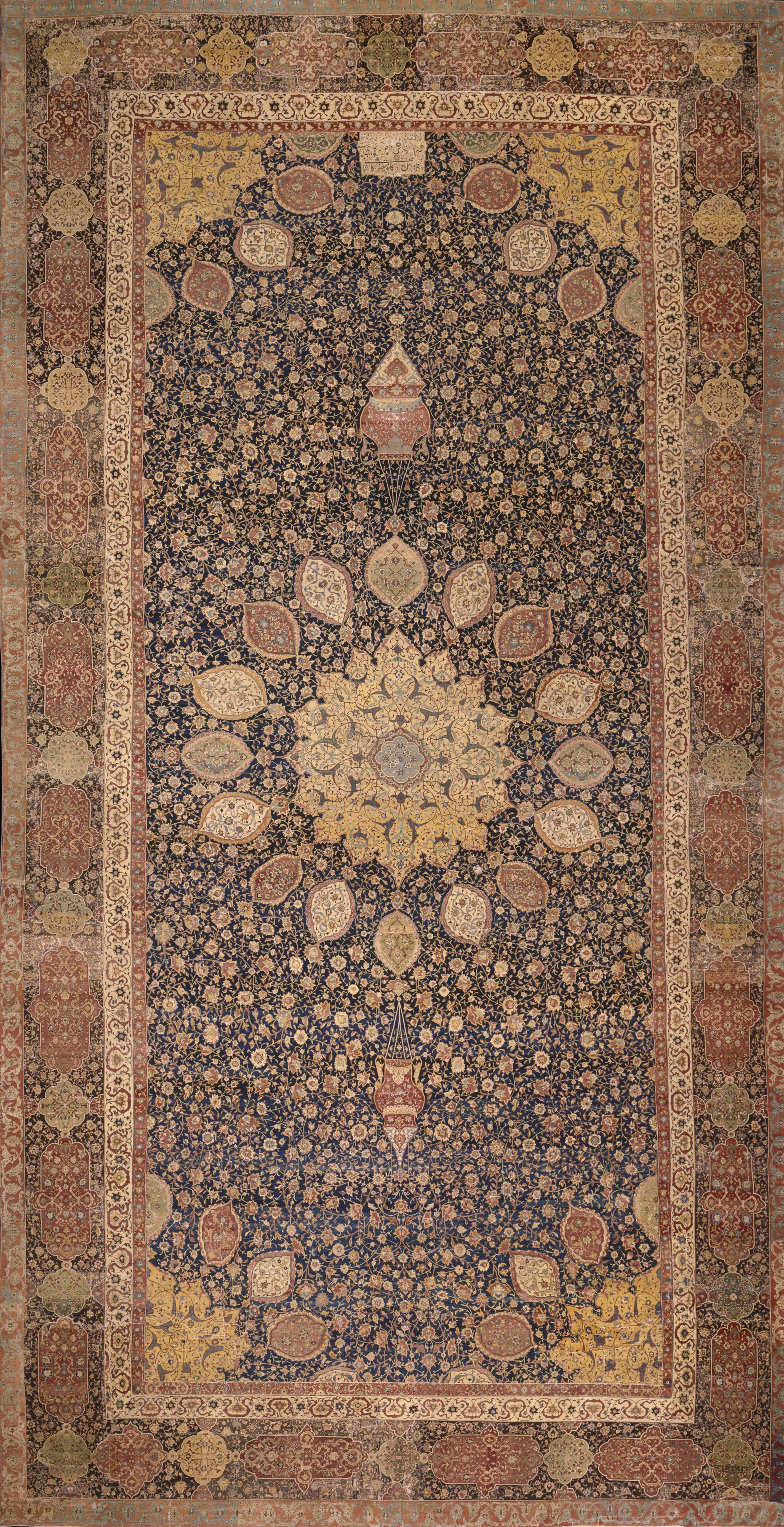
The Los Angeles County Museum of Art “Ardabil” Carpet
The second Ardabil carpet, now in the Los Angeles County Museum of Art, is considerably smaller. It has lost its outer borders and several other areas, most of which were used to repair the Victoria and Albert carpet. It now measures 7.3 × 4.1 meters (23.1 × 13.5 ft.) and is also woven in wool on silk warps and wefts.
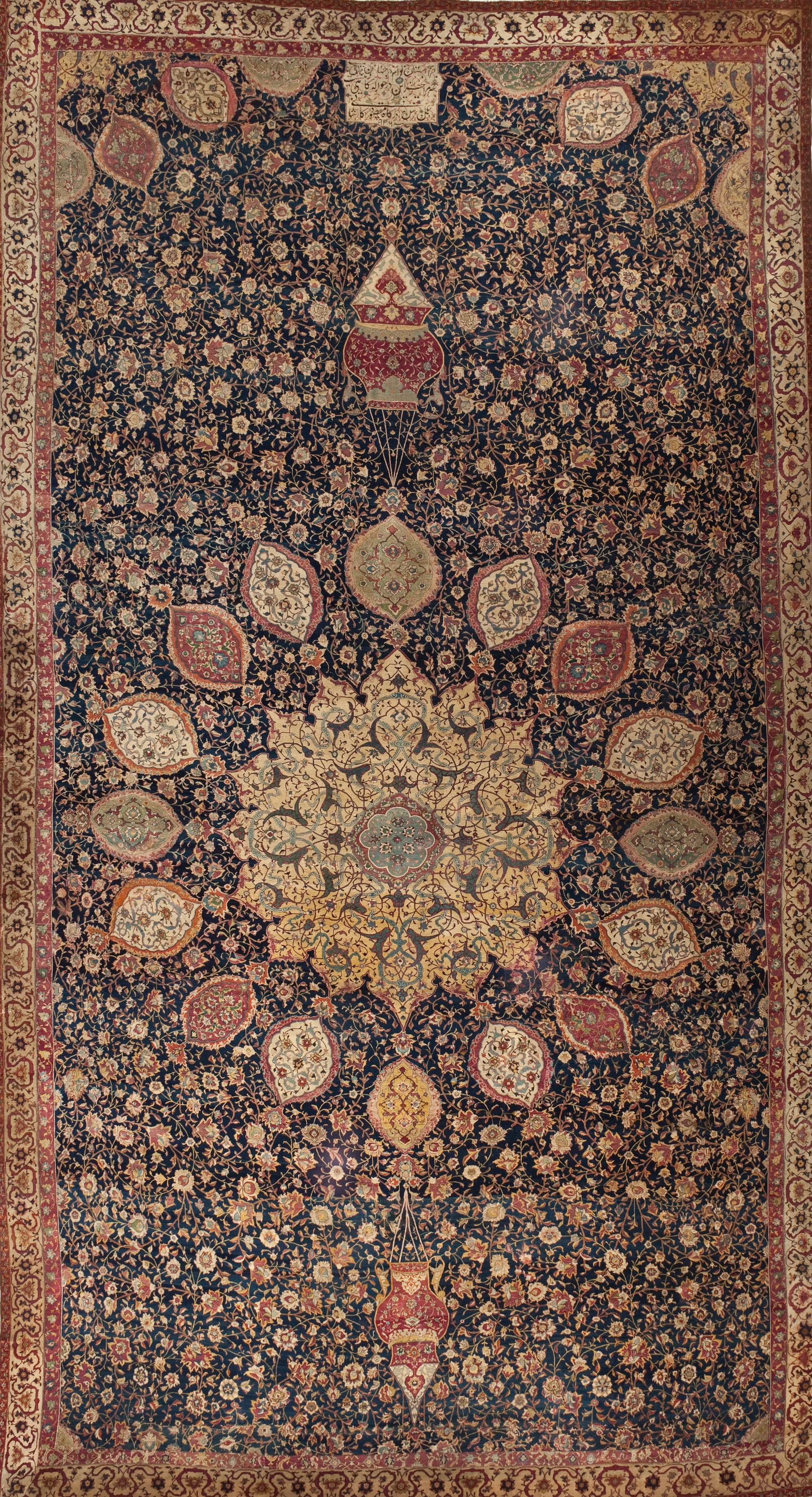
The Design
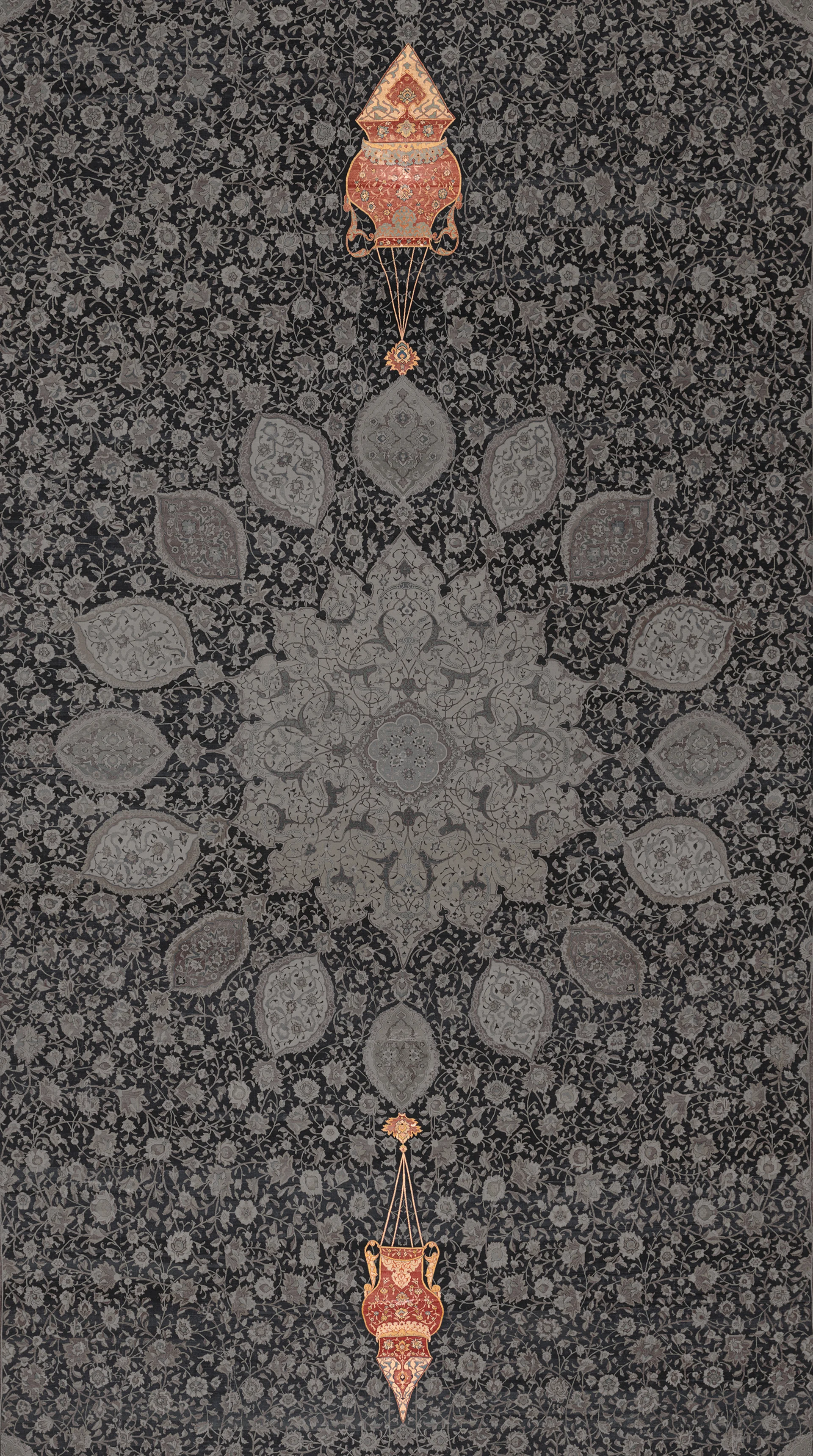
Both carpets use the same design, which is centered on a sunburst medallion with sixteen pendants. The dark ground is covered with a meandering scroll pattern of stylized blossoms and flowers, as if gently swaying in the breeze.
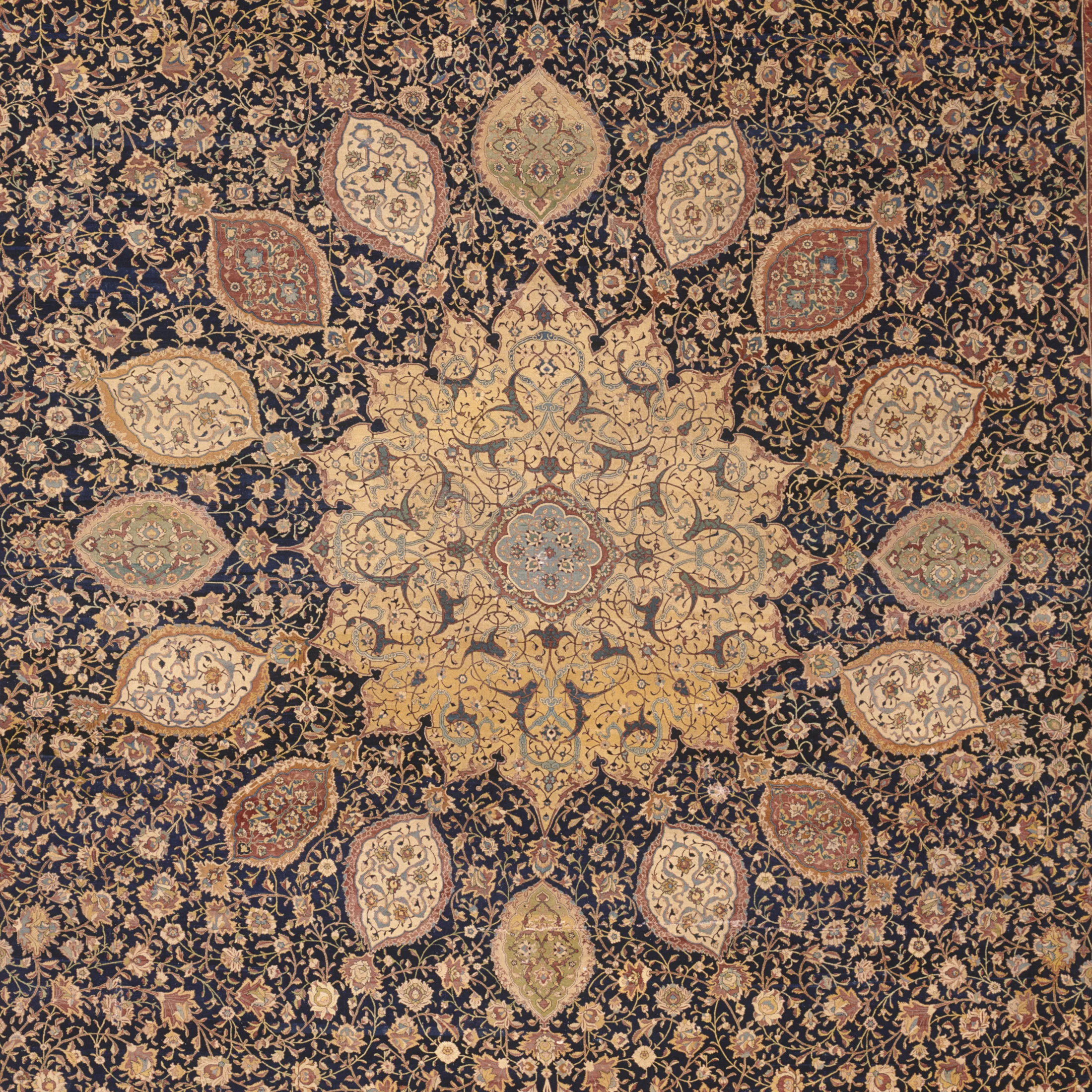
Two mosque lamps are suspended from the central pendant on axis. The corners of the carpet repeat a quarter of the central design, lending it visual unity.
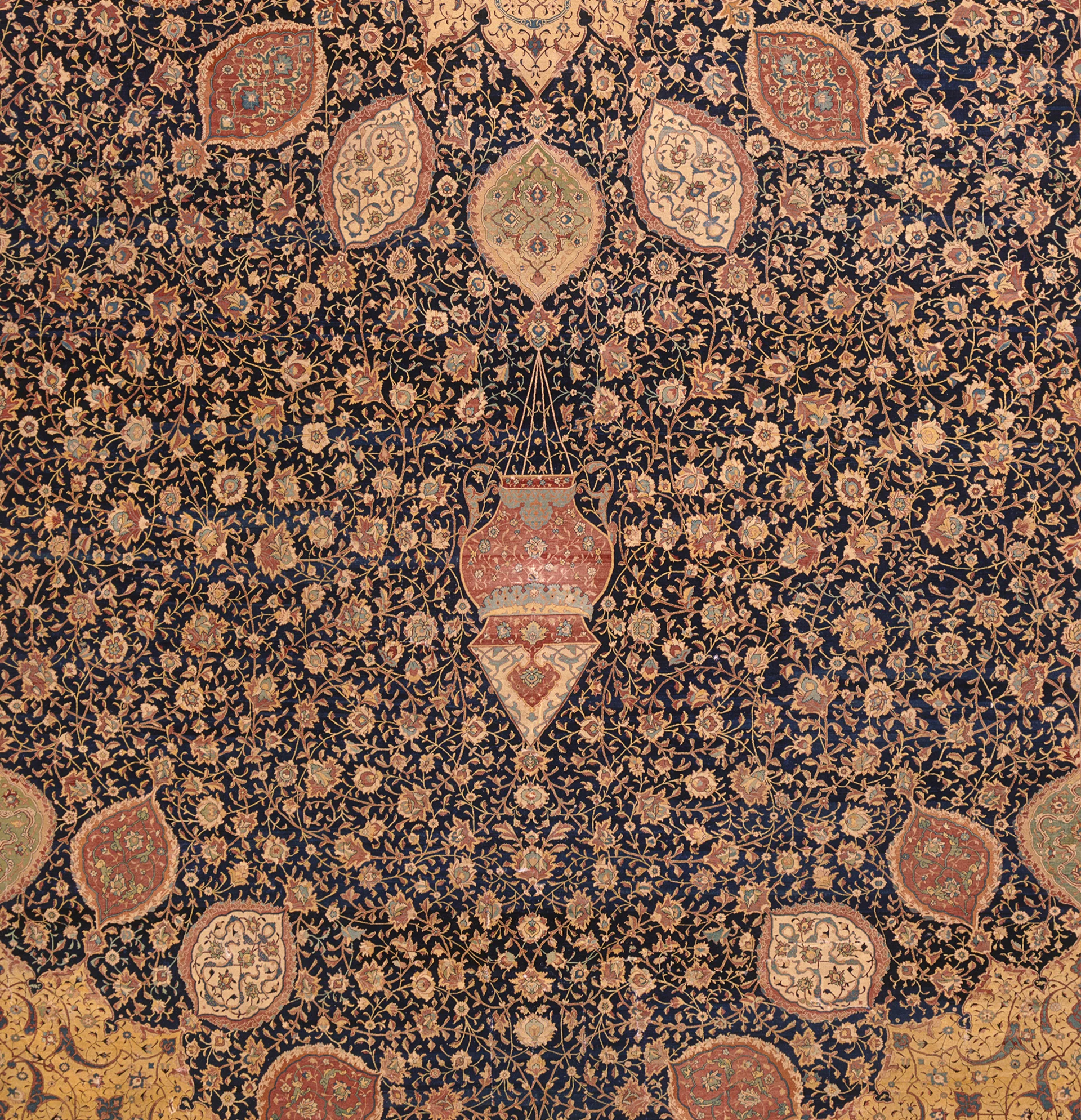
An unusual feature is that the two lamps differ in shape, design, and size. As scholars have suggested, the asymmetry was intentional to create an optical illusion for those sitting at the lower end of the carpet. From their perspective, the two lamps appear the same size, which also suggests the low angle from which the carpet was to be viewed.
The Inscription
An inscription, set in a panel, appears at the top of each carpet. It states on the third line that the floor covering was designed by a certain Maqsud Kashani in 946 AH (1539–40 CE), making it the earliest dated Persian carpet. Maqsud was from the southern city of Kashan in Iran, known for its carpet production. The rest of the inscription is a poem, composed by the celebrated fourteenth-century Persian poet Hafiz (d. 1390). It reads as follows:
“Except for thy threshold, there is no refuge for me in all the world. Except for this door, there is no resting place for my head.”
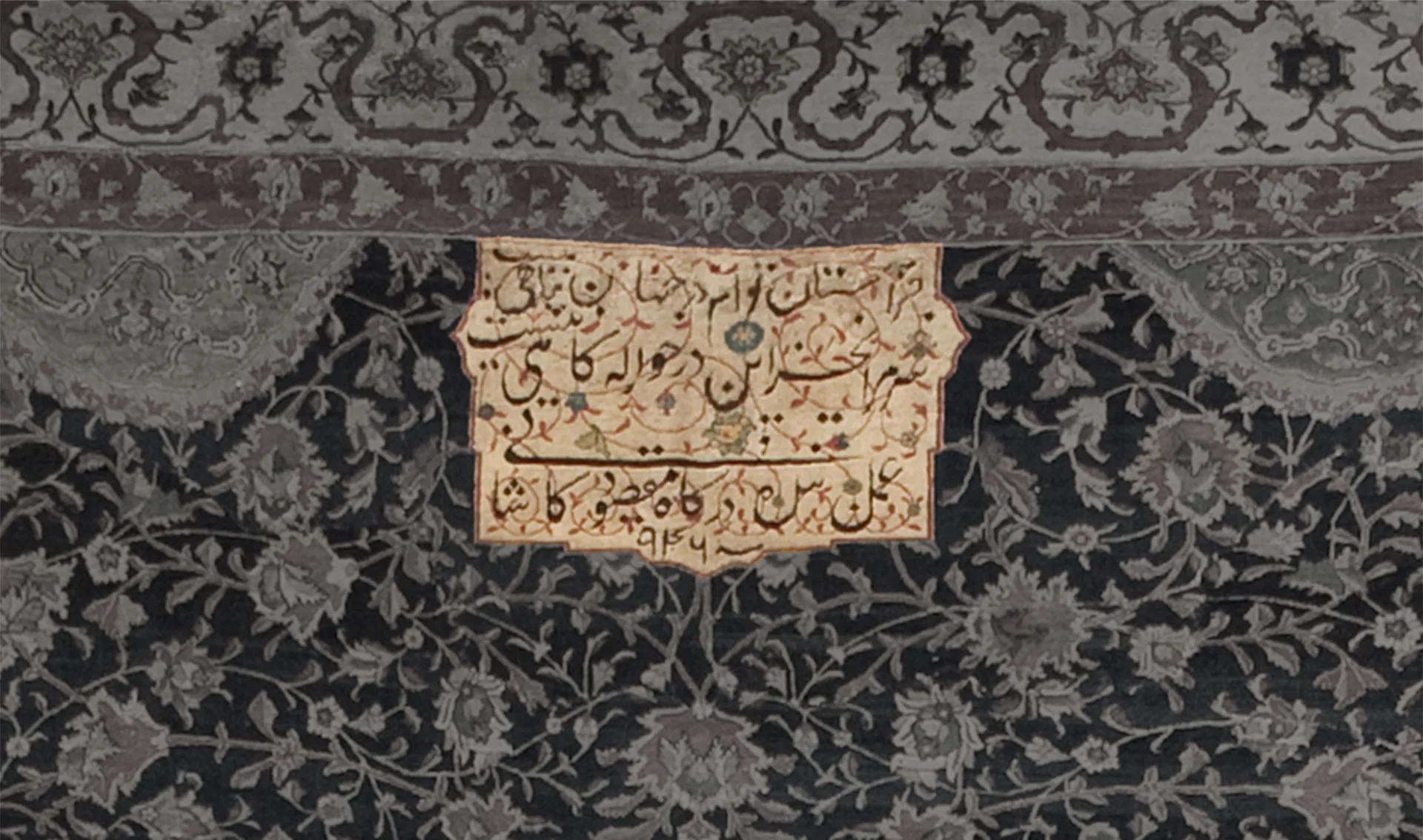
The poem helps to identify the function of the carpets. In Persian, the word for “threshold” (astan) means a shrine or sanctuary. Additionally, the phrase “resting place for my head” refers to the act of praying, suggesting the floor coverings were made for a religious site, such as Ardabil.
The placement and direction of the inscriptions also indicate the carpets’ top and lower ends. They confirm that the text was meant to be read by a person seated or standing on the lower part of the floor covering.
The Carpets in Situ
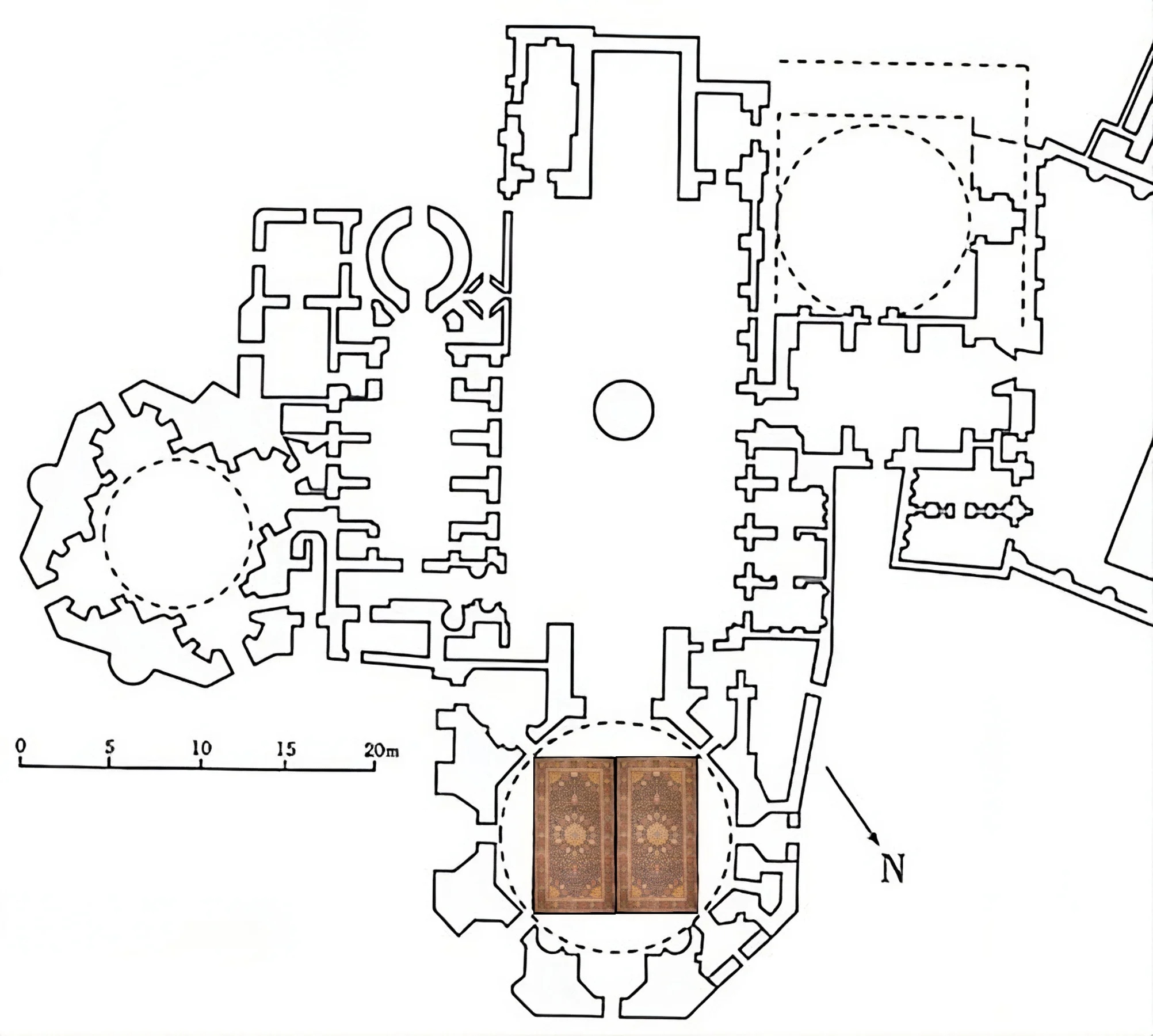
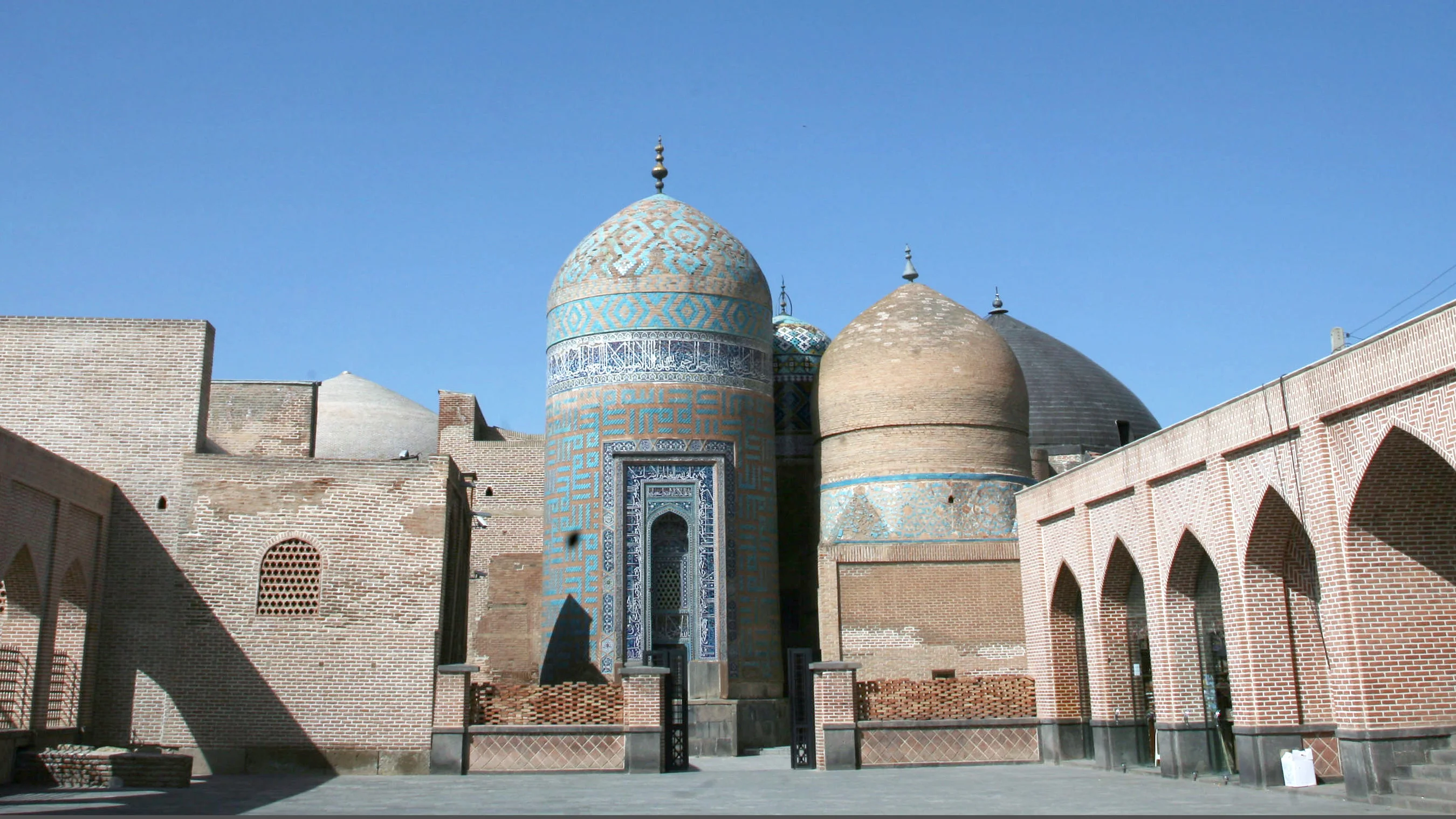
Based on the carpets’ original dimensions and inscriptions, it has been suggested that the pair was created for the Jannat-sara (Abode of Paradise) at the Ardabil shrine complex. The relatively large octagonal space, situated at the end of the inner courtyard, recalls the shape of a tomb chamber, which may have been its original purpose. It was part of Shah Tahmasb’s architectural expansion and completed about the same time when the carpets were commissioned. In the end, the Jannat-sara was probably used for prayer or royal receptions, further confirming the link between Safavid secular and religious powers.
© Victoria and Albert Museum, London
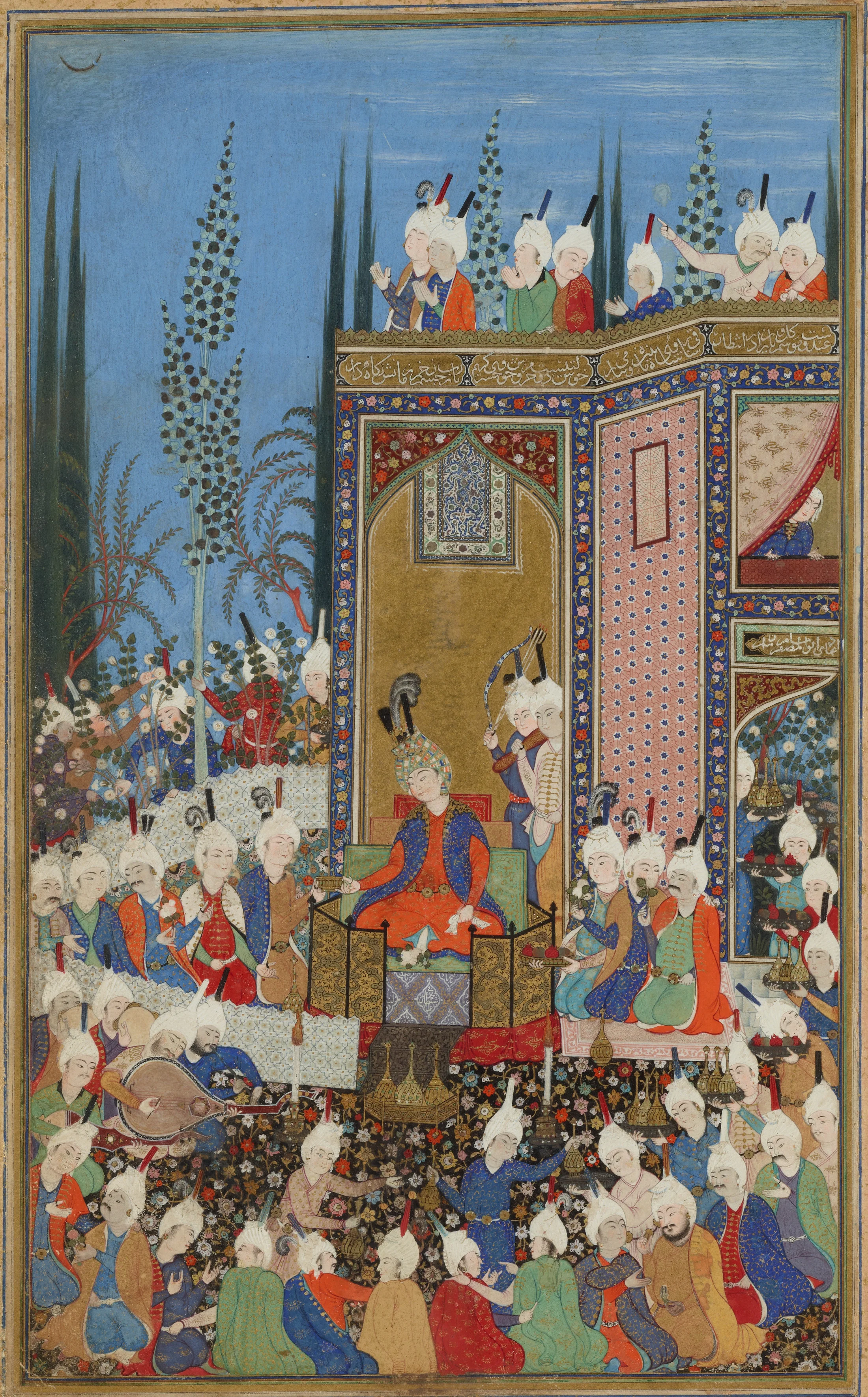
The Ardabil carpets’ overall ground pattern recalls the carpet in Feast of ‘Id, a painting that is signed and dated to 1527 by the celebrated Safavid painter Sultan Muhammad. The illustration, which depicts an enthroned Shah Tahmasb, was originally part of a copy of the Divan by Hafiz (d. 1390), who also composed the verses on the Ardabil carpet. The painting further illustrates the association of such grand carpets with the Safavid court.
The Carpets’ Afterlife
With the fall of the Safavid dynasty in 1722, the dynastic shrine in Ardabil lost its political and religious significance. It fell into neglect and was damaged by repeated earthquakes, and by the late nineteenth century, the Jannat-sara was in ruins. The carpets, however, were still in situ until at least the mid-nineteenth century when two Englishmen saw them and recorded their faded but still discernable magnificence.
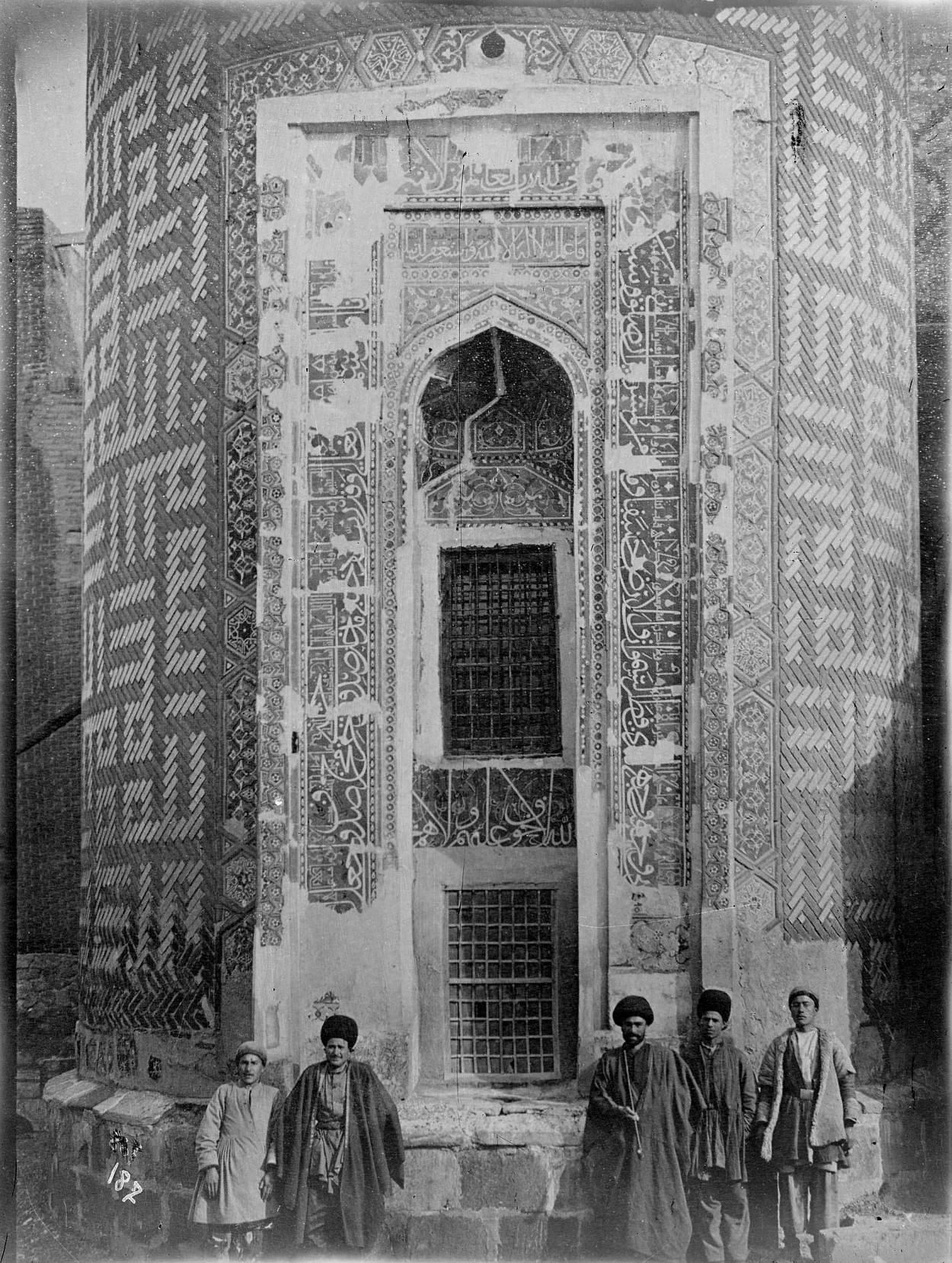
By the 1880s, the damaged carpets were sold to Ziegler & Co., an English company specializing in carpet trade. The company used the one now at the Los Angeles County Museum of Art to restore the other. The two were then sold to the British company Vincent Robinson & Co. In 1892 the Victoria and Albert Museum bought the larger and more complete one; the second one was eventually acquired by American oil magnet and collector John Paul Getty, who donated it to the Los Angeles County Museum of Art in 1953.
© Victoria and Albert Museum, London This presentation draws on Dr. Sheila Blair’s research on the pair of Ardabil carpets.
Ardabil Iran
Objects
Explore the map or scroll to select an object.