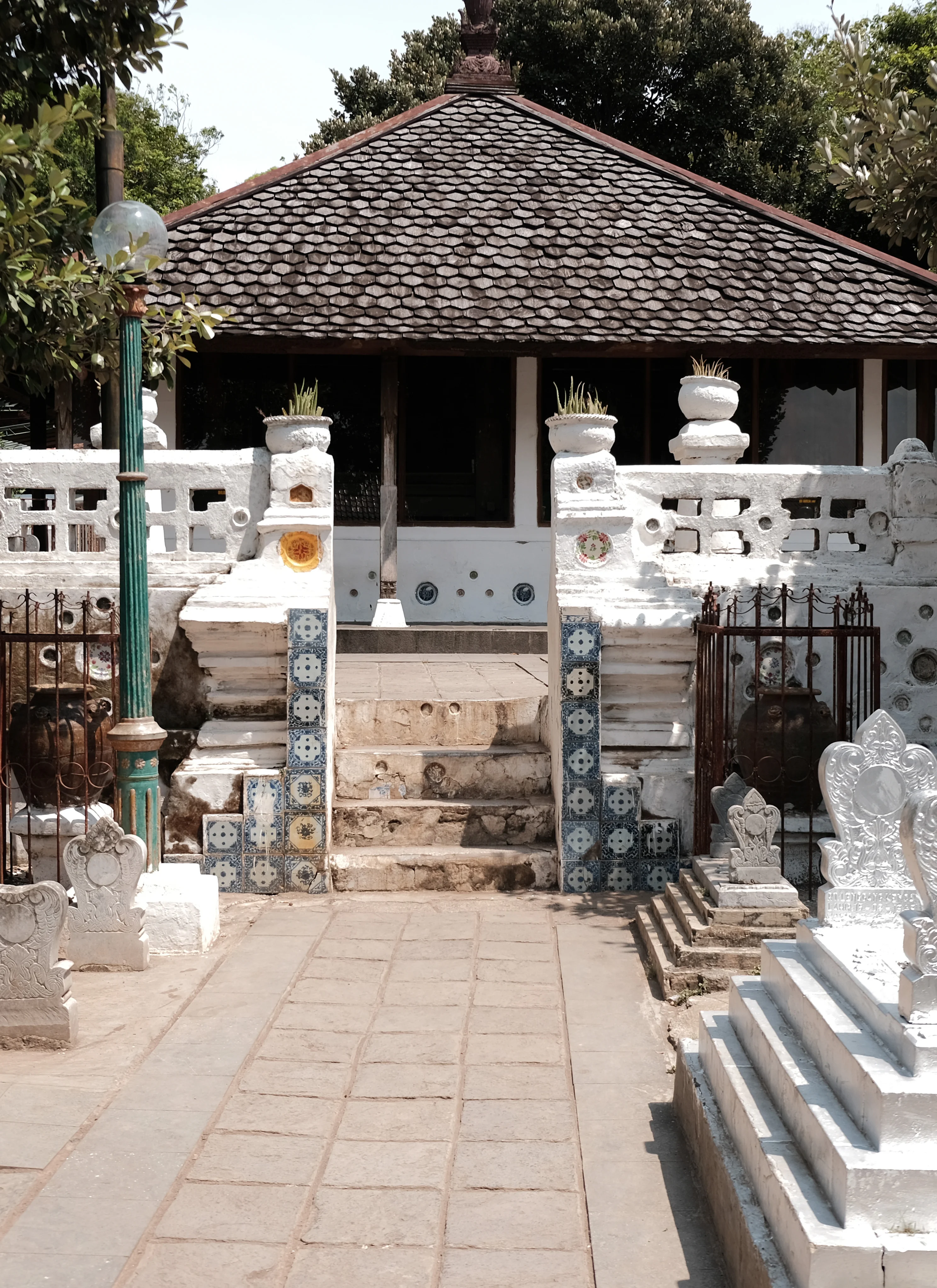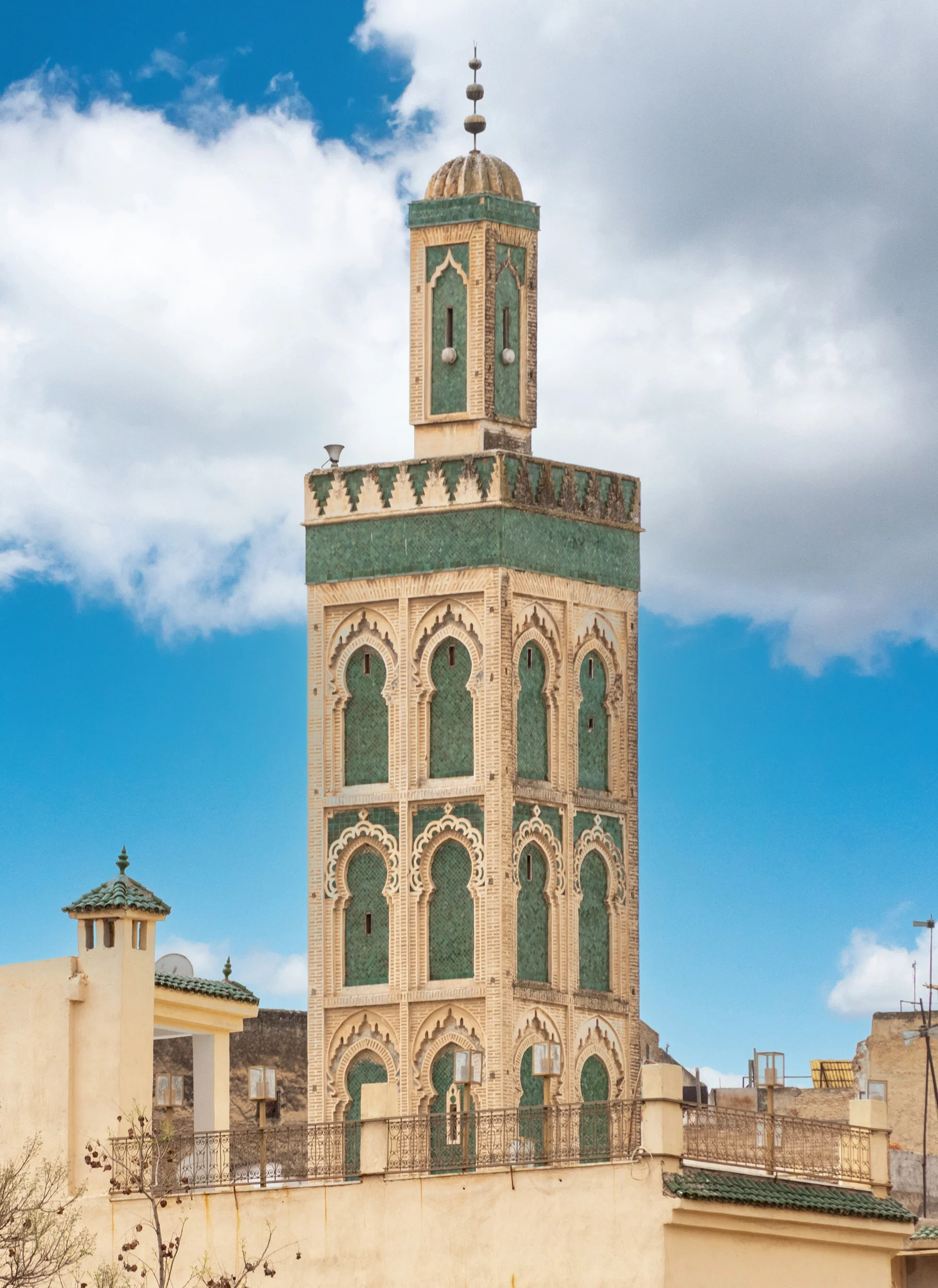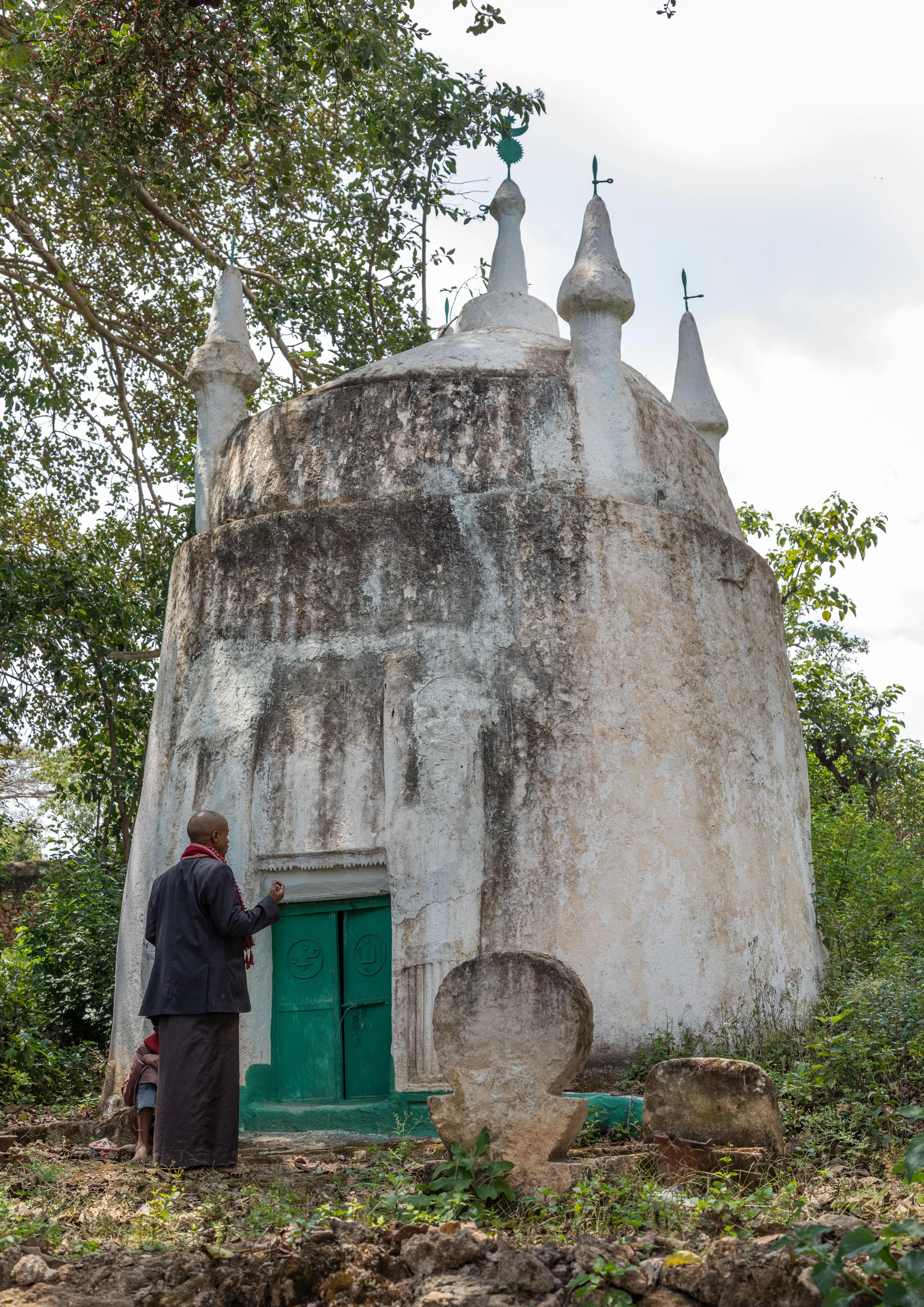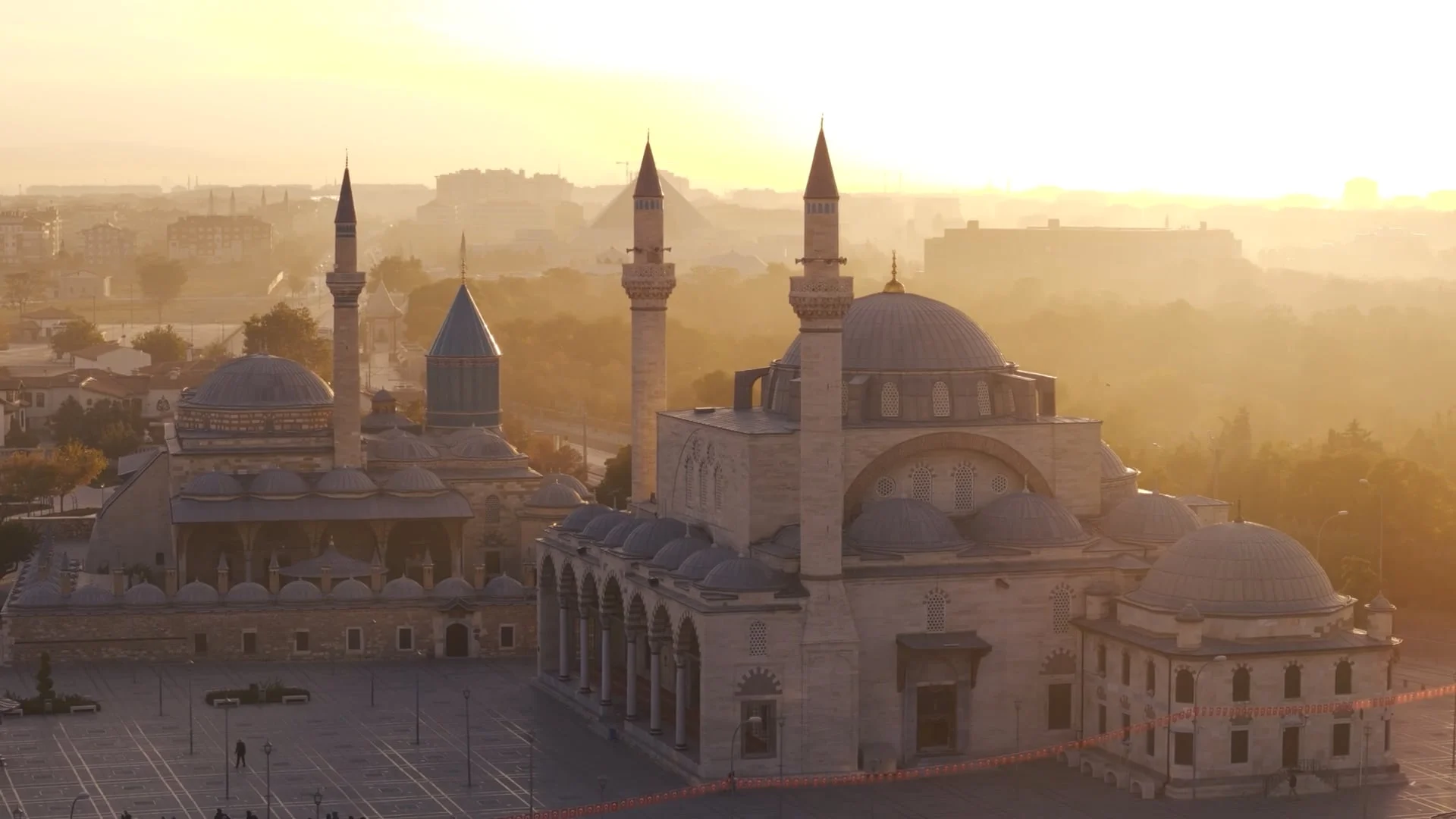
Konya
Türkiye
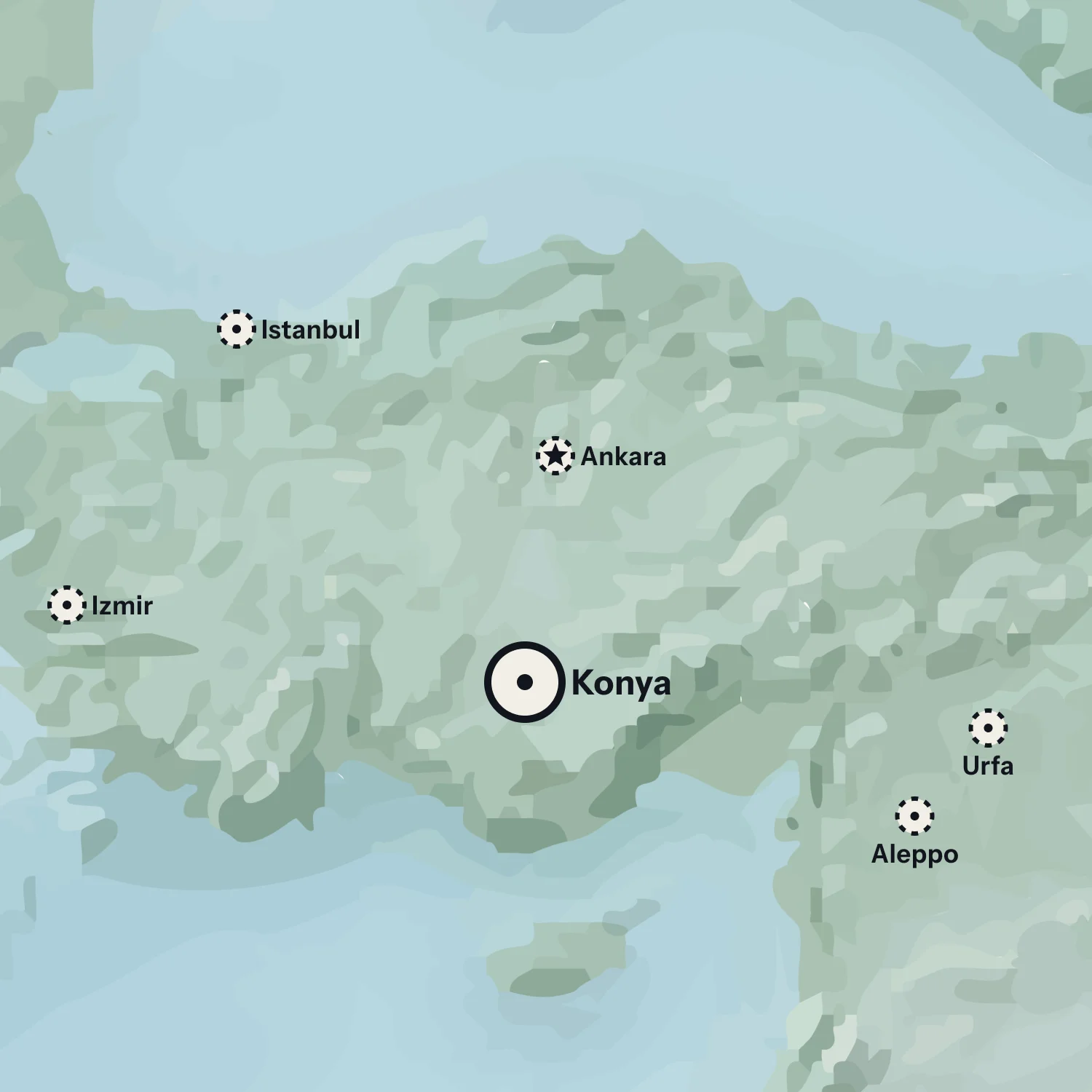
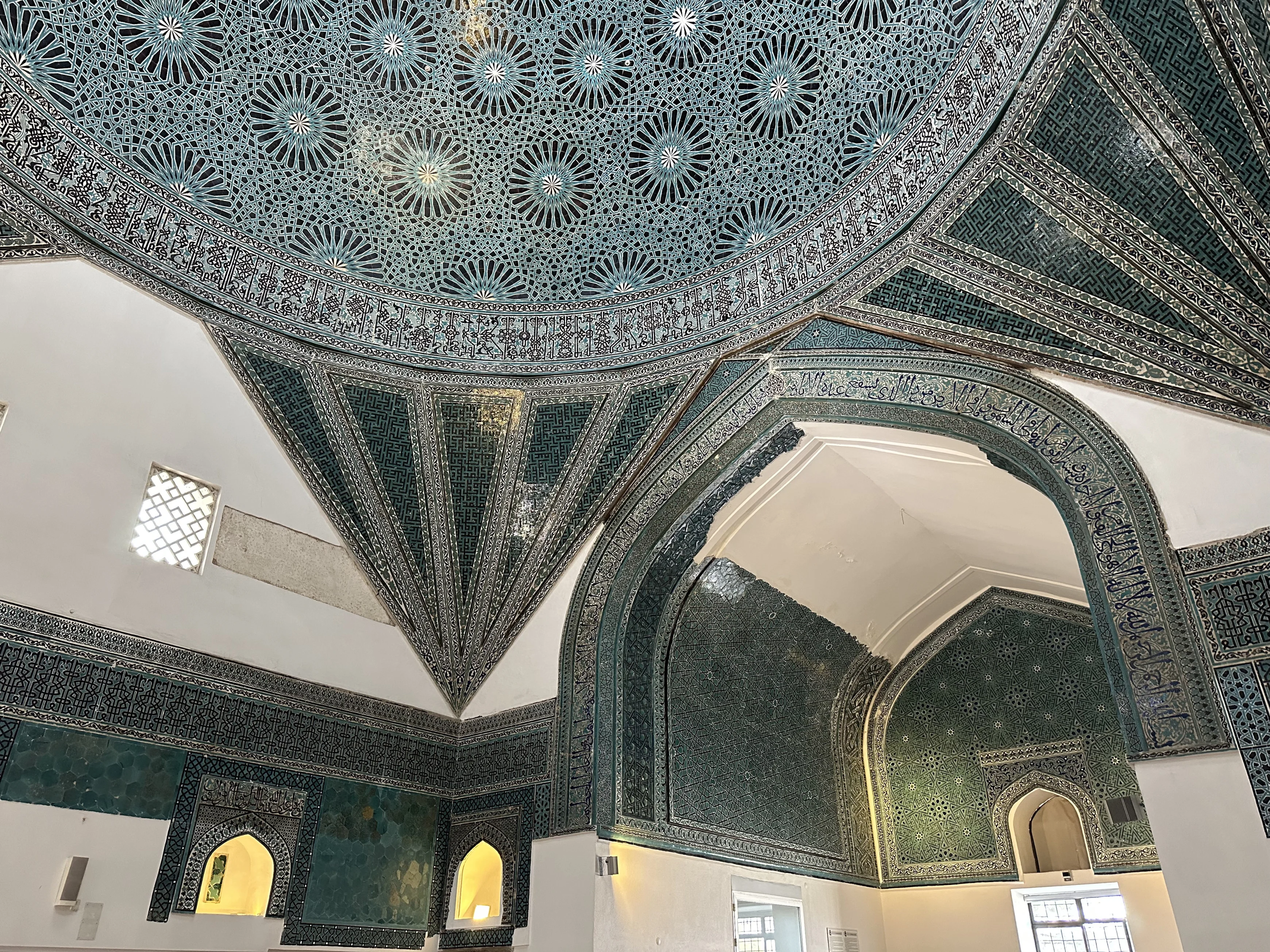
Located on the semi-arid Anatolian plateau in modern-day Türkiye, Konya was known as Iconium in the Greek and Byzantine periods. It became the capital of the Rum Seljuks in the early twelfth century and was transformed with palaces, caravanserais, and religious structures such as the Karatay Madrasa founded in 1251. When the poet Jalal al-Din Rumi (1207–1273) and his father fled the Mongol armies of Genghis Khan in the early 1220s, they settled in this vibrant city, which has maintained its regional economic importance to this day.
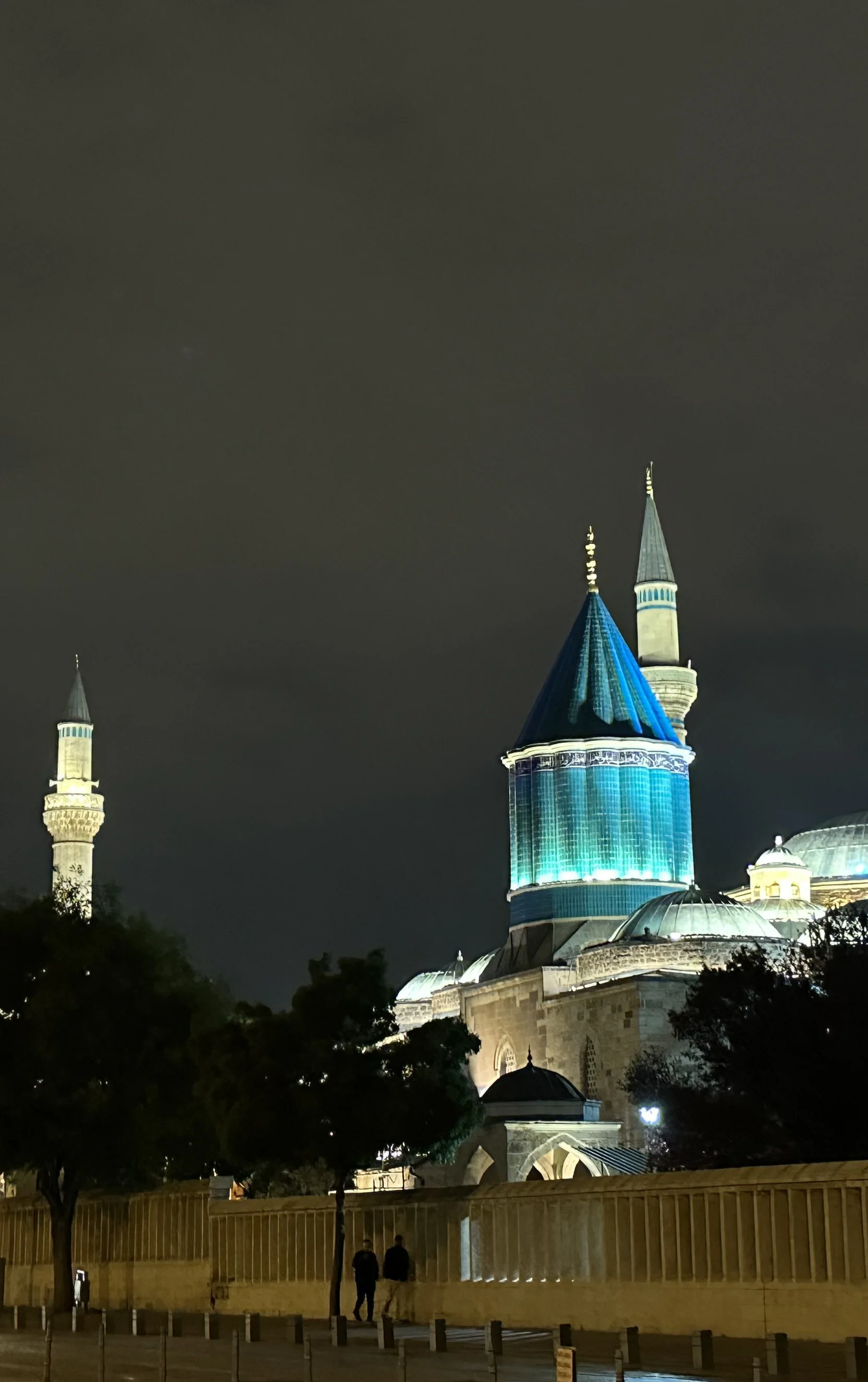
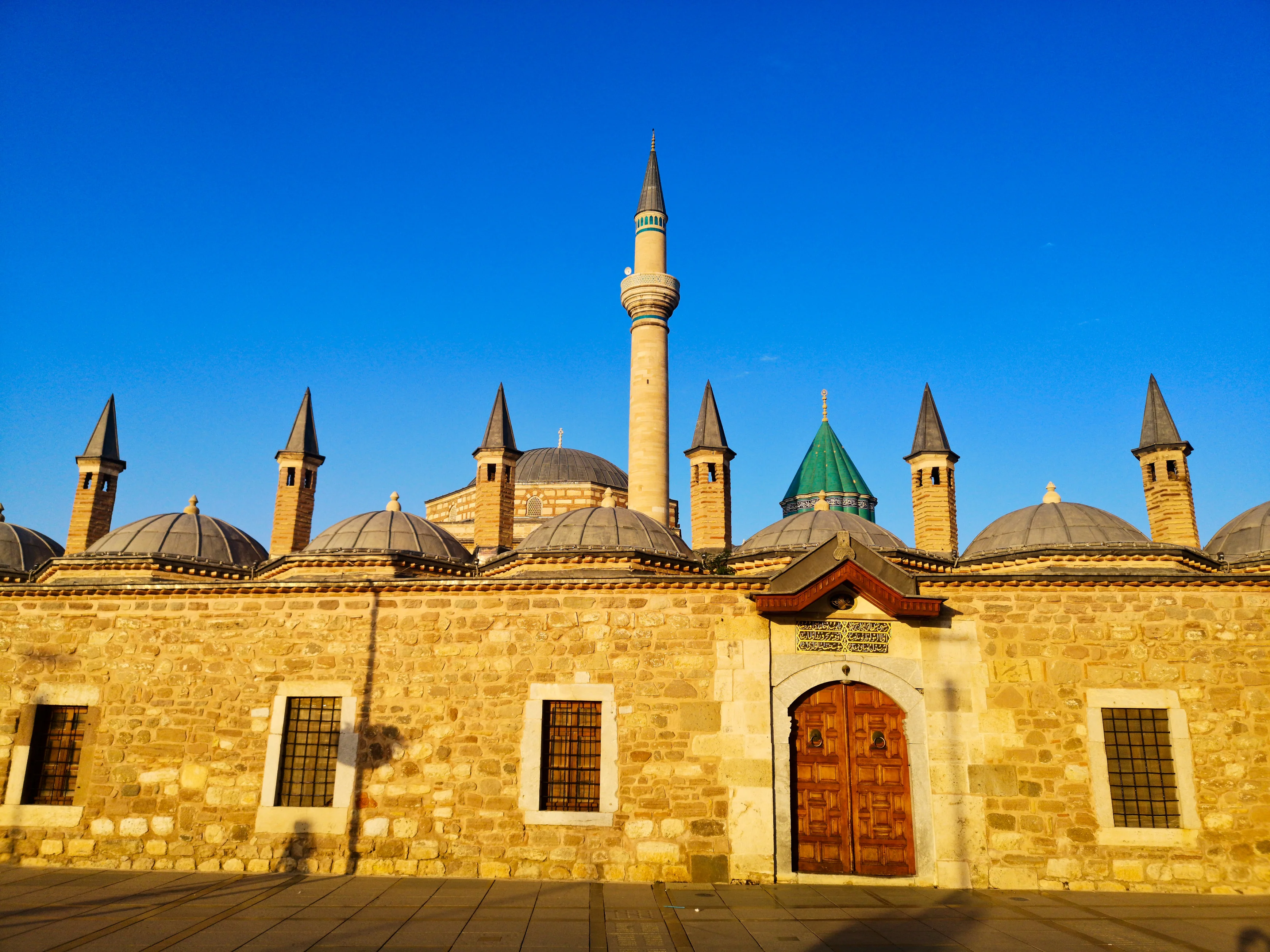
Konya’s fame rests on its association with Rumi, known as such globally but as Mawlana historically. His shrine, with its iconic green dome, was originally located on the outskirts of the city. Following Rumi’s death, his eldest son Sultan Valad (d. 1312) commissioned a Persian architect to design a structure over the grave, which was funded by a Seljuk noble. Renovated and expanded over the following centuries, the complex became the headquarters of the Mevlevi tariqa, which grew within the Ottoman Empire and beyond. With the creation of the Republic of Türkiye in 1923, the shrine officially became a museum, but it continues to attract pilgrims and tourists from around the world.
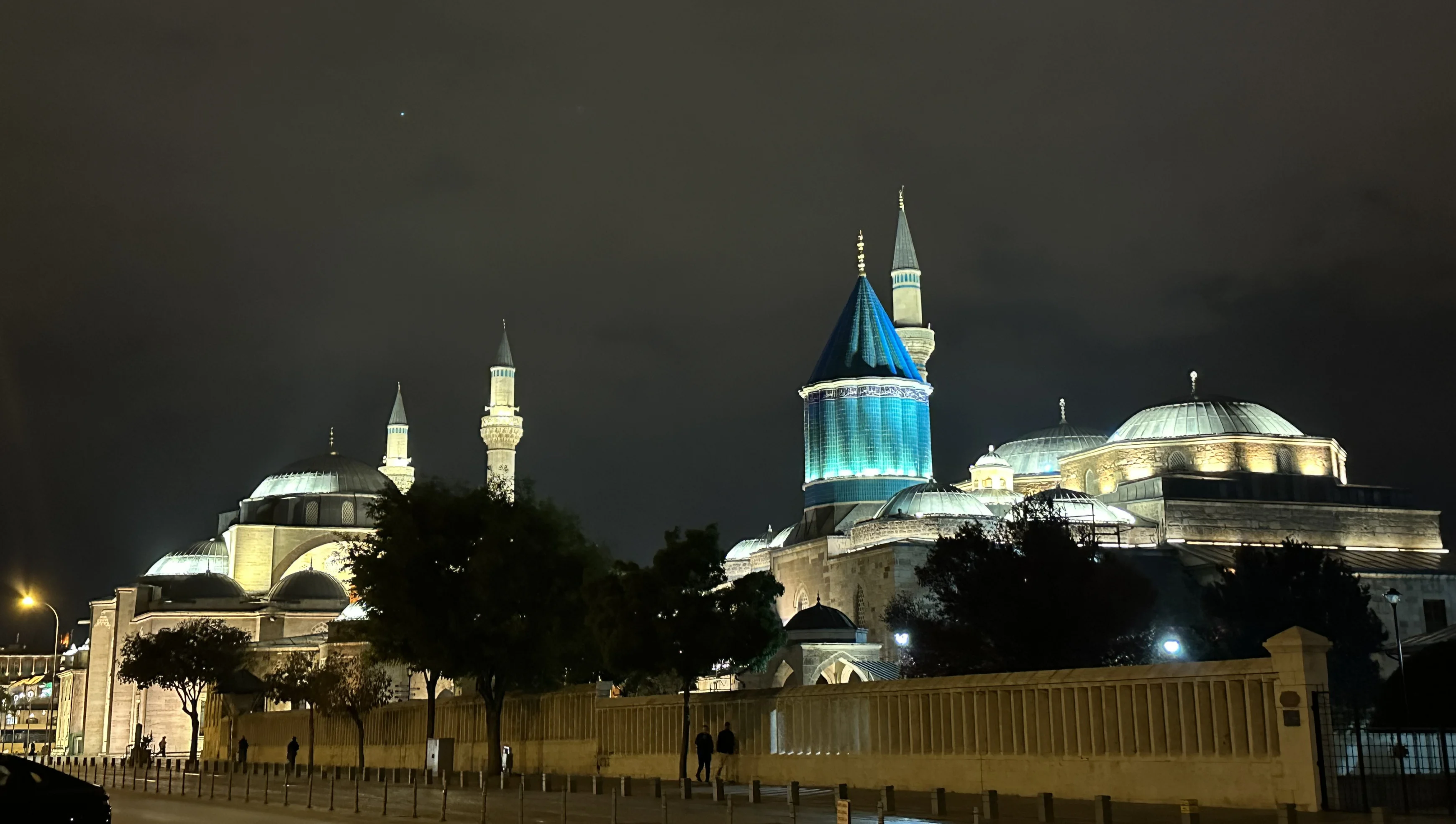
National Museum of Asian Art, Smithsonian Institution. Photo by Simon Rettig.
The Historical Rumi: The Man and The Work
Jalal al-Din Rumi, whose original name was Jalal al-Din Muhammad ibn Muhammad al-Balkhi, was born to the theologian Baha al-Din in Balkh in Afghanistan or, as scholars recently suggested, in Vakhsh, present-day Tajikistan. The family fled the Mongol invasions and eventually settled in Anatolia, where there was a sizable Persian-speaking population. His nickname “Rumi,” meaning “from Rome,” is a reference to Byzantium and the Byzantines, the “Romans of the East.”
Following his father, Rumi became a scholar, but he was neither considered a Sufi shaykh in his lifetime nor did he belong to a specific order. He lived in a madrasa and earned his living as a teacher of Islamic law.
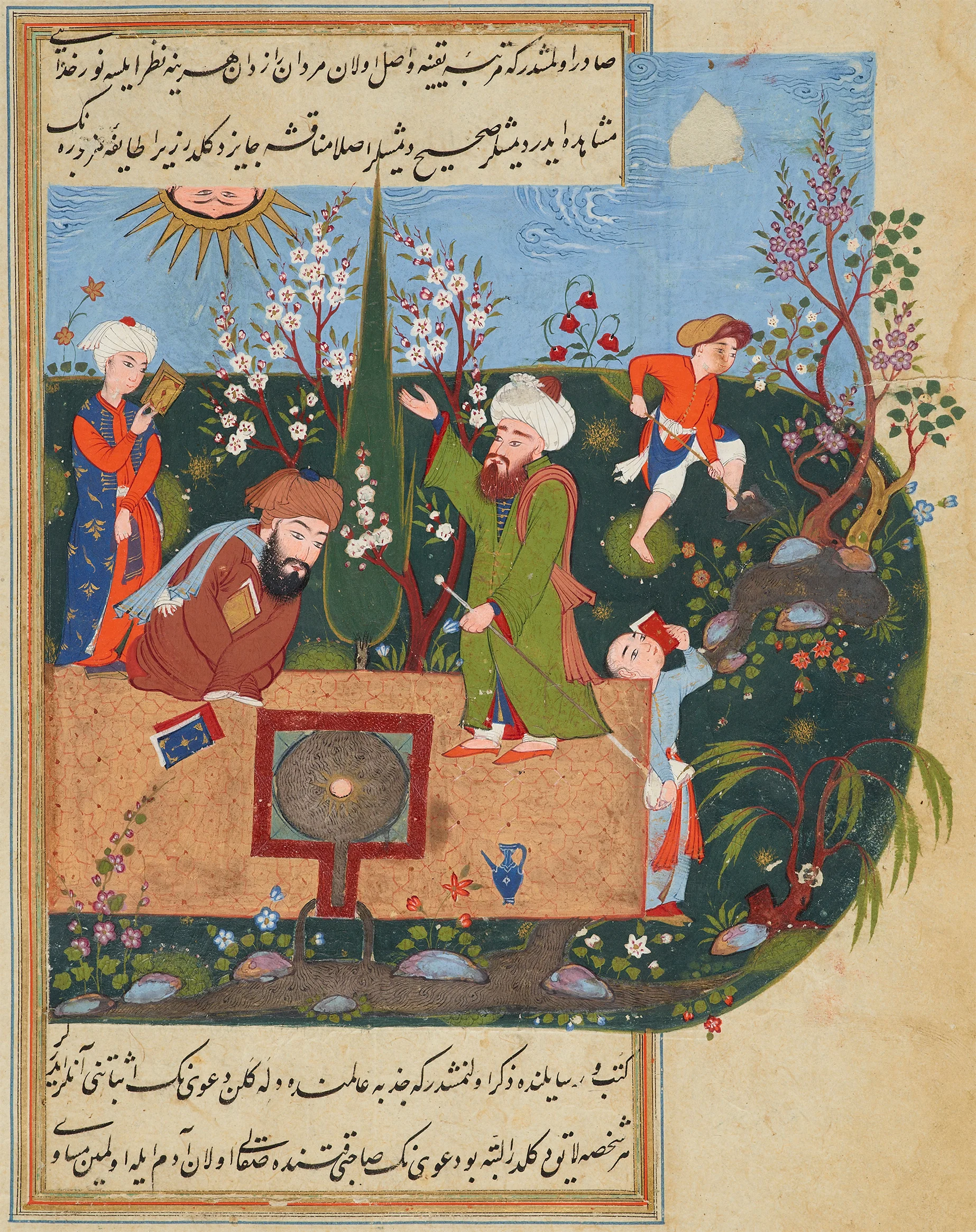
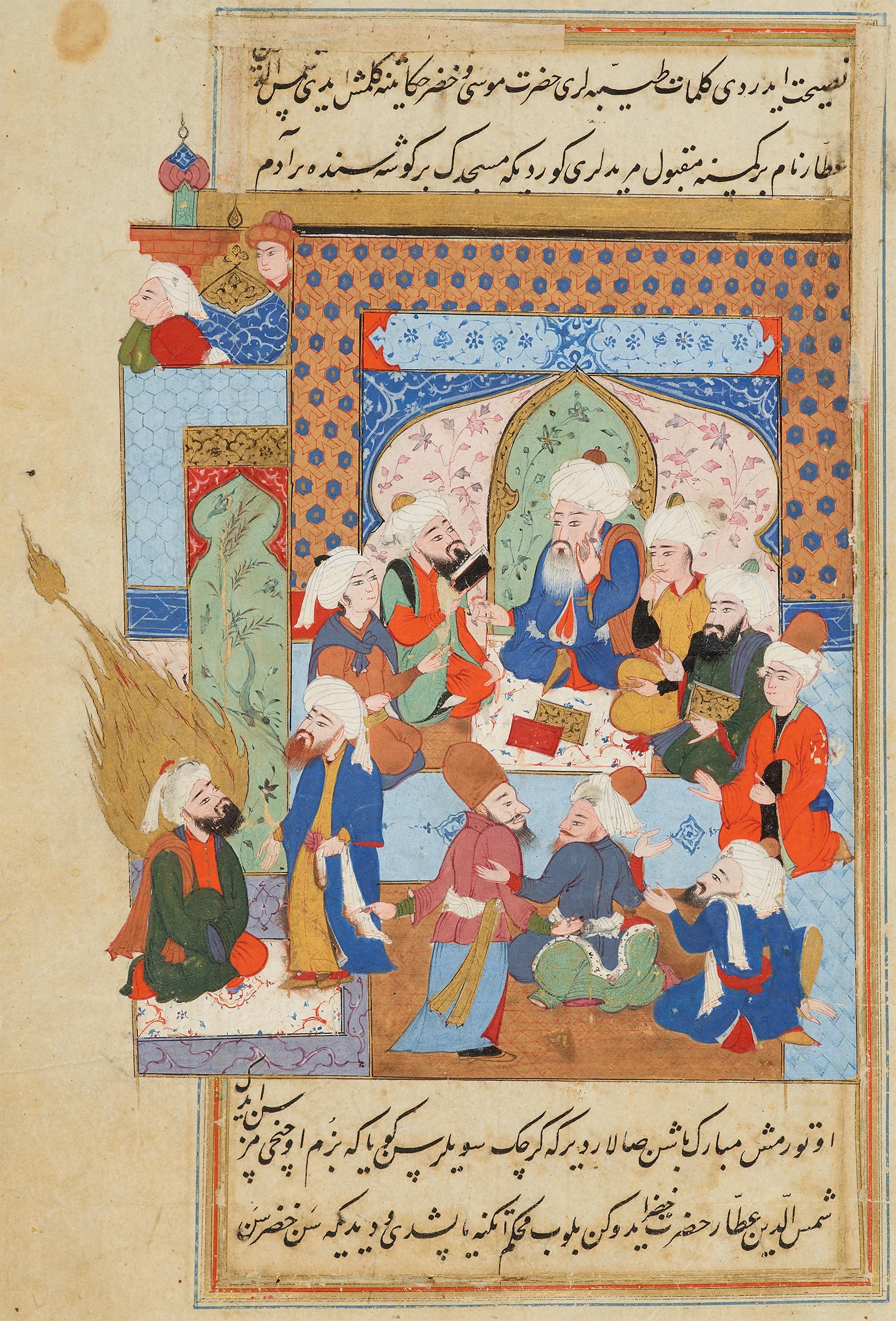
In 1244, Rumi had a life-changing encounter with an itinerant scholar and mystic named Shams al-Din Tabrizi, who became Rumi’s spiritual inspiration. He stopped teaching and began writing poetry, which was collected into the “Great Divan” or the “Divan of Shams Tabrizi.” For Rumi, poetry was another way to preach and pray. He continued to write after Shams left Konya for Syria. Sultan Valad, Rumi’s son, brought him back from Aleppo, but Shams disappeared again, never to return. Some claim that Rumi’s devotees assassinated him because of their jealousy of Shams’s close relationship with their master.
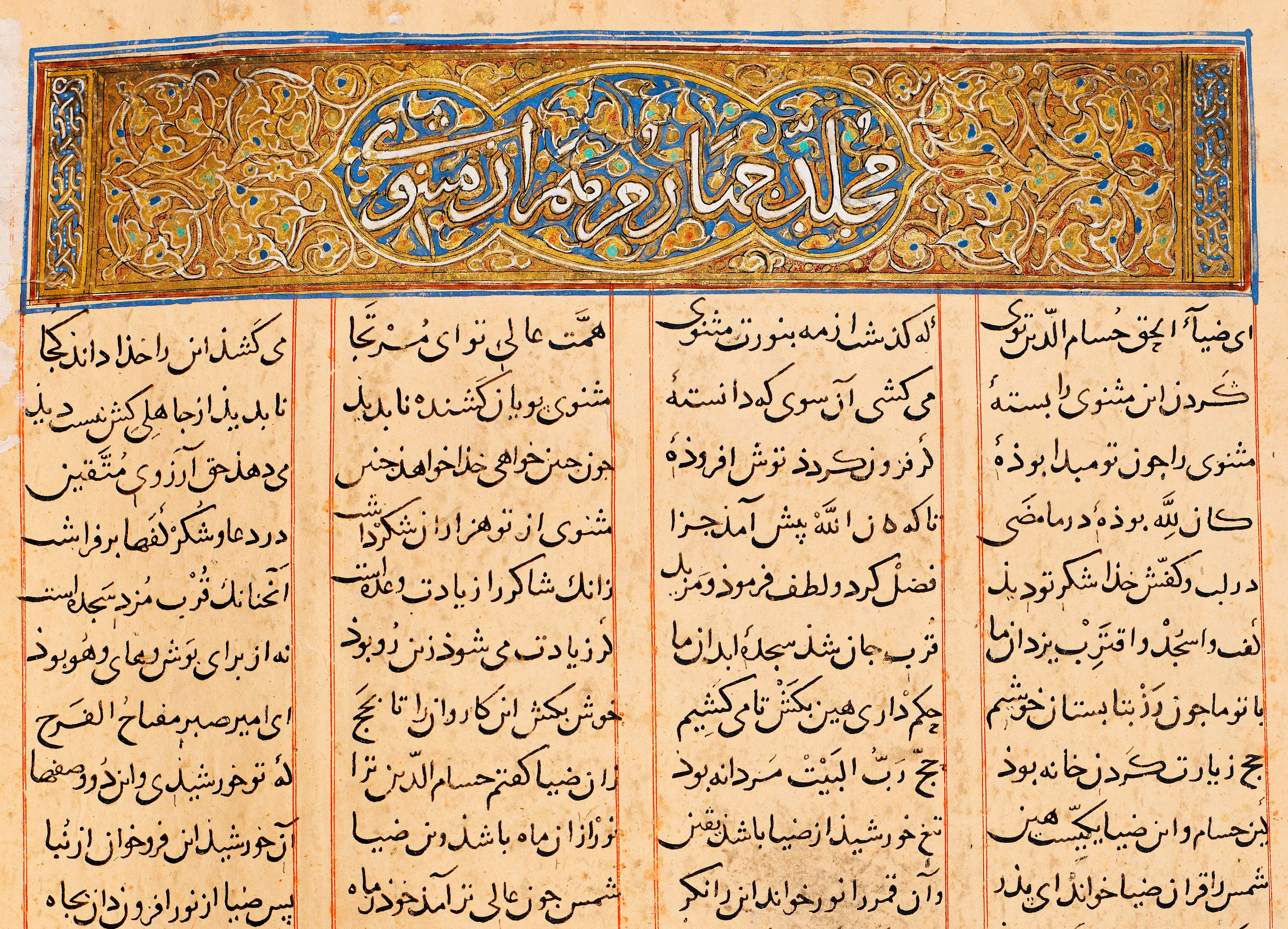
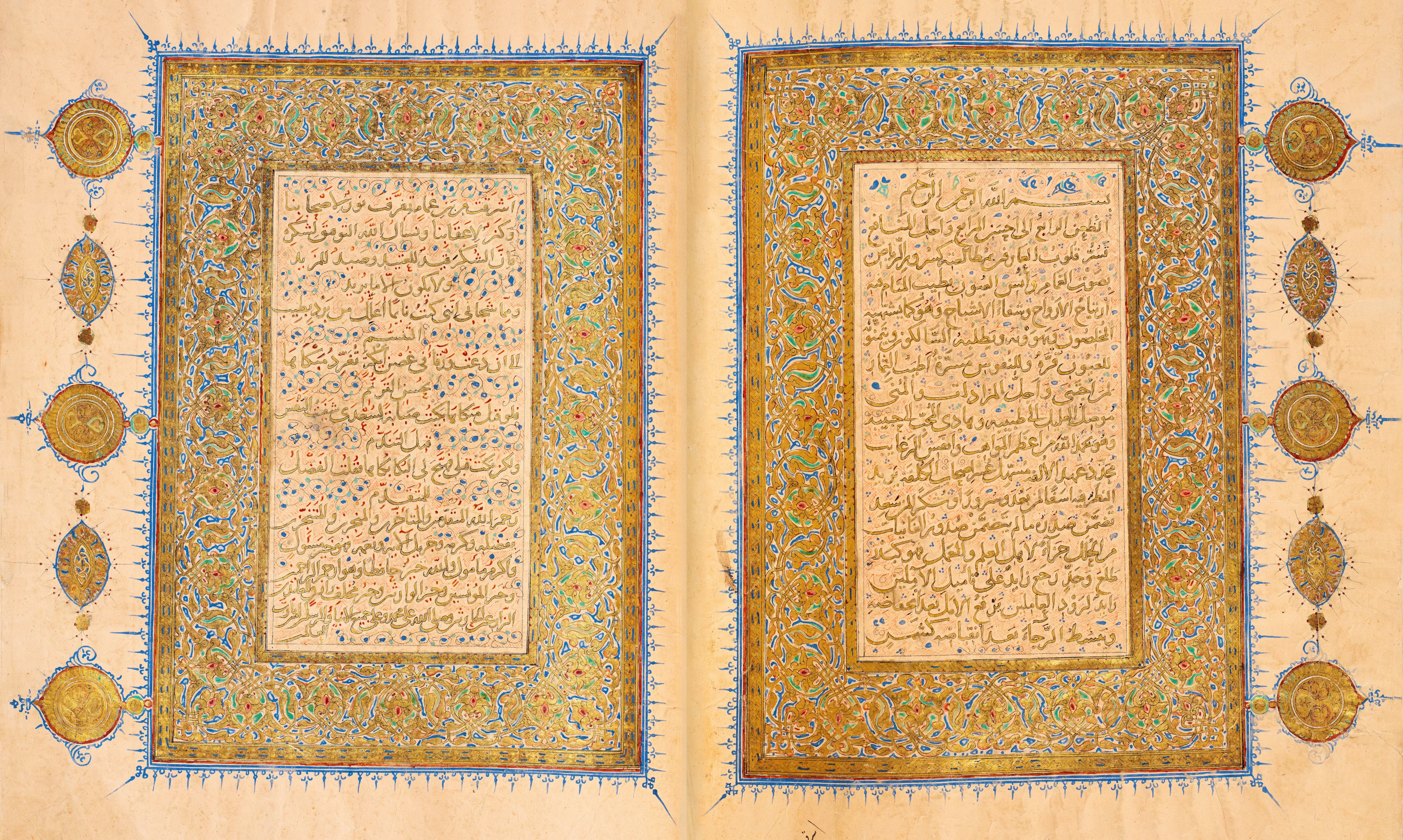
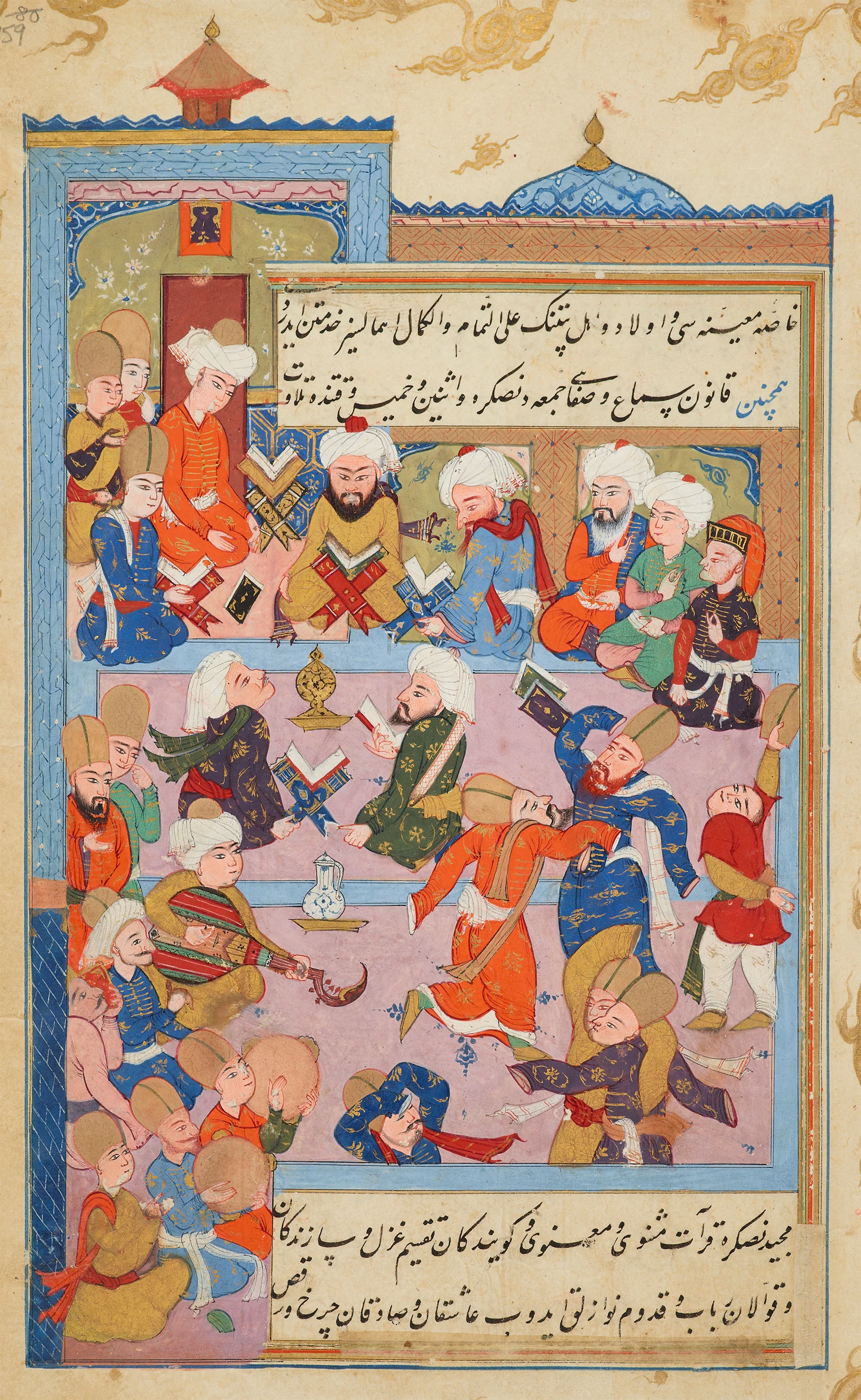
Rumi’s most famous work is the Masnavi-yi ma‘navi (Spiritual Couplets). This monumental mystical poem in rhyming verses takes the form of stories and anecdotes. Composed in Persian, the Masnavi achieved a quasi-scriptural status through ceremonial recitations and is still widely recited from the Balkans to Central Asia and Bengal.
An Early Copy of Rumi’s Masnavi
The Mevlevi Order
Sultan Valad, Rumi’s son, began transforming the loose group of followers around his father into a formal order with a relatively complex organization. Both shaykhs and novices were assigned specific roles and performed certain ritual practices. They lived and occupied different quarters depending on the function of their position. For instance, an aspiring disciple had to spend 1001 days working in the kitchen of the tekke before being accepted as a novice.
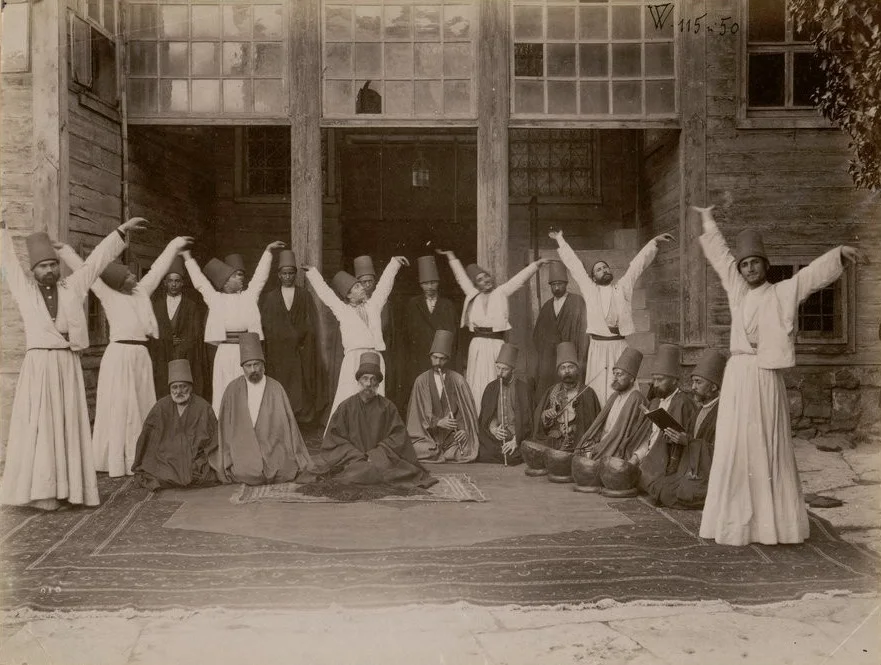
The tariqa took the name Mevlevi from mevlana, a Turkish word for the Arabic mawlana, or “our master,” the title by which Rumi is known in the Islamic world. A defining characteristic of the Mevleviyya is the accoutrement of its members: the buff colored, tall cap made of solid tanned carpet; the brownish sleeved coat made of thick fabric; and the long, white collarless dress.
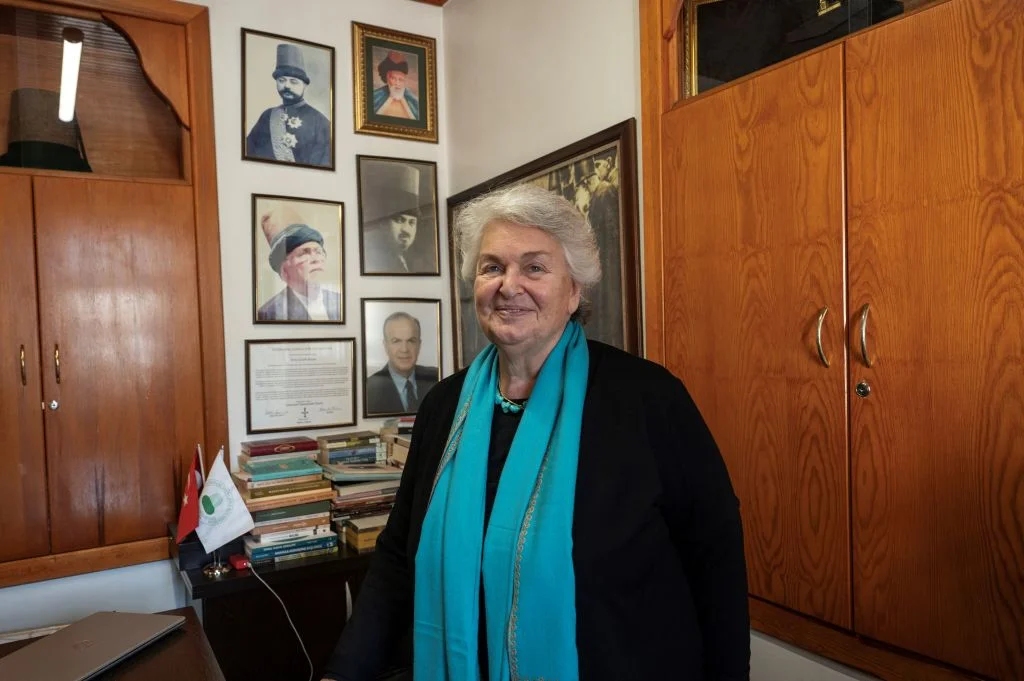
The descendants of Rumi have maintained their association with the Mevlevis to the present. Known by the title çelebi (literally, “gentleman,” in Ottoman Turkish), male descendants of Sultan Valad have uninterruptedly been the formal stewards of the order. The head shaykh at Konya is known as the Grand Çelebi and currently is Faruk Hemden Çelebi. Female devotees are also included in the Mevleviyya, and women play a leading role in the order. Esin Çelebi Bayru, Faruk Hemden Çelebi’s sister and the twenty-second-generation granddaughter of Rumi, is the Vice President of the International Mevlana Foundation, which is located in the vicinity of Rumi’s shrine in Konya.
Particular to the Mevlevis is the sema‘, a distinct dhikr ceremony during which participants spin while wearing robes and tall felt hats—hence, the Western term “whirling dervishes.” Rumi became enamored with sema‘, and its practice transformed him into a shaykh in the eyes of his followers. This is encapsulated in the following quatrain from the Masnavi:
And so, like food, sema‘ sustains God’s lovers
Within its harmonies the mind’s composed
Imagination draws its inspiration
Takes its shape within this hue and cry
Rumi
Only initiates are permitted to participate in the ceremony. They are accompanied by a musical ensemble, which usually includes a singer or reciter and a variety of instruments, such as drums and a reed flute. While the Mevlevi sema‘ is quite distinct, it has become the symbol of all Sufi music traditions worldwide.
For their sema‘, Mevlevis developed a particular liturgical dance called the ayn-i sherif, which was accompanied by a series of songs with instruments. Along with percussion (tambourine and kettledrum) used by other orders, the Mevlevis consider the reed flute (ney) as a sacred instrument and give it special importance. Rumi used it as a metaphor for the soul’s yearning of unity with the divine. In fact, the ney opens the Masnavi with the following verse:
Listen as this reed play out its plaint
Unfolds its tale of separations
Rumi
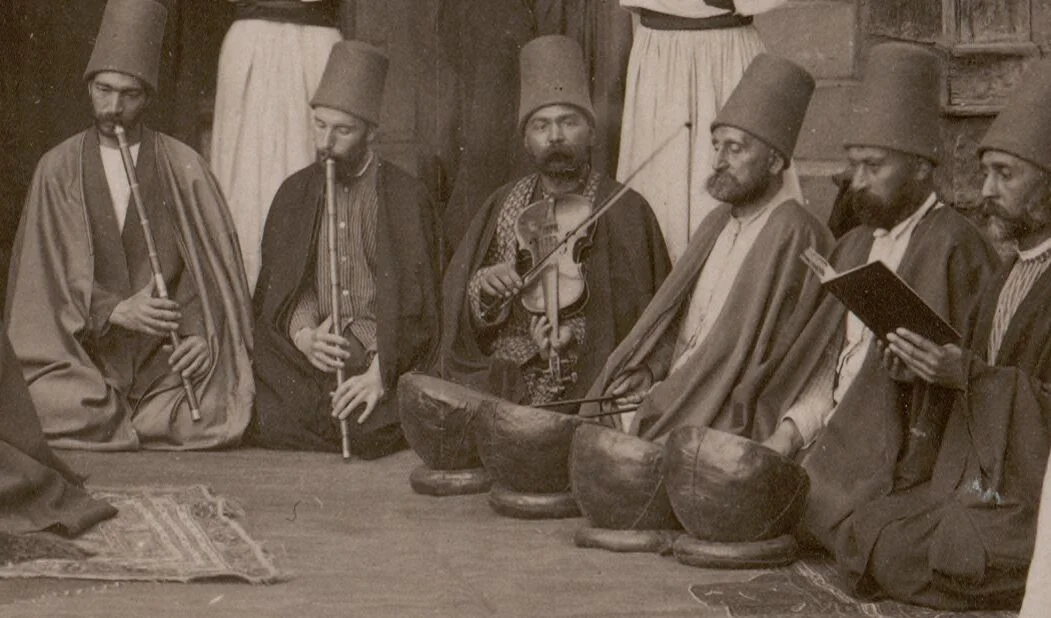 A group of men in traditional clothing play musical instruments, including flutes and a violin, while seated on the floor.
Recording at the Mevlana Festival
View Credits
Part of inaugural prayer at the Mevlana Festival in Konya and Song of Mevlana. Les Derviches tourneurs (Whirling Dervishes), recorded in Syria and Türkiye by Deben Bhattacharya. Paris, Éditions de la boite à musique, 1961.
Bibliothèque nationale de France, département Audiovisuel, E-19488
Image: Mevlevis Musicians. Detail of Photograph of Mevlevis, called Derviches tourneurs.
Rumi’s Shrine: An Ottoman Business
In 1466, the Ottomans captured Konya, and Jamal al-Din Çelebi, the head of the order, welcomed the Ottoman Sultan Bayezid II (r. 1481–1512). The sultan paid to refurbish Rumi’s shrine and provided it with expensive brocade to lay over the graves. Since then, the shrine has received continuous support from sultans, members of the Ottoman aristocracy, and other supporters of the Mevlevis.
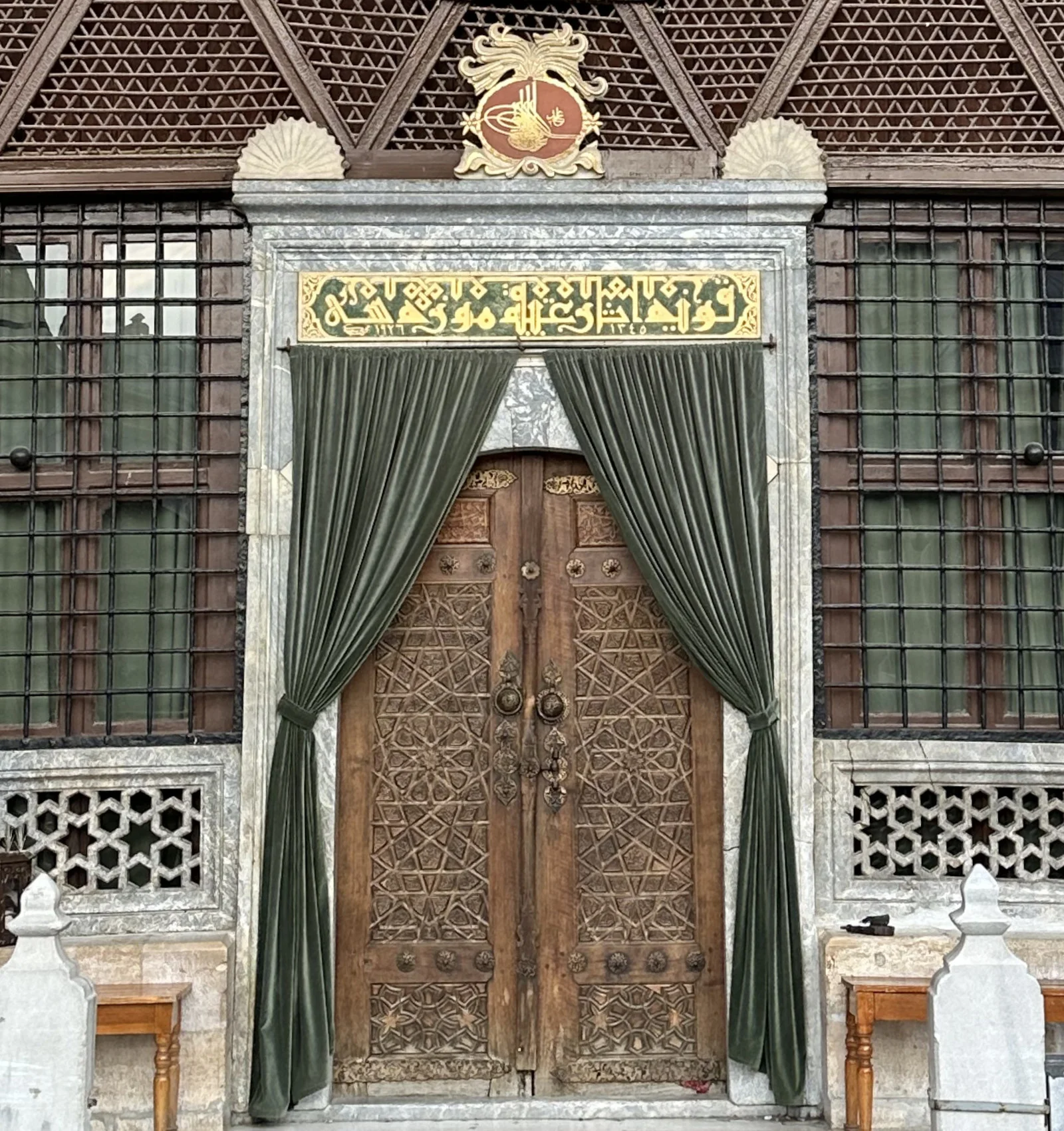
Today, the compound consists of a central and marbled-paved courtyard with a series of cells for the disciples to live in as well as a large kitchen on one side of the street. An imperial covered fountain for ablution leads to the main structure, which houses the tombs, a mosque and the sema‘ hall.
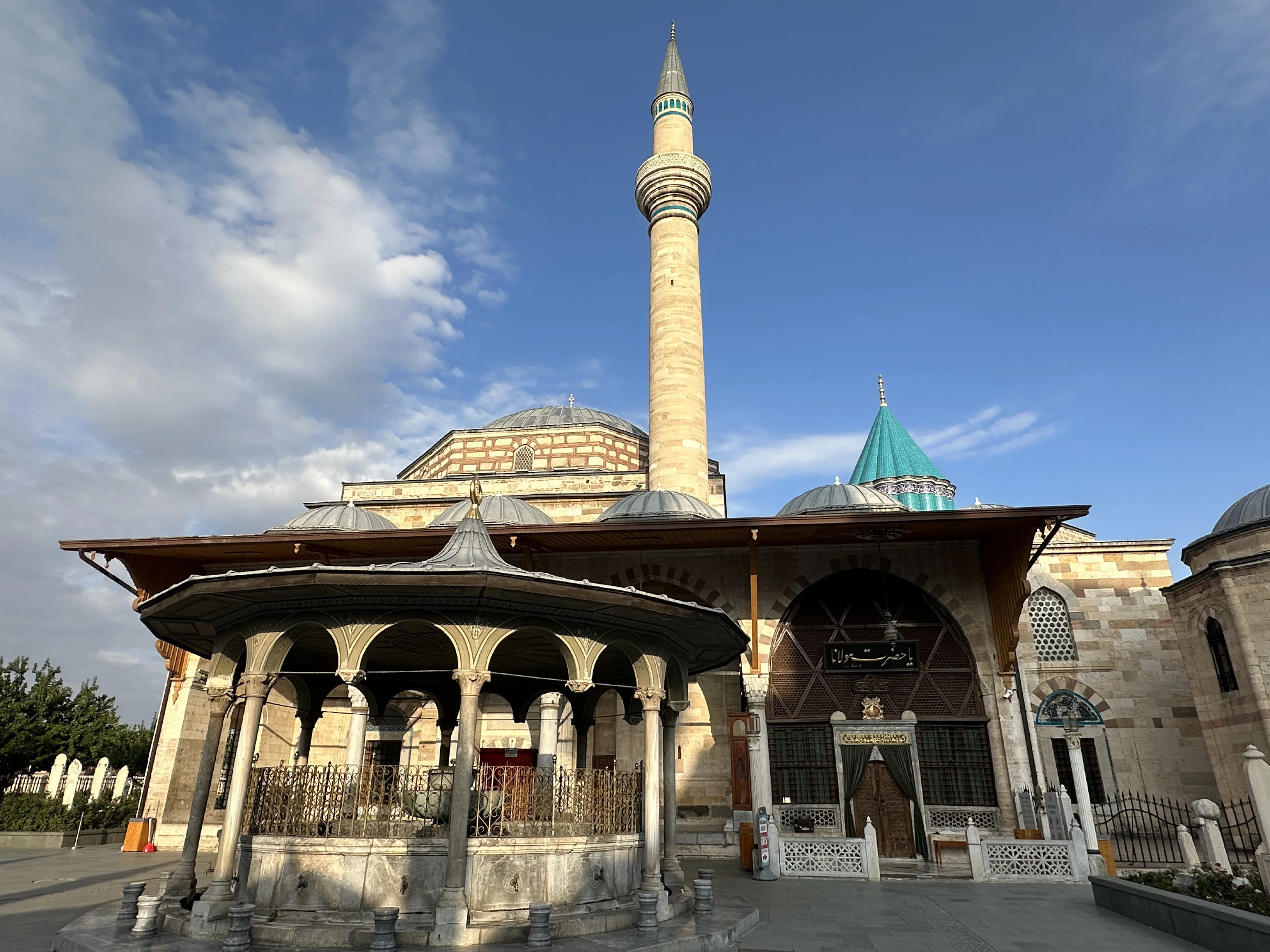
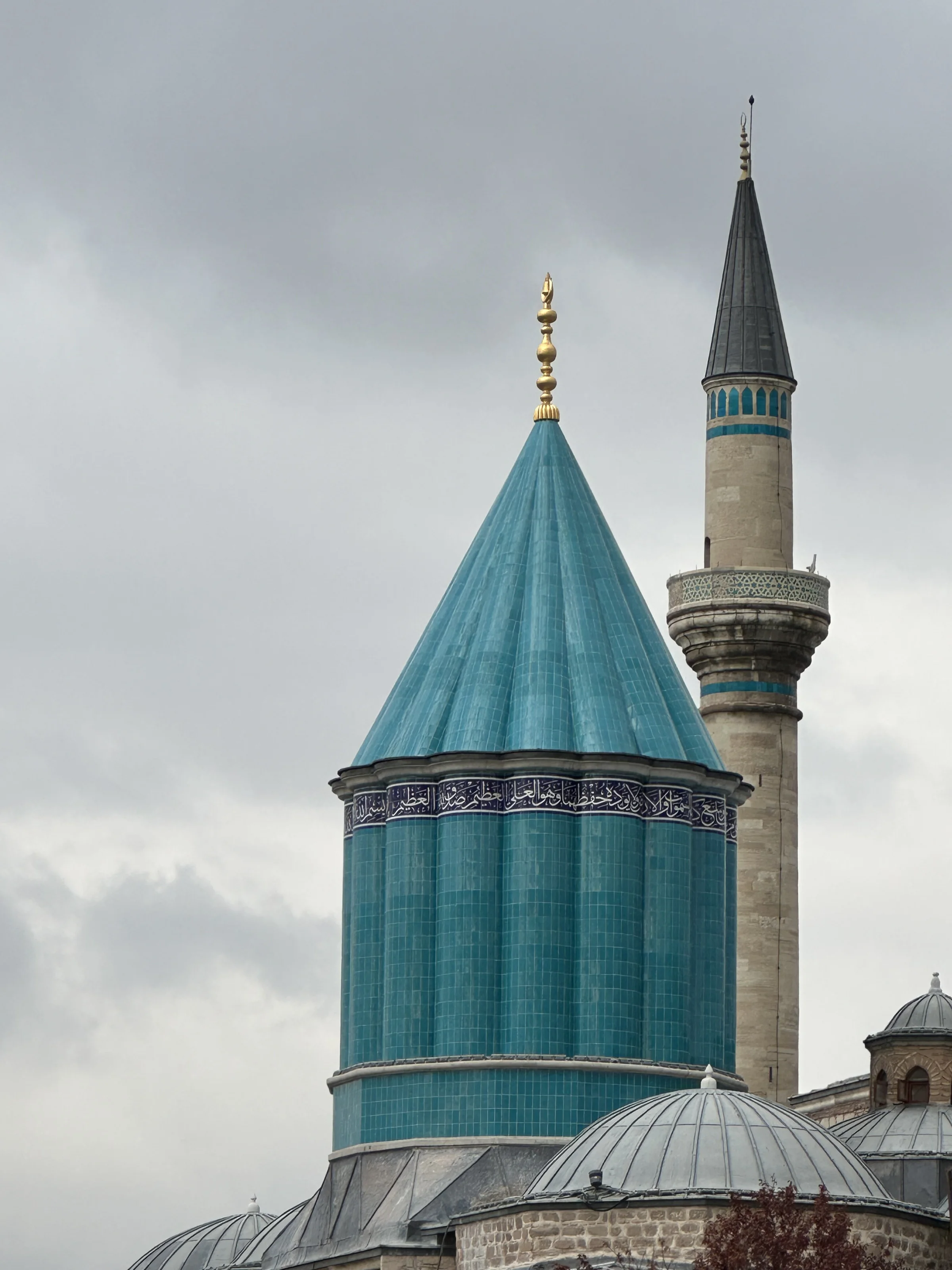
Rumi’s tomb is marked on the exterior by a green-domed, ribbed tower, which is visible from a distance. Other members of his family, including his father Baha al-Din, his son Sultan Valad, his second wife Kerra Khatun, and his daughter Maleke Khatun, are buried nearby.
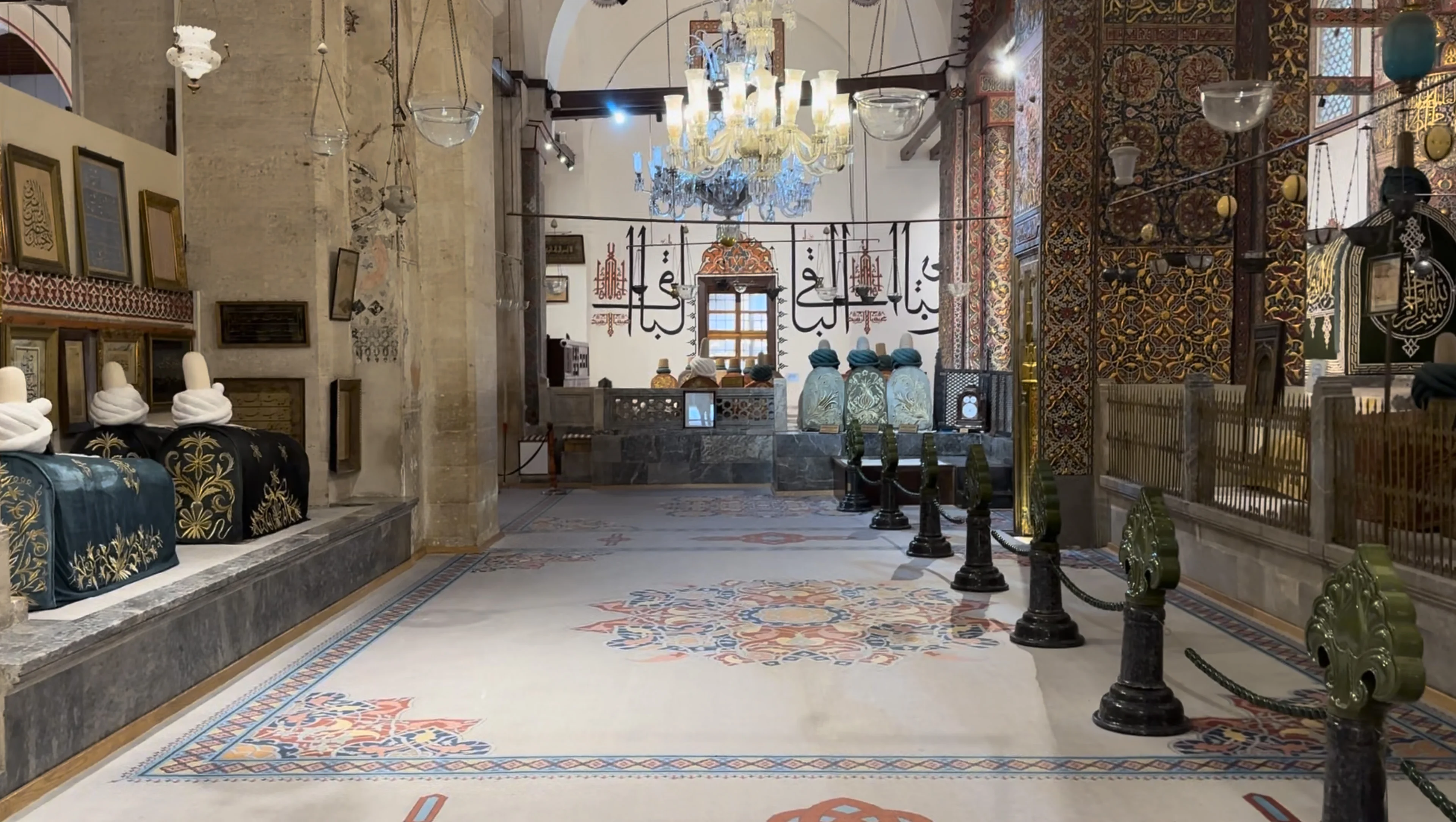 An ornately decorated interior of a historical tomb with Arabic calligraphy, a chandelier, and several sarcophagi lining a hall with a patterned carpet.
View Credits
Interior of Rumi’s shrine, now the Mevlana Museum.
National Museum of Asian Art, Smithsonian Institution. Video by Simon Rettig.
The interior of the light-filled tomb chamber is lavishly decorated with wall paintings. Dating to the reign of Bayezid II, they depict stylized landscapes, some with elegant pavilions, that have been interpreted as images of paradise. They may also depict an imaginary map of the Mevlevi network with its different complexes throughout Anatolia.
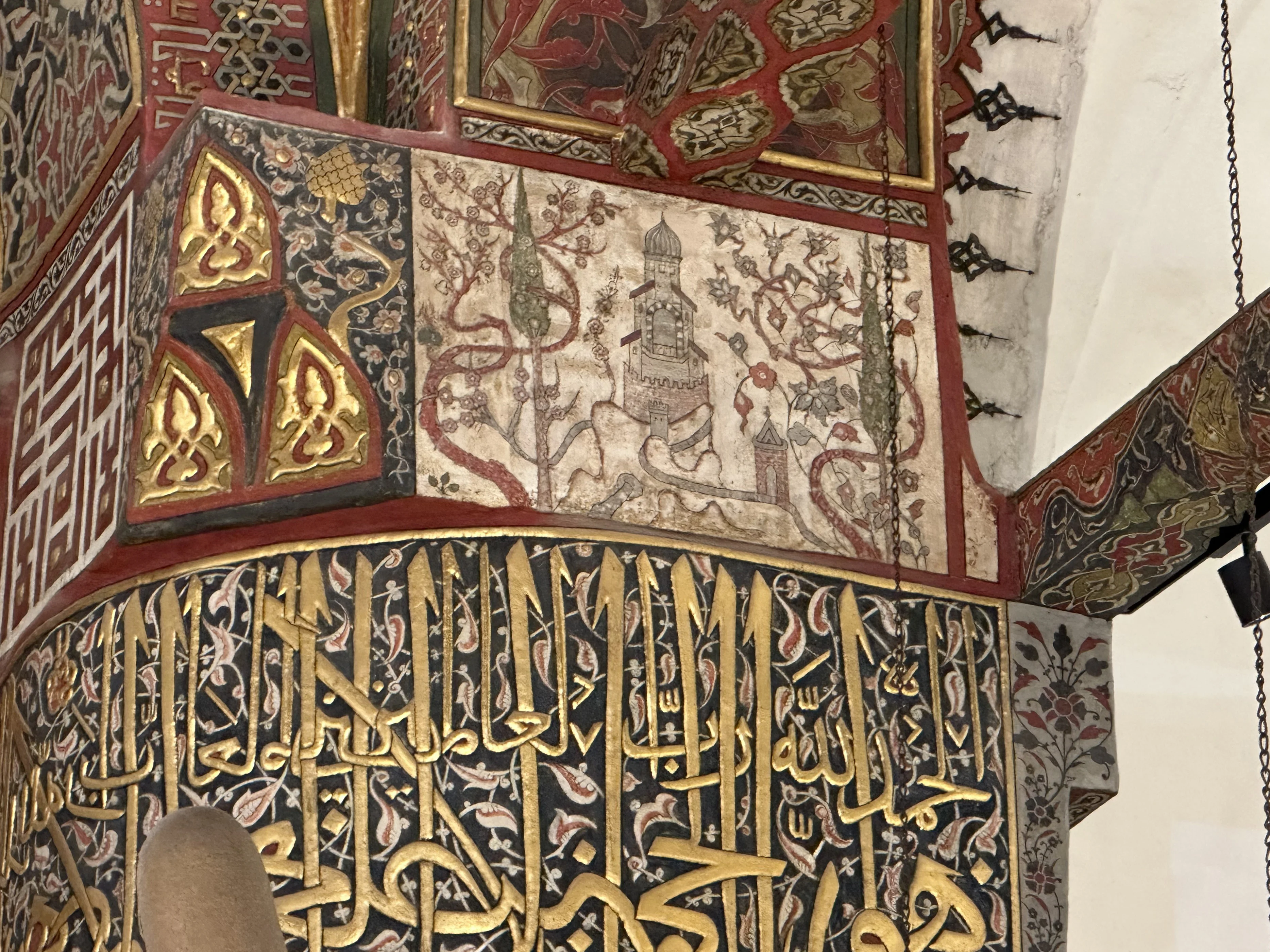
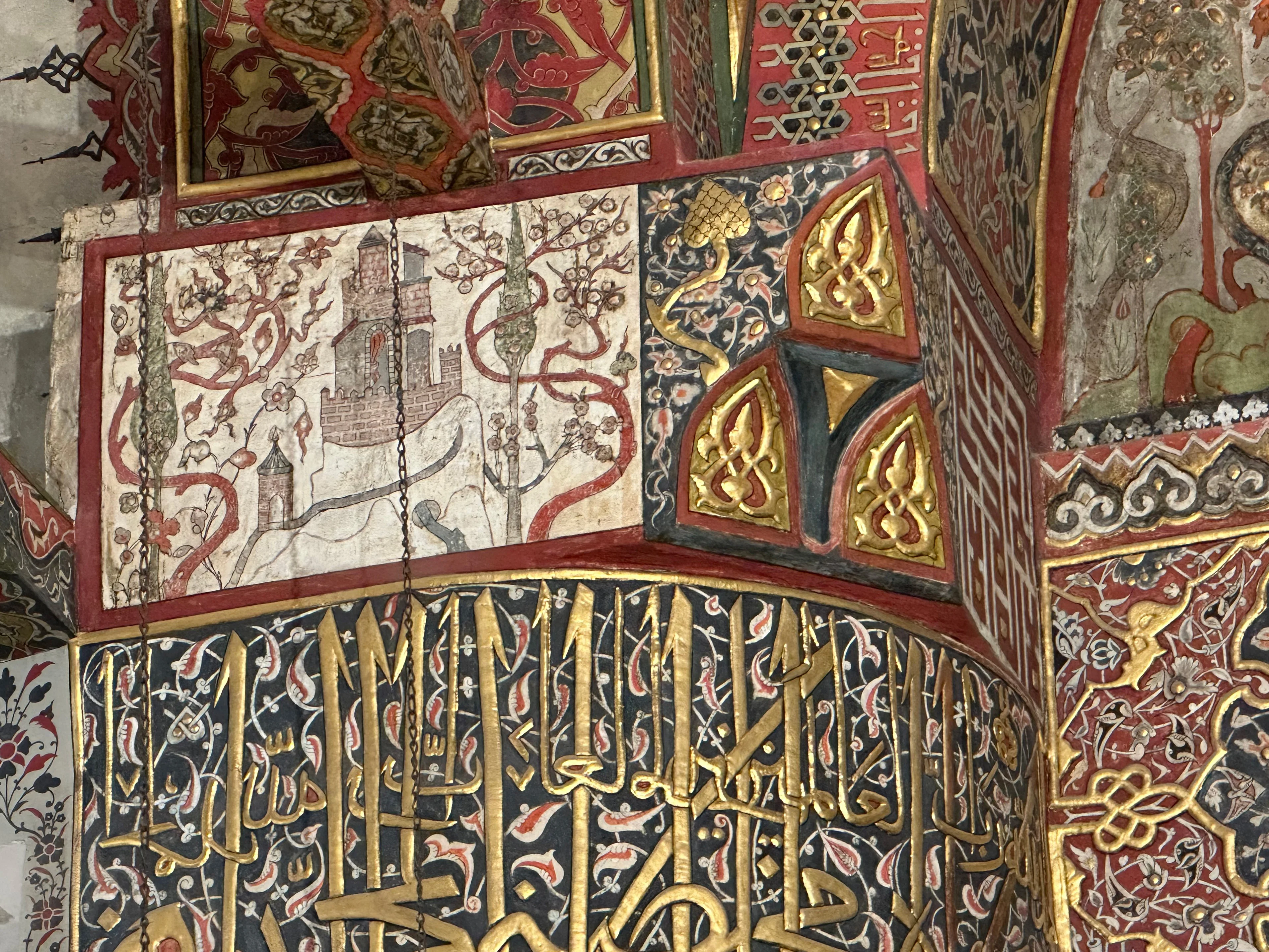
The Mevlevi Network
The Ottoman rulers continued to support the shrine at Konya and the Mevlevi order, which in turn became an ally of the Ottoman state. While Rumi’s poetry was popular across Iran, Central Asia, and the Indian subcontinent, the tariqa spread primarily across the Ottoman territories from the Balkans to Iraq and North Africa, where it became a wealthy corporation with close ties to the imperial court and one of the favorite brotherhoods of the Ottoman bureaucracy. Outside of Türkiye, the Mevlevi order was particularly active in Syria, where it still has a strong presence today.
Following Konya, the most famous Mevlevi tekke was in the district of Galata in Istanbul. Founded in 1491 by Bayezid II, it was restored in the eighteenth century in European baroque style, fashionable at the time in the Ottoman capital.
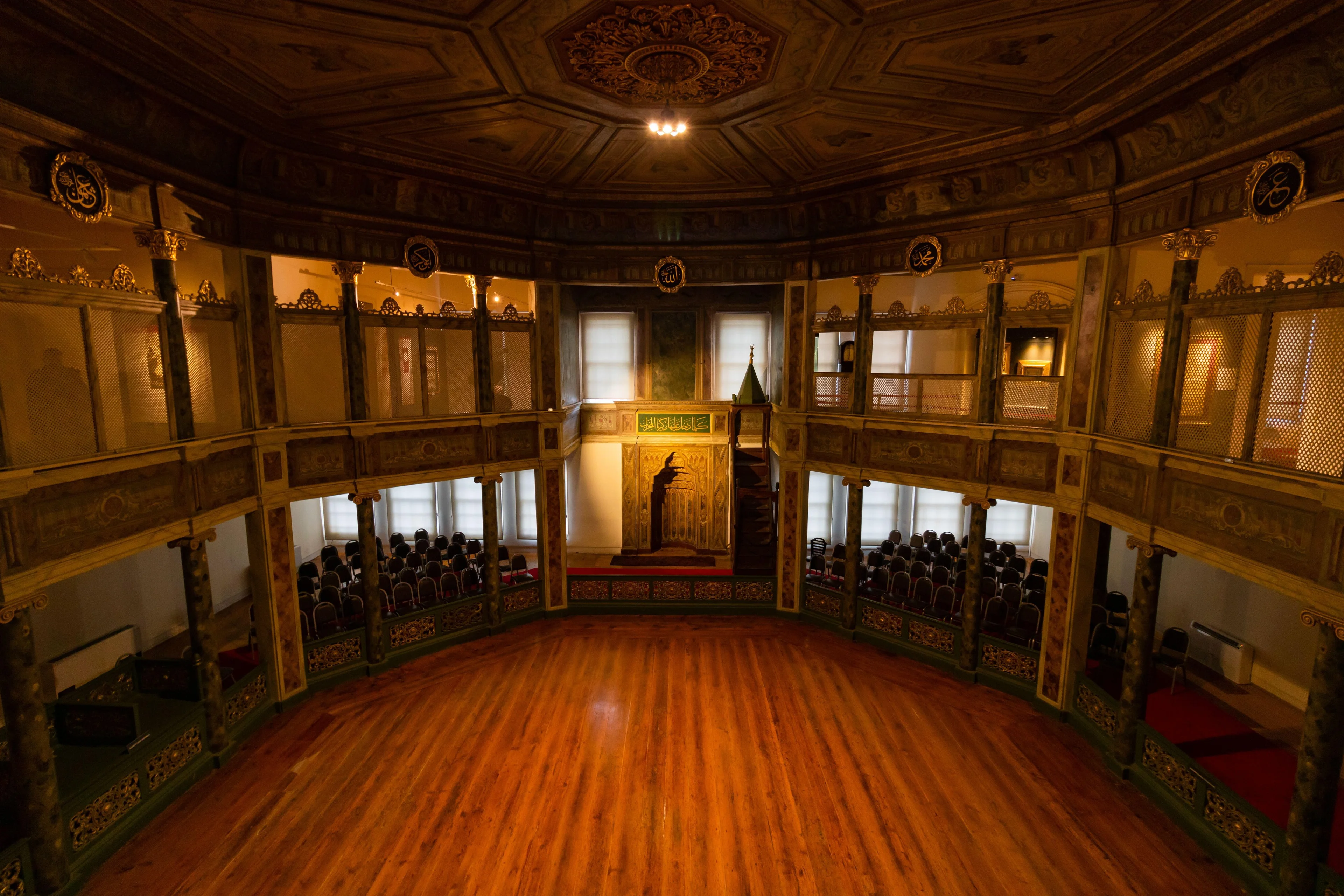
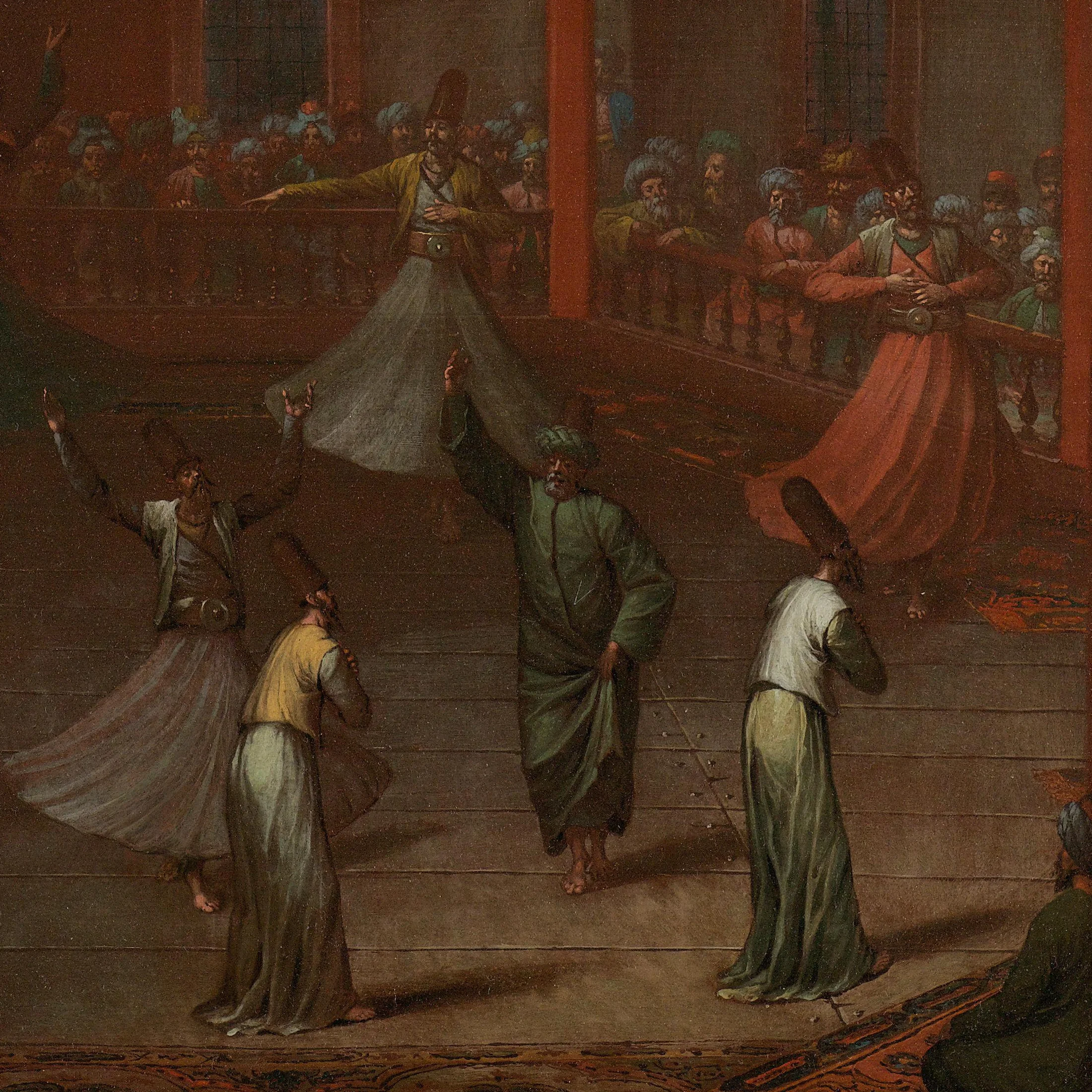
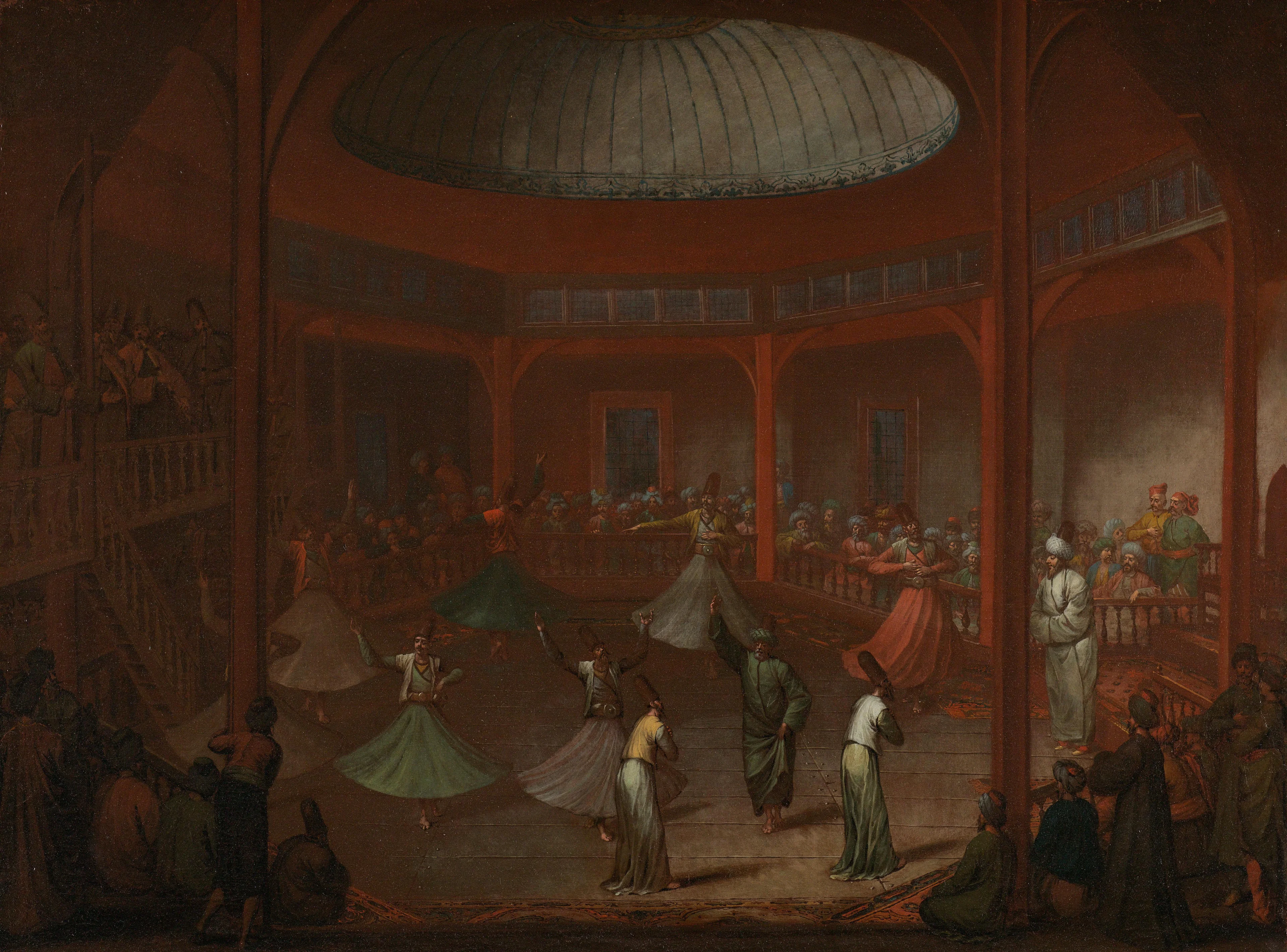
With the growing interaction between the Ottoman Empire and the West by the seventeenth century, Europeans began to describe and depict Sufis and their rituals, especially members of the Mevlevi order. The best-known European painting of the Mevlevi sema‘ is of the Galata mevlevihane. It is painted by French artist Jean-Baptiste Vanmour, who spent much of his life in Istanbul and died there in 1699.
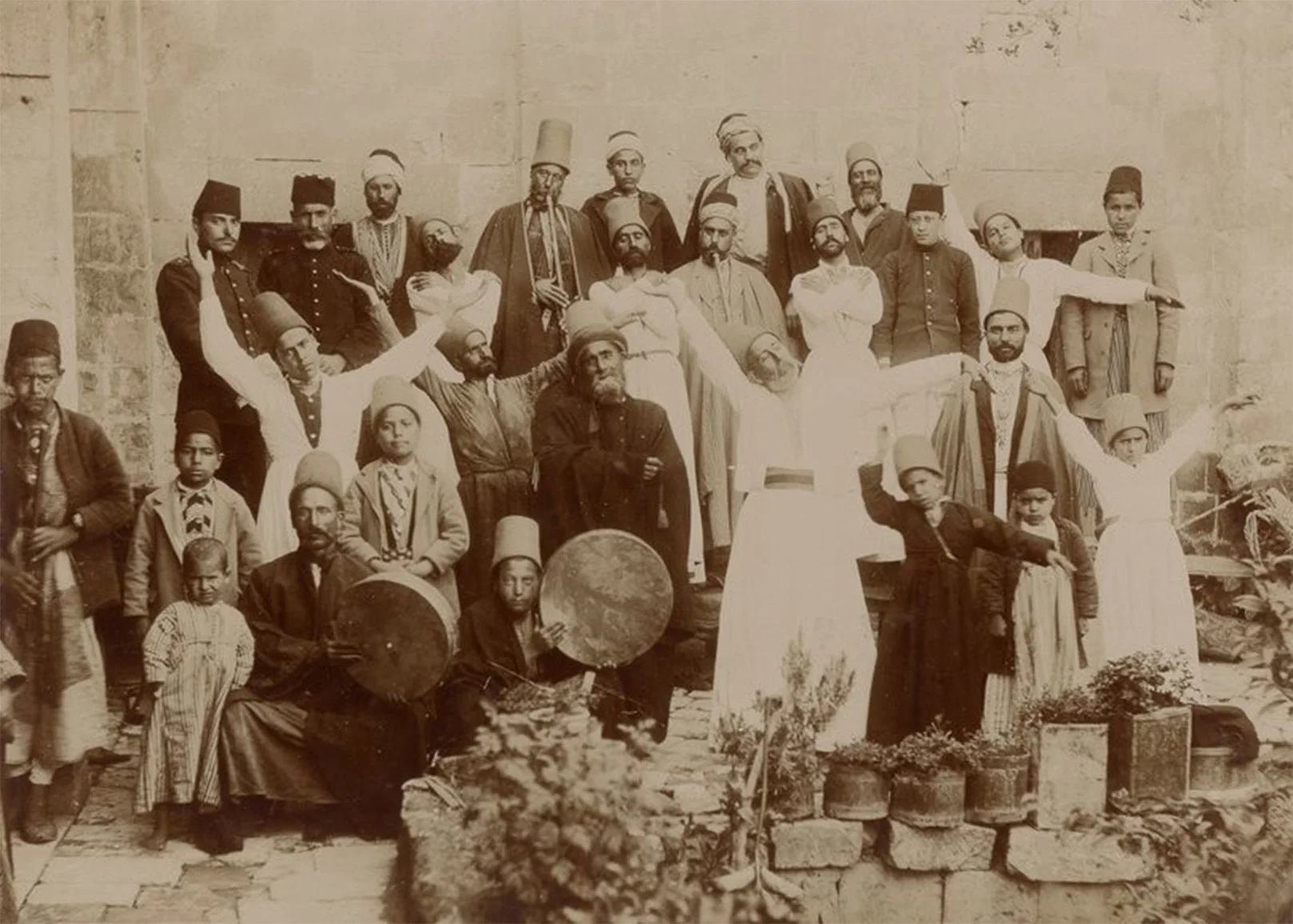
European interest in the Mevlevi continued as the order and its practices were carefully documented. In provincial centers, local communities were often photographed, as seen here in Urfa in southeastern Türkiye.
Audio recording of a sema’ of the Mevlevis of Syria
View Credits
Ajam, office du soir and Rasd, office du soir (evening services). Les Derviches tourneurs (Whirling Dervishes), recorded in Syria and Türkiye by Deben Bhattacharya. Paris, Éditions de la boite à musique, 1961. Bibliothèque nationale de France, département Audiovisuel, E-19488
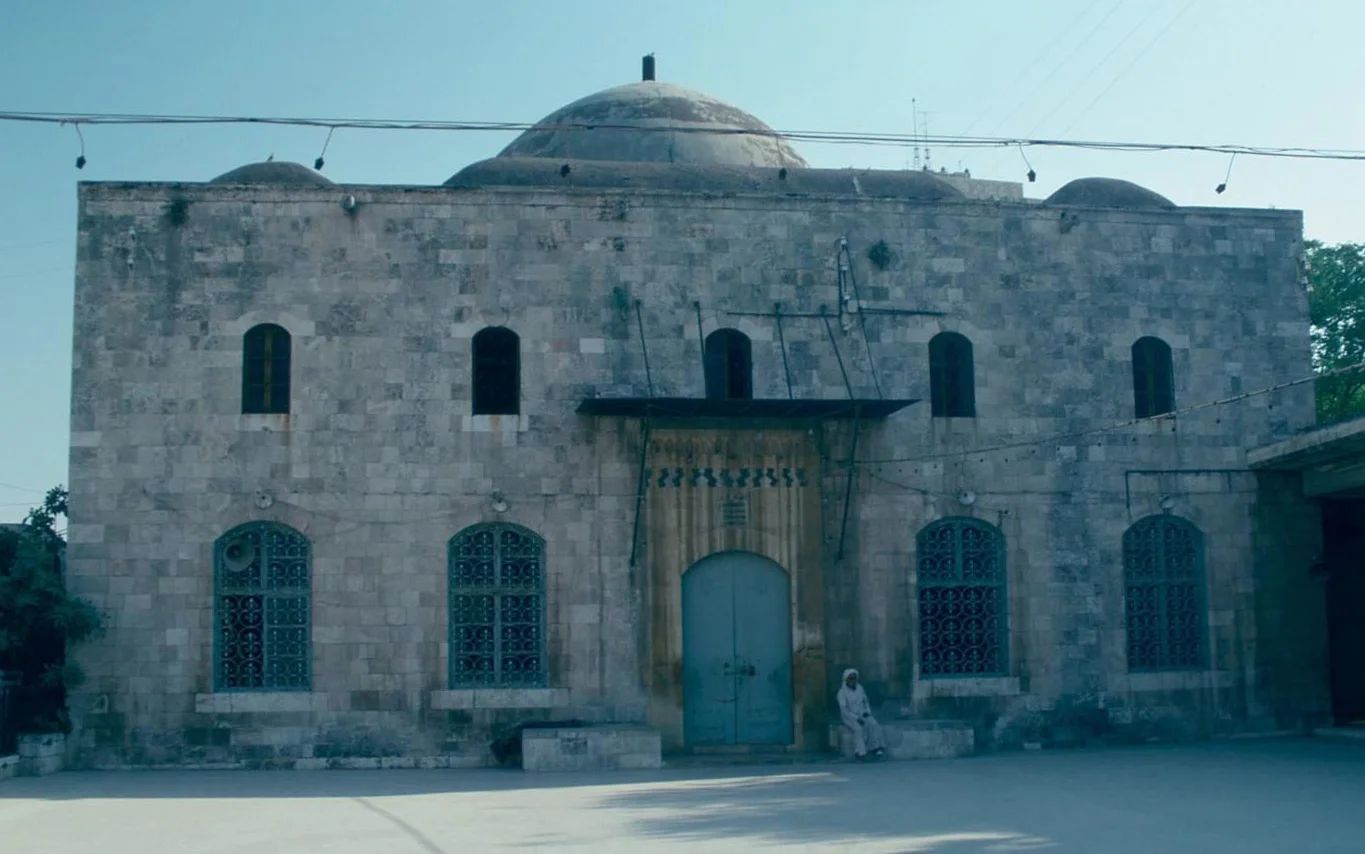
Image: Façade of the Mevlevi Sufi lodge, known as the takiyya al-mawlawiyya, Aleppo. Shirine Hamadeh, Aga Khan Documentation Center, MIT Libraries.
Throughout the Ottoman Empire, a mosaic of ethnicities and languages, each lodge kept the complex hierarchical structure inherent to the tariqa. Like many other Sufi orders, rituals and sema‘ were conducted in the local, vernacular language. For example, at the takiyya al-mawlawiyya in Aleppo, Syria which had one of the largest sema‘ hall ever built outside of Türkiye, Mevlevis would perform in Arabic.
Rumi and his Shrine in the Modern Day
The close relationship of the Mevlevis and the Ottoman ruling house spared the order from the state’s suppression of other Sufi orders, notably the Bektashis in the early nineteenth century. With the establishment of the secular Republic of Türkiye in 1923, however, all Sufi orders were banned, which forced them into a semi-clandestine existence. The next year, Mustafa Kemal Atatürk (d. 1938), the founder of the Republic, decreed the conversion of Rumi’s shrine into a museum. In the 1950s, it was renamed the Mevlana Museum, but the order is still alive and continues to operate from Konya.
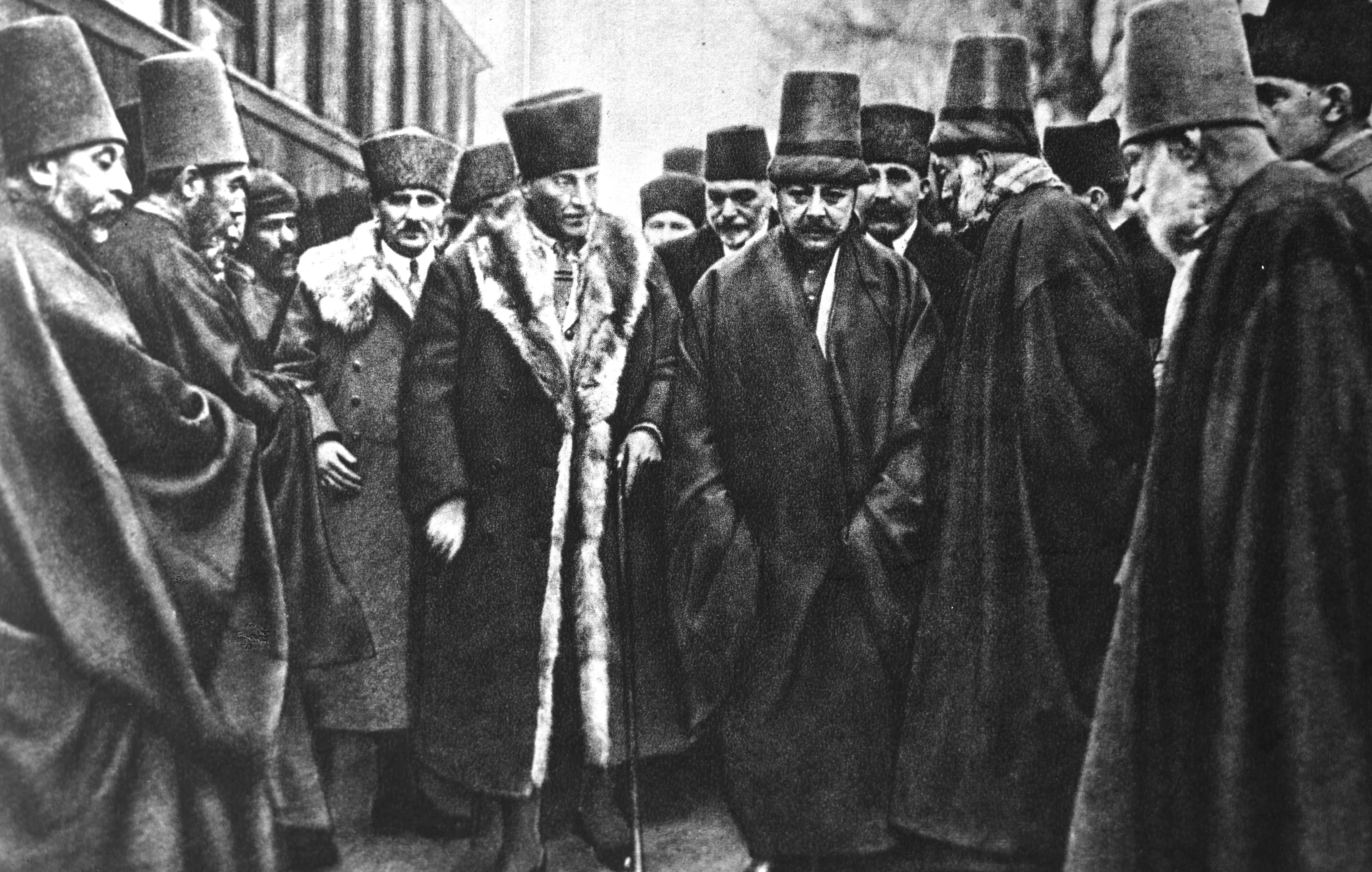
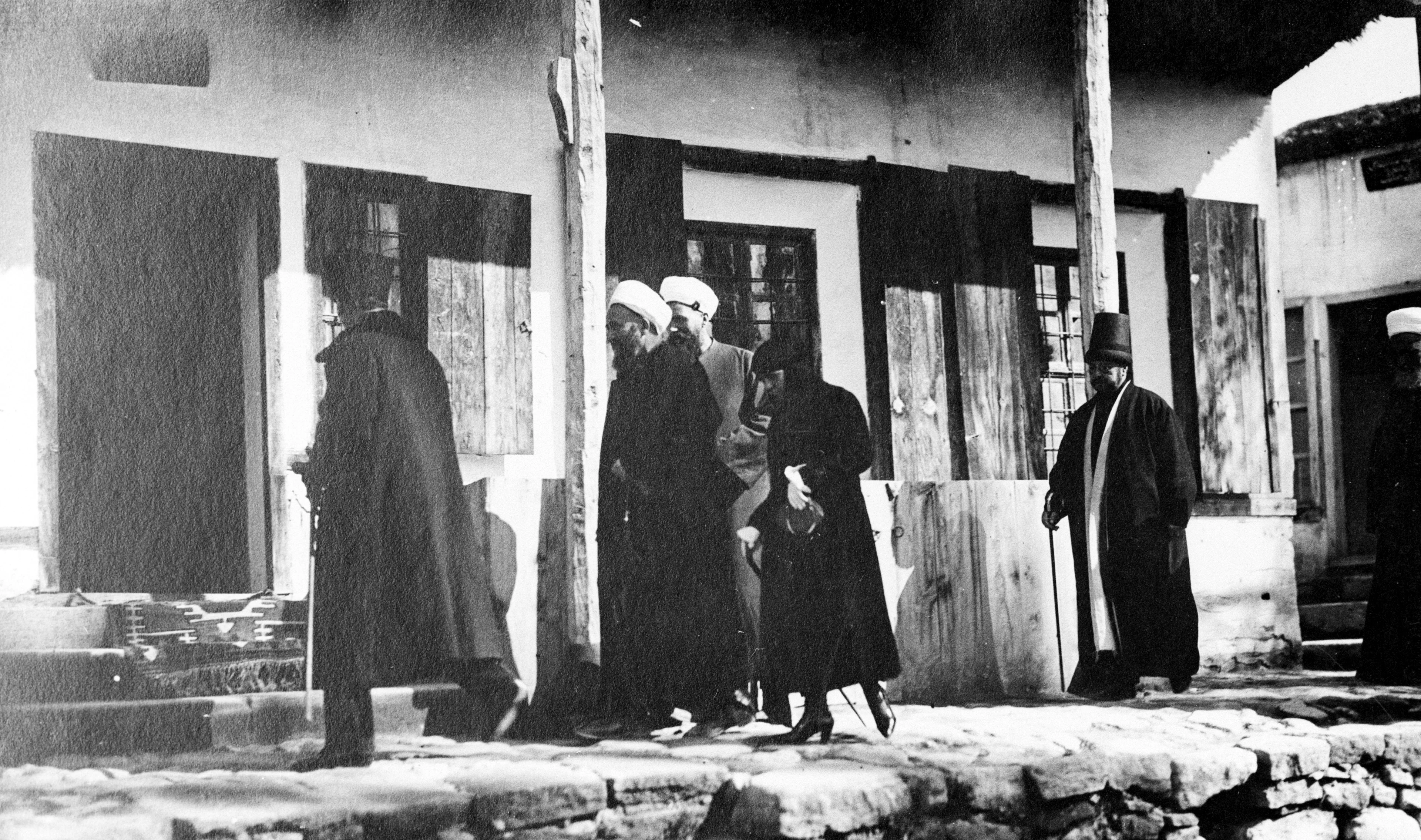
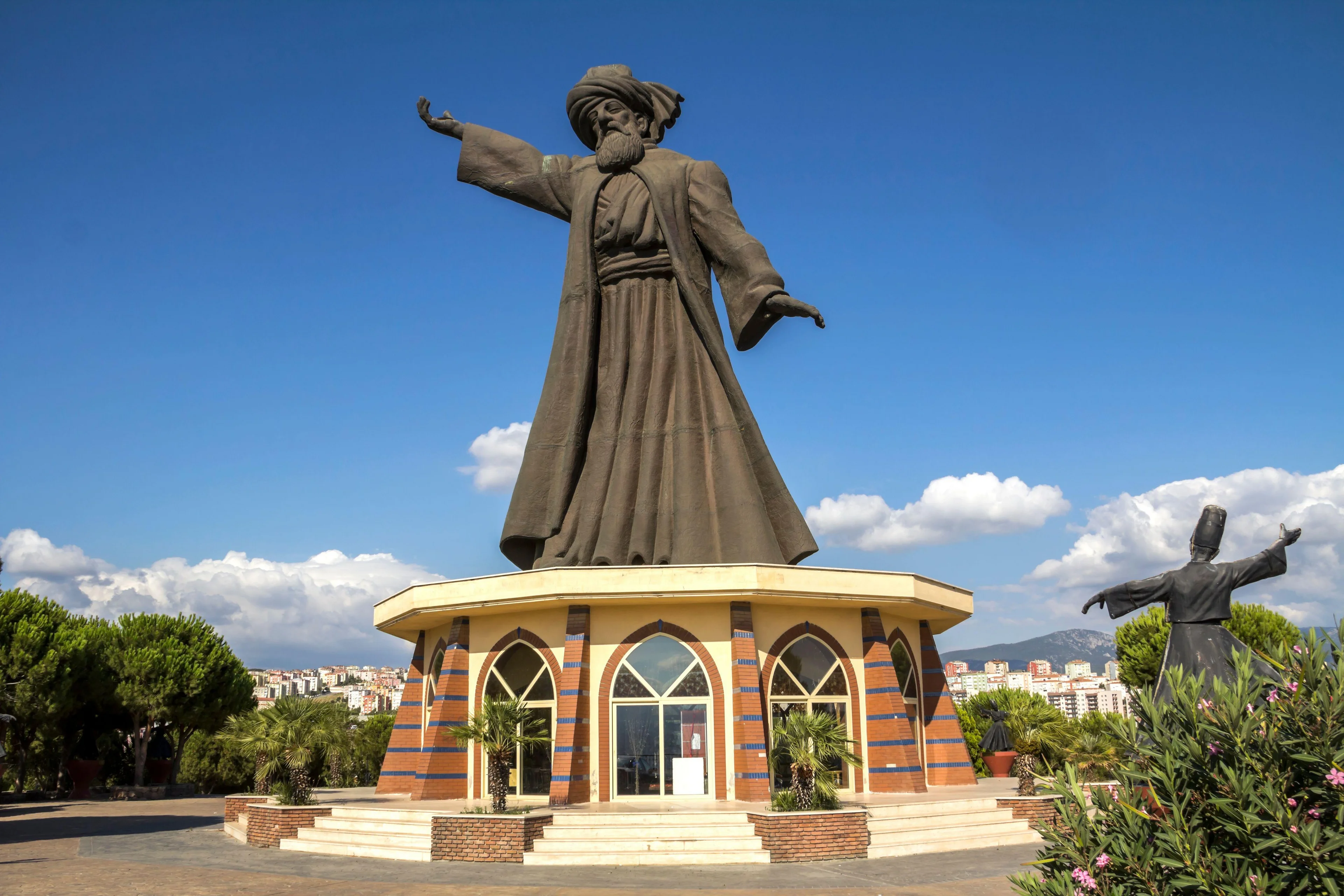
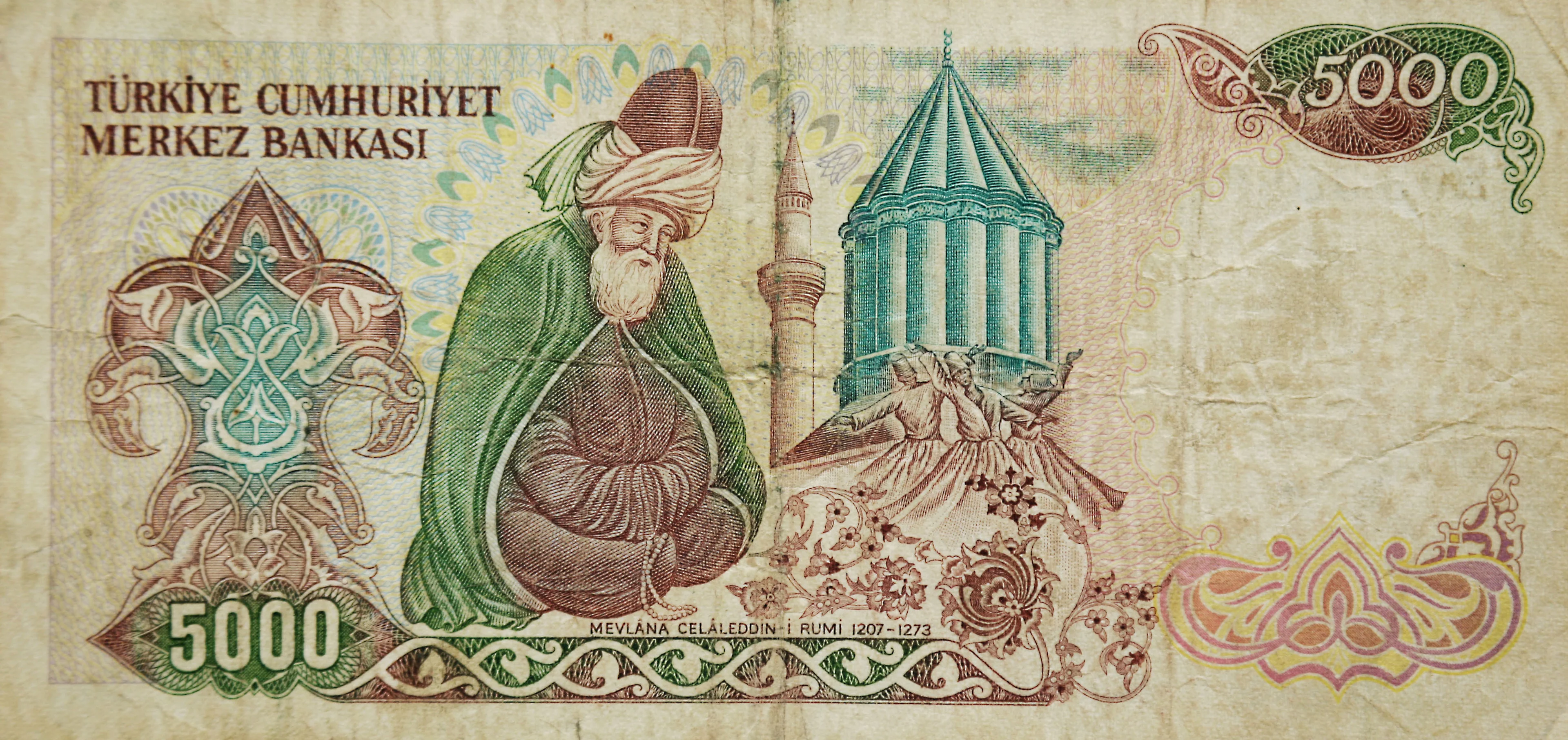
Today, the shrine is a popular destination for Turkish pilgrims as well as others from across the Islamic world and international tourists. Rumi has become a saint to many, whose baraka is worth seeking. He has also been embraced by popular culture, with his face on greeting cards, magnets, coffee cups, as well as on a Turkish bank note from 1985. A monumental statue of Rumi whirling has also been erected on the outskirts of the coastal city of Izmir.

In the 1990s, Rumi became the best-selling poet in the United States through a series of translations and reinterpretations of his Masnavi. Stripped of its association with Islam, Rumi’s poetry was transformed into a generic expression of Eastern spirituality, rather than a specific tradition, while the whirling dervishes have become globally emblematic of all Sufi traditions. They spin every Thursday evenings on the square in front the shrine to the delight of visitors, tourists, pilgrims, and Mevlevi followers alike.
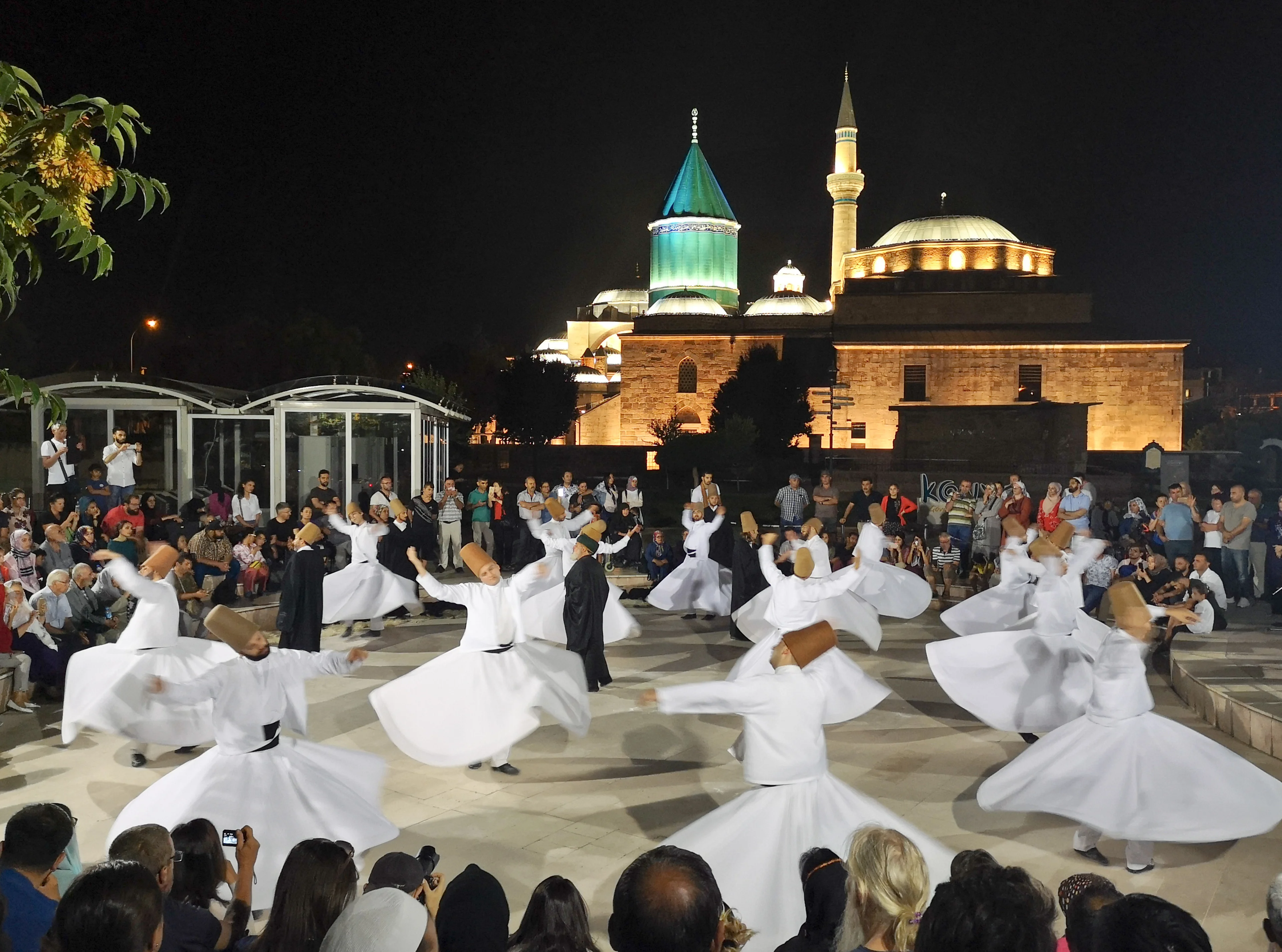
The annual commemoration of Rumi’s death, observed on December 17, also became an international phenomenon. The ceremonies, centered in Konya, attract large crowds of pilgrims and involve the performance of a sema‘ retransmitted on television, alongside recitations of Rumi’s poetry and concerts of Mevlevi music. Called Sheb-i Arus, which translates to “wedding night,” it celebrates a joyous event rather than a somber occasion as it signifies Rumi’s spiritual union with God, or his “Beloved.”
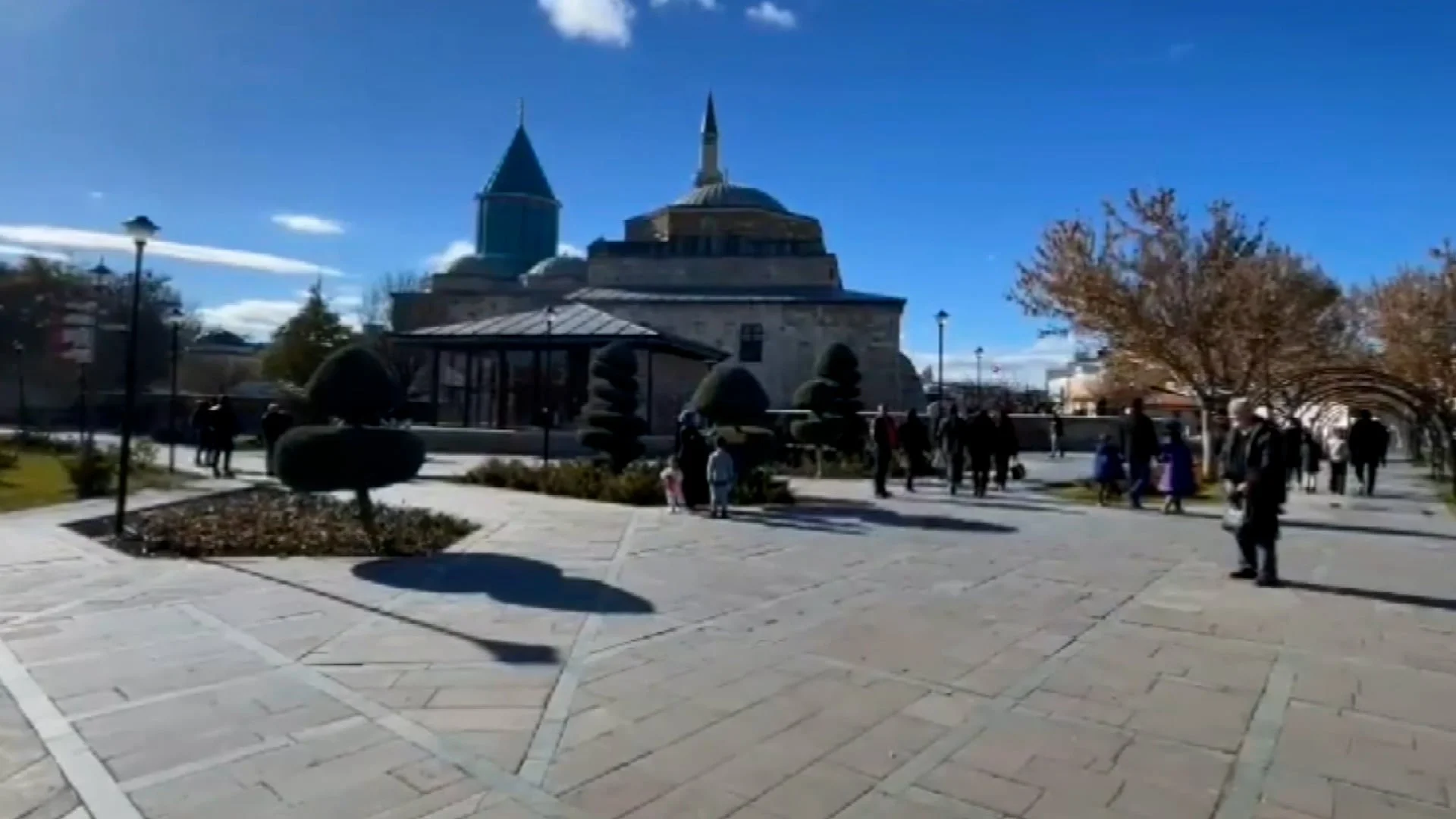 People walk on a paved path near the Mevlana Museum in Konya, Turkey, with trimmed trees and clear blue sky in the background.
View Credits
Ceremonies marking the 751th Sheb-i Arus in Konya on December 17, 2024.
Basir Gülüm, Aleyna Kartal/Anadolu Agency via Getty Images
And now it’s time
for love’s union
for God’s vision
for resurrection, everlasting life
Time for grace, for blessing
For surging pure oceans of purity
The sea foams white, casts its treasures:
Fortunate dawn, morn of the light of God!
Rumi
Locations
Explore the map or scroll to select a location.