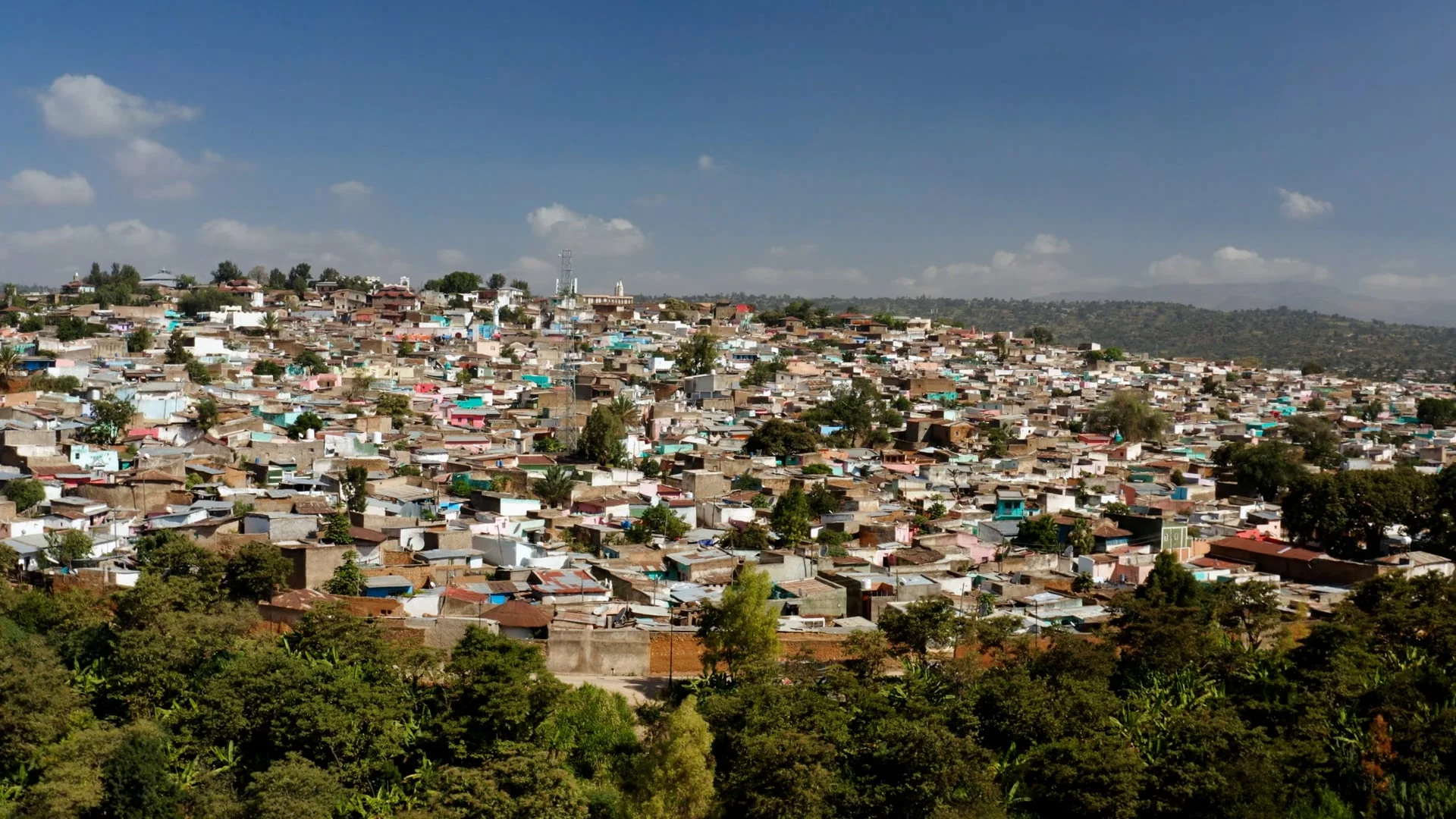
 A densely populated hillside cityscape with clusters of small, colorful buildings and trees in the foreground under a clear, blue sky.
Harar
Ethiopia
Islamic Learning and Trade in the Horn of Africa
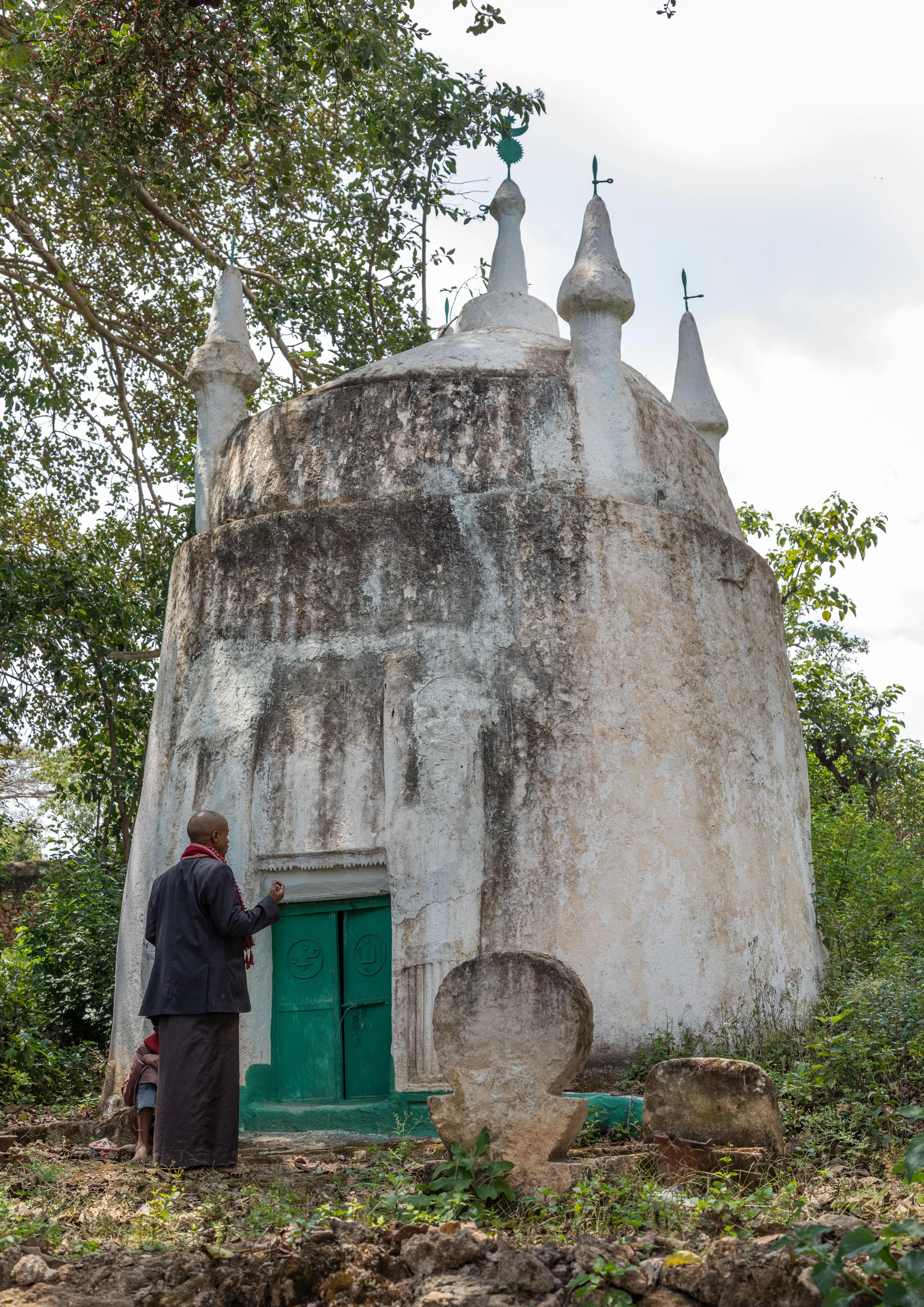
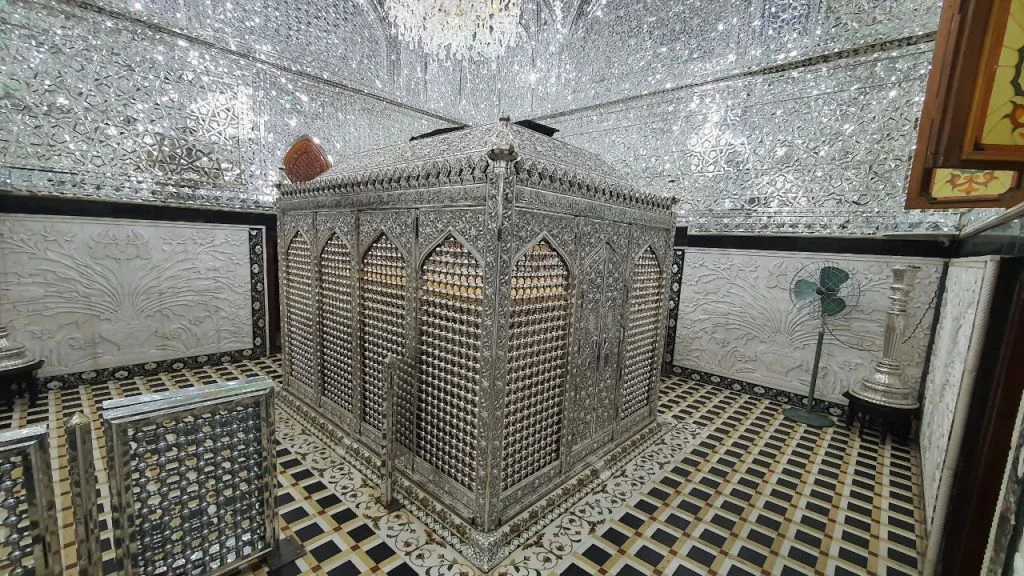
On the outskirts of the city of Harar in Ethiopia stands a tomb dedicated to an individual buried over three thousand miles away in Baghdad, Iraq: Shaykh Abd al-Qadir Jilani (1078–1166), a noted Islamic scholar who inspired the Qadiriyya tariqa.
Constructed over seven centuries after Jilani’s death, this honorific tomb is a testament to both the dramatic spread of the Qadiri order and the dynamic religious culture of the Horn of Africa during the height of the Harari Emirate (1647–1887).
A highly revered figure, Abd al-Qadir Jilani inspired one of the first formal Sufi orders, which became known in his honor as the Qadiriyya. Established in Iraq, the Qadiriyya gradually spread to Senegal, Indonesia, and as far as China, becoming a global phenomenon with millions of adherents by the nineteenth century.
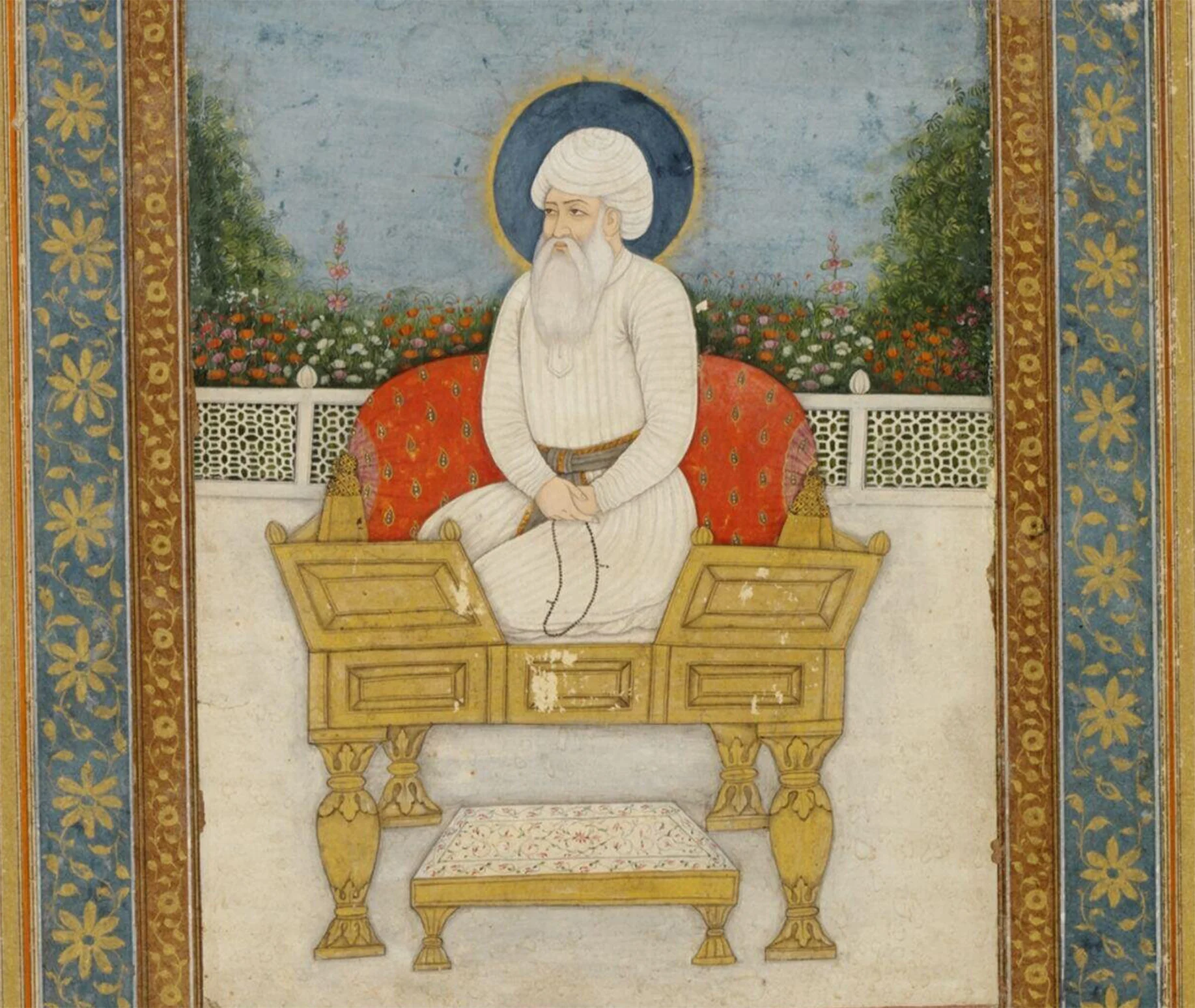
Born in the region of Gilan near the Caspian Sea in Iran, Jilani studied Islamic law in Baghdad and Mecca. Through dreams, he was inspired to preach in Baghdad, and his eloquent and egalitarian teachings widely appealed to people of all backgrounds, encouraging conversion to Islam. Jilani called for humility, piety, and social consciousness. As a result, he became known as the “Reviver of Religion” and the “Helping Pir.” His name was often invoked in prayers for relief and healing.
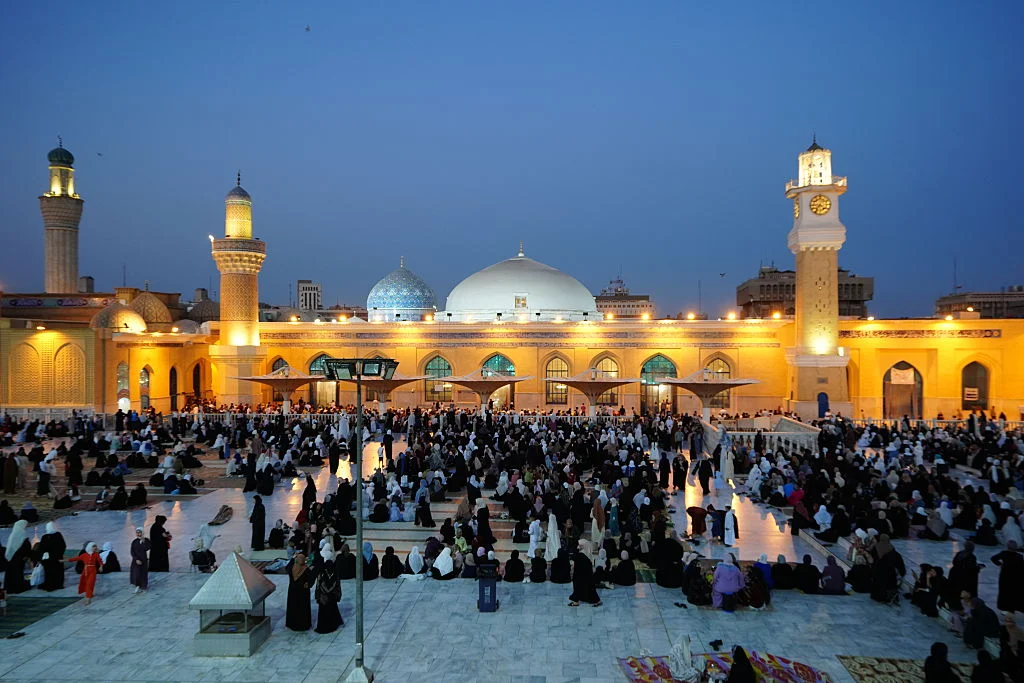
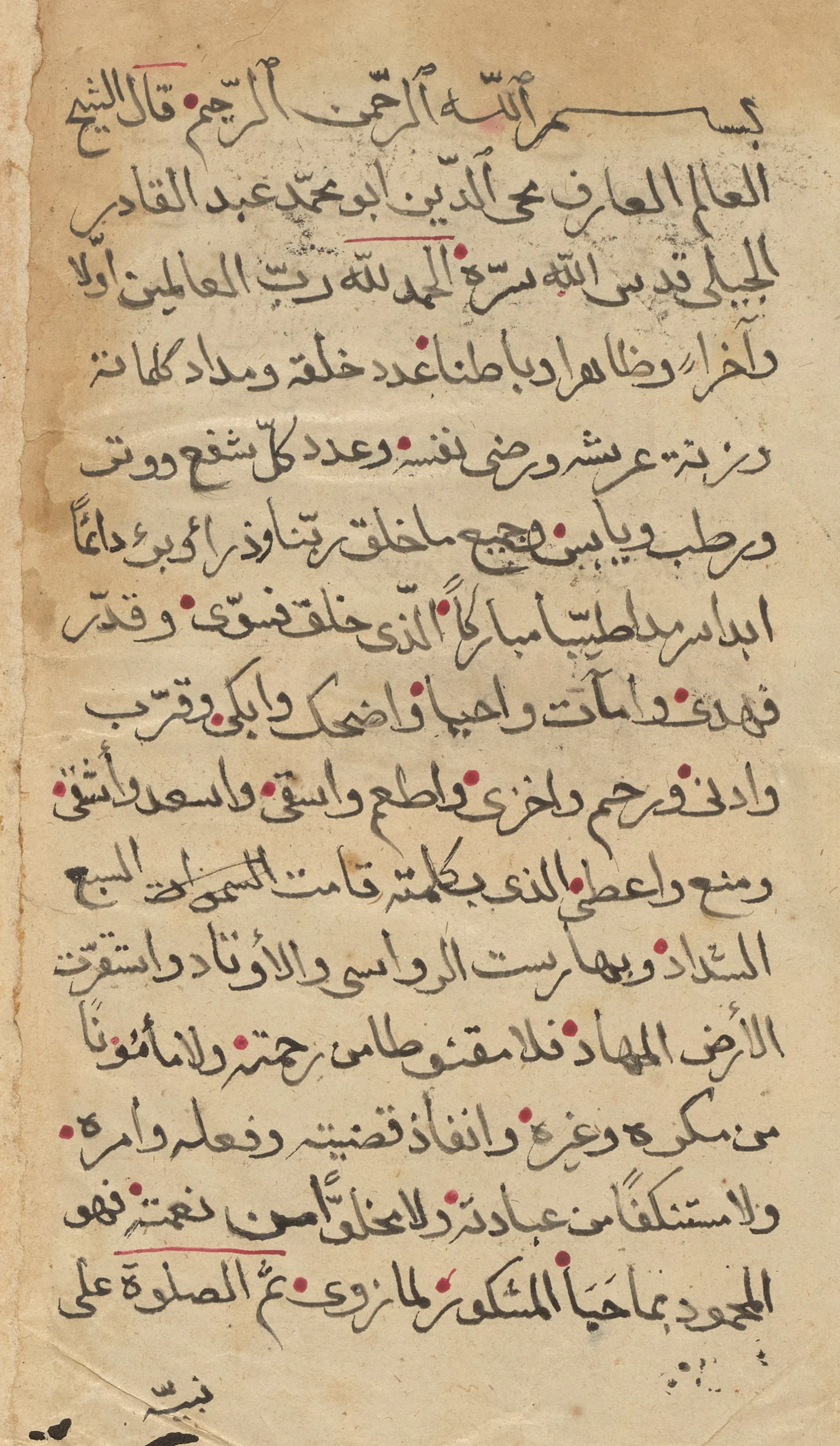
Jilani’s many followers and descendants recorded his teachings, including his numerous sermons, and they wrote extensive biographies praising his character and documenting his wondrous piety. These teachings were passed from master to disciple in a silsila (spiritual chain). Yet the Qadiriyya has a polycentric rather than a centralized structure, with regional branches that have distinct practices. As the tariqa expanded, it intersected with the larger and older history of Islam in Ethiopia.
A Historic Center of Islamic Learning
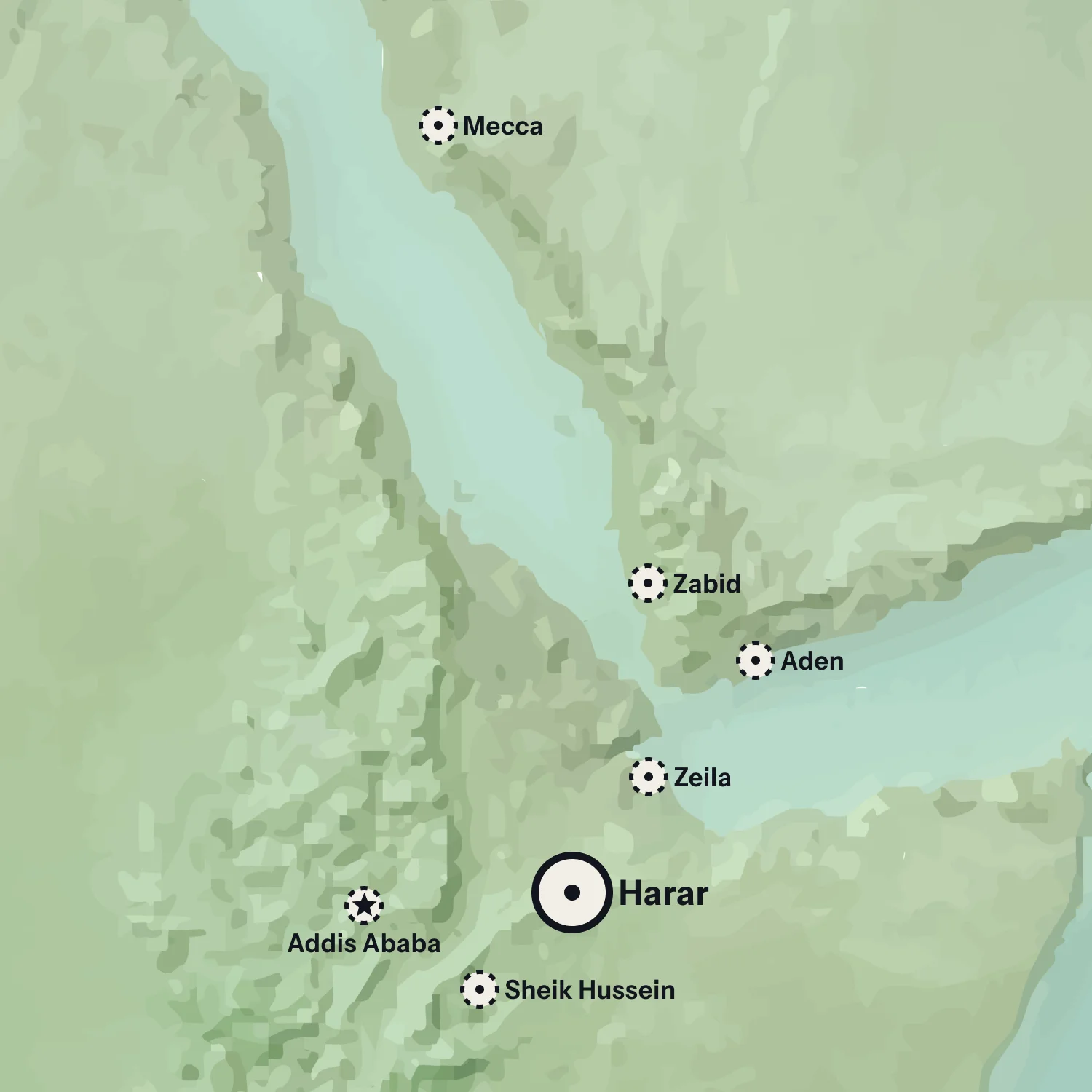
While Islam first reached Ethiopia as early as the seventh century, it gradually grew along trade routes that connected the highlands of Ethiopia to the vast mercantile networks of the Red Sea coast, including the Hijaz (western Arabia). Alongside these trade routes, Harar arose as a major site of Islamic learning, especially after Shaykh Abadir Umar al-Rida and his many students migrated from the Hijaz to Harar by 1216. Local tradition credits him with establishing the city and leading military campaigns.
Shaykh Abadir’s tomb and religious institution (zawiya) are the most important within Harar. Additionally, hundreds of tombs of his students, subsequent scholars, and notable figures (known as awach) radiate through the city and surrounding countryside, leading to the city’s reputation as a Madinat al-Awliyaʾ or “City of Saints.”
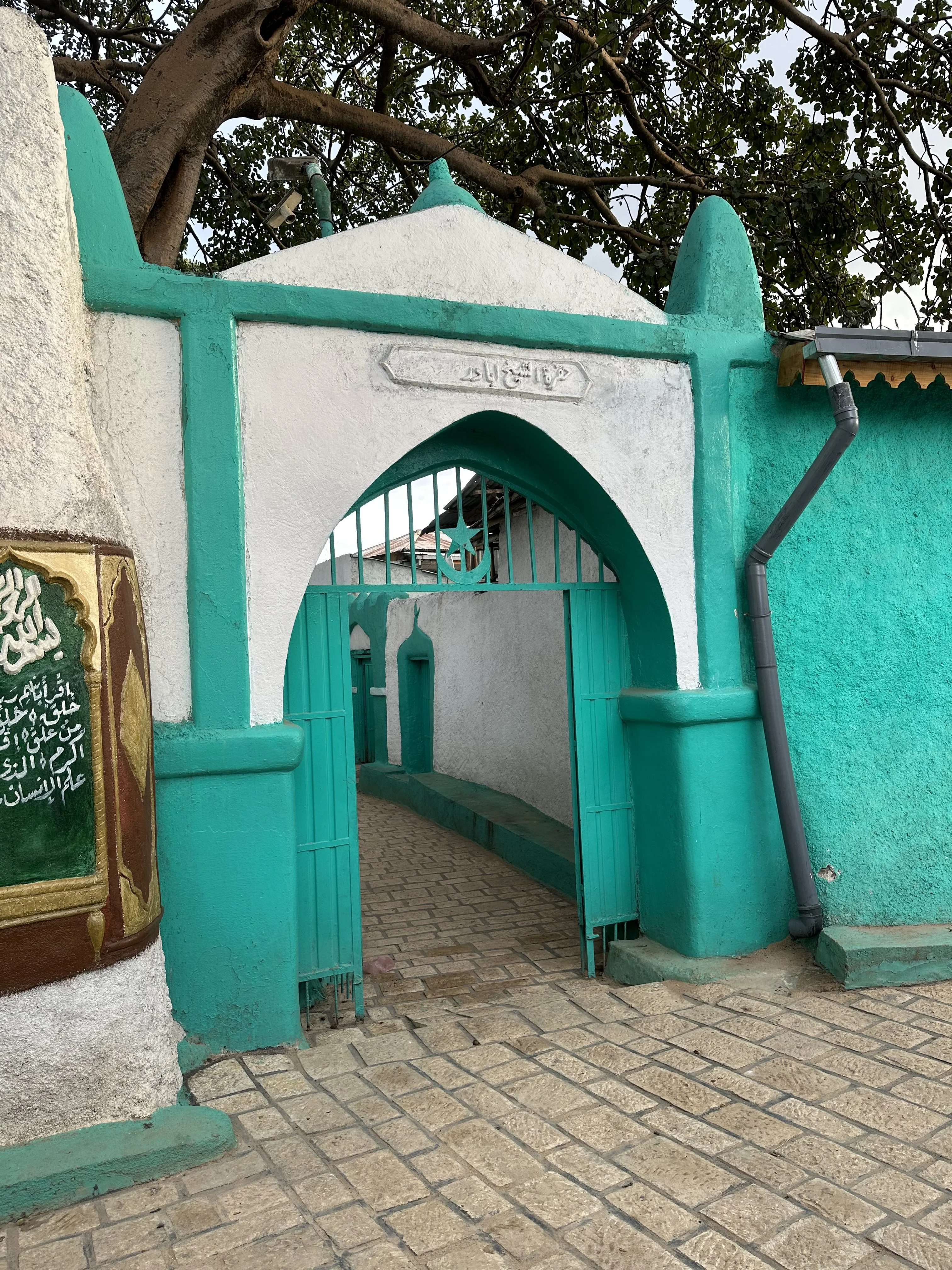
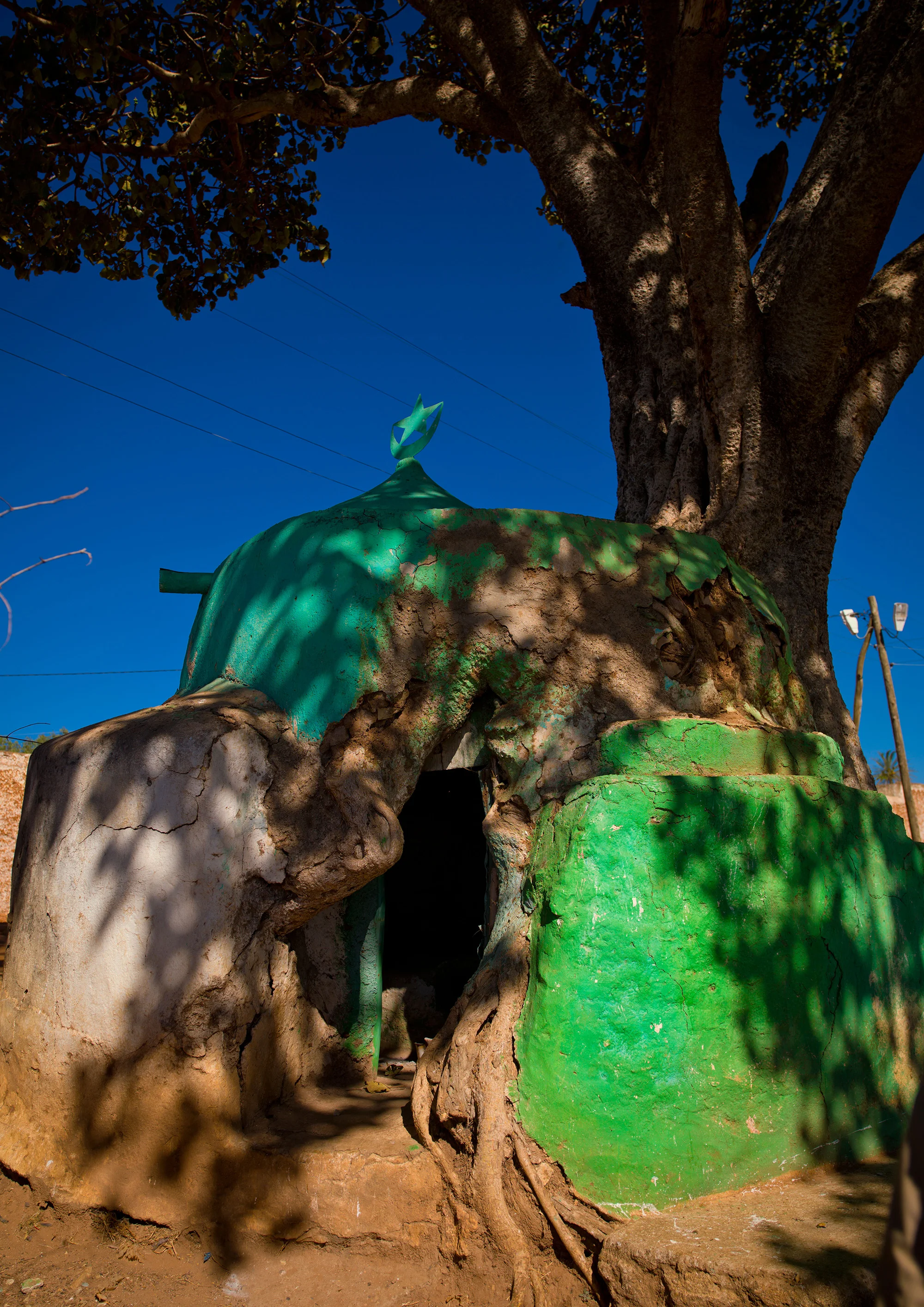
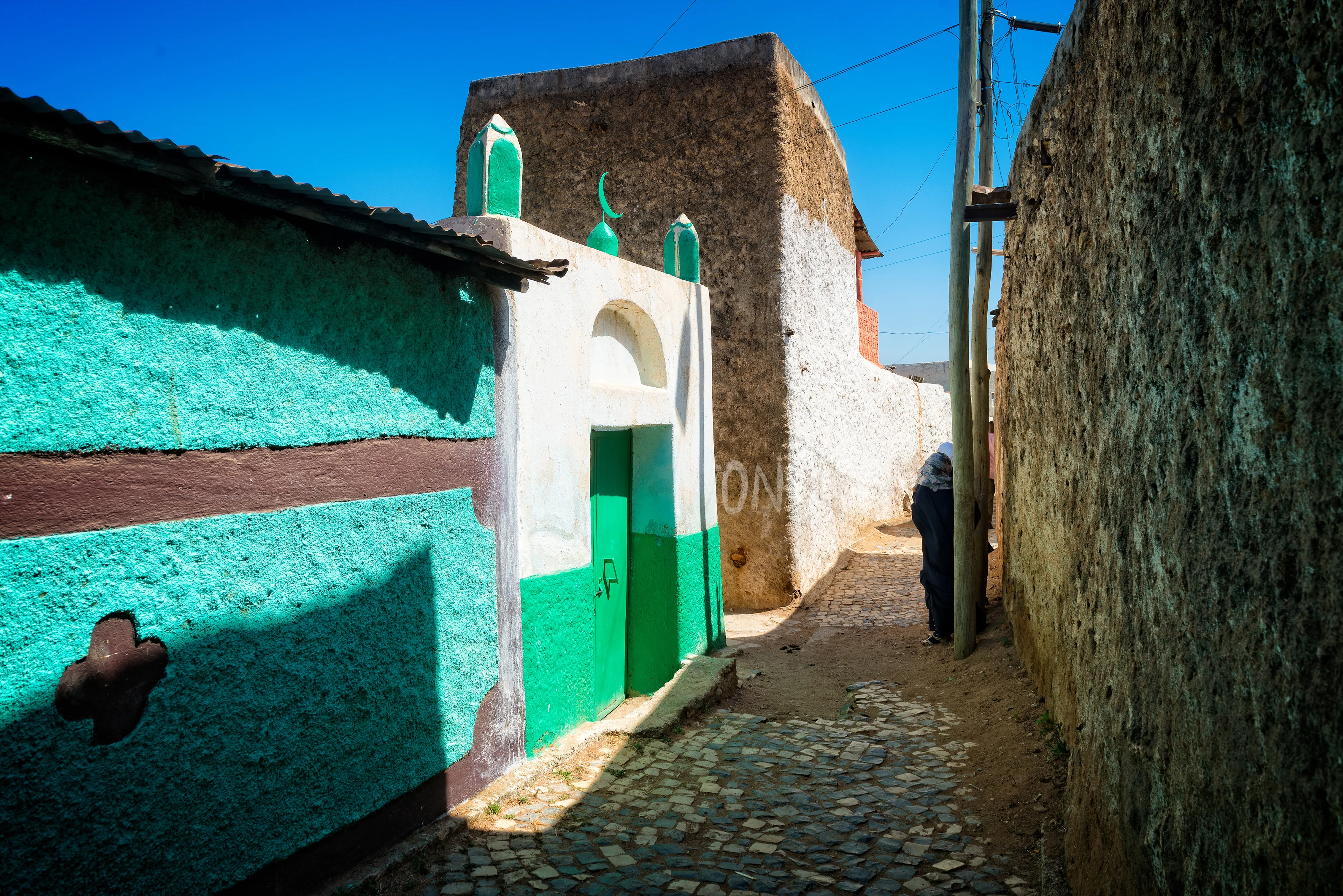
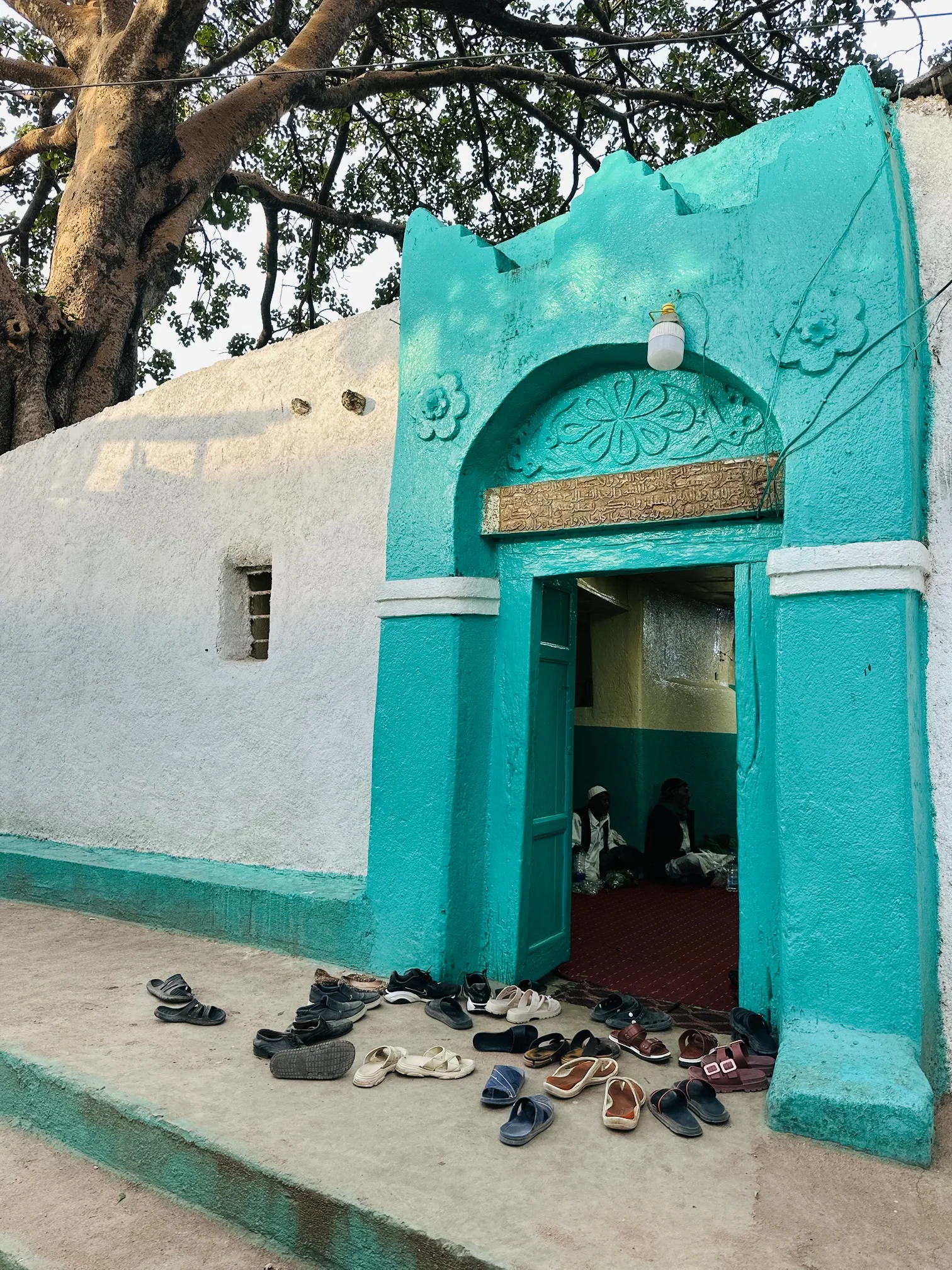
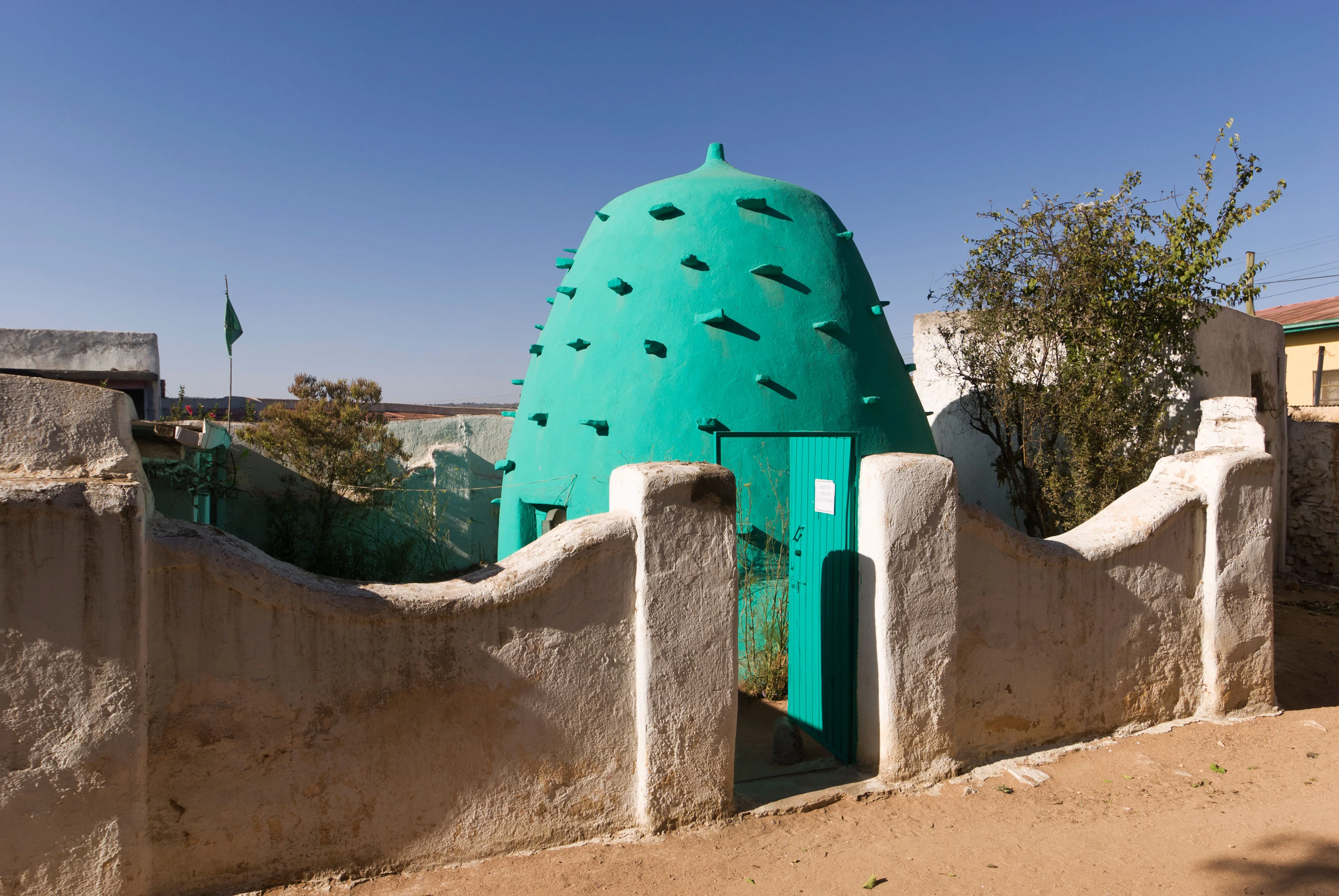
These monuments vary in formality, size, and shape, from a designated tree to conical, whitewashed structures (qubbi). Low doorways require one to bend when entering to show respect for the aw (Harari for “father” or “saint”) buried within. Qubbi are often painted vivid green, a color long associated with Islam and the Prophet Muhammad, as seen in this more modest tomb and the more prominent structure dedicated to Nur ibn Mujahid (d. 1567). He was an amir of Harar who fortified the city and pushed back against invading forces. The awach are focal points for spiritual and social practices. They are regularly visited by individuals seeking baraka and are also sites for reciting and learning the Qur’an.
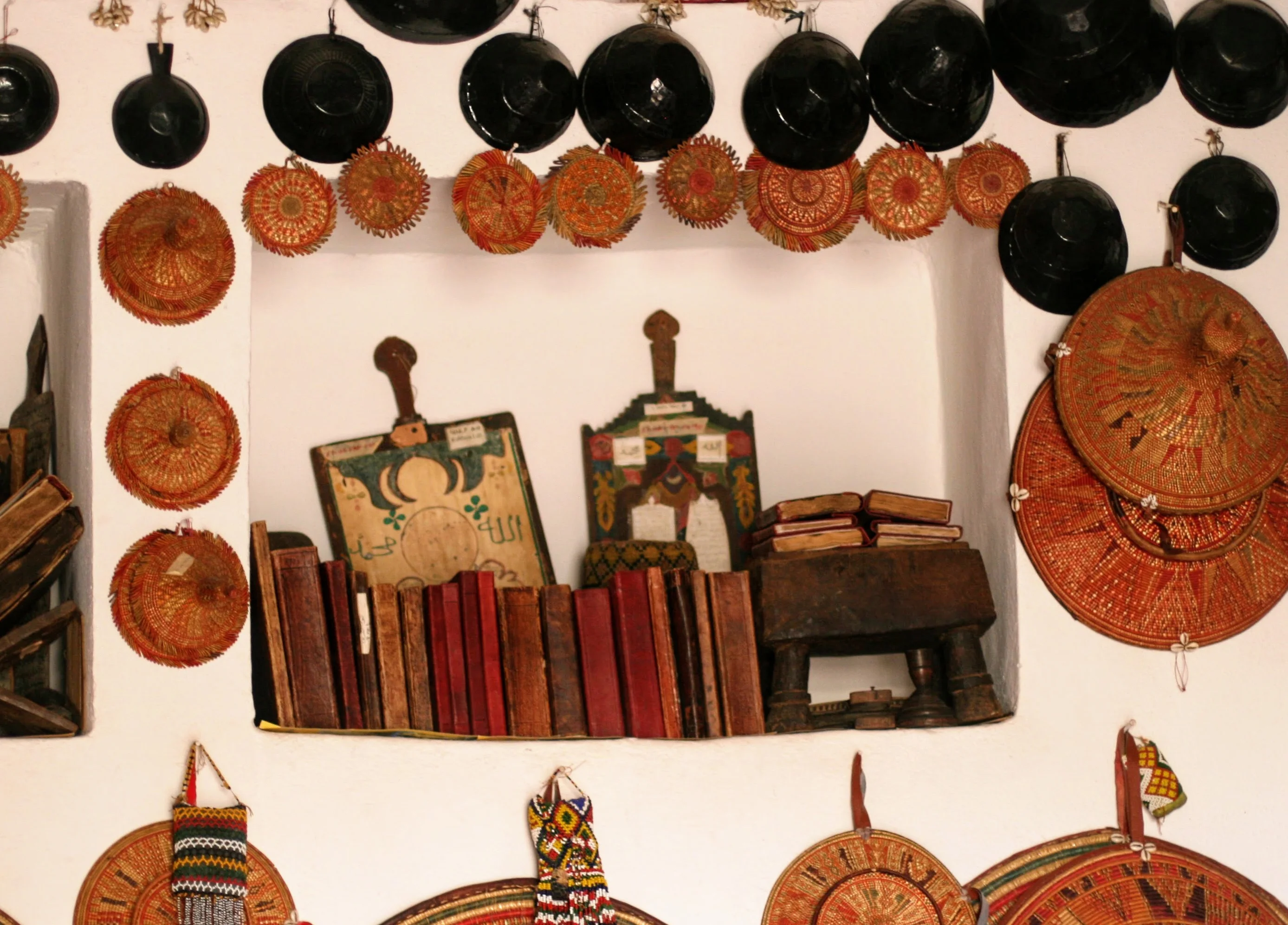
Hundreds, if not thousands, of manuscripts were copied in Harar from the mid-seventeenth century through the late-nineteenth century during the Harari Emirate period. Many were kept within wall niches in traditional Harari houses or dedicated to the numerous tombs and mosques within the city. From copies of the Qur’an to devotional and legal texts to scientific treatises, the depth and breadth of these manuscripts underscore the importance of Harar’s intellectual tradition.
A Momentous Visit
The reputation of Harar extended across the Red Sea, prompting a famous visitor—Abu Bakr ibn Abd Allah al-Aydarus (1447–1508). As the principal Qadiri shaykh in Yemen, Aydarus first introduced the tariqa to the Horn of Africa and is considered the father of the order in Ethiopia. He is particularly associated with the burning of incense, a practice still done at the tombs of the awach.
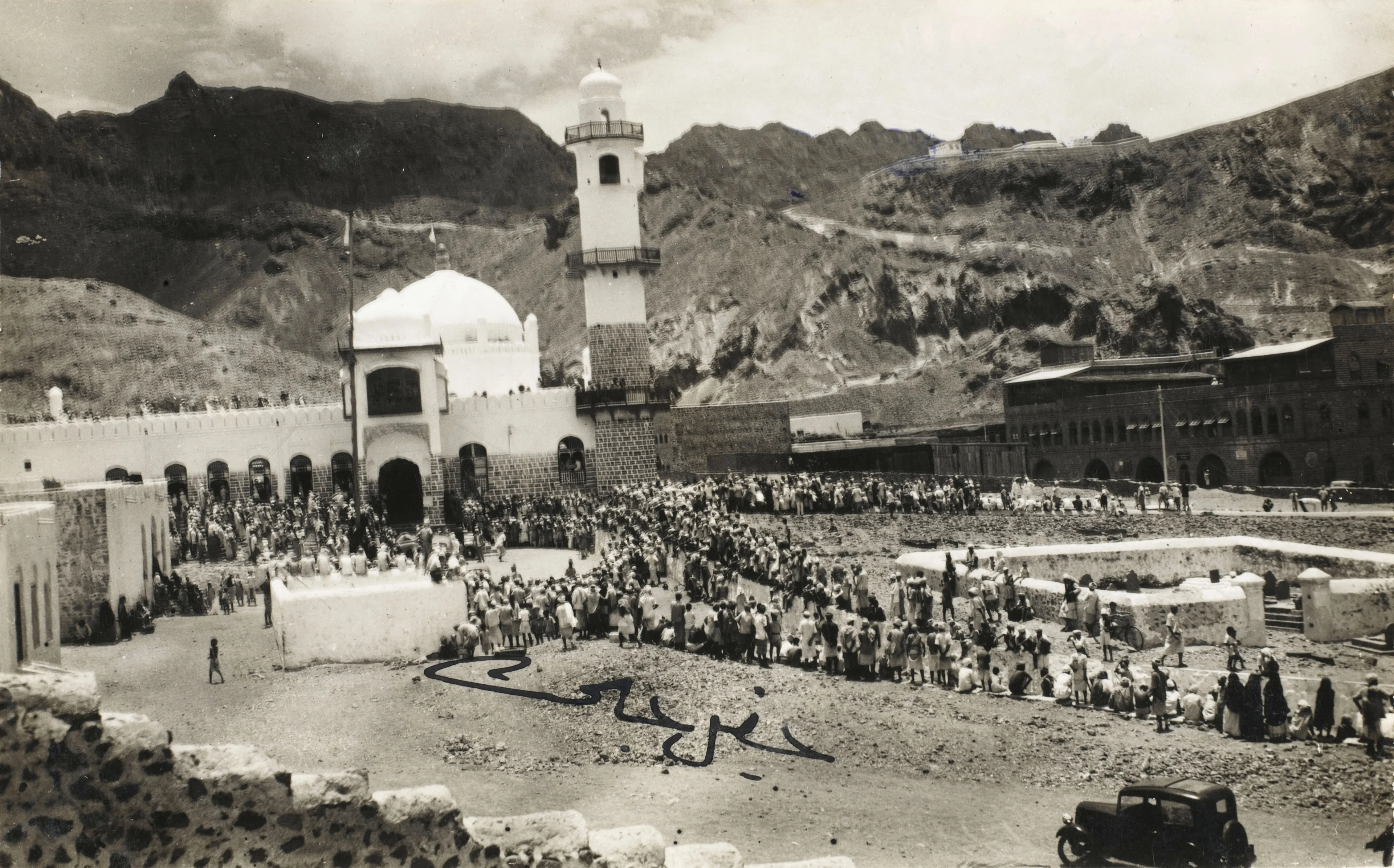

Returning from Ethiopia to Yemen, Aydarus is credited with bringing coffee to southern Arabia as a drink that allowed disciples to concentrate for long periods of prayer and study. The drink gained in popularity over the following centuries. By the eighteenth century, the booming coffee trade fueled the rise of the Harari Emirate, as coffee was its major export. At this time, many of the amirs of Harar also embraced the Qadiriyya, and their sponsorship ignited the tariqa’s diffusion across Ethiopia.
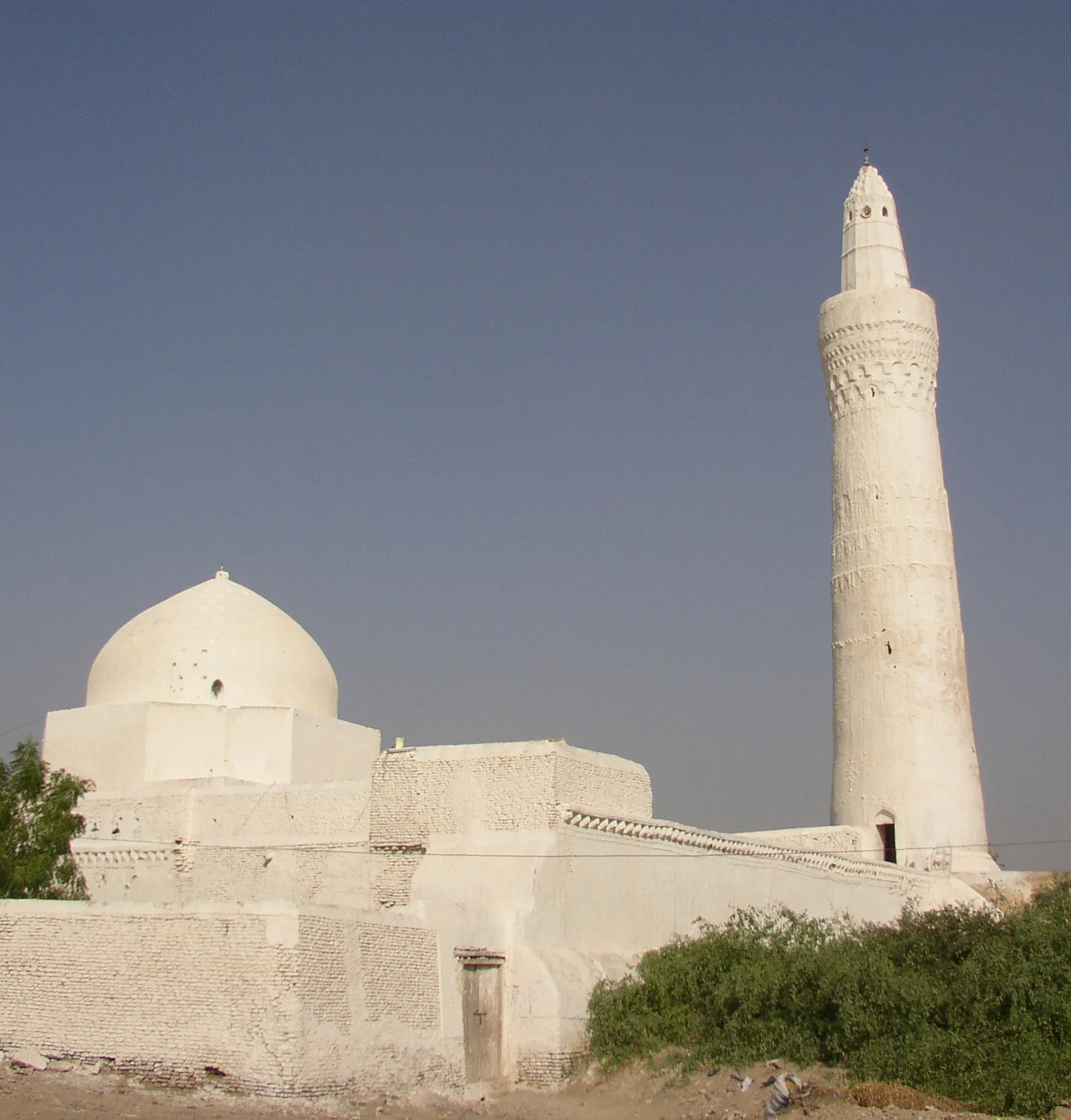
A Qadiriyya “Lighthouse”
When Shaykh Hashim ibn Abd al-Aziz (d. 1765), the grandson of Harari Amir Hashim ibn Ali ibn Dawud (r. 1662–1721), traveled from Harar to Mecca for the hajj, he encountered the Qadiriyya order in Yemen. He would later spend years studying under important shaykhs in the city of Zabid.
Upon his return to Harar, Shaykh Hashim became the principal Qadiri shaykh of the city. He shared teachings specific to the order by preaching and writing texts in both Arabic and Harari, the local language.
One of his most famous compositions was the Fath al-Rahman (Inspiration of the Merciful), a text in praise of the Prophet Muhammad. It was copied widely in Harar, even during Shaykh Hashim’s lifetime, alongside other devotional texts. The Fath al-Rahman shares certain similarities with and directly quotes from the Dala’il al-khayrat (Waymarks of Benefits) by Muhammad b. Sulayman al-Jazuli (d. 1465), arguably the most popular prayer book in the Islamic world to the present day.
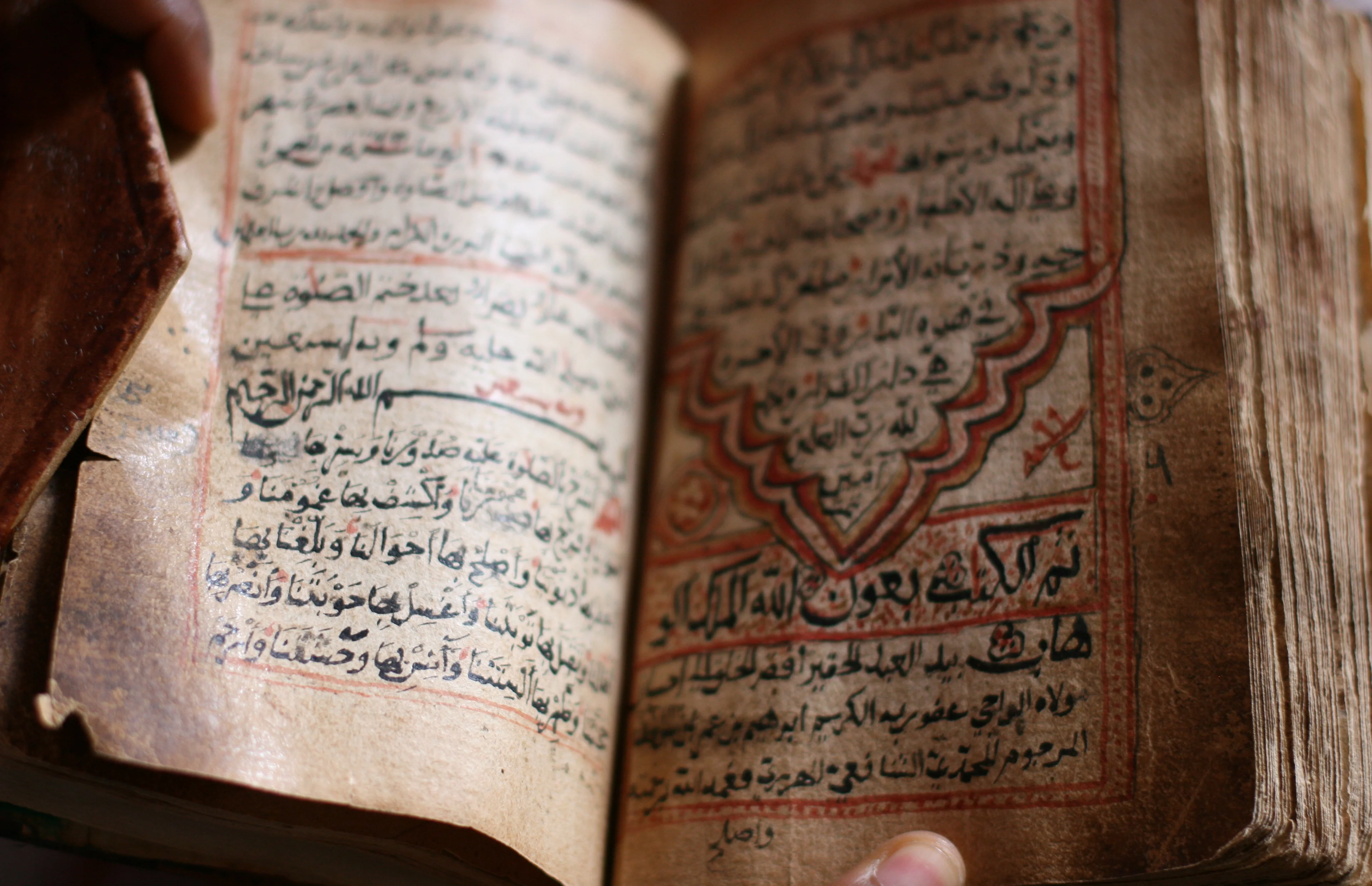
A Qadiri Prayerbook from Harar: The Fath al-Rahman
The Fath al-Rahman and other prayers are sung in traditional Harari zikri (Harari for dhikr) during mawlid gathering and visitations to the graves of shaykhs (ziyara), important features of Qadiri practice. In Harar, mawlid recitations are part of multiday wedding ceremonies, and zikri is regularly performed in homes, at mosques, and at the awach as well as during Eid celebrations. Several other devotional poems dedicated to the Prophet are performed during these gatherings, including the Qasida al-burda (Ode to the Mantle) by al-Busiri.
 A man in a green jacket and colorful turban sings into a microphone, flanked by two men in white wearing caps who are singing along and clapping.
View Credits
Video courtesy of Aw Sofia Media
Expanding Beyond Harar
The support of the Harari amirs allowed the tariqa to expand across the Horn of Africa. For instance, Amir Abd al-Shakur ibn Amir Yusuf (r. 1783–94) sponsored a small symbolic tomb to Abd al-Qadir Jilani at Dirr Sheik Hussein, over 145 miles from Harar in southeastern Ethiopia. The mosque was already a major place of pilgrimage as it hosts the grave of Somali Shaykh Nur Hussein, who is credited with having introduced Islam to the region in the thirteenth century. This commemorative monument became a place for Qadiri devotional practice in the region—a way to connect locally to and engage with the blessings of the eponymous founder of the order.
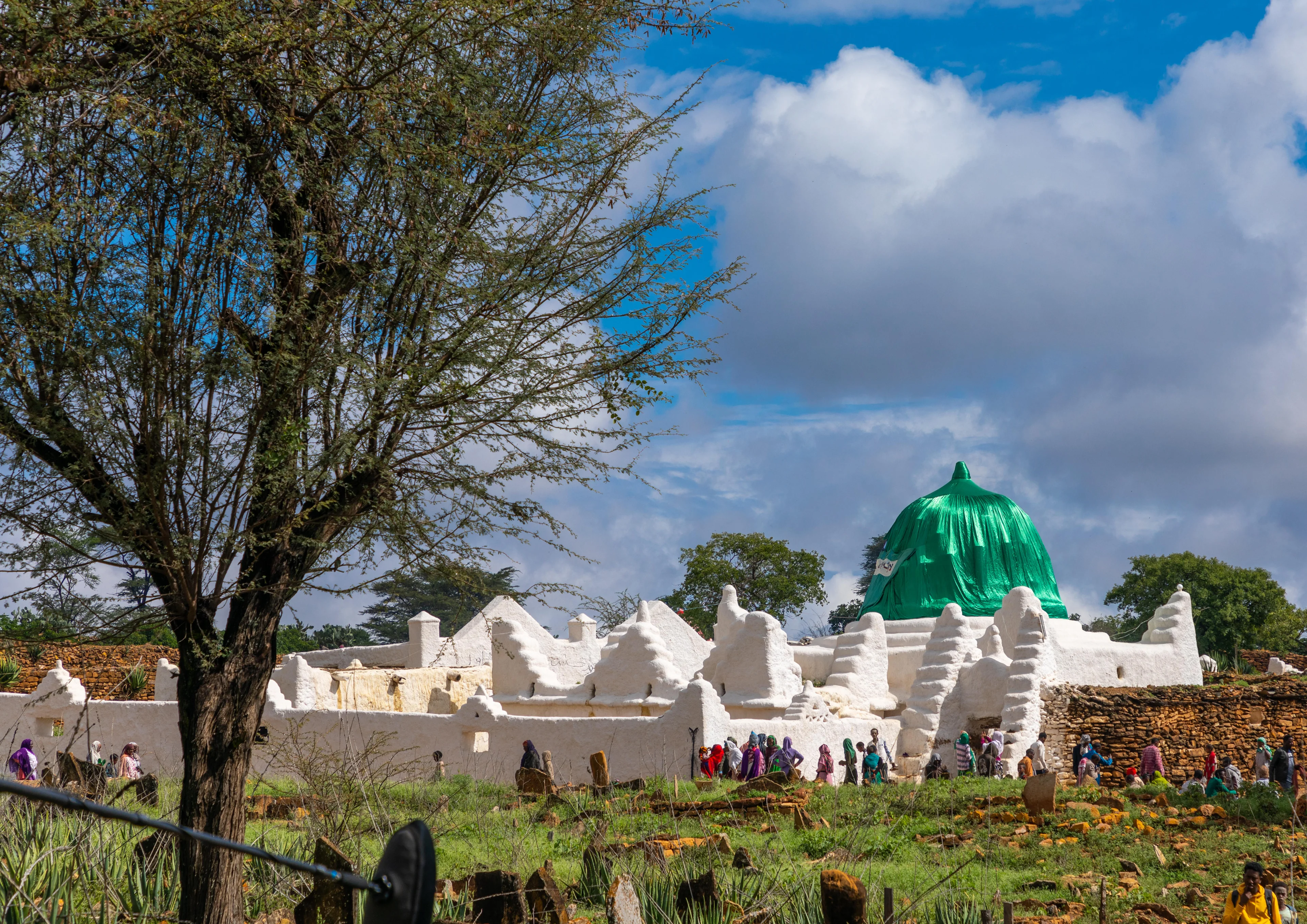
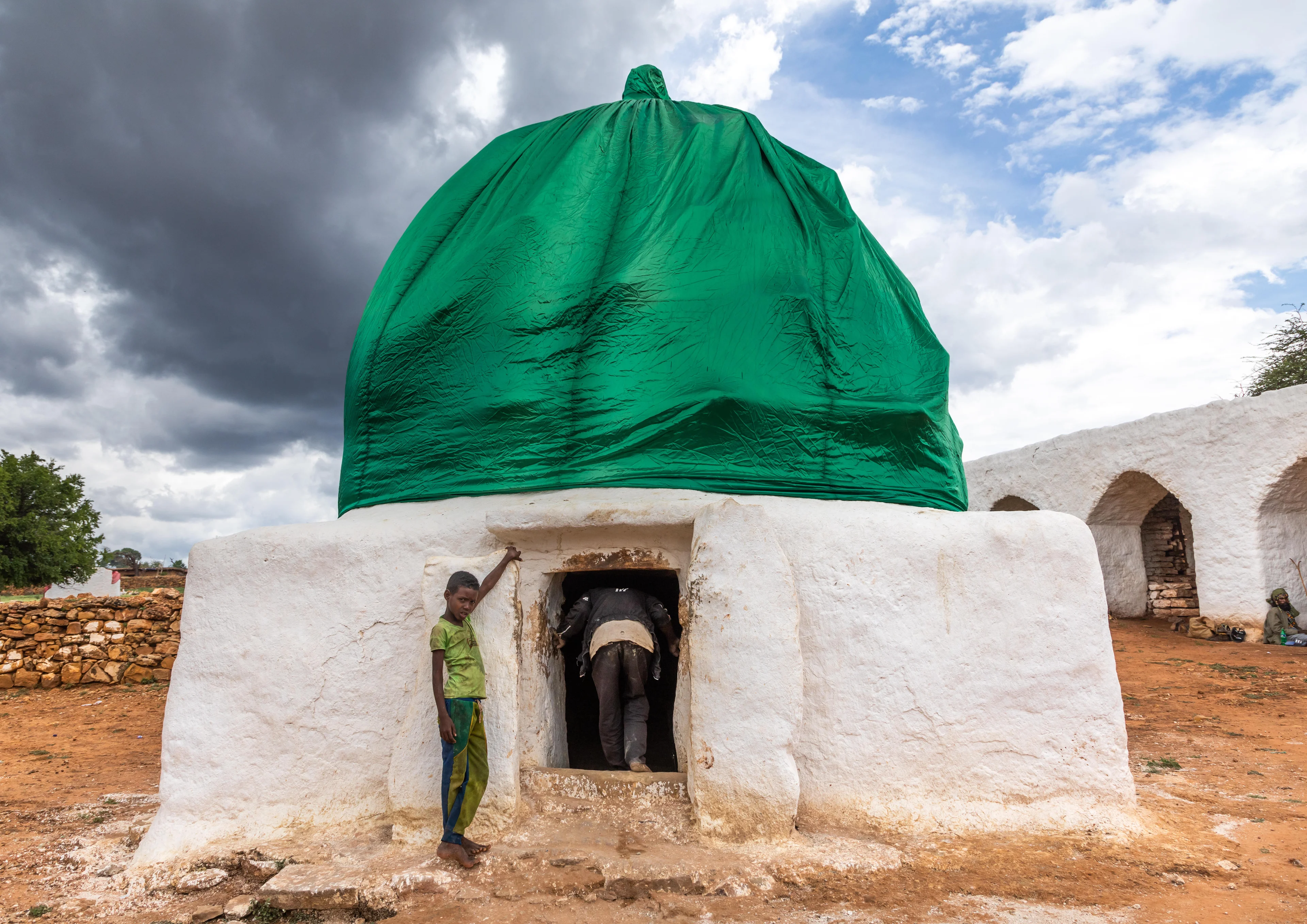
Amir Abd al-Shakur ibn Amir Yusuf also employed Qadiri shaykhs, who preached throughout the Horn of Africa. They are credited with encouraging the conversion of nomadic Oromo populations to Islam around Harar and with the spread of the order across Ethiopia. The Qadiriyya’s focus on egalitarianism and devotion appealed to people from across all social spectrums. In practice, there were numerous regional variations. Harari Studies expert, Professor Ahmed Zekaria, reflects on Harar’s long history and its devotional practices.
 A man with a gray beard sits in a patterned armchair, wearing a gray blazer, light shirt, and khaki pants, in front of a geometric-patterned background.
View Transcript and Credits
Welcome from Habesha, Ethiopia, Abyssinia these are three different names for land of origins.
Ethiopia is known for it is biodiversity as well as bio-cultural diversities and religious diversities especially when it comes to Islam.
The Red Sea was just like a bridge which was not affecting crossing and so the relationship between Ethiopia and the other side of the Red Sea was amicable through centuries.
Harar was founded about 1000 years ago and it was established in a small hilly place which had a good effect on environmental impact because surrounding area is infected by malaria.
So Harar was free from malaria and it was surrounded by a river system which establish a strong agricultural community based on the agricultural product, Harar became famous for export items like coffee.
So the connection between Yemen and Ethiopia was a strong and Harar was established as a trading center between the coastland and the highland and it thrived and became strong community.
And preachers used to come, traders used to come to Harar and in 10th century we anticipated the coming of Abadir with his 45 followers who established their centers surrounding Harar and then beyond.
These centers became strong Islamic educational hub and focus, so they were able to spread Islam easily in surrounding area of Harar. In the 16th century Harar became extremely important because of Imam Ahmed Al Ghazi who spread his power throughout the Horn of Africa.
At the same time, we encountered the first Sufi father who’s introduced the Qadiriyya to Ethiopia.
His name is Abdullahi Aydrus.
He came to Harar early in 16th century and his followers became strong especially in 17th century.
Hashim Sheikh Hashim Abd al-Aziz became an important figure in the region. He in fact produced different texts on Afkar and litanies of the of the Qadiriyya and still his books are extremely important to the Hariri community.
Fath al-Rahman and Mustafa, which are recited every almost every day in the community.
So Harar by and by became the center of Sufi tariqa became stronger and now today Harar has more than 400 centers, shrine centers, which is supposed to be Medina al-Awliya, one could say the city of Awliyas.
The lovers of Allah, 40 of them are reserved for women.
Some of them are extremely important centers where women used to go regularly.
These centers are now still active in a sense as a teaching center where individuals come together and recite Quran.
These centers are known in horror as awach which denotes plural form of fathers.
Because the fathers used to come together early morning and stay after midday together.
They used to have different purposes in in solving societies problem.
So these centers produce lots of manuscripts which are now scattered all over the world.
They were centers for needy individuals who were fed by contribution of the community.
So these centers were extremely had their importance in different aspect of Harar society and still they are considered as identity markers for every Harari individuals.
These centers are extremely important for the city of Harar as a school, for Islamic education, as a Medical Center, as also social hub especially for the elderly to come together every morning and have their rituals, ritual practices.
So Harar is now considered as the 4th holy city of the Islamic world because of one concentration of shrines, two concentration of mosques and one can consider these shrines centers are depositories of manuscripts.
Harar is known for its Islamic manuscript all over the world.
We can claim to be considered as Timbuktu of the East.
We have thousands of manuscripts still lying alive with different individuals which needs support and protection.
So Harar has many varied practices of Islamic realities.
Video courtesy of Ahmed Zekaria
Images courtesy of AwSofi Media, Ramzi Hashim, and Sana Mirza
A Global Phenomenon
The Qadiriyya became the largest Sufi order in eastern Africa. Spread throughout the world, nearly every country with a large Muslim population is home to a branch of the Qadiri order. At the same time as the tariqa was being introduced to Harar, it was also taking root thousands of miles away.
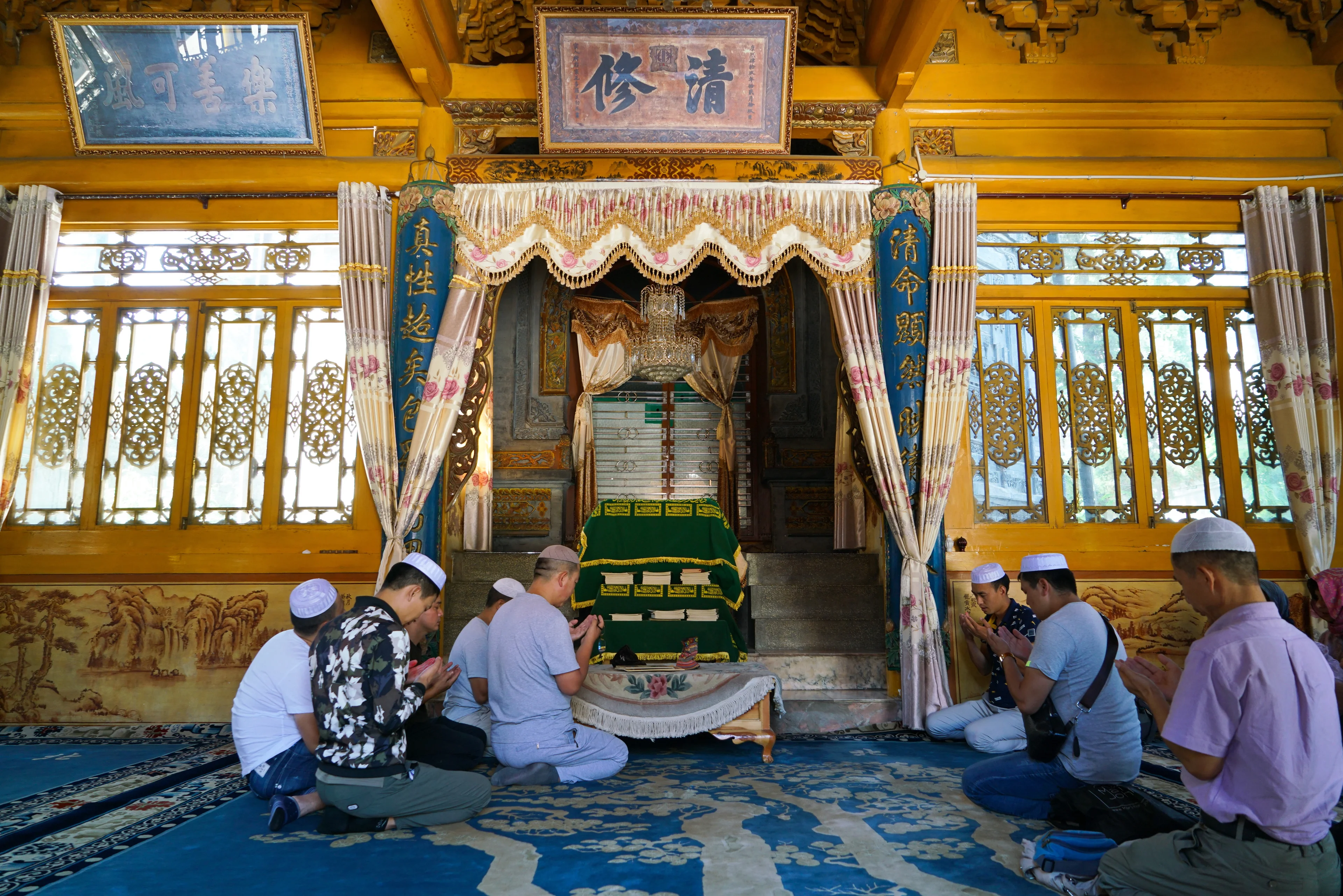
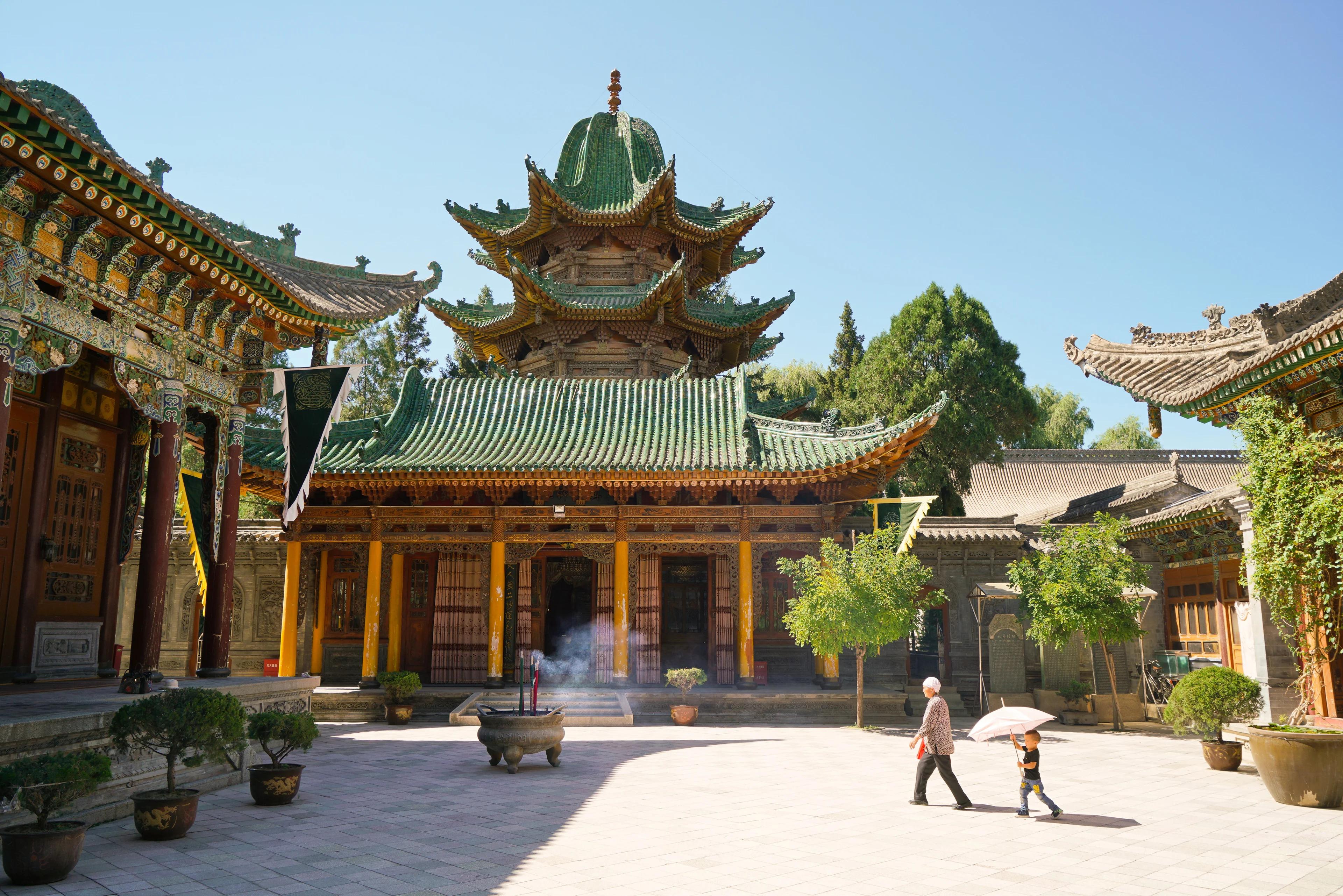
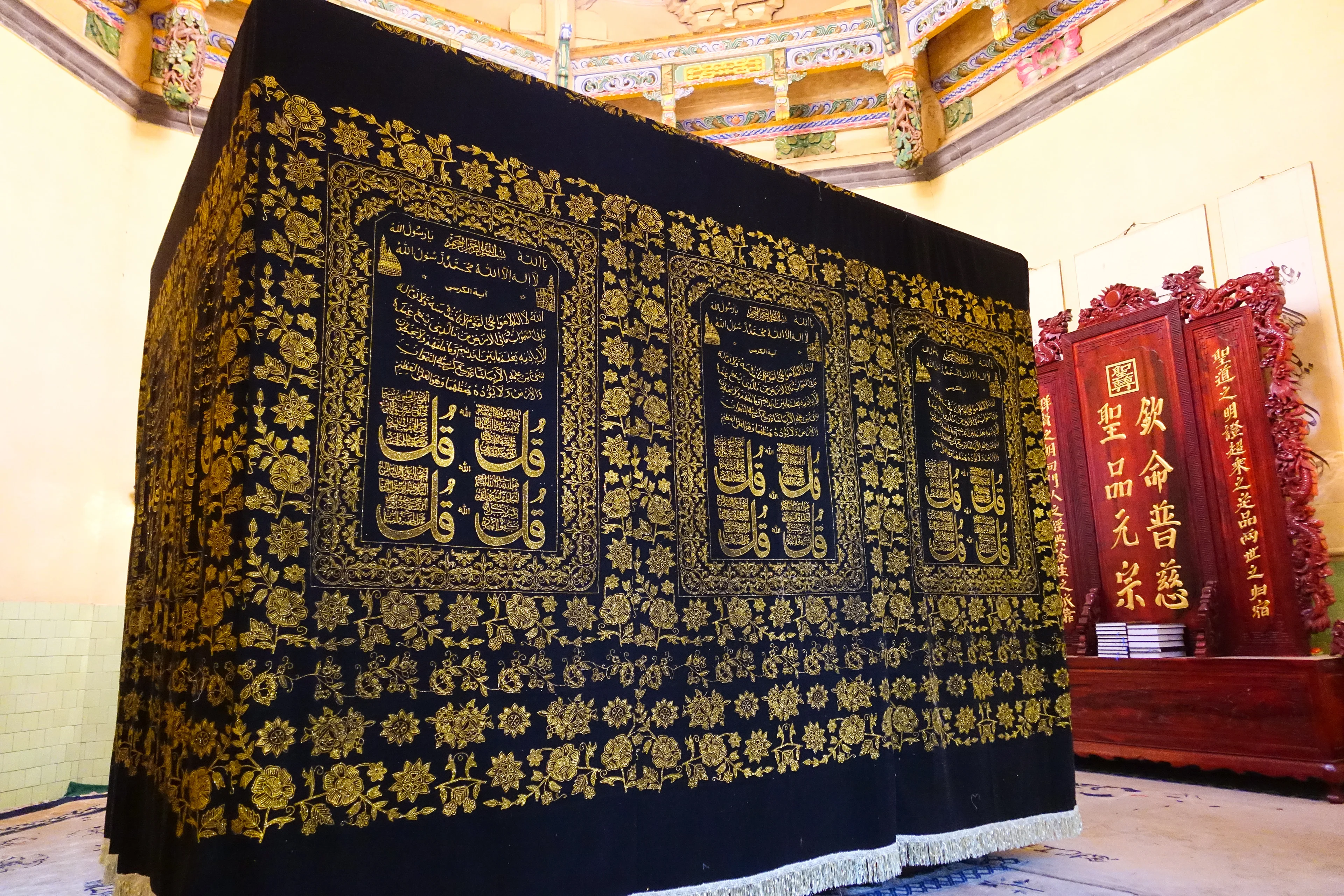
The Qadiri Shaykh Qi Jingyi Hilal al-Din (1656–1719) helped establish the order in western China, much like Shaykh Hashim did in Harar. His tomb is in the city of Linxia, China, and is still a site of pilgrimage.
Linxia became the center of the tariqa in China and one of the major centers of Islamic learning in the region, earning the nickname “the Little Mecca of China.” Qi Jingyi’s tomb draws upon regional architectural styles to create a space for prayer, contemplation, and ziyara. Pilgrims burn large quantities of incense, a practice that also is found not only in neighboring Buddhist temples as a sign of reverence but also among the Qadiriyya in Harar and Yemen.
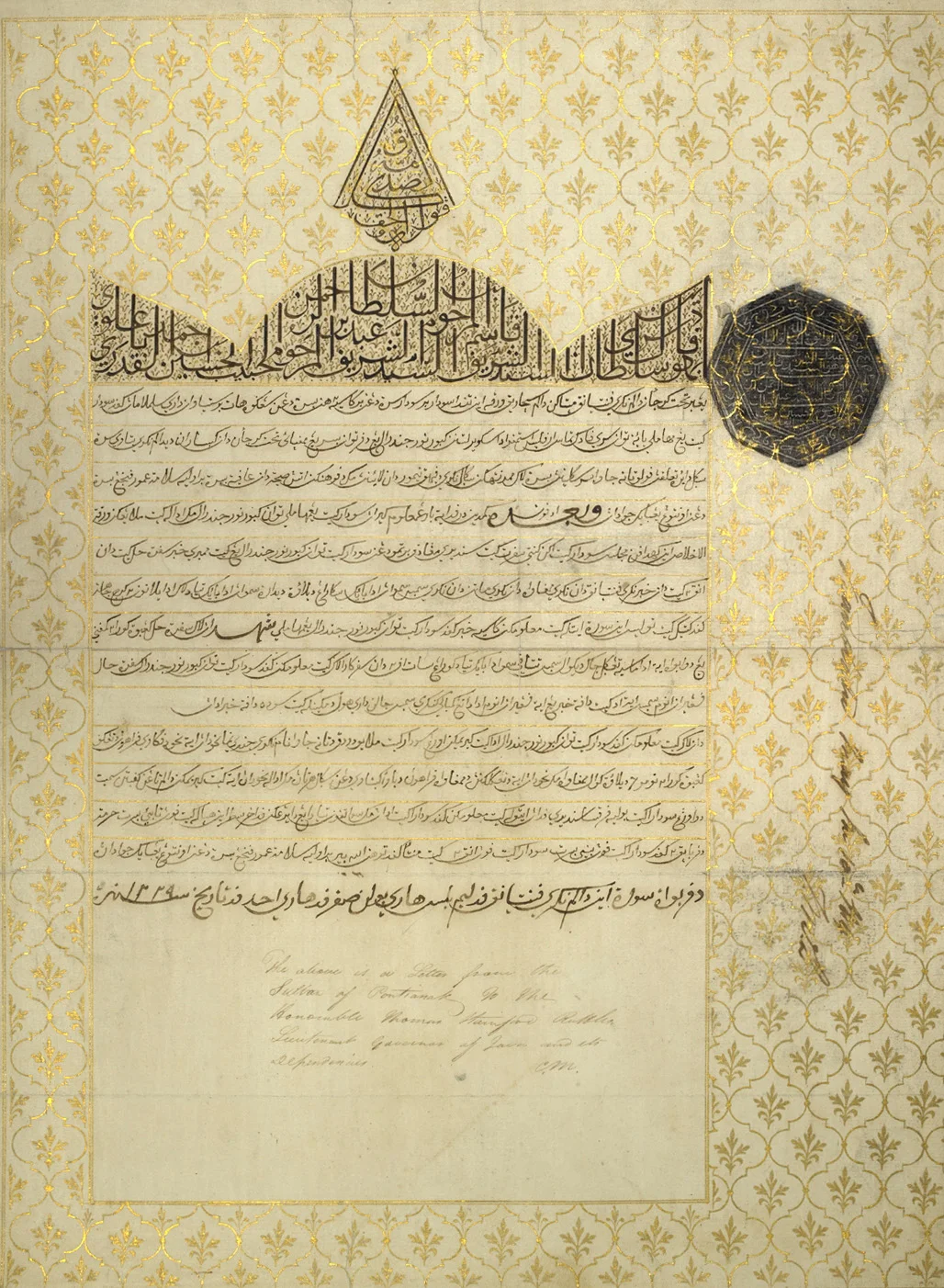
By the nineteenth century, the development of transoceanic empires and new transportation technology, like steamships and trains, allowed for greater connections between Qadiri communities and led to the order’s expansion on the global stage. Reflective of these transregional networks, Qadiri affiliation was expressed by sultans and scholars across vast geographic expanses. Sultan Syarif Kasim (1766–1819) of Pontianak in Indonesia included “al-Qadiri” on his sovereign seal, stamped on official letters.
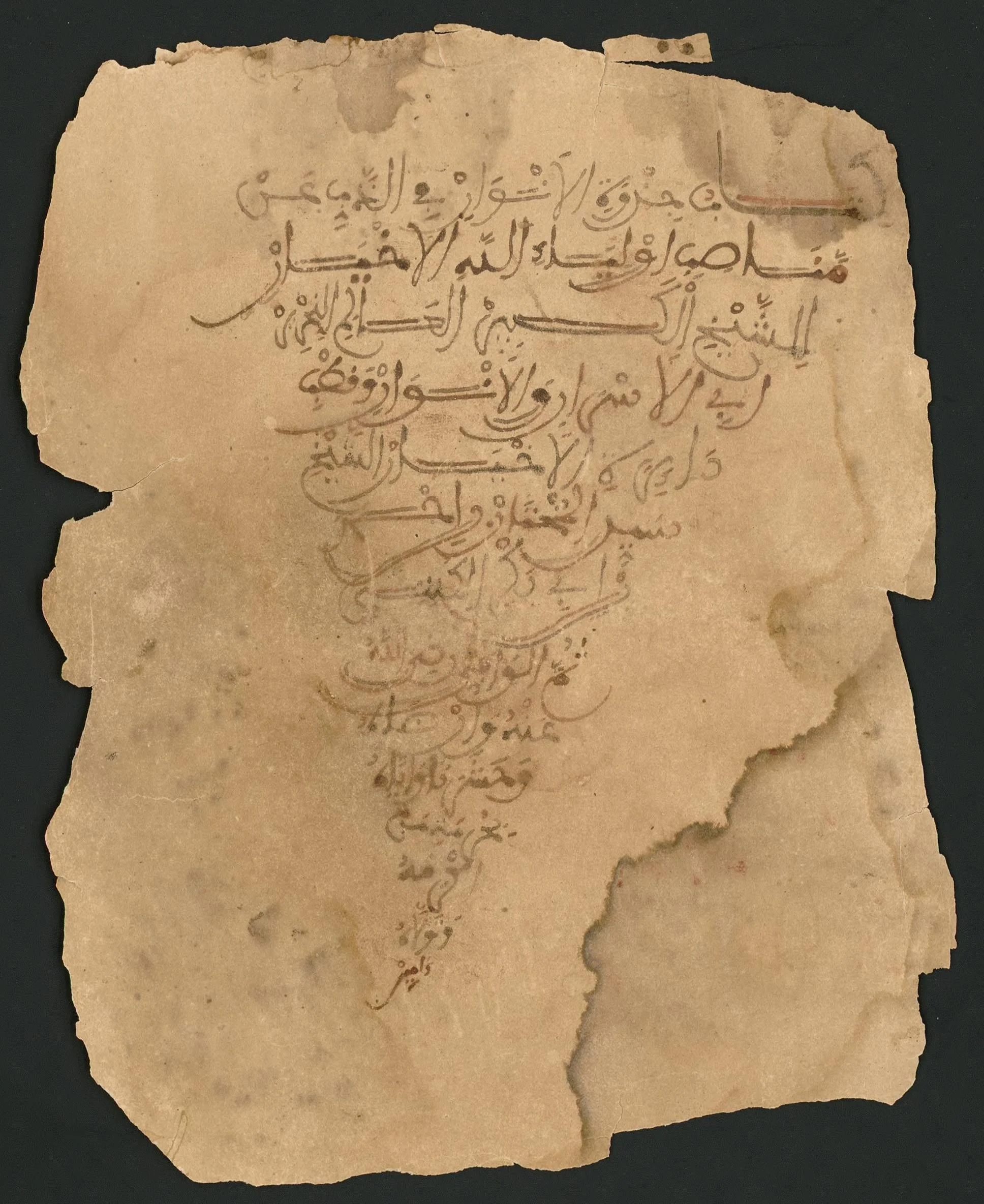
Meanwhile, works expressing the basic principles of Sufism knew larger diffusion than ever before. Such texts were written by major Qadiri figures, like Al-Mukhtar ibn Ahmad ibn Abi Bakr al-Kunti al-Kabir (1729–1811) in Timbuktu, Mali.
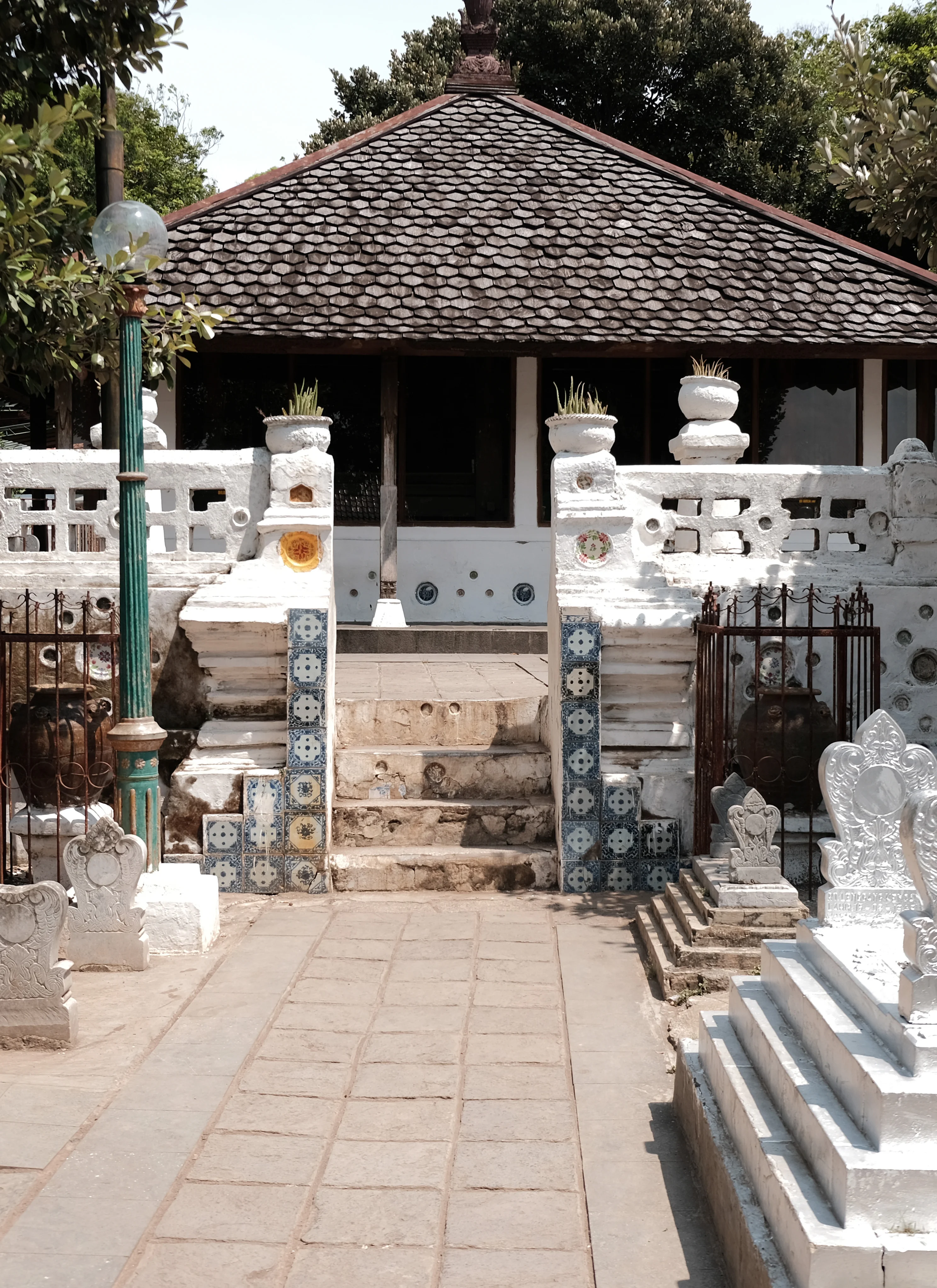
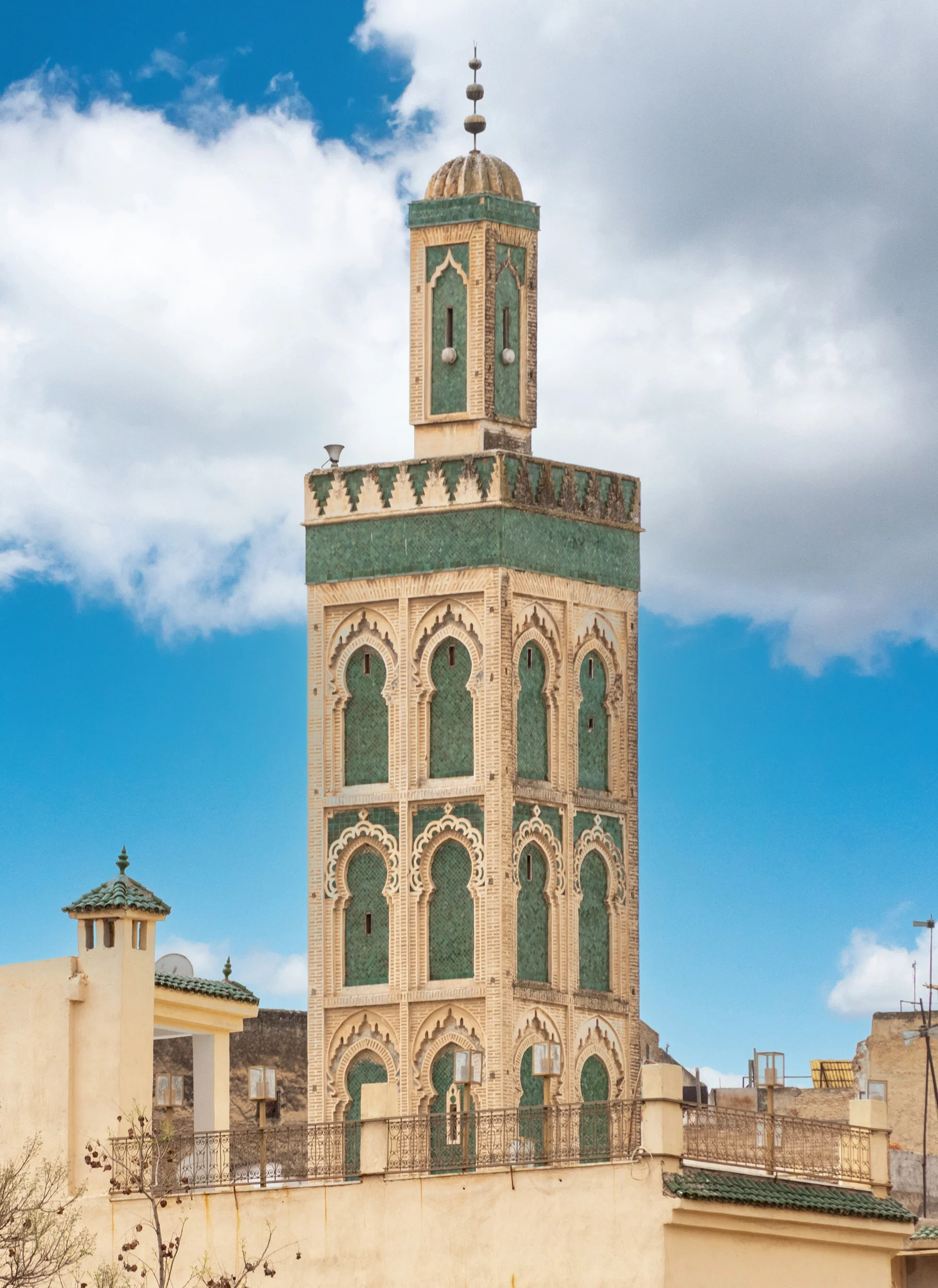
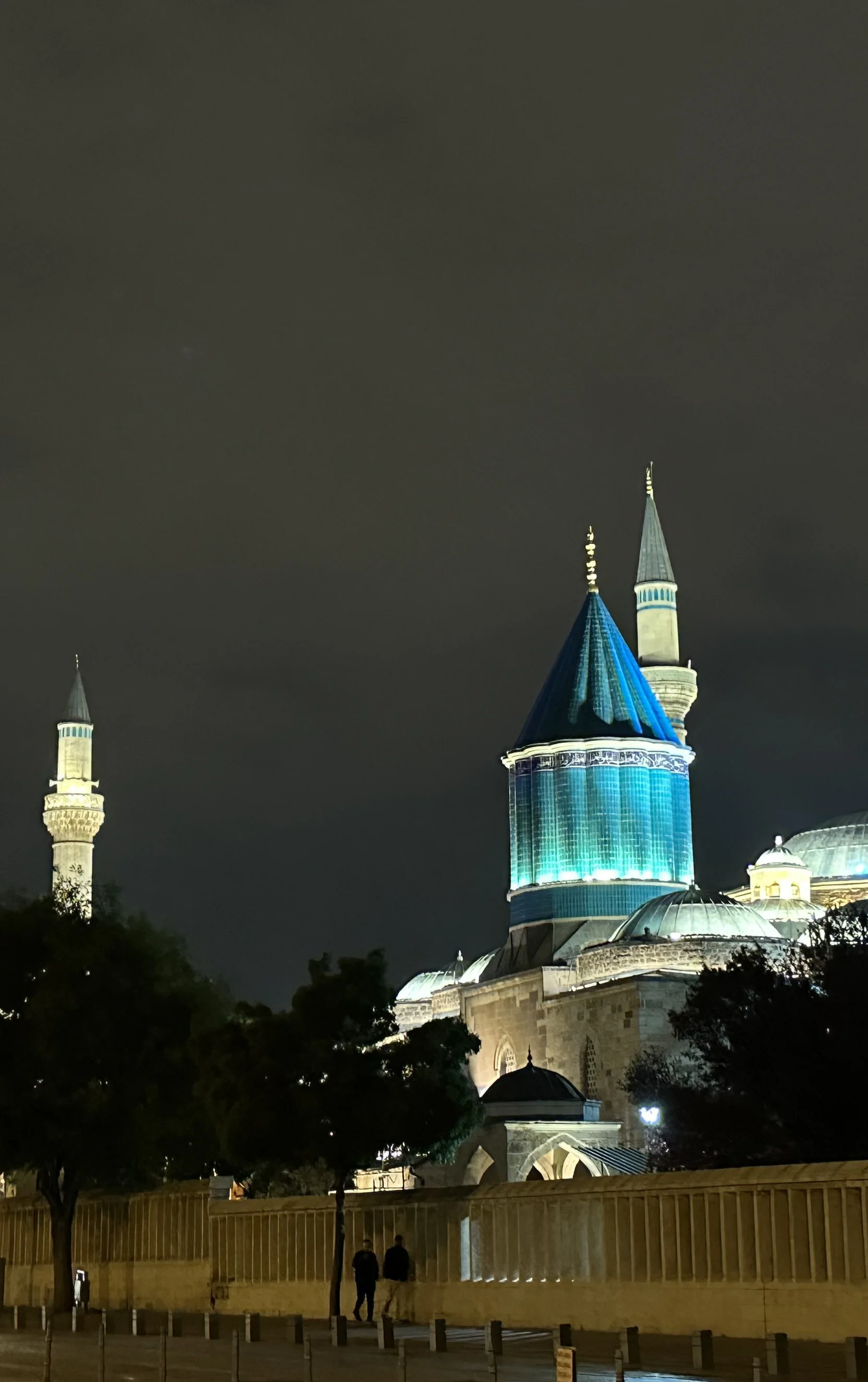
Through shared texts, devotional practices, and commemorative monuments, Qadiri shaykhs from West Africa to China united communities, linking back to the teachings and persona of Abd al-Qadir Jilani in twelfth-century Baghdad. These ties were reaffirmed as Qadiri scholars from around the world made their way to Mecca for the hajj, or undertook ziyara to Baghdad, meeting each other, exchanging ideas and practices, and studying together. From the remembrance of God to purification of the heart, Qadiri teachings transcended geographic and temporal bounds, and continue to grow.
Locations
Explore the map or scroll to select a location.