Cirebon
Indonesia
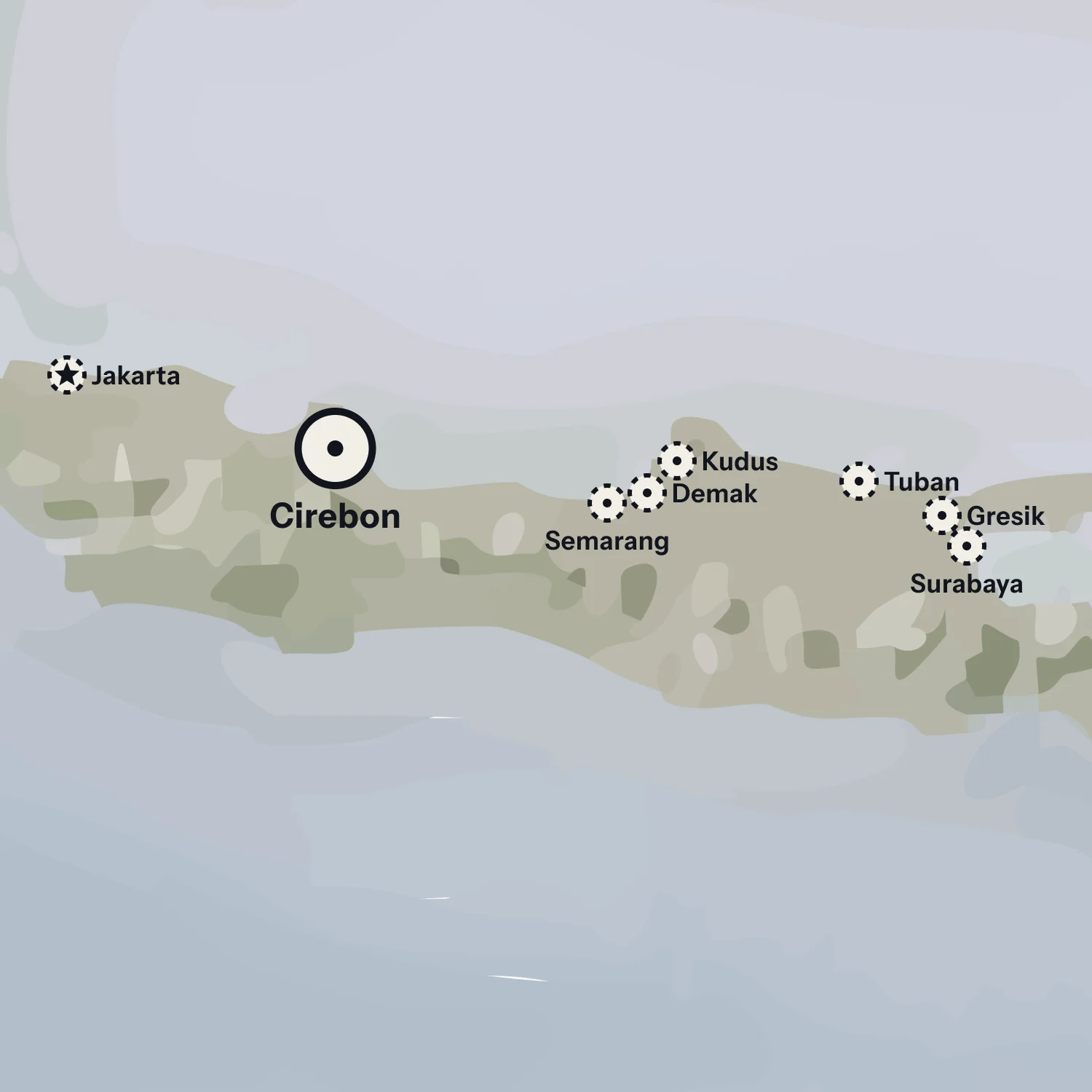
Today, Indonesia is home to the largest population of Muslims in the world. Starting in the twelfth or thirteenth century, Islam gradually expanded within the archipelago and is generally linked to Sufism, proselytized along these rich trade routes by local religious leaders in the sixteenth century. On the island of Java, which was then a diverse religious milieu with Hindu, Buddhist, and Muslim communities, the spread of Islam is often attributed to nine shaykhs. Known as the Wali Sanga or Wali Songo (the Nine Friends of God), their piety and miraculous acts inspired conversion to Islam even if they were or were not affiliated with any one Sufi order.
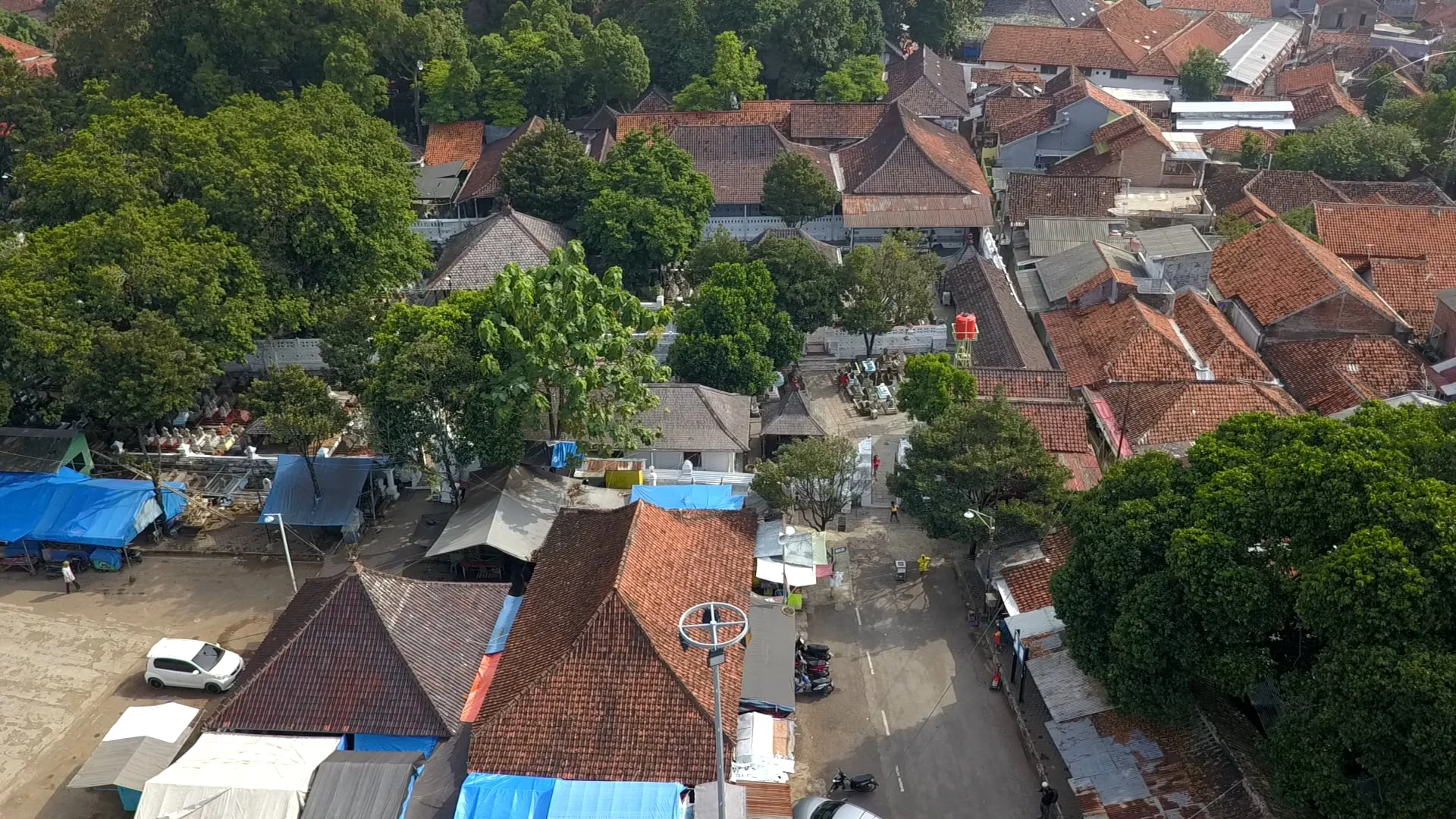
The bustling city of Cirebon in West Java, which sits at the juncture of trade routes stretching across the Indian Ocean and the East China Sea, is home to the shrine of one of these popular figures—Sunun Gunung Jati.
Friends of God and Guardian Scholars of Islam
The Wali Sanga are considered the founding figures of Islam in Java. They lived during the fifteenth and sixteenth centuries and many were related directly or by marriage. They are referred to with the Javanese title of “sunan,” which means “eminence.”
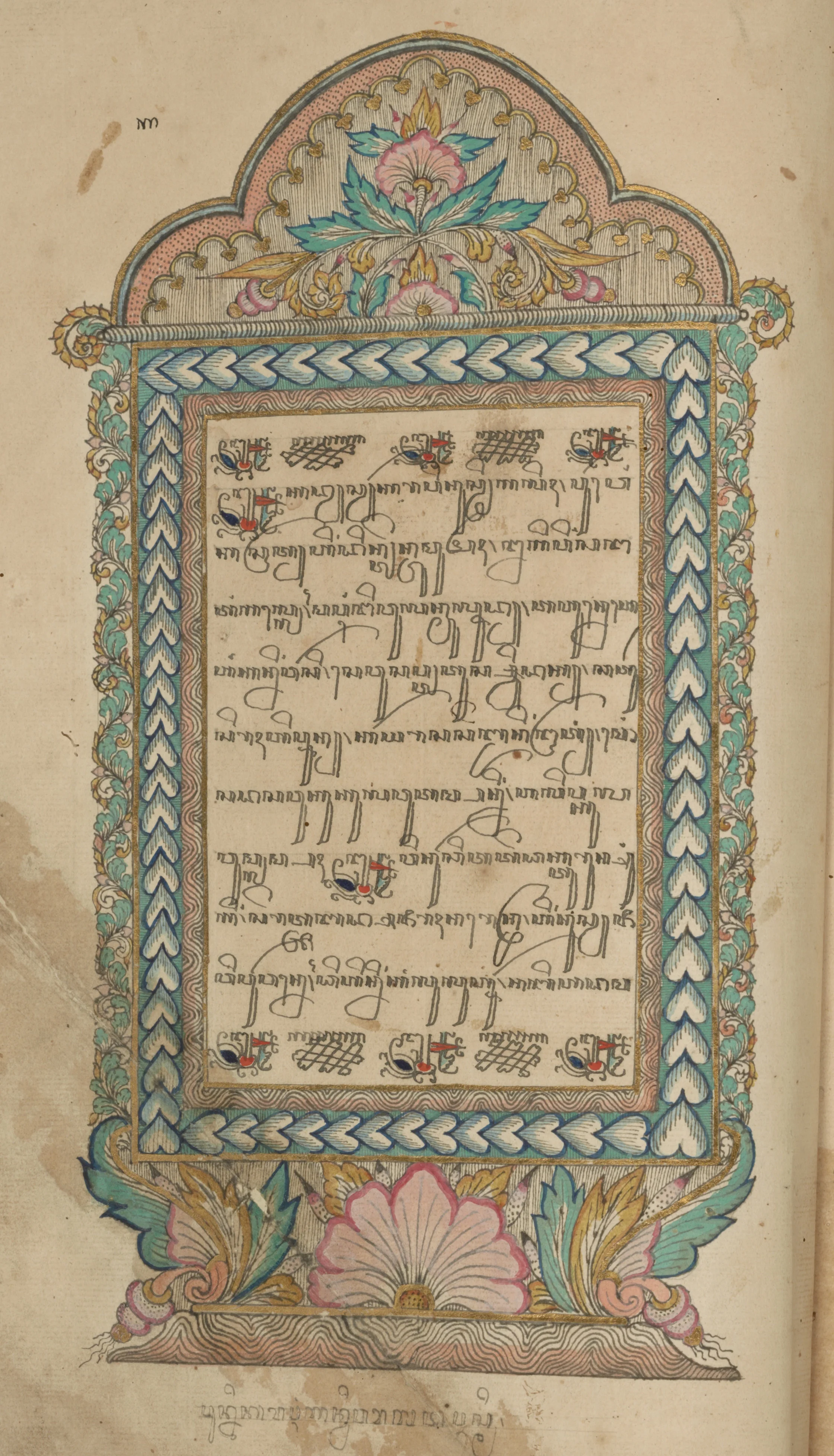
Despite their renown, the Wali Sanga’s historic lives are often disputed. Texts present different life dates, historic names, and ancestries for each of the figures. These narratives were transmitted orally and in written form; they were composed in the local language of Javanese and sometimes illuminated, like this nineteenth-century history.
Each Wali is largely associated with a particular city or region. Their tombs are found across Java, from Surabaya in the east to Cirebon in the west, a distance of almost four hundred miles. Today, these tombs are major sites for pilgrimage and many individuals journey from shrine to shrine seeking spiritual growth and blessing. Over the centuries, these sites have become homes for various Sufi tariqas, the most popular ones today being the Qadiriyya—one of the oldest orders founded in the twelfth century by Abdul Qadir Jilani in Baghdad—and Shattariyya, which originated in India in the fifteenth century.
Many pilgrims begin in Subaraya at the shrine of Sunan Ampel (d. 1481), who is often seen as the leader of the Wali Sanga. The father of two Wali Sanga and teacher to others, Sunan Ampel was also the son of the oldest of the Wali, Malik Maulana Ibrahim (d. 1419).
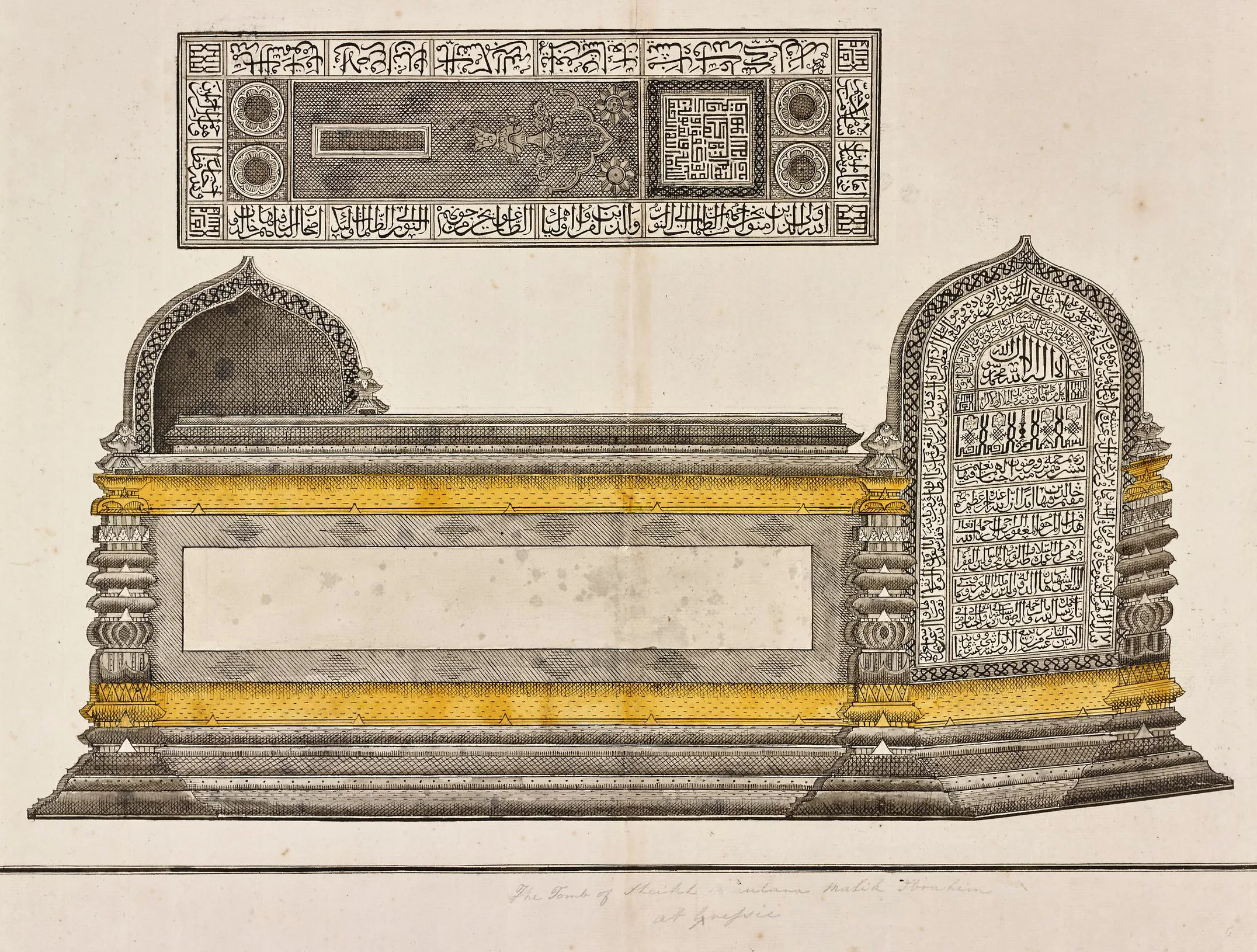
Another site of visitation, Malik Maulana’s tomb in Gresik was built in the fifteenth century from richly carved marble panels imported from Gujarat, India, and is covered with elaborate calligraphic inscriptions.
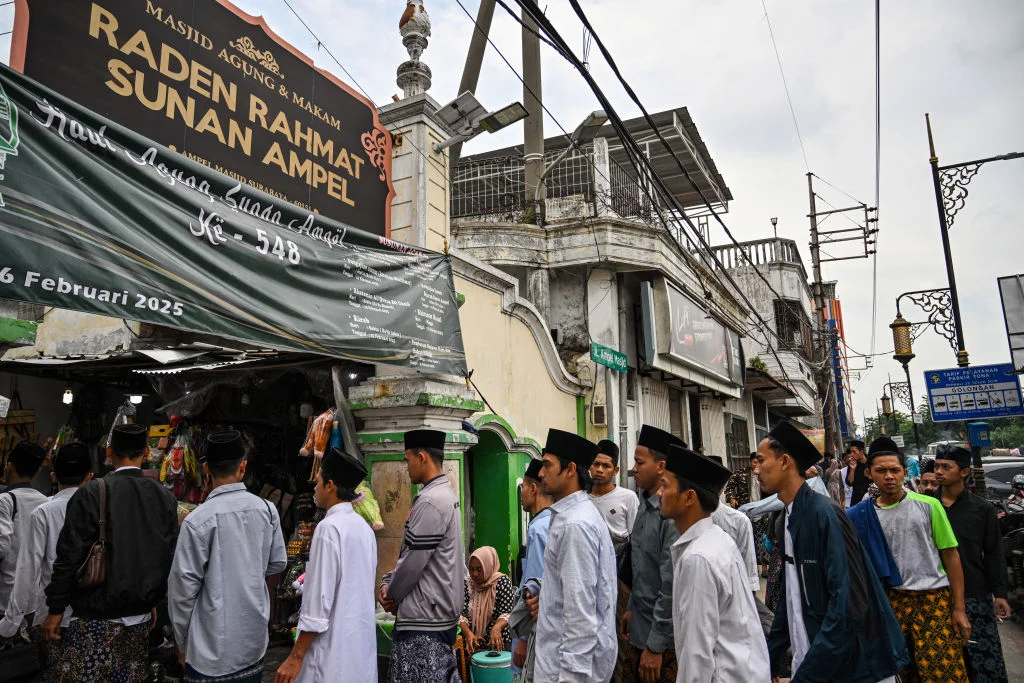
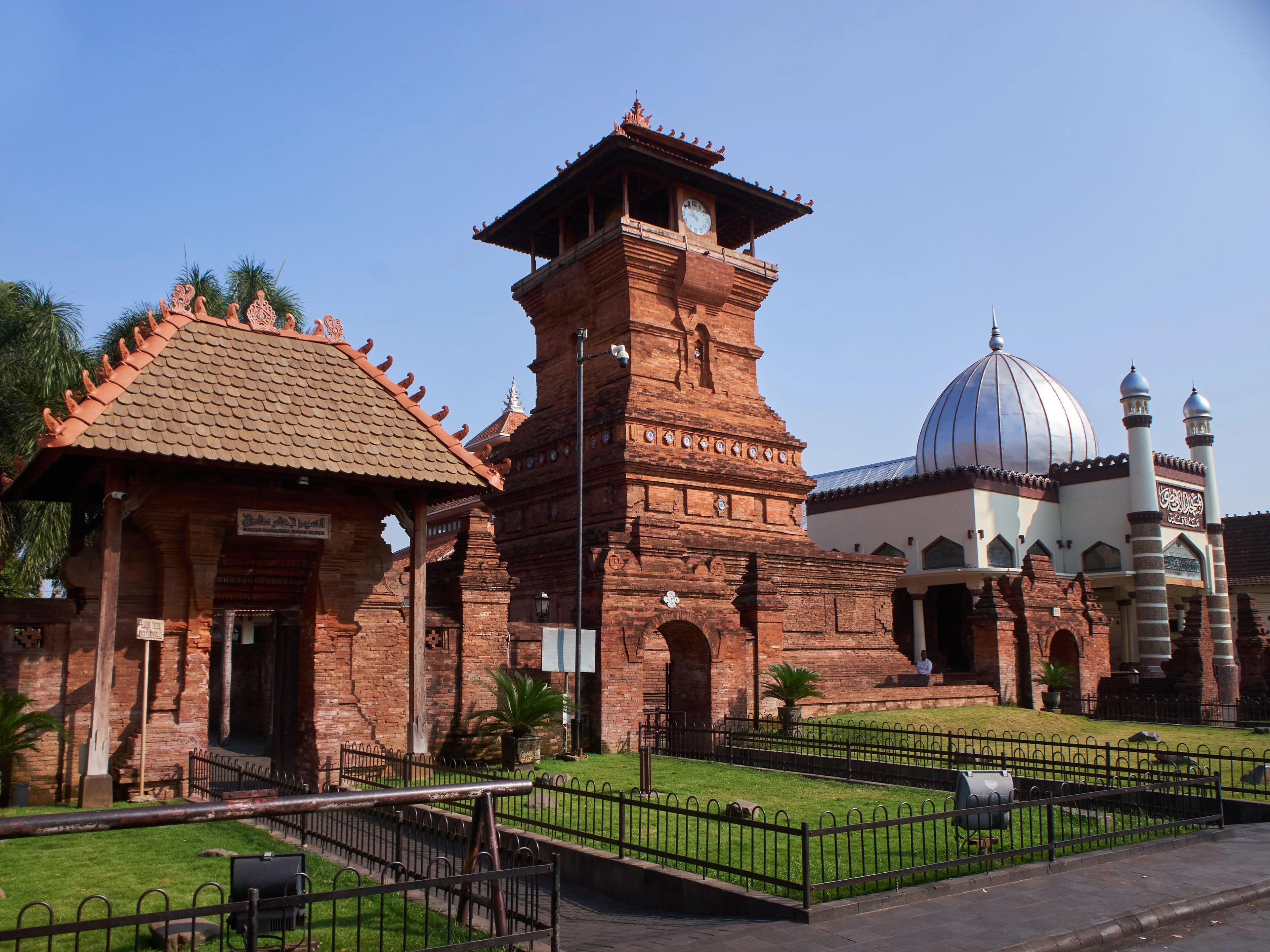
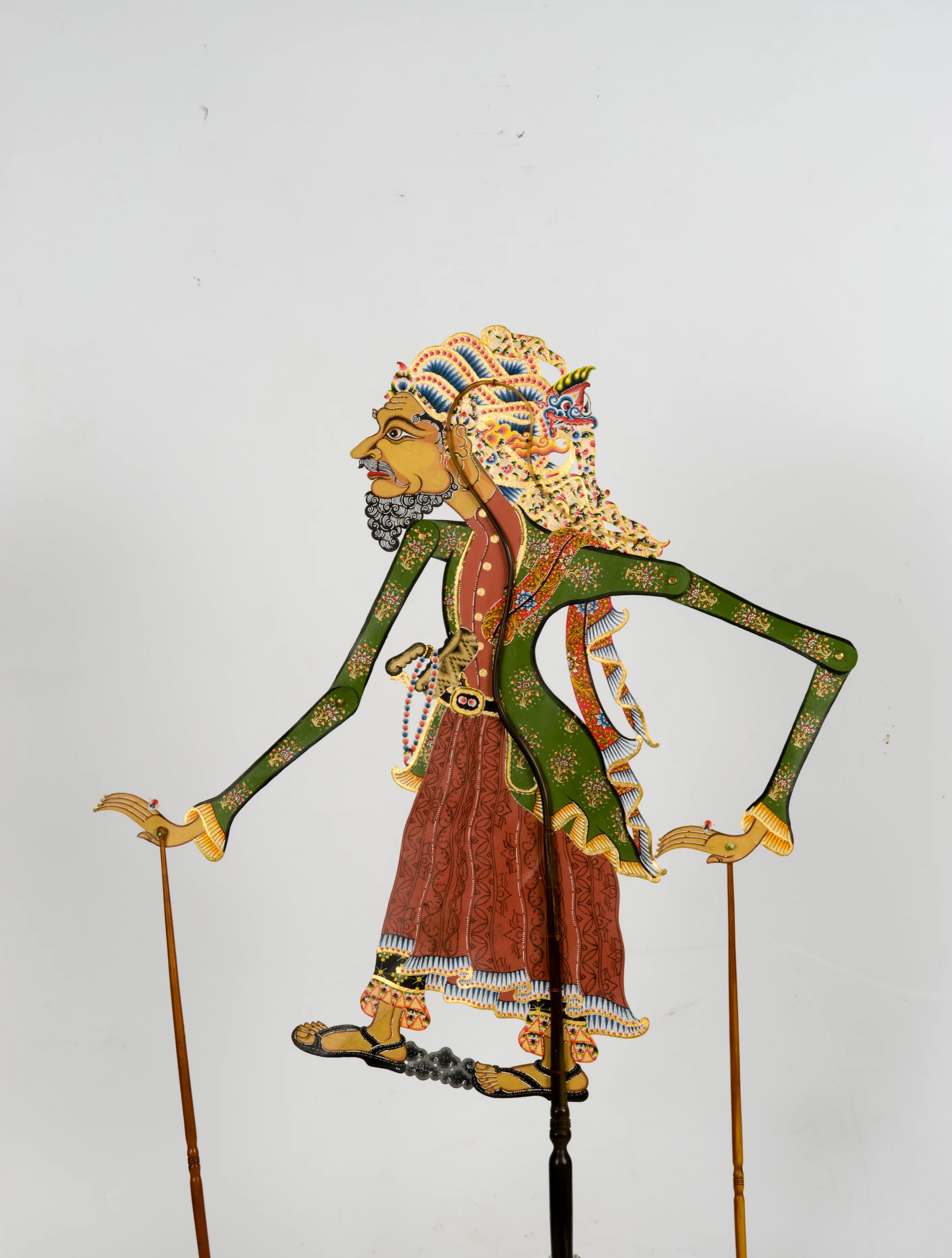
These sites create a sacred geography within Java, one that connects to local traditions but also to the wider Islamic world. This idea is best exemplified in Kudus, a city whose name is associated with Jerusalem (which is sometimes called “al-Quds” in Arabic) and the tomb of another Wali Sanga and grandson of Sunan Ampel. Sunan Kudus (d. 1550) built a mosque known as Masjid al-Aqsa, again a reference to the mosque in Jerusalem. He was later buried behind it. The distinctive minaret is home to a large gong for calling Muslims to prayer, and the red brick structure resembles the pre-Islamic Javanese temple form used by the Majapahit Empire (13th–16th centuries). Sunan Kudus is also credited with creating a genre of puppetry, wayang golek, to teach Islam.
The final station of the Wali Songo’s shrine circuit belongs to the last of the saints: Wali Sunan Gunung Jati in Cirebon.
Sunan Gunung Jati and the Teak Hill
It is believed Sunan Gunung Jati was born Syarif Hidayatullah (d. ca. 1570), the son of a Sundanese princess and an Arab ruler, who descended from the Prophet Muhammad. His travels led him to Mecca and Medina, where he studied with great scholars and was inducted into several Sufi orders. He brought these teachings to Java. As a sign of his sacred status, he is miraculously credited with finding the tomb of Suleyman (Solomon) and rising to the heavens to meet the spirit of the Prophet Muhammad.
As a military leader, Sunan Gunung Jati was allegedly responsible for blocking the rapidly expanding Portuguese presence in the region. He then established a sultanate in Cirebon and is the only Wali Sanga who was both a spiritual and political leader—a Wali and a sultan.
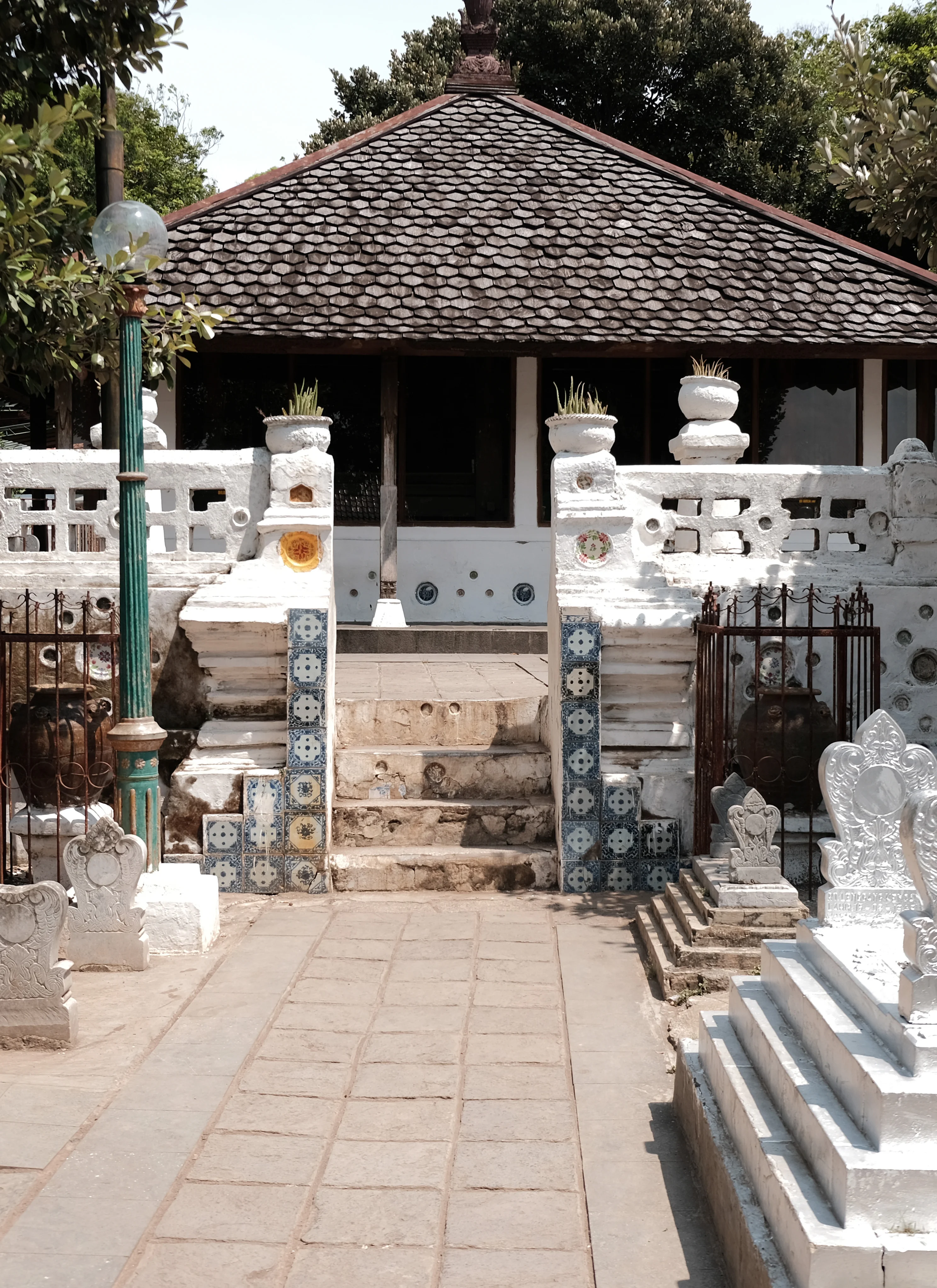
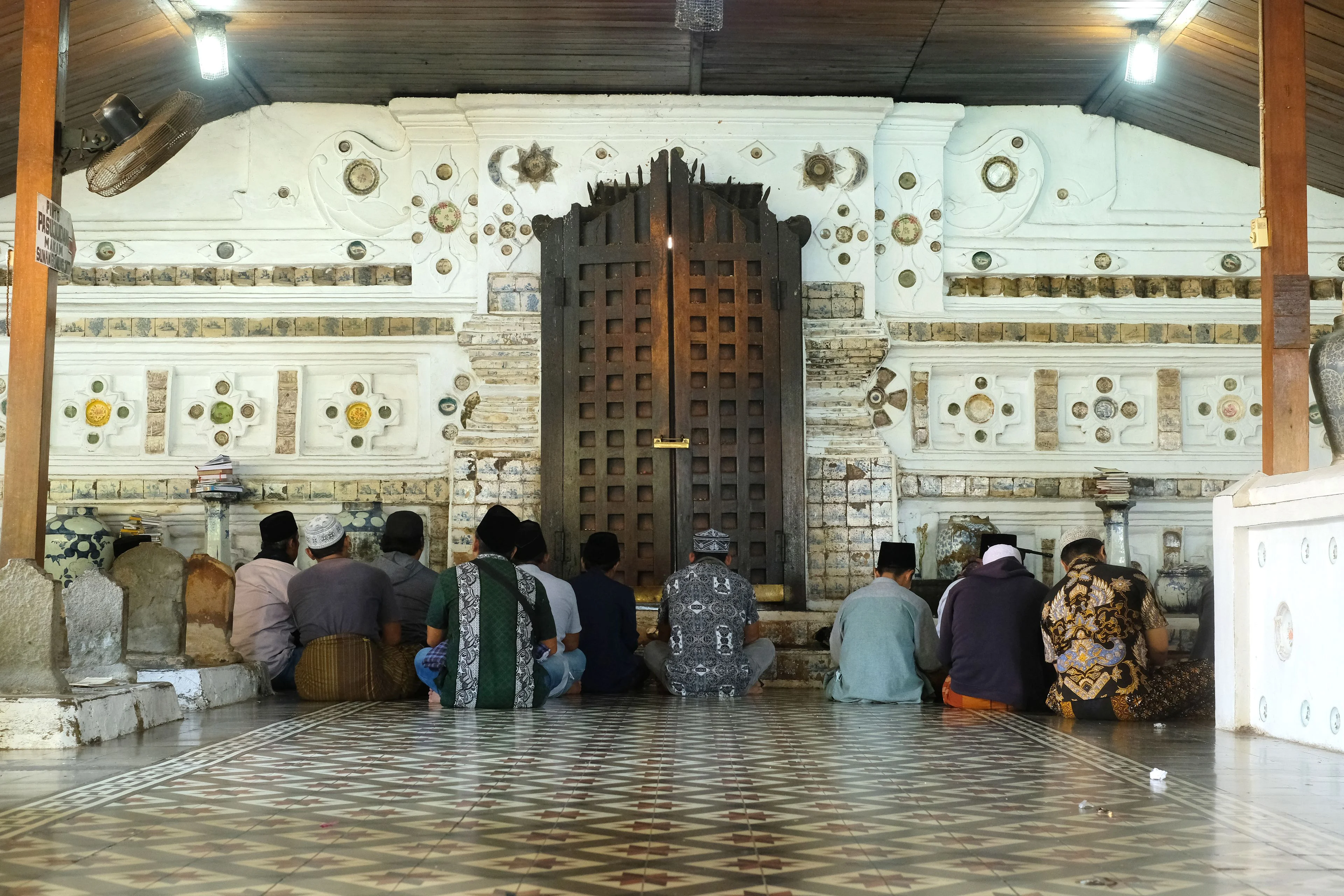
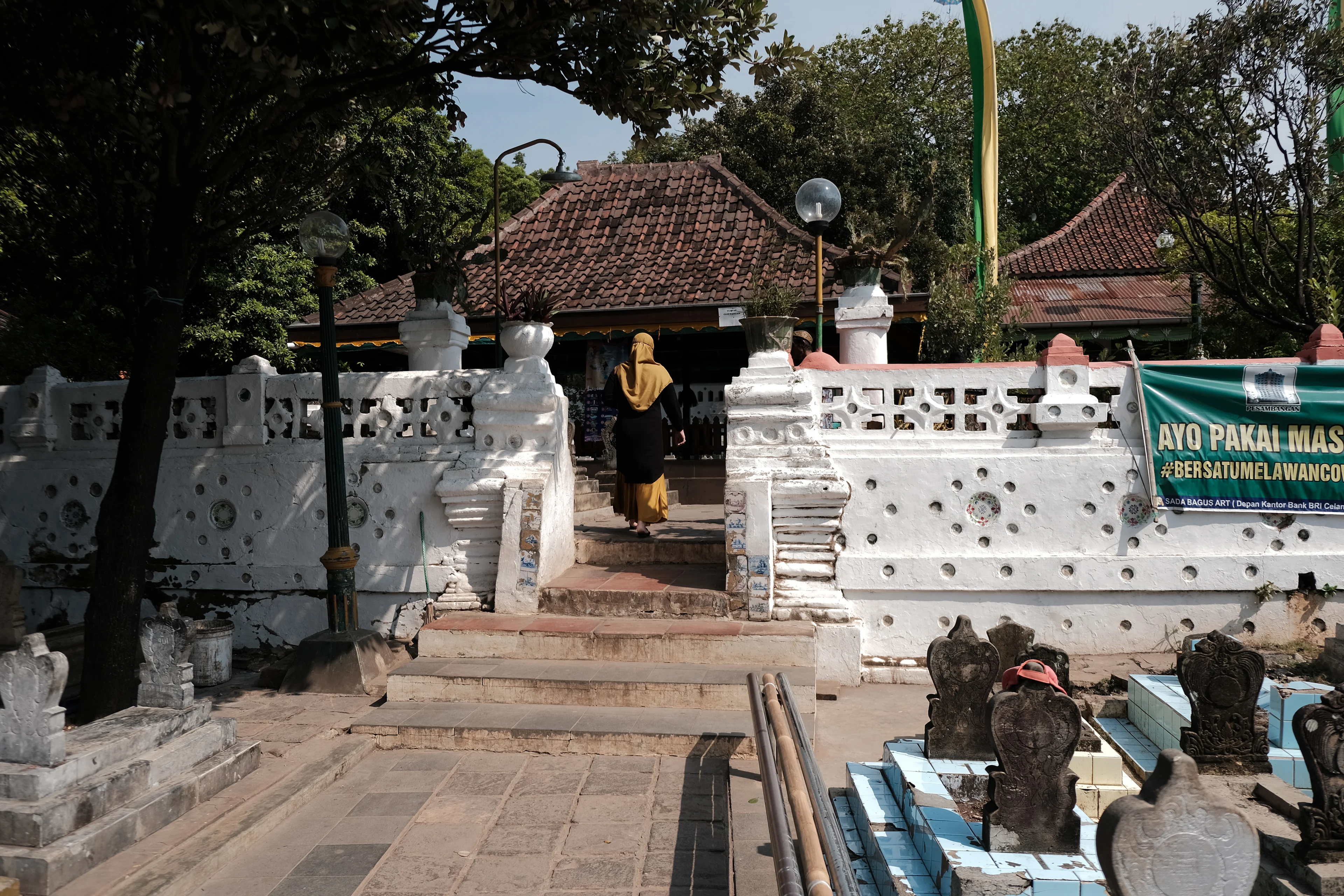
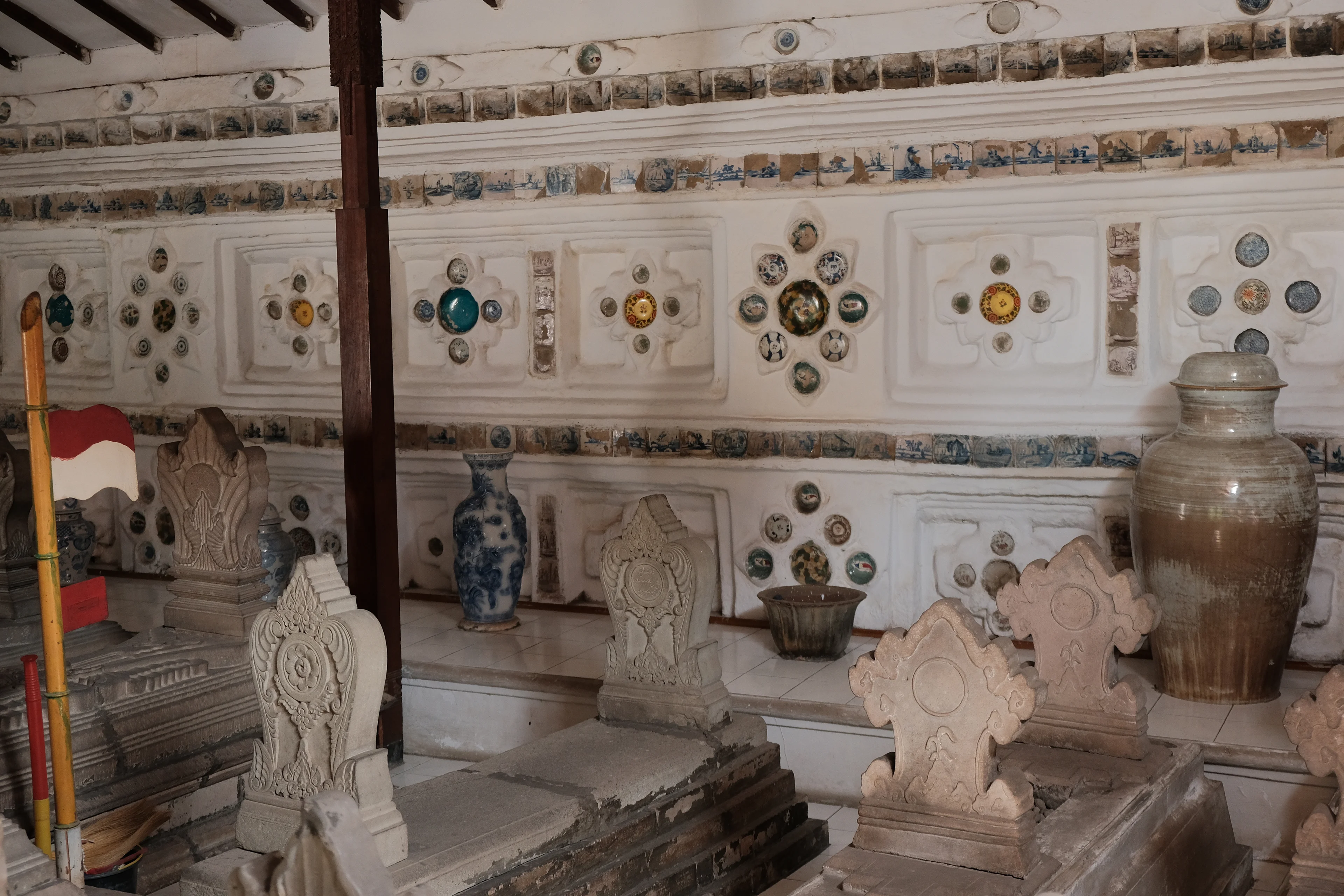
Syarif Hidayatullah’s popular name Sunan Gunung Jati (Lord of the Teak Hill) refers to his impressive tomb complex, still maintained today by his descendants. Adorned with Chinese ceramics, Dutch tiles, and Javanese teak, the tomb of Sunan Gunung Jati in the Astana district north of the city embodies the diversity of Cirebon. The tomb draws hundreds of thousands of visitors each year, Muslim and non-Muslim alike, from wealthy Chinese businessmen to presidents.
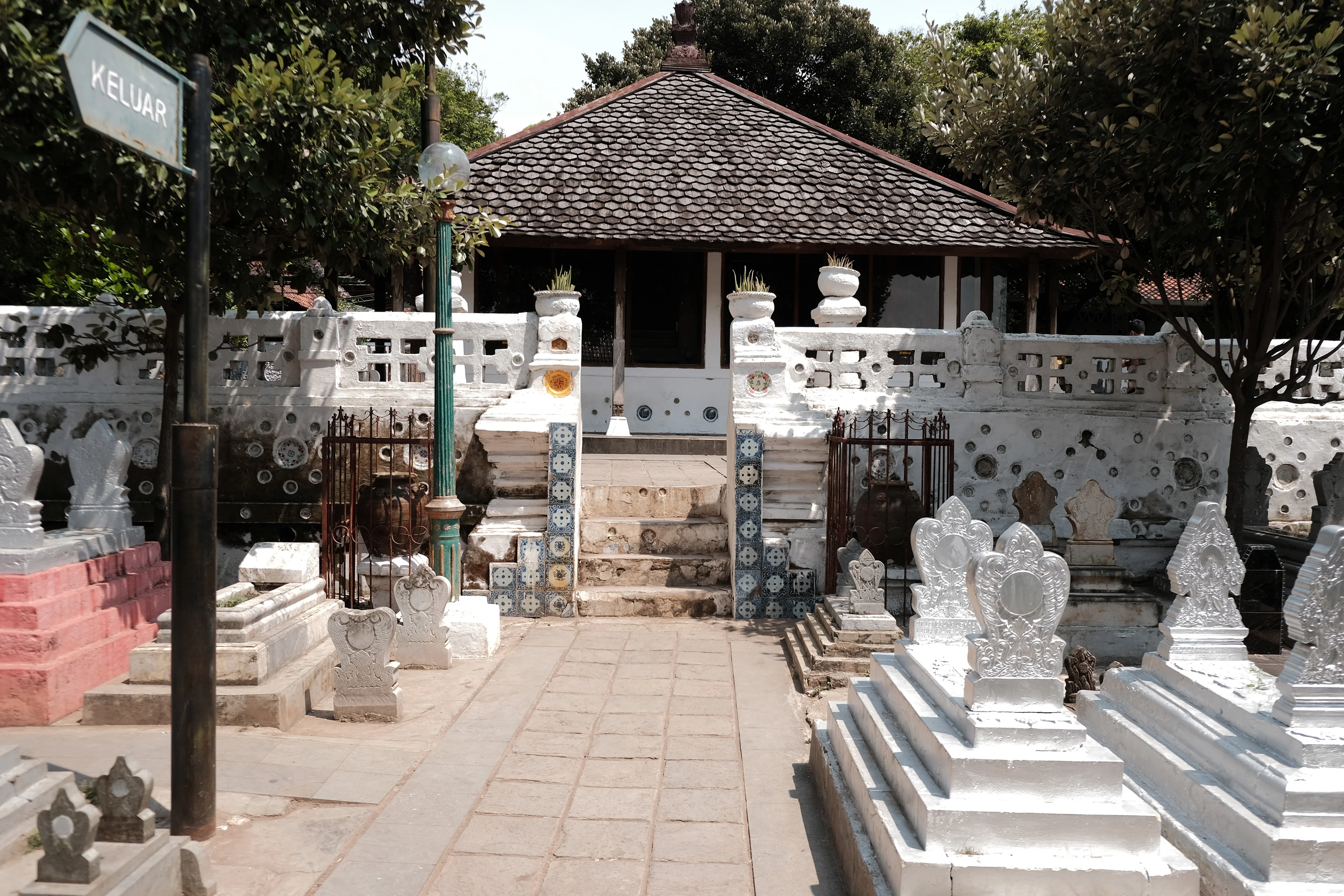
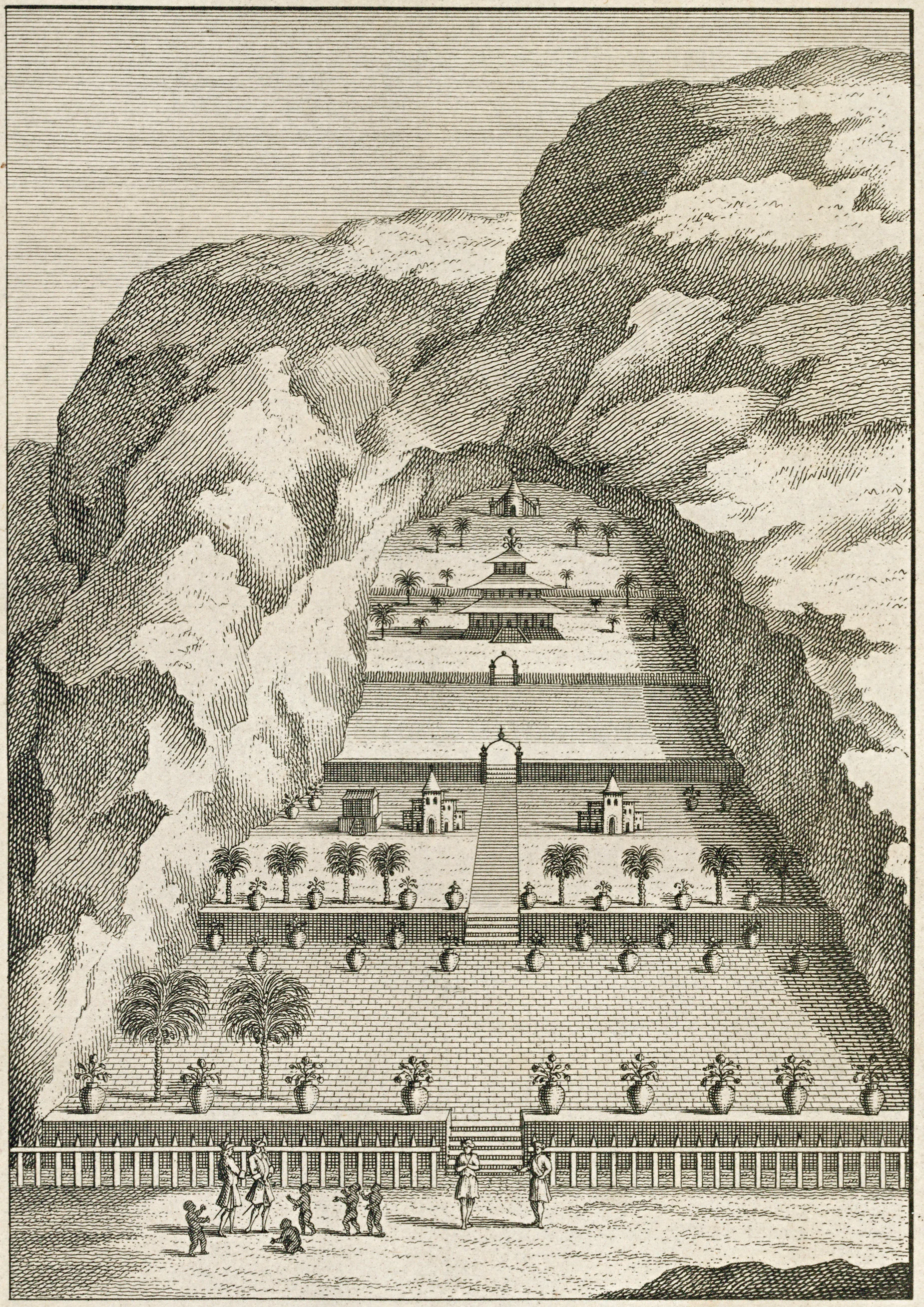
The shrine features a series of wooden buildings on a hill. This distinctive structure is an example of a Pundhen-style (terraced hill slope) mosque and tomb complex, one that is specific to Java and found in local Hindu-Buddhist temples as well. Pilgrims ascend ten terraces, passing many buildings that include a mosque as well as kitchens for feeding the pilgrims, other tombs, and a series of gates. At the top, they reach the focal point—the tomb of Sunan Gunung Jati.
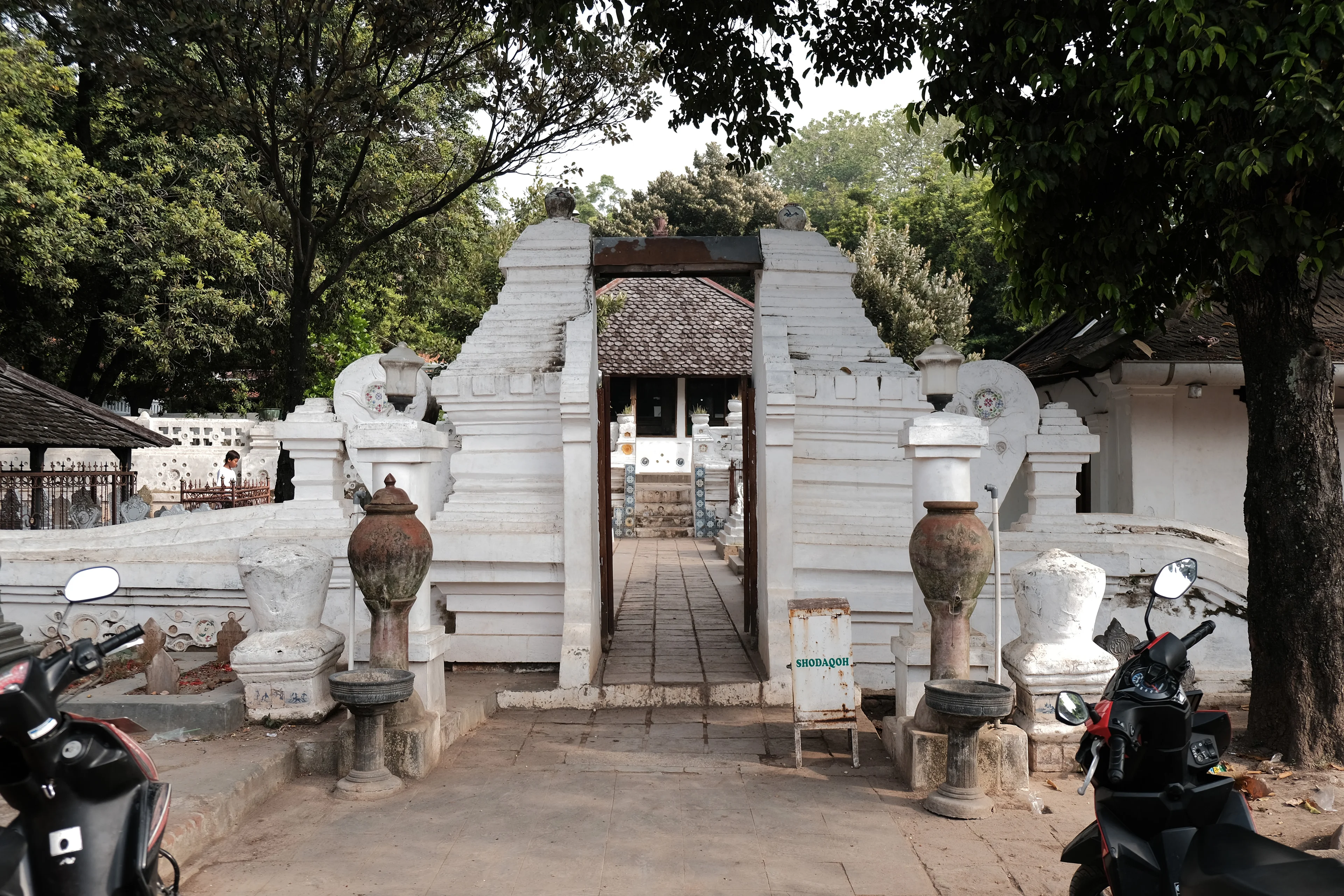
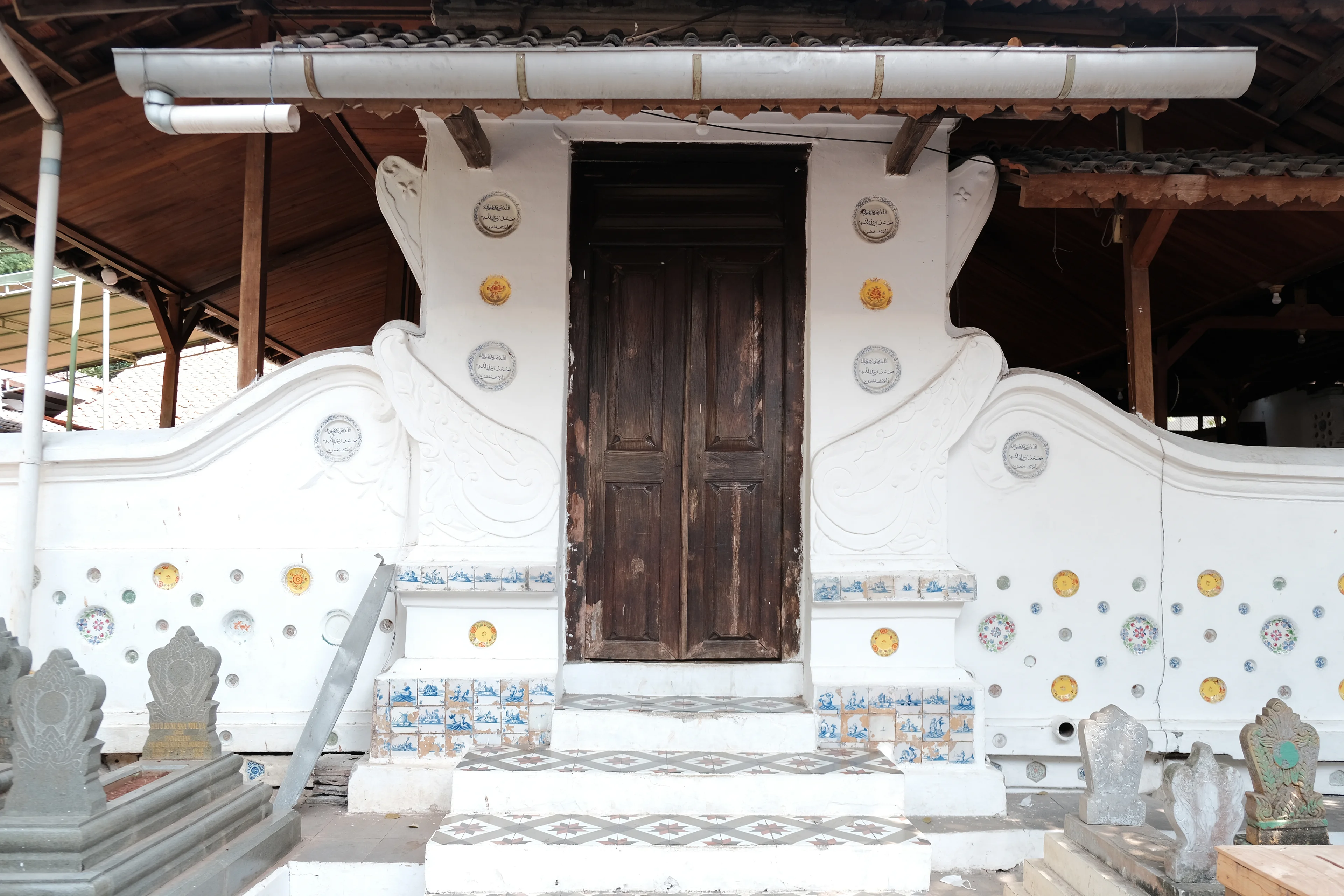
The mausoleum is a type of Javanese building known as cungkup. Its chamber is raised on a high platform that covers the graves. The building is covered by a tiered, slanting hip roof (tajug).
Sunan Gunung Jati’s tomb is in the inner chamber, which is surrounded by a gallery where pilgrims congregate to pray. The largest gatherings occur during the mawlid of the Prophet Muhammad, the commemoration of the isra’ (night journey) and mi‘raj (ascension to heaven), and more regularly for the Juma Kilwon, which occurs every thirty-five days. The event marks the convergence of multiple traditions, when the most significant day of the traditional Islamic seven-day calendar and the pre-Islamic Javanese five-day calendar coincide. It was also the day Sunan Gunung Jati died and is celebrated as the date of his union with God (urs).
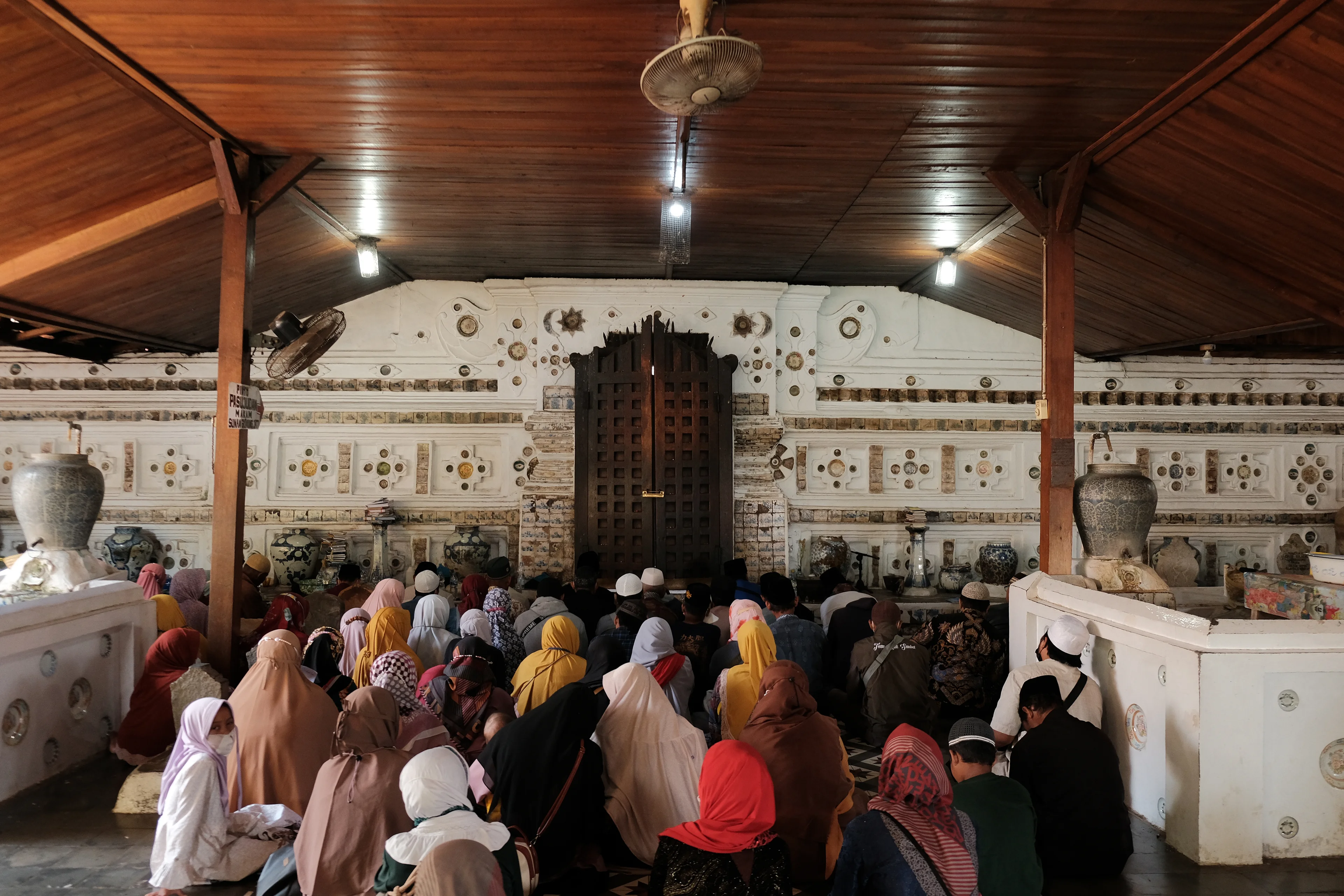
A reflection of Java’s cosmopolitan identity is the tomb of Sunan Gunung Jati’s wife: Nio Ong Tien. According to tradition, she was the daughter of the Ming emperor who first ridiculed Sunan when he visited his court in China. She eventually recognized his miraculous abilities and the two were wed. Historically, Java was home to a large Muslim Chinese community during the lifetime of Sunan Gunung Jati. Today, Chinese pilgrims gather at the complex and burn paper money at Nio Ong Tien’s tomb.
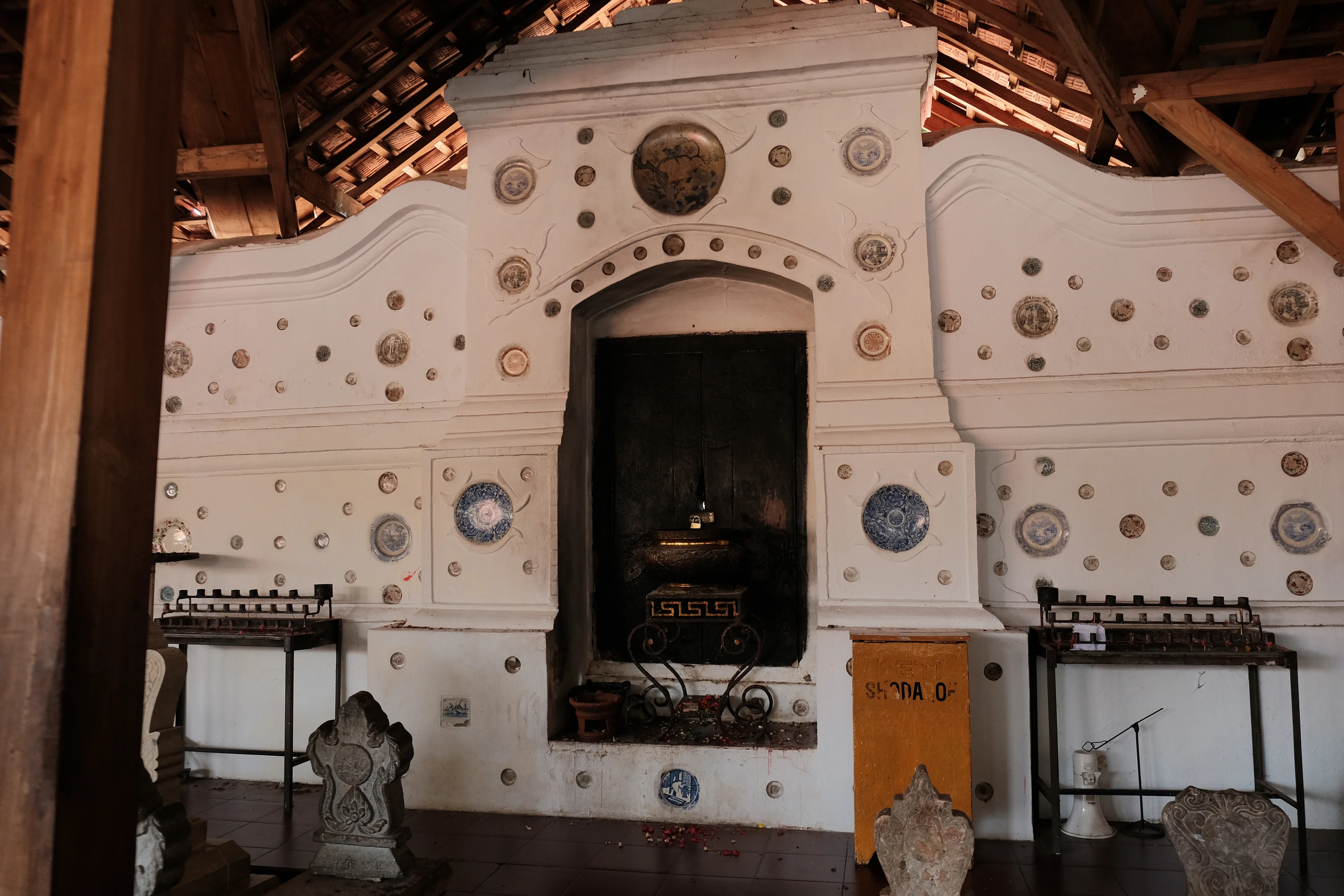
Another testimony of Cirebon’s long-distance trade are the walls of Sunan Gunung Jati’s tomb complex. It is embedded with ceramic vessels and tiles produced between the sixteenth and nineteenth centuries in China, Japan, Myanmar, Thailand, and Vietnam, as well as England, Scotland, and the Netherlands. Within Indonesia, this practice of inlaying ceramic vessels into walls is specific to West Java and can be found also in mosques and palaces in the region.
The Ceramics of Teak Hill
The Legacy of Sunan Gunung Jati
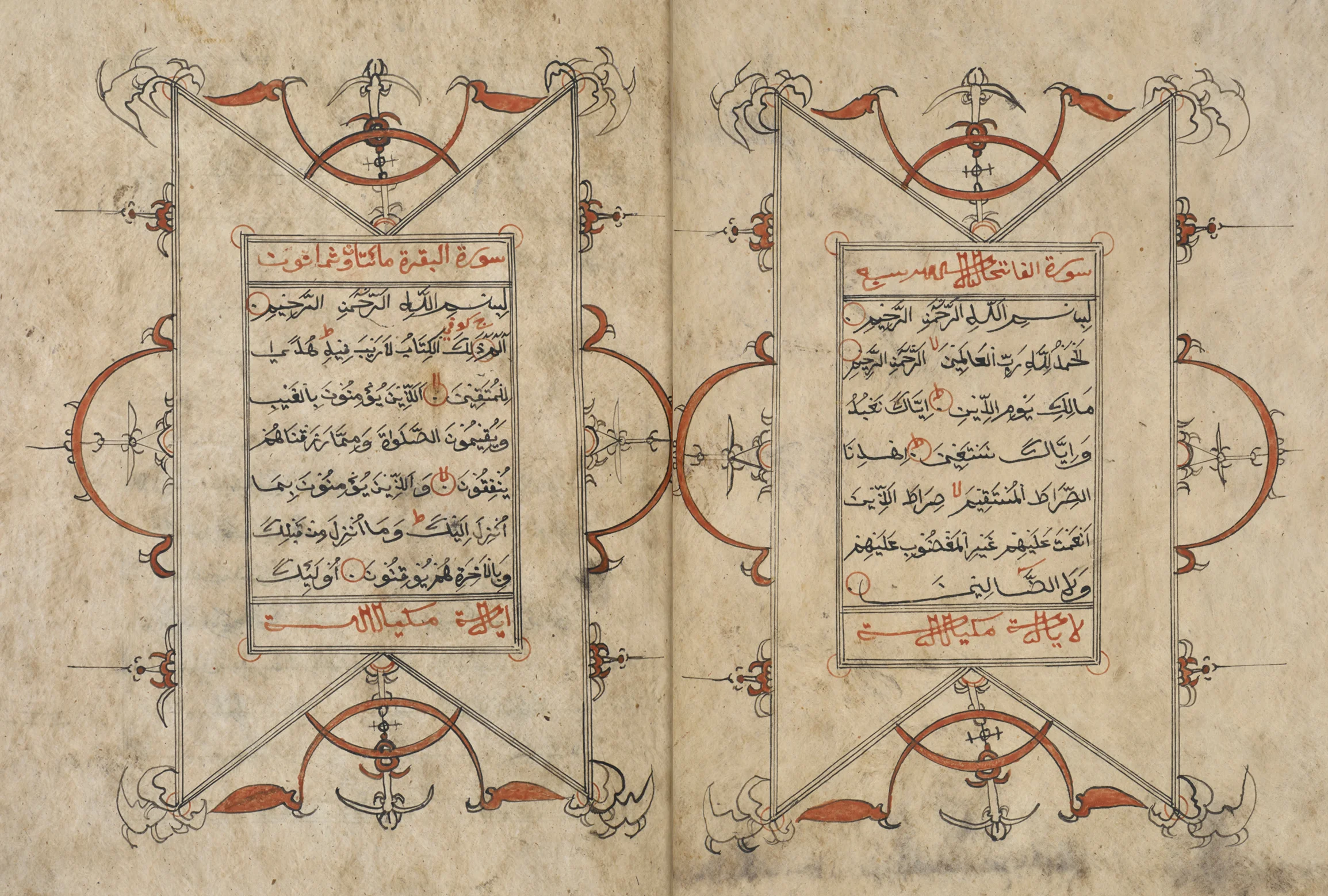
In the centuries after Sunan Gunung Jati’s death, Cirebon continued to be a major center of Islamic learning, and numerous Islamic manuscripts were produced in Java, like this copy of the Qur’an. Following in Sunan’s footsteps, Javanese Muslim scholars went to other centers of Islamic learning in Arabia, Yemen, and around the Indian Ocean. Their travels ensured that Cirebon remained connected to an expanding religious network, particularly in the eighteenth and nineteenth centuries when a number of Sufi orders, such as the Qadiriyya, Naqshbandiyya, and Shattariyya spread to Southeast Asia.
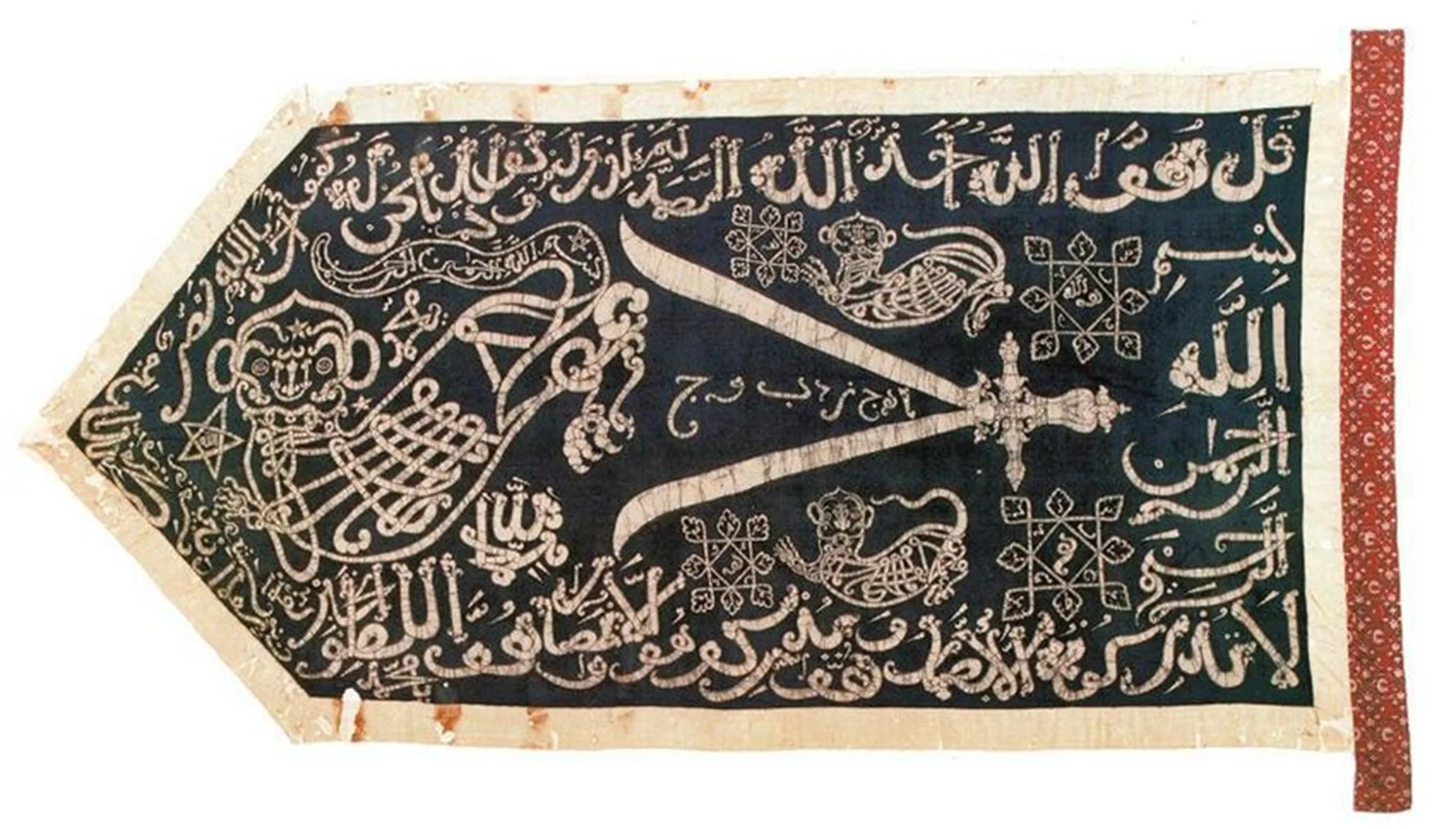
This mixture of ancestral knowledge and Islamic teachings permeates the identity of Javanese Muslims over centuries. The Cirebon sultans have hoisted the banner seen here since 1776, but the design may date back to the fifteenth century and Sunan Gunung Jati’s lifetime. The lion and zu’l-fiqar, the two-bladed sword, are emblems of Ali ibn Abi Talib, the Prophet Muhammad’s son-in-law and cousin, who is an important figure for Sufis as a member of the ahl al-bayt.
Calligraphic felines are also visible on either side of the sword. Here, they symbolize the two tigers, which are the emblem of Cirebon’s sultans. All around are inscriptions, such as the shahada, the chapter “The Purity [of Faith]” (sura al-Ikhlas) from the Qur’an, Islamic phrases, as well as Javanese chronograms. These elements all merge to express courage and strength but also piety and affirmation of the Islamic faith.
Heirs of the Wali
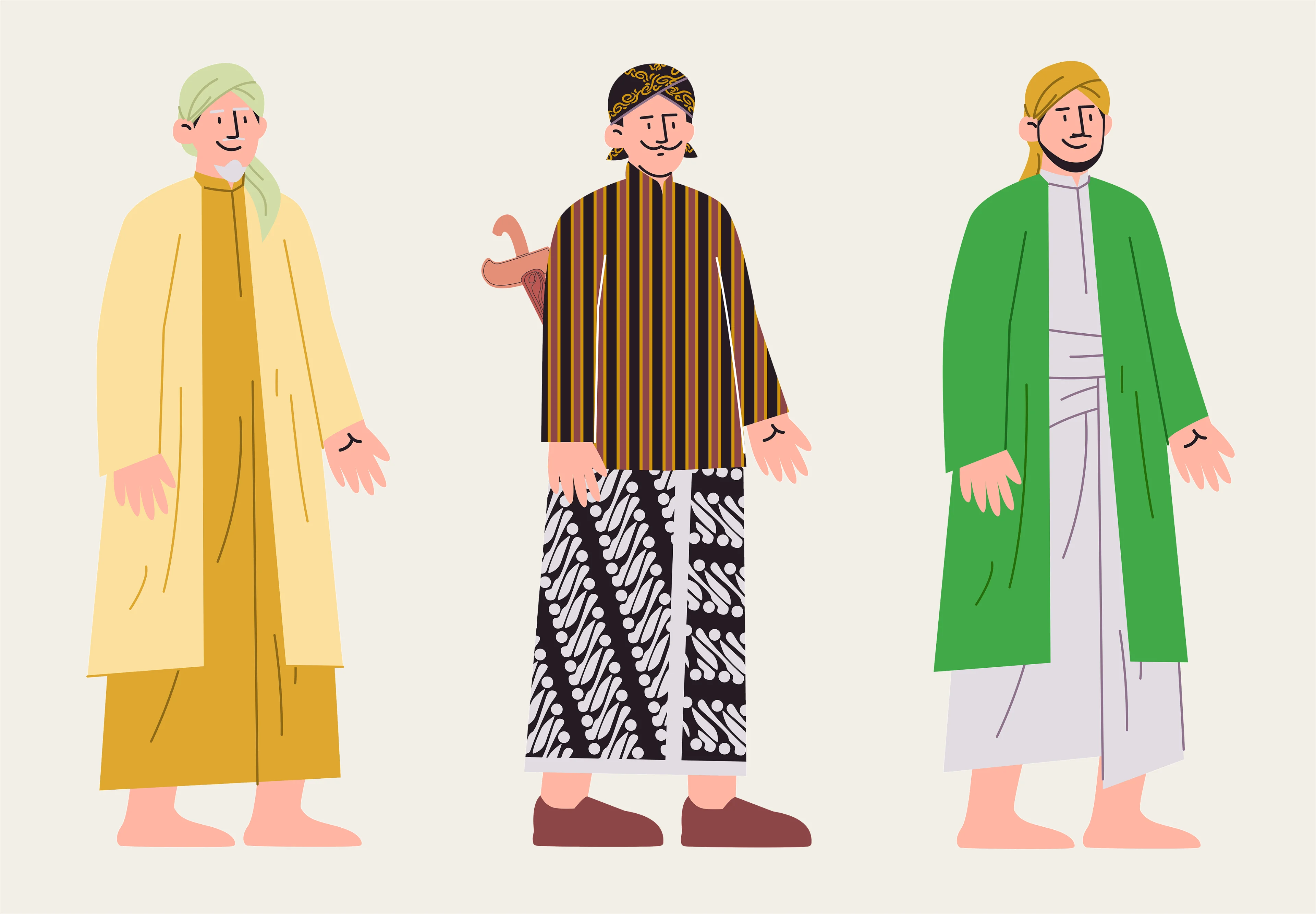
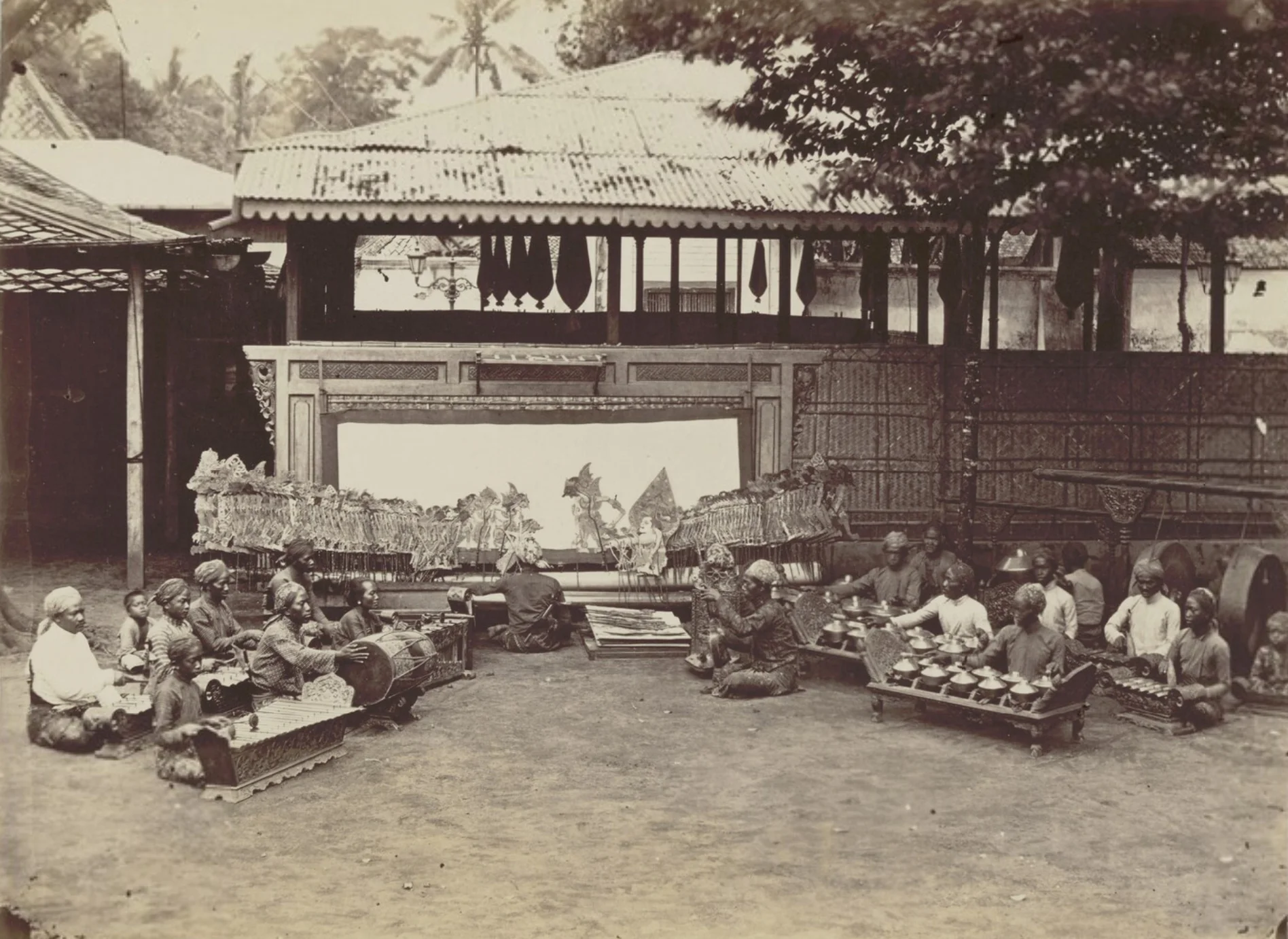
Today, the Wali Sanga are represented on stamps and have inspired television series, movies, and graphic novels. These popular depictions emphasize their singular biographies and approaches to tasawwuf as well as their embrace of Java’s expressive culture, from architectural practices to musical traditions and puppetry. For instance, Sunan Bonang wrote religious poetry and gamelan (gong-chime ensemble) compositions. Sunan Kalijaga (d. 1592) is one of the most beloved of the Wali and is known for expanding the use of music and puppetry to teach Islam.
Gamelon Sekaten
View Credits
Sekaten festival, Surakarta, Indonesia, recorded March 1977. John Pemberton and Nancy K. Florida / Cornell University Library, Indonesian Music Archive, AFR_RL_76_AM_02_01
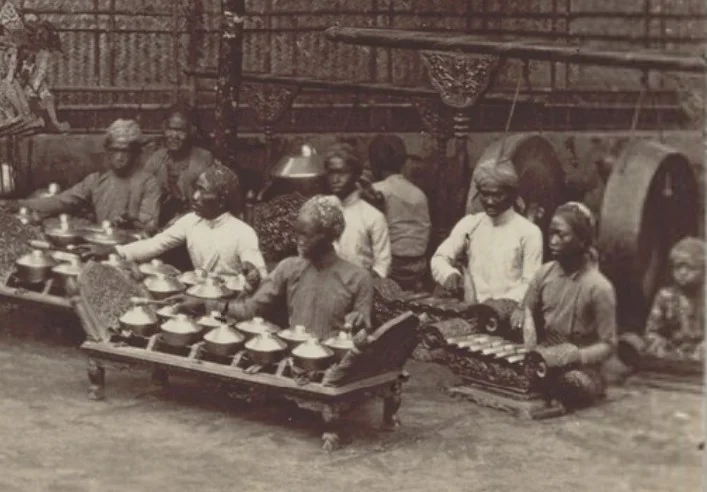
Sunan Kalijaga is credited with developing the gamelan sekaten (also known as sekati), named after the shahada. Unlike other gamelan compositions, sekati has no singers and is only performed for one week each year for the mawlid of the Prophet Muhammad. In Cirebon, sekati is played softly by a small ensemble in a pavilion outside the city’s two palaces. Elsewhere, sekati is often loudly performed in front of mosques, attracting individuals to the celebration.
Puppet Performance
The reverence for the Wali Sanga embodies how Islamic ideas have been conveyed in the past and are still significant today in Java. Dalang (puppet master) Ki Purjadi reflects on this specifically Javanese artform—which is viewed as an inheritance from the Wali—and its practice today.
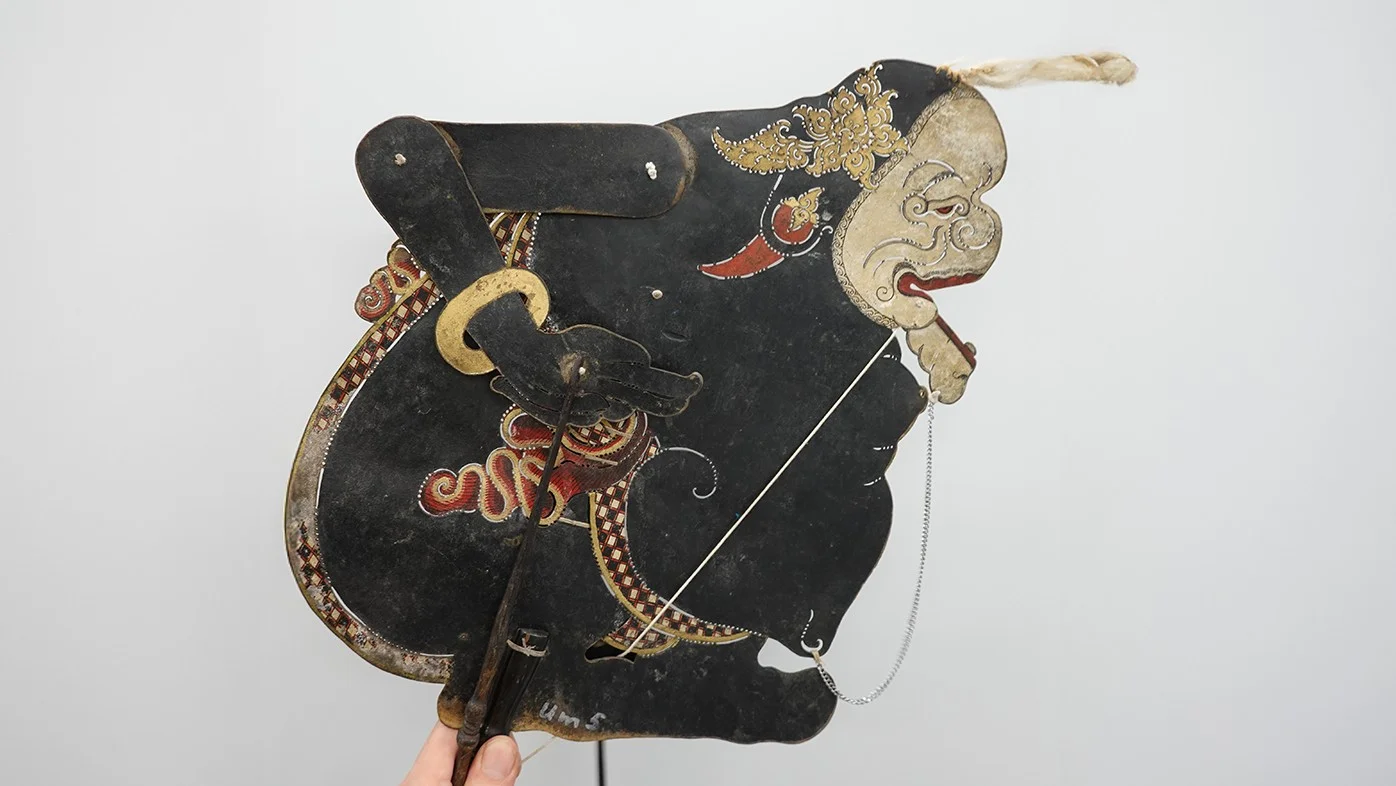 A person holds a traditional Wayang Kulit shadow puppet with black body, ornate painted details, and a single handle, against a plain background.
View Credits
Ki Purjadi, a dalang (puppet master) in dialogue with Professor Matthew Cohen. Video and images courtesy of Ki Purjadi and Matthew Cohen.
Locations
Explore the map or scroll to select a location.