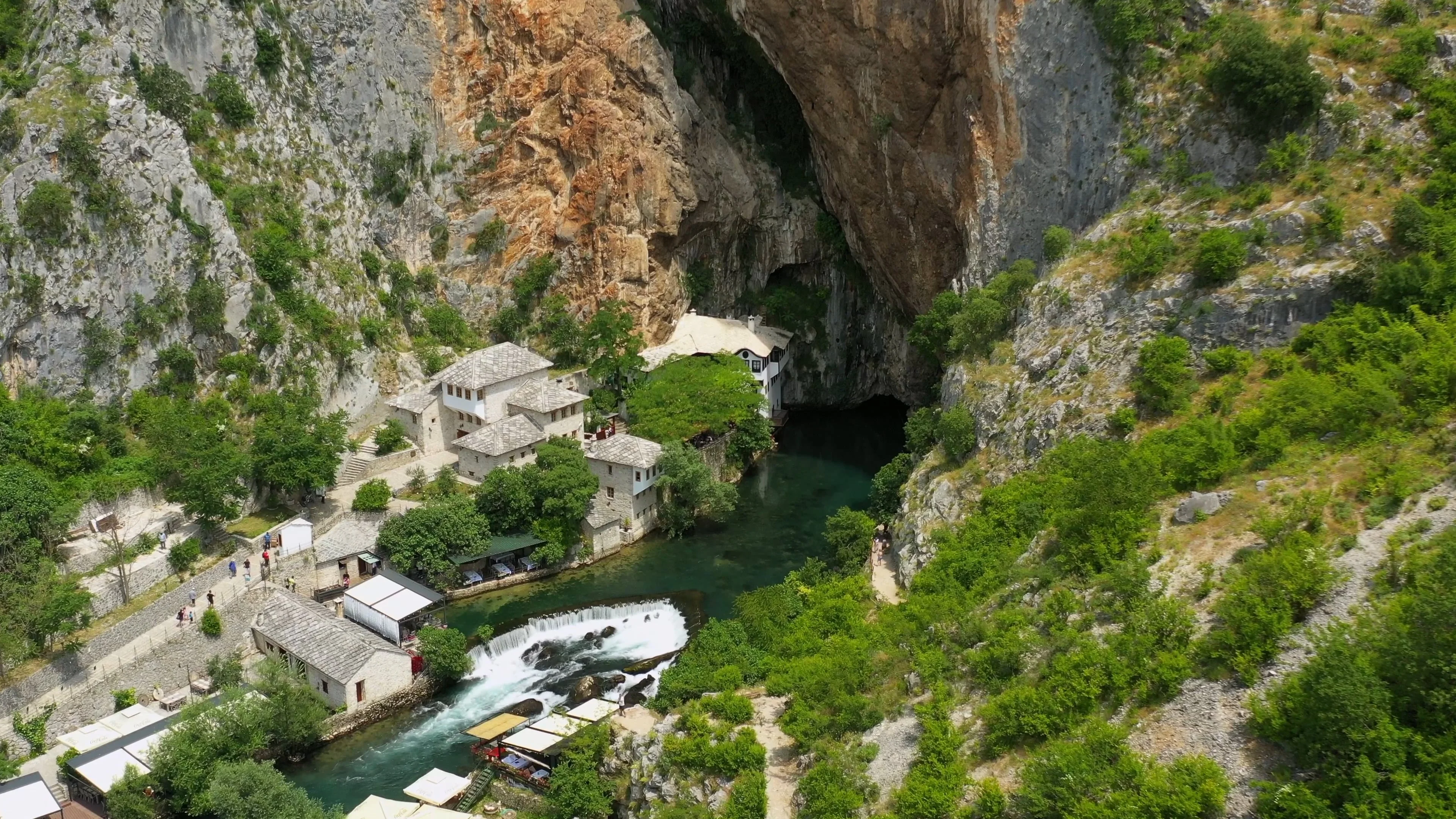
 Aerial view of a river emerging from a cave surrounded by mountains, historic stone buildings, green trees, and a small waterfall near the structures.
Blagaj
Bosnia & Herzegovina
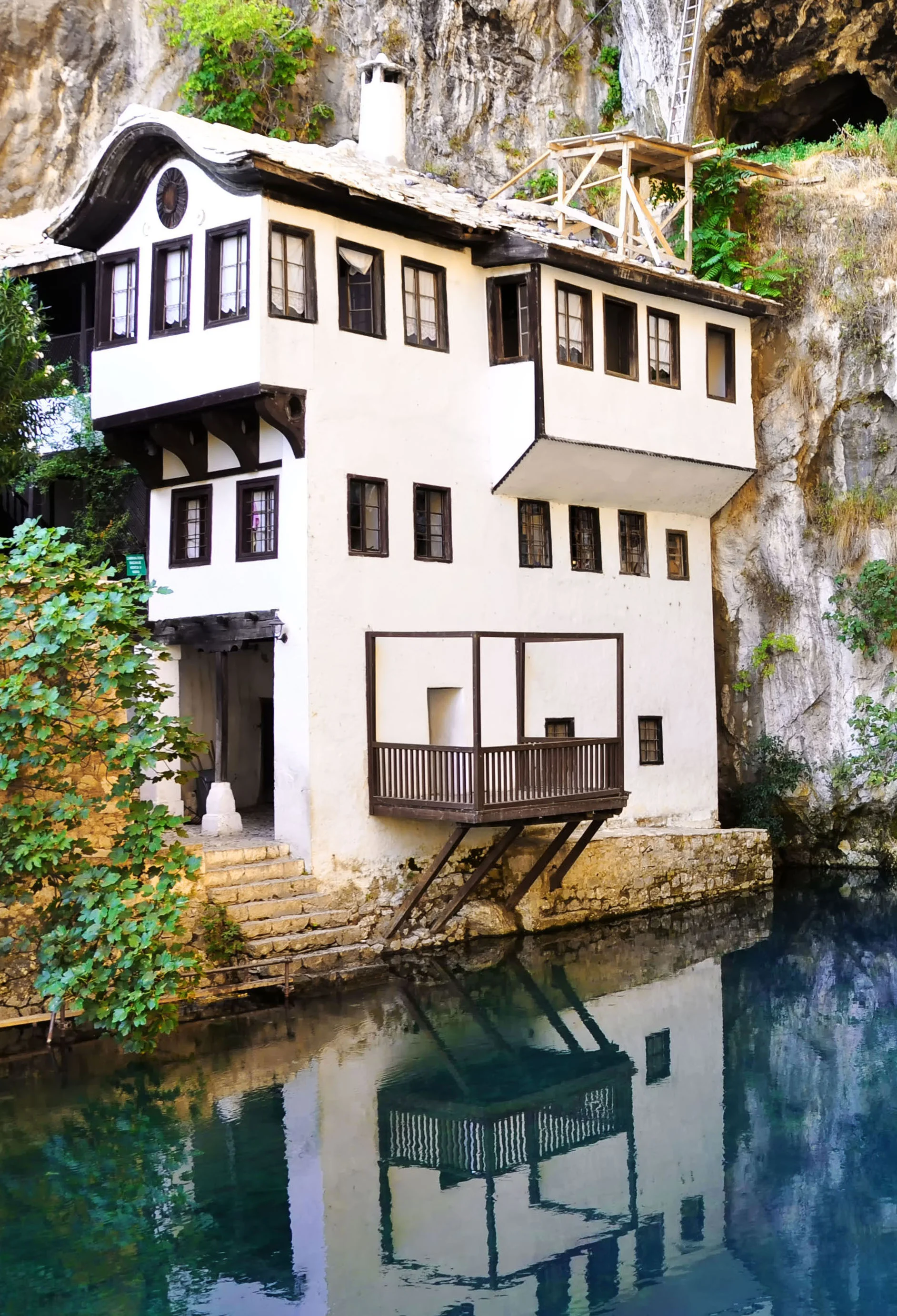
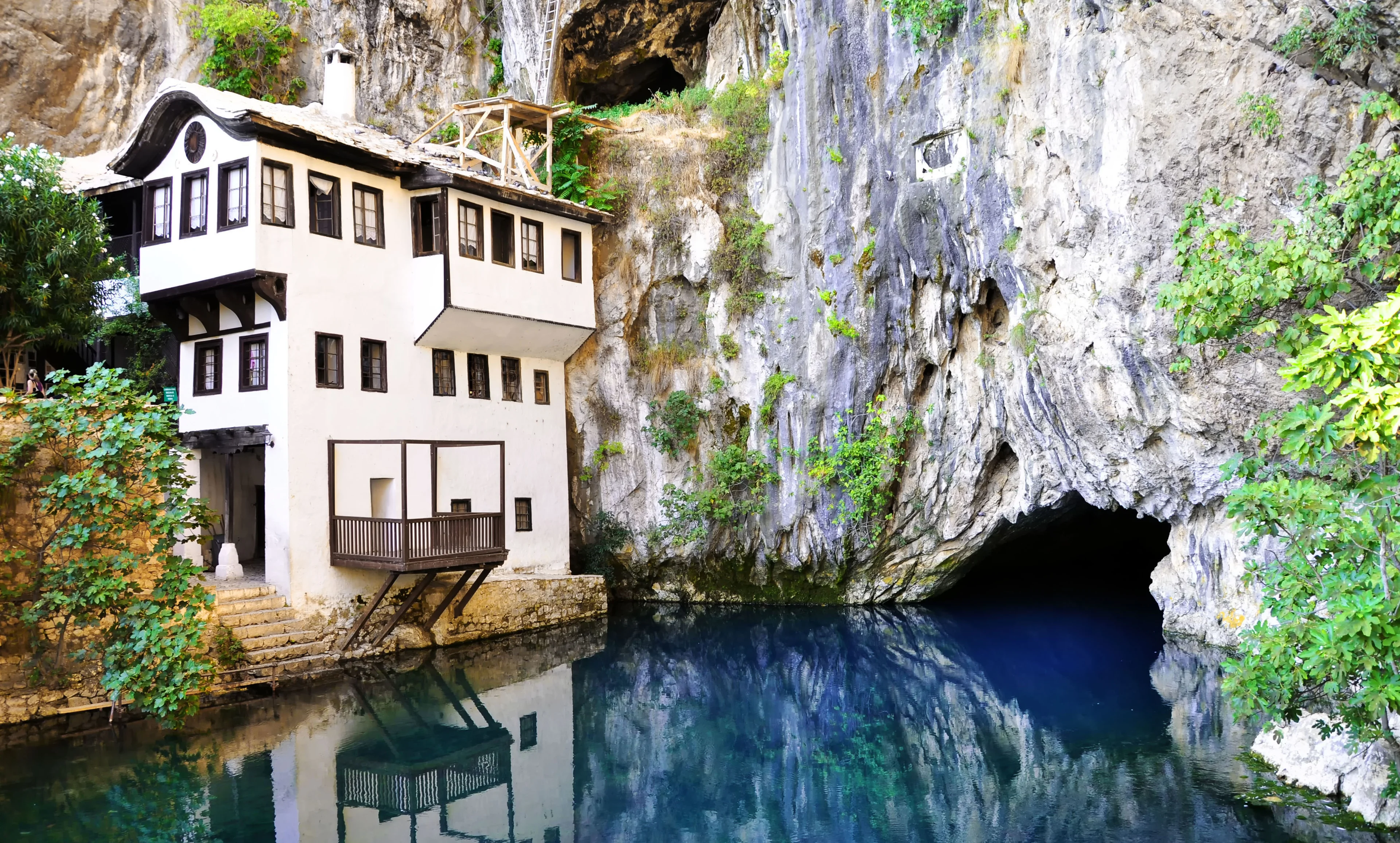
Rising out of the rocks, Blagaj is a remote outpost near the source of the Buna river and occupied by a tekke. The small village is located near Mostar, famed for its bridge, about eighty miles south of Sarajevo in modern-day Bosnia and Herzegovina. Blagaj was probably built around 1520 when the region came under the rule of the Ottoman Turks, but archaeological finds suggest that the site has been considered sacred since Late Antiquity. The current structures date back to around 1851, when the tekke underwent major restoration.
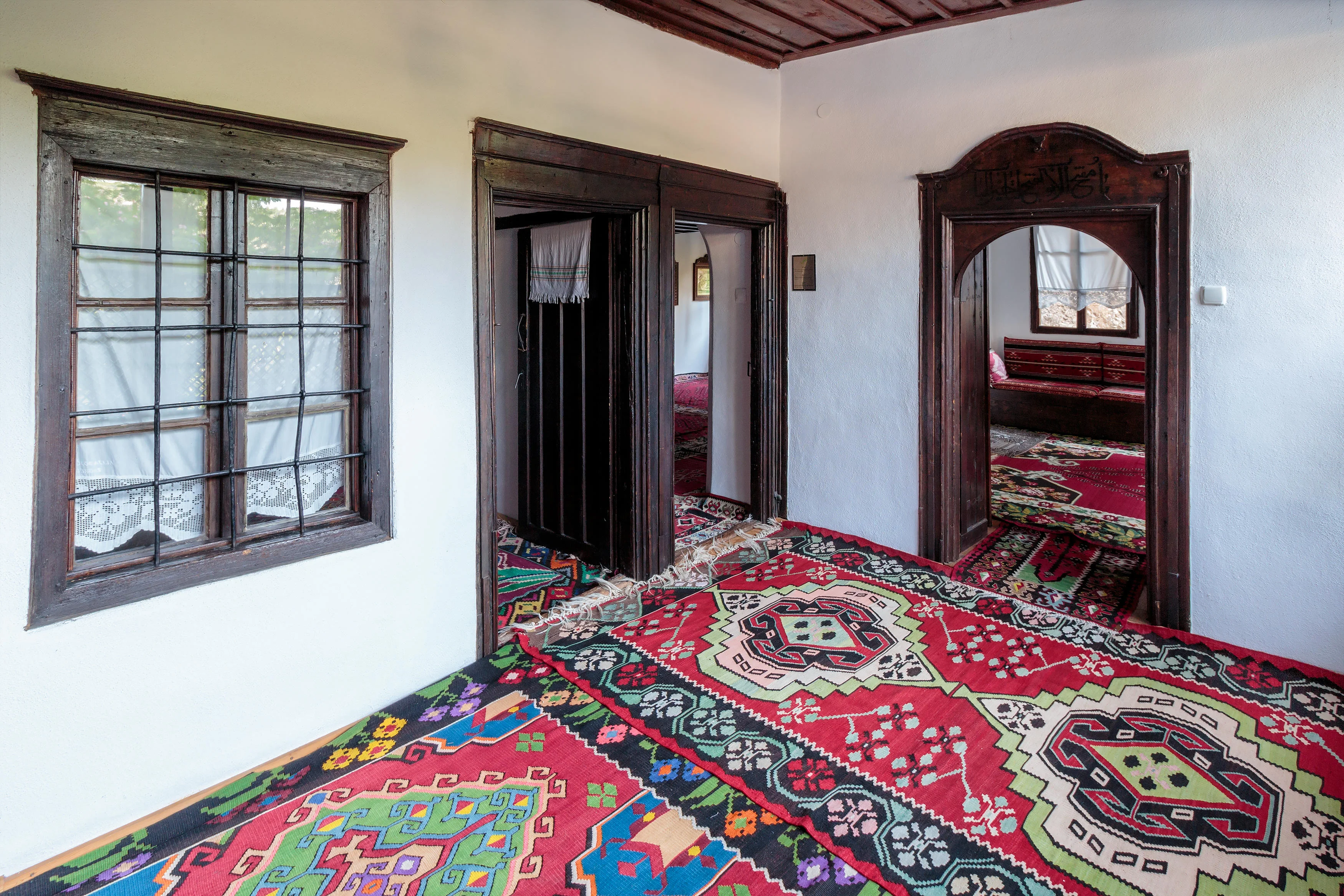
Like any lodge, the one at Blagaj comprises cells for Sufis and includes a musafirhane, or guest house for visitors. It was a destination for traveling devotees and scholars alike. The famous Ottoman historian Evliya Çelebi (1611–1682) described the site in his travelogue of 1664 as a spiritual and intellectual center. Today, the tekke hosts the Naqshbandi order but different tariqas occupied the building in the past. Despite major political upheavals in the Balkans over the past century, Sufism still has a strong presence there. A number of brotherhoods have been revived, and some have even been expanding their reach beyond the region.
Sufi Warrior and Syncretic Saint: Sari Saltuk
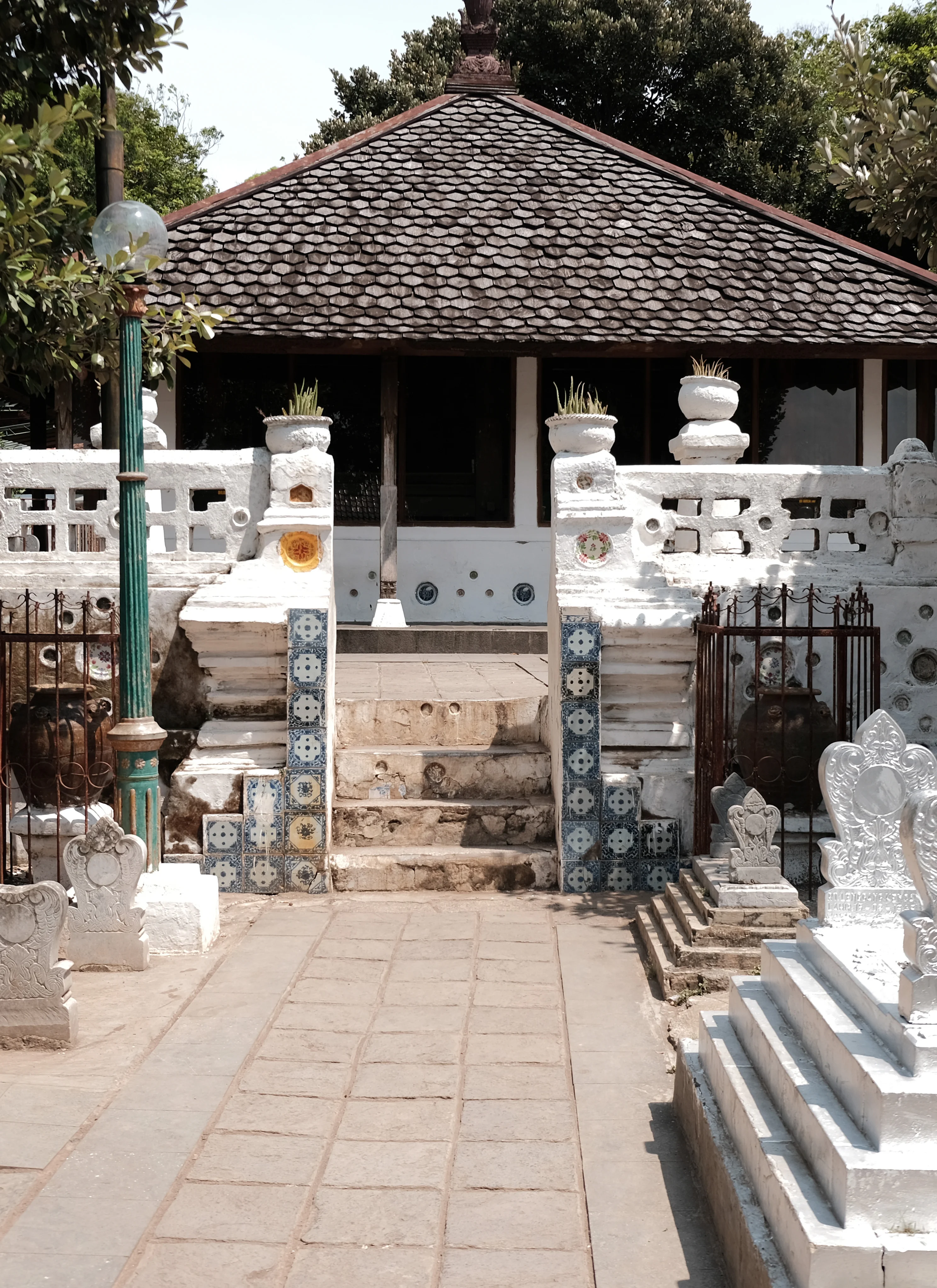
The Blagaj lodge also houses a türbe commemorating Sari Saltuk, a “warrior saint” who lived in the thirteenth century. He is venerated for introducing Islam to the region, which expanded into Europe with the advance of the Turks. Local legends claim he mysteriously disappeared at the spring of the Buna river, leaving behind his mace and sword. Visiting the tomb is especially popular among members of the Bektashi order, who claim Sari Saltuk as their own.
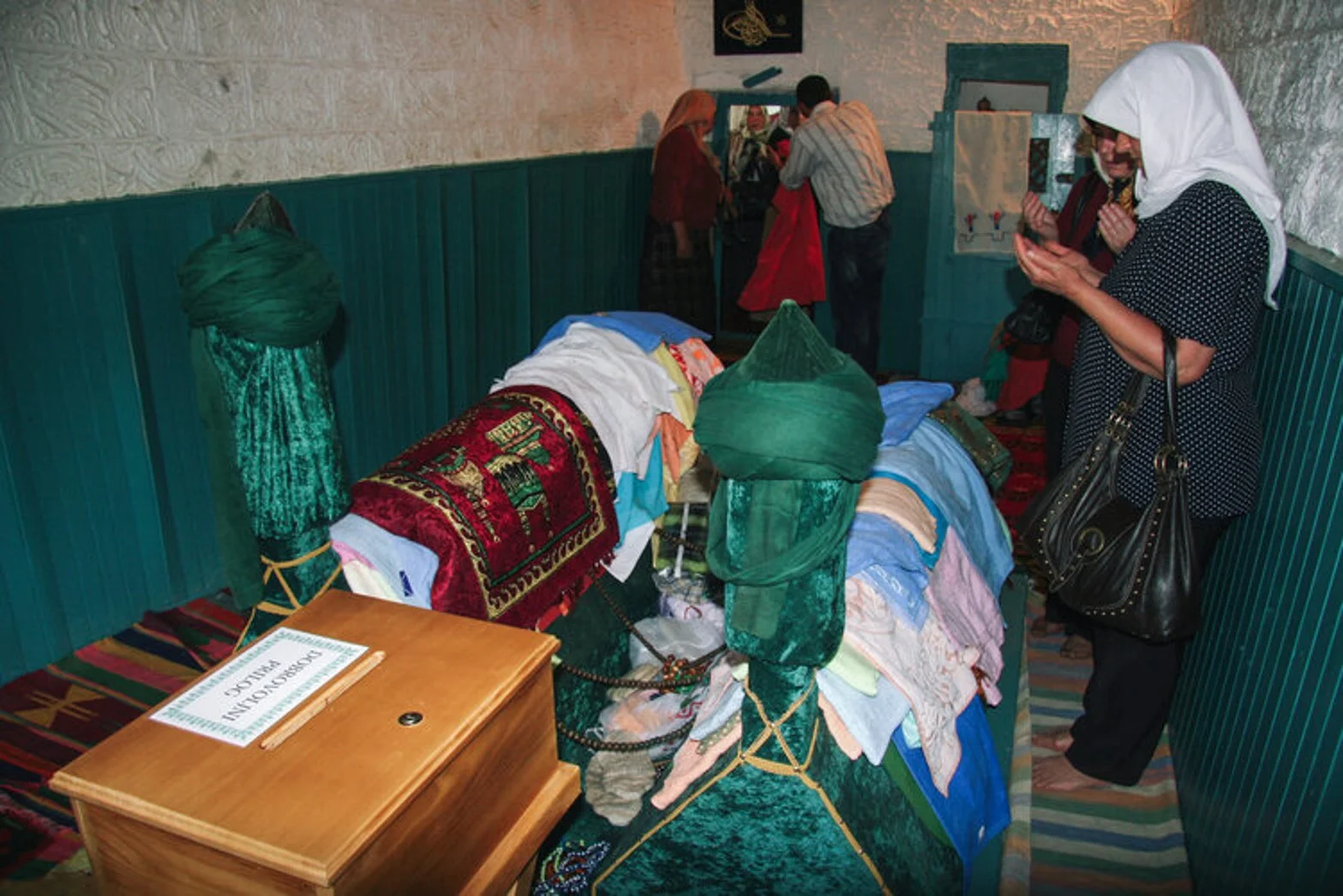
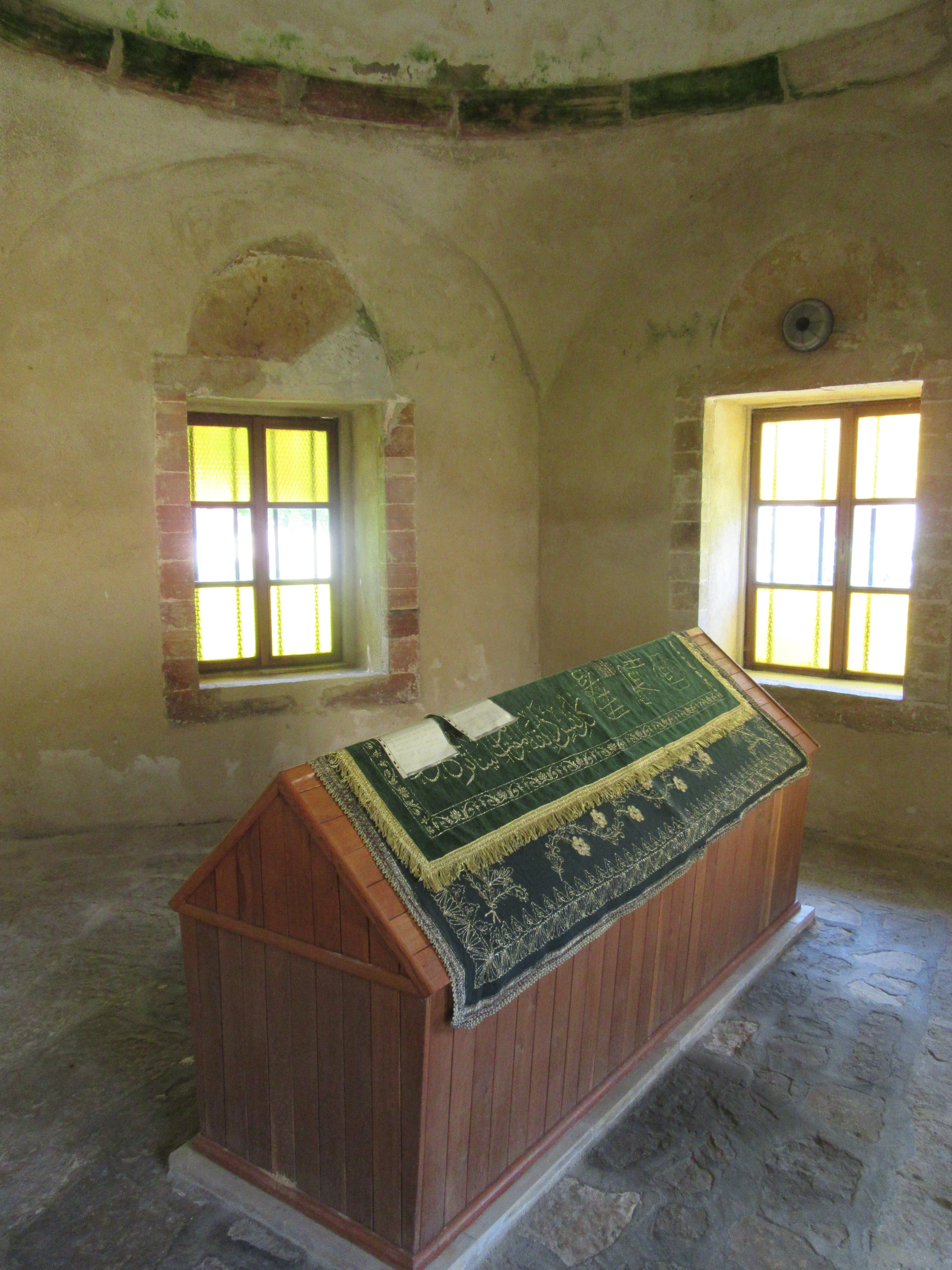
Sari Saltuk’s origin story is unknown. He was likely part of a wave of Turkic-speaking Muslims who migrated from Central Asia to the Balkans. In local myth, he is remembered for slaying a seven-headed dragon with his wooden sword, which convinced Christians to convert to Islam. Hagiographies of Sari Saltuk describe how the saint ordered his followers to bury him in seven places, from the Balkans to Sweden, decreeing “You will find me in each one of them!” The tombs linked remote towns to each other and incorporated the Balkans into a wider Sufi network.
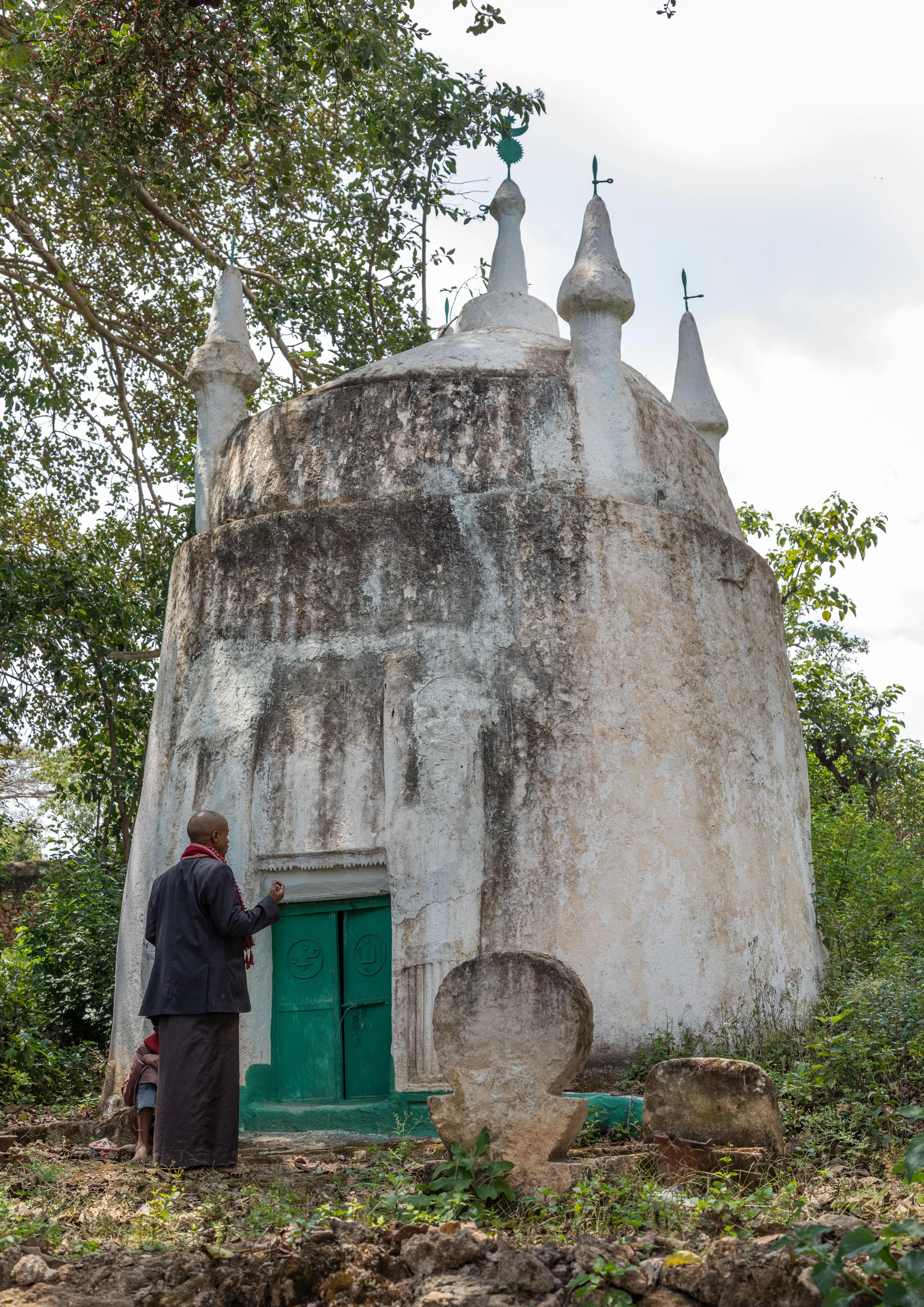
Perhaps the most important tomb of Sari Saltuk is the one located in Babadag, in present-day Romania, which was under Ottoman control until 1878. The mausoleum of modest dimensions and decoration is located not far from a tekke, which includes a mosque and a madrasa.
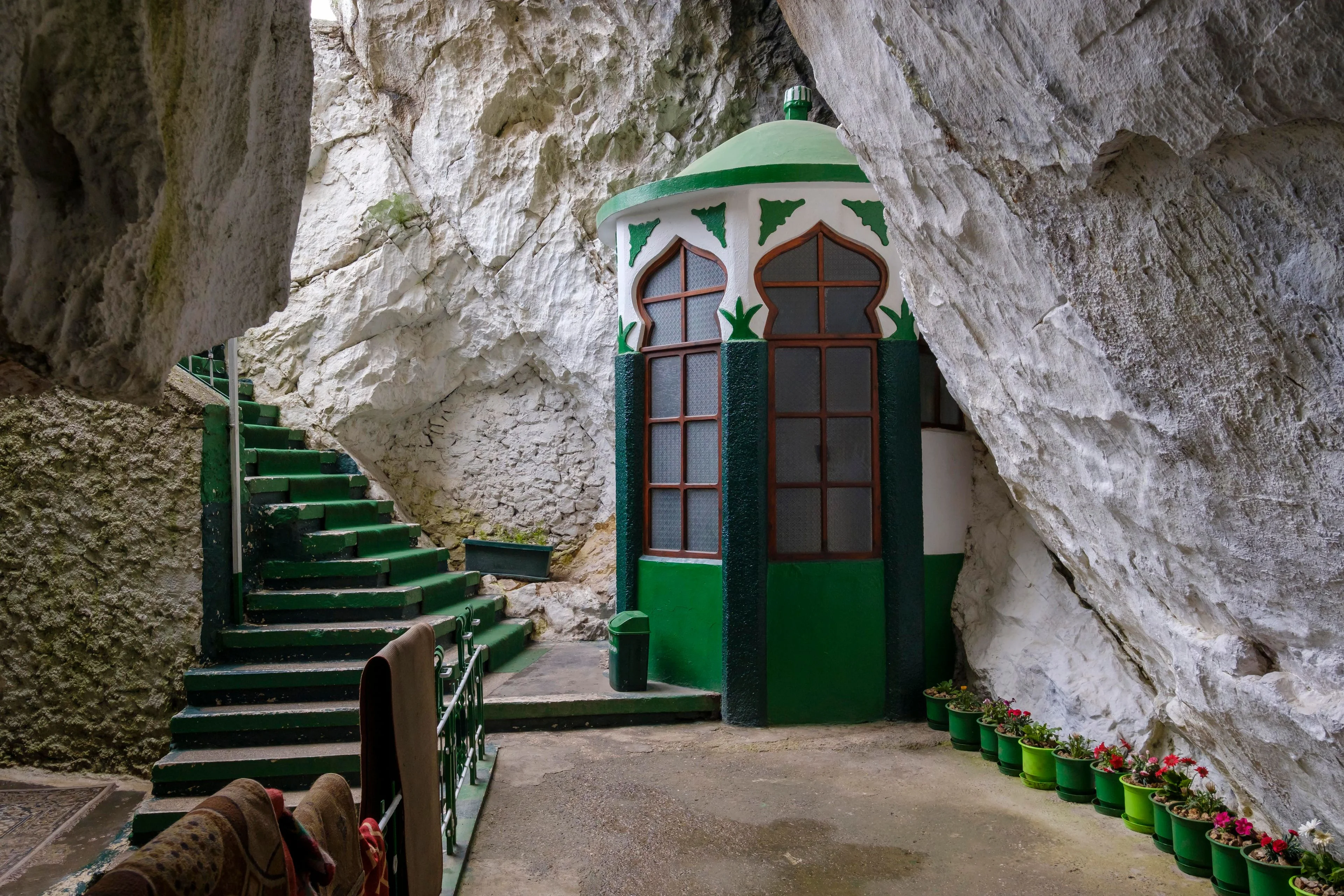
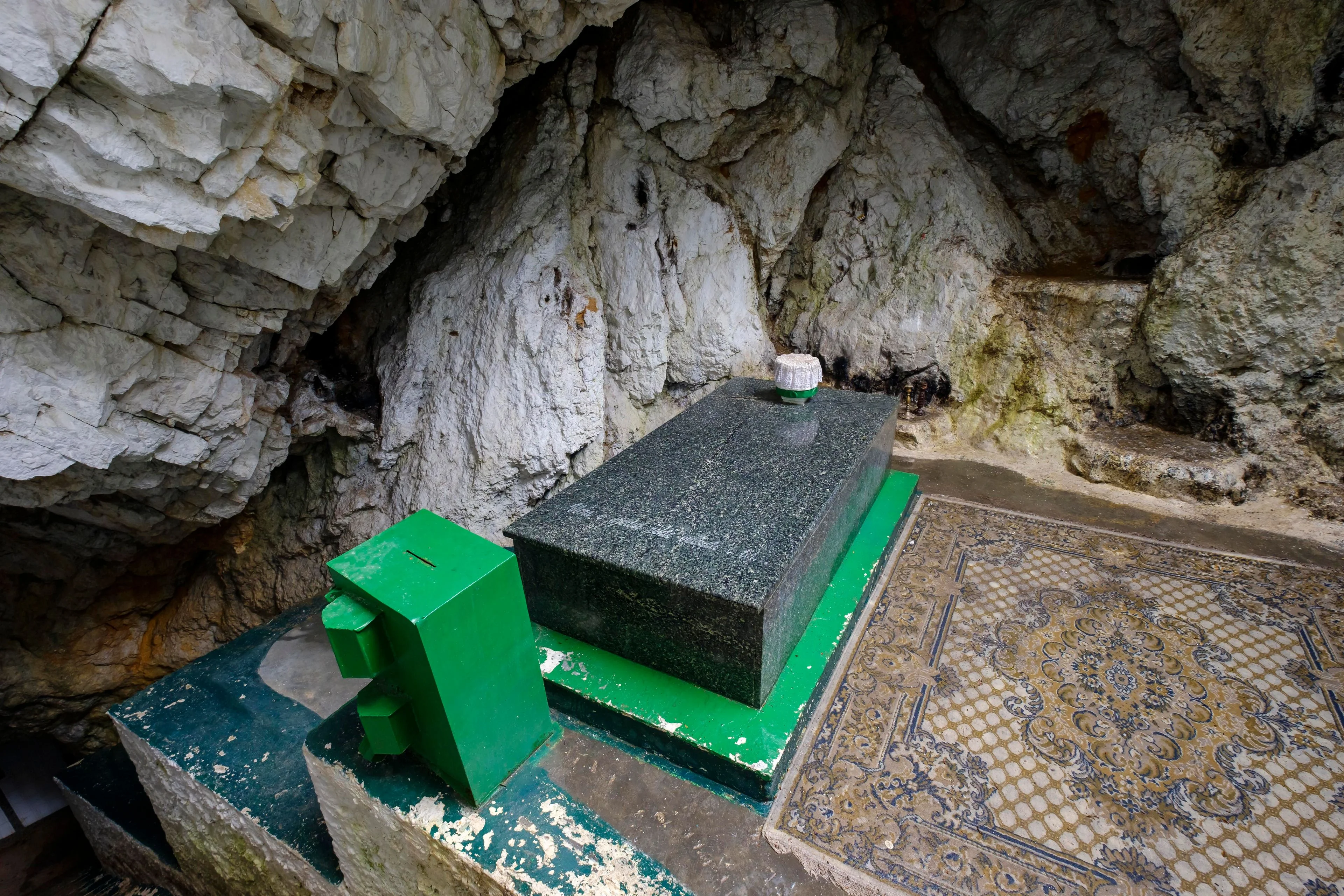
Each tomb of Sari Saltuk is also associated with a miracle. At Blagaj, the saint is believed to have disappeared into the water. In neighboring Albania, where Bektashis represent 10 percent of the Muslim population, the shrine of Sari Saltuk is located in a cave in Krujë. From there, he miraculously flew to the island of Corfu in Greece.
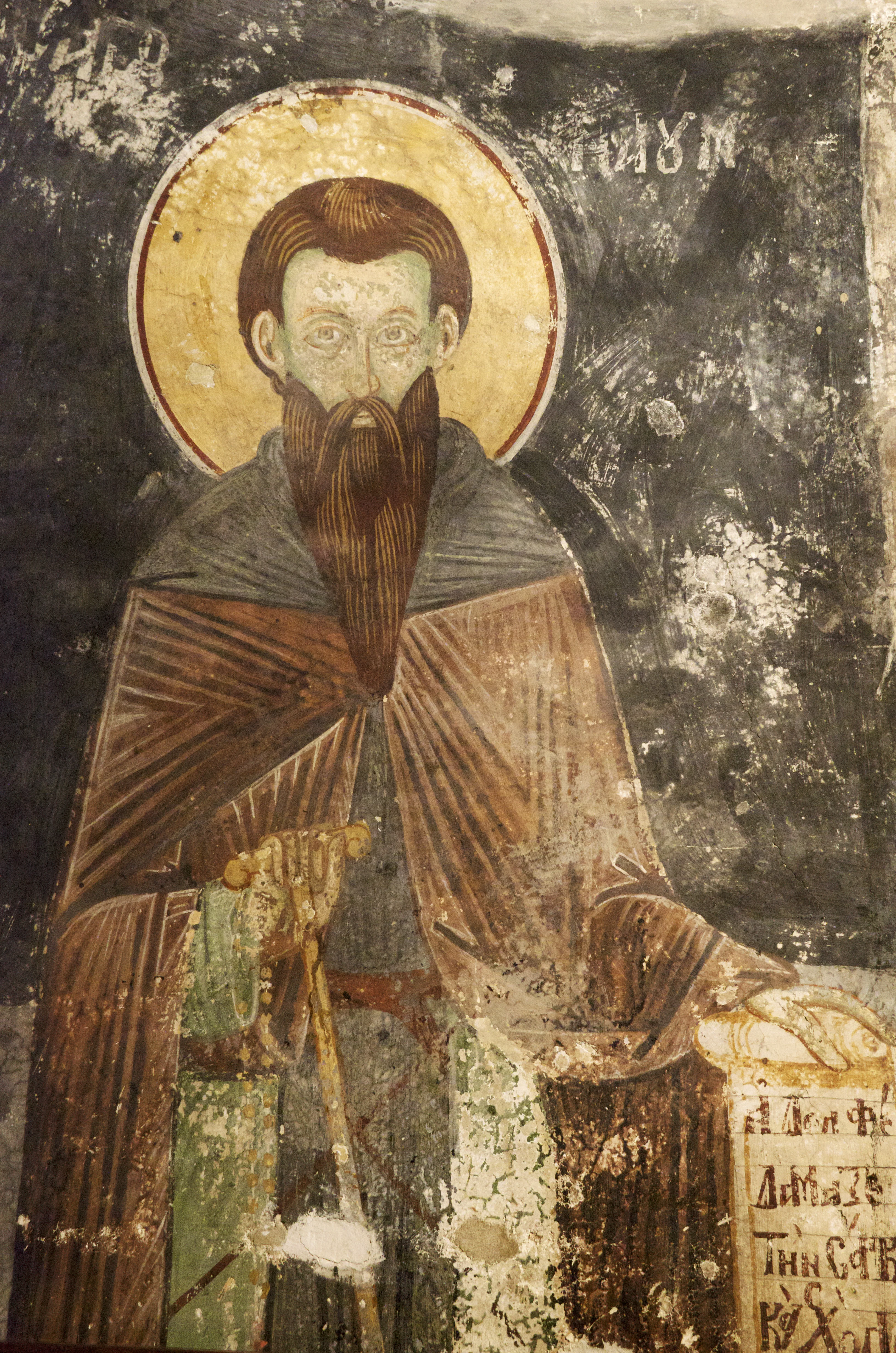
Sari Saltuk lived at a time when Christians and Muslims often intermarried, and his legend intersects with local Christian practices. Muslims also identify Saint Naum (d. 910) of Bulgaria with Sari Saltuk and believe he is buried in the monastery of St. Naum at Ohrid in North Macedonia. Pilgrims from the Orthodox Church, Catholics, Sunni Muslims, and Bektashis all visit the Ohrid shrine.
The Bektashi Order
The Bektashis in the Balkans trace their beginning to the arrival of Sari Saltuk to the region, but the order’s lineage dates back to its founder Hajji Bektash Veli (d. 1270s or later). A contemporary of Rumi, he is believed to have been a Turk from Khurasan who migrated west in the thirteenth century and settled in Anatolia, present-day Türkiye. Today a museum, Hajji Bektash’s darga—located in the city now bearing his name, Hacıbektaş, in central Anatolia— still is a major center for pilgrimage. Since at least the reign of Bayezid II (d. 1512), the Ottoman sultans regularly patronized the shrine and associated themselves with the order, which they often tried to control and utilize.
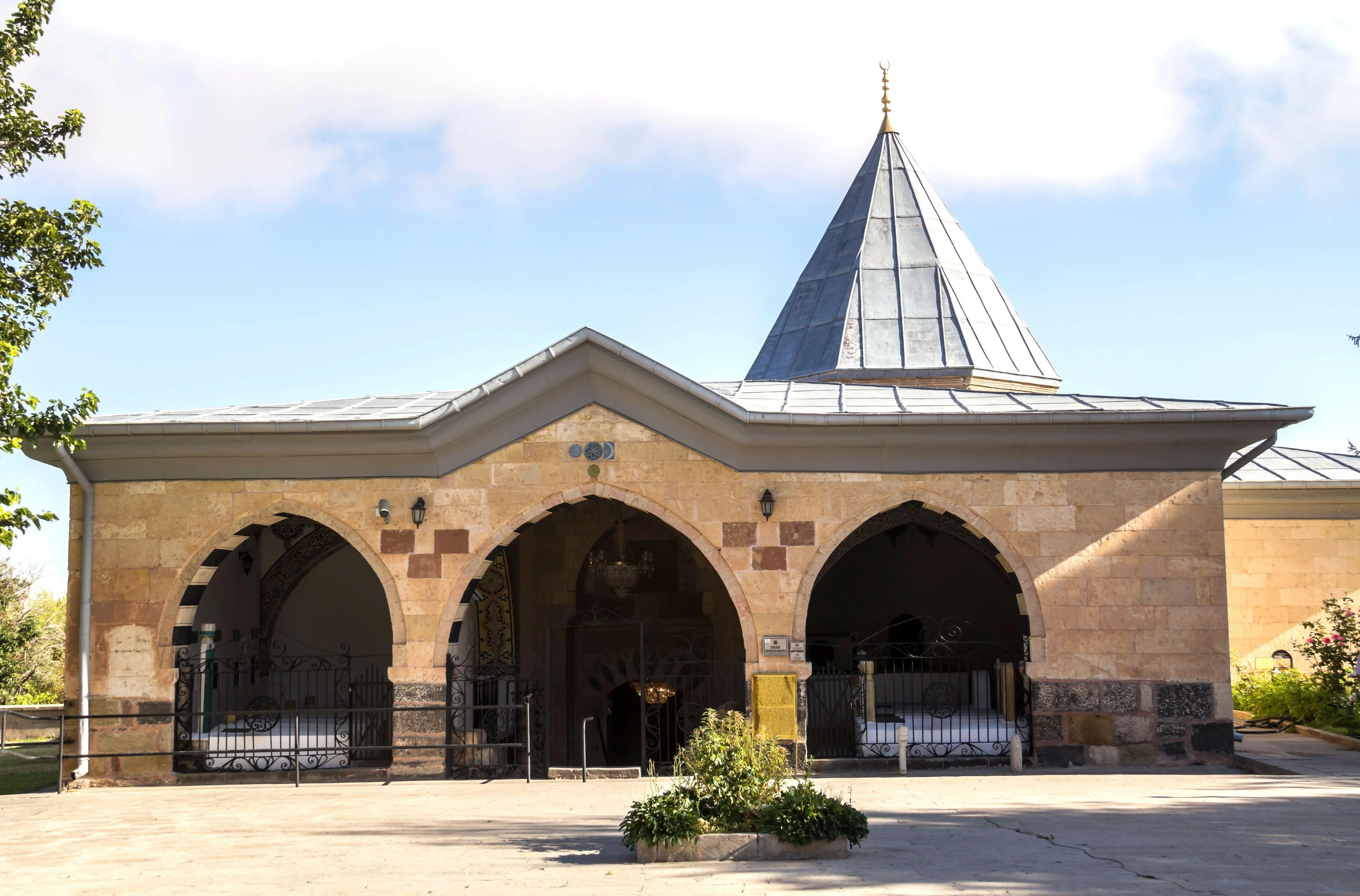
The architectural complex was repeatedly extended and renovated to accommodate the growing number of pilgrims, who would visit Hajji Bektash’s tomb inside. In the early nineteenth century, however, the order fell out of favor because of its association with the Janissaries, the elite Ottoman infantry corps, and was viewed as a threat to the sultan’s power. The shrine, which was turned into a museum after the creation of the Turkish Republic in 1923, is still the epicenter of Bektashi devotion.
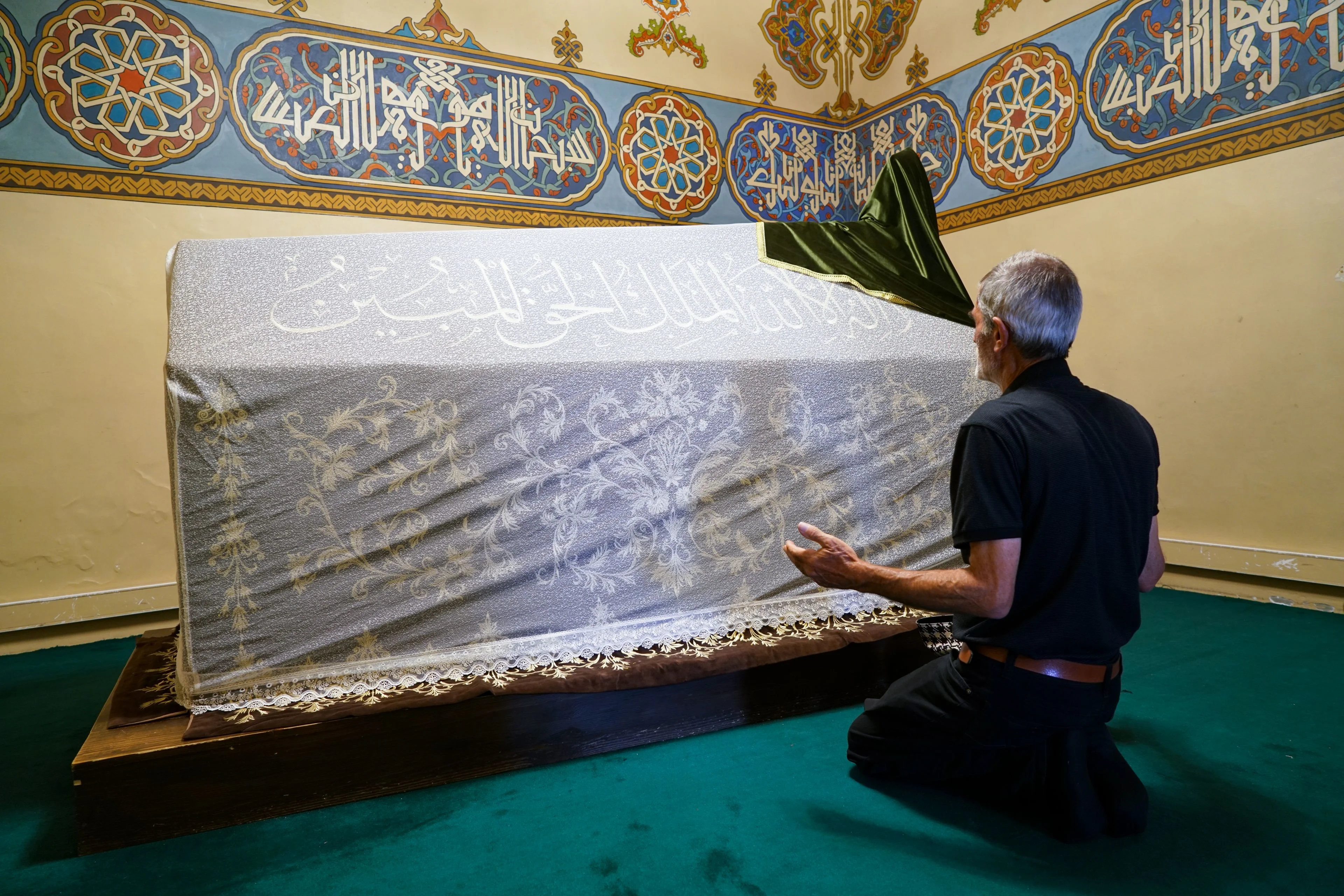
Rooted in Sunni Islam, the tenets of the order gradually incorporated Shi‘i elements and rituals, especially those practiced by the Alevis in Türkiye, and developed idiosyncratic features. The Bektashi devotion to the ahl al-bayt and in particular to Ali—the Prophet’s son-in-law and cousin and the first Shi‘i Imam—goes so far as to placing him in a trinity-like association with the Prophet Muhammad and God.
For the Bektashis, the festival of Sultan Nevruz, the first day of spring in the Persian calendar, marks the birth of Ali. They also celebrate Ashura, the anniversary of the martyrdom of Husayn, the son of Ali, which they commemorate in the presence of the baba, or “father,” with a special wheat-based dish cooked in cauldrons the night before.
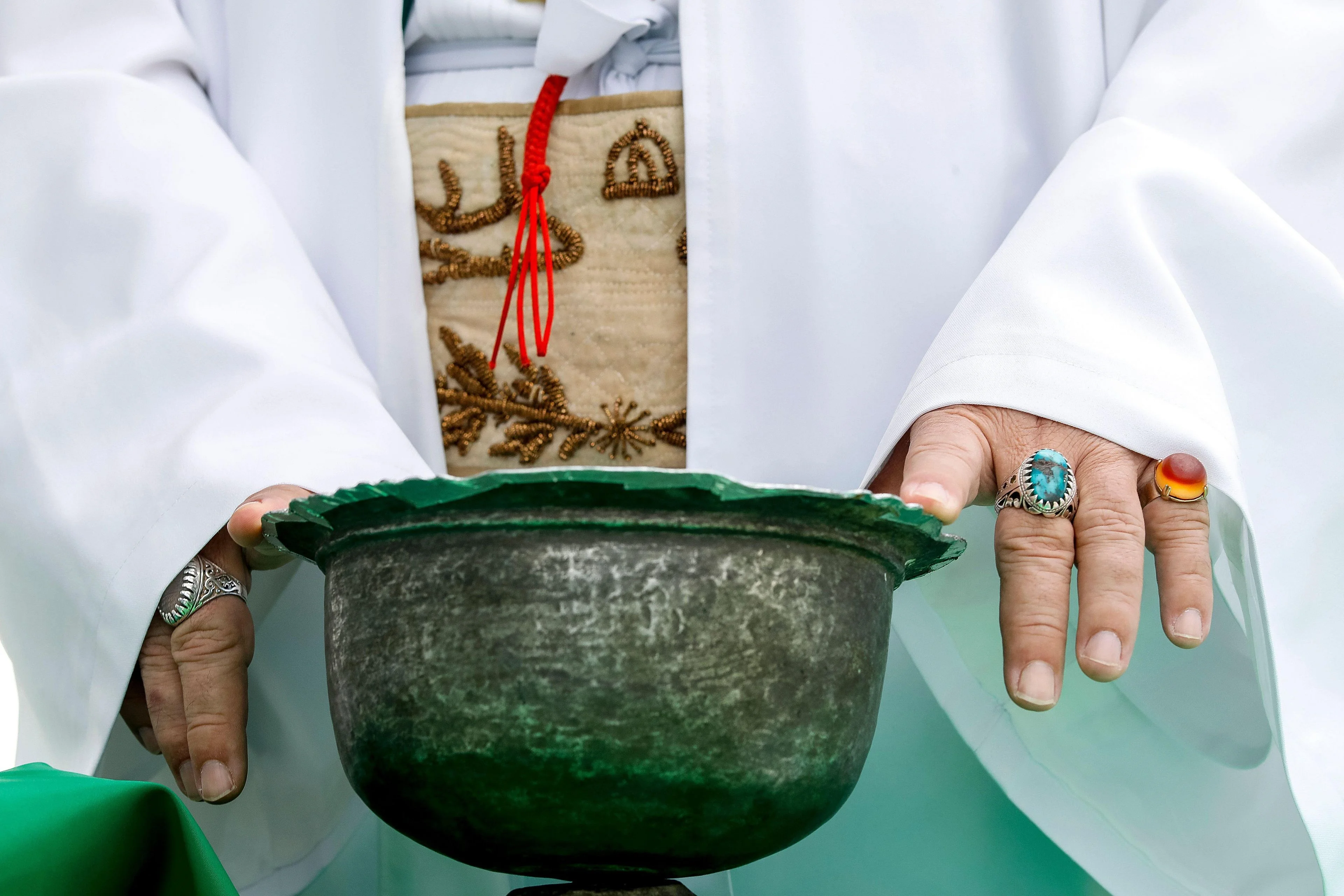

The Bektashi order came to prominence in the fifteenth century and spread from Anatolia to the Balkans and Greece during the Ottoman period. It is still popular in Albania, Kosovo, and North Macedonia.
The Bektashi order is still popular in Albania, Kosovo, and North Macedonia. The tariqa has a hierarchical membership structure defined by the baba—non-hereditary leaders called who are distinguished by their dress and the distinctive headdress, the Husayni taj, or Husayni crown. It is made of felt and has twelve segments symbolizing the Twelve Shi‘i Imams, which further demonstrates the Bektashis’ incorporation of Shi‘i customs.
Bektashi Images and Visual Culture
Bektashi beliefs also led to the development of a distinct iconography and the use of figurative imagery in the shrines and tombs of babas and saints. The scholar Sara Kuehn discusses some of the main characteristics of this artistic tradition and the Bektashi material culture in Albania.
The Visual and Material Culture of Albanian Bektashism
 A traditional painting depicts five seated figures in ornate robes with halos, surrounded by angels and set against a decorated backdrop with Arabic script.
View Transcript and Credits
Dr. Sara Kuehn, Department of Islamic Theological Studies, University of Vienna, Austria
Uphill in the northeastern part of Albania’s capital, Tirana, a stone gate marks the entrance to the World Headquarters of the Albanian Bektashi Sufi order. Flanking this gate are two flags: the green Bektashi banner bearing a white, twelve-fluted emblem and Albania’s red national flag. The twelve-fluted symbol appears again above the gate in stone relief.
Upon entering, visitors are greeted by a bronze statue of Haji Bektash Veli, a 13th-century mystic revered as the Bektashi patron saint. Originally from Khorasan in eastern Iran, Haji Bektash settled in Anatolia, where he founded a dervish community in the village later named Hacibektas. This became the nucleus of the Bektashi order. In 1925, when Mustafa Kemal Atatürk’s secular reforms in Turkey banned all Sufi lodges, the Bektashi leadership relocated to Albania, where Bektashism already enjoyed a strong presence.
Haji Bektash’s legacy endures in art and ritual, such as the wall painting at the Bektashi mausoleum in Fushe-Kruja depicting him with a lion and gazelle. This striking pairing symbolizes the Bektashi ideal of spiritual harmony and peaceful reconciliation of opposites, rooted in universal love—a vision of divine balance overseen by Haji Bektash himself.
Within the Tirana compound stands the main lodge, a rectangular building also marked by a plaque with twelve flutings, echoing the teslim tash, or “stone of surrender,” a pendant conferred on a dervish after completing spiritual training. The teslim tash signifies the dervish’s submission of the self to divine truth. This emblem reflects the Bektashi concept of unity of God, the Prophet Muhammad, and his cousin and son-in-law Ali. At its center is a bust of Ali, surrounded by flutes representing the Twelve Imams, pivotal to Bektashi spirituality. Crowning the lodge is a monumental taj, or crown – the twelve-seamed headdress traditionally worn by Bektashi spiritual leaders. The number twelve recurs here, signaling spiritual lineage and the cosmological order.
The current spiritual leader, Edmond Brahimaj – known as Baba Mondi – and other Albanian Bektashi leaders always wear this iconic headgear, as also shown during the 2012 memorial rituals for Baba Mondi’s predecessor, Haxhi Dede Reshat Bardhi (1935–2011).
In the lodge’s museum, a ceremonial taj bears a gold calligraphic lion-shaped pin, evoking Ali’s epithet haydar, “the lion.”
Paintings of Ali appear throughout the lodge (, and across Albania, posters of him frequently appear, often alongside portraits of Reshat Bardhi (, underscoring their central place in Bektashi devotion.
The lodge’s main ritual hall, the mejdan (, reserved for initiated members, centers on the taht, or “throne” of Muhammad – a three-stepped wooden structure supporting twelve candles, another invocation of the Twelve Imams. The tradition of lighting twelve candles is traced to Balim Sultan, the 16th-century reformer of the order, considered the order’s “second elder.” Two three-branched candelabras above likely symbolize the mystical triad of Hakk (the Real), Muhammad, and Ali. Together, the symbolic numbers twelve and three frame the cosmological structure of Bektashi belief.
The Bektashi path is deeply Shi‘i-inflected. Baba Mondi has emphasized the kinship between Albanian Bektashism and the Alevi tradition, a branch of Shi‘ism widely practiced in Turkey and the Balkans, both of which center on the sanctity of the Prophet’s Muhammad family.
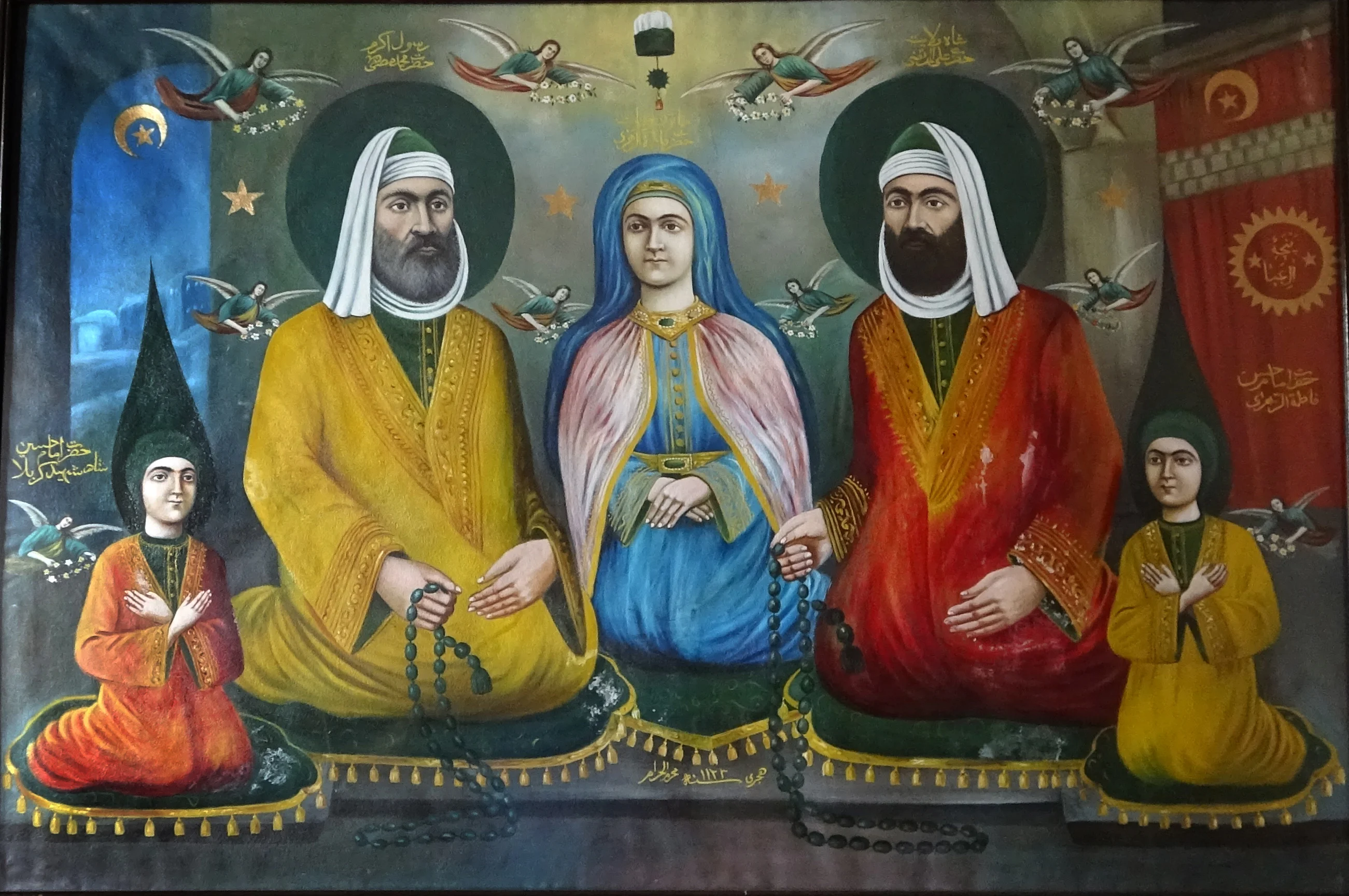
The lodge’s reception room where Baba Mondi meets with diplomats, religious figures, and political leaders displays a large oil painting dated 1123 AH/ 1711 CE depicting the five members of the Prophet’s family, the Ahl al-bayt.
Fatima is seated at the center, flanked by her father Muhammad and her husband, Ali. Beside them are her sons Hasan, the second Imam, and Huseyn, the third Imam, martyred at the Battle of Karbala in 680 CE. Since the Prophet left no surviving sons, the spiritual lineage continues through Fatima and Ali. Though their heads are covered, all faces – including the Prophet’s – are fully visible. Fatima’s central placement also reflects Bektashi views on gender equality in spiritual life. So important is devotion to the Ahl al-bayt that the famous 17th-century Ottoman traveler Evliya Çelebi referred to the Bektashis as Al-i Aba, meaning “the People of the Cloak,” a qurʾanic epithet for the Prophet’s family and a synonym for the Bektashi path.
The painting’s artist is unknown, and while it does not appear to borrow directly from Christian iconography, it may draw on diverse Albanian visual traditions, creating a distinctively Bektashi pictorial style. Similar compositions appear in other Bektashi sites, such as Fushe-Kruja reinforcing a shared devotional aesthetic.
Further south, perched on a cliff overlooking the sea near Saranda, stands the newest Bektashi lodge, dedicated to Reshat Bardhi.
Following the recent discovery of footprints believed to be those of two Bektashi saints, the lodge has become a pilgrimage site. One print is attributed to Sari Saltuk, one of the most venerated saints in the Balkans who is regarded as a founding figure by the Bektashis, and the other to Balim Sultan. Revered as miraculous, these marks draw pilgrims seeking blessings. For the Bektashi community, the rediscovery of the prints affirms the living power of the tradition.
Under Baba Sadik Ibro’s leadership, the Saranda lodge is richly decorated with portraits of key Bektashi figures, including Ali, Haji Bektash, Balim Sultan, and Reshat Bardhi – each a node in the spiritual genealogy of the Bektashi path.
Unidentified painter, Ahl al-bayt (The Prophet Muhammad and his family), probably Albania, dated 1123 AH/ 1711 CE, oil on canvas. Reception room of the Bektashi World. © Sara Kuehn
Gate entrance to the Bektashi World Headquarters, Tirana, Albania. © Sara Kuehn.
Bronze statue of Haji Bektash Veli in the Bektashi World Headquarters, Tirana, Albania © Sara Kuehn.
Wall painting with Haji Bektash Veli at the Bektashi mausoleum in Fushe-Kruja, Albania. © Sara Kuehn.
Entrance of the main lodge at the Bektashi World Headquarters, Tirana. © Sara Kuehn.
Baba Mondi and other Bektashi leaders in 2012. © Sara Kuehn.
Bektashi ceremonial taj. © Sara Kuehn.
Reshat Bardhi under a painting with Ali ibn Abi Talib. © Sara Kuehn.
Banners with Ali and Reshat Bardhi in a street in Albania. © Sara Kuehn.
Taht or “Throne of Muhammad” in the main ritual hall of the Bektashi lodge, Tirana. © Sara Kuehn.
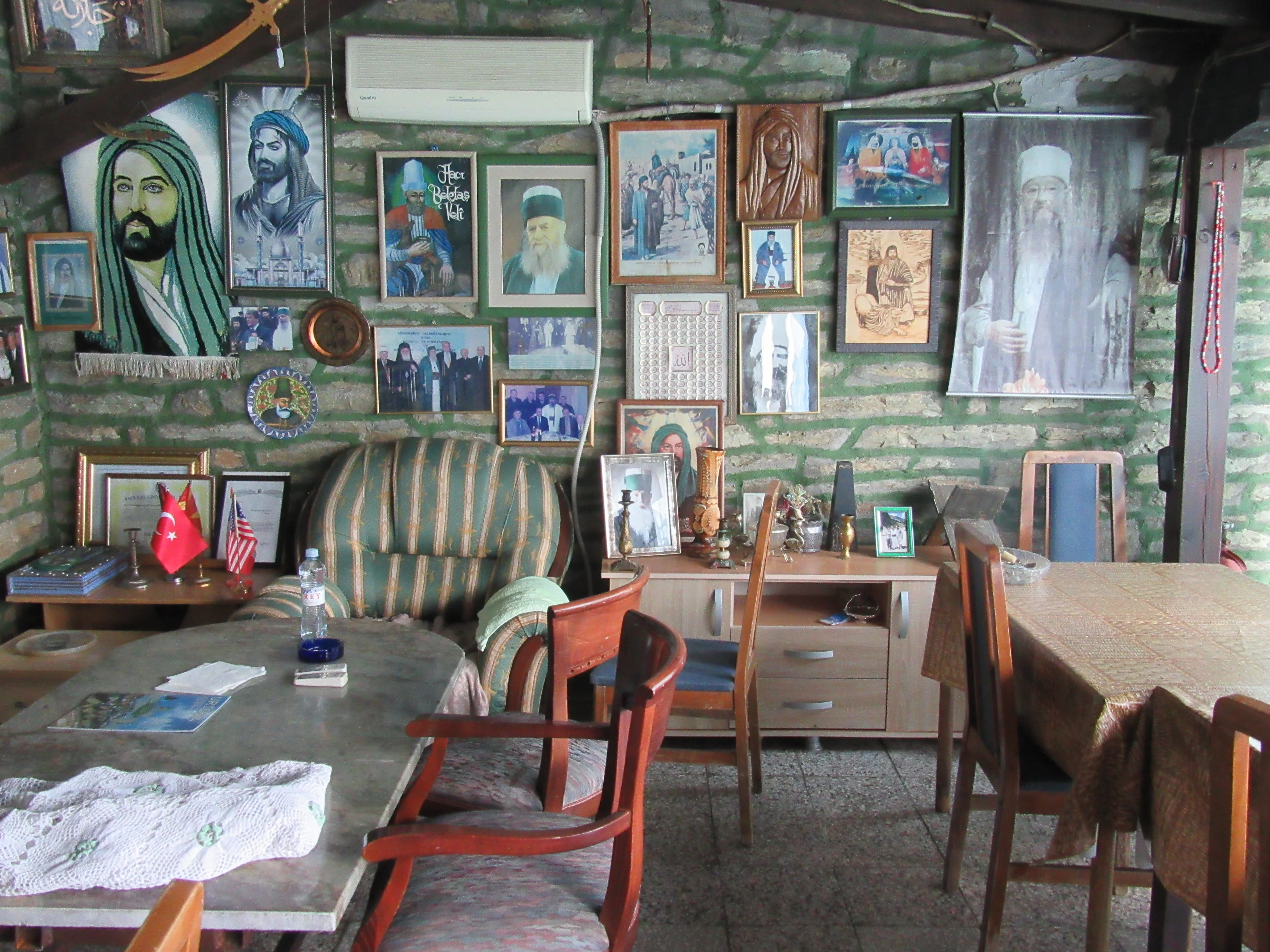
Reception room at the Bektashi World Headquarters, Tirana. © Sara Kuehn.
Fresco with the Ahl al-bayt in the shrine at Fushe-Kruja, Albania. © Sara Kuehn.
Bektashi lodge dedicated to Reshat Bardhi near Saranda, Albania. © Sara Kuehn.
Footprints of Sari Saltuk and Balim Sultan in the Bektashi lodge near Saranda, Albania. © Sara Kuehn.
Interior of the Bektashi lodge in Saranda, Albania. © Sara Kuehn.
Painting of Haji Bektash Veli in the Bektashi lodge in Saranda, Albania. © Sara Kuehn.
Painting of Balim Sultan in the Bektashi lodge in Saranda, Albania. © Sara Kuehn.
Painting of Reshat Bardhi in the Bektashi lodge in Saranda, Albania. © Sara Kuehn.
Intermittent religious suppression and political conflict in the Balkans and Türkiye destroyed most eighteenth-century and nineteenth-century examples of Bektashi paintings. Following the fall of Communism in the early 1990s, supporters from Iran and Türkiye brought posters with religious images, such as portraits of Ali, to Bektashi shrines in Albania and introduced a new pictorial tradition. Today, modern prints and photos of babas are displayed in shrines, and Bektashi images also appear on pens, pins, and pocket images. For devotees, these memorabilia are considered to carry prophylactic and curative powers as well as baraka, especially when given by a baba.
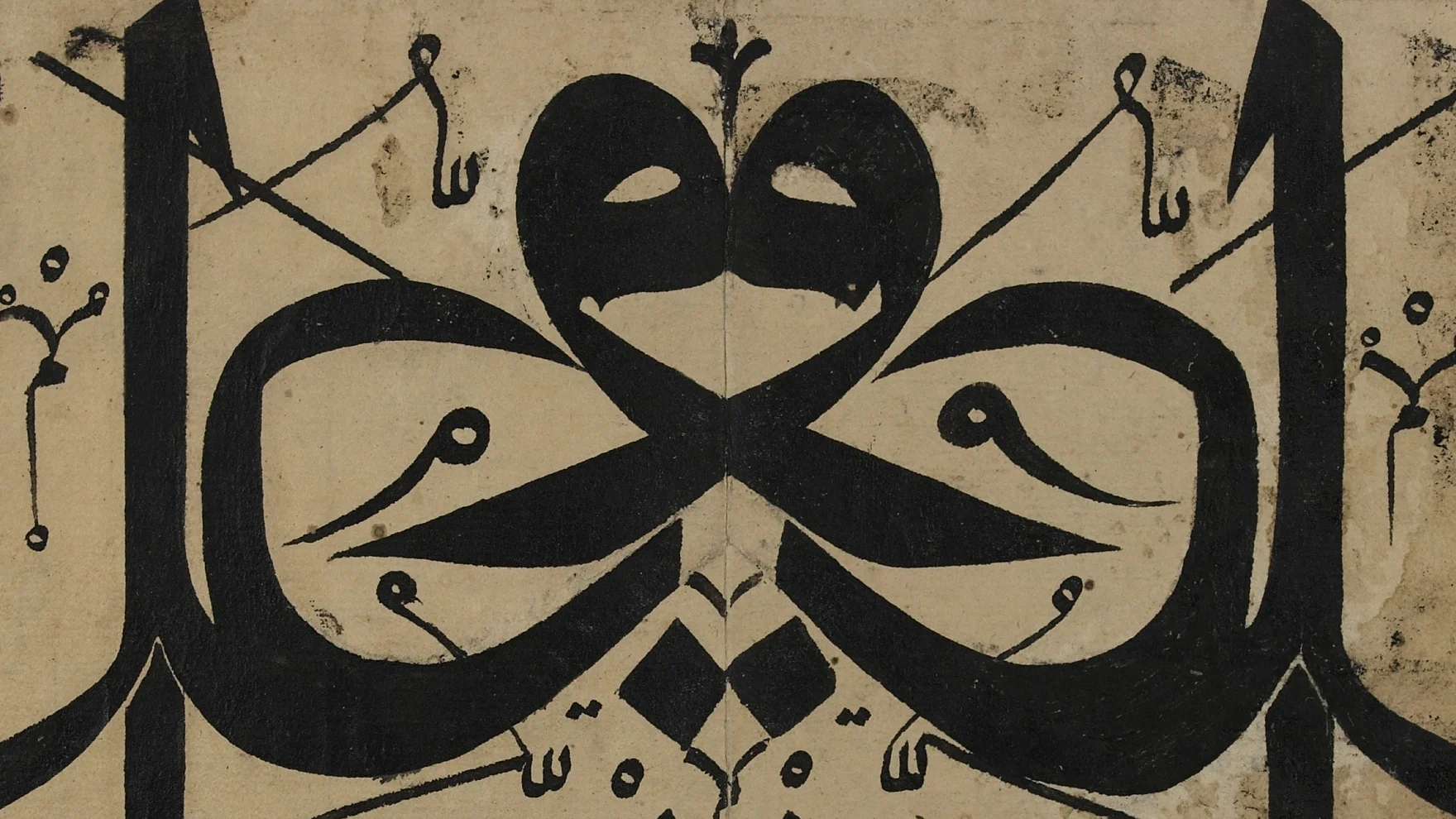
While Imam Ali and other members of the Prophet’s family are depicted in Bektashi art, they can also be represented through calligraphy. Whether transcribed on the walls of Bektashi mosques and shrines or as independent folios and panels, these calligraphic works embody the importance of the art of writing in Bektashi cosmology. They are inspired by Hurufism, a set of beliefs that was developed in the fourteenth century and regarded the world as a manifestation of a divine language. An important component of Bektashi thought, this idea also explains the development of a particular form of calligraphy, known as muthanna (“mirror writing”), which is closely associated with the Bektashi order. It became widely popular throughout much of the late Ottoman Empire.
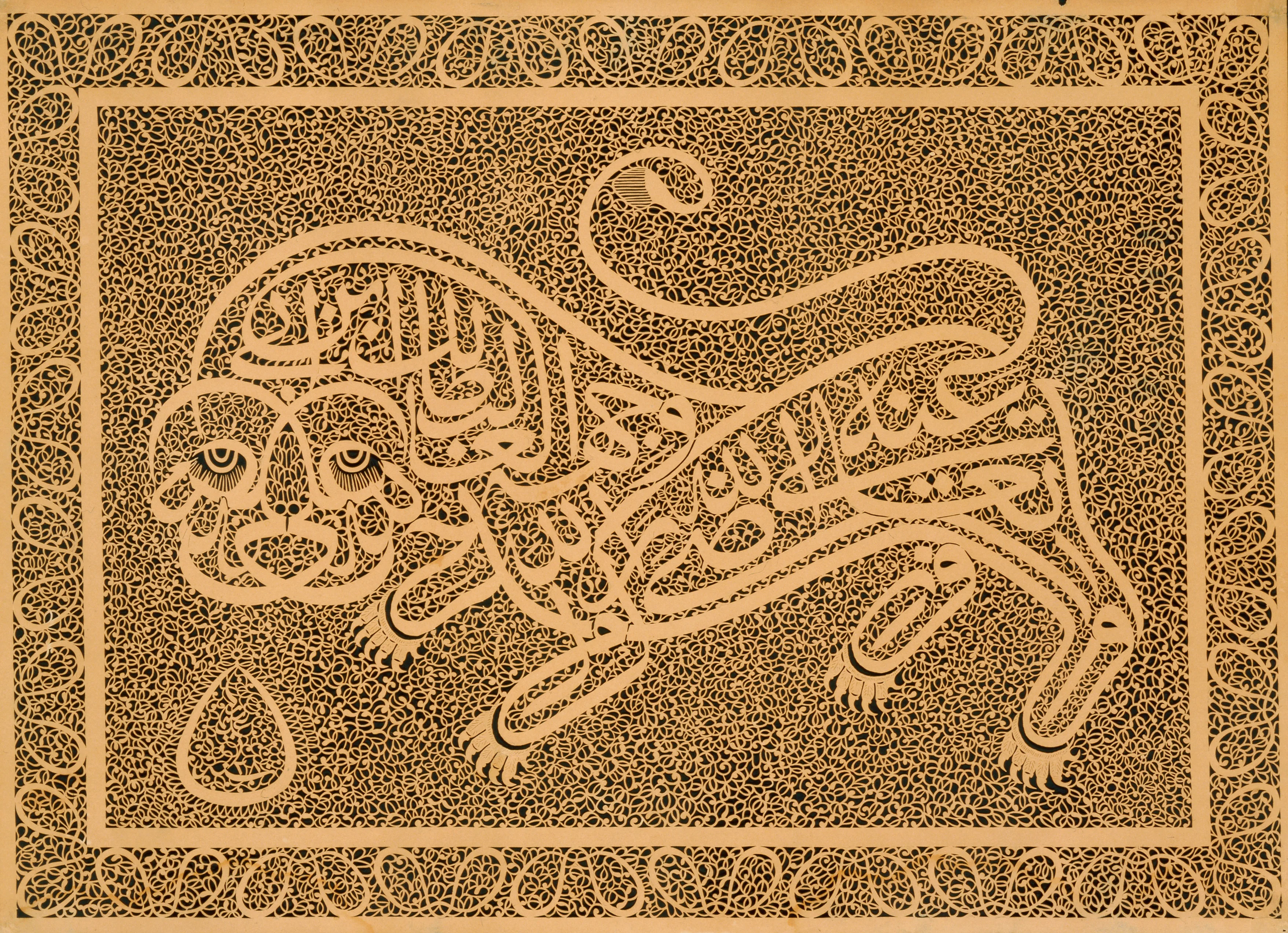
A Bektashi Mirror Calligraphy
These Bektashi calligraphic works use letters to create new and highly innovative configurations known as “calligrams.” In this remarkable example cut out of paper, Imam Ali, whose surname is asad Allah (literally, “the lion of God”), is symbolized as a golden lion. Reading from the tail to the head, the composition states, “May God bless his countenance and be satisfied with him, God’s victorious lion, Ali ibn Abi Talib.”
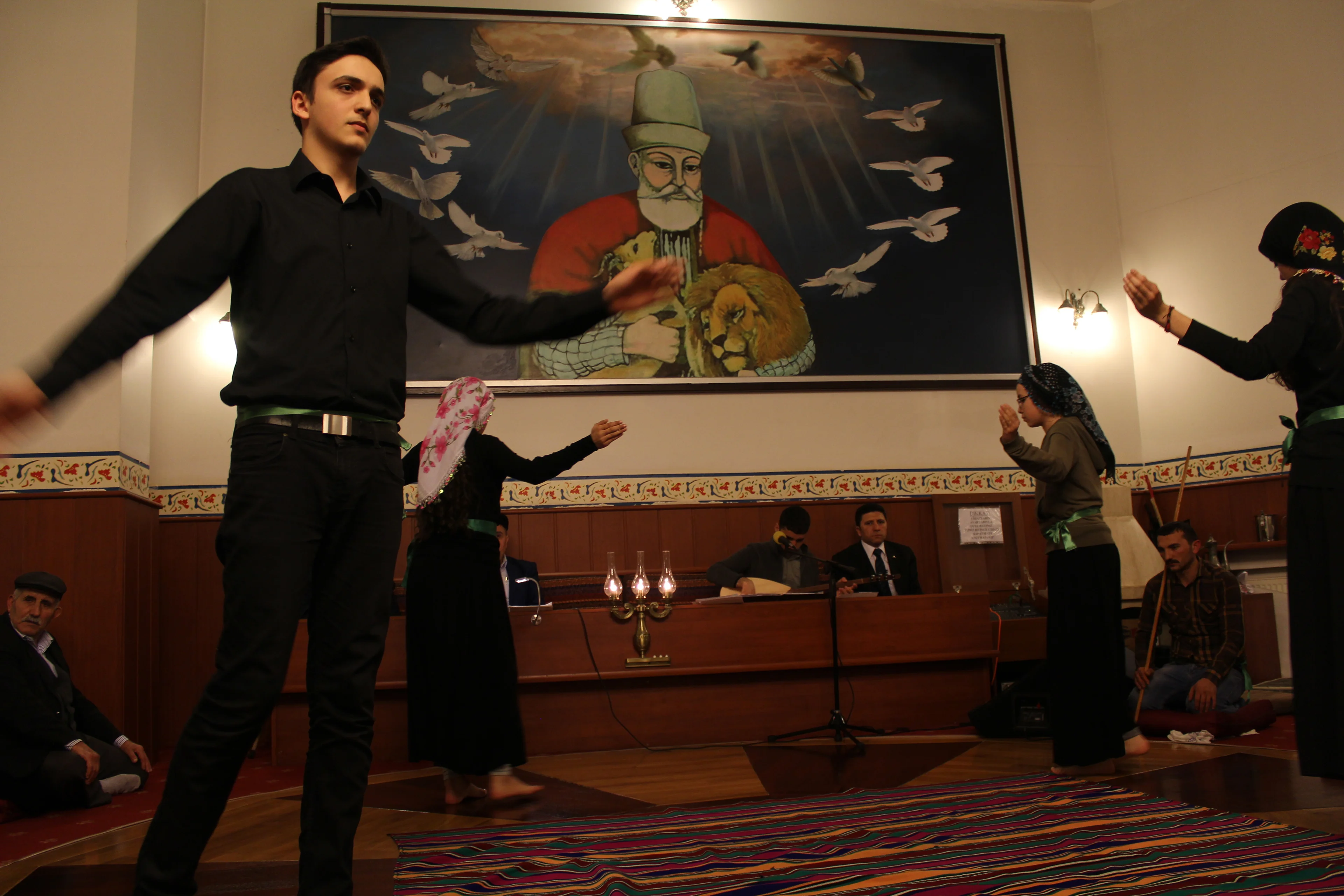 People perform a traditional dance in a room with a large painting of a bearded figure and doves on the wall behind them, while others watch or play music.
Instrumental sema‘ music
View Credits
Ali Ekber Çiçek, Meydan Saz. Turkey: Bektashi Music: Ashik Songs. Unesco Collection of Traditional Music, 1982.
Kudsi Ergüner – Recorder, Liner Notes; Bernard Mauguin – Liner Notes. Smithsonian Folkways.
Image: Sema‘ ceremony in the Okmeydanı cemevi in Istanbul in 2015. The place of worship is used by the Alevis–Bektashis for their rituals.
Ahmet Serhad Aslan / Shutterstock
The Bektashis and Music
Music is also integral to Bektashi practice and particularly in the sema‘ ritual, which symbolizes the detachment of the devotee from the world. Unique to the Bektashis—and also Alevis—is the participation of women. Male and female participants dance the sema‘ together to the sound of instruments, such as the lute, flute, and tambourine.
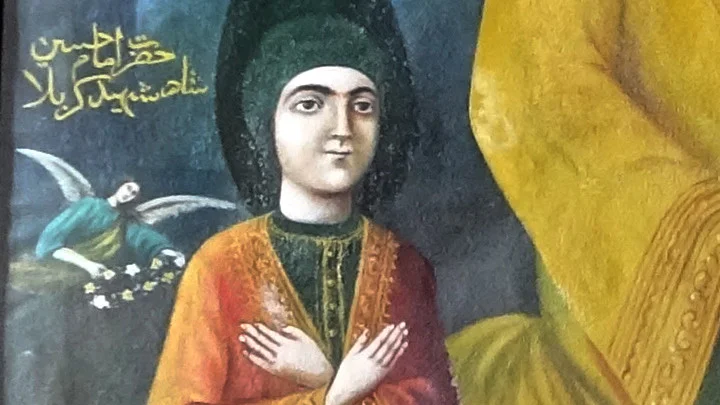 Detail crop of a mural depicting the ahl al-bayt (family of the prophet), focused on a figure in an orange robe with hands folded across their chest.
Gonul Kalk Gidelim Huseyne Dogru
View Credits
Ali Ekber Çiçek, Gönül Kalk Gidelim Hüseyn Dogru. Turkey: Bektashi Music: Ashik Songs. Unesco Collection of Traditional Music, 1982.
Kudsi Ergüner – Recorder, Liner Notes, Translator; Bernard Mauguin – Liner Notes; Pierre Manies – Translator. Smithsonian Folkways.
Image: Unidentified painter, Ahl al-bayt (The Prophet Muhammad and his family) (detail), probably Albania, dated 1123 AH/ 1711 CE, oil on canvas. Reception room of the Bektashi World Headquarters, Tirana, Albania. © Sara Kuehn.
Often, one or more poet-musicians sing. They are known as ashik, or “lovers,” and their songs are called nefes (“breath”). Performed in vernacular language, mostly in Turkish and not Arabic, the text of the songs is open to interpretation depending on the audience’s experience and their position in the Bektashi order.
The themes are always related to God’s love, submission to the divine order, abandonment of vanity, and acquiring gratitude. They often also profess love for and show immense devotion to the family of the Prophet Muhammad, notably Husayn, as in the song “Rise my heart, look to Husayn” (Gönül Kalk Gidelim Hüseyn Dogru):
I reject you, beloved, despite so many promises. Friend, cause of my sorrow, you are of no use to me. My heart is overwhelmed with faith and I cannot divert it from its love.
Arise, my heart, look to Husayn.
The nightingale has always to do with the rose. But your pretty speech is for others. Hide yourself, I wish to see you no longer. My tears fall like a river and death surrounds me on all four sides. I desire no funeral. It is useless.
Come, my heart, look to Husayn.
Gönül Kalk Gidelim Hüseyn Dogru
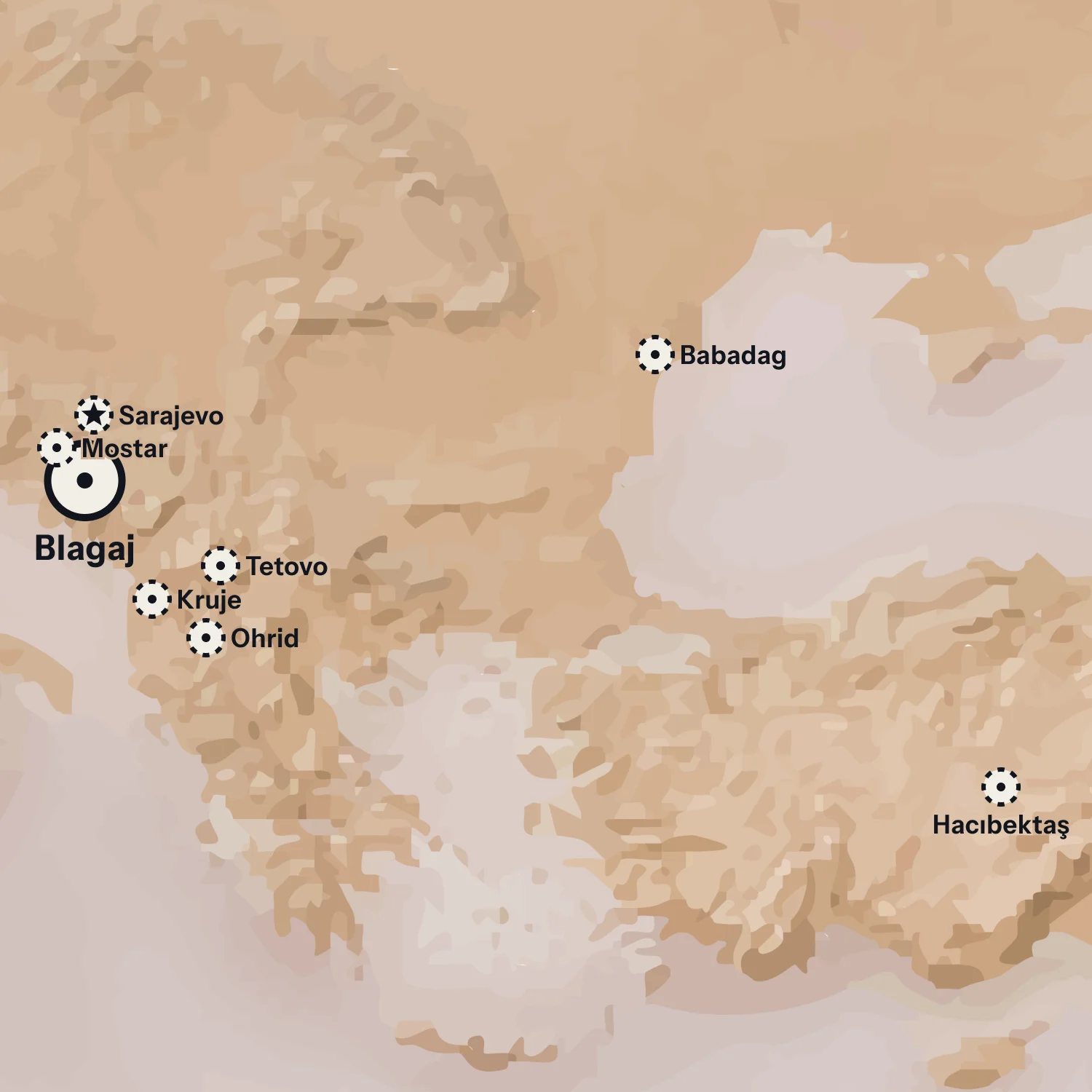
Locations
Explore the map or scroll to select a location.