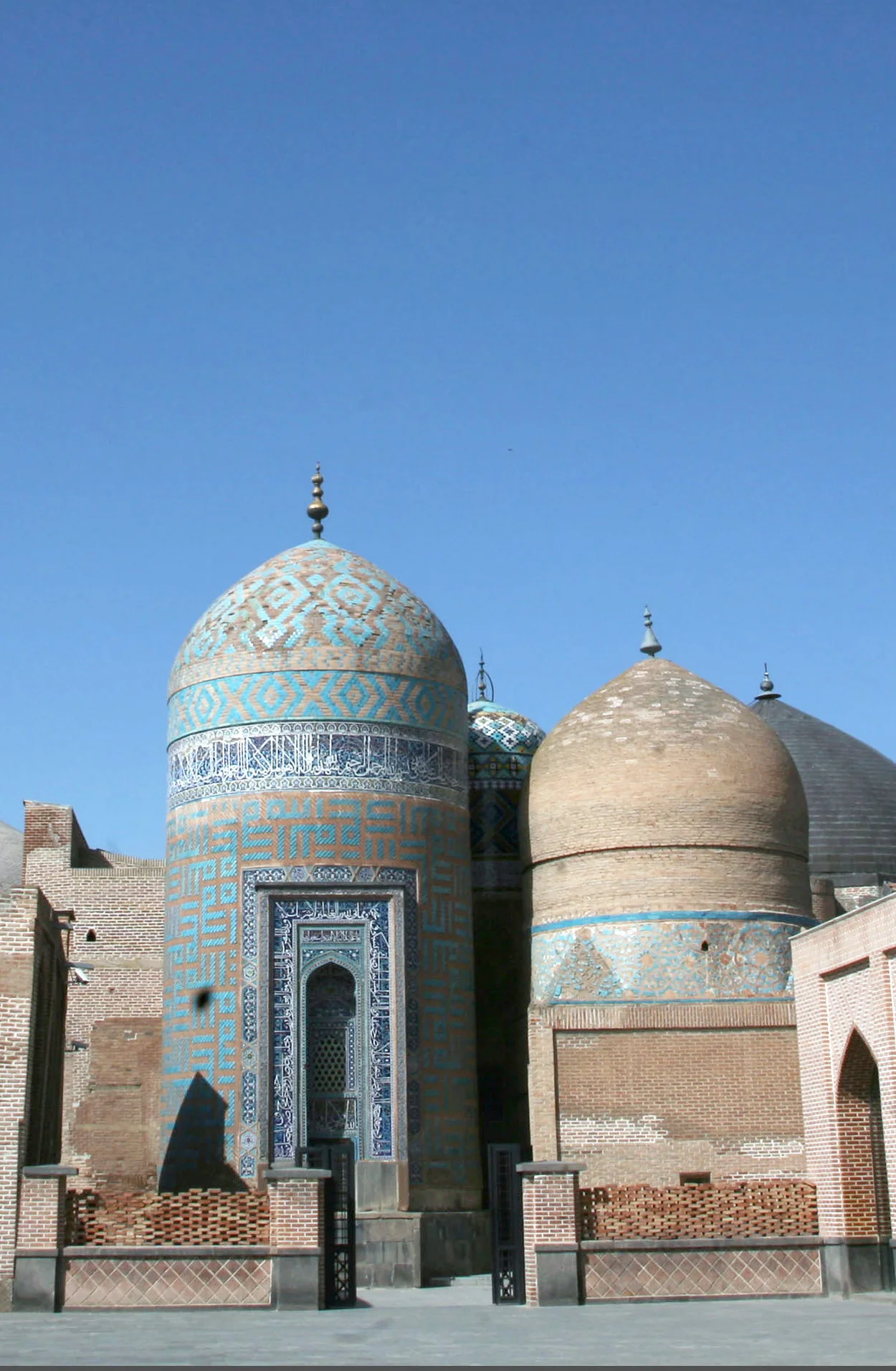
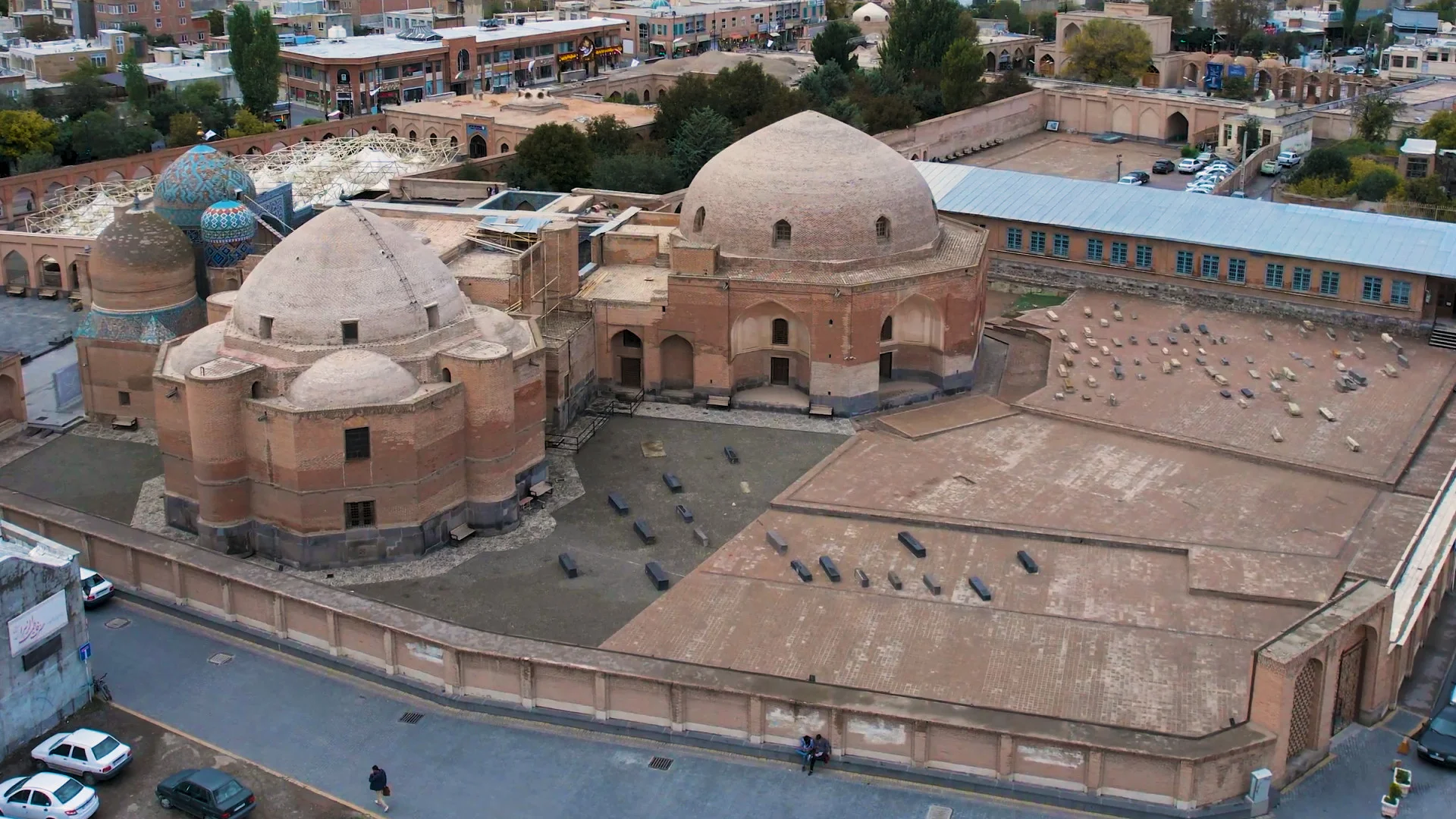
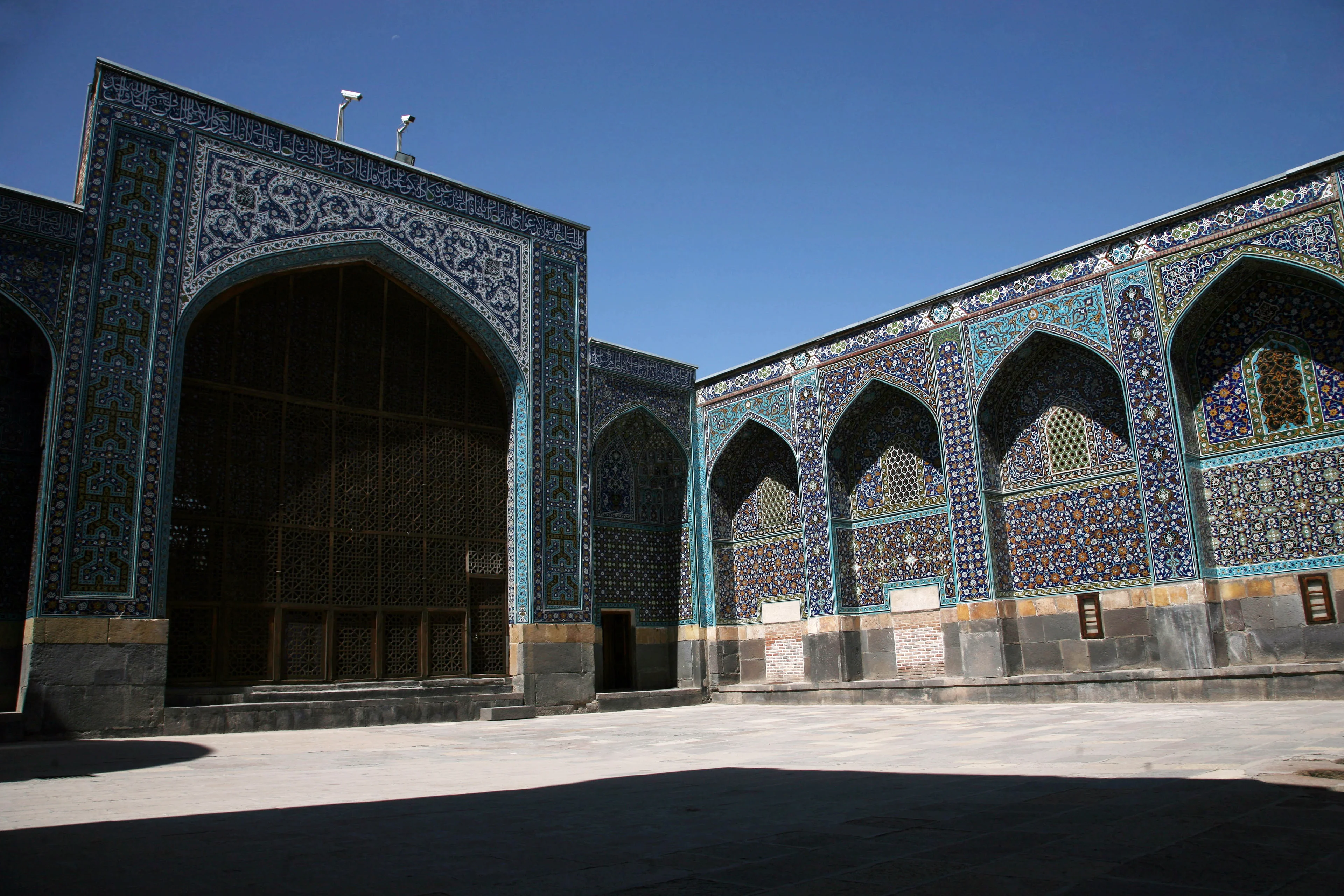
 Section of an ornate brick building with blue tile mosaic decoration and arched windows; stone pavement in the foreground.
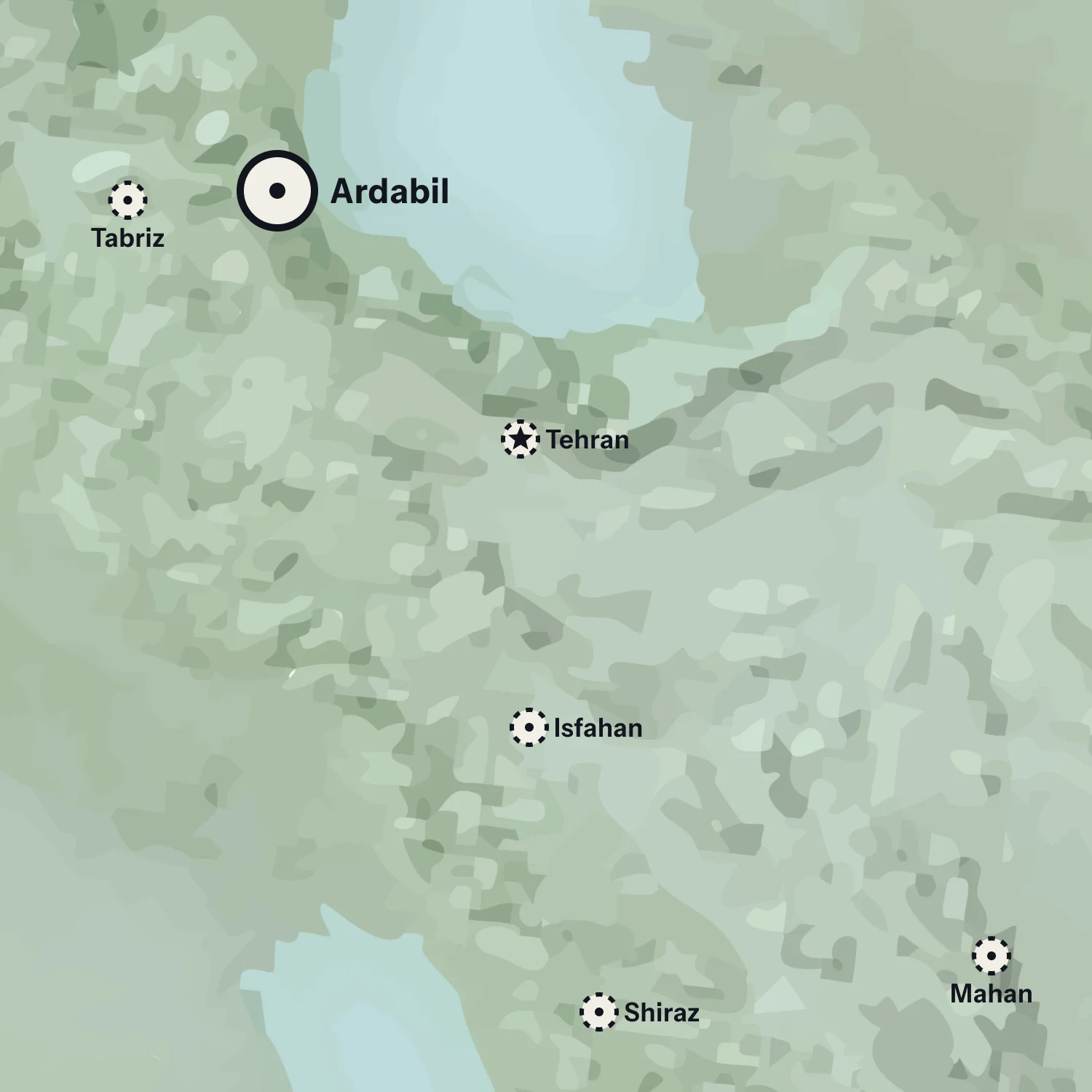
Ardabil
Iran
The shrine of Shaykh Safi in Ardabil in northwestern Iran exemplifies the merging of Sufism and Shi‘ism, the branch of Islam that considers Ali, the Prophet’s cousin and son-in-law and his descendants as Muhammad’s legitimate successors. The role of the shrine has changed dramatically over the centuries. It began as a simple khanaqa in the fourteenth century. In the sixteenth century, it became a powerful dynastic shrine under the Safavids before it was abandoned with the fall of the dynasty in 1722. Today, it serves largely as a museum. Still, the distinct blend of Sufism and Shi‘ism has survived in Iran to this day and has played a critical role in modern religious life.
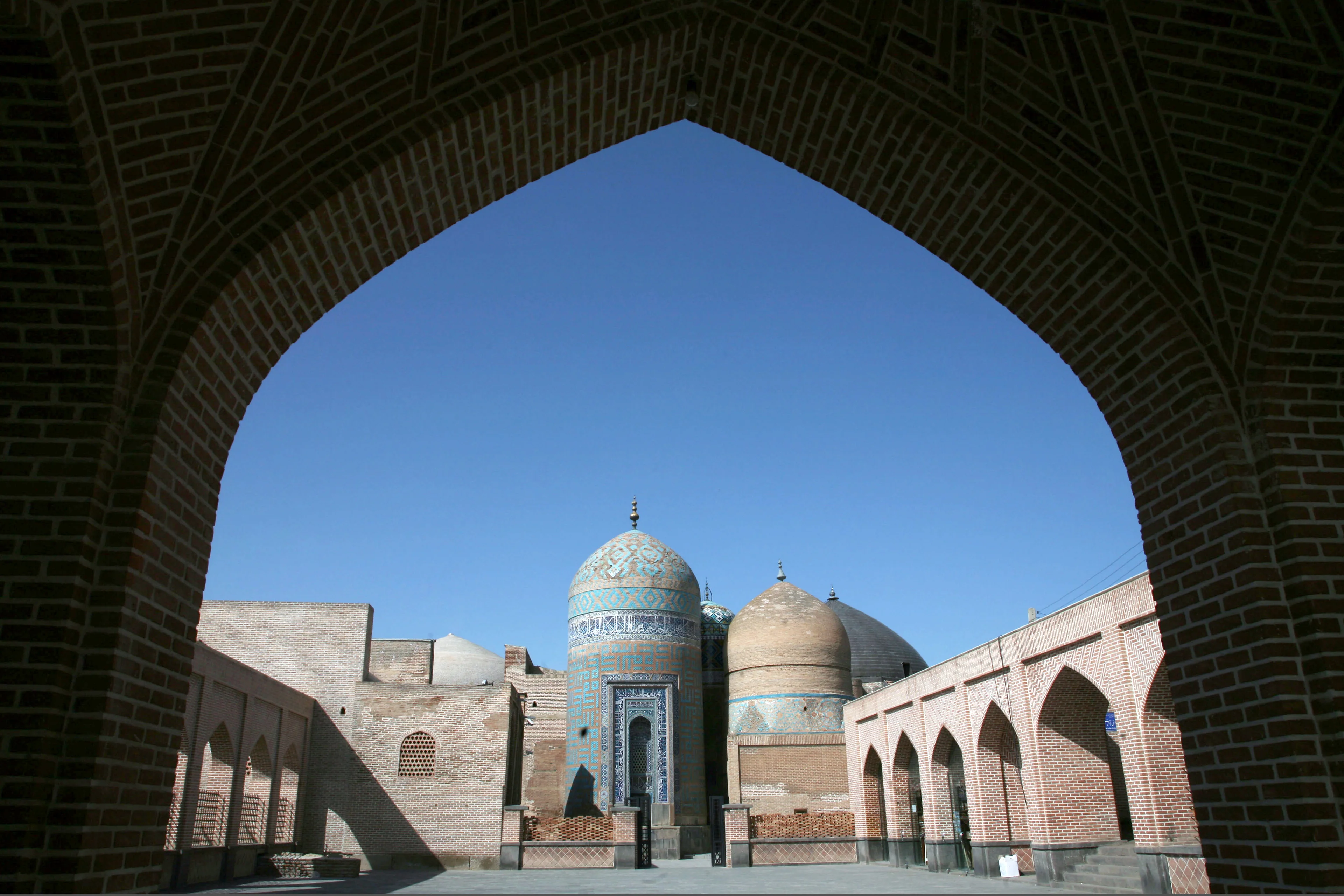
Iran Image /Mohammad Tajik/© UNESCO Credit Line: Iran Image /Mohammad Tajik/© UNESCO
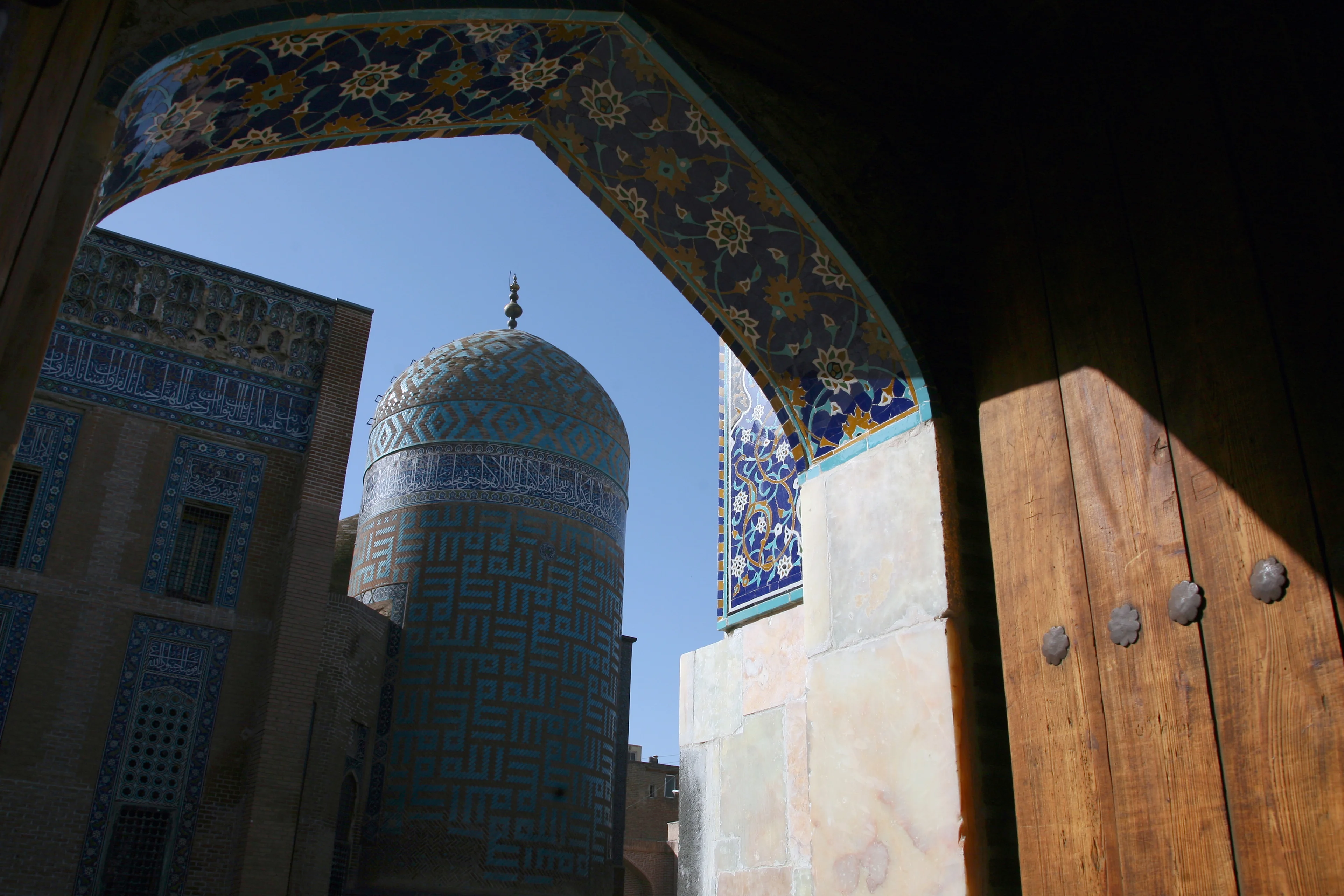
Iran Image /Mohammad Tajik/© UNESCO
Sufism in Iran after the Fourteenth Century
The fall of the Mongol Ilkhanid dynasty in the mid-fourteenth century decentralized political power and led to the rise of different religious traditions in Iran, Iraq, and Anatolia. Up to this period, Sufism was largely associated with Sunnism, the branch of Islam followed by the majority of Muslims that recognizes the first four caliphs as the Prophet’s rightful heirs. The political and social uncertainty of the period encouraged many popular Sufi brotherhoods also to adopt Shi‘i beliefs and practices.
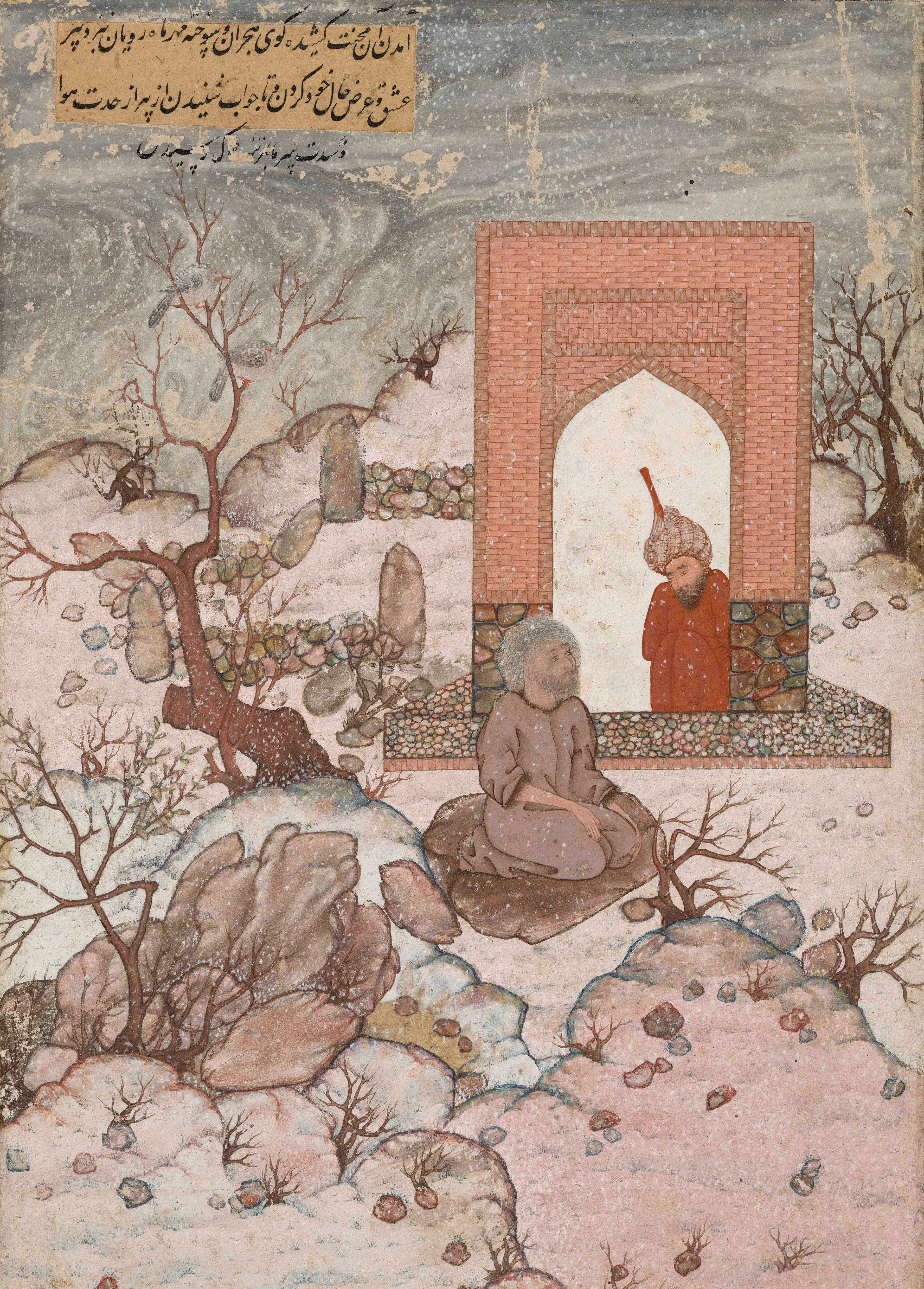
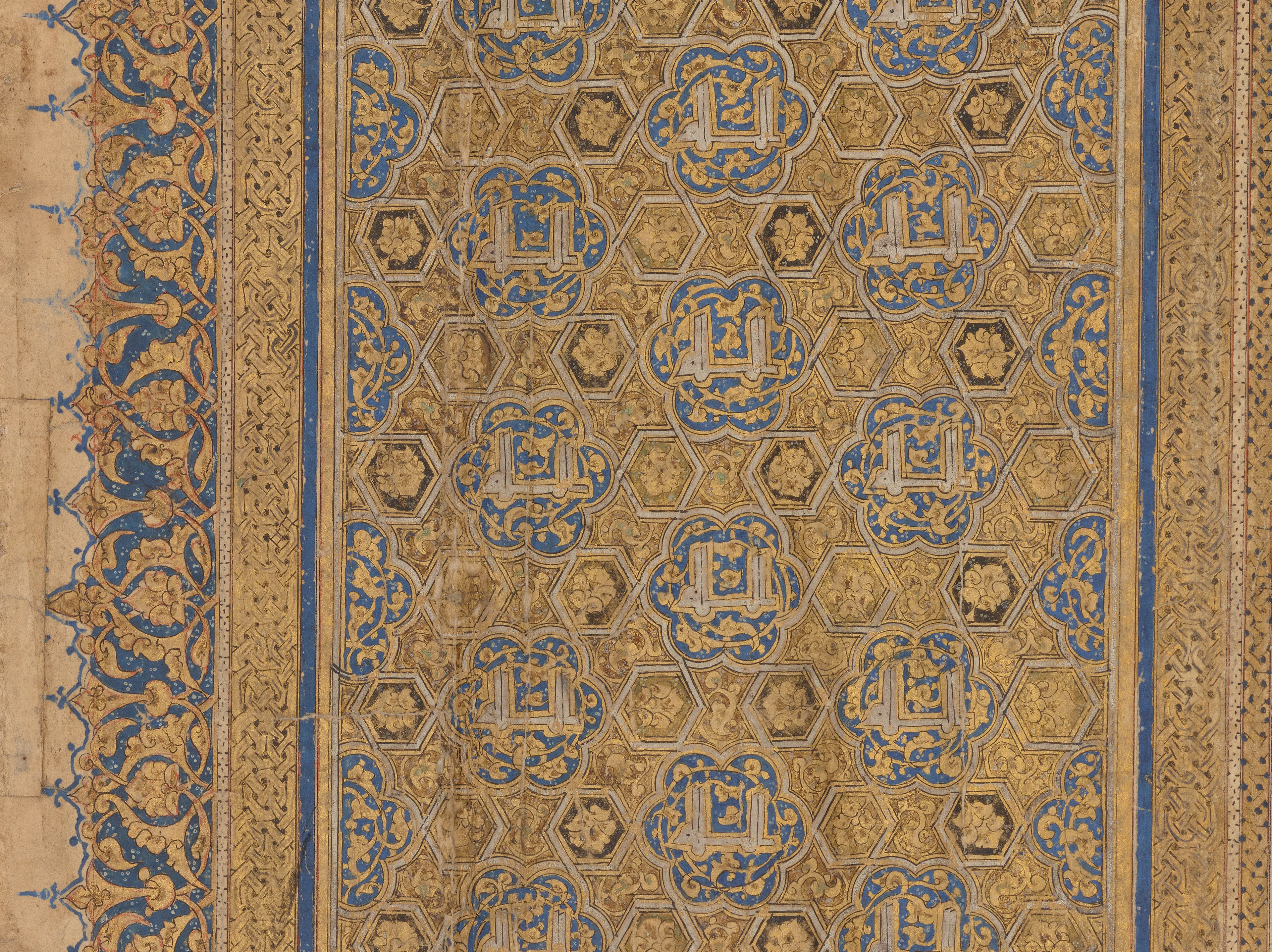
The orders centered around khanaqas that spread across the region. They attracted followers from both wealthy urban communities and poorer rural areas. Some orders incorporated unusual ideas, such as deifying the family of the Prophet Muhammad—Imam Ali, in particular—and attaching superhuman powers to their Sufi masters. Certain Sufis followed the more formal teachings of their spiritual guide, while others renounced institutionalized forms of Sufism. Rejecting material comfort and stability, these individuals were largely itinerant and showed their devotion through poverty and isolation.
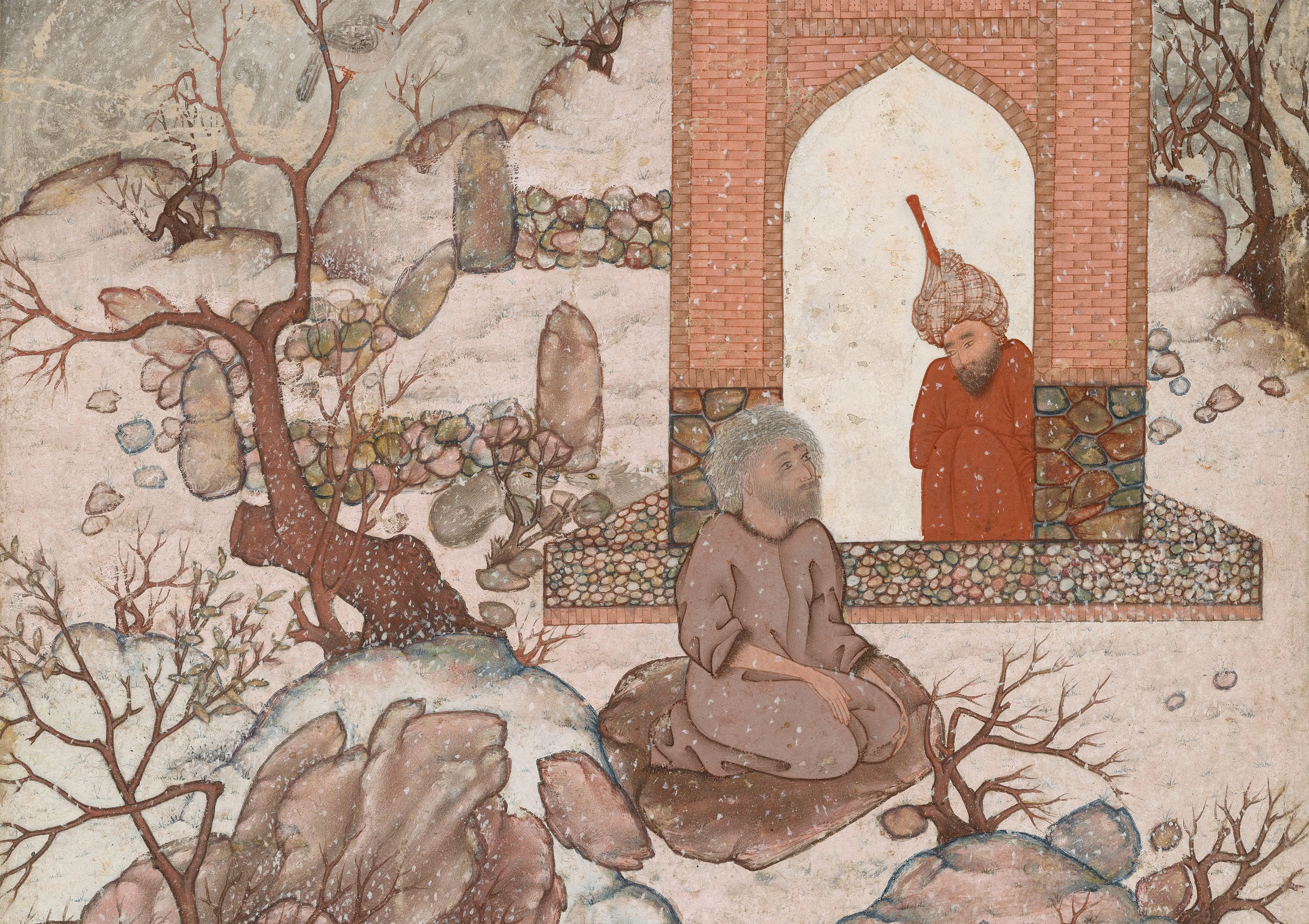
© The Aga Khan Museum
The Safavids: The Spiritual and the Earthly
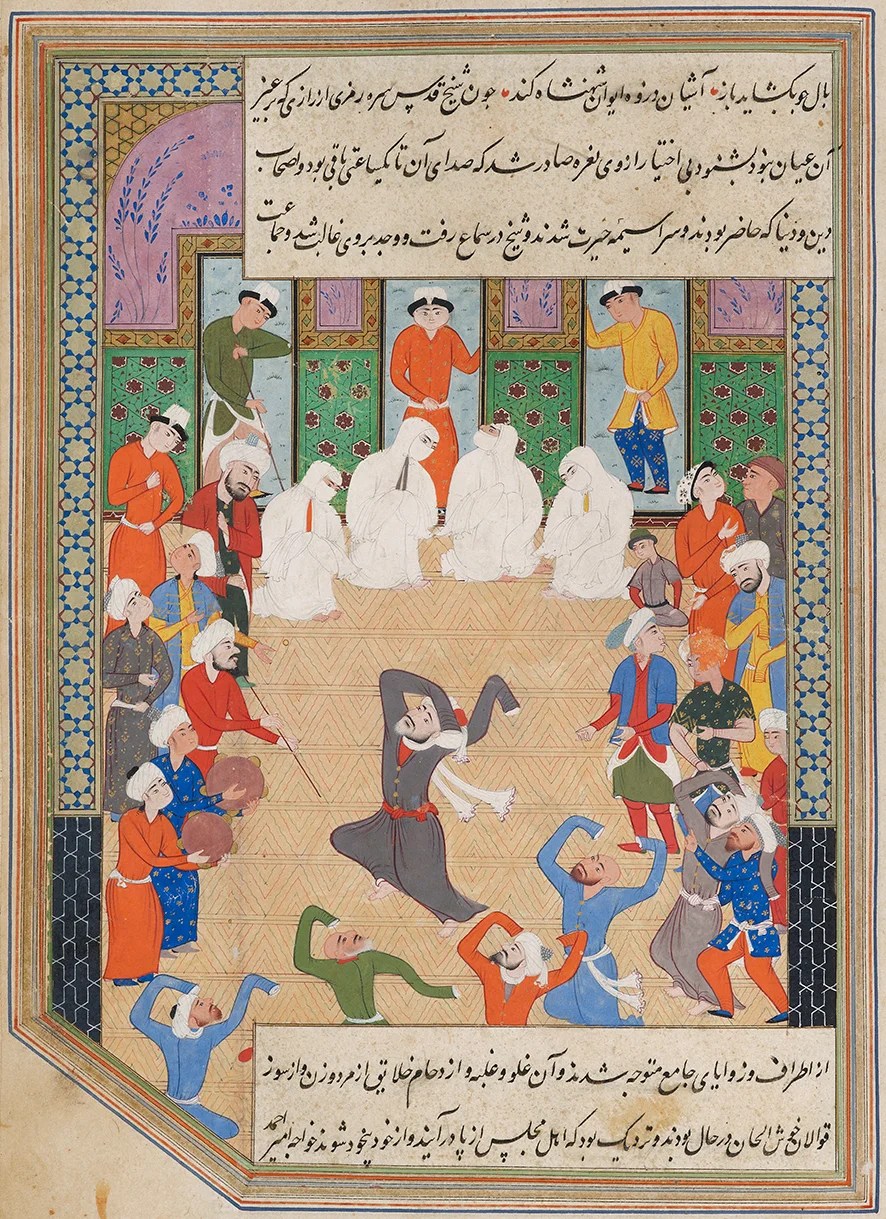
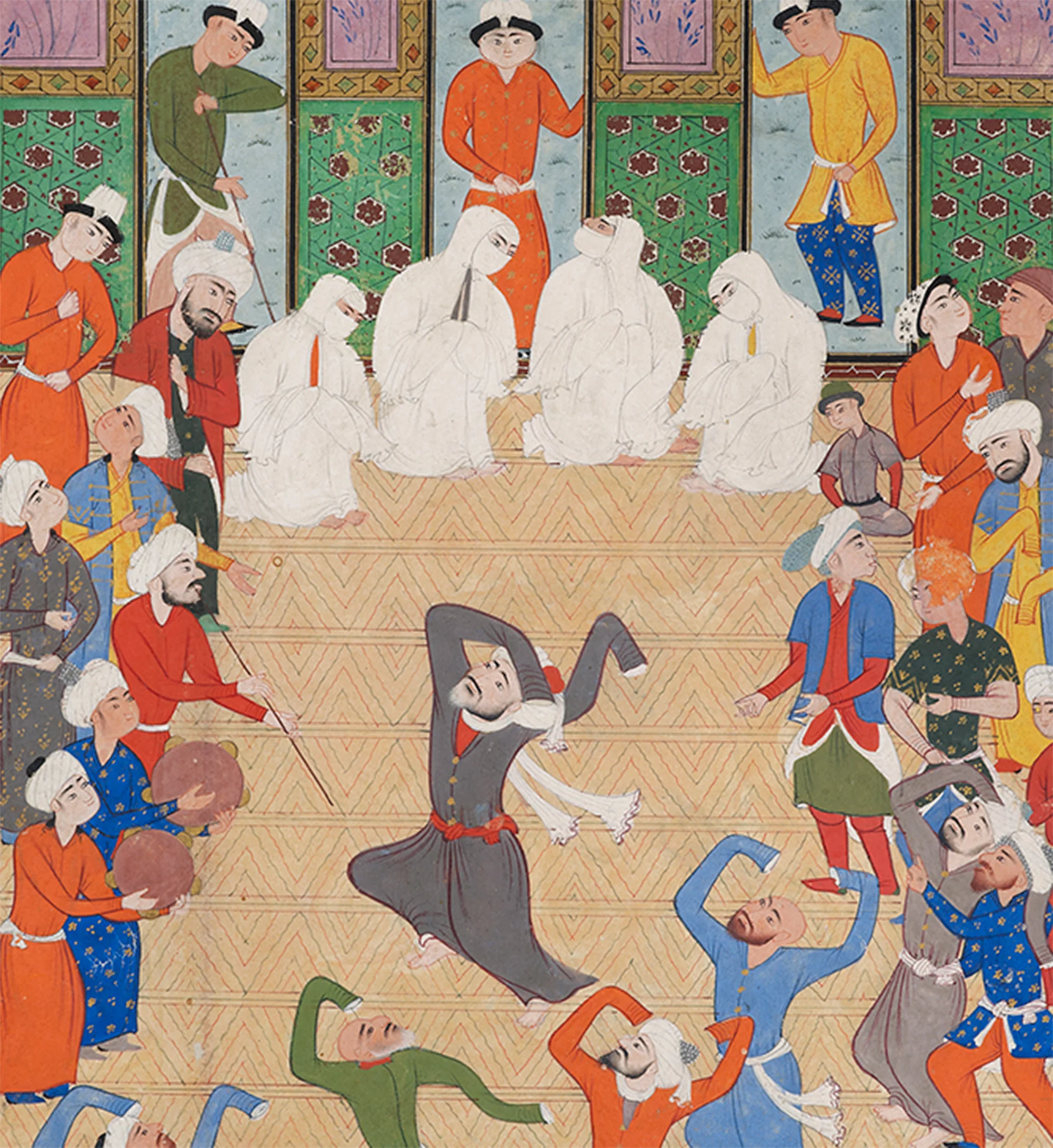
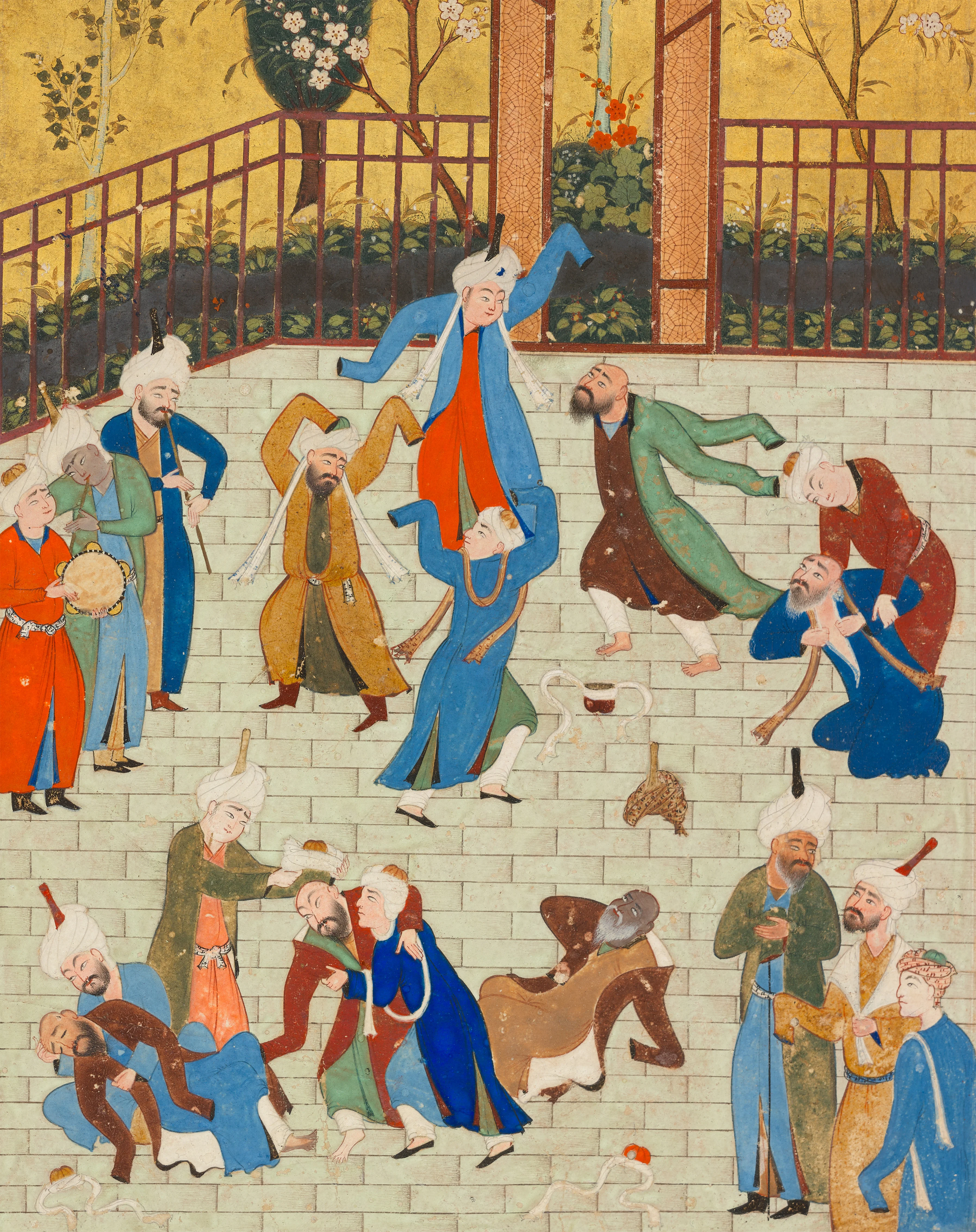
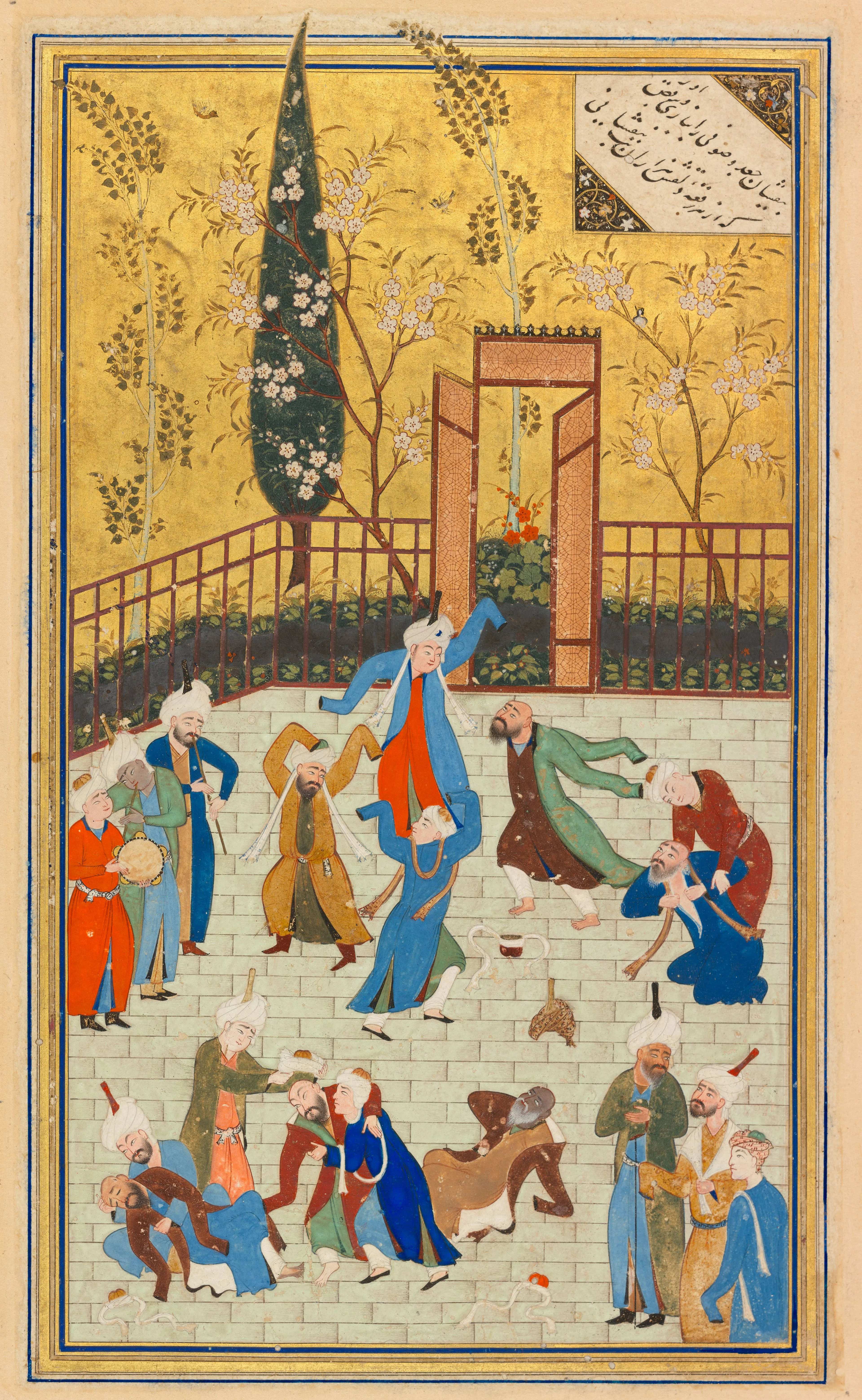
The Safavids were one of the many Sufi orders that originated in the fourteenth century. The founder, Shaykh Safi Ishraqi (d. 1334), built a modest khanaqa in the city of Ardabil, near Tabriz. In a late sixteenth-century copy of the shaykh’s biography, known as Safat al-Safa (Quintessence of Purity), a text that was composed in the fourteenth century by Isma‘il ibn Bazzaz, he is depicted in an ecstatic dance, illustrating his charismatic persona. By the end of the fifteenth century, the order had transformed from a spiritual group into a political entity and was particularly popular among the nearby rural and tribal communities of northwestern Iran and eastern Anatolia. With intermarriage into the Turkmen ruling family of western Iran, the Safavids integrated spiritual and temporal power into the order.
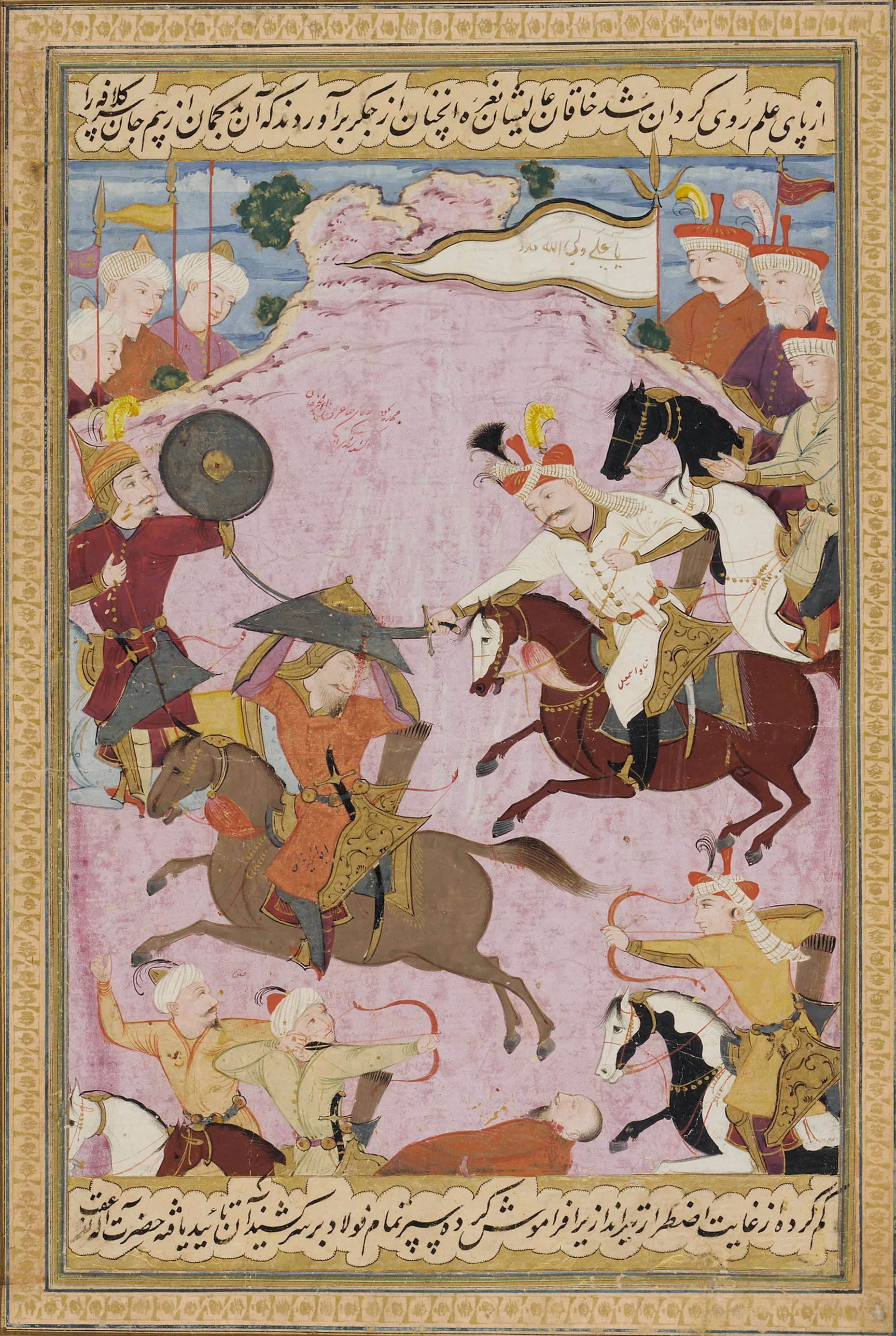
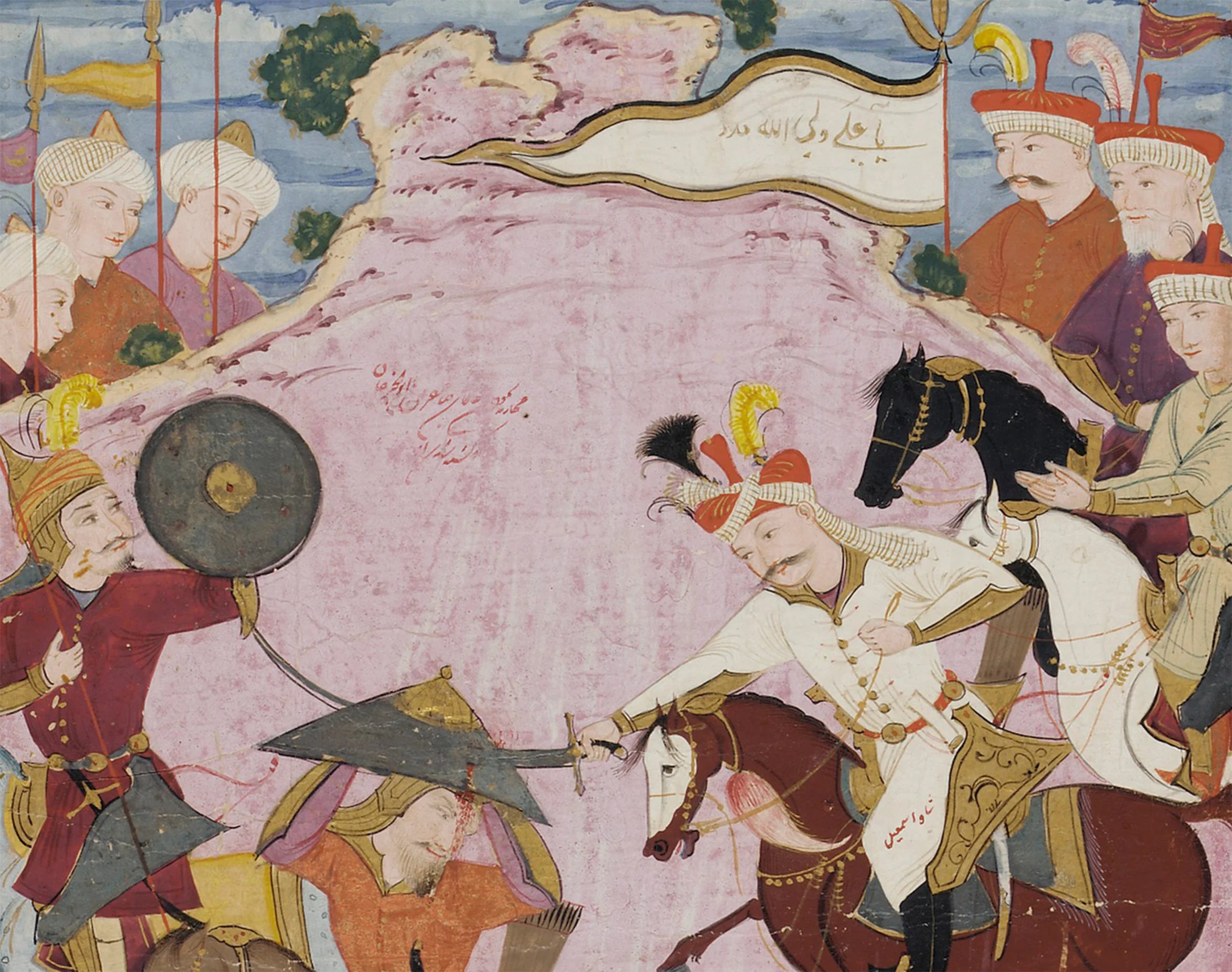
The fifth head of the order, Isma‘il, captured Tabriz in 1501 and became the founder of the Safavid dynasty (1501–1722). He owed much of his military success to the Qizilbash (“Red Heads”), members of local Turkmen tribes, who saw him as a messianic leader and godlike figure. They are recognizable by their red cap (kula) with its red shaft as depicted in an illustration from a copy of History of Shah Isma‘il completed in 1688.
Devotion in Poetry
Shah Isma‘il’s spiritual character is best expressed in his Divan. He composed it in Turkmen Turkish, a language that was used by the tribes of Anatolia and northwestern Iran, under the pen name Khata’, literally, the “Sinner.” Many of the verses can be characterized as traditional Persian love poetry, which are open to both sacred and profane interpretation, others are clearly and fervently religious in content. Khata’i’s Divan, which takes many different poetic forms, integrates Sufi and Shi‘i concepts and underscores a profound reverence to Imam Ali, whom he addresses as his king and spiritual guide.
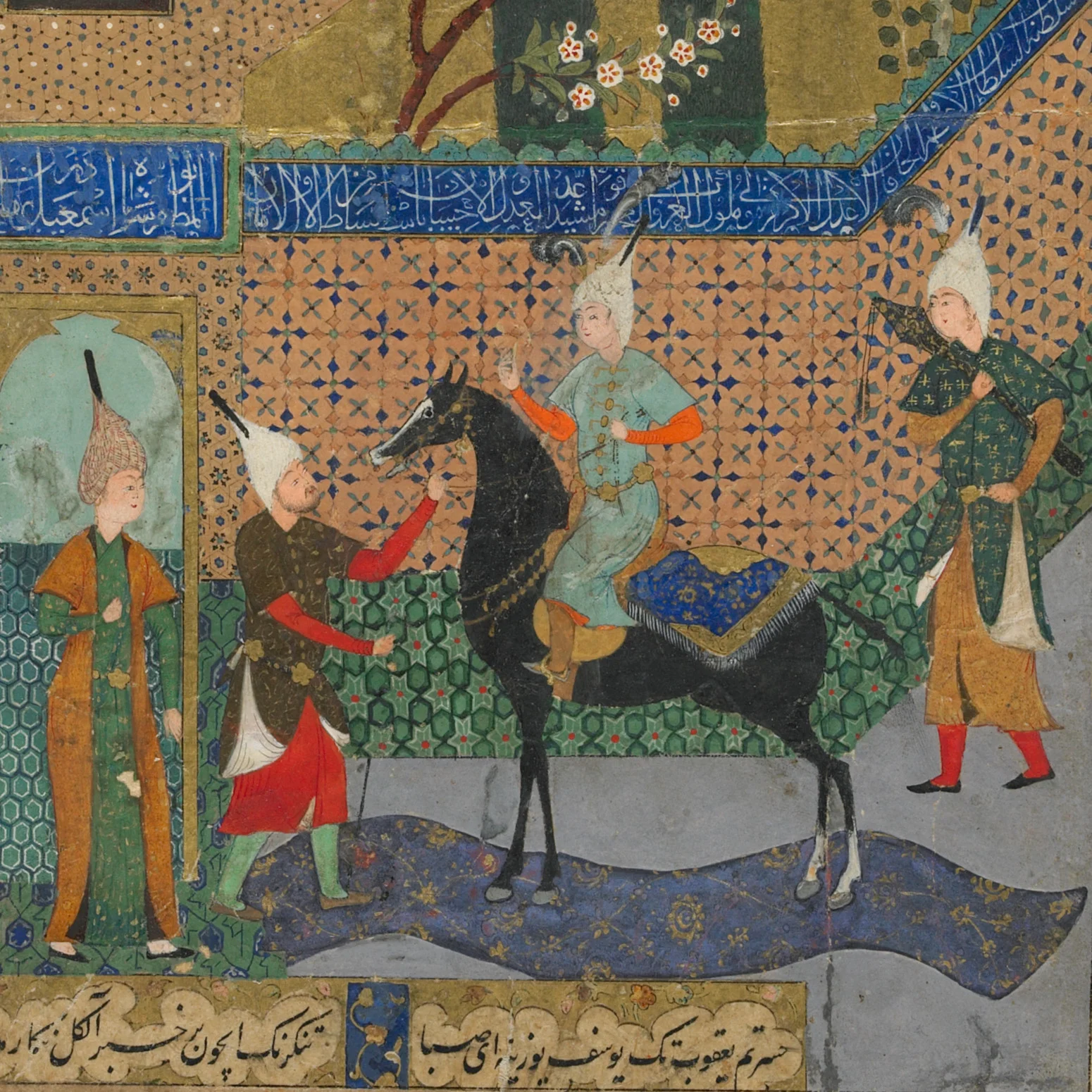
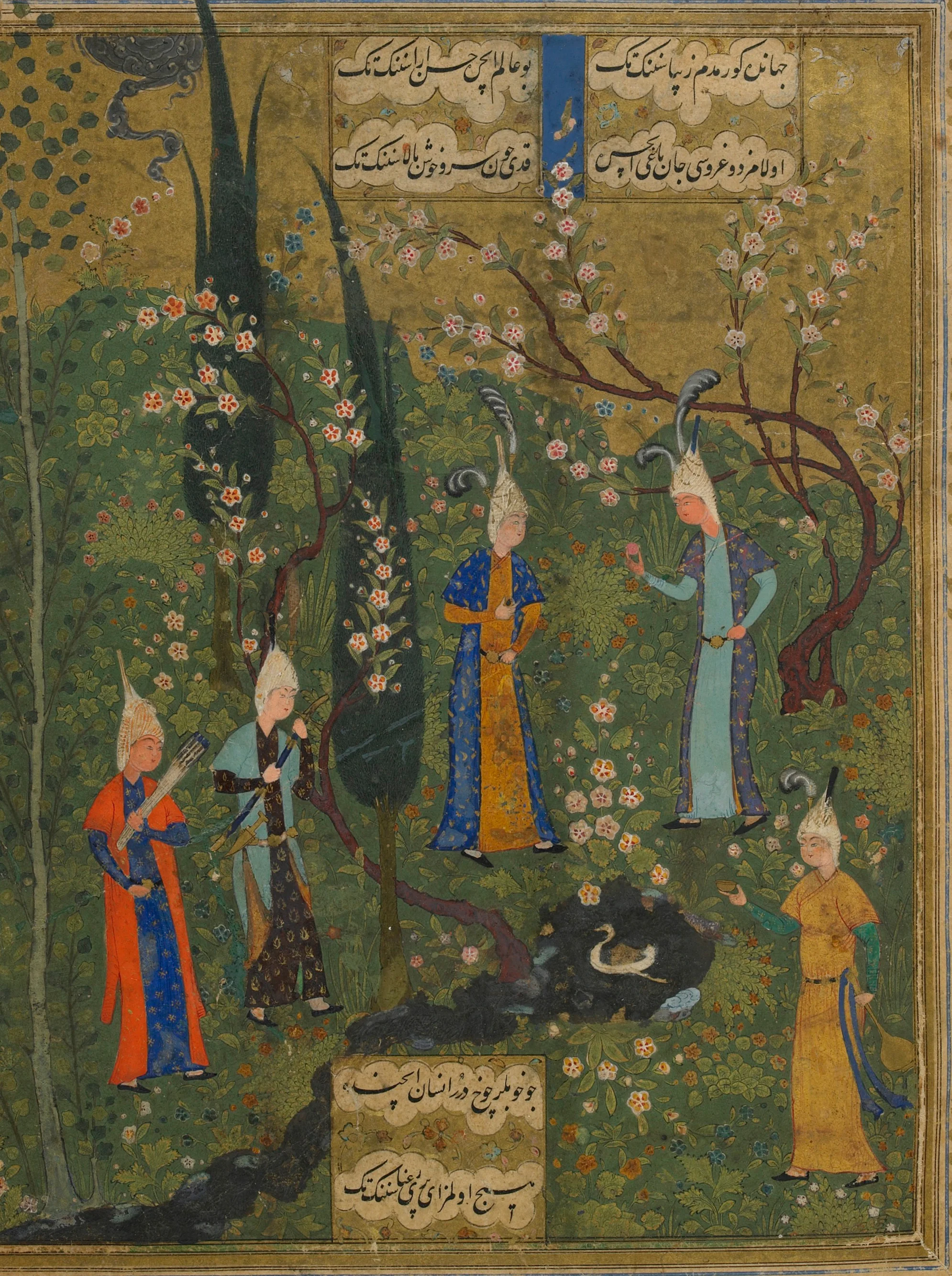
An early illustrated copy of the Divan in the National Museum of Asian Art also includes an idealized portrait of Shah Isma‘il on horseback. He is identified by the inscription above the doorway.
The verse below, from the Divan in the National Museum of Asian Art, exemplifies Shah Ismai’l’s devotion to Imam Ali:
My name is Shah Isma‘il. I am on God’s side; I am the leader of all warriors
My mother is Fatima, my father Ali; I am too one of the twelve Imams.
From you, O king, Khata’i desires purity, grace, kindness, and bounty,
The dust of your feet, king of kings, Khata’i desired a salve for his eyes.To traverse this straight path, O King, Khata’i desires a guide like you.
Shah Ismai’l
Translated by Wheeler M. Thackston, “The Diwan of Khata’i: Pictures for the Poetry of Shah Isma‘il,” Asian Art 1, Fall 1988, p. 56.
Shah Isma‘il’s poetry remains popular among the Bektashis and Alevis in Türkiye and the Balkans to this day and has been adapted to modern Turkish as can be heard in this rendition by artists Ali Riza and Hüseyin Albayrak.
The beloved companion Ali, the friend Ali
Ali is the closest manifestation to clear a proof
Ali is the declaration of the unity of the Qur’an
On the night Muhammad ascended to heaven
The lion he saw at the gate was Ali
O Beloved Ali
He took out the ring and gave the sign
He saw the truth, the glory, AliWith truth he spoke ninety thousand words
Ali is the secret of thirty thousand secrets
Before the earth and sky, the Throne and the Footstool [of God]
The truth is the Qur’an, Ali
Ali is the remedy for incurable sorrows,
And the refuge of this helpless Khata’i
Ali, my beloved.
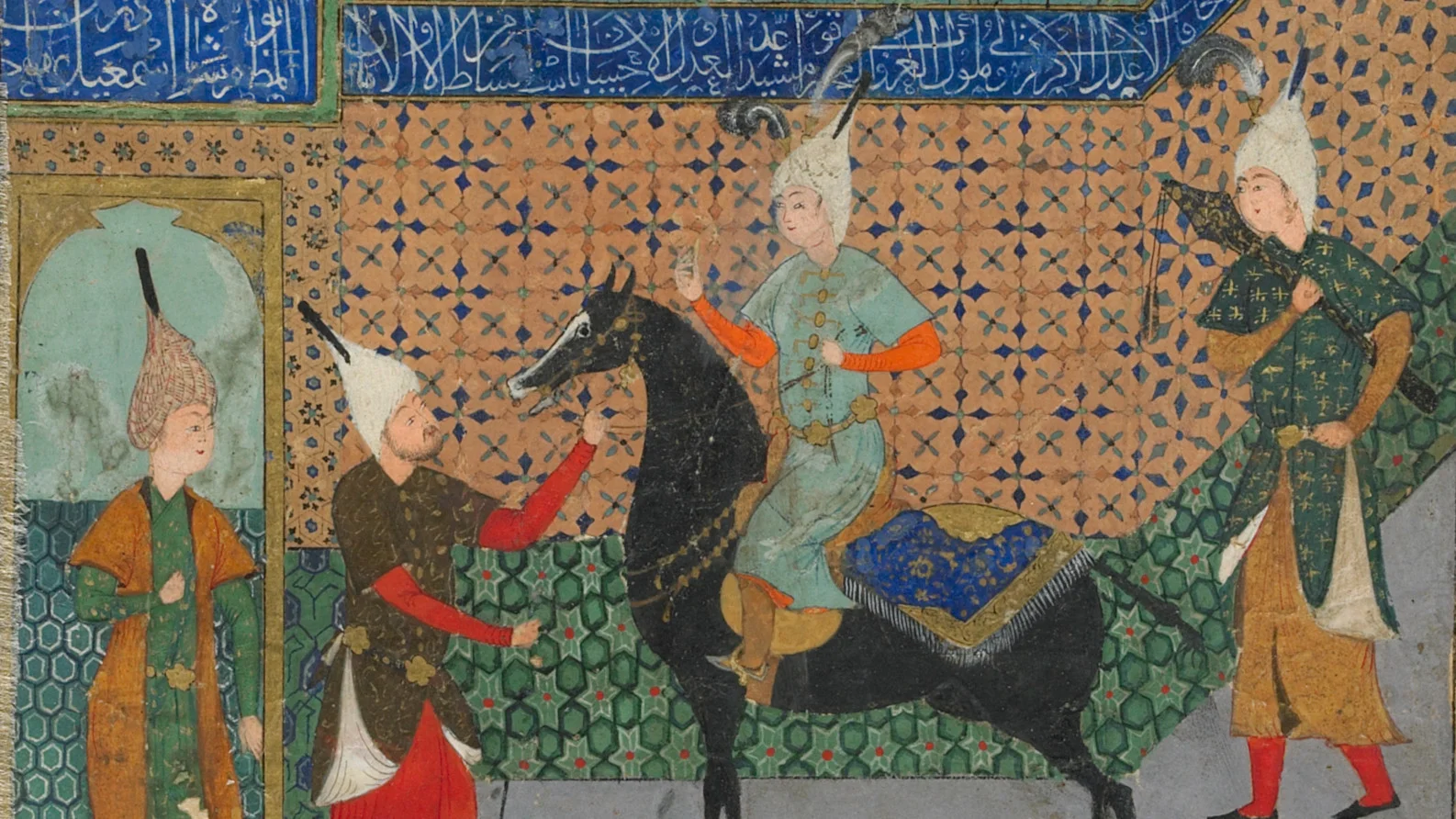 A historical painting depicts a man on a black horse, flanked by three attendants, with ornately tiled walls in the background.
Dertlere Dermandır Ali by Ali Rıza and Hüseyin Albayrak
View Credits
Image: Rider in front of a Castle, folio 23 verso (detail)
Natalia Lukiianova / Alamy Stock Photo
Transformation of the Shrine
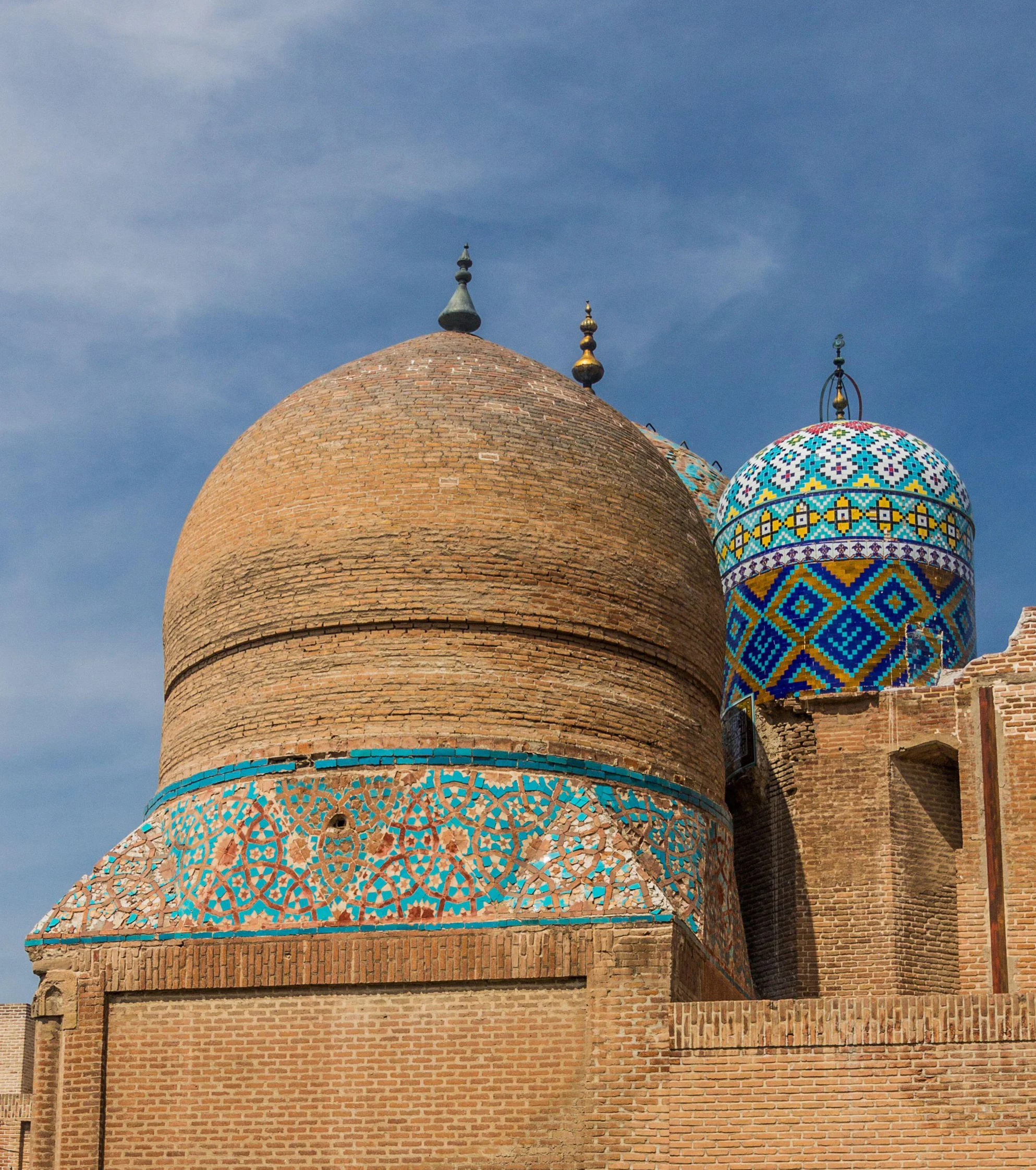
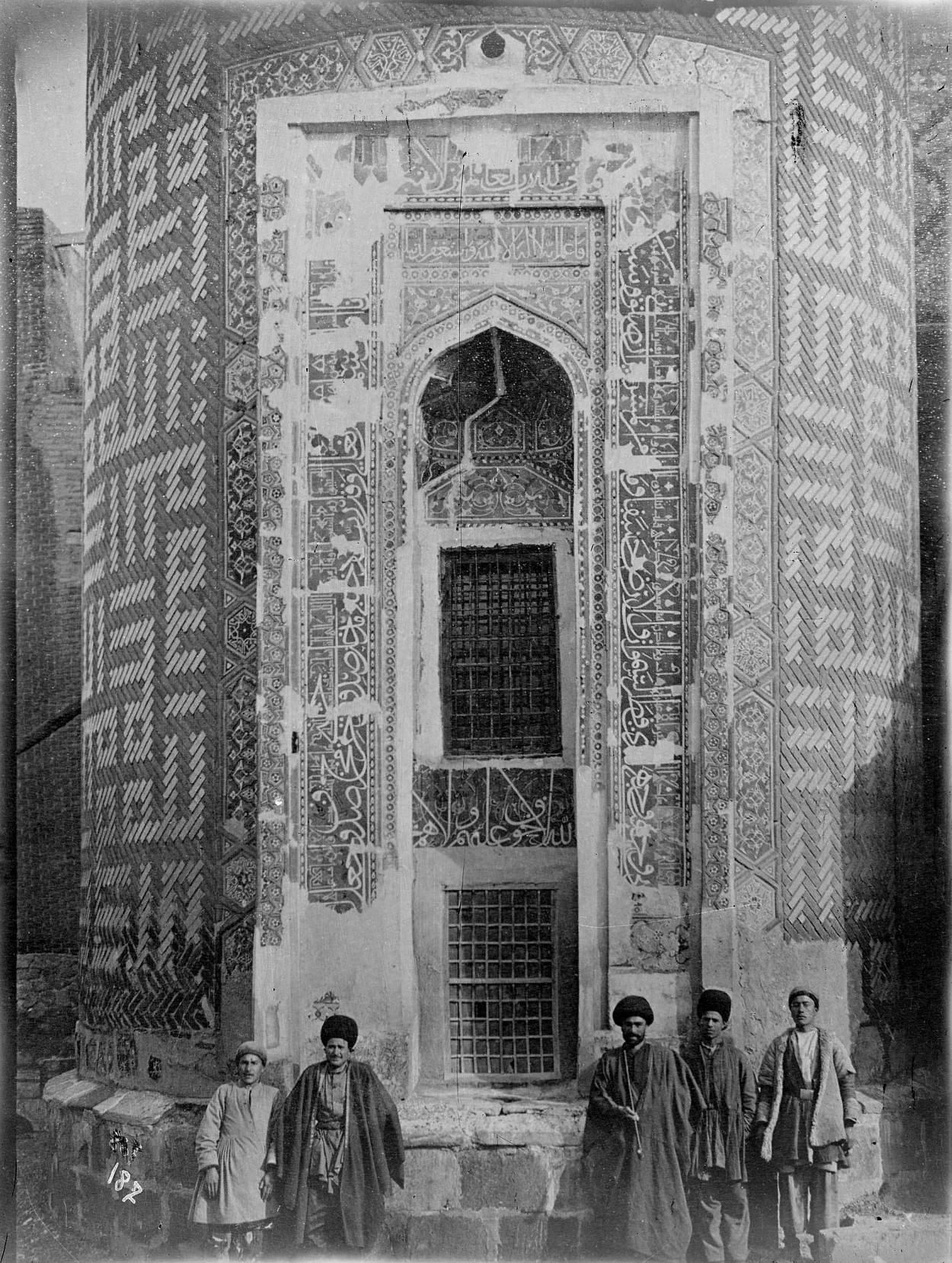
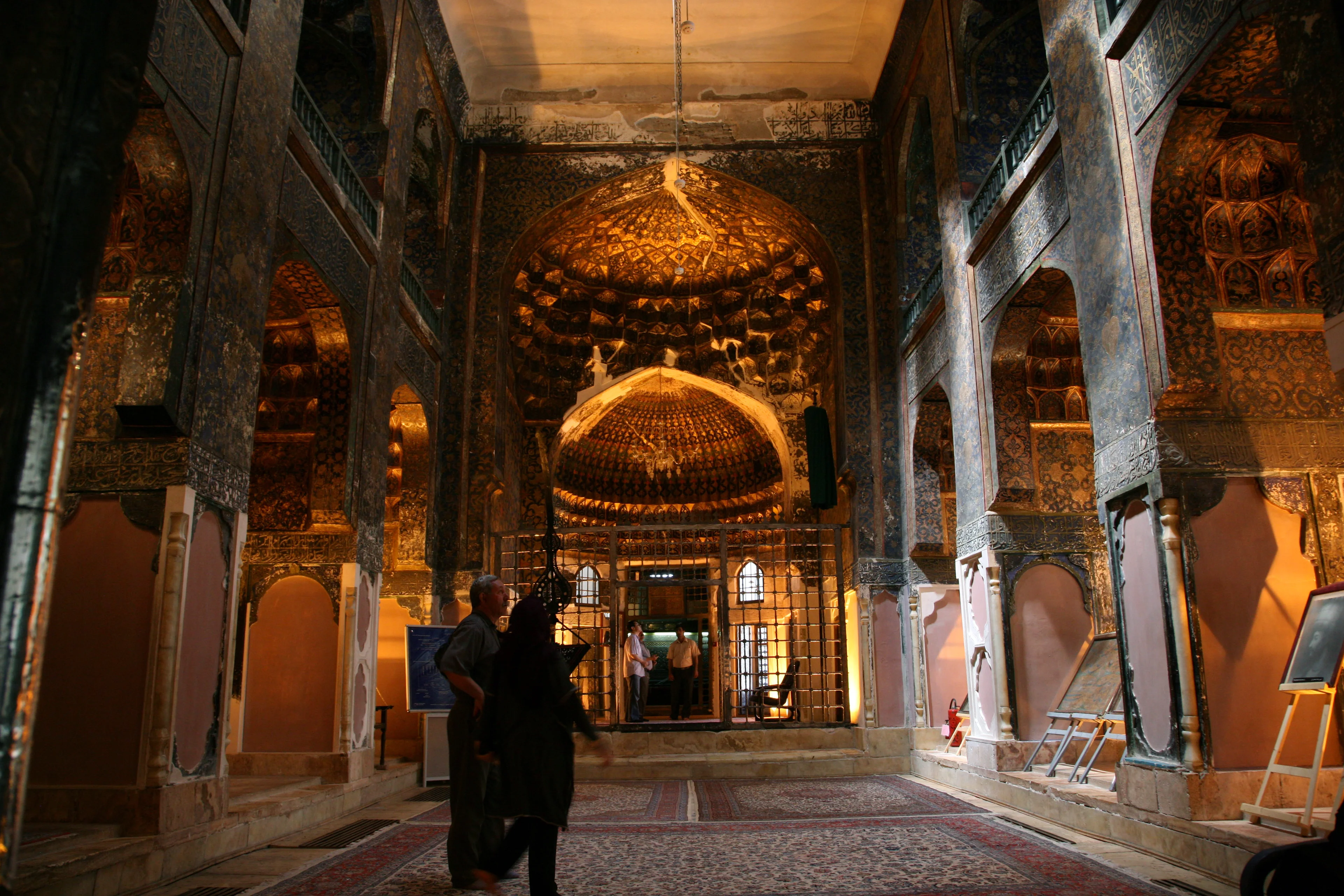
Shah Isma‘il died in 1524 and is buried in a small mausoleum tower next to Shaykh Safi’s, immortalizing the relationship between Safavid secular and spiritual powers. Isma‘il’s successor, Shah Tahmasb (r. 1524–76), expanded the complex by adding new structures, such as the Dar al-hadith (Abode of Hadith)—a space for Qur’anic recitation—and the Jannat-sara (Abode of Paradise)—a prayer/reception hall, which may have been originally designed as a tomb chamber. Members of the elite, especially the Qizilbash tribes, financially supported these expansions as well as the shrine’s upkeep. Many patrons were also female members of the Qizilbash tribal aristocracy.
Iran Images/Mohammad Tajik/© UNESCO Credit Line: Iran Images/Mohammad Tajik/© UNESCO
© Victoria and Albert Museum, London
Royal Gifts
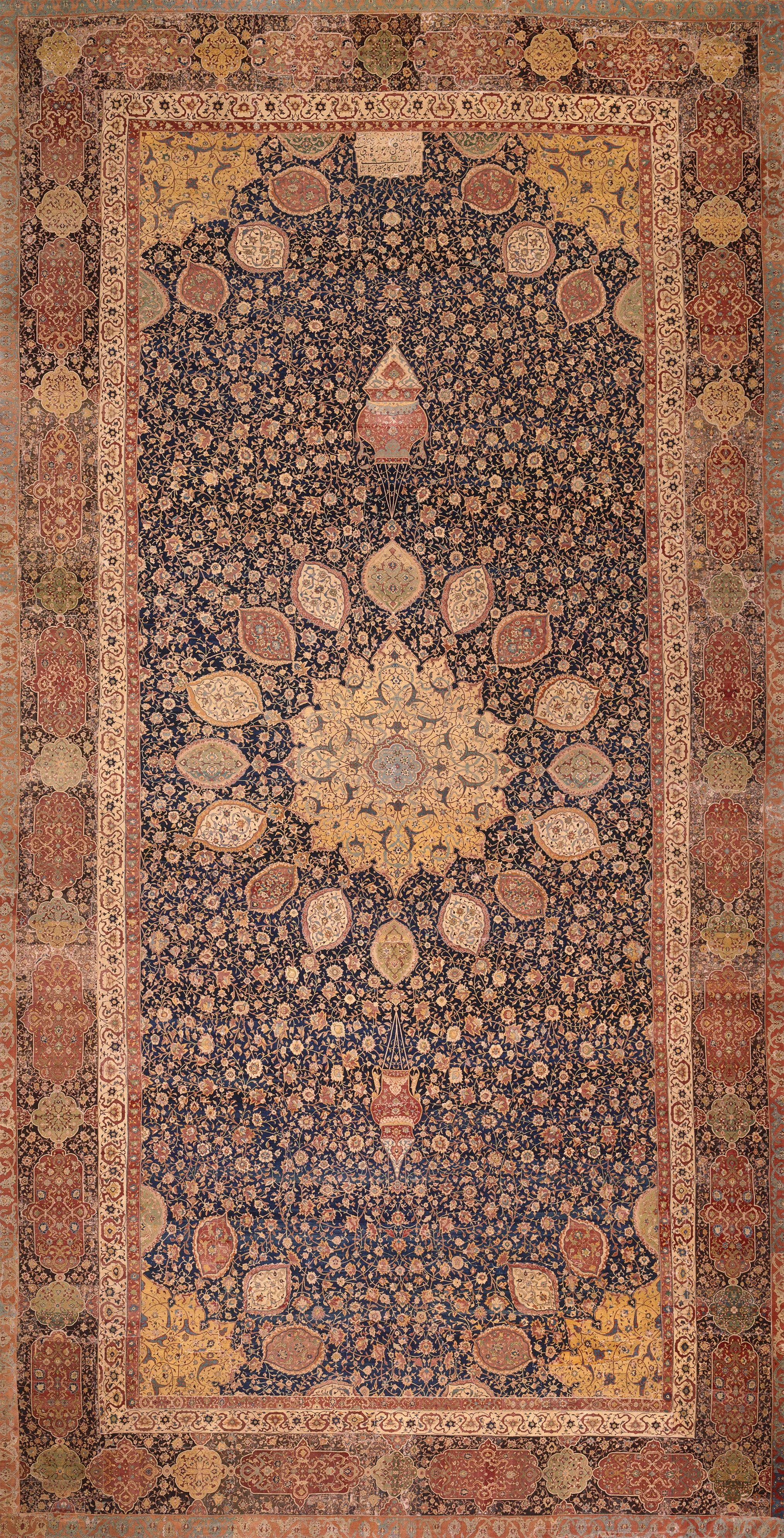
Shah Tahmasb and Safavid high-ranking officials also endowed priceless works of art to the shrine at Ardabil, emphasizing its growing religious importance. One of the most impressive such gifts is a pair of carpets, completed in 1539–40 to coincide with Tahmasb’s expansion of the sanctuary. Scholars have suggested that the carpets were displayed in the Jannat-sara, the large octagonal space reserved for prayers and other gatherings.
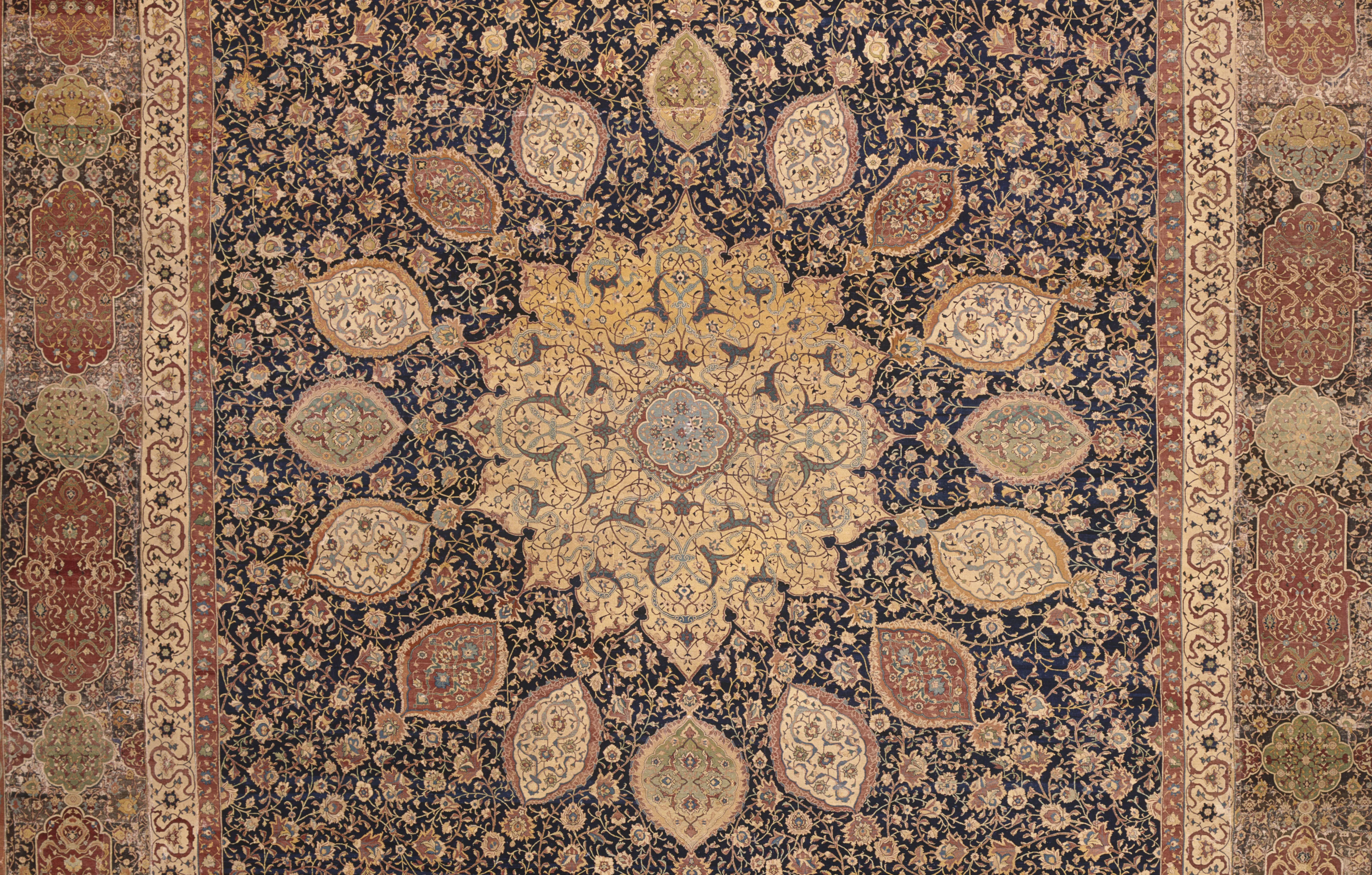
The Ardabil Carpets
The importance of Ardabil as both an ancestral and dynastic shrine became even more prominent during the reign of Abbas I (reigned 1589-1627), who chose the city of Isfahan as the new Safavid capital and transformed it into a political, religious, and commercial center of Shi’i Iran.
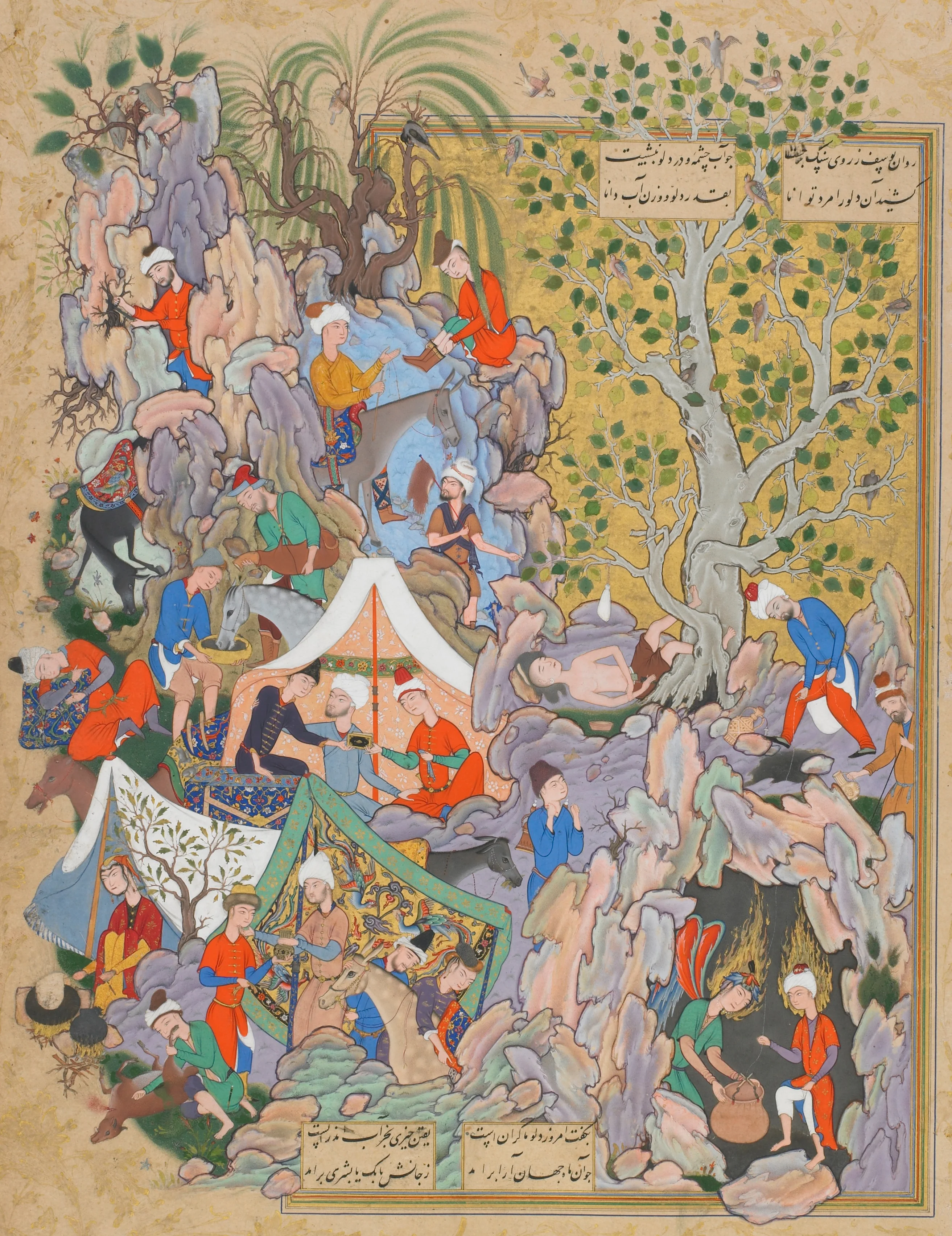
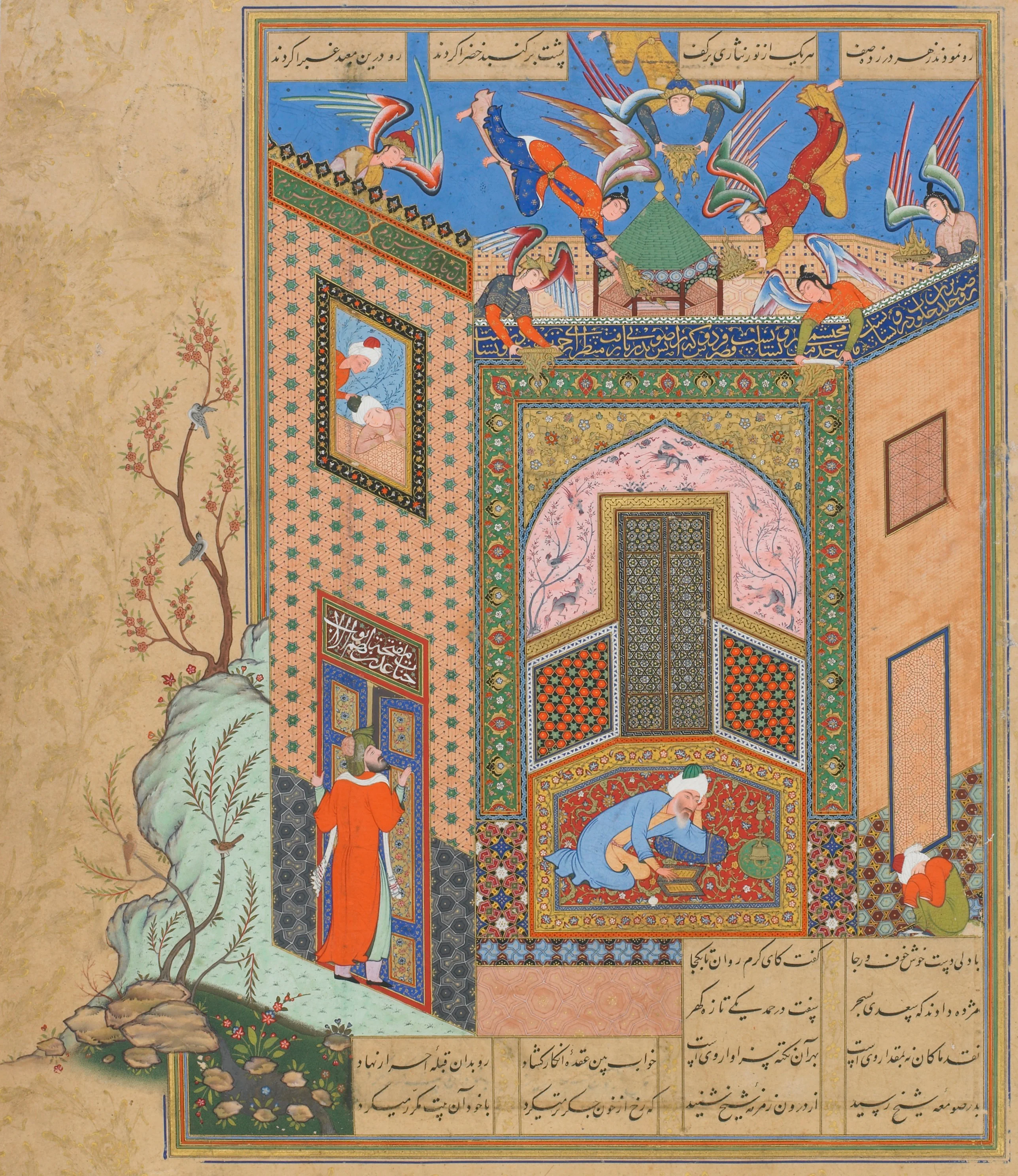
As a symbol of his spiritual devotion and generosity, in 1608 Shah Abbas I donated his library of literary and historical manuscripts to the shrine in Ardabil. This extraordinary gift included a copy of the mystically inspired Haft awrang (Seven Thrones) by the poet Jami (d. 1492), which was completed between 1556 and 1564 for Sultan Ibrahim Mirza (d. 1577), the nephew and son-in-law of Shah Tahmasb. The manuscript is one of the most sumptuously illustrated examples from the sixteenth century.
Iran Images/Mohammad Tajik © UNESCO
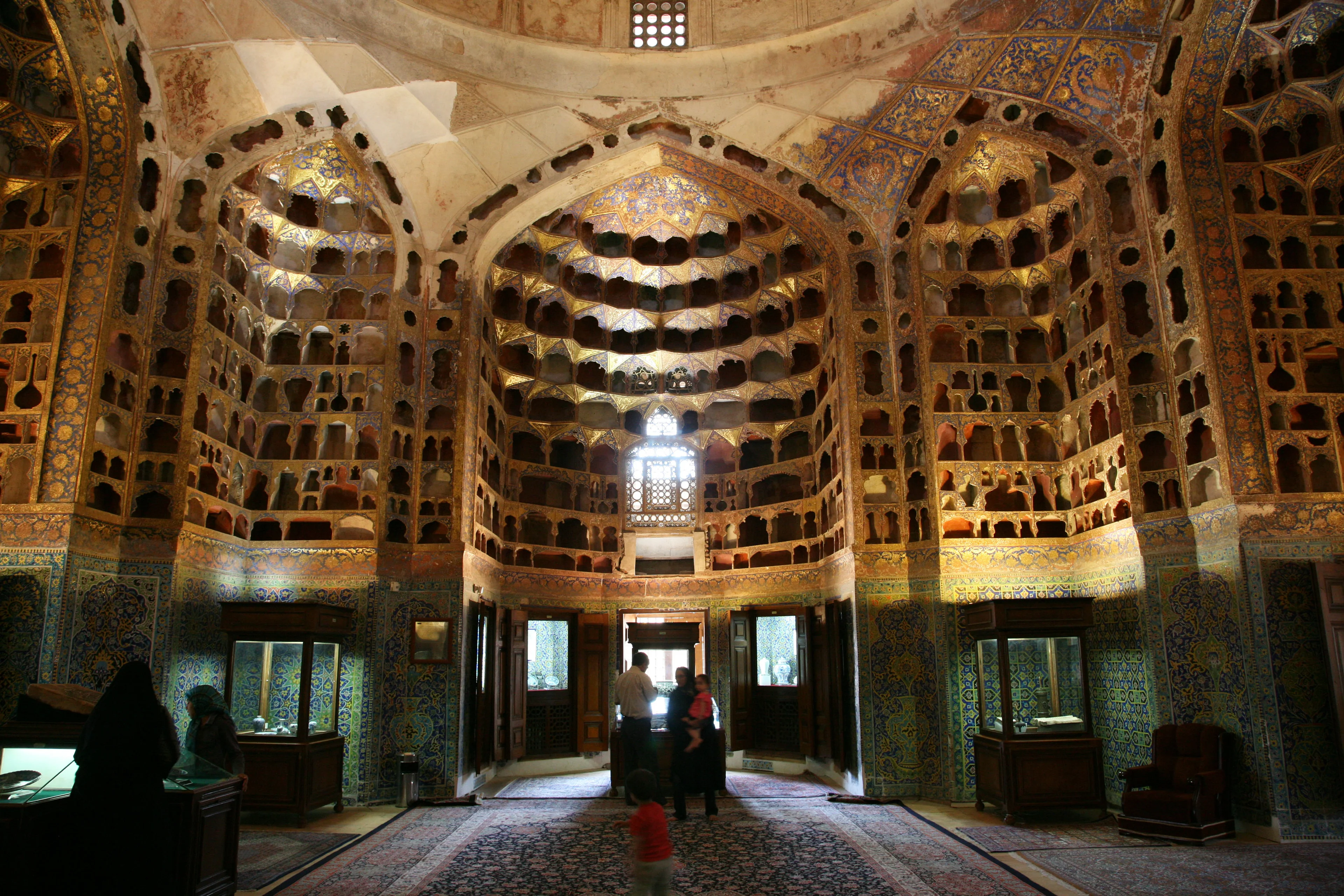
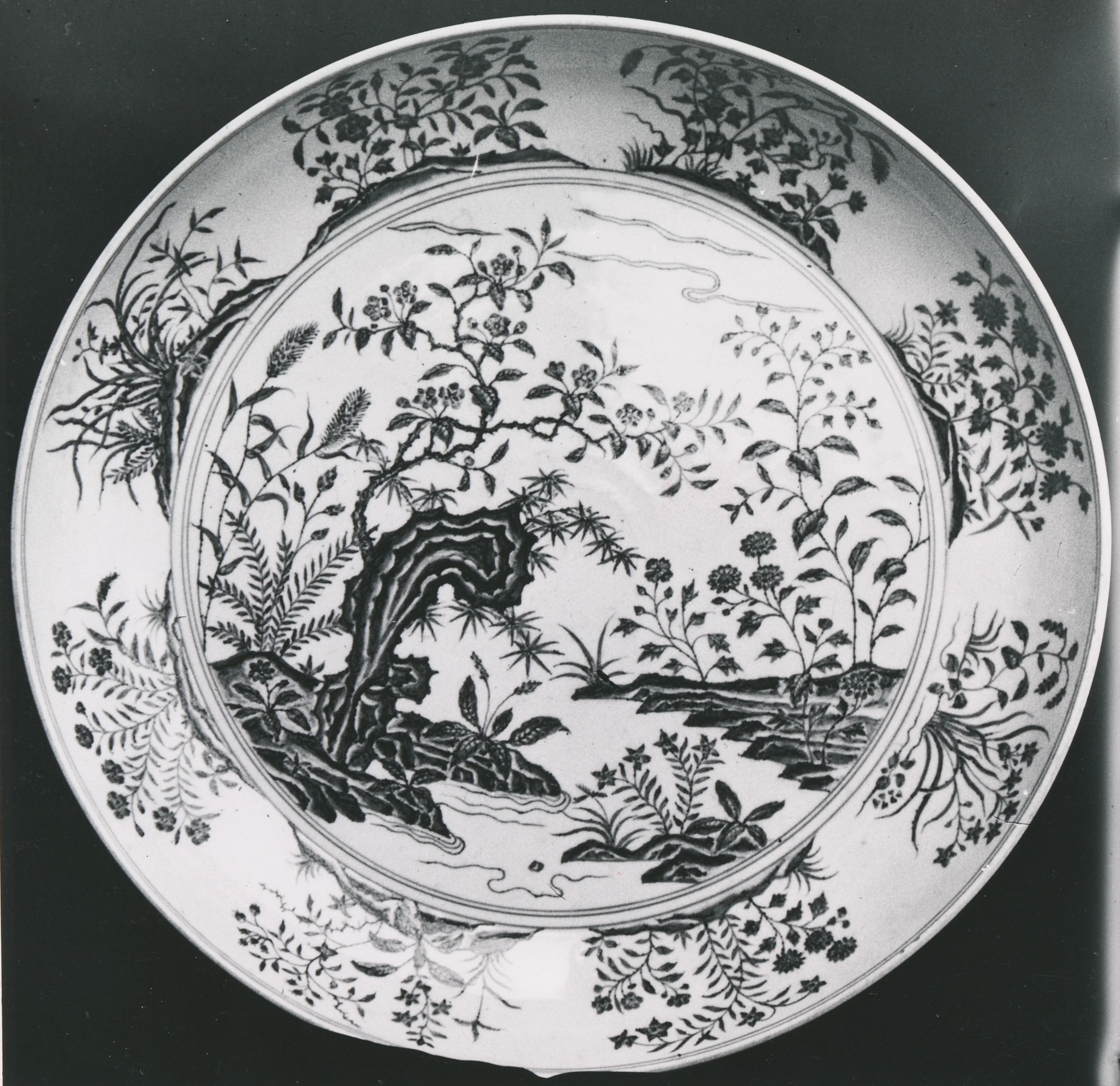
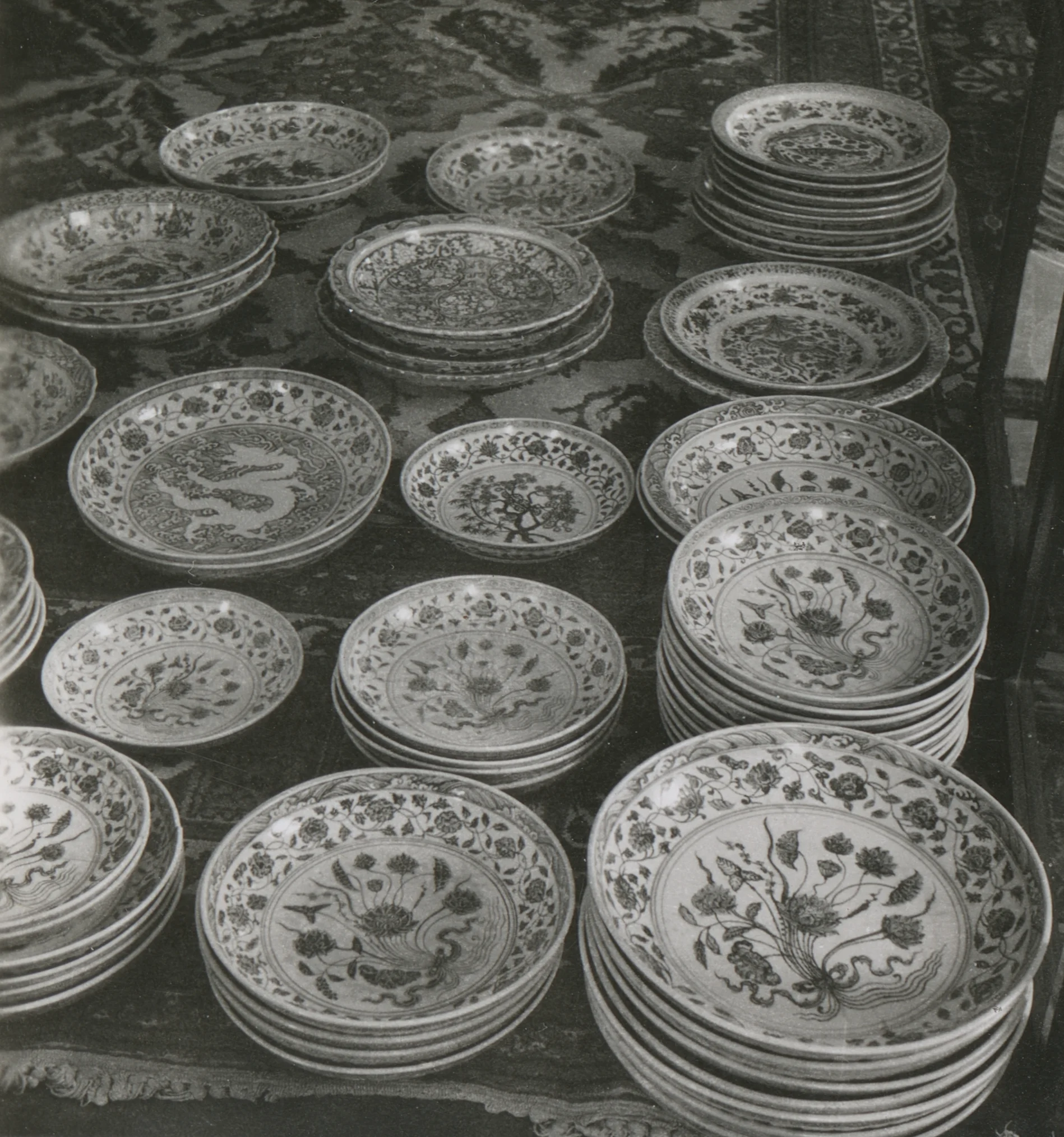
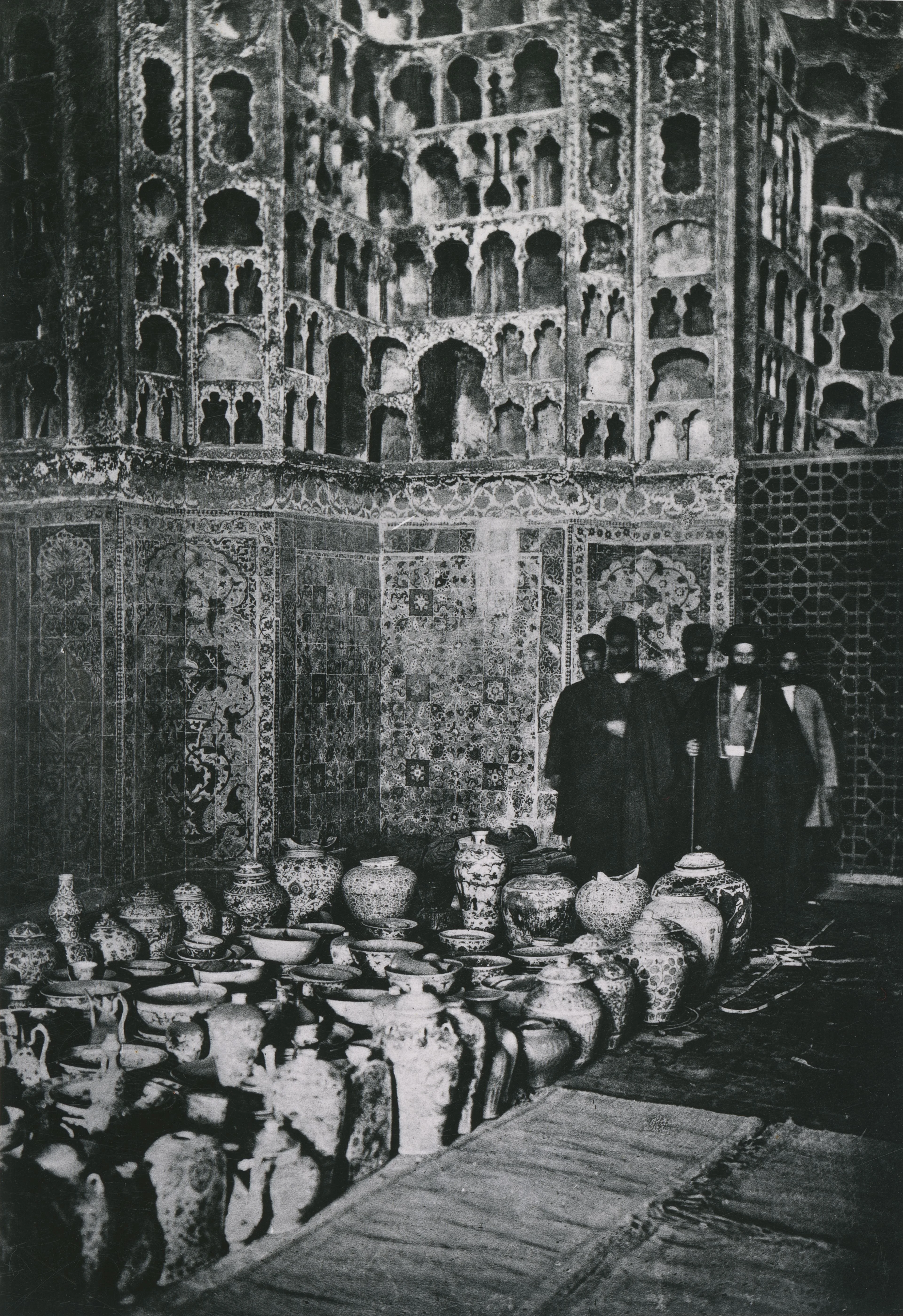
Shah Abbas I also donated his unrivaled collection of 1,162 Chinese blue-and-white vessels to the shrine and encouraged some of his noblemen to follow his example. To display the dazzling Chinese porcelain collection, the shah ordered the construction of the Chini-khana (House of Porcelain) in the heart of the shrine complex. The Chini-khana served much like a royal treasury but was now part of the Safavid ancestral shrine and visible to the public. These gifts illustrate Safavid efforts to integrate their political power and spiritual authority and affirm Ardabil’s dynastic significance.
The Decline
Shah Abbas regarded himself as a “Shadow of God on Earth” and continued to use Ardabil as a symbol of Safavid political and spiritual legitimacy. At the same time, he curtailed the power of the Qizilbash, countered popular Sufi-Shi‘i beliefs and practices, and executed several Sufi leaders he regarded as a growing threat to his authority. To limit the influence of Sufis further, the shah systematically dismantled their religious networks, which had taken root in Safavid popular culture and advocated for a more traditional form of Shi‘ism. Shah Abbas’s successors continued with these policies and further weakened the power of Sufi orders in Safavid Iran.
Ardabil continued to serve as the Safavid ancestral shrine but by the late seventeenth century, the role of Sufism had been dramatically diminished. When the Afghans invaded Iran in 1722 and ended the rule of the Safavids, the once grand dynastic shrine fell into disrepair and was almost abandoned.
In 1826–28, the city was caught in the Russo-Persian war, and the precious collection of manuscripts was taken to St. Petersburg for “safe keeping.” Today, it is kept in the National Library of Russia.
The Chinese porcelain collection was mostly transferred to Tehran’s National Museum in 1935, where some of the works are now on display. A small group was returned to Ardabil and is on view today at the shrine.
The Continuation of Sufism in Iran
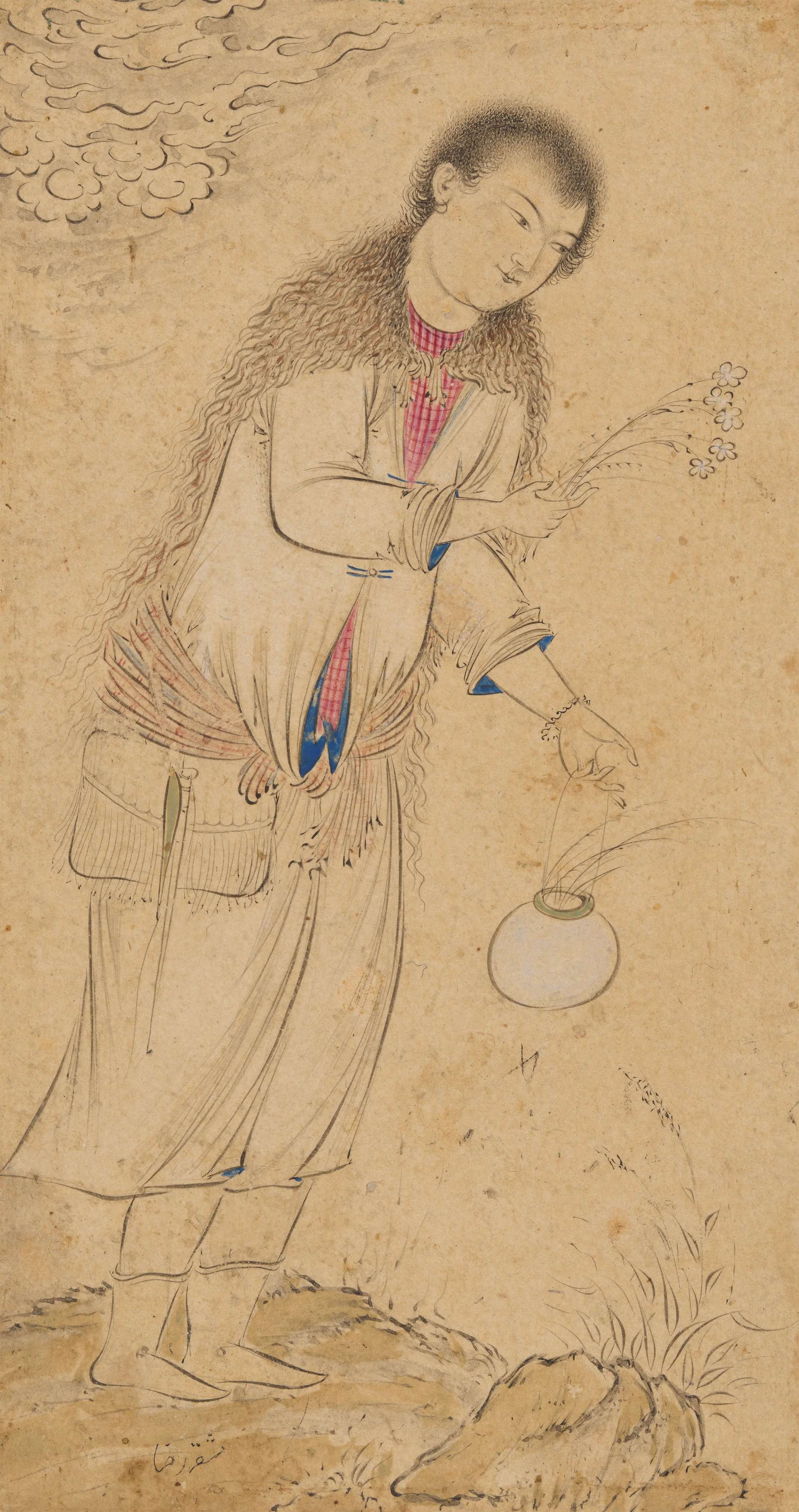
Still, Sufism survived and flourished in Iran in several different ways. While Safavid rulers had purged and banned most of the Sufi orders, many individual Sufis found support among the population. These figures also became common subject matter for painters and poets, whose artworks, even if idealized, celebrated the traditions and rituals associated with Sufis.
Another source of support for Sufism was the futuvvat, which professed allegiance to Imam Ali and followed Sufi traditions and practices, especially the master/pupil model. These associations were closely linked to artisan guilds and ensured that the Sufi codes of conduct were upheld and respected among the community.
Irfan—A New Form of Spiritual Knowledge
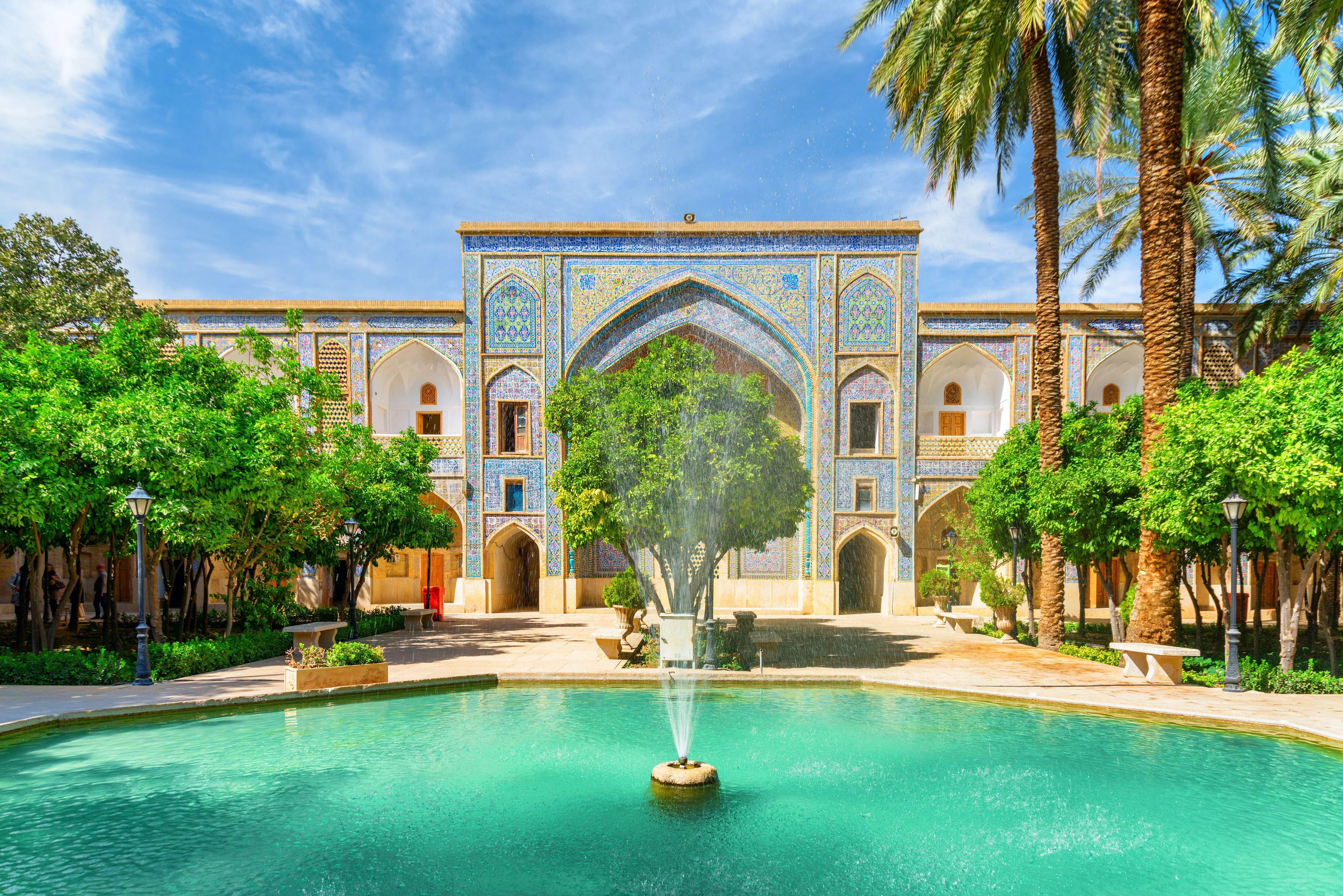
Sufism also persevered in Iran thanks to the work of several powerful scholars and philosophers. These included Shaykh Bahai (d. 1621), Muhammad Taqi Majlesi (d. 1659), and especially Sadr al-Din Shirazi, better known as Mulla Sadra (d. 1636), who allegedly taught at the Madrasa-i Khan in Shiraz for some time. Mulla Sadra advocated for a more intellectual approach to mystical Islam in Iran, one that combined Sufi ideals and Shi‘i religious thought.
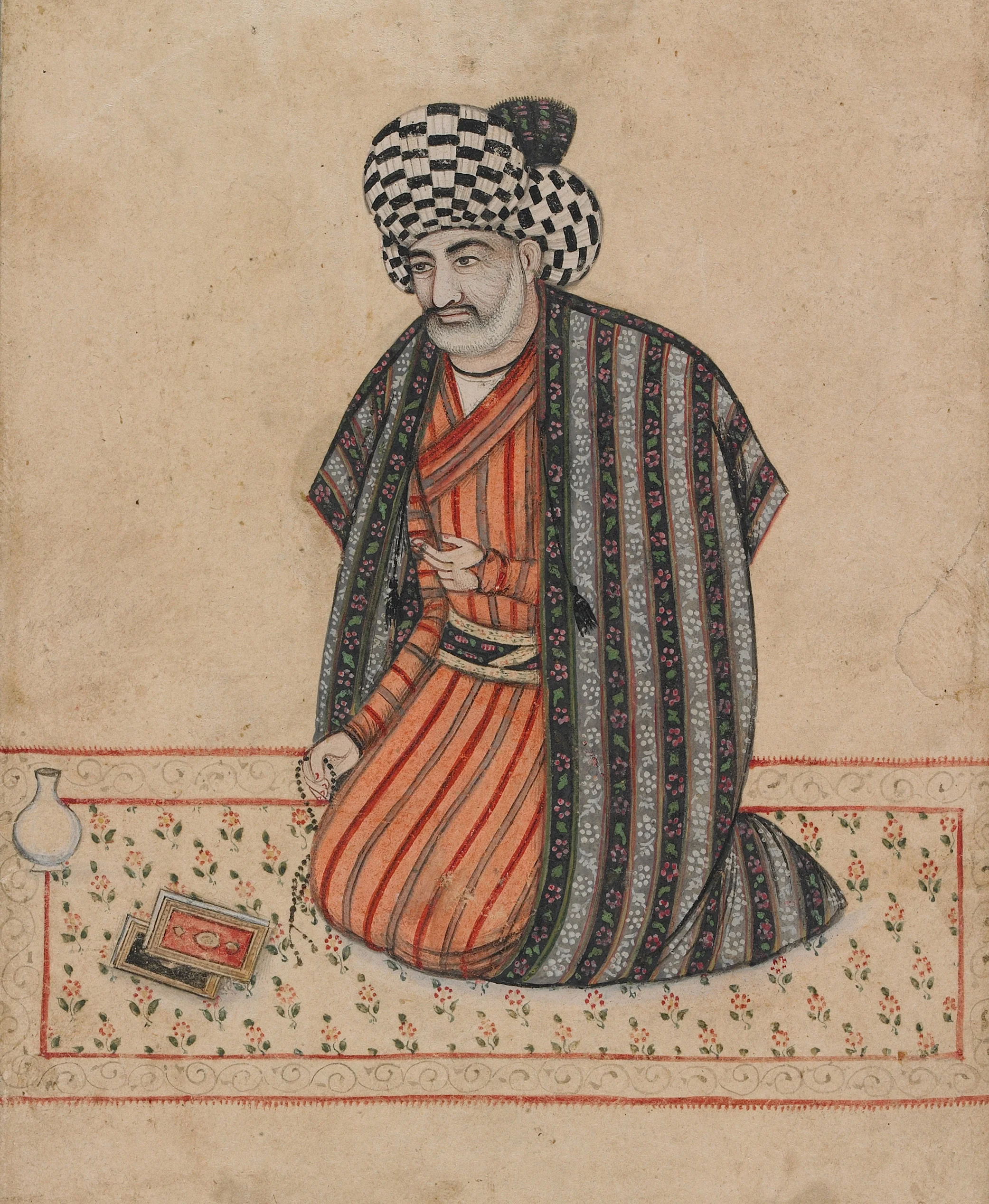
Mulla Sadra drew on the work of several great thinkers, such as Avicenna, the eleventh-century philosopher and physician, and Ibn Arabi (d. 1240), the Andalusian scholar and mystic, to advocate for a more comprehensive intellectual approach to the mystical understanding of God. His writings provided a firm philosophical grounding to mystical elements in Shi‘ism. The tradition became known as Irfan—meaning wisdom, knowledge, and spiritual awareness—and is still practiced in Iran to this day.
Sufism after the Eighteenth Century
With the establishment of the Qajar dynasty (1789–1925) at the close of a tumultuous century in Iran, other Sufi orders such as the Nimatullahis also flourished. The Nimatullahi order was founded by the fifteenth-century Shaykh Nimatullah Vali (d. 1431), who is buried in Mahan, near the city of Kerman.
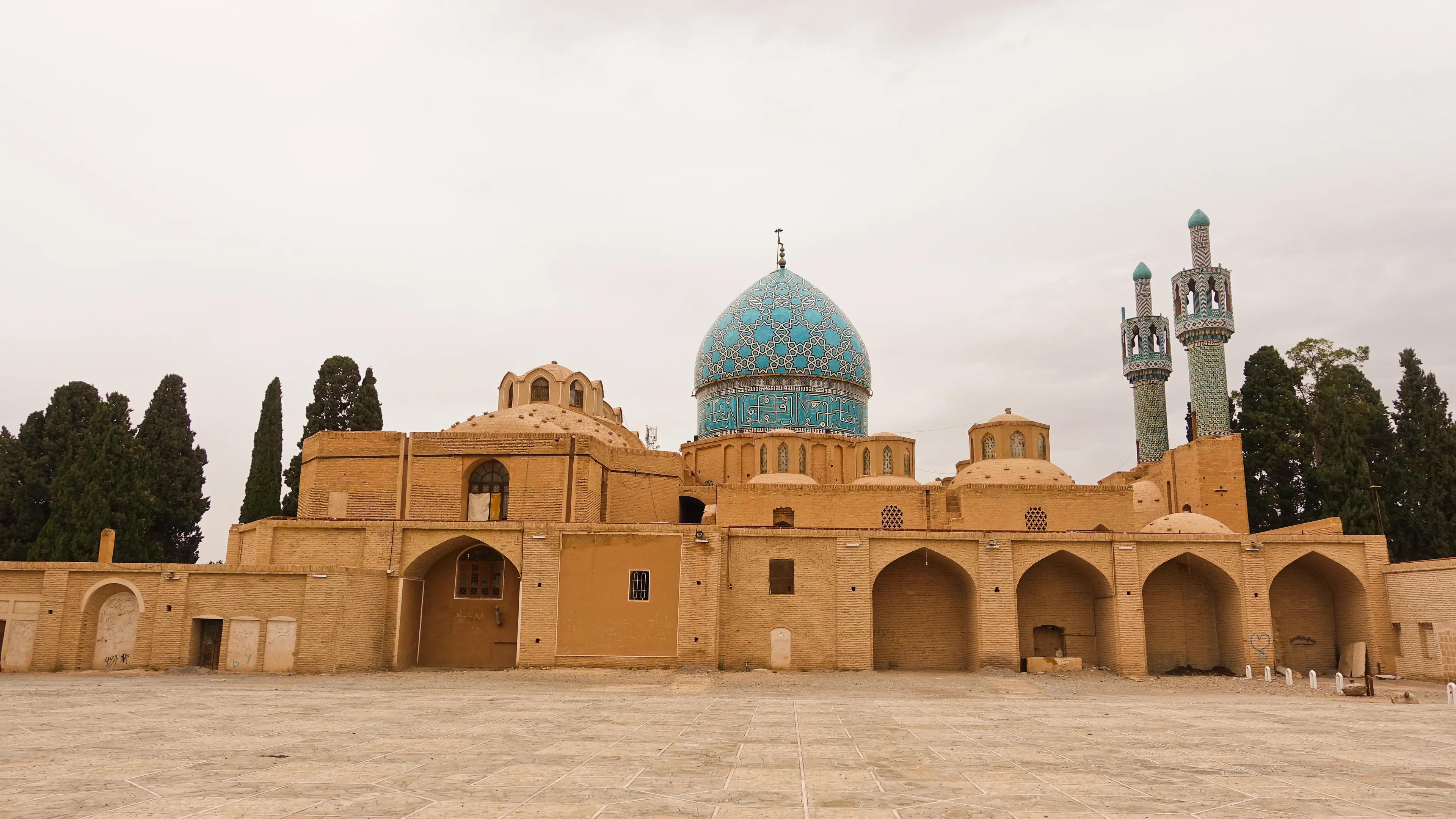
Prior to the rise of the Safavids in the sixteenth century, the order gradually declined, and its leaders migrated to India. In the eighteenth century, however, Mir Sayyid Abd al-Hamid Ma‘sum Ali Shah (d. 1797), a charismatic master, returned from India to revive the tradition. He soon developed a large following among both the elite and general population to grow the order significantly. It is still active today among the diaspora, while the impressive shrines at Ardabil and Mahan serve as potent physical reminders of the Sufi tradition in Iran.
Irfan and the Development of Gnostic Mysticism in Iran
Ata Anzali, Professor of Religion at Middlebury College, explains Irfan and the rise of the Nimatullahi order in Iran.
View Transcript and Credits
Dr. Ata Anzali, Associate Professor of Religion, Middlebury College
What you have with the with the first century of the Safavid Empire, is that the gradual lack of emphasis on that early, charismatic, messianic element of the Sufi pirs’ authority, and more emphasis on Twelver Shi’ism, and especially kind of a juristic understanding of Twelver Shi’ism as a basis for social order. And what this does is that it gives the Shia ulema at the time, more power, more resources and more opportunities to shape the public life. So this becomes a competition between two sources of religious authority. On the one hand, is the traditional Sufi lodges, who have been the center of life in many kind of localities, not only do they offer social services, but also kind of act as the centers of really spiritual authority that people go to, and then like then you have the Ulama, who are establishing their own authority. And it’s here that really you have the emergence of a new discourse on spirituality in Iran that is called Irfan.
Now, with the name of Irfan, they could basically claim that there is this authentic tradition of spirituality in Shi’ism that is called Irfan, that has a past, and it’s related and legitimized by Shi’i Hadith from the sayings of the Imams. And it’s not really Sufism, because it really, socially speaking, wasn’t. Irfan becomes this notion, this intellectual notion that is really not tied to that social institution.
They avoided the terminology that was overtly Sufi sounding. But you also see a lot of emphasis on learning and reading and commenting on classical Sufi texts. For example, the text that Ibn Arabi wrote, right? So Arabi this, this majestic Sufi figure. There’s also this emphasis on Hafez and Rumi, and this Persian Sufi poetic tradition, on preserving it, on teaching it, on reciting it, even in most cases that I know, what you find is that these ulema really are treating this as secret knowledge.
Of course, the story of Irfan really doesn’t end there. What you have, for example, early 19th century, you have a revival of Sufism in Iran. Nimatullahis existed in Iran before the Safavid times. But then, you know, like, for a variety of reasons, before even the Safavids rise to power, the followers of Shah Nimatullah Vali, most of them, like, migrate to India, and they have a thriving scene in India. A lot of, you know, activity there. But at some point, they are kind of really distraught that in Iran, like this tradition of Sufism is kind of dying off, or kind of has been severely marginalized. So at the end of the 18th century, they find this opportunity.
They send this Sufi, Sufi guy, Masum Ali Shah, who comes basically with the with the with the mission of reviving Nimatullahi Sufi order in Iran met with tremendous success in a way that they didn’t even expect themselves, you know, like, so, like, so there seems to be this, this vacuum that the Irfan tradition, because of its elitism, because it’s confined to the walls of madrasa and the ulema, has not been able, really, to answer a public, public need.
And that is why, even today, you could say the most popular and most active Sufi order in Iran happens to be the Nimatullahi order in contemporary Iranian landscape, where people do want to see and be in touch with figures who represent the divine. That immediacy is craved, but the Ulema usually have not been able to give that to people, and that is what kind of creates all these new revivals and kind of popular spiritual movements that that gain popularity, but nevertheless, at the same time, the tradition of Irfan continues well and alive.
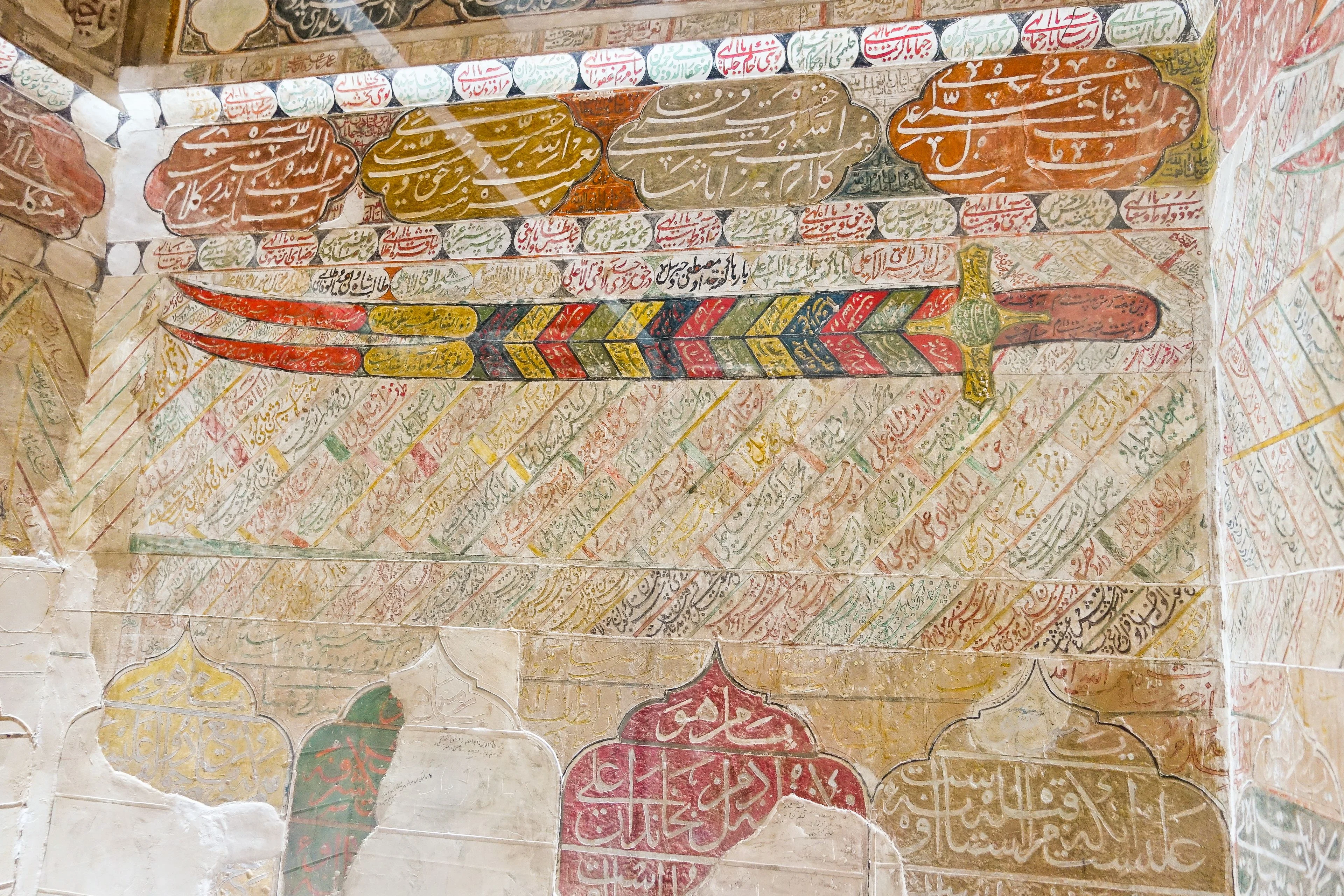
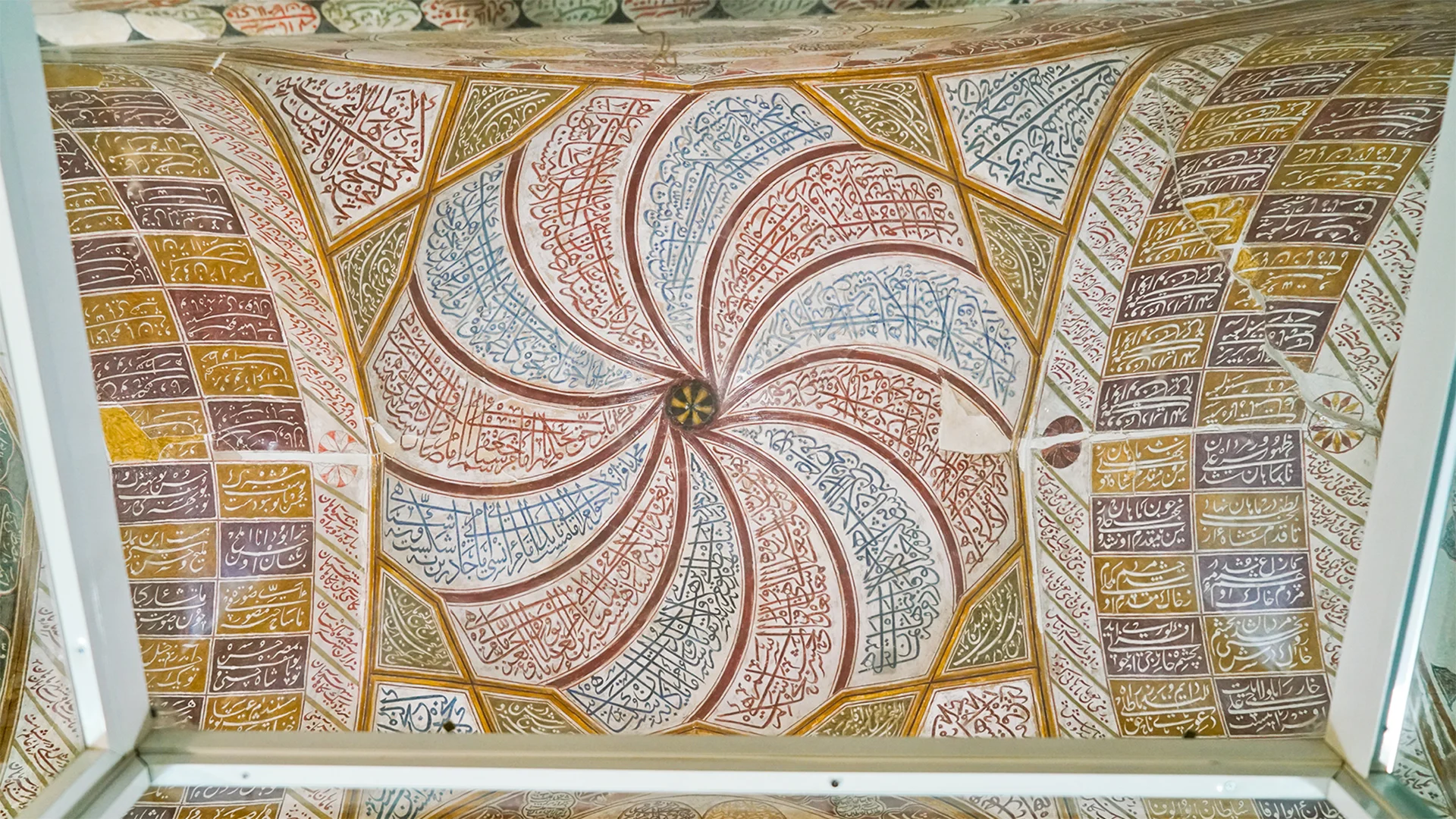
Calligraphic wall painting in the Shah Nimatullah Vali Shrine, Mahan. © Catherine Touaibi-Chatagny.
Façade of the Harun-e Velayat, Isfahan. NG-Spacetime / Shutterstock.
Binding of a Shi‘i book of prayers, signed by Ahmad Nayziri, Iran, Safavid period, dated 1127 AH (1715 CE), gold colored pigment and lacquer on pasteboard. National Museum of Asian Art, Smithsonian Institution, Gift of Abolala and Nasrin Soudavar, S2022.12.1a-b.
Princely Gathering in a copy of Mathnavi-yi ma’navi (Spiritual Couplets) by Rumi (d.1273), Iran, Tabriz, ca. 1530s, opaque watercolor and gold on paper. National Museum of Asian Art, Smithsonian Institution, Arthur M. Sackler Collection, Purchase — Smithsonian Unrestricted Trust Funds, Smithsonian Collections, S1986.35, fol. 1 verso.
Penbox, Iran, Qajar period, 1850–70, opaque watercolor, gold colored pigment and lacquer on pasteboard. National Museum of Asian Art, Smithsonian Institution, Gift of A. Soudavar in memory of his mother Ezzat-Malek Soudavar, S2014.17.64.
Shrine of Shah Nimatullah Vali, Mahan. Tuul and Bruno Morandi / The Image Bank / Getty Images.
Tomb of Shah Nimatullah Vali, Mahan. © Catherine Touaibi-Chatagny.
Locations
Explore the map or scroll to select a location.