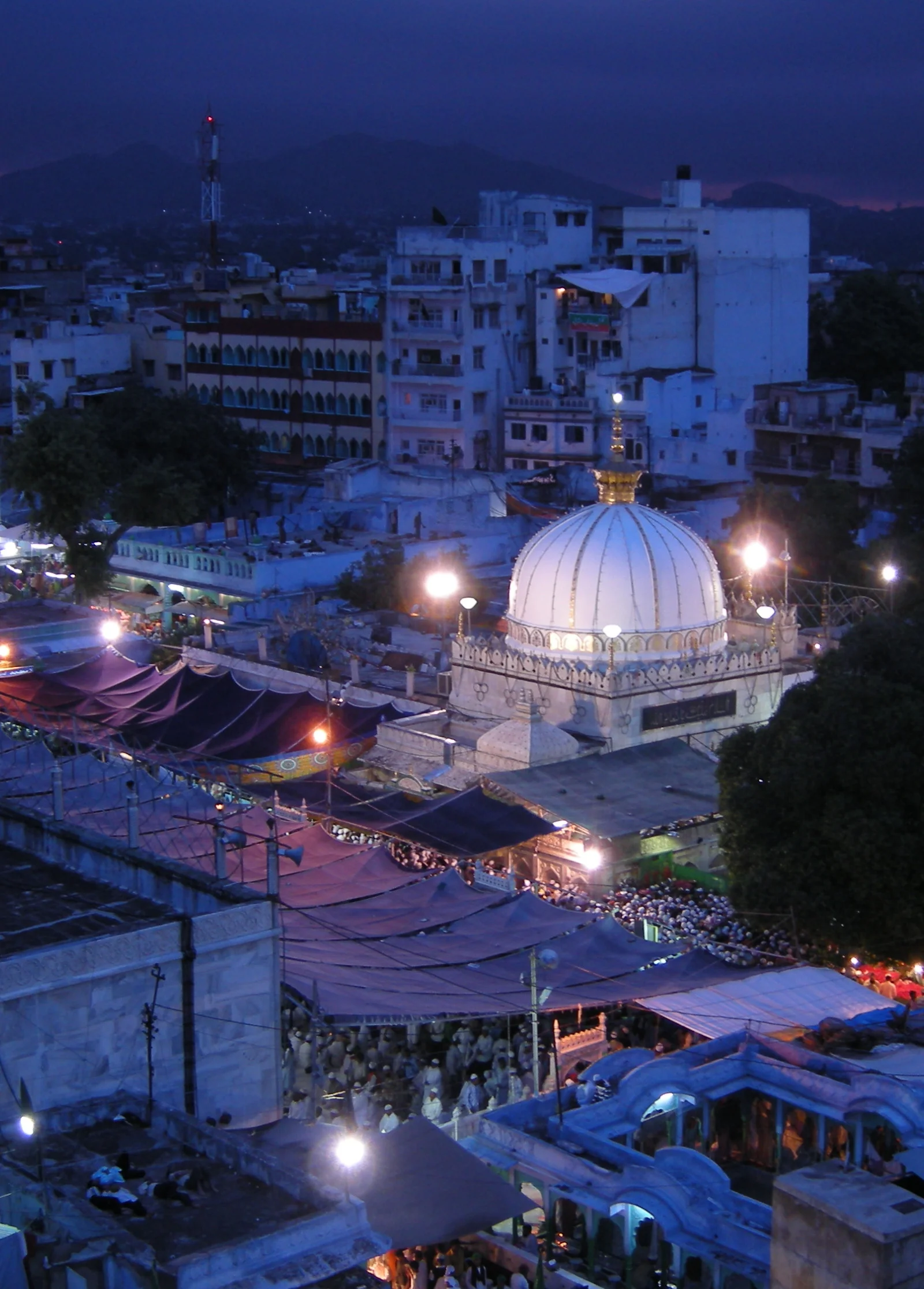
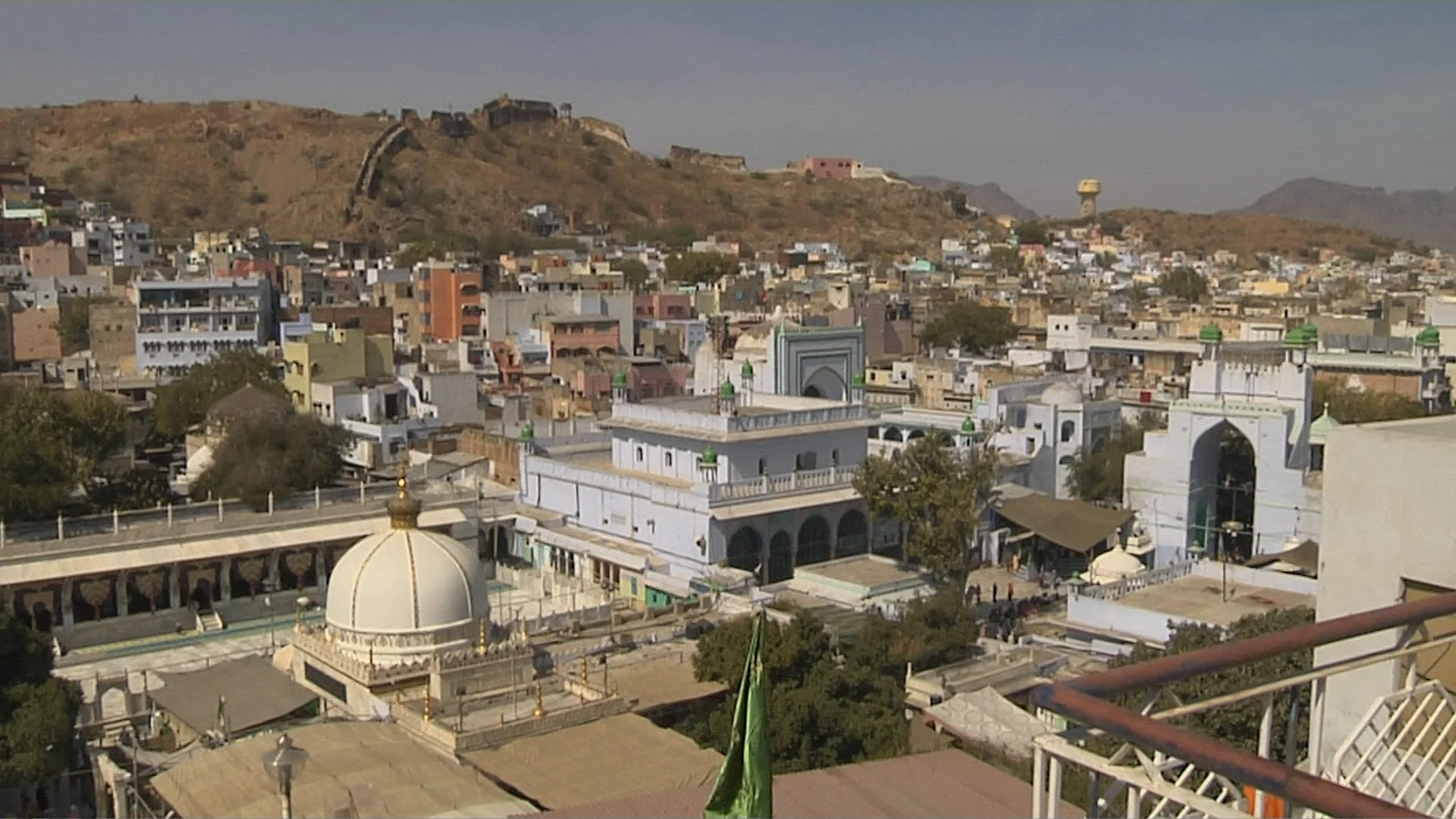
 A cityscape view of Ajmer, featuring the white domes and buildings of the shrine with hills in the background under a clear sky.
Ajmer
India
Heart of Sufi Devotion
Located in northwest India at the heart of the desert region of Rajasthan, the city of Ajmer is the burial site of Mu‘in al-Din Chishti (1143–1236), a Sufi saint and philosopher. The city became a major center of pilgrimage, especially after the accession of the third Mughal Emperor Akbar (r. 1556–1605), who was an ardent follower of the Sufi master, as were his descendants.
Today, the city attracts tens of thousands of devotees daily. Like other Sufi shrines in India, it is not only popular with Muslim pilgrims but also with those from other religious traditions. The most important annual event is the commemoration, or urs (literally, “wedding”) of Mu‘in al-Din Chishti’s death, which takes place over six days. Marked by devotional music, communal meals, and prayers, the urs defines the principles and beliefs of the Chishtiyya, the most popular Sufi order in South Asia.
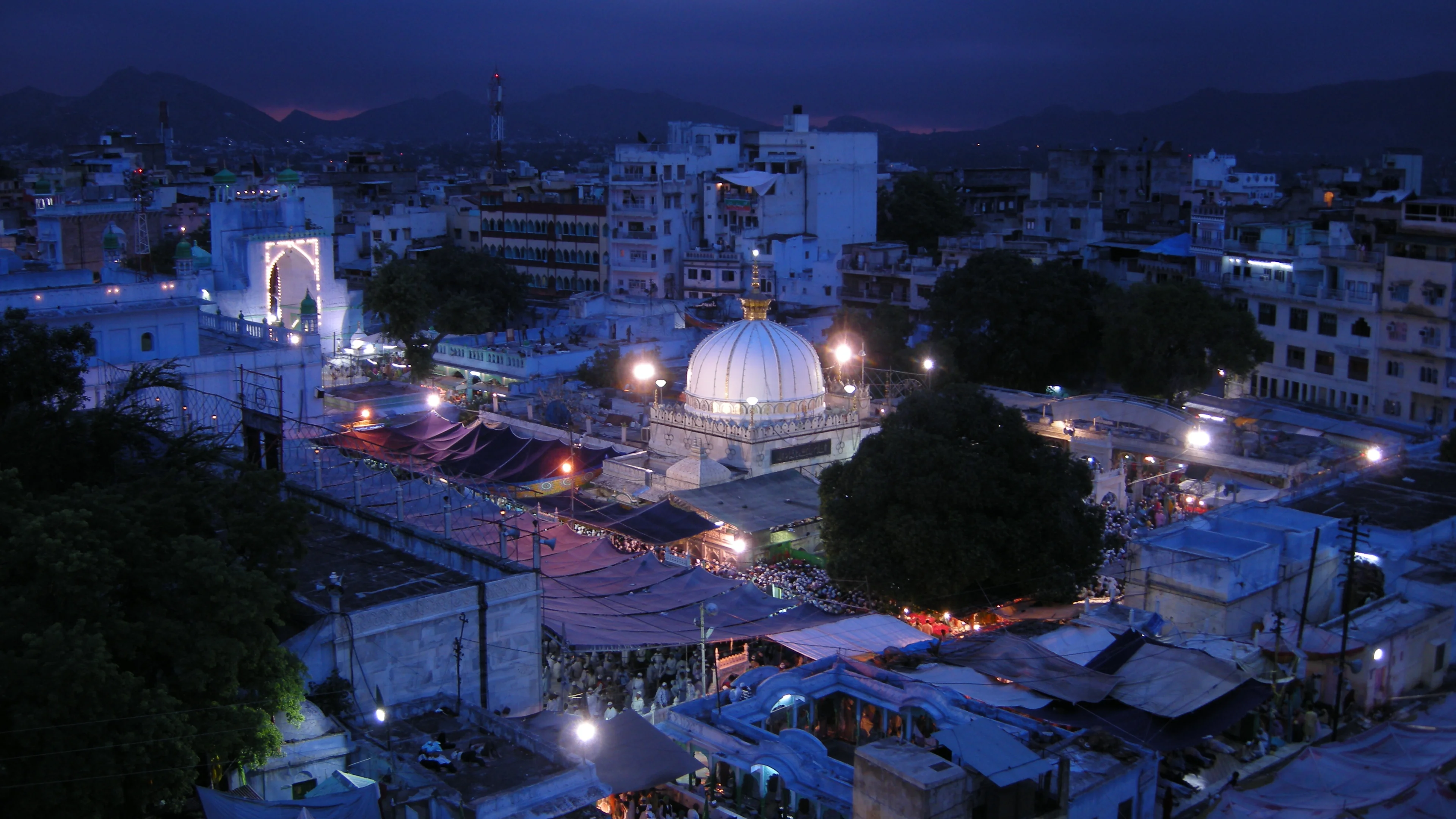
Rasika108 / DepositPhotos / Alamy Stock Video
Muʿin al-Din Chishti and his Shrine
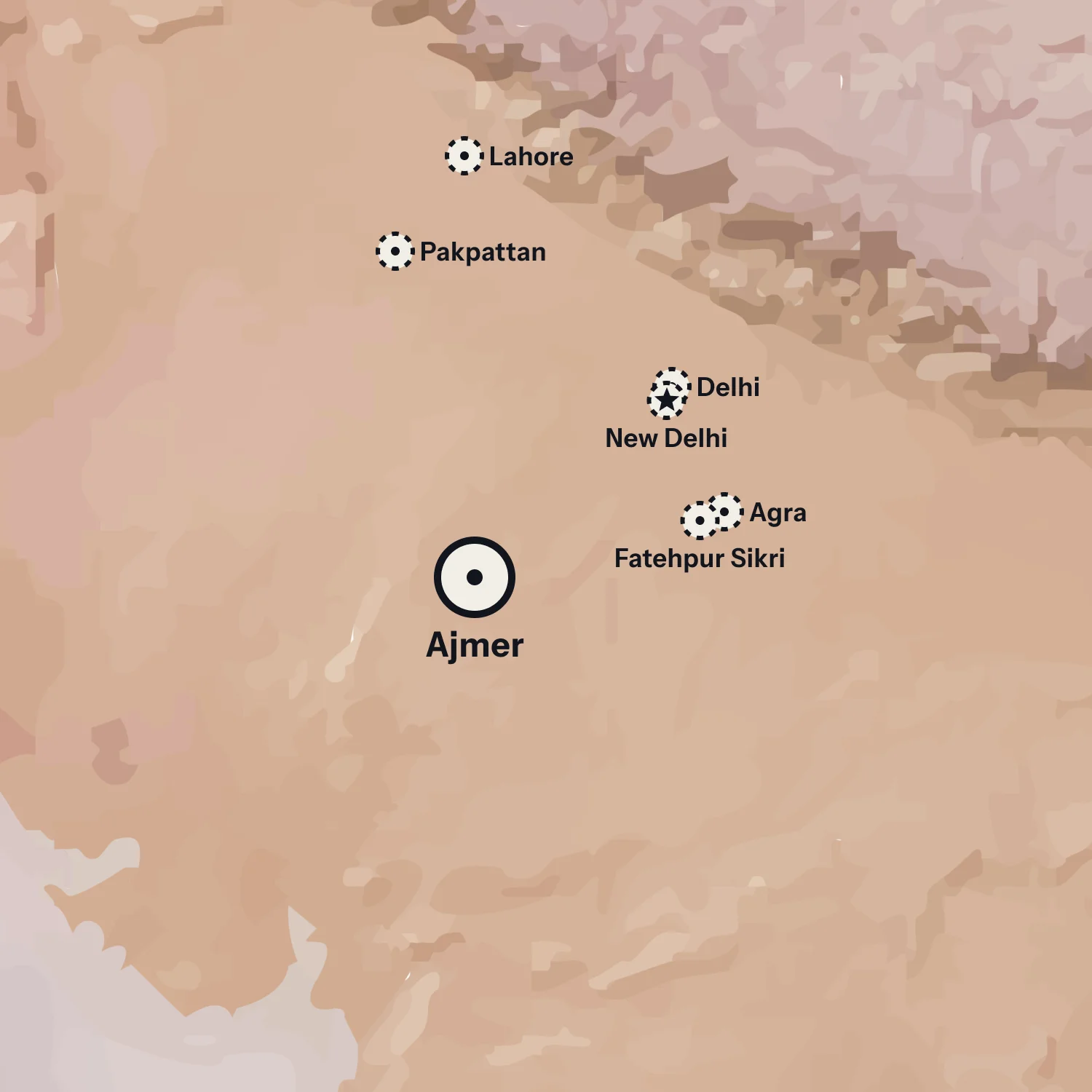
Mu‘in al-Din Chishti was born in southeastern Iran, and at the age of sixteen, he decided to devote himself to a spiritual way of life. He traveled to different centers of learning—from Nishapur to Samarqand and Bukhara in the east to Baghdad in the west—where he met and studied with eminent scholars and Sufi masters, such as Abd al-Qadir Jilani (d. 1166), and Abd al-Qahhar Suhravardi (d. 1168). During his pilgrimage to Mecca and Medina, Mu‘in al-Din allegedly saw the Prophet Muhammad in a dream, who asked him to spread Islam to India. He first went to Lahore, in present-day Pakistan, before settling in Ajmer. There, Mu‘in al-Din became a practitioner of the Chishtiyya, which had been already established circa 930 in the town of Chisht near Herat in present-day Afghanistan.
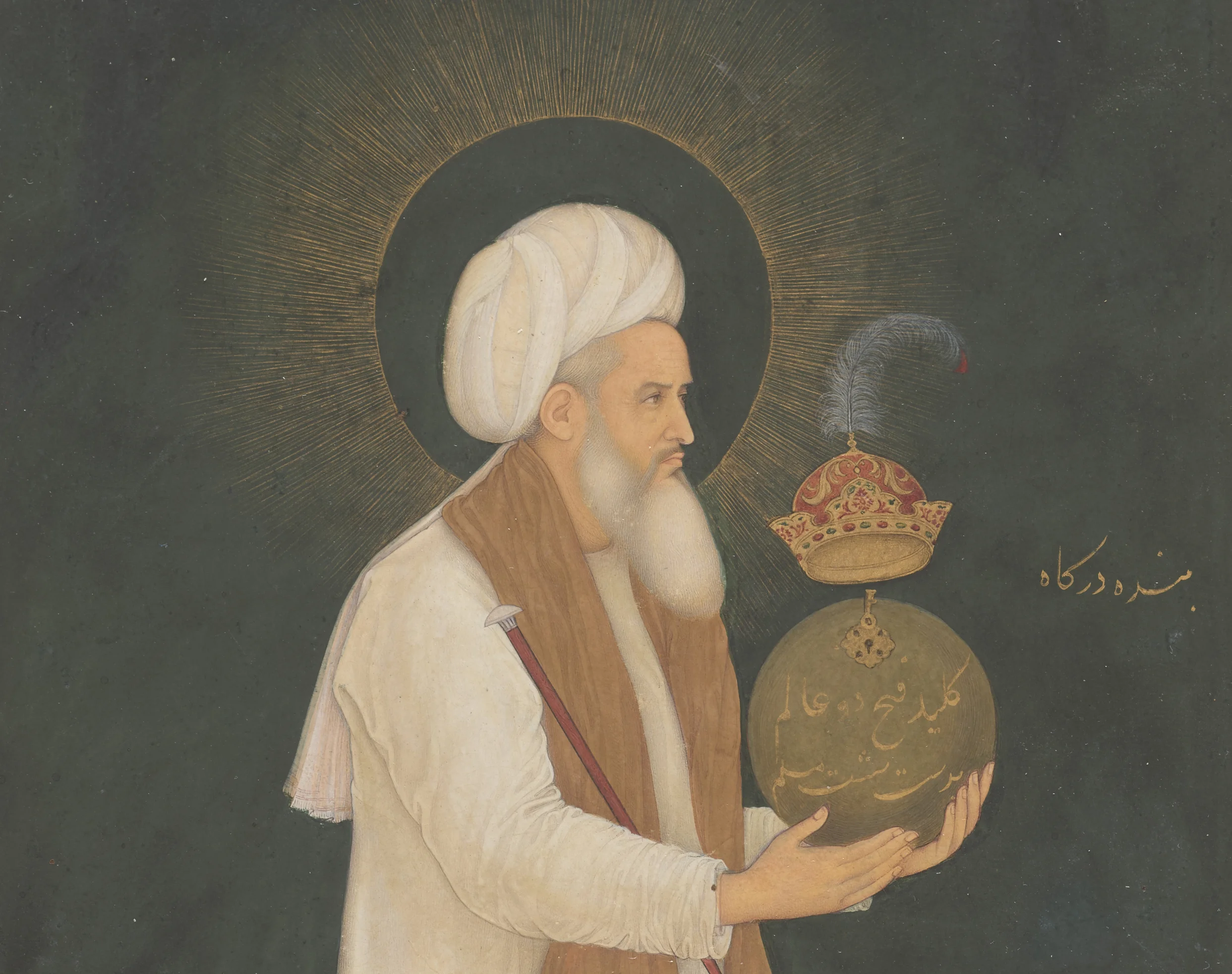
Chishti teachings emphasize material simplicity, public service, and caring for the poor and the marginalized. Mu‘in al-Din also encouraged his followers to depend on the generosity of others for their livelihood. In addition, the order stresses the importance of sound in achieving spiritual awakening, such as sama‘. The act of listening to devotional music as well as reciting and remembering the Divine names of God are important practices for the Chishtis. This emphasis led to the development of qawwali, a particular form of devotional singing accompanied by instruments. The lyrics are traditionally about the love for God and praise on the Prophet Muhammad.
The Mughal Dynasty and the Chishti Order
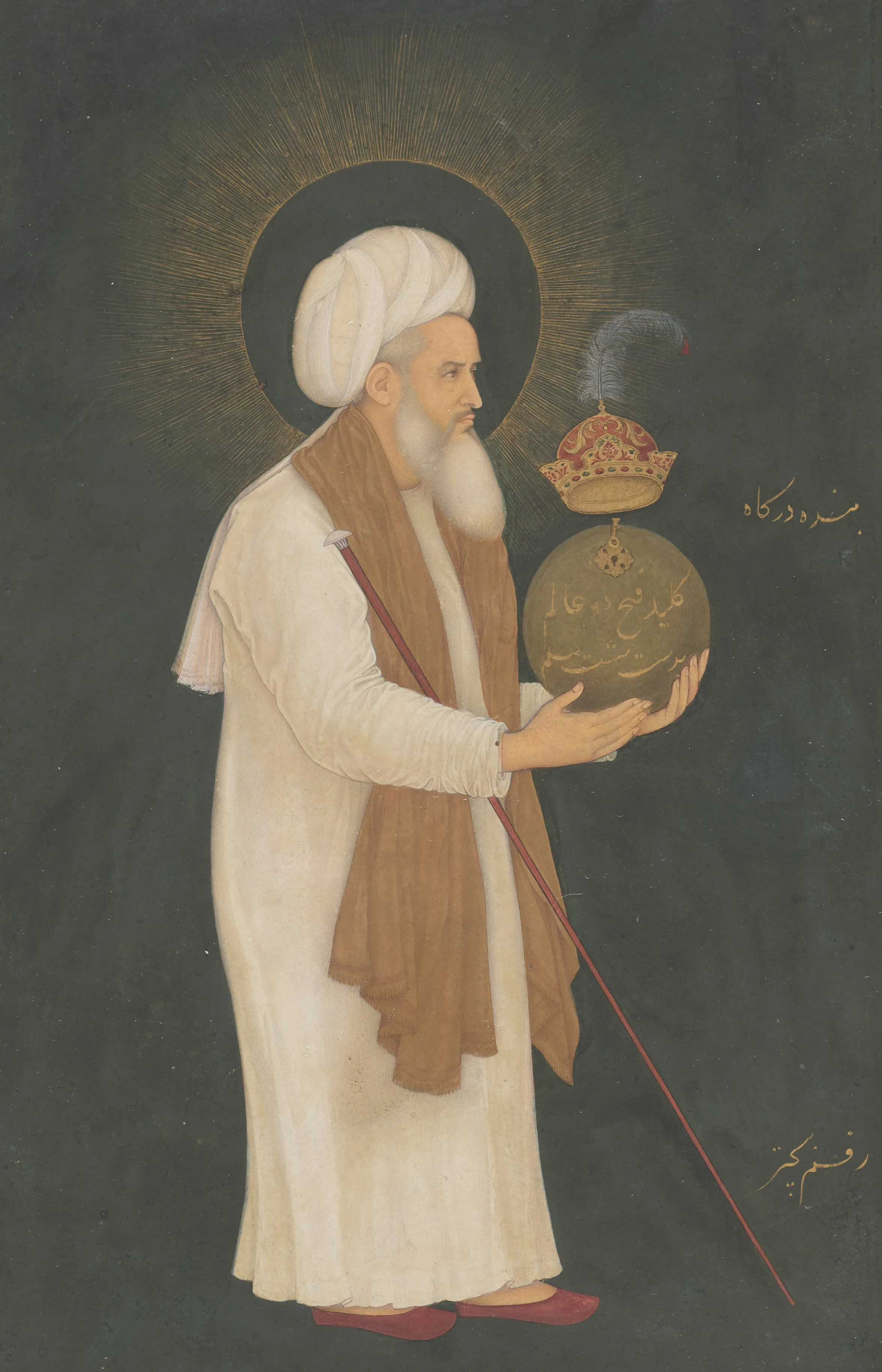
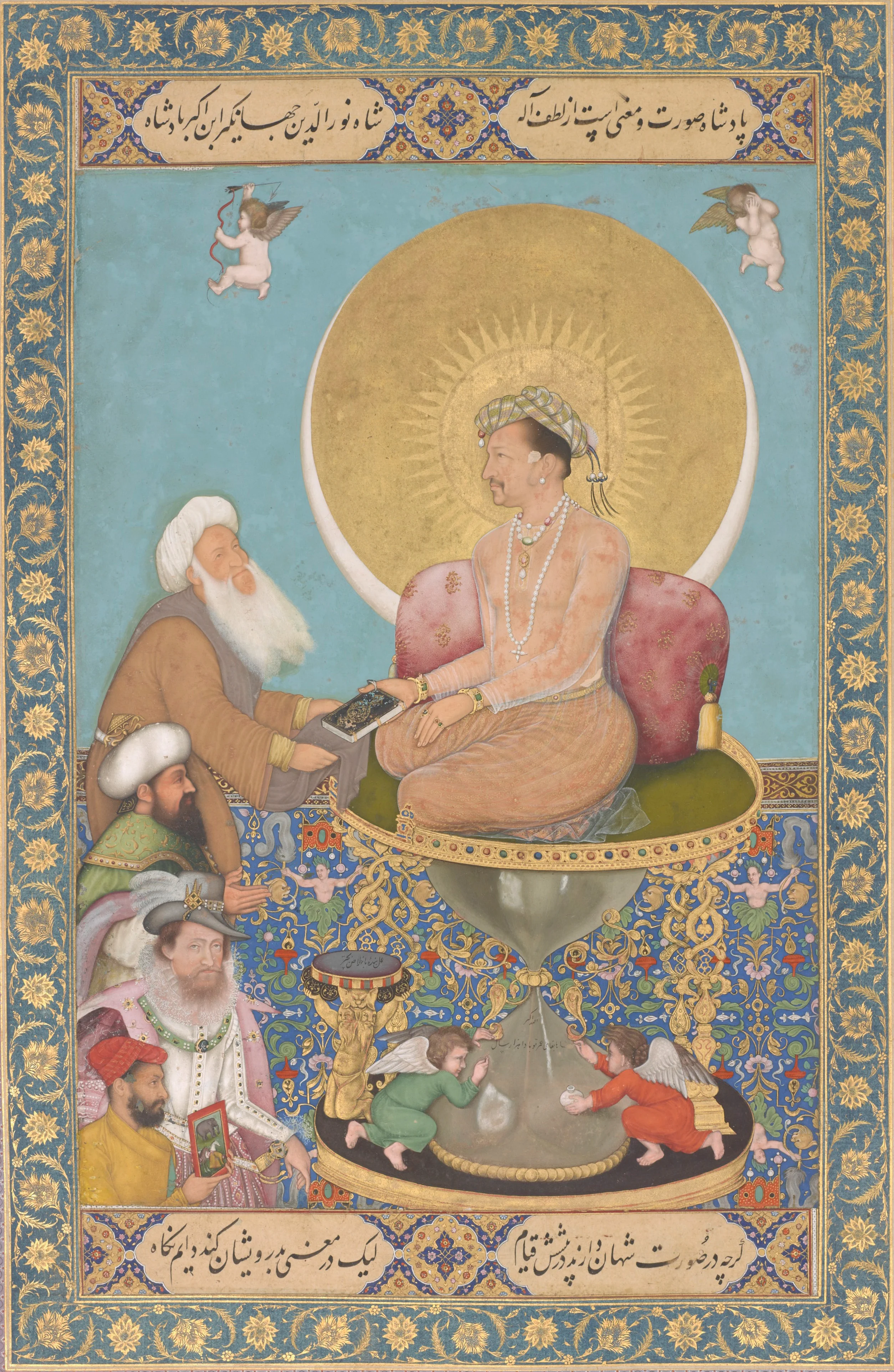
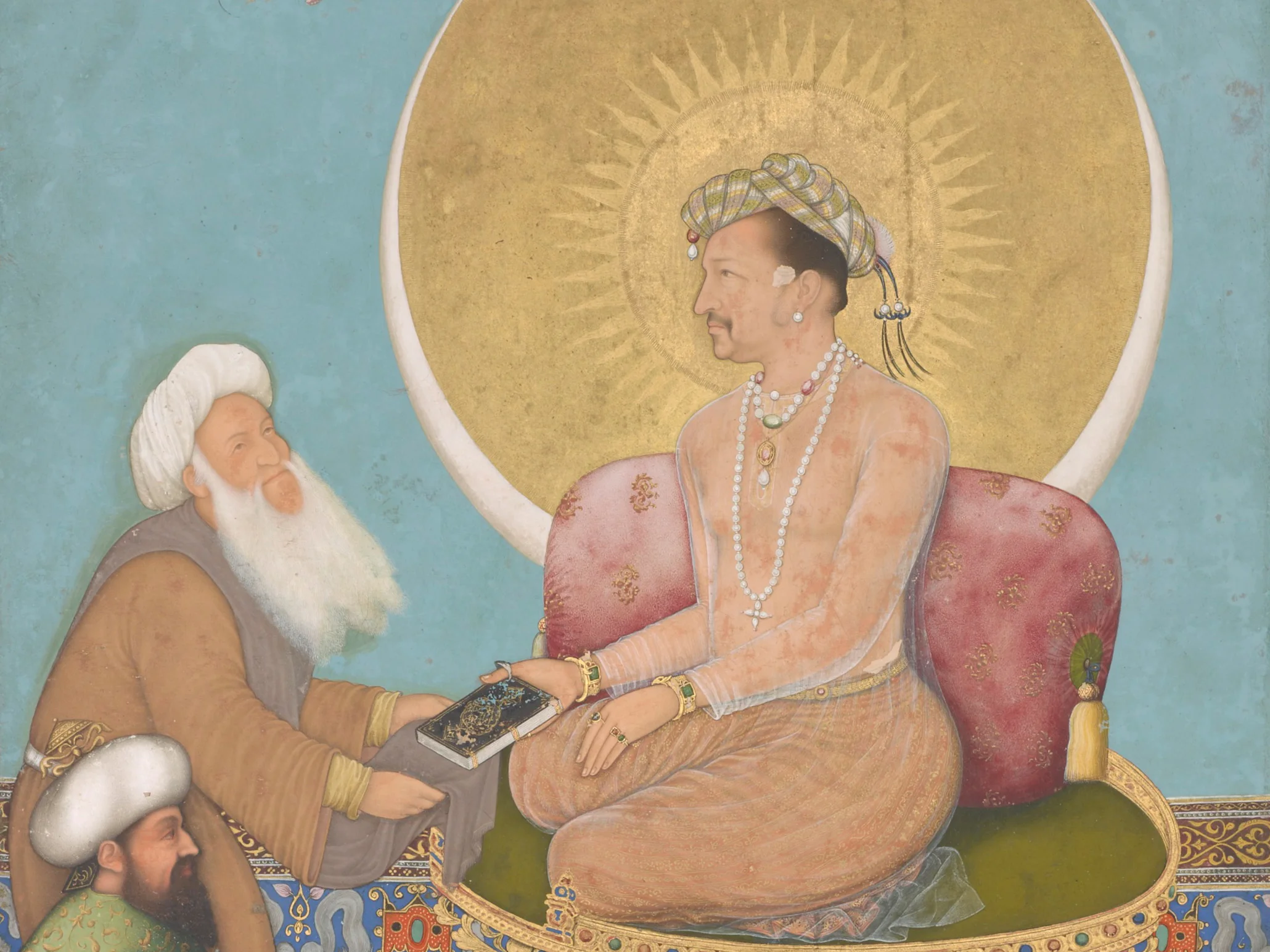
In its current state, the shrine of Mu‘in al-Din Chishti dates back to the early sixteenth century. The Mughal Emperor Akbar (r. 1556–1605) took a particular interest in the site and his charitable donations allowed for its expansion and upkeep. His son and successor Jahangir (r. 1605–27) continued to strengthen Mughal dynastic ties with the order as is symbolized in this celebrated portrait.
A Mughal Painting with a Chishti Shaykh
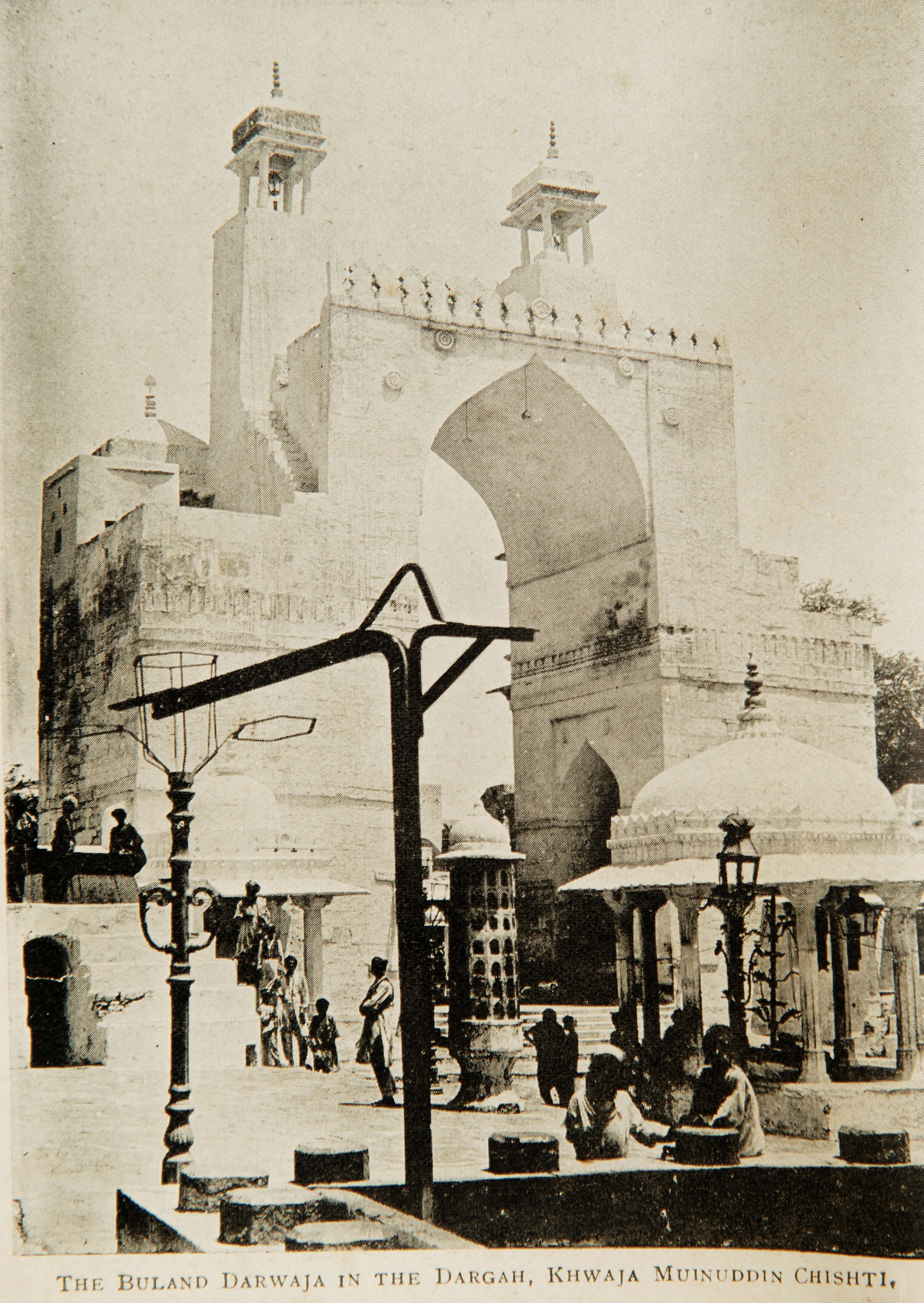
By the seventeenth century, the complex had places for dispensing food to the poor, hospices for pilgrims, an elaborate mosque, and impressive gates. These buildings continue to accommodate large numbers of pilgrims to Ajmer and provide them with both religious and social support.
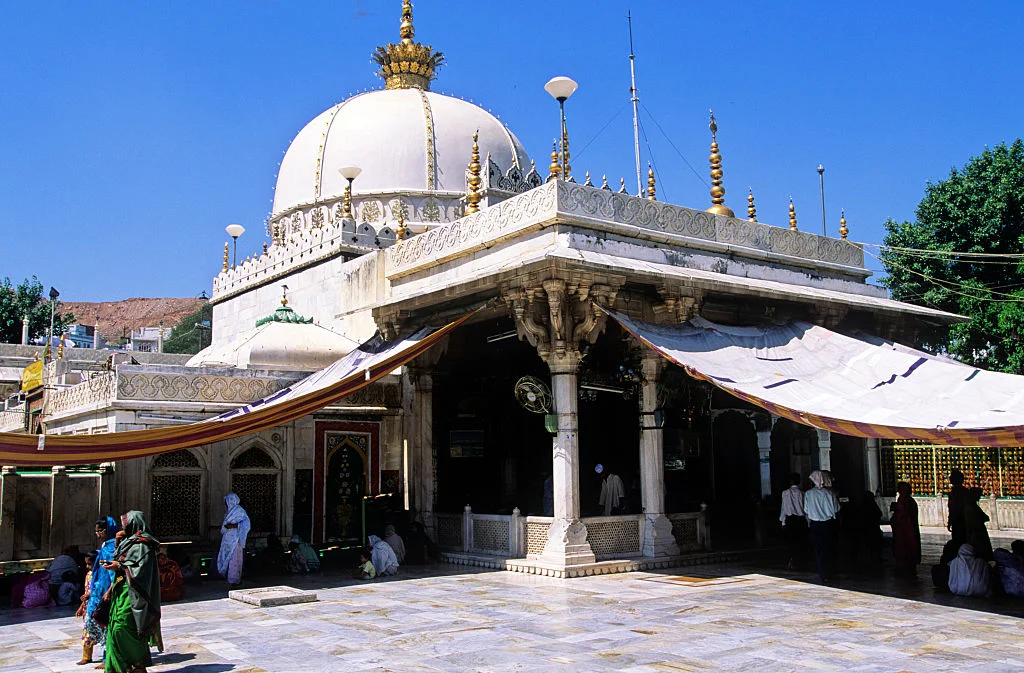
Photo by Soltan Frédéric/Sygma via Getty Images
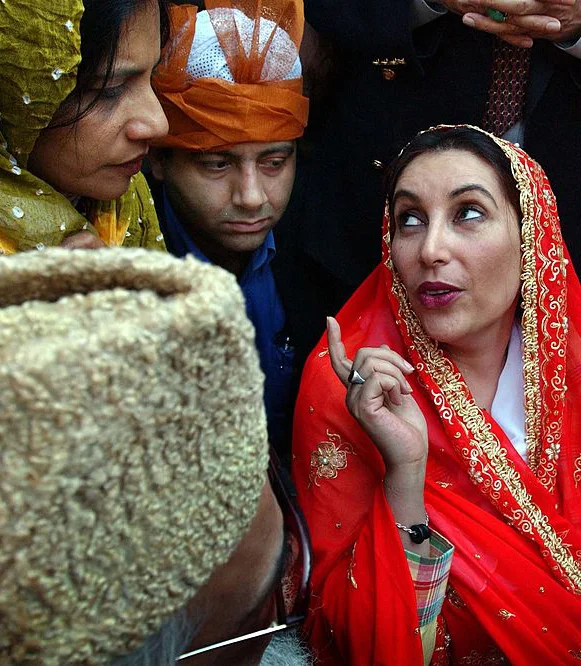
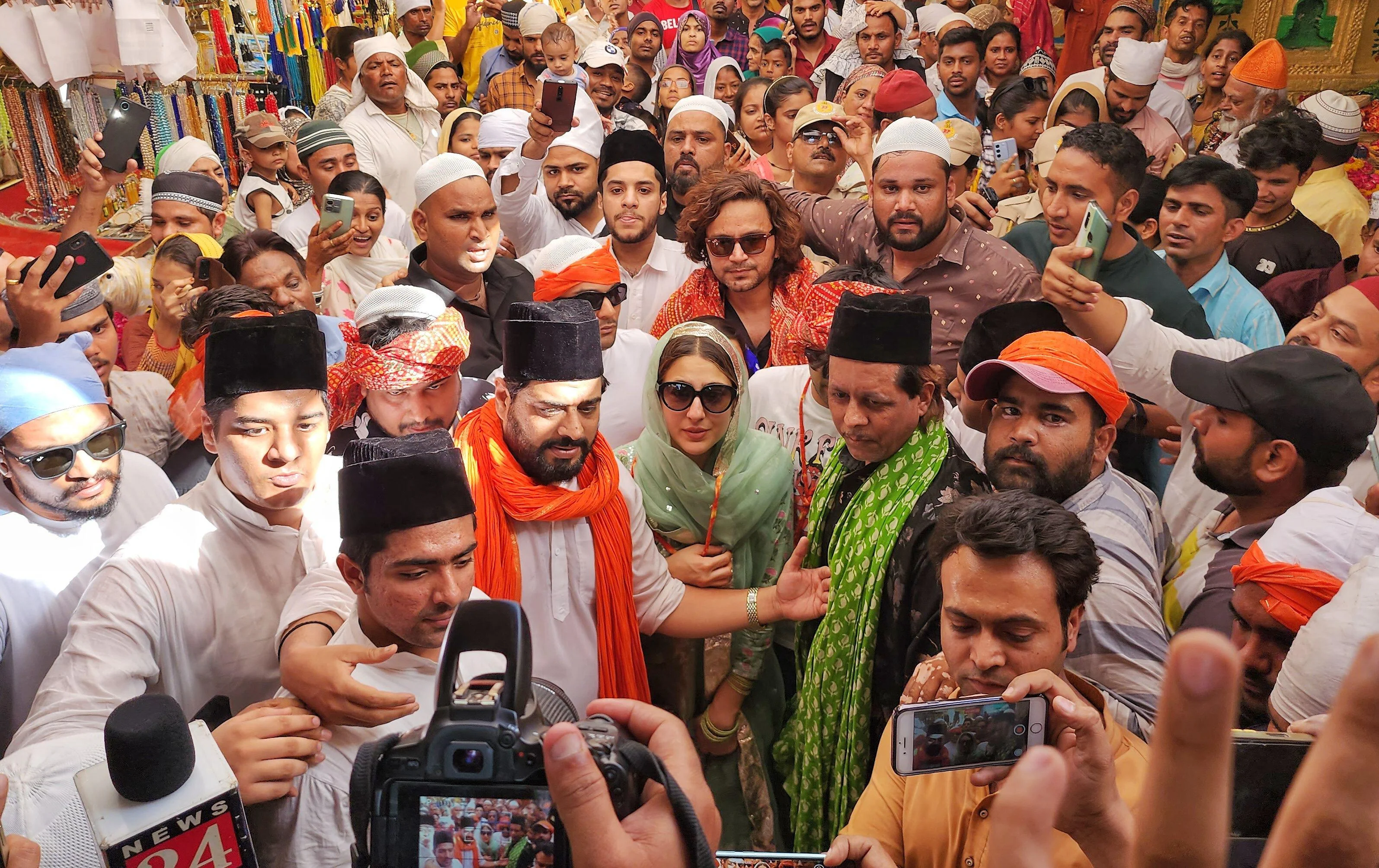
The shrine at Ajmer is maintained by thousands of hereditary caretakers known as khadims or khuddam, a term derived from the Arabic “to serve.” Following in the footsteps of their forefathers, these trusted individuals are attached to the shrine and manage the vast complex: they maintain the buildings, regulate and oversee the daily food distribution, and annually arrange the complex urs ceremony. These activities currently take place under the supervision of Hajji Syed Salman Chishti, a descendant of the saint and the hereditary custodian of the shrine.
The caretakers’ other responsibility is to guide the pilgrims in their ziyara and prayers. In return, they receive a token of gratitude for their services. Over the centuries, these men have assisted many visitors, whether Hindu or Muslim, prominent politicians, Bollywood stars, or anonymous men and women, who come to Ajmer to show homage to Mu‘in al-Din Chishti and ask for his guidance and blessing.
The Urs
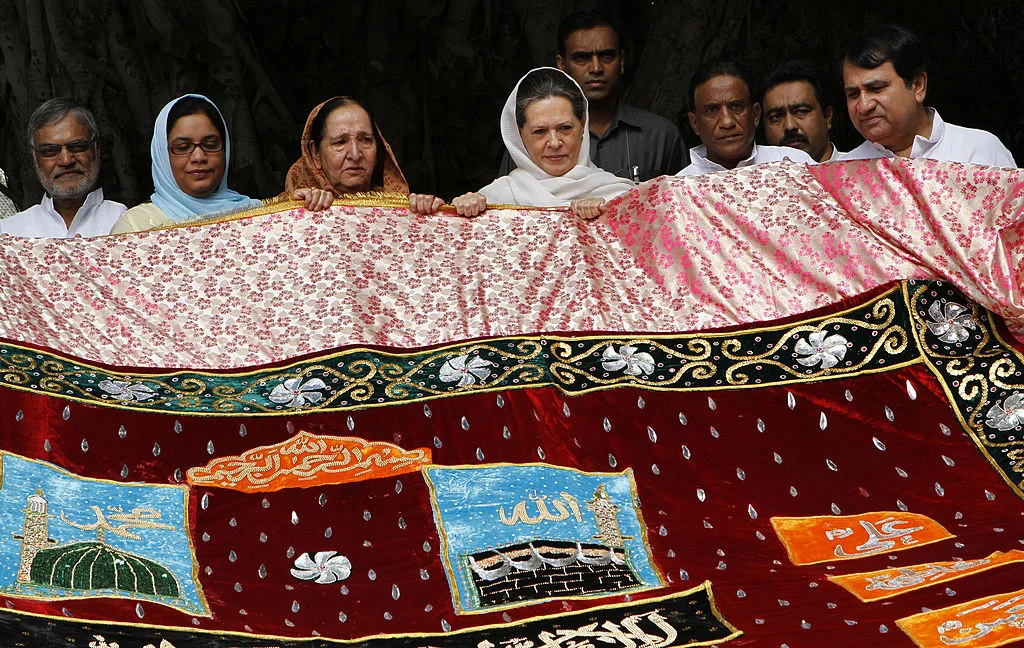
An annual pilgrimage at the start of Rajab, the seventh month of the Islamic calendar, the urs commemorates the death anniversary of Mu‘in al-Din Chishti. The literal meaning of urs as “wedding” underscores the passing of a saint from one plane to another and the celebration of their reunion with God. Like a nuptial, the urs is observed with music, communal meals, and prayers as seen in these images
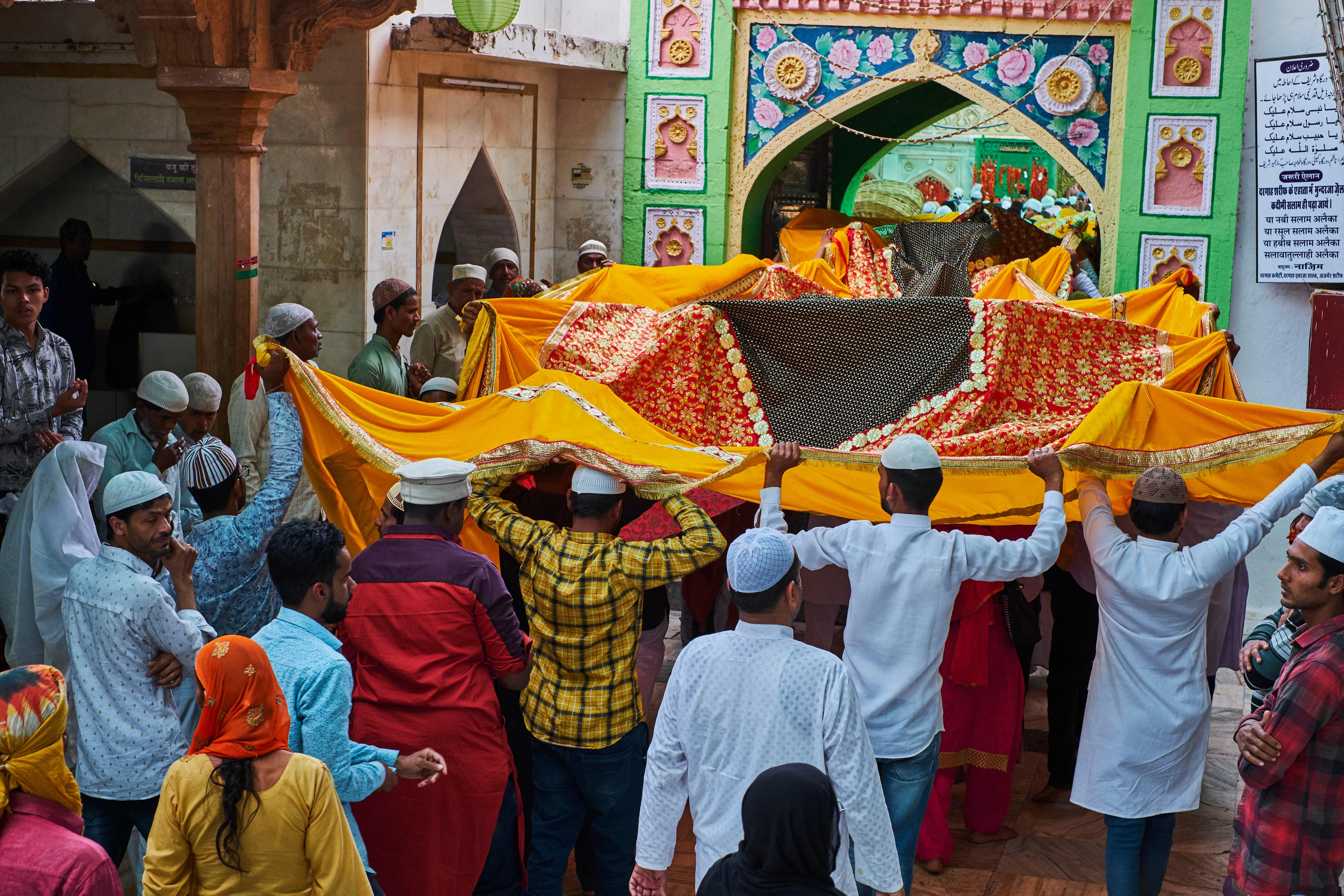
Tuul and Bruno Morandi / Alamy Stock Photo
At the center of the urs is the visit to the mausoleum, which is open twenty-four hours a day over the six-day period. Pilgrims circumambulate and scatter rose petals on the cenotaph, a structure or empty tomb that honors a person buried elsewhere. Pilgrims sit in its vicinity to absorb the baraka, read the Qur’an, pray, offer thanks, and ask for guidance. Over the six days, hundreds of thousands of pilgrims gather and participate in these traditions that date back centuries.
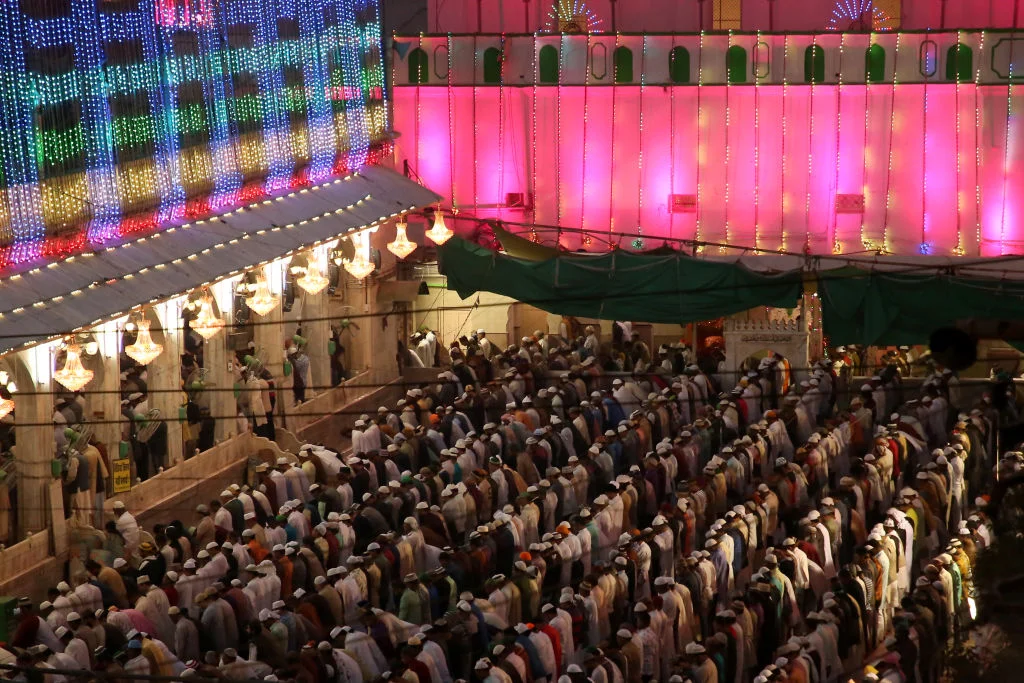
Photo by STR/NurPhoto via Getty Images
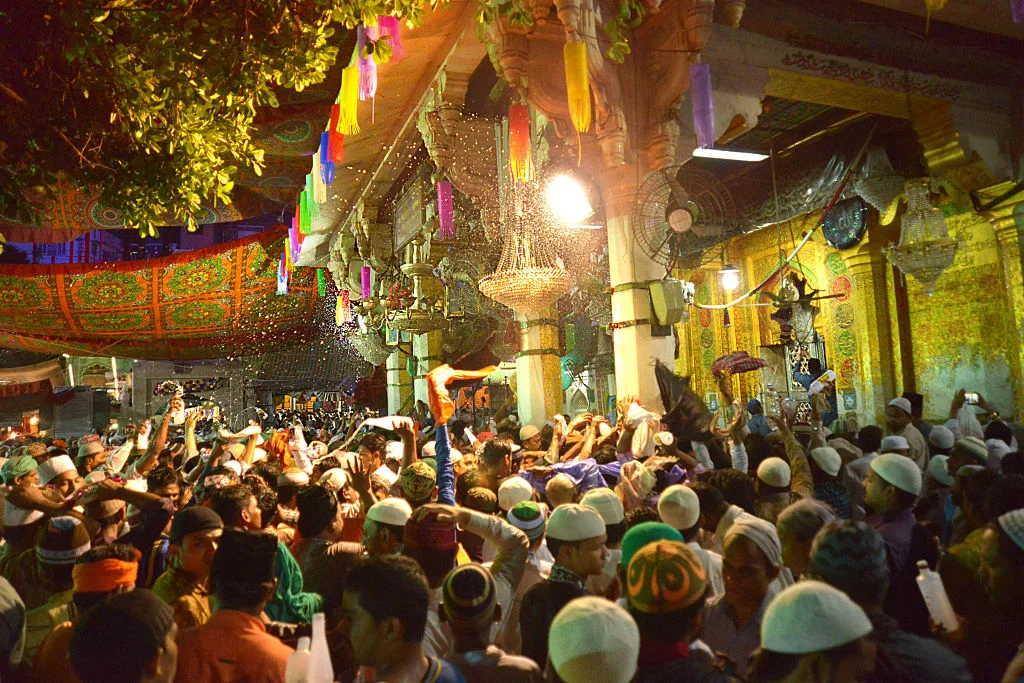
Photo by Shaukat Ahmad/Pacific Press/LightRocket via Getty Images
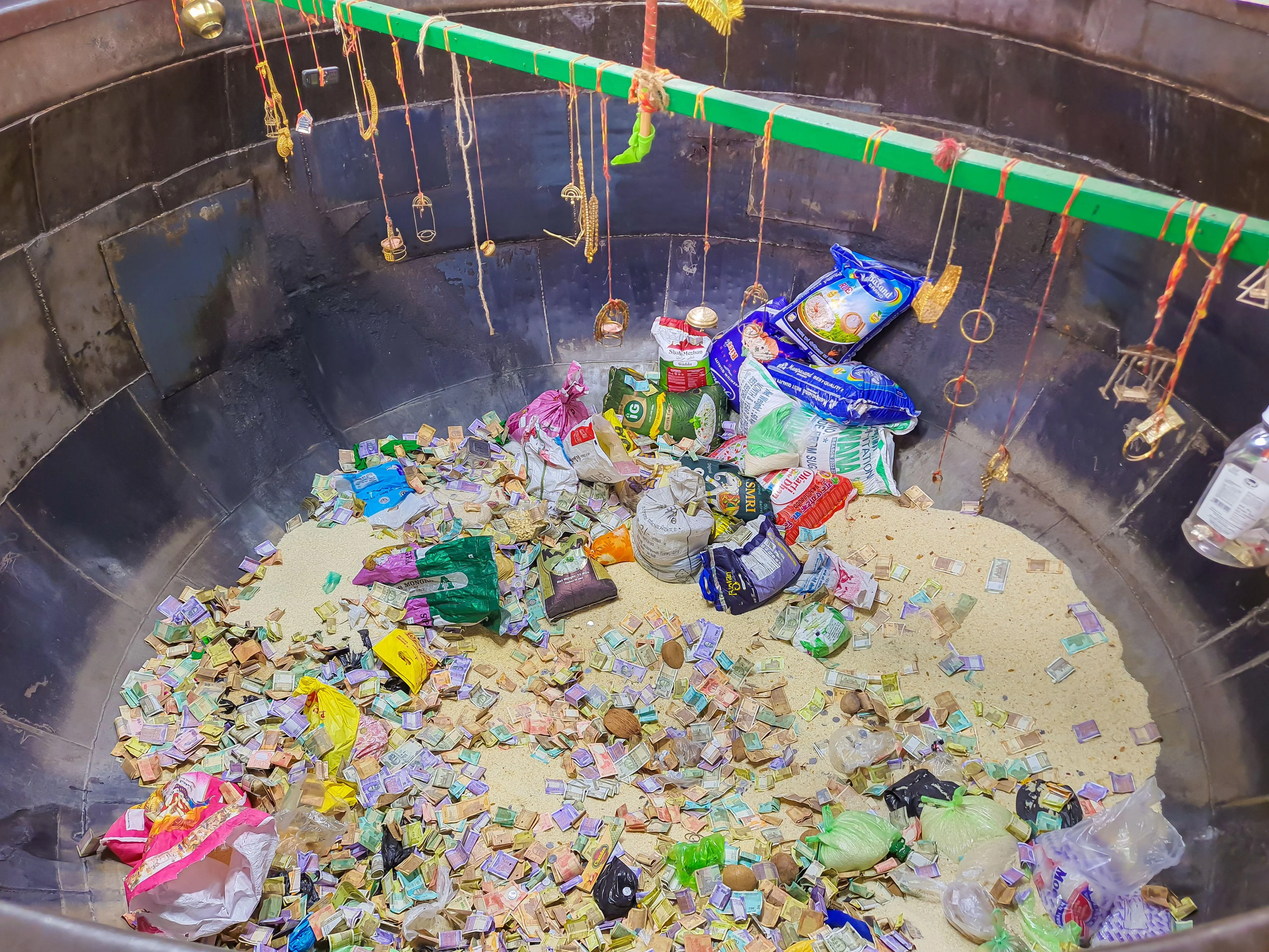
Bambam Kumar Jha / Alamy Stock Photo
Social Equity and Personal Devotion
Social equality is a major component of Chishti teaching and is particularly evident during the urs when pilgrims gather in Ajmer. In the sixteenth century, Emperor Akbar established the shrine’s free communal kitchen, known as a langar, which is active to this day. The food is cooked in two massive caldrons (deg), one of which was donated by the emperor and the other by his successor, Jahangir. They are both still in use today and feed the vast number of devotees around the clock.
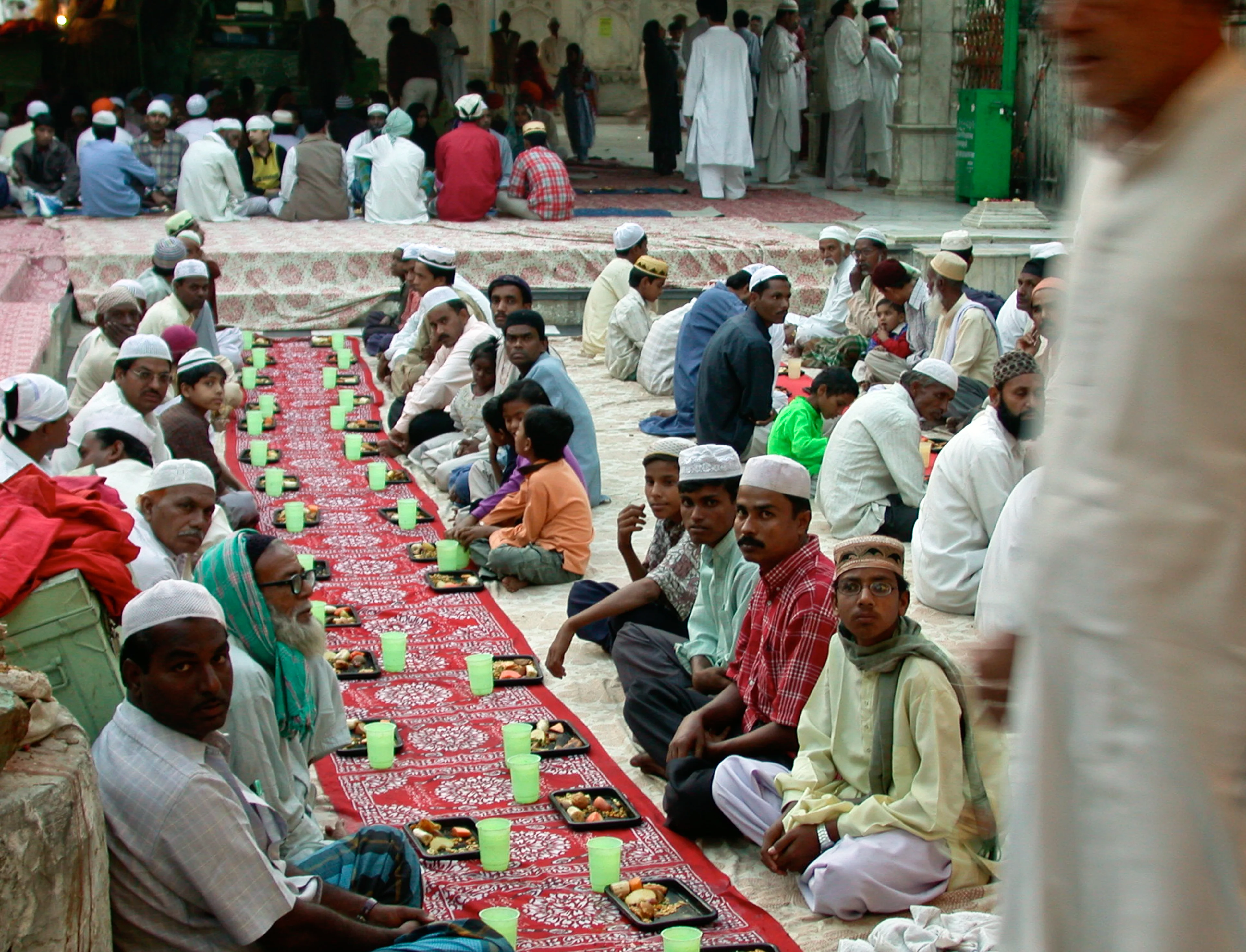
© Catherine Touaibi-Chatagny
A common practice at Ajmer and other Sufi shrines is that of mannat, the custom of making a vow to a saint in return for his favor and grace. Devotees tie knots of strings or ribbons to the tomb of Sufi masters to mark prayers for his assistance and intercession, such as the pilgrim seen here.
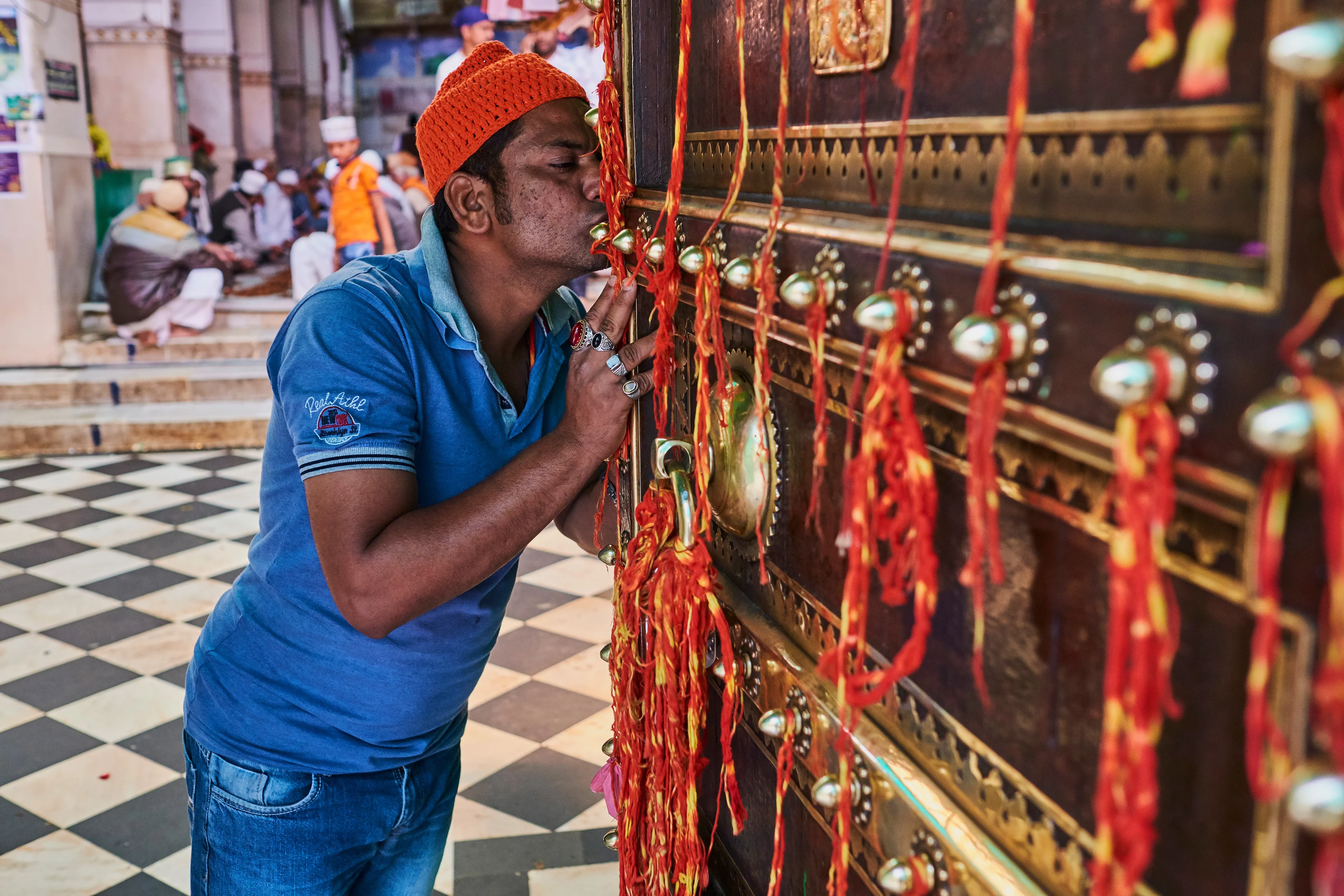
Tuul & Bruno Morandi / Getty Images
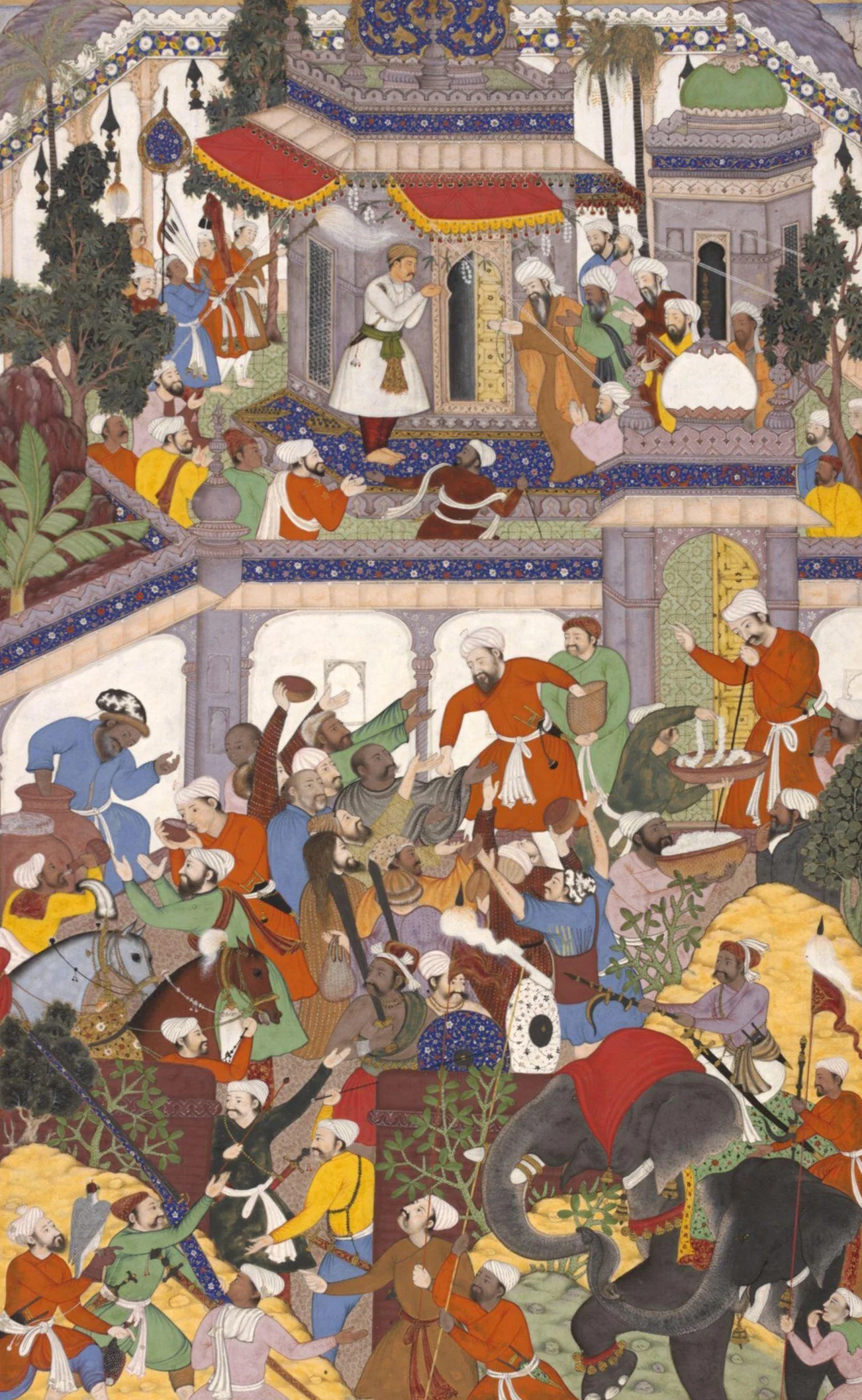
© Victoria and Albert Museum, London
Royal Pilgrimage and Patronage
Mughal emperors also regularly performed pilgrimages to Ajmer following major events, such as coronations and victories on the battlefield, or to request divine favor. Allegedly, Emperor Akbar prayed for a son through the intercession of Salim Chishti, the living descendent of Mu‘in al-Din. When the emperor’s wish was granted and his son was born in 1569, Akbar named him Salim after the shaykh. To express his gratitude for the birth of a son and heir, Akbar walked over 250 miles from the capital Agra to Ajmer. These public expressions of religious devotion were commemorated in official histories, such as in the Akbarnama, a history dedicated to Akbar’s reign, which describes in words and images Akbar’s visits to the Chishti shrine.
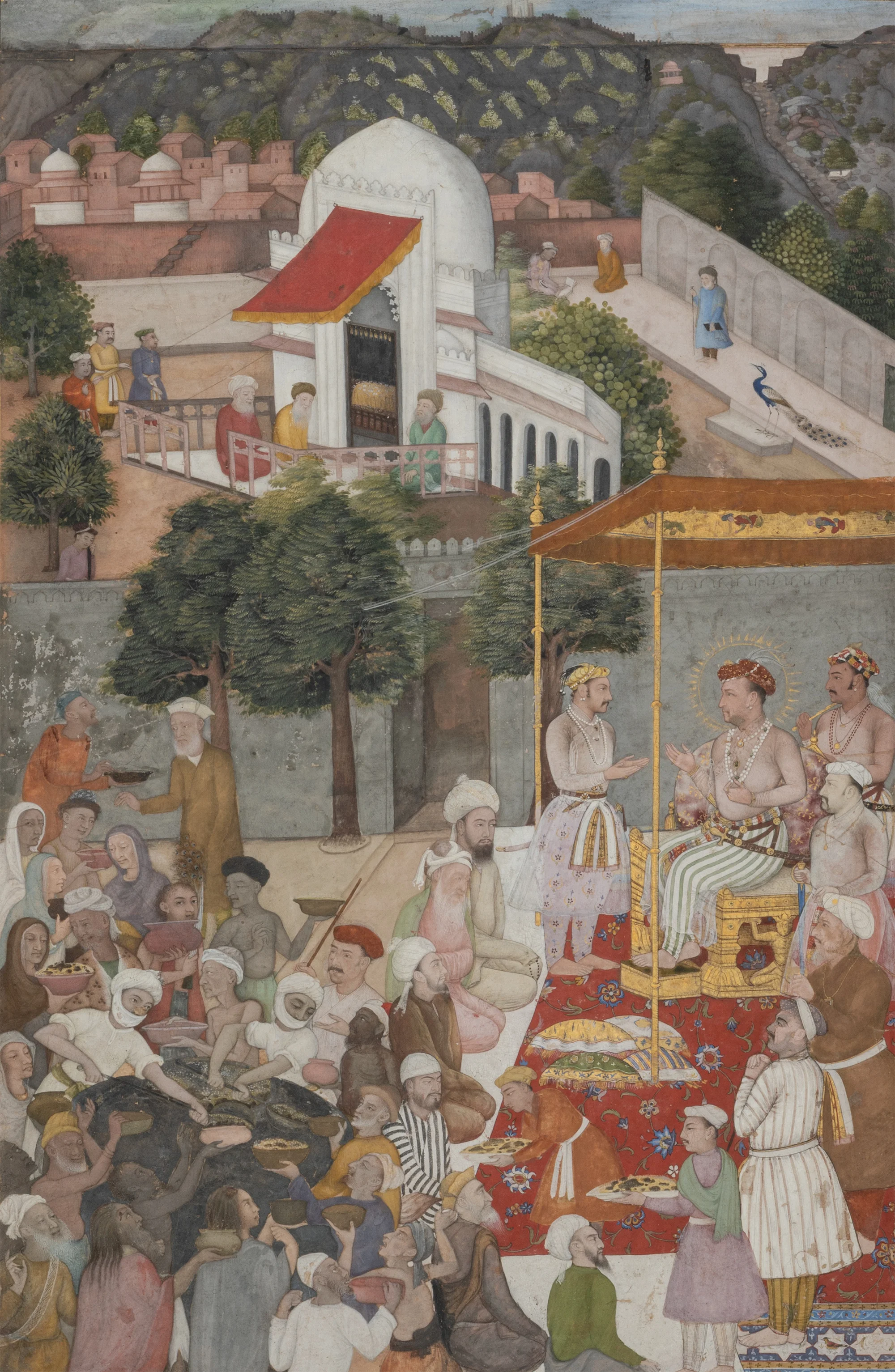
Courtesy of the Trustees of the Chhatrapati Shivaji Maharaj Bastu Sangrahalaya. Not to be reproduced without prior permission of the Trustees.
Jahangir in Ajmer
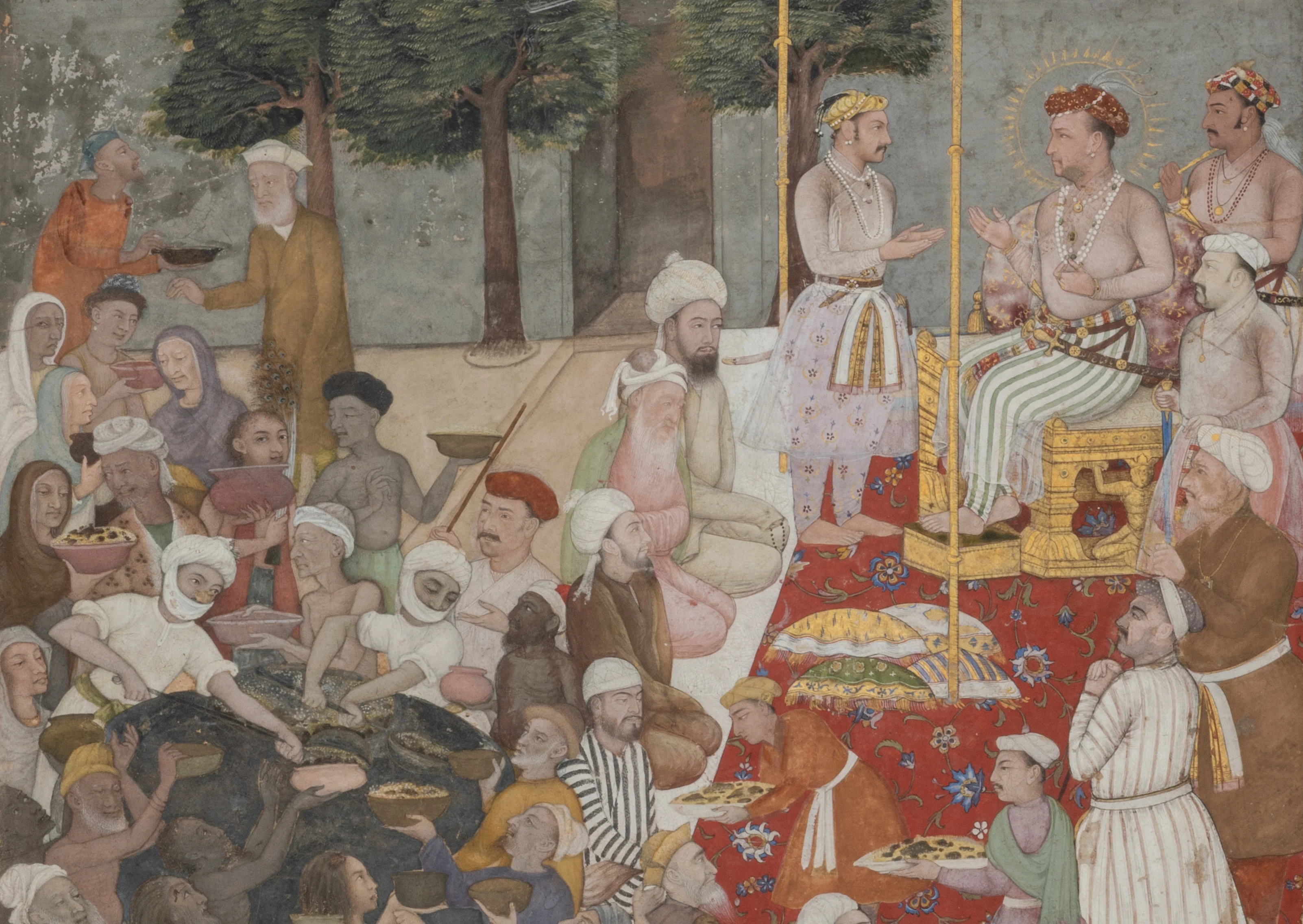
Emperor Jahangir declared Ajmer the capital of the Mughal Empire from 1613 to 1616. He spent those three years in the city to be near the shrine and to tend to its needs. For example, he notes in his memoirs, “On this day, [the deg] was brought, and I ordered them to cook food for the poor in that pot and collect together the poor of Ajmer to feed them whilst I was there.” This scene is illustrated in the circa 1614 Tuzuk-i Jahangiri (Memoirs of Jahangir), which depicts the emperor accompanied by his son Prince Khurram, the future Shah Jahan, feeding the pilgrims. The white marble shrine stands out in the background.
Female Devotion
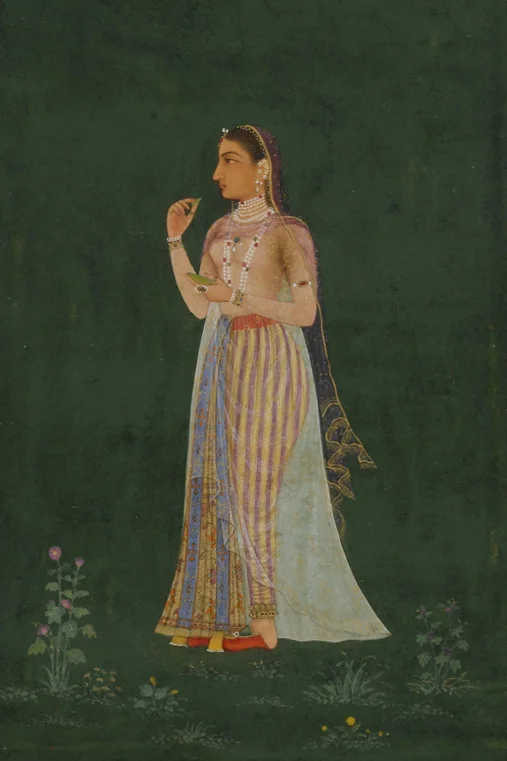
Women also followed Mu‘in al-Din Chishti’s teachings. Among the most celebrated was Princess Jahanara Begum (1614–1681), the daughter of Emperor Shah Jahan (r. 1628–58), the patron of the Taj Mahal. A serious devotee, Princess Jahanara completed a biography of Mu‘in al-Din Chishti known as Mu’nis al-arvah (The Confidant of Spirits) in 1640. In an appendix to the text, she offers an evocative and sensuous account of her spiritual experience of the urs at Ajmer:
I went around the light-filled tomb of my master seven times, sweeping it with my eyelashes, and making the sweet-smelling dust of that place the mascara of my eyes. At that moment, a marvelous spiritual state and mystical experience befell this annihilated one, which cannot rightly be written.
Princess Jahanara
As translated in Carl Ernst and Bruce B. Lawrence, The Chishti Order in South Asia and Beyond, p. 89
Qawwali, Sound of Devotion
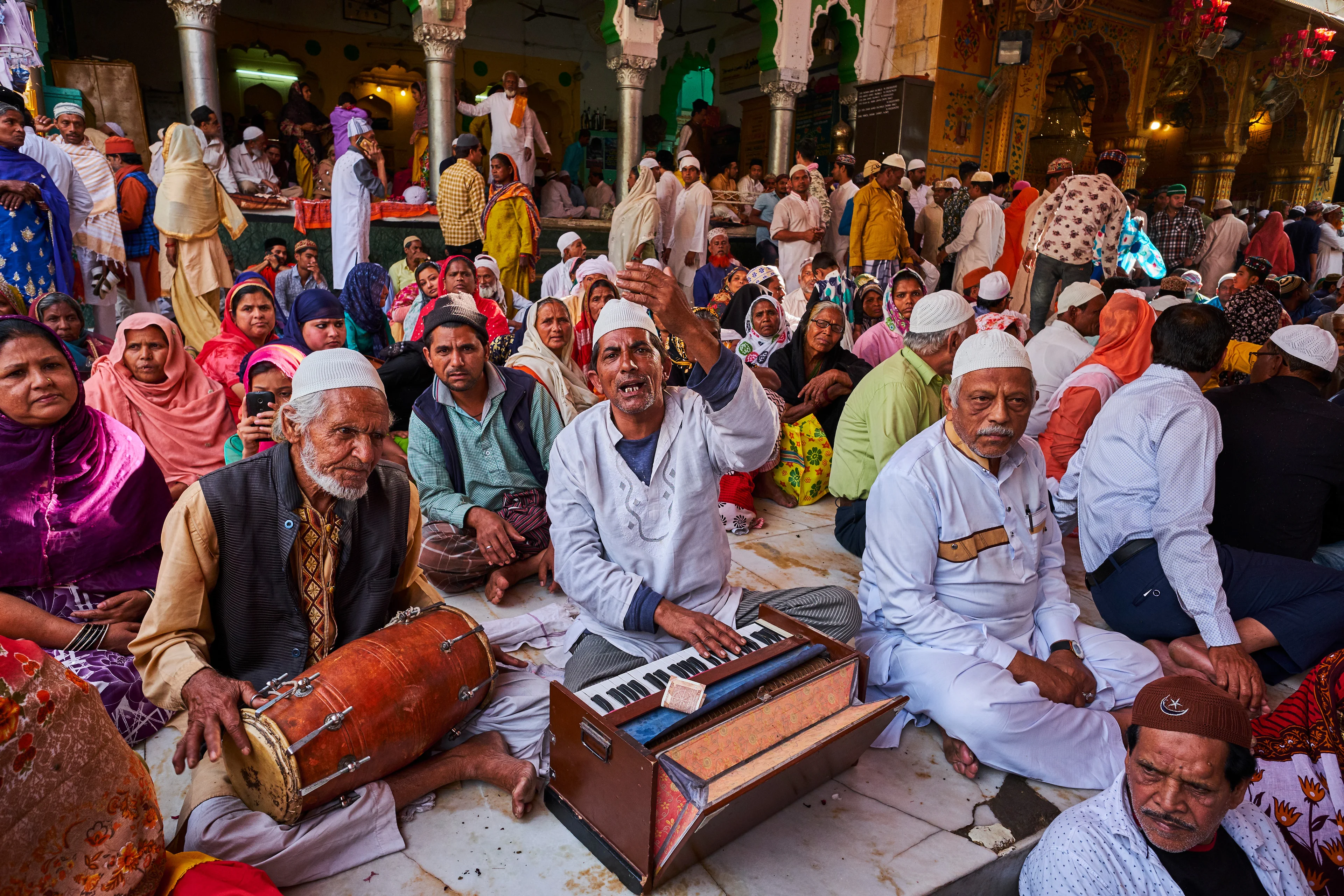
The Chishti order is particularly renowned for its emphasis on ritual performances (sama‘) as a means to invoke Divine Presence. This principle is expressed in the art of qawwali, a form of devotional music, which is an essential part of Chishti Sufi tradition. It dates to the thirteenth century and the celebrated poet Amir Khusraw Dihlavi (1253–1325), a Chishti disciple, who is credited with inventing the genre in Delhi. His poetry is in Hindi and therefore understood by both Muslims and Hindus, but Persian, Urdu, and Panjabi poetry are also used.
Tuul & Bruno Morandi / Getty Images
Qawwali performances consist of sung Sufi poetry with the repetition of verses and rhythmic handclapping and drumming that intensify the ecstatic experience. Usually, one singer presents the text in an intense emotional tone and is joined by others in the refrain passages. Qawwali helps to bring the centuries-old tradition of Sufi poetry into a popular, accessible form that can be memorized and shared by adherents of different religious traditions.
 A man in white raises his hands and sings passionately into a microphone while another man sits beside him, both dressed in traditional clothing.
Nusrat Fath Ali Khan at a Religious Festival
View Credits
L’atelier des Archives/ Yves Billon collection Musique du Pakistan director Yves Billon
From its South Asian beginnings, qawwali gained an international audience in the twentieth century. One of the most celebrated performers, who has been responsible for the growing appreciation and popularity of qawwali, was the Pakistani performer Nusrat Fath Ali Khan (1948–1997). Following in the footsteps of his father and two uncles, who were also famous qawwali singers, Nusrat Fath Ali Khan only began to devote himself to qawwali after his father’s death in 1964. Over the years, he developed his own distinct style, which heightened the spiritual resonance of qawwali. Nusrat Fath Ali Khan also collaborated with international musicians and composers and gained enormous following outside of Pakistan. Public adulation for Nusrat Fath Ali Khan is evident in this video from the late 1980s at a religious festival in Pakistan.
The Spread of the Chishti Order
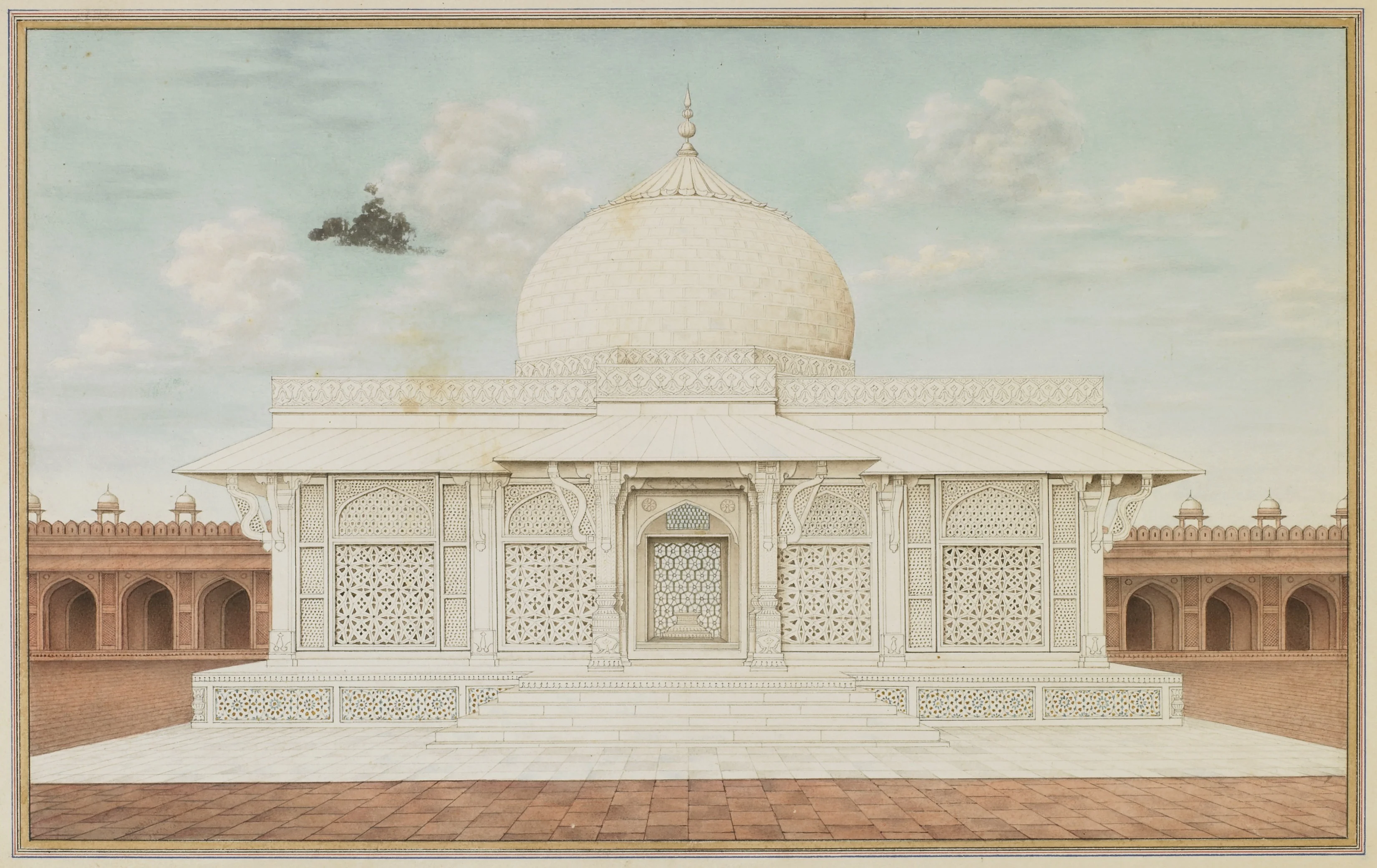
The proliferation of Sufi shaykhs across South Asia played a critical role in the expansion of Islam. Through Mu‘in al-Din and his successors, the Chishti order continues to draw devotees from across the region. Tombs of other Sufi leaders such as that of Salim Chishti’s in Fatehpur Sikri, Uttar Pradesh—originally built by Emperor Akbar between 1571 and 1580 in the courtyard of the congregational mosque—became important hubs for Sufi communities.
The Chishti Order in Pakistan
Farid al-Din Mansur Ganjshekan, commonly known as Baba Farid (d. 1265) was a student and successor of Mu‘in al-Din and is buried in Pakpattan, now in present-day Pakistan. Although divided from Ajmer by modern political borders, Pakpattan serves as an important Chishti pilgrimage center and underscores how Sufism has transcended political realities and differences.
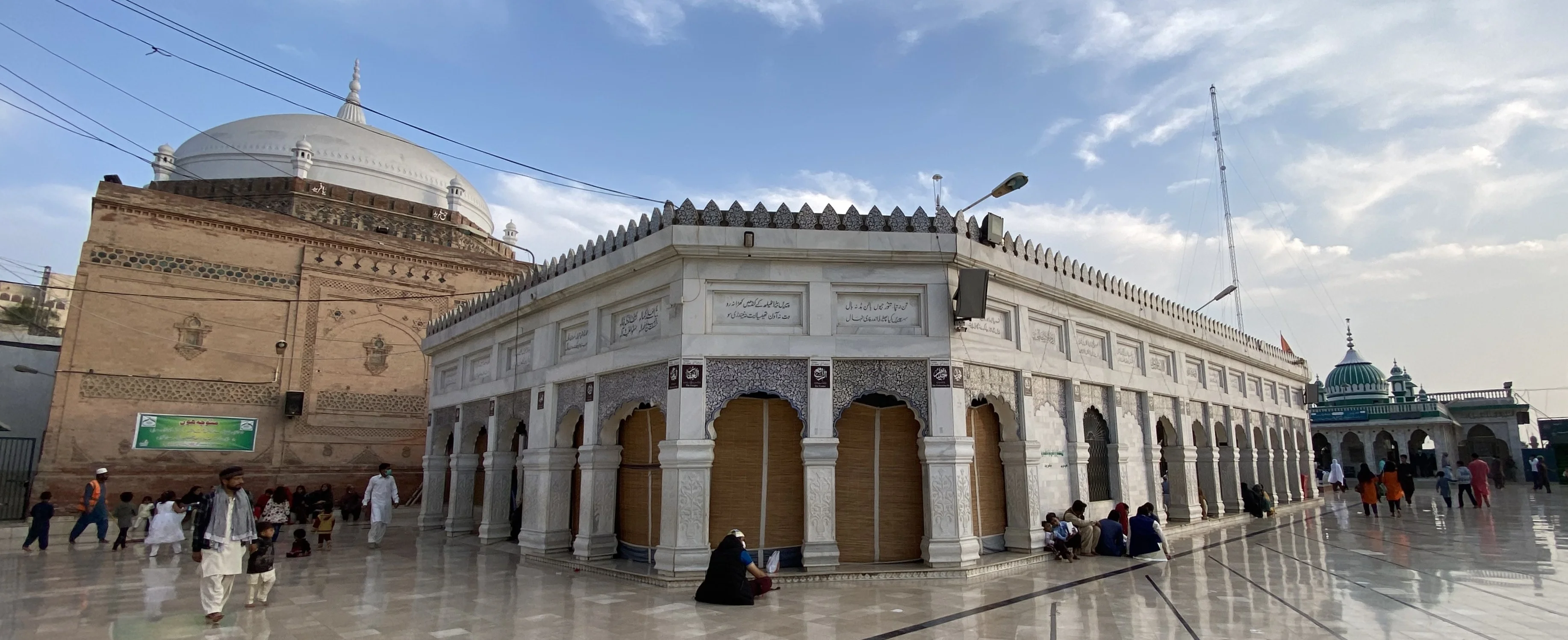
Maria Waseem
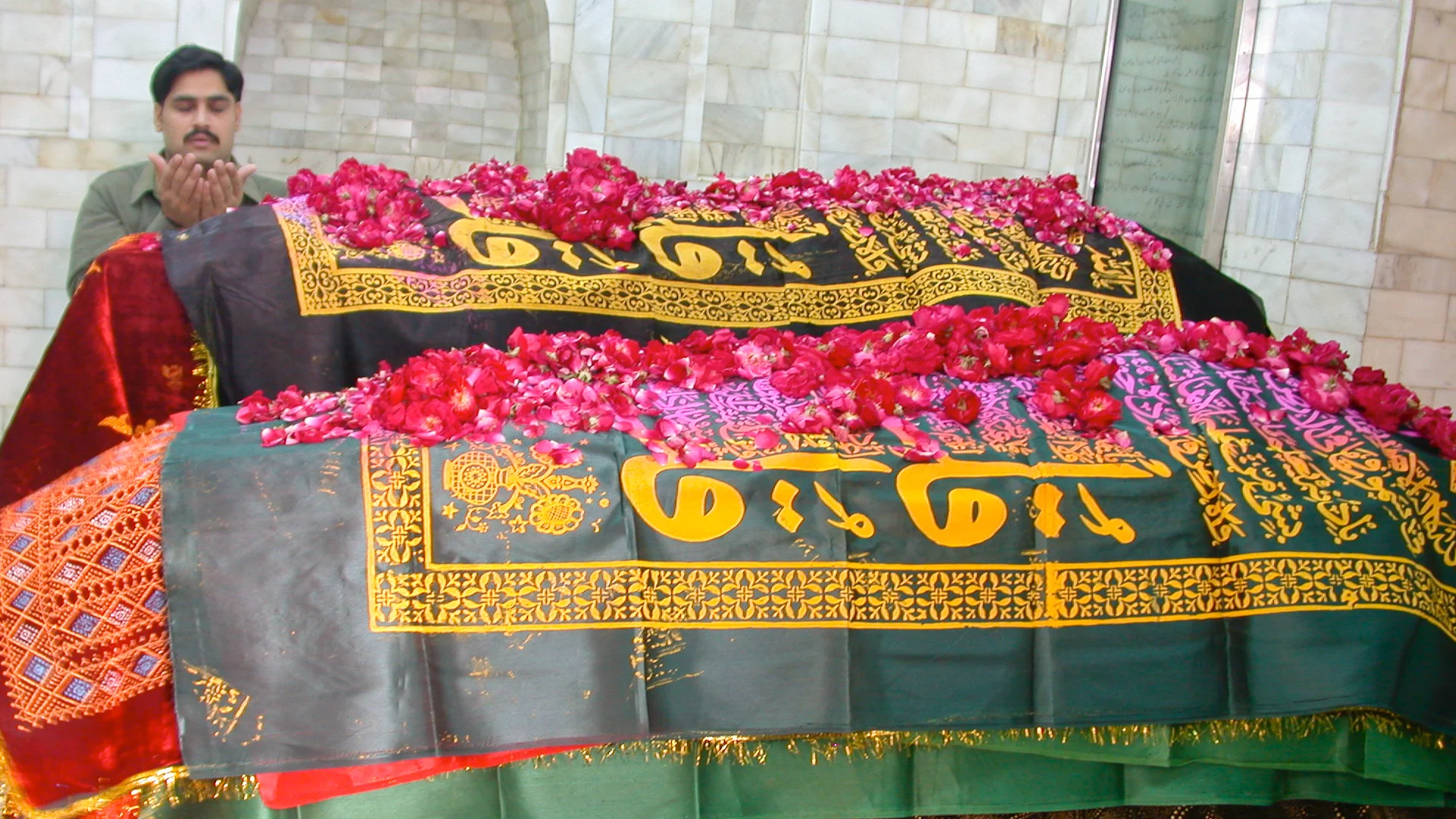
Qawwali at the Pakpattan Shrine
View Credits
Images © Catherine Touaibi-Chatagny
Like Ajmer, an urs is held at Baba Farid’s shrine every year during the Islamic month of Muharram. For six days, devotees gather to pray, take part in communal meals, practice sama‘ to renew their spiritual commitment, and visit the shaykh’s tomb on the two days of the year it is open. The two Chishti shrines also share a long tradition of qawwali performances, which unites their respective communities in their quest for spiritual fulfillment.
Continuation of the Qawwali Tradition
The art of qawwali is passed on from one generation to the next as can be seen and heard by these young Rajasthani devotees.
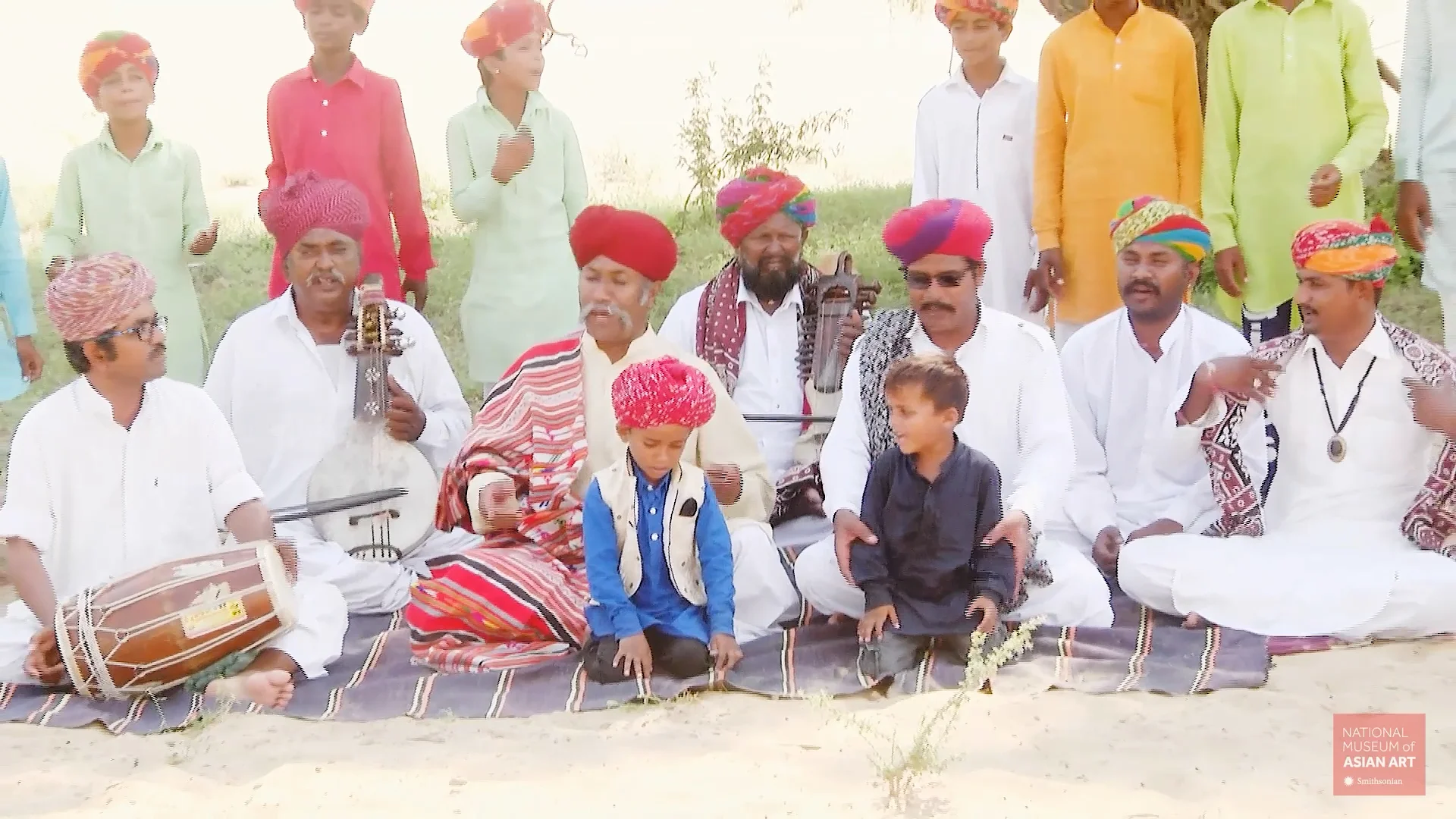 A group of men and two children in traditional attire sit on a mat outdoors, some holding musical instruments, with others standing behind them.
View Credits
Courtesy of Manganiyar and Langa Communities, Marwar, Rajasthan
Locations
Explore the map or scroll to select a location.